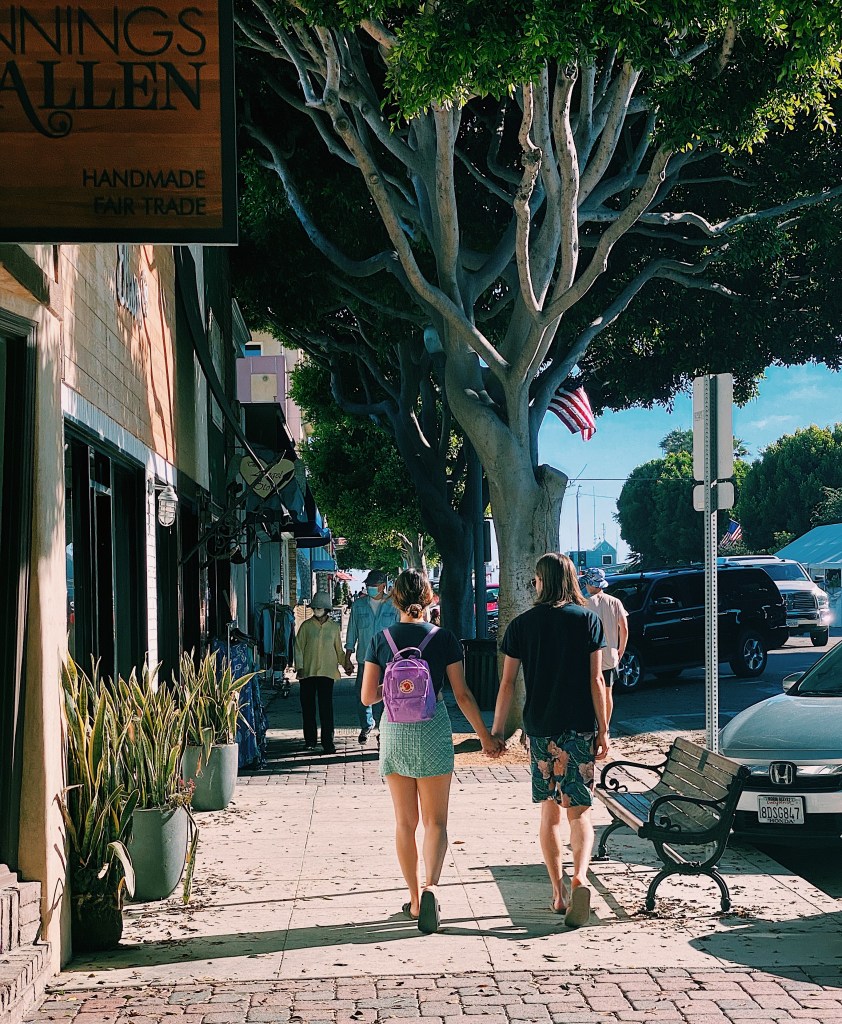
On a glorious sunny Saturday, we joined the crowds heading to the beach, edging along in bumper to bumper traffic most of the way. We made our way to Long Beach and Seal Beach, just south of Los Angeles. Guiding us were our son Jake, his girlfriend Kylie and Kylie’s daughters, Sophie and Emma. We ate in Belmont Shore, a pleasant Long Beach neighborhood by the beach. We liked the residential streets of small Spanish villas.
After lunch we drove a little further down the Pacific coast to the pretty little beachside town of Seal Beach.
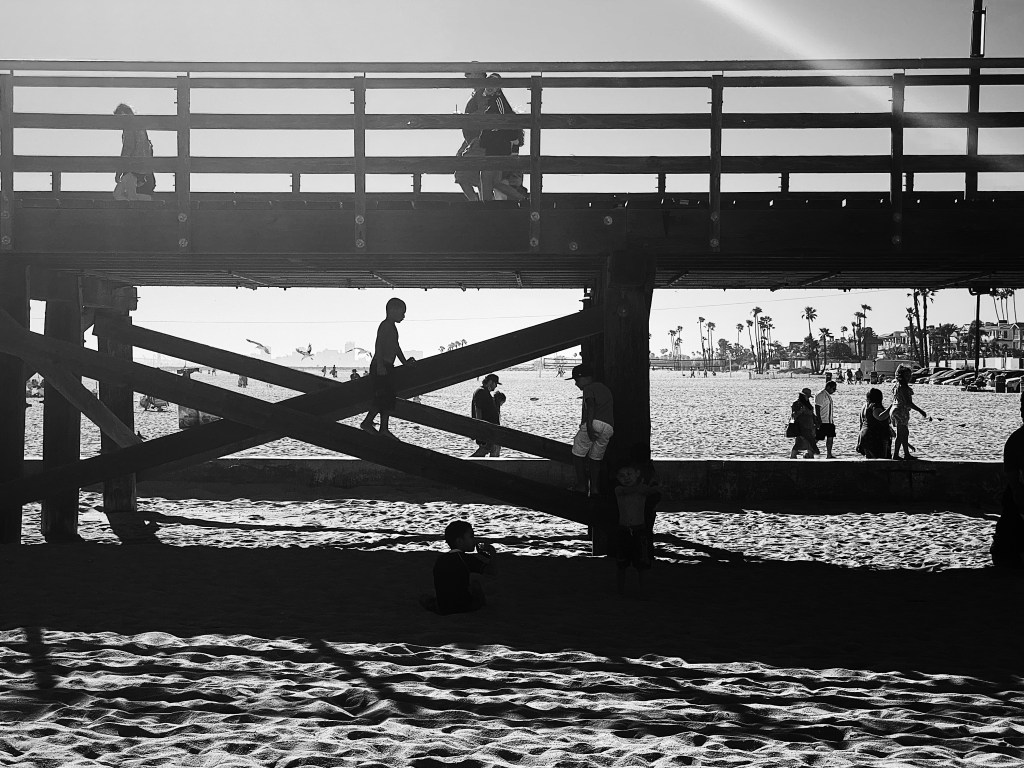
Like many of the Southern California beaches we have visited, Seal beach had a pier stretching a long way out into the Pacific.
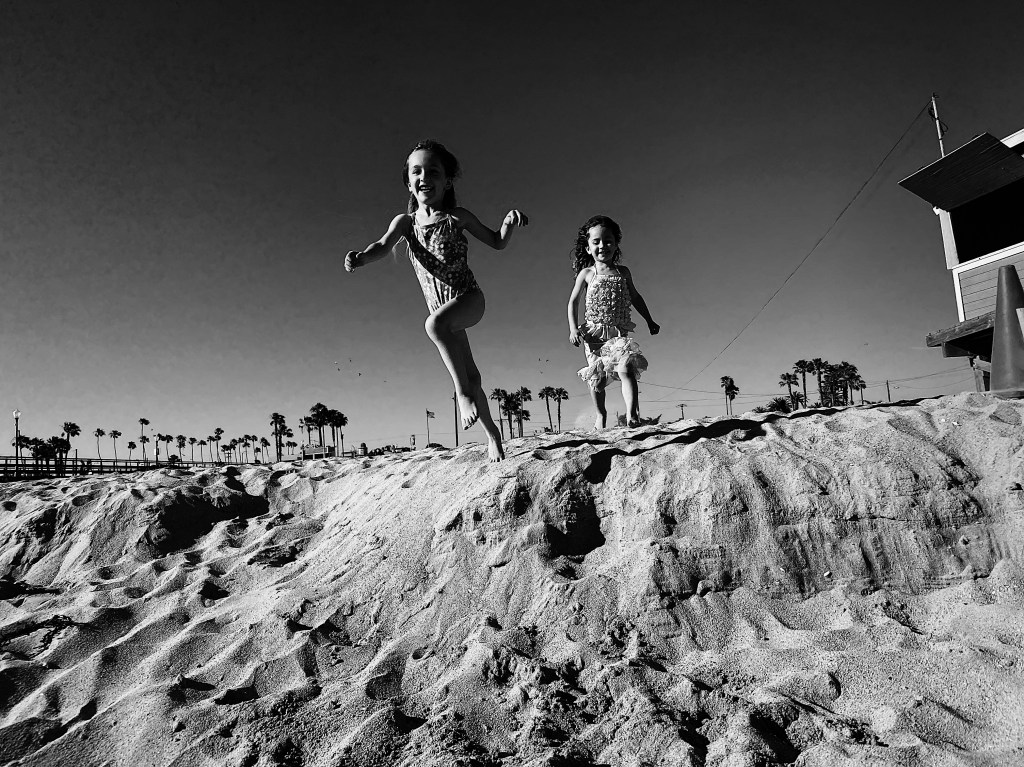
While we basked in the sun, Sophie and Emma burnt off some of their endless energy.
After spending the last five months hiding out from the world and its problems down in New Zealand, we have finally returned to Washington DC. On the way, we visited our sons, Jake and Ben, who live in LA. Flying in, it was easy to see why LA is so well known for its freeways. Driving around the city, they are almost impossible to avoid. In most highway systems that we have come across, entrances and exits are a distance apart and well marked. But in LA, there are numerous small entrances and exits that often on small reside streets and hardly noticeable. Residents of the city had a welcome respite from the endless traffic jams during the Covid crisis, but with life getting back to normal the heavy traffic has returned.
We rented a house in the Los Feliz hills, not far from Sunset Boulevard and the hipster haven of Silver Lake. As befitting its name, most of the houses in the neighborhood are distinctly Spanish. Here are a few.
There were some houses in other styles, including this majestic deco house.
It wouldn’t be a Los Angeles neighborhood without a resident film or television studio. For many years, The Prospect Studios was the headquarters of one of America’s major television networks, ABC, and many well know shows were filmed there, including American Bandstand. ABC is now owned by the Walt Disney Company and ABC’s main headquarters are now at the Walt Disney Studios. However, the studios are still busy. Among the shows currently being shot there are the medical dramas General Hospital and Grey’s Anatomy.
We walked along iconic Sunset Boulevard. Stretching all the way from the coast to downtown, a distance of about twenty two miles (35 kms), it is lined with numerous landmarks. Here it bisects Silver Lake and is lined with trendy cafes, restaurants, bars and shops.
Cannabis is legal in California and it’s not uncommon to pass stores selling a wide variety of cannabis products. This store was prominently advertising our sons’ company, dompen, and its collaboration with homeless artists.
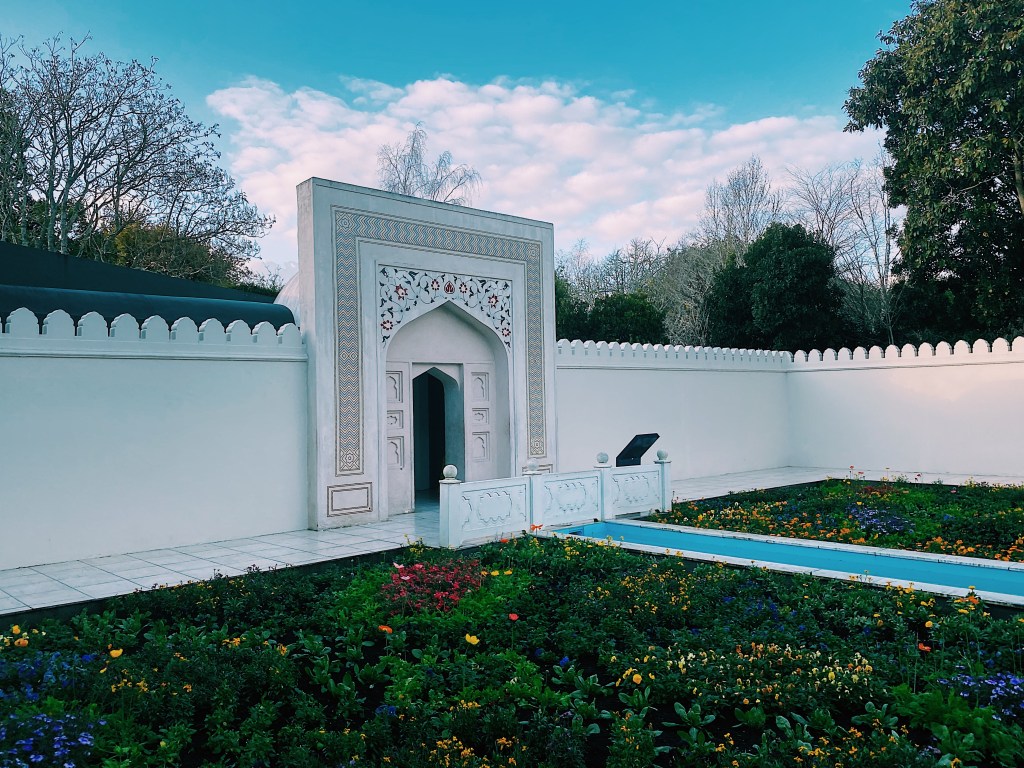
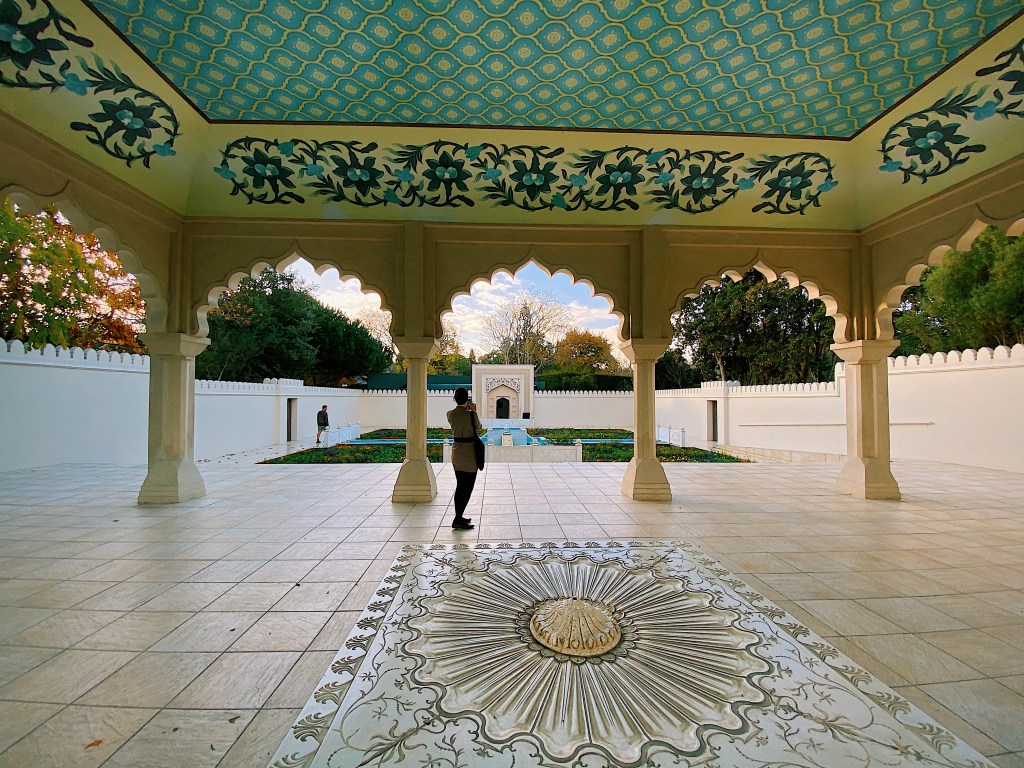
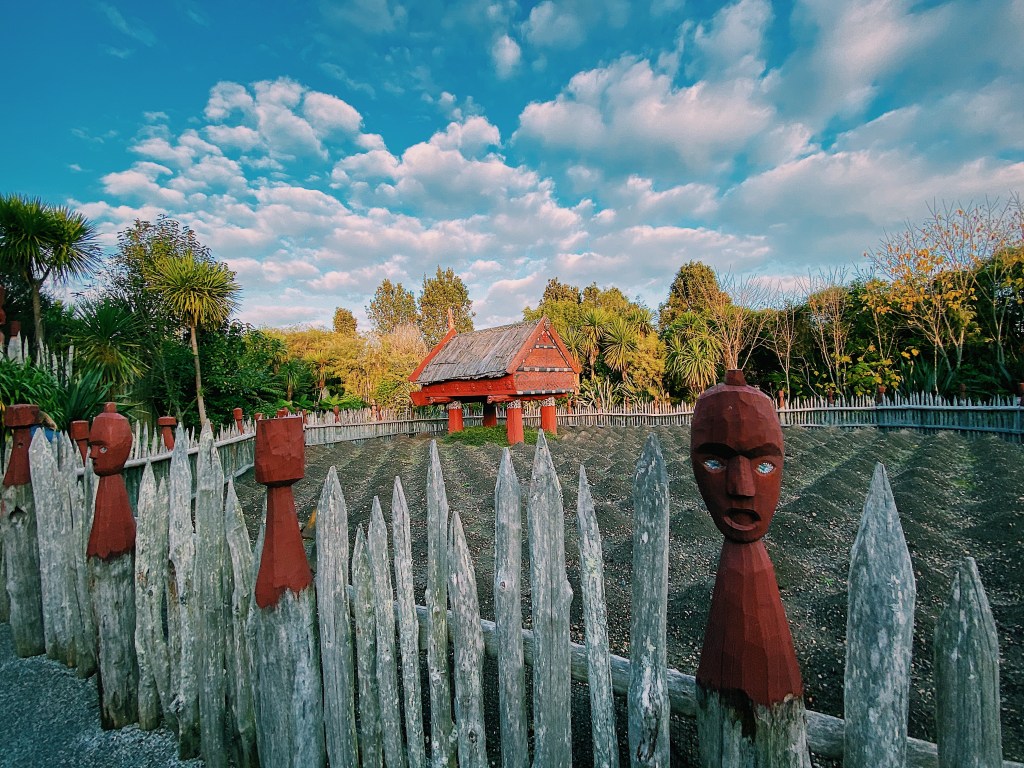
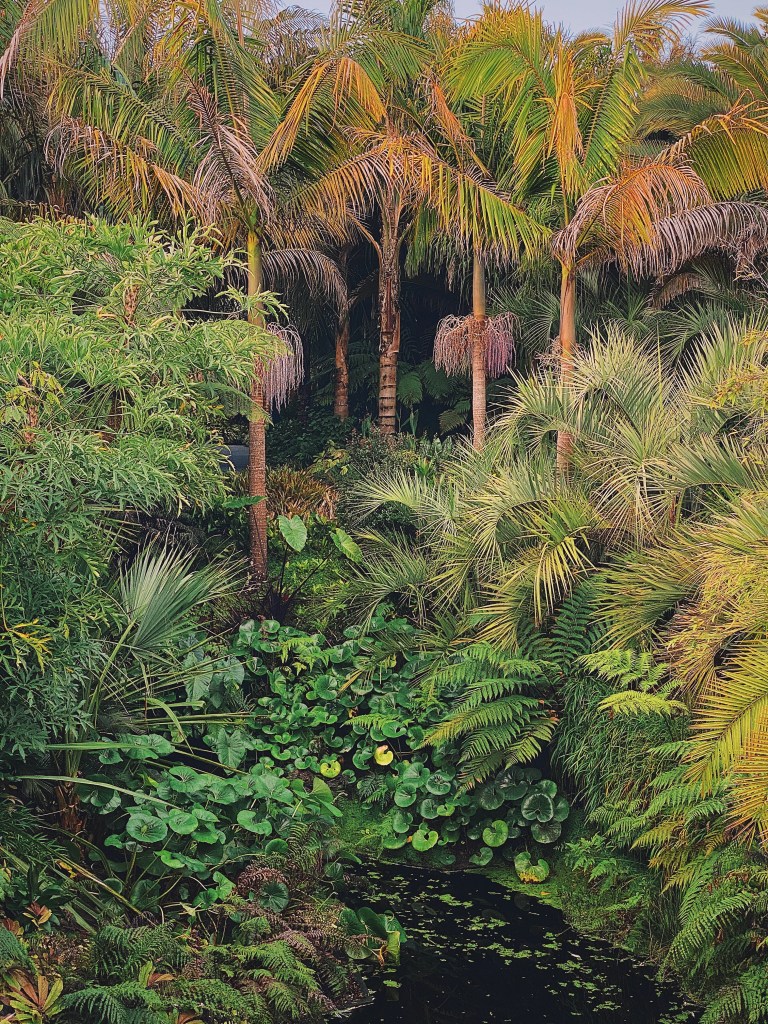
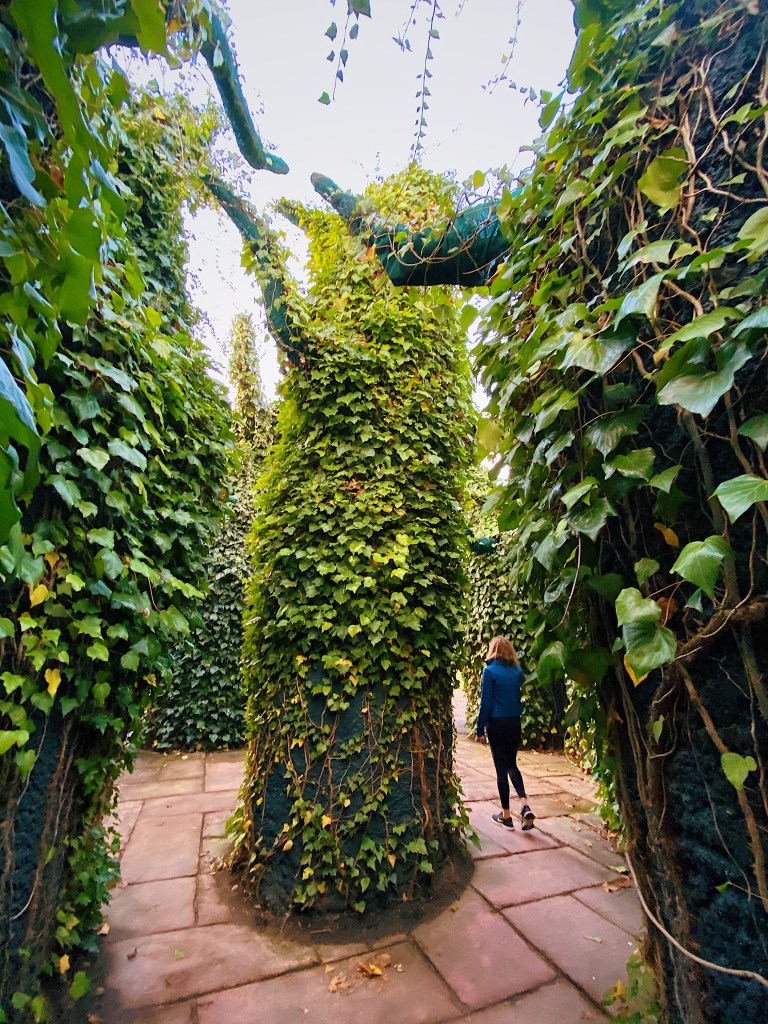
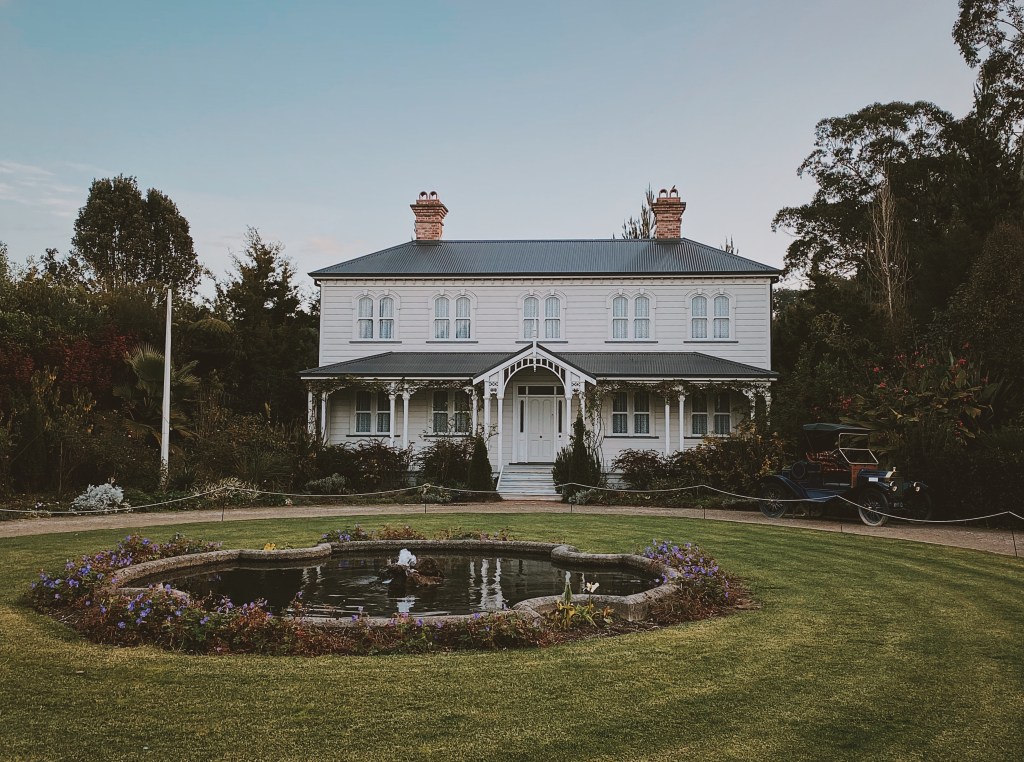
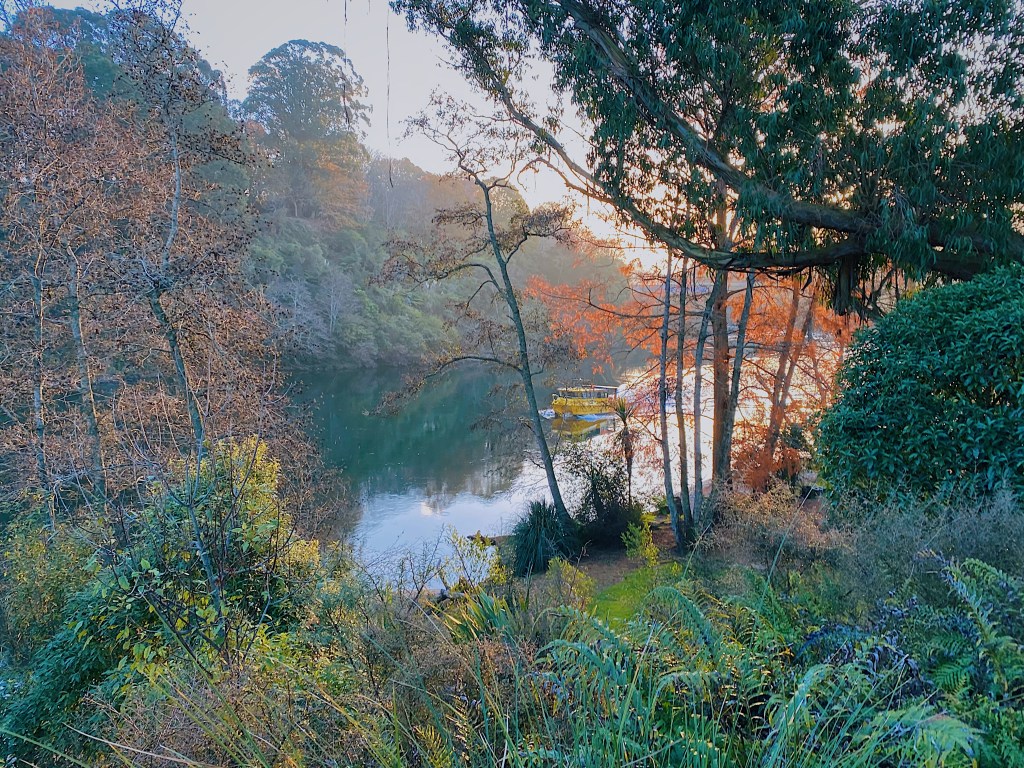
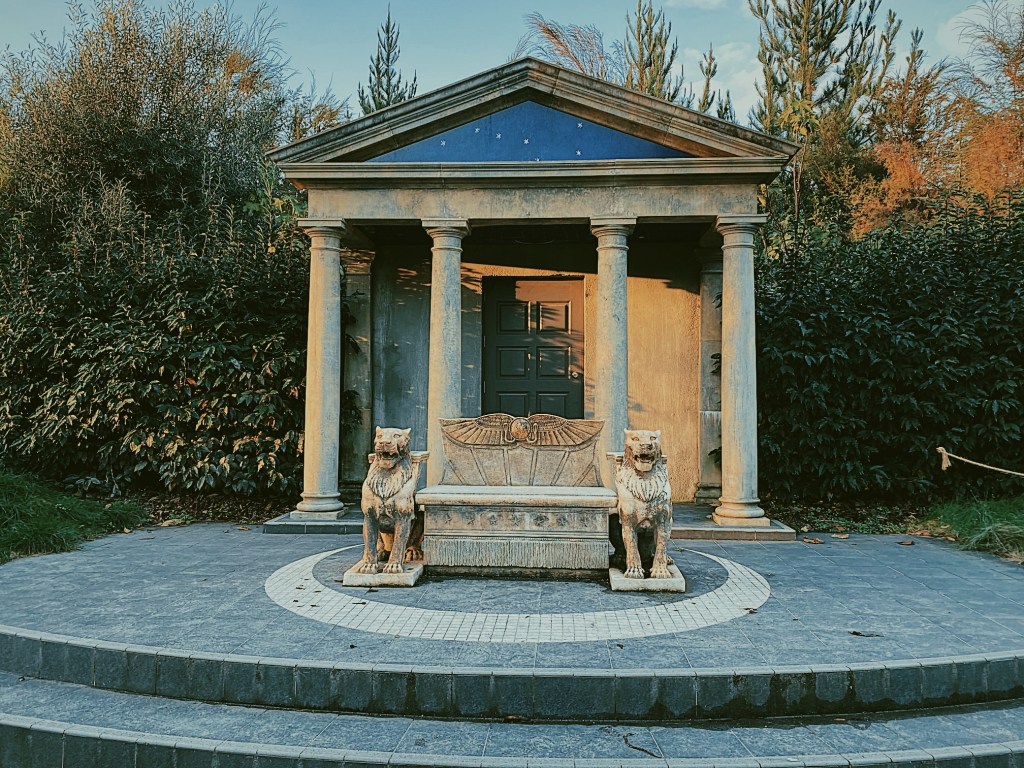
On our way back from Cambridge to Auckland we stopped in Hamilton to visit the very impressive Hamilton Gardens. On the banks of the Waikato River, the gardens cover 54 hectares (133 acres) and includes many different types of garden. It is the Waikato region’s most popular attraction, attracting over a million people a year pre-Covid. Picture it as sort of a Disneyland for gardens, depicting an amazing variety of themed gardens. Here are some examples.
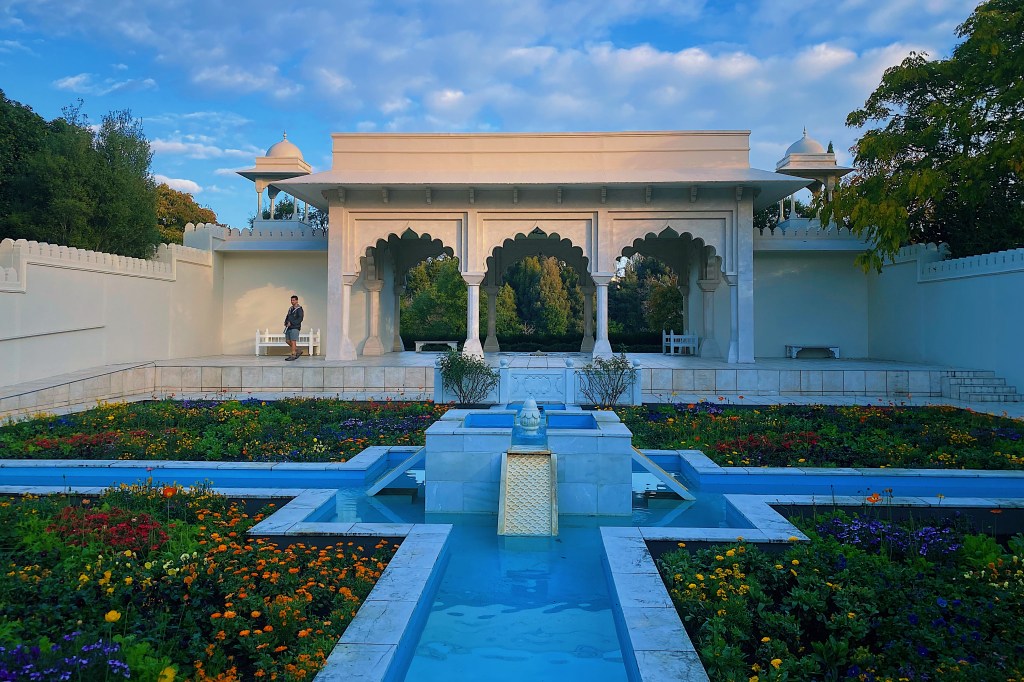
Indian Char Bagh Garden
Italian Renaissance Garden
Japanese Garden
Maori Garden
Tropical Garden
Surrealist Garden
This pathway is actually flat
Tudor Garden
There is even a garden created to depict the early 20th century New Zealand lawn party featured in Katherine Mansfield’s short story The Garden Party.
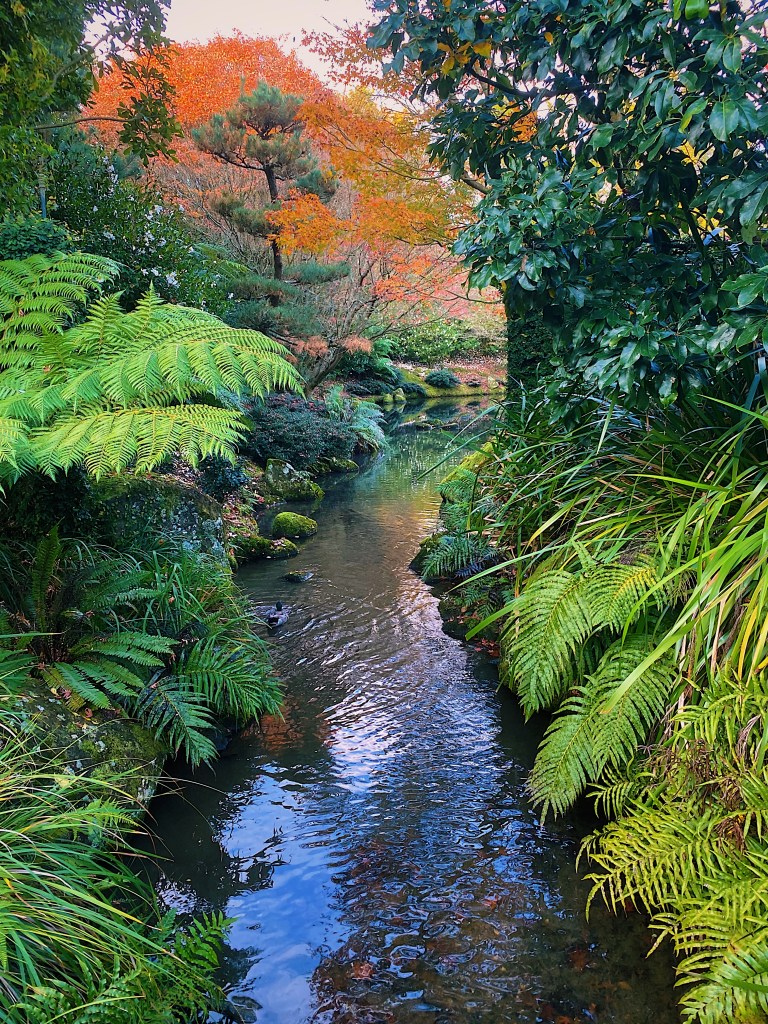
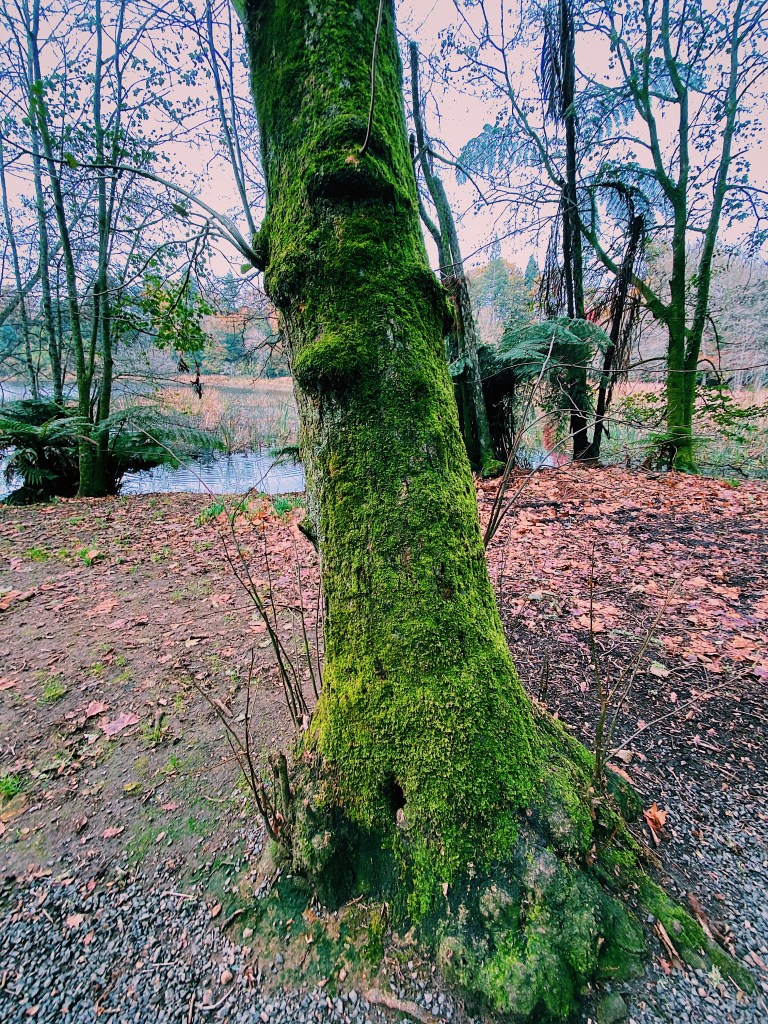
Here are some more of the beautiful scenes we saw during our visit.
This blog is in honor of Mal’s Mum who was born in Hamilton in 1925 and died yesterday at 95 years old after a long and eventful life. She travelled the world and was an avid gardener and talented artist. She also had an eye for beauty and style. We think she would have particularly loved this blog entry.
From the age of eight to thirteen years, Mal lived in the small country town of Cambridge, about two hours drive south of Auckland. At the time it had about five thousand residents but it has grown dramatically since then to over 20,000. It is a lovely town with a decidedly English feel. In fact, in 2019, it won New Zealand’s Most Beautiful Large town. So Mal dragged Lauren and our niece Debbie on a nostalgic tour of the town. We started out walking around Lake Te Kouto. Although it sits at the center of the town it is not easily visible and is sometimes called Hidden Lake.
Near to the lake is the one of the two houses where Mal lived. It didn’t look all that different from when he lived there. There are two things that stick out in his memory about the house. The first, is that it is, without doubt, the coldest house that he has ever lived in. It sits down near the river and in the winter the damp fog would not lift until noon. Often there was thick frost on the ground. Like most New Zealand houses, it had not been built for the cold. There was no central heating, insulation or double glazed windows. On the plus side, it had incredible gardens and orchards. He remembers grapes, raspberries, strawberries, passionfruit, kiwi fruit, apples, peaches, mandarins and grapefruit. There were also beans, carrots and assorted other vegetables.
From there, we crossed Victoria Bridge high over the Waikato river on our way to visit the other house where Mal lived in the suburb of Leamington.
The house in Leamington was much warmer, sitting in the sun and on the edge of a hill up above fog. Unfortunately, we only rented that house and the owners were not interested in selling.
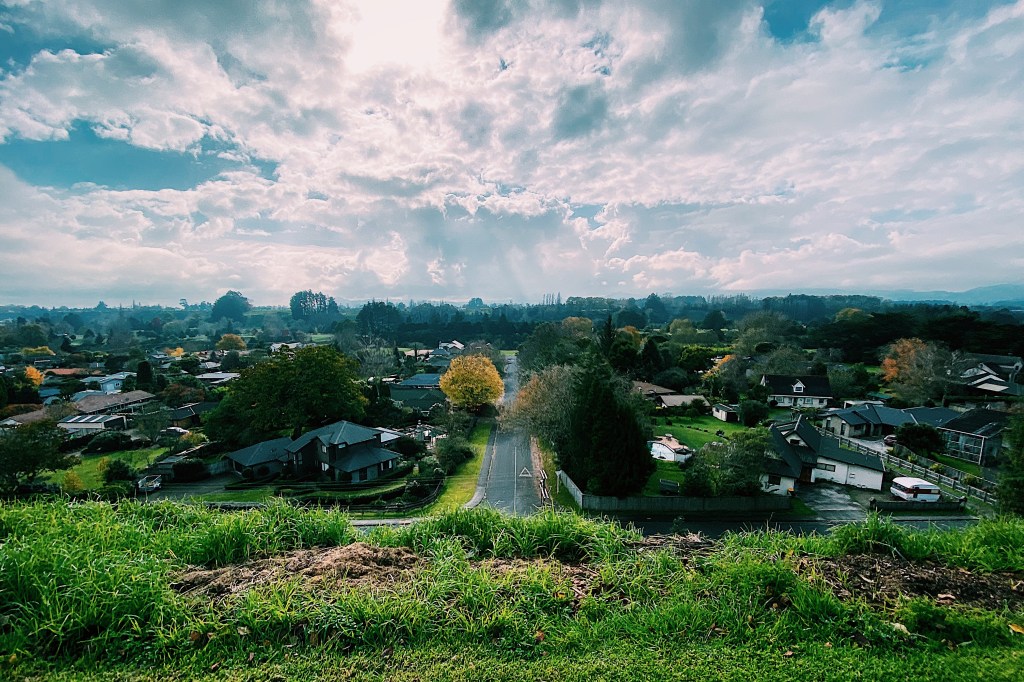
As a sign of the growth, the view from the house used to be of idyllic farmland. Now it’s of houses and streets.
It is citrus time in New Zealand and many of the houses had trees in their yards laden with lemons, oranges, mandarins, limes and grapefruit.
Adding to the English feel of the suburb was this bandstand which Mal remembers as a favorite hangout spot for the local kids.
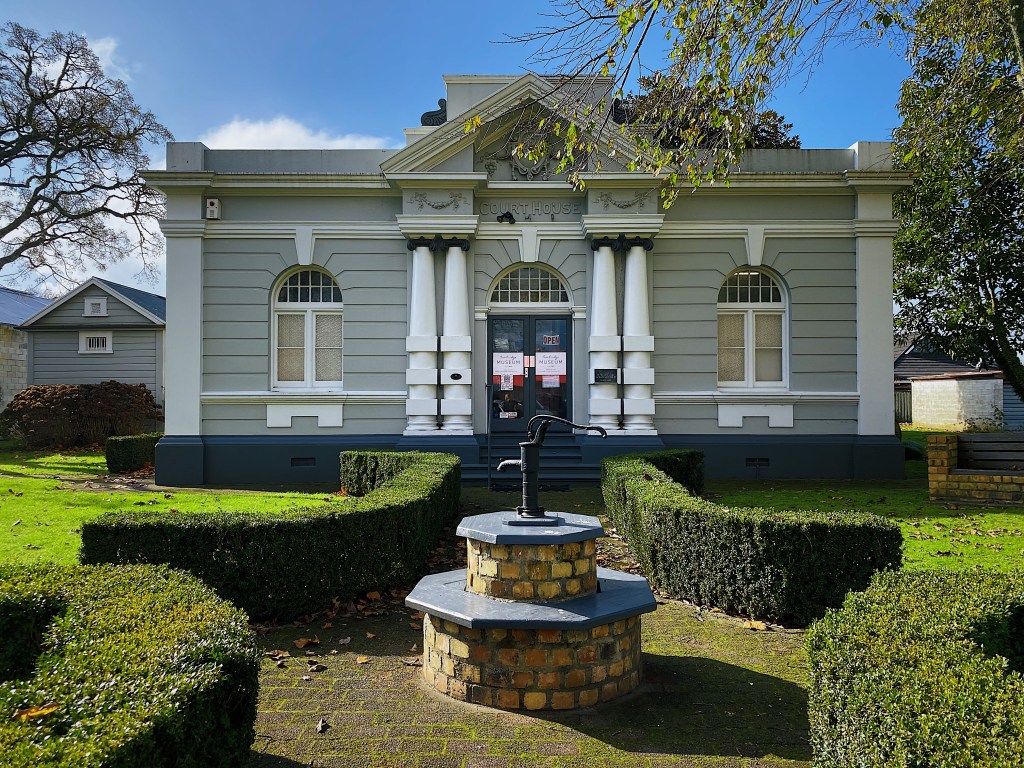
Then it was back across the river to Cambridge to explore the cafes and shops of the main town. Here are some of the local buildings.
We walked up the main Street.
And passed by the town’s iconic clock tower.
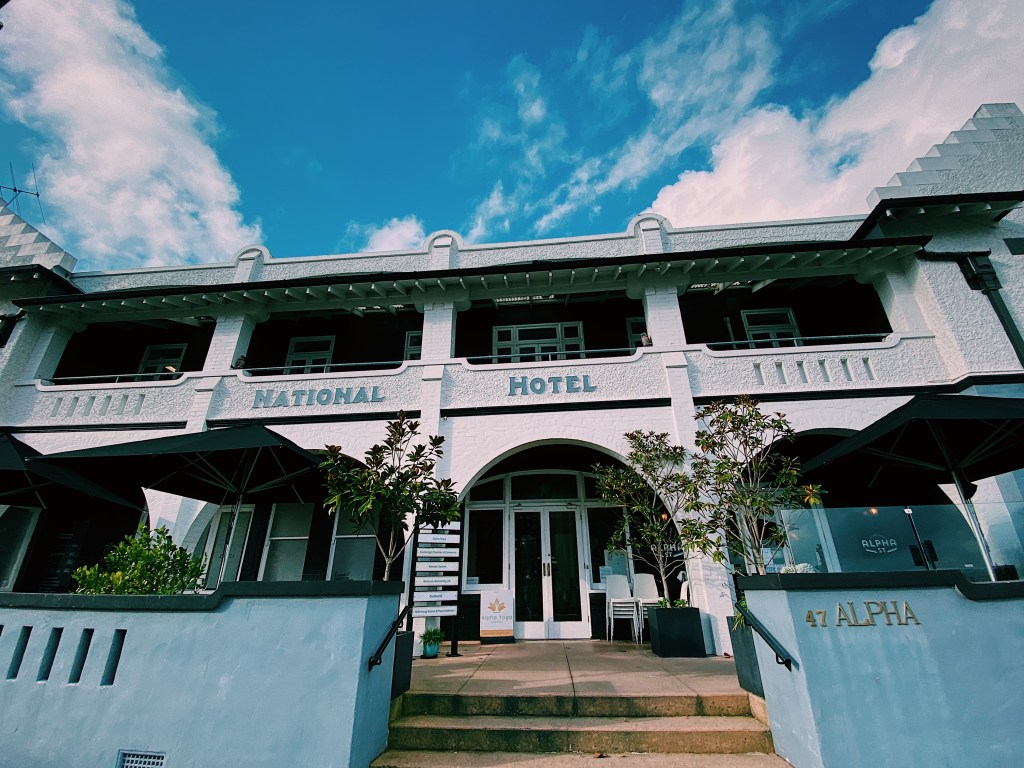
Across from the clock tower is the National Hotel. Mal’s best friend’s father was the proprietor of what was then a bustling pub. He can remember staying over in his friend’s room which was right above the public bar and going to sleep to the sound of clinking glasses and drunken singing. In a sign of the times, the hotel is now the home of a fancy restaurant.
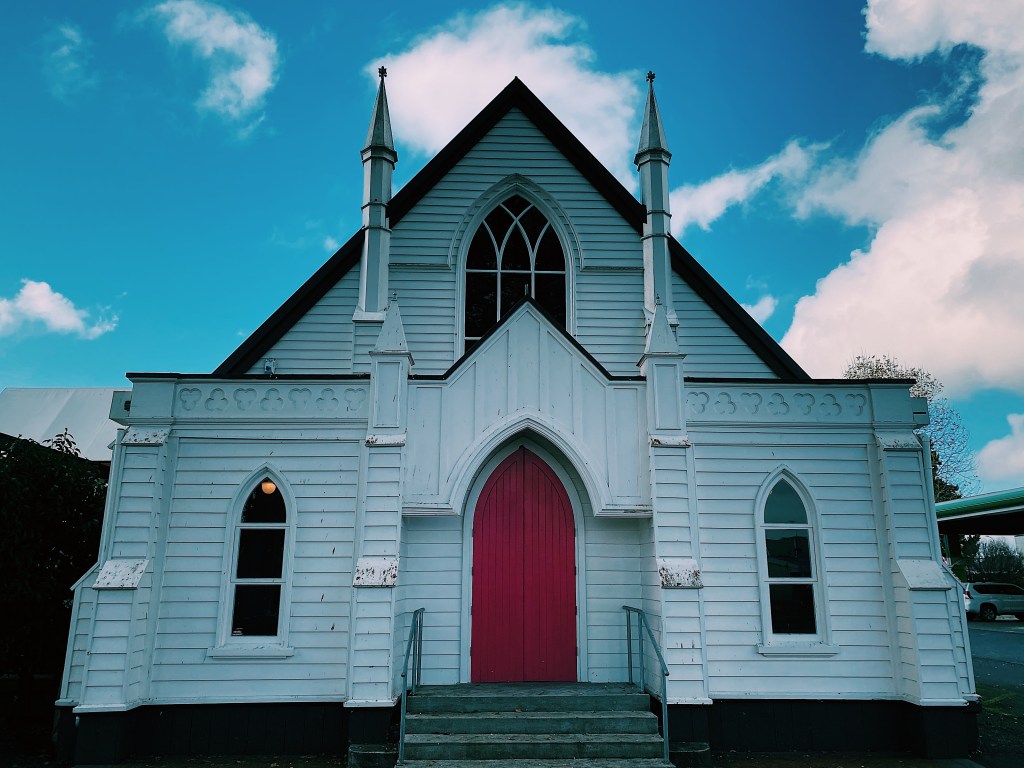
This is the church where Mal’s brother, Russ, and sister-in-law, Di, got married. In another sign of the times, it is now an upmarket restaurant and bar.
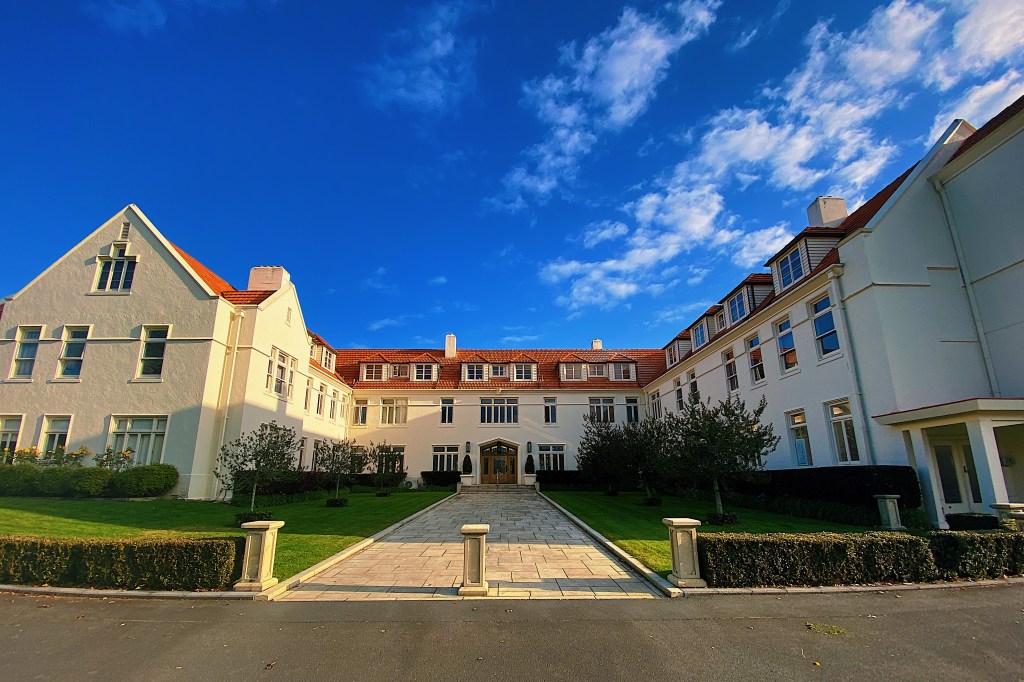
On our way back to Auckland, we dropped in at St. Peter’s School just outside Cambridge, where Mal spent three unhappy years. It was a private boy’s school that appeared to base itself on schools in Dickens time. Lots of caning, bullying, sitting in Chapel and studying of Latin. When he finally transferred to local Cambridge High School, it was as if a deep gloom had lifted. St. Peter’s is now a co-ed school and based on the look of students we saw, a much happier place.
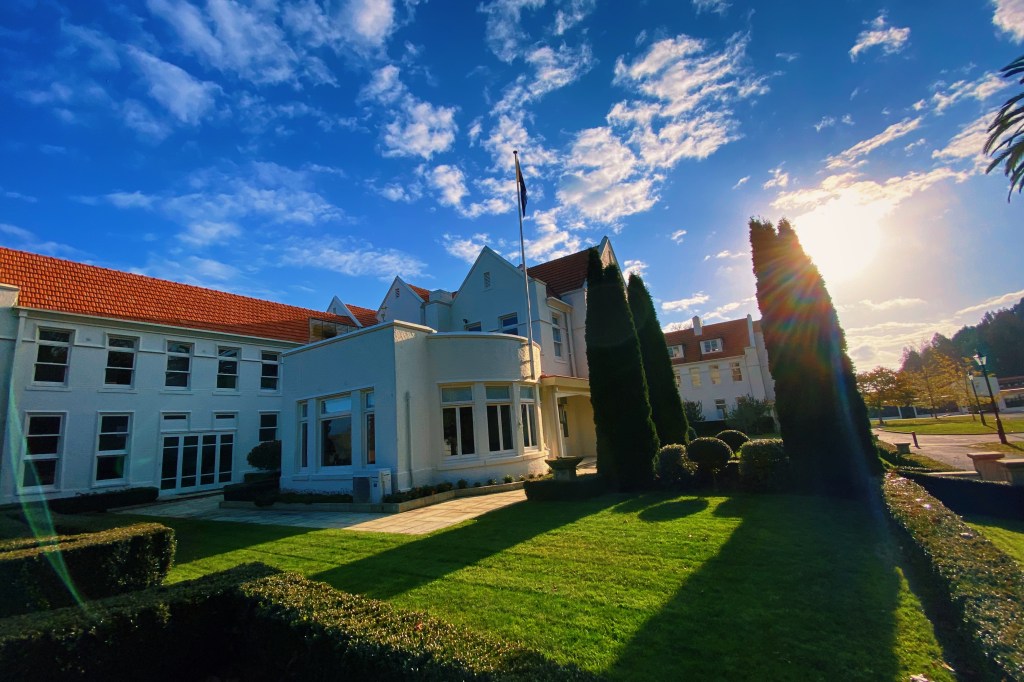
This is the school chapel where Mal spent many bored hours. More happily, Mal’s sister, Christine, and brother-in-law, Bill, were married there
Our good friends, Louise and Jack, live at the end of the Whangaparoa peninsula (in Maori whanga means bay and paroa means whale), just north of Auckland. Their house sits on a hillside with incredible views over Okoromai Bay toward Rangitoto.
After a scrumptious lunch, we went for a walk on a windy and cool day.
Pipi, Jack and Louise
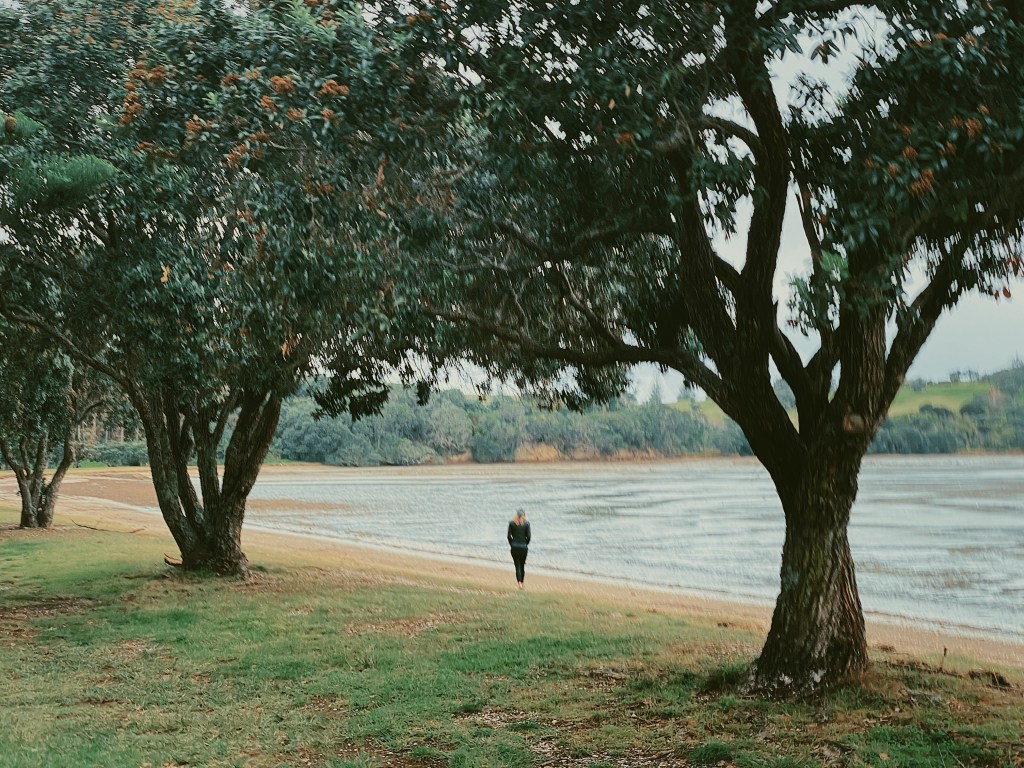
We started off walking along the bay
And then crossed the wetlands to Army Bay on the other side of the peninsula.
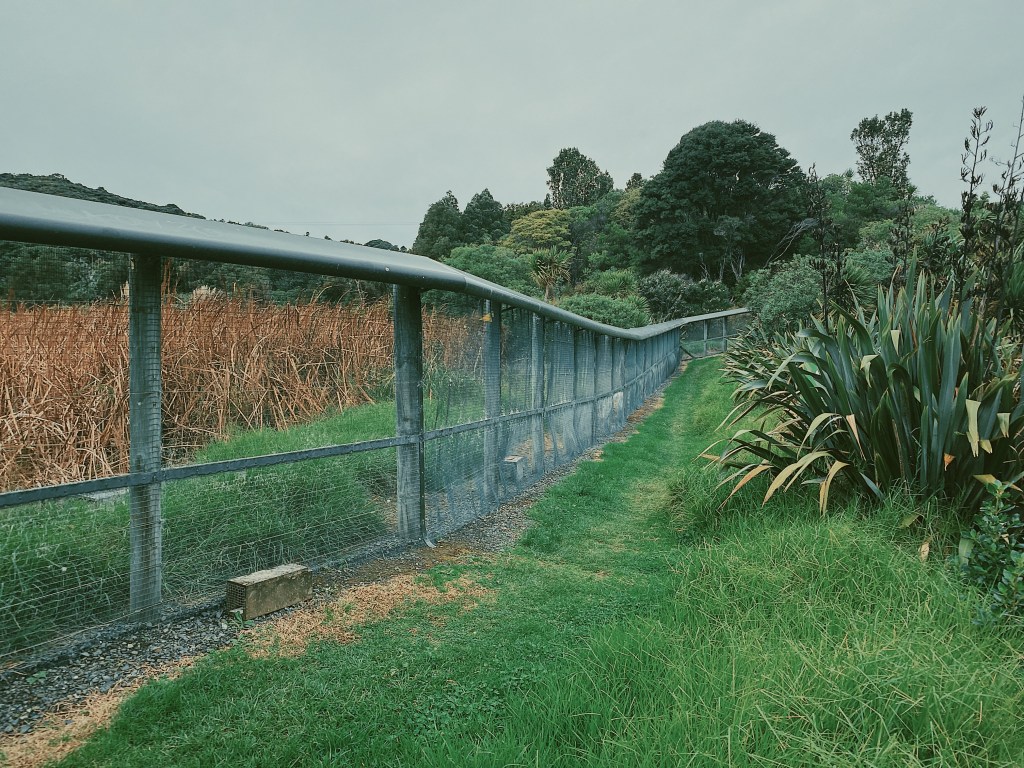
At the end of the peninsula is the Shakespear Regional Park bird sanctuary and we passed by the fence that crosses the peninsula, protecting the birds from predators.
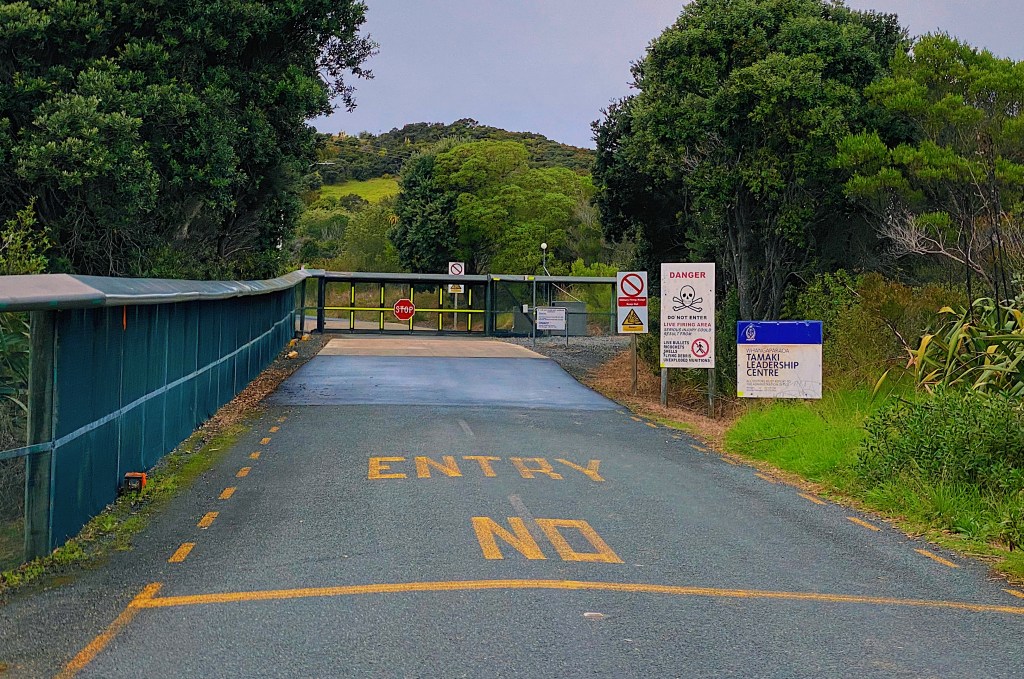
Army Bay gets its name from the fact that the New Zealand Defence Forces use the area adjoining the bay for various purposes, including testing their weapons. Recently, the area was used to quarantine New Zealanders and Pacific Islanders evacuated from Wuhan during the Covid pandemic in February 2020.
Army Bay
Walking back across the peninsula, we passed through a small manuka forest.
Manuka honey has become popular worldwide because of its medicinal quantities. Here is the small flower responsible.
Manuka flower
We also passed by some other beautiful native plants and trees.
Finally, we came full circle, arriving back where we started at Okoromai Bay.
Today’s walk was a rather nostalgic one for Mal. First, we visited K.S. Thompson Ltd., the picture framing business owned by Mal’s sister, Christine, and brother-in-law, Bill. Along with a number of our friends, we both worked there on a number of occasions when we were at university. So if you are in Auckland and need some framing done. Go no further.
Our niece, Debbie, hard at work.While her Boss, Bill, fools around
Then we walked by Bill and Christine’s first house in Auckland where Mal lived for a few months when he was starting high school. Bill said it cost him just over thirty thousand dollars when they bought it in the seventies. Recently, it sold for over two million.
We also passed the small apartment where Mal’s grandparents lived when he was small.
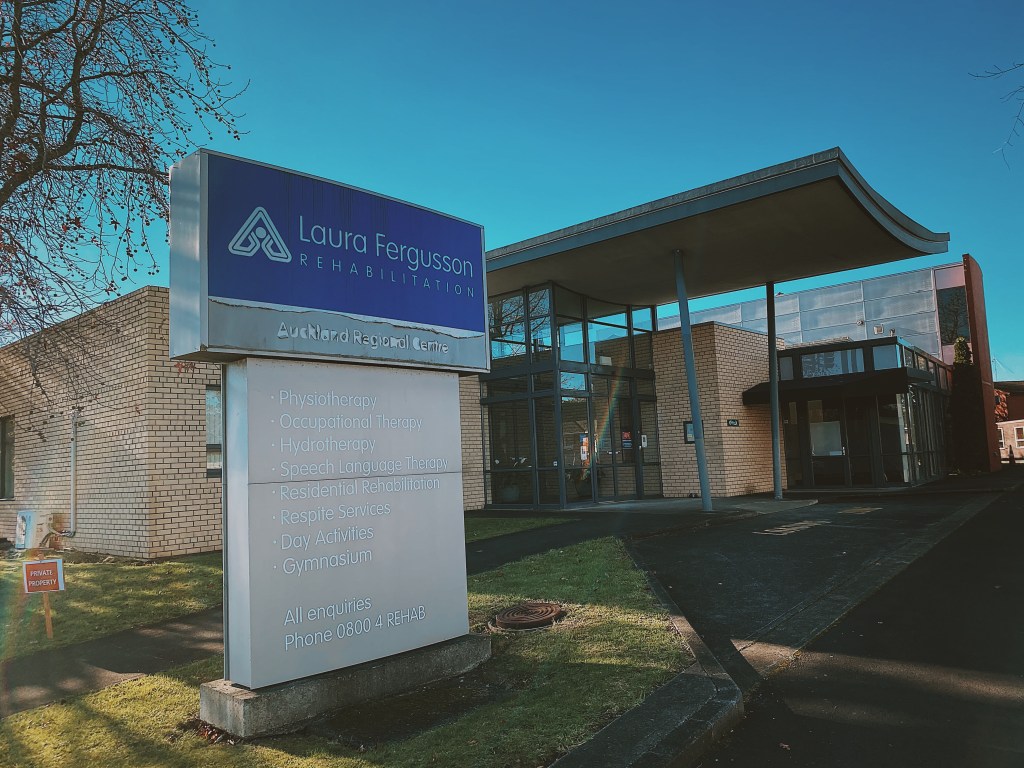
Mal spent one summer while he was at university, working at the Laura Ferguson Trust Rehabilitation Center. The center offered accommodation to the severely physically disabled. With a couple of friends, Mal painted and wallpapered the residents’ units. He still remembers its as one of his most satisfying jobs. Unfortunately, the Center closed controversially recently, supposedly due to lack of funding. A petition has started to re-open the facility. We hope it succeeds.
We also managed to summit yet another of Auckland’s volcanos. Mount Saint John (Te Kopuke) is smaller than the other volcanoes that we have climbed but it is one of the most beautiful. There are trees around the top and in the crater and plenty of spots to sit and enjoy the view.
Looking down into the craterLooking toward nearby Mt. Eden
Marcus and Vasu picked us up and we drove around the harbour to Petone. We walked along Jackson Street, lined with shops and cafes. There were even shops catering directly to the Dutch and British.
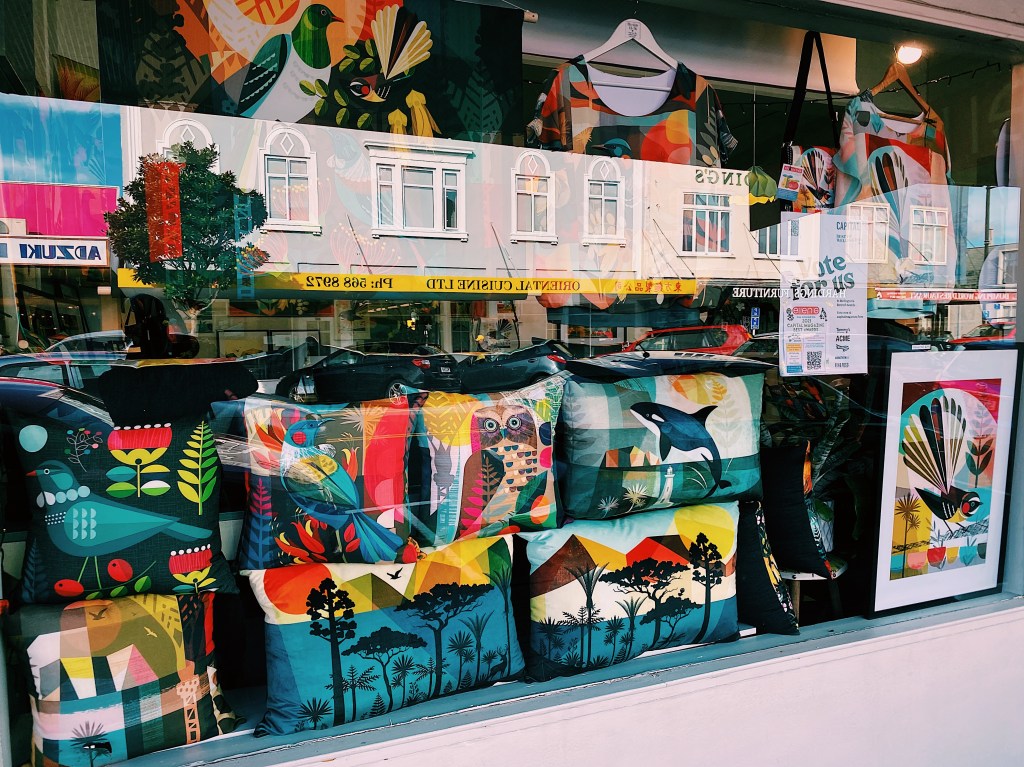
Some of the stores were more colorful than others.
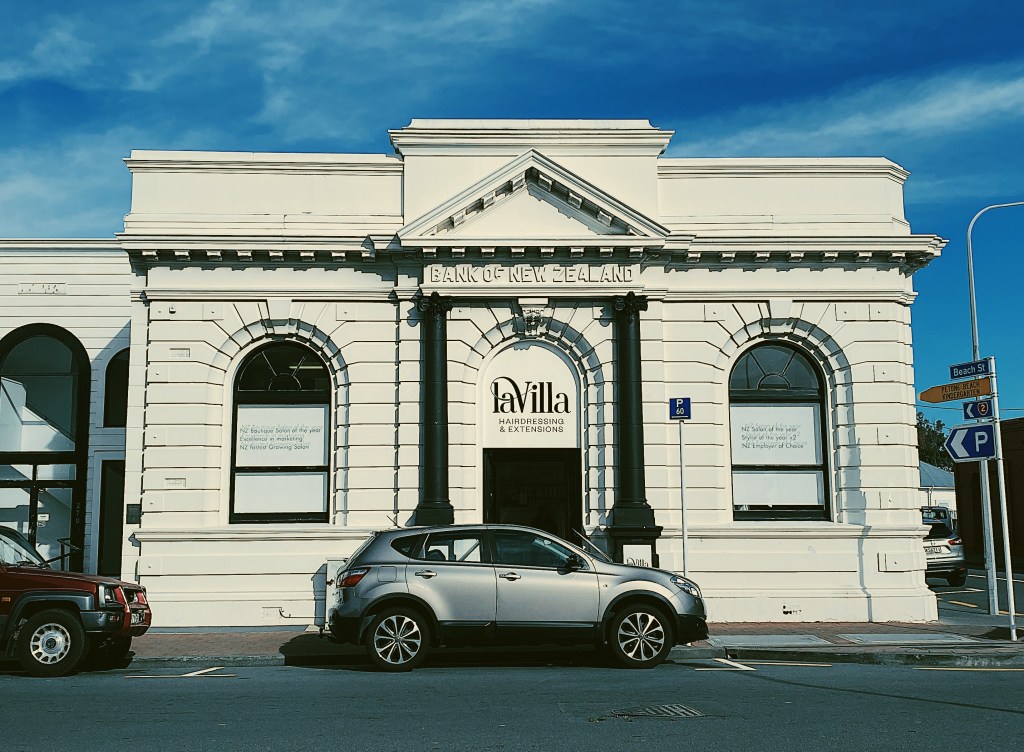
We have previously mentioned how old banks are often repurposed into restaurants and cafes. This is the first one we have seen being turned into a salon.
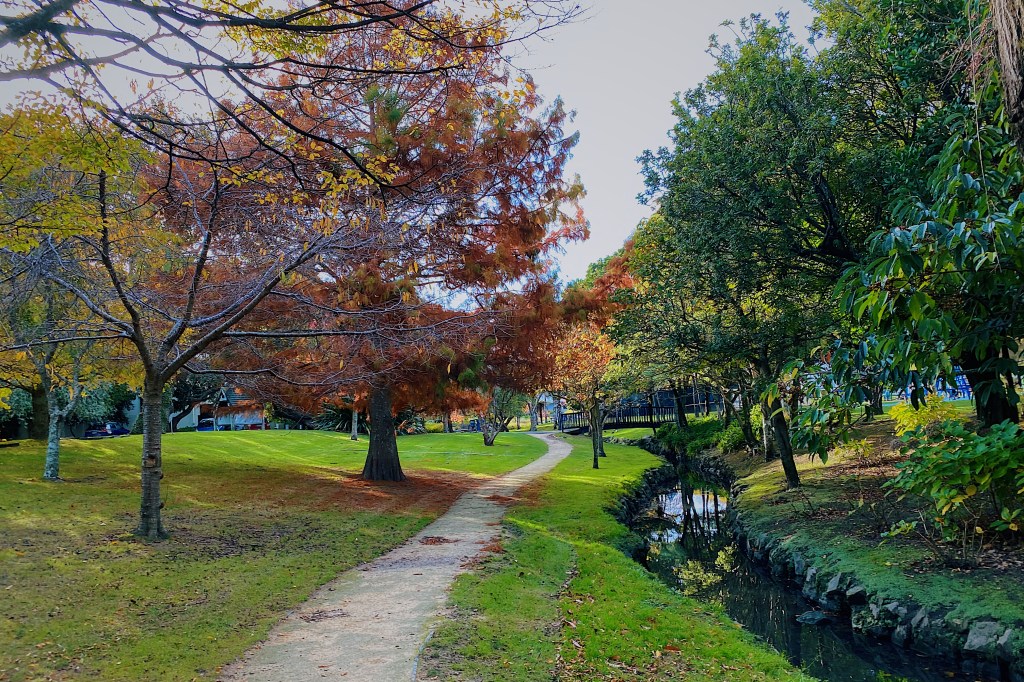
We then drove on to nearby Lower Hutt where we went for a walk through a pretty park on a perfect Autumn day.
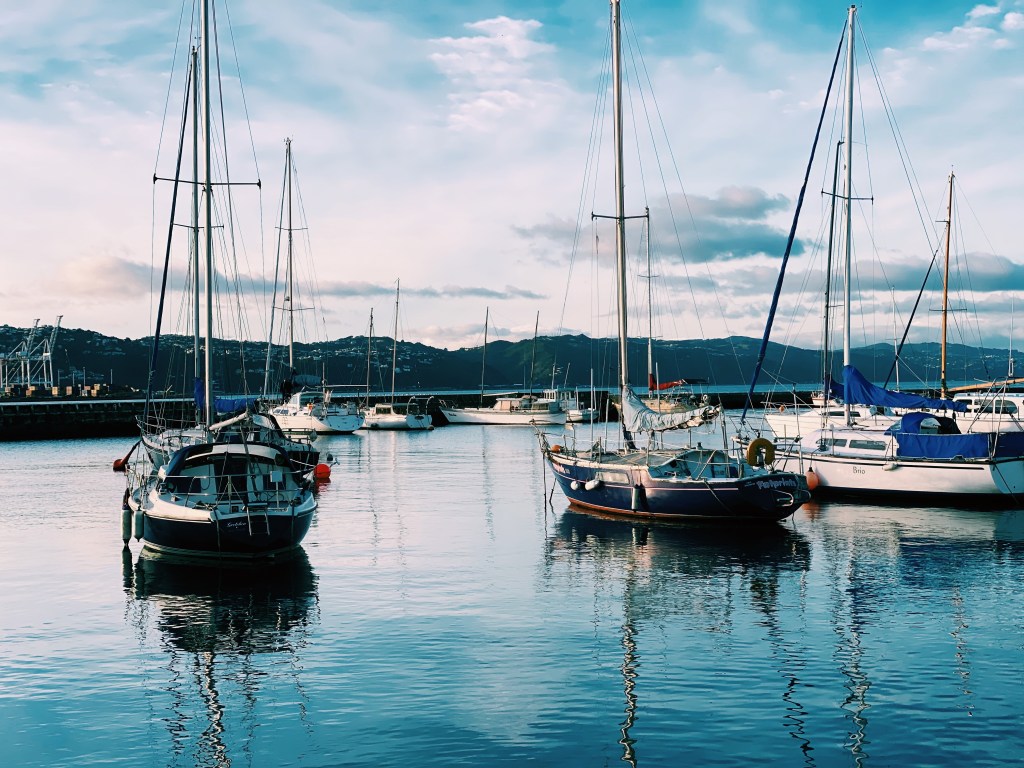
In the late afternoon, Marcus and Vasu dropped us off back downtown where we went for a walk around Oriental Parade. The harbour was a shining mirror on a still day in what is normally a windy city.
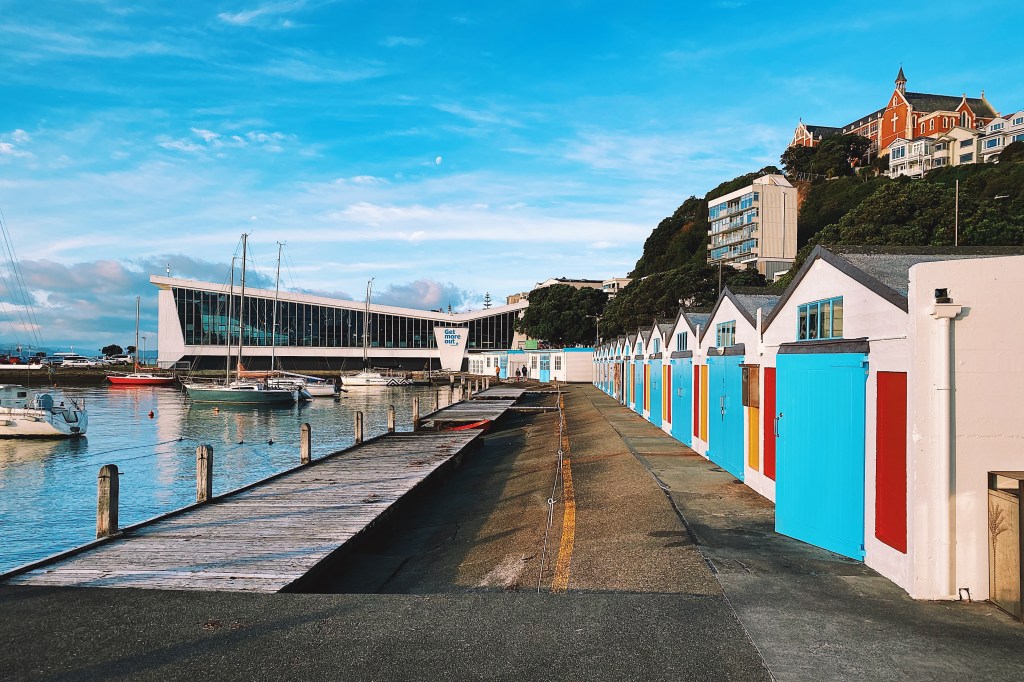
We walked by the iconic boat houses with their colorful doors and the Freyberg indoor Pool. Opened in 1963, it is named for Bernard Freyberg who was a very very impressive person. He was a strong swimmer, winning the New Zealand 100 yard swimming championship in 1906 and 1910, but he is most famous as a soldier. During World War I, he served at Gallipoli and on the Western Front where he won the Victoria Cross and three Distinguished Service Orders, making him the British Empire’s most highly decorated soldier. Churchill nicknamed him “the Salamander” due to his ability to pass through fire unharmed. Actually, he didn’t go unharmed. During the War he was wounded many times, sometimes seriously. According to those serving with him, hardly a part of his body was without scars.
During the Second World War, he commanded the New Zealand forces in the Battle of Crete, the North African Campaign and the Italian Campaign. He wasn’t the type of General to lead from the rear. He was wounded by an exploding German shell in 1942 but soon returned to the Battlefield. Then in 1944 he was seriously injured in an aircraft accident but after six weeks in hospital returned to action where he led the Spring 1945 offensive in Italy.
Freyberg had been born in England before moving to New Zealand with his parents as a two year old. After serving as Governor General in New Zealand after the war, he returned to England where he often sat on the House of Lords before dying in 1963, the same year that the pool opened. We highly recommend doing your own reading on Freyberg. When you read about his exploits it is almost incomprehensible that he survived the two wars and lived to be 74 years old.
Freyberg Pool and boat sheds.
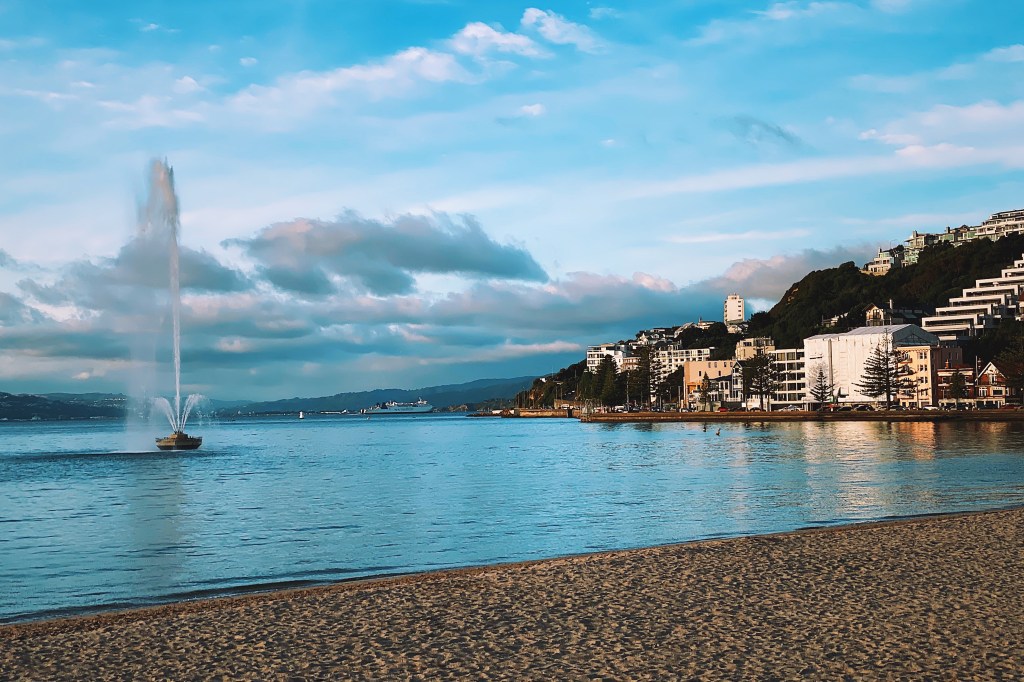
Just around from the pool is Oriental Bay, perhaps the city’s most affluent suburb.
In our last post we were climbing Mt. Wellington. In this post we are actually in Wellington, New Zealand’s capital. Arriving after a short flight from Auckland, we went for a stroll along the streets that we walked over thirty years ago when we were both fresh out of university and working for the New Zealand Government. With a population of just over 200,000, Wellington is much smaller than Auckland. But with its narrow streets of tall buildings nestled between the hills and the harbour, in some ways it seems more of a city than Auckland.
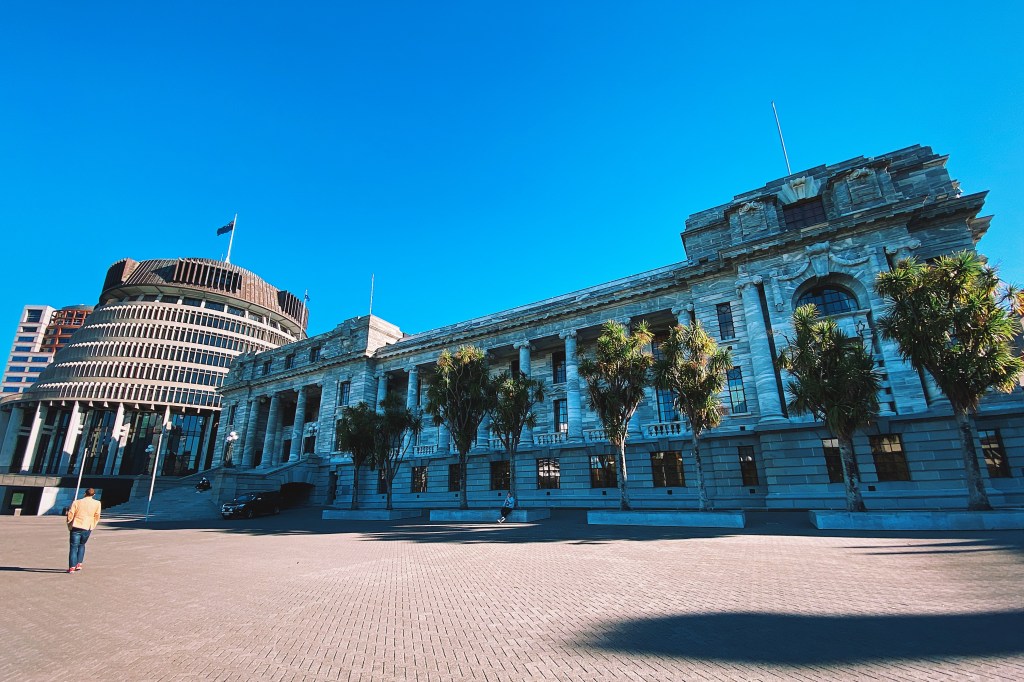
On the next day we were joined by our dear friends (and Wellington residents) Marcus and Vasu for a walk by Parliament and along the waterfront. The New Zealand Parliament buildings consist of the Edwardian neoclassical Parliament House, the executive wing (known commonly, for readily apparent reasons, as the Beehive) and the Parliamentary Library.
The Beehive and Parliament BuildingThe Parliamentary Library
Sitting directly behind Parliament is the Bowen State Building where Mal used to work at the Ministry of Commerce. It has been extensively renovated and is unrecognizable from the building where he worked. It is now the nerve center of the country’s security and defense systems with its primary tenant being the New Zealand Defence Force.
Bowen State Building
Walking by this side entrance to the Beehive, Mal was reminded of the time that he delivered a report to the Deputy Prime Minister. He remembers the security guard just inside the entrance with his feet up on a desk, waving him through as he barely looked up from the book he was reading, which happened to be ‘The Communist Manifesto’. Then Mal, accidentally, took a wrong turn and found himself alone in the Deputy Prime Minister’s personal office. He was still determining what to do when the Deputy PM, himself, walked in. He, understandably, wondered what this stranger was doing standing in his office but, surprisingly, didn’t seem overly concerned. Times were a lot more innocent back then.
Beehive entrance
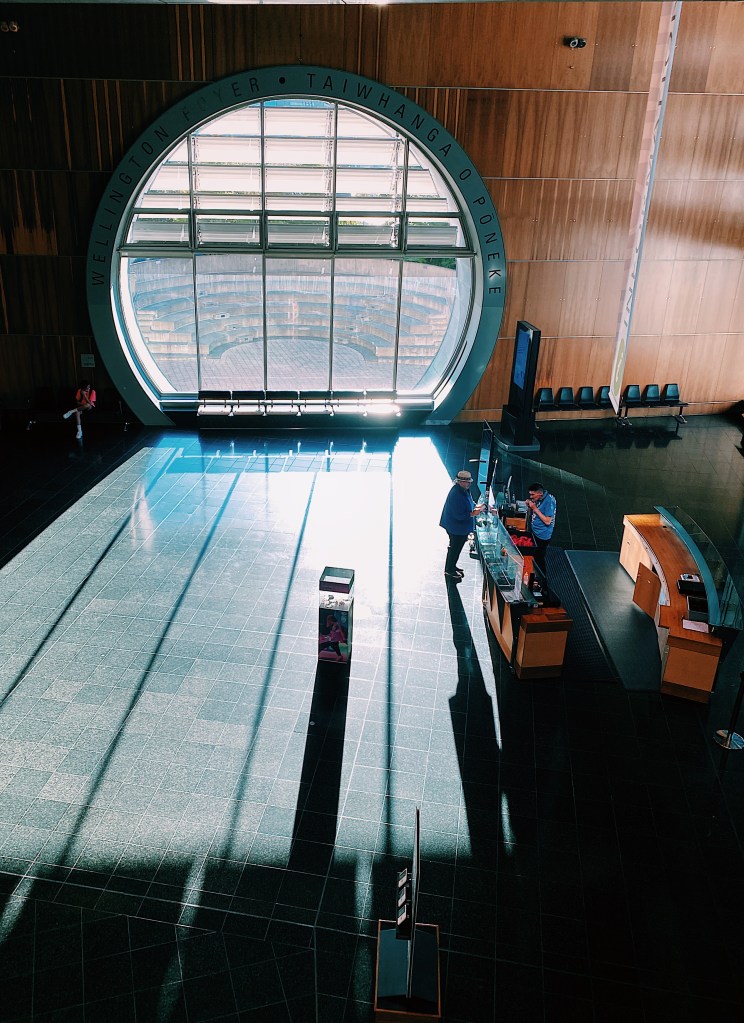
From Parliament, we walked along the Wellington waterfront toward the Museum of New Zealand, commonly called Te Papa (Maori for ‘our place’). Its full name is actually Te Papa Tongarewa, meaning ‘Container of Treasures’. Opened in 1998, it is an impressive and very interactive museum.
Te PapaInside the Museum
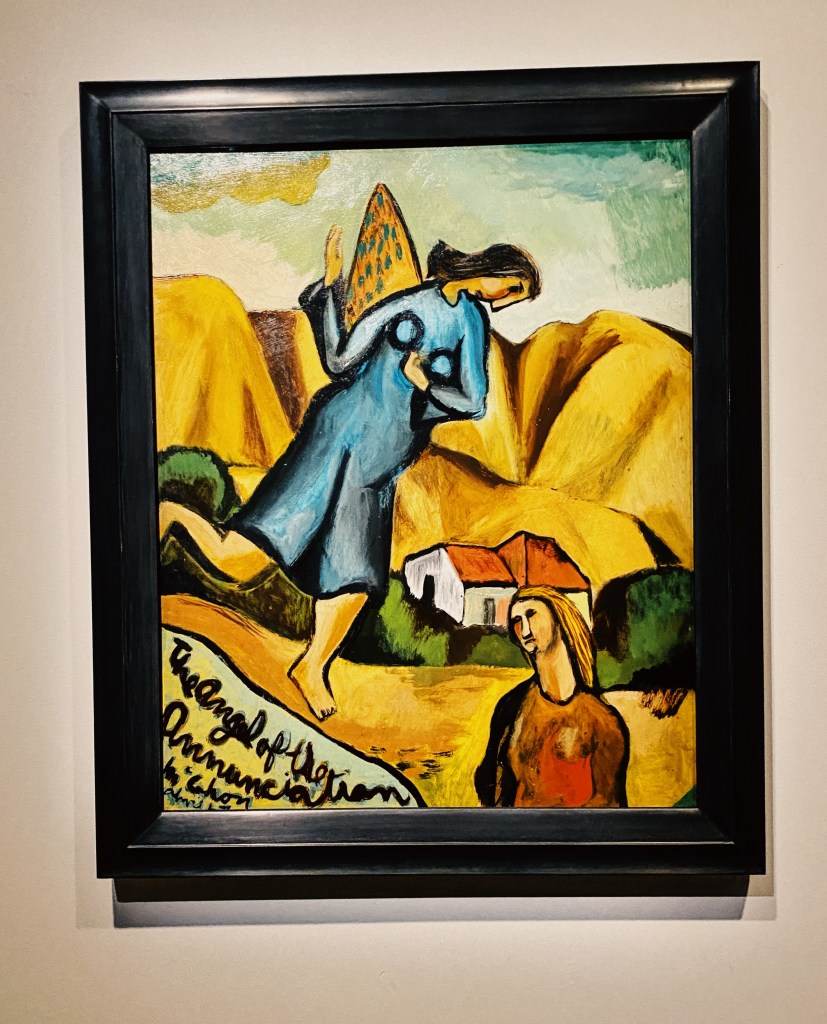
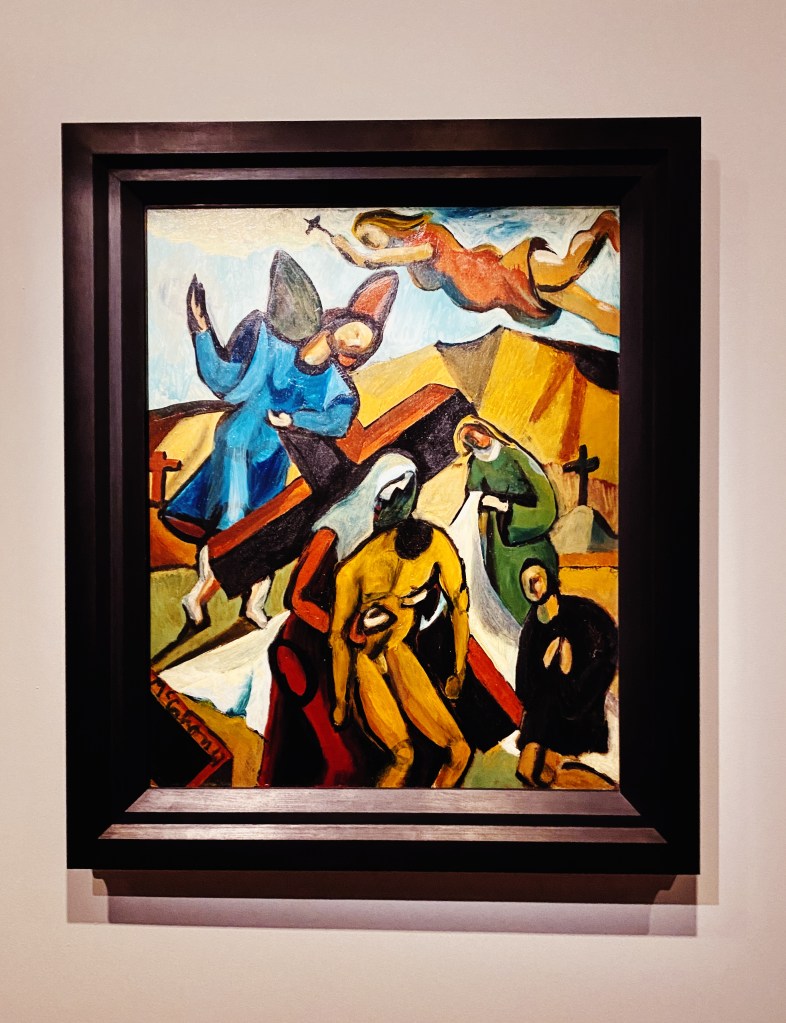
If you visit Te Papa, make sure you get to the top floor where they have a collection of New Zealand art, including a gallery dedicated to the works of Colin McCahon. Living from 1919 to 1987, McCahon is regarded as New Zealand’s most important modern artist. Although he is most well known for his landscapes, many of the paintings also have religious themes. A prime example are the three paintings hanging in Te Papa that depict scenes from the Bible in a New Zealand landscape. Originally shown in 1948, audiences were shocked by the flat way that the figures were painted, the thick black outlines, and the use of text. McCahon, who wanted his work to speak directly and clearly to its audience, was influenced by sign writers and comic strips. The speech bubble in ‘King of the Jews’ was borrowed from a soap advertisement.
The Angel of the AnnunciationChrist taken from the CrossThe King of the Jews
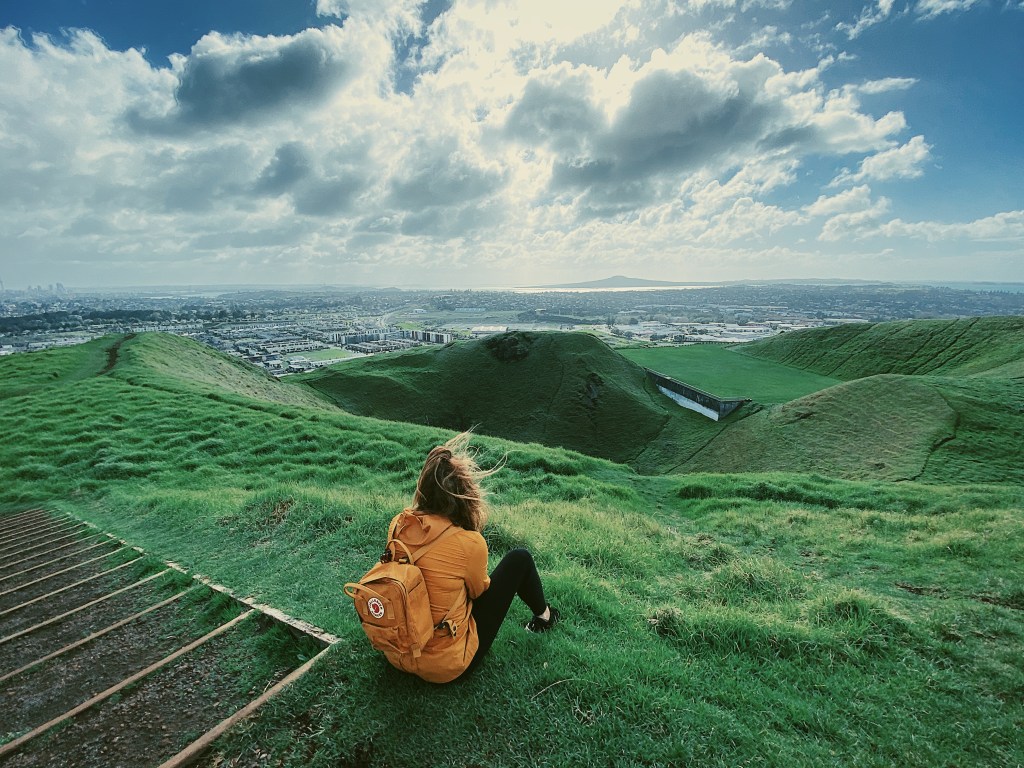
We have been on a quest to summit all of the great peaks of Auckland. So far we have climbed One Tree Hill (Maungakiekie), Mt. Eden (Maungawhau), Mt. Hobson (Ohinerau) and North Head (Maungauika). Today, we climbed Mt. Wellington (Maungarei). It is the youngest onshore volcano of the Auckland region, having formed just 10,000 years ago.
Looking over the crater toward Rangitoto
From the top of Mt. Wellington, it is easy to see just how close the west and east coasts of the North Island of New Zealand come to meeting in Auckland. At the bottom left of the following photo you can see inlets from the Waitemata Harbour that lies on the east side of the island on the Pacific Ocean. At the top right just below the horizon you can see part of the Manukau Harbour that is on the west side of the island on the Tasman Sea. It made us wonder why a canal has never been built to join the two. It couldn’t be more than a mile or so between them.
Previously, during our Auckland walks we have come across quarries that have been turned into playing fields and gardens. Today we came across a whole neighborhood. When we lived in Auckland in the eighties, Stonefields was a large discontinued quarry, infamous for its packs of wild dogs. But over the last twenty of so years, the quarry has been repurposed as part of a massive development and is now home to about 5,000 people.
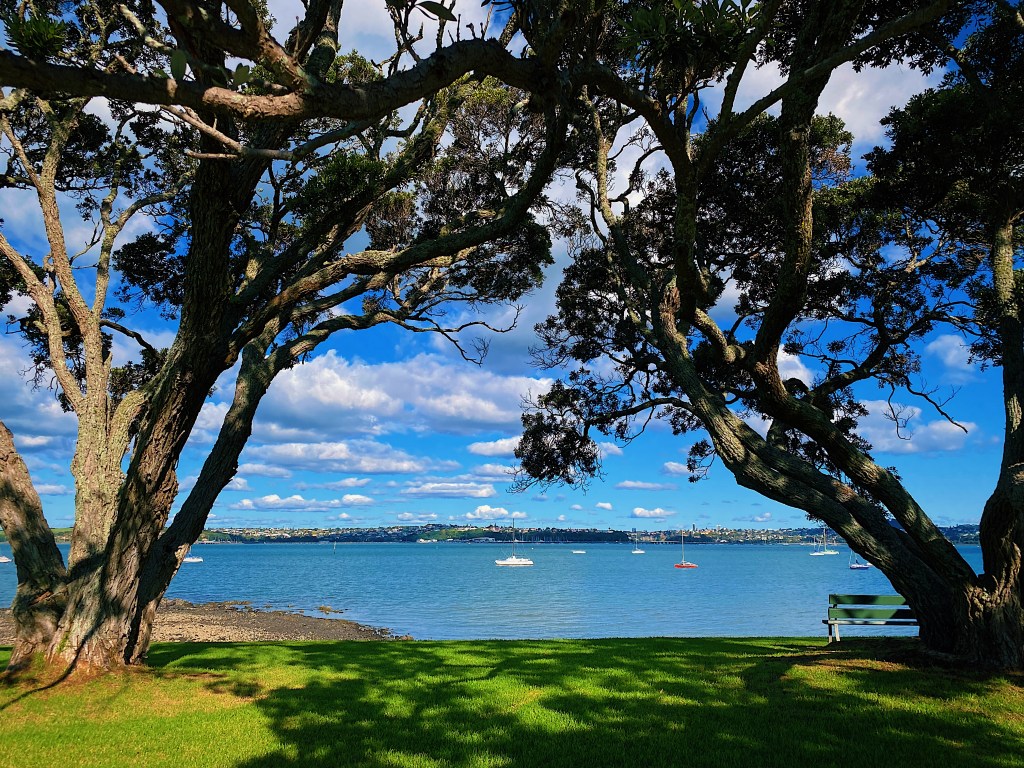
From the hustle and bustle of downtown Auckland, it’s just a short ferry ride across the harbour to the laid-back suburb of Devonport. There has not been the same amount of development there as in many other parts of Auckland and many of the original villas and bungalows remain. In a way it feels as if you are stepping back in time to the Auckland of last century. It also happens to be the neighborhood where kiwi pop icon, Lorde, was raised.
Leaving downtown Looking back to the city from Devonport Beach
We went for a walk along the coast toward North Head (Maungauika) a volcano that forms a headland with spectacular 360 degree views of the city and harbour.
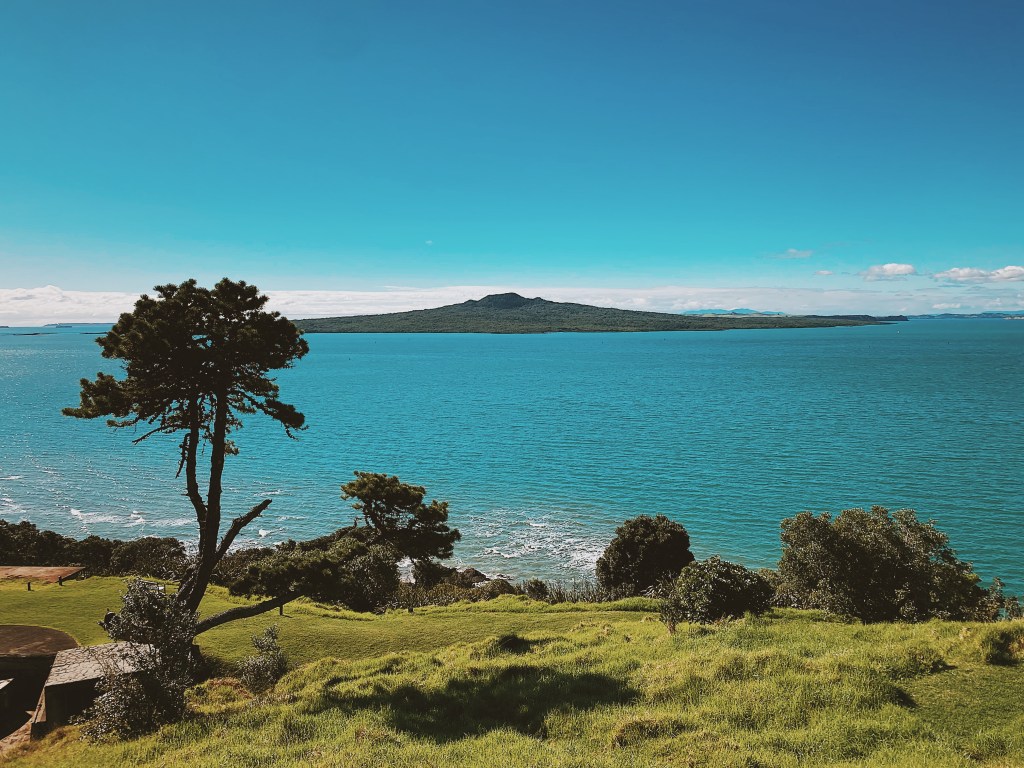
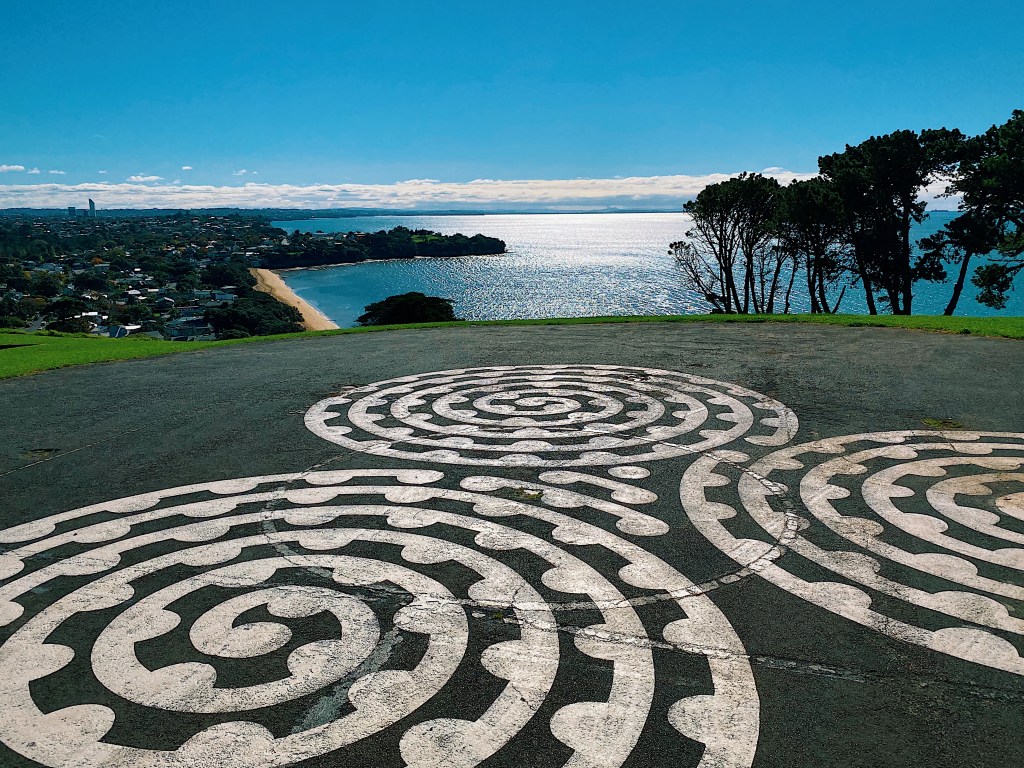
Here are some of the views from the top of North Head.
We liked these painted furls.
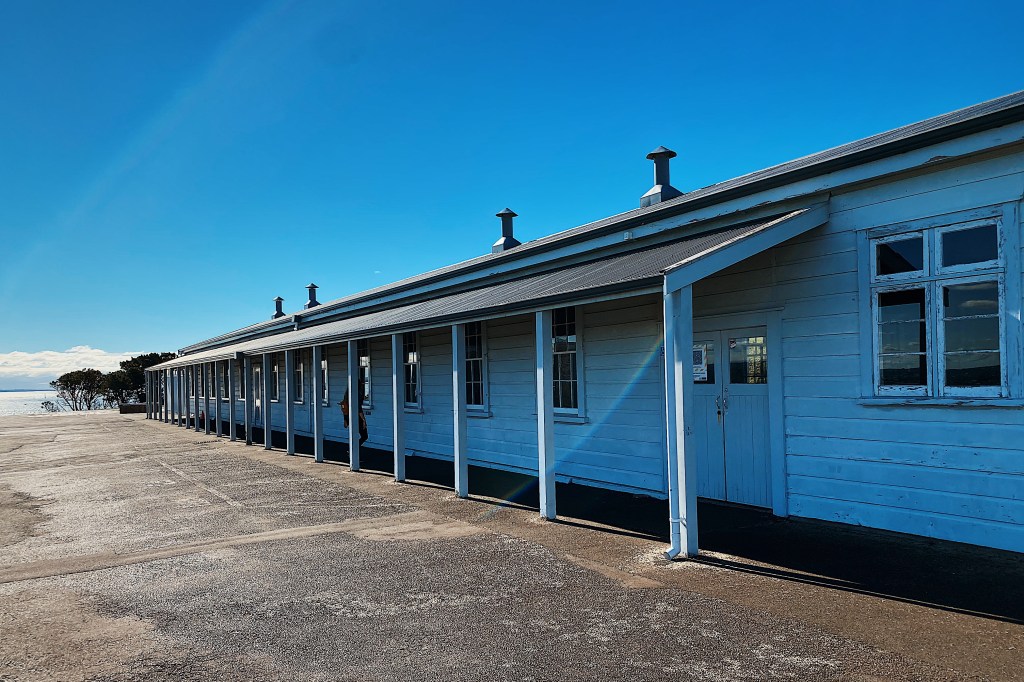
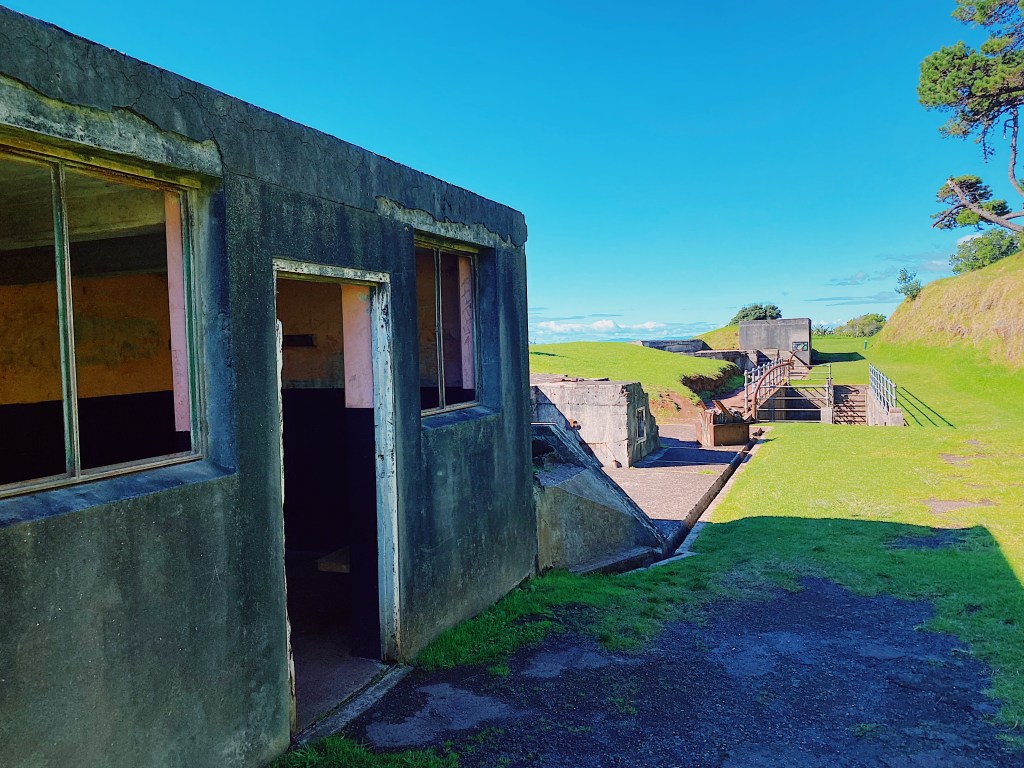
Because of its prime location, North Head has, in the past, been used to provide defenses for the city. There are still remains of some of the fortifications and a wooden barracks at the very top.
These canons were being climbed by some children. Which seemed to us to be a far better use for them than their original purpose.
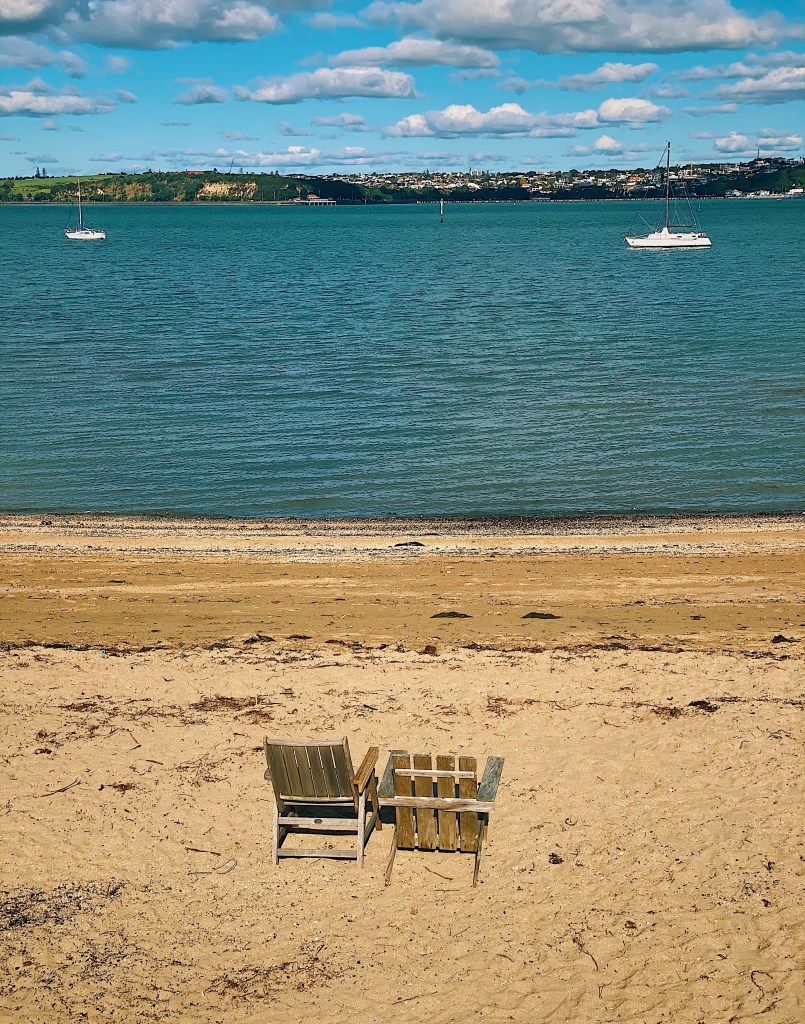
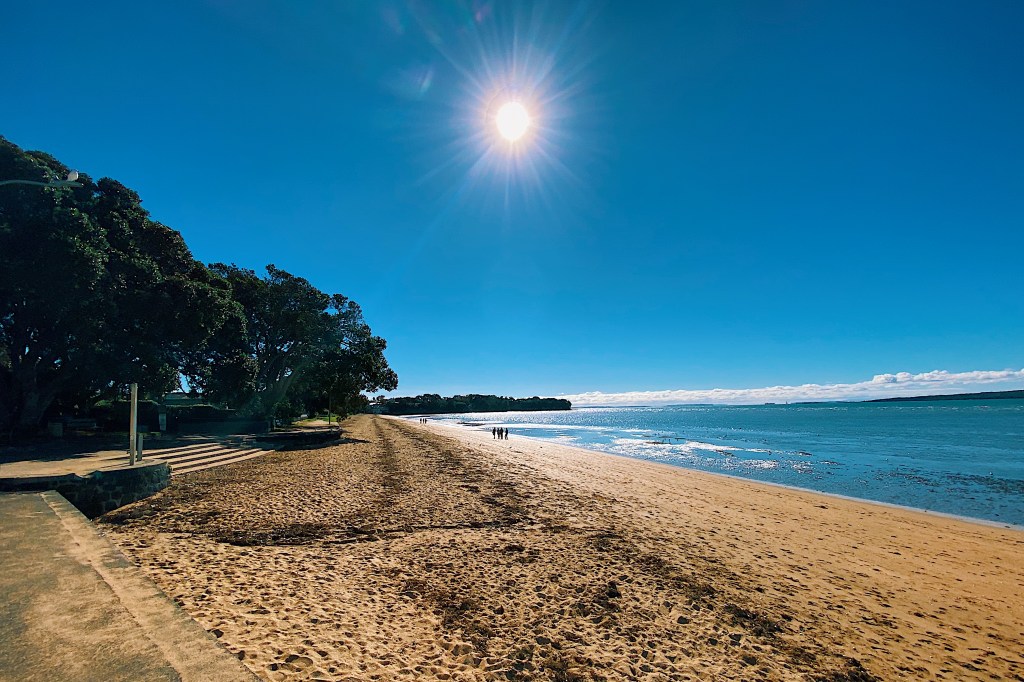
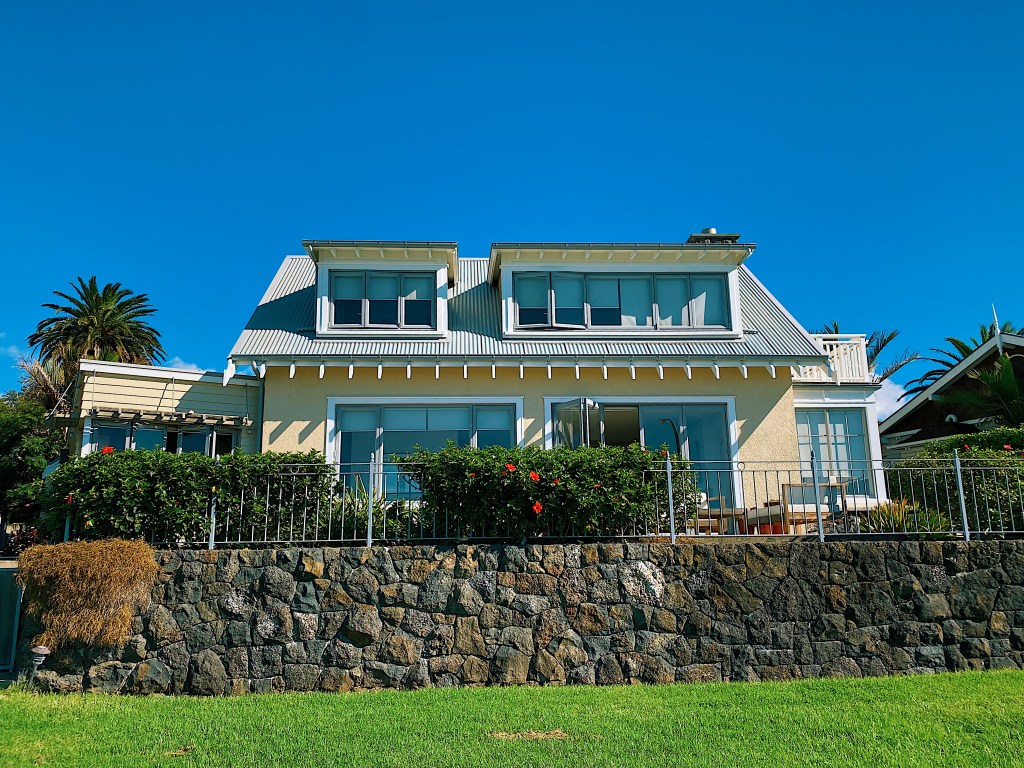
We then walked down to Cheltenham Beach. It is quieter than Auckland’s other beaches and more of the older homes have survived. Even the newer ones were more traditional in design, unlike the glass and concrete modern homes that are common along the other beaches
Cheltenham Beach in the distance
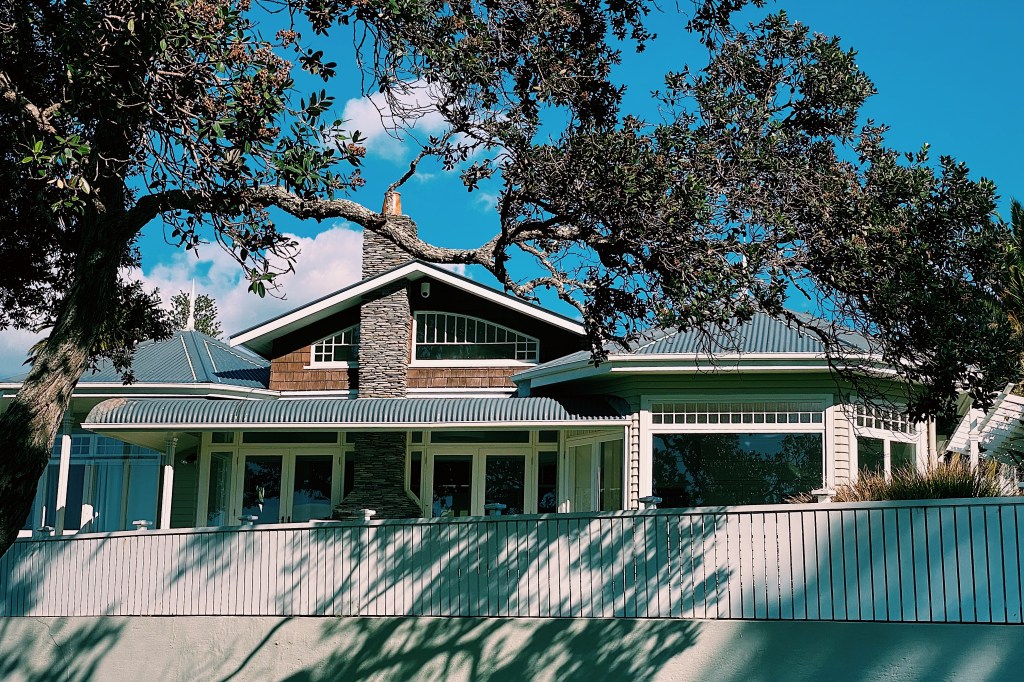
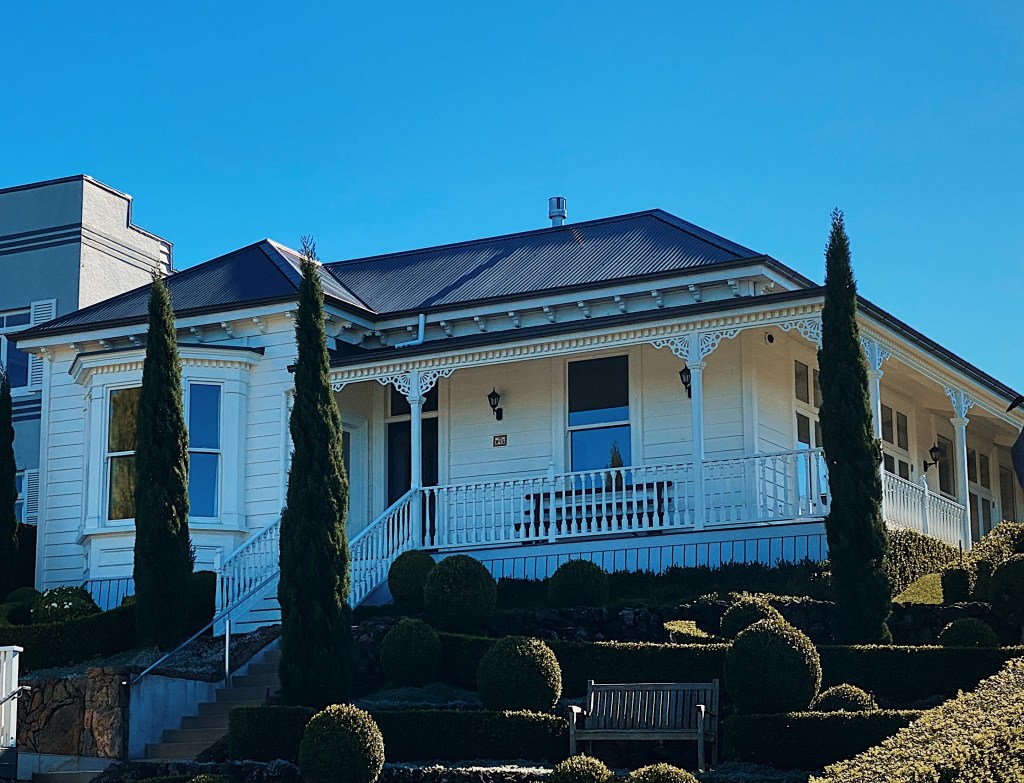
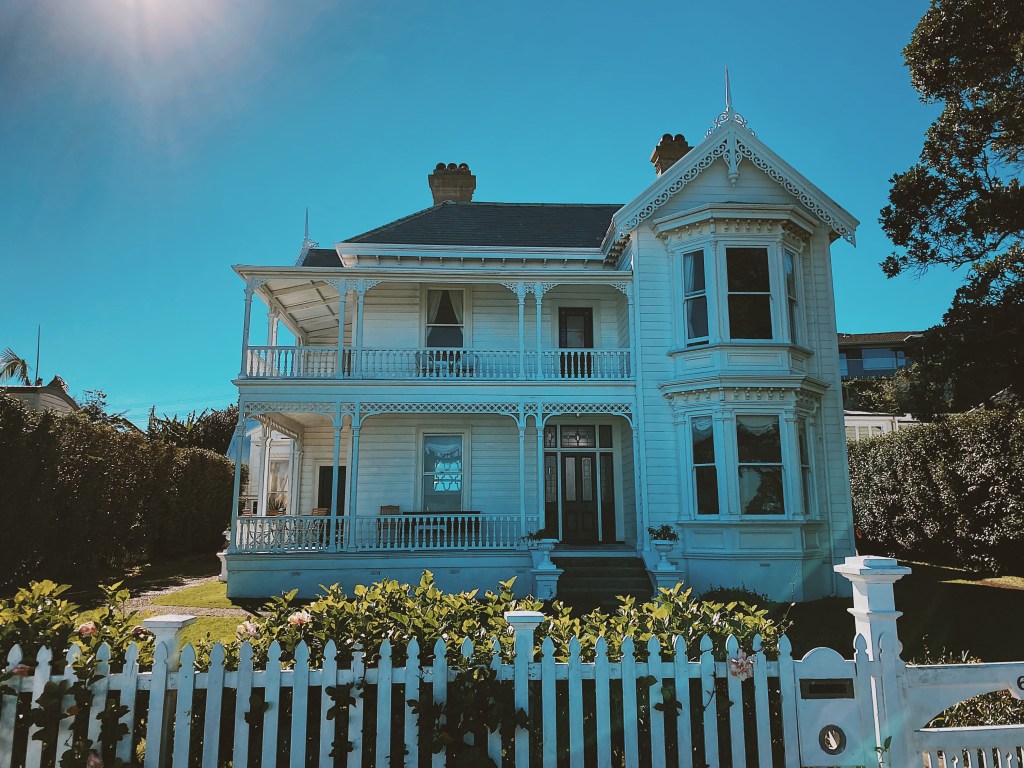
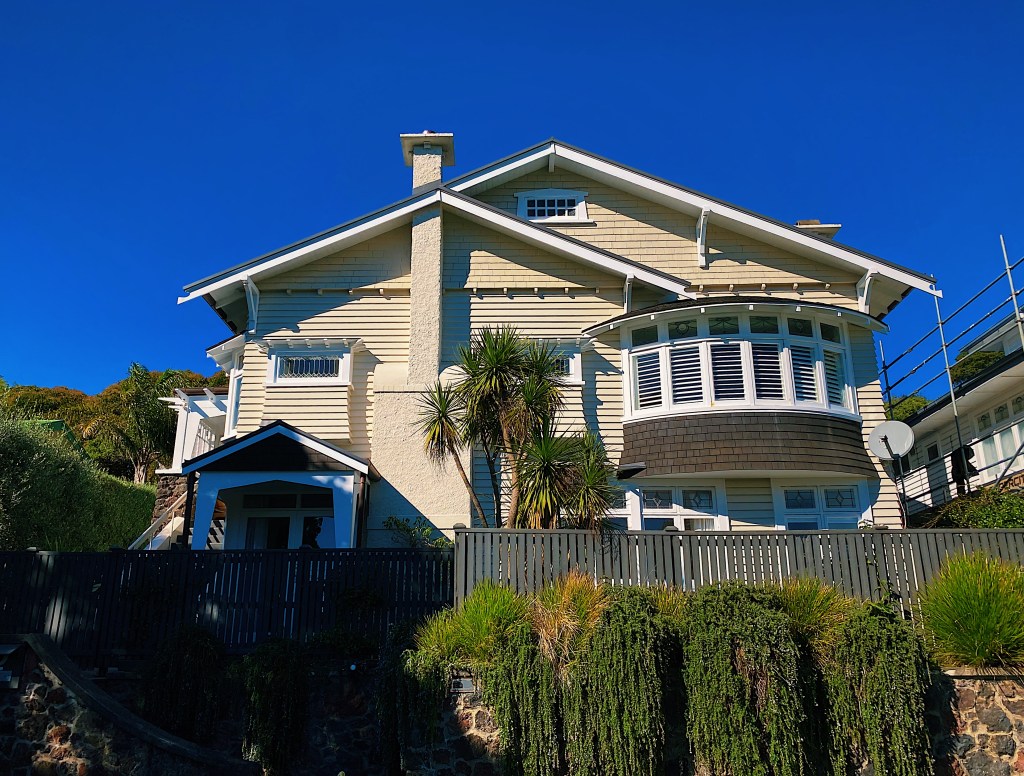
We then walked back through Devonport to the main shopping area by the pier. Here is a sample of the typical houses that we passed along the way.
And here are some of the older buildings in the main shopping area. In New Zealand it is common to see old banks and government buildings repurposed to become restaurants, cafes or bars.
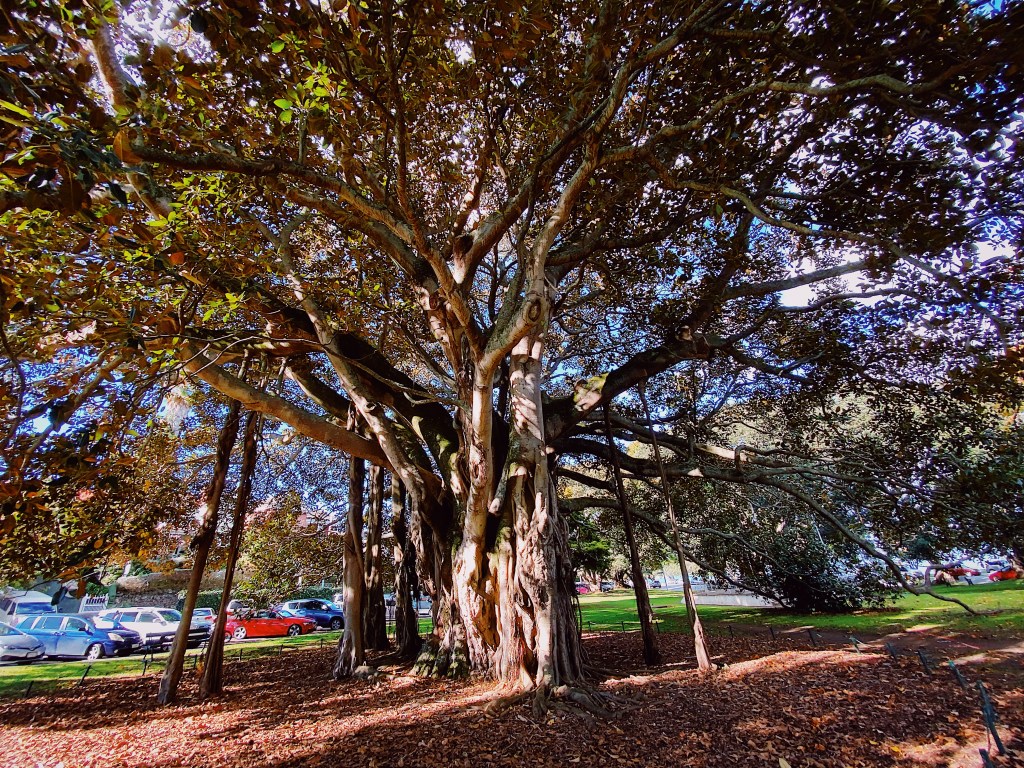
In our last blog post we featured a pohutukawa tree clinging to a wall. Today we came across another unusual tree. This Morton Bay Fig is over 100 years old and is affectionately known as “Old Albert”. Like any old man, it was in need of a little extra support to stay upright. Ingeniously, it appeared to have grown supports extending from its branches down into the ground. It wasn’t something that we had ever seen before.
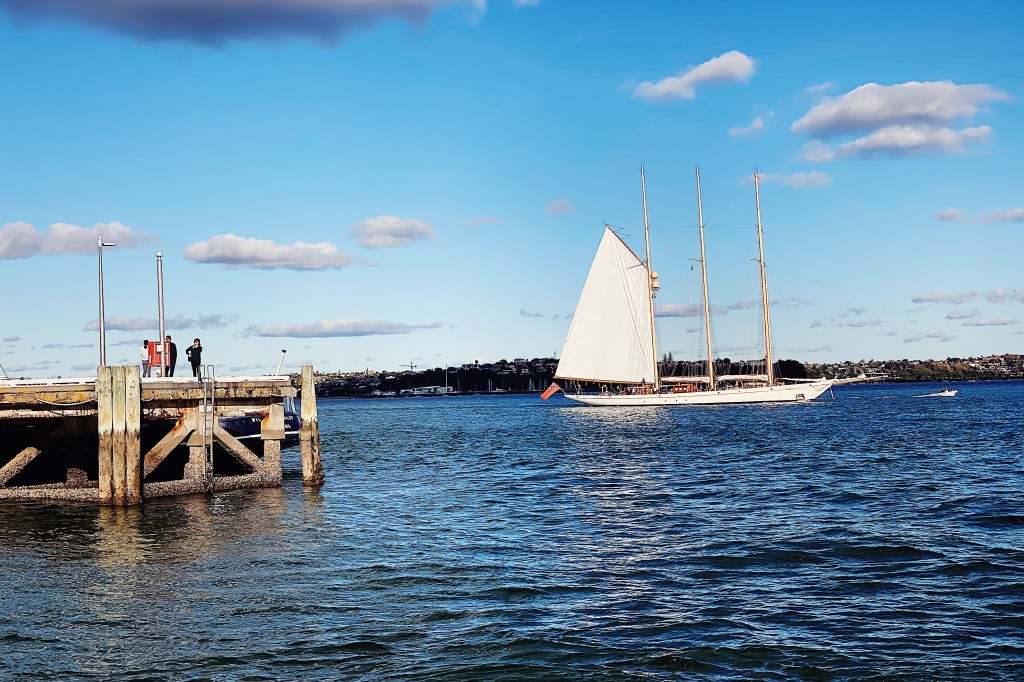
Back at the pier, while waiting for the ferry, we saw this beautiful sailing boat pass by.
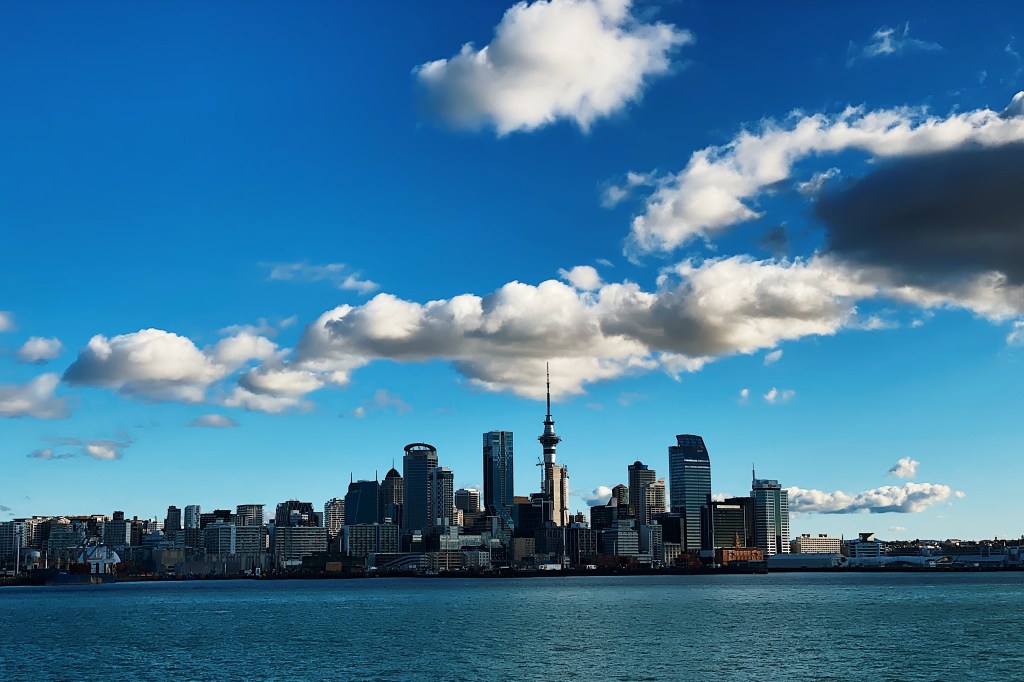
And then it was time to head back to the city, where the sky tower seemed to be blowing clouds into the air.
















































 Mal and Lauren