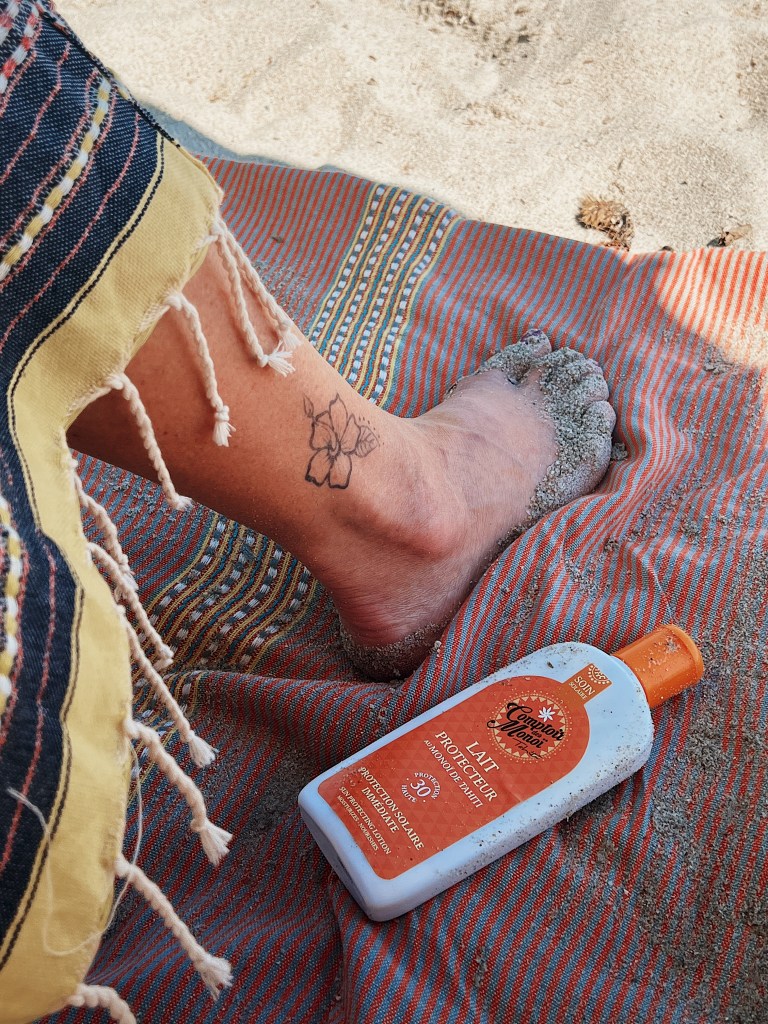
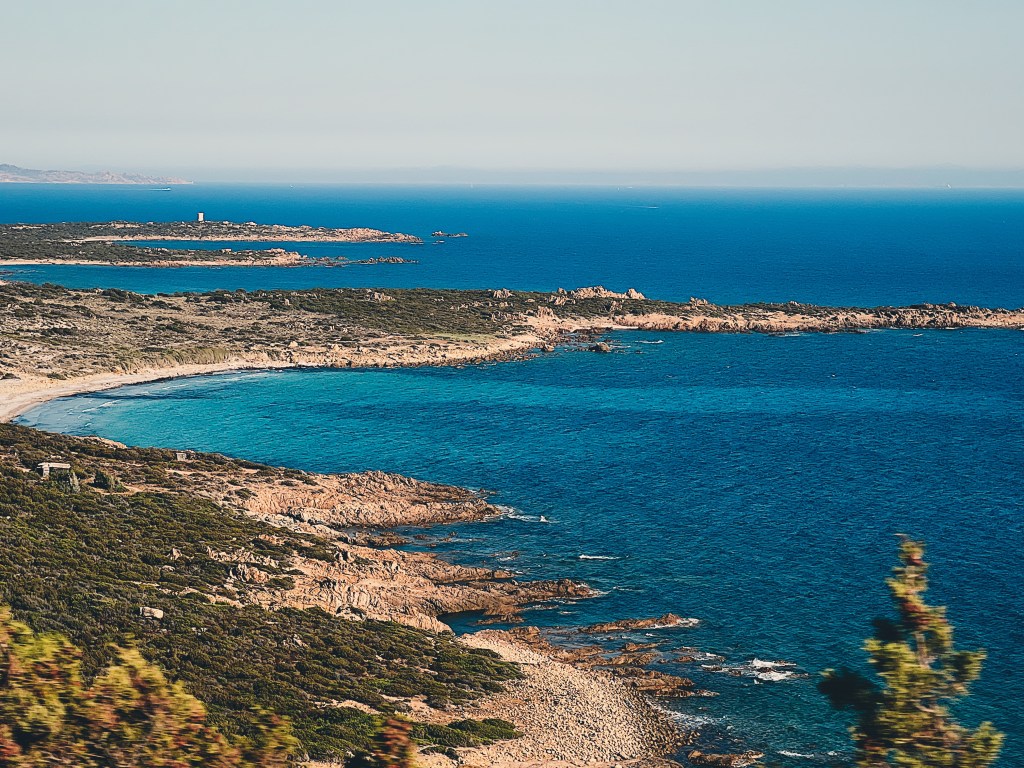
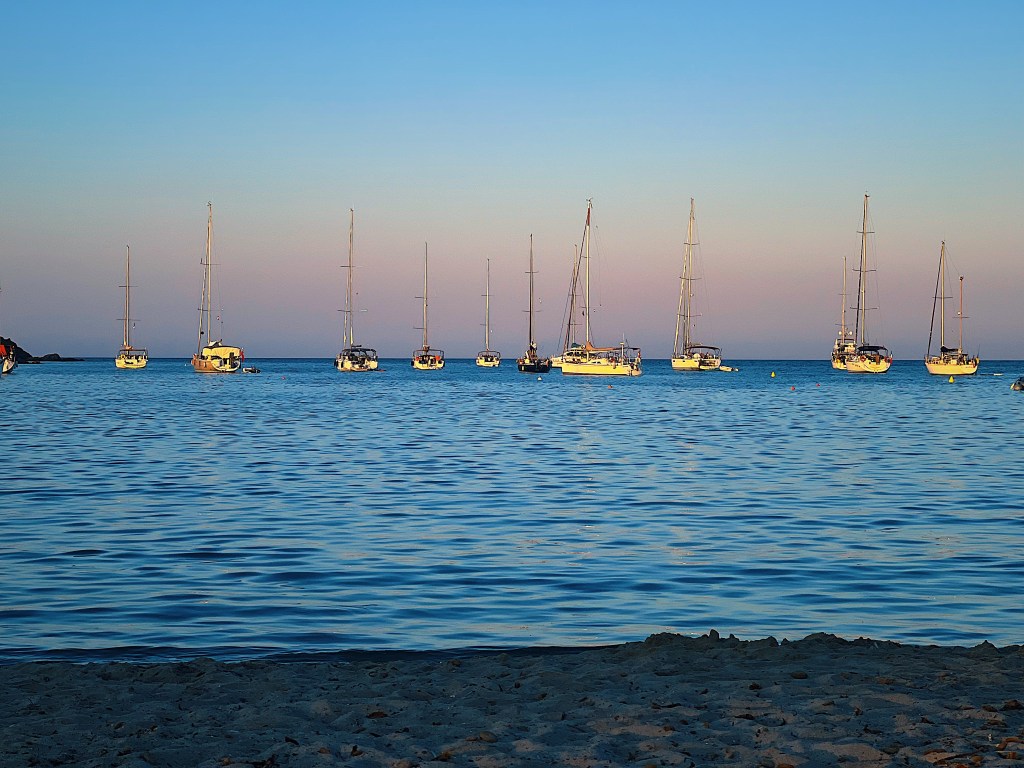
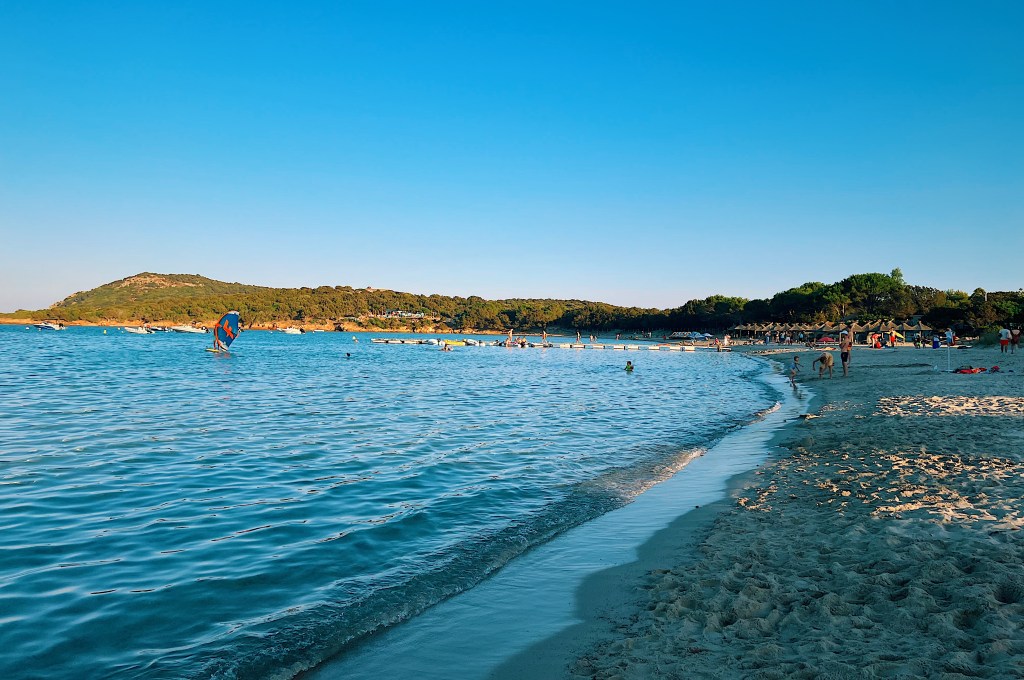
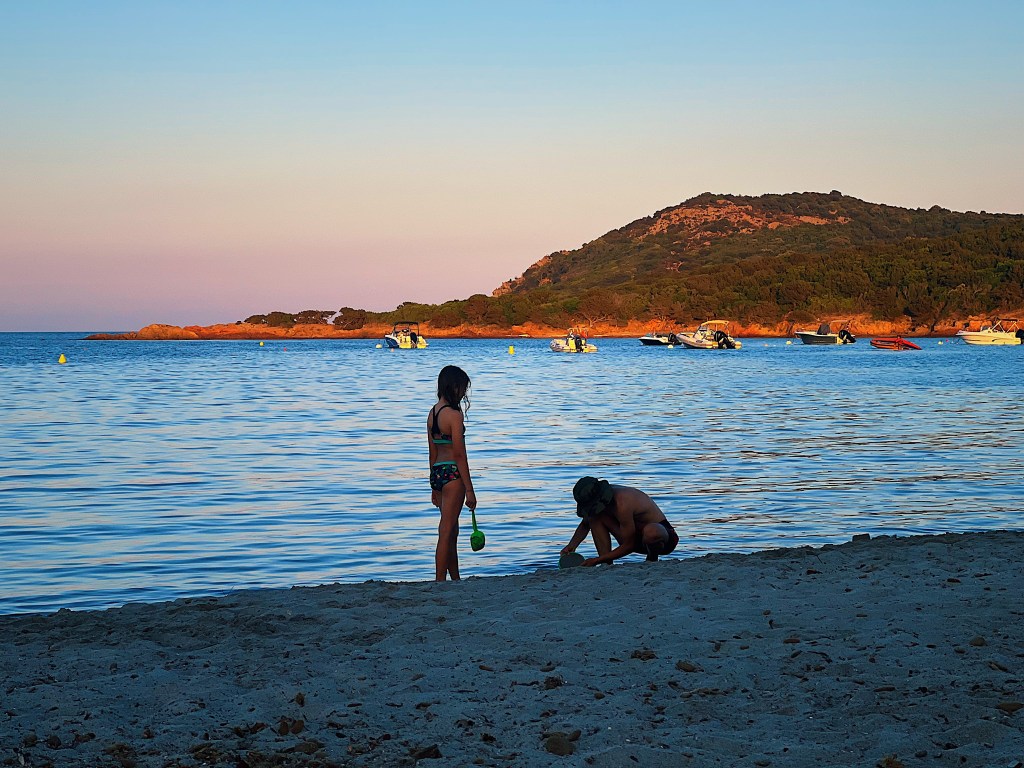
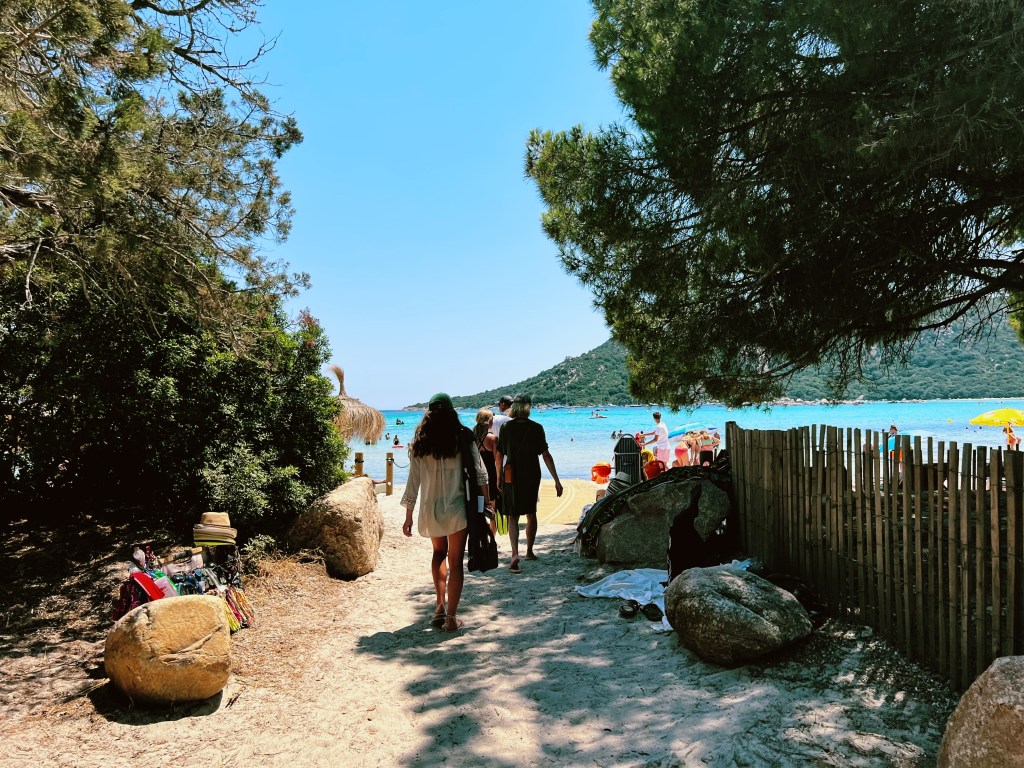
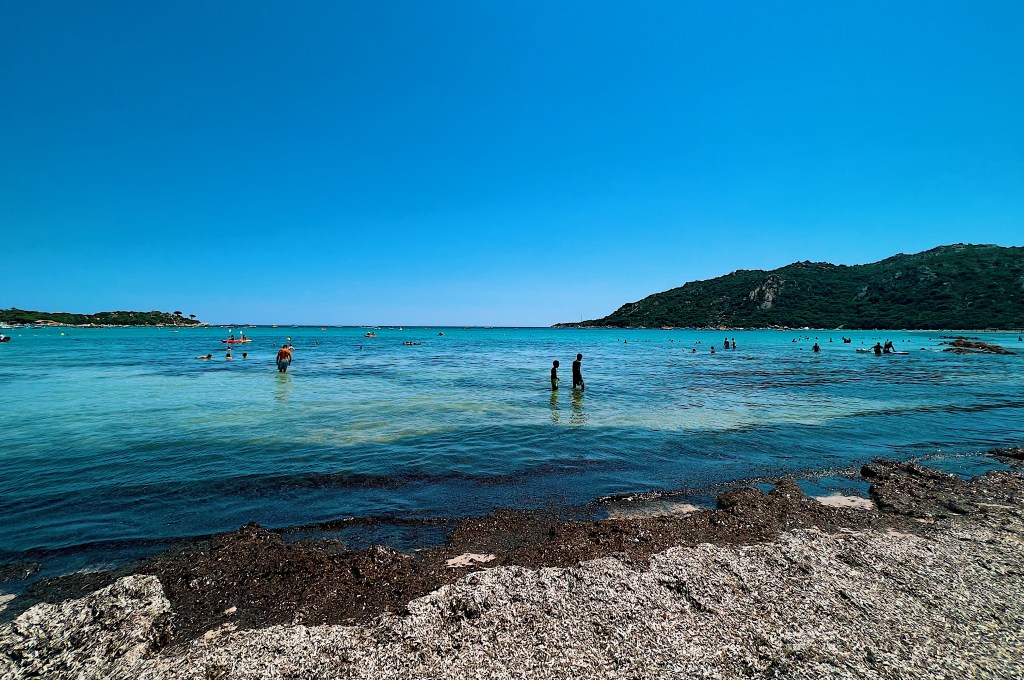
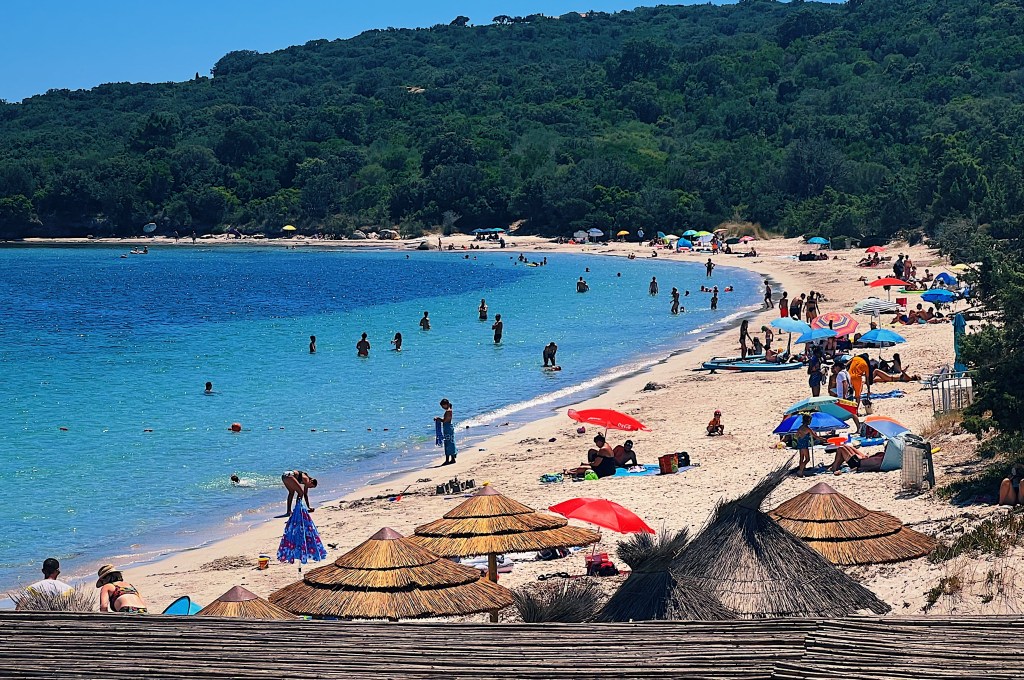
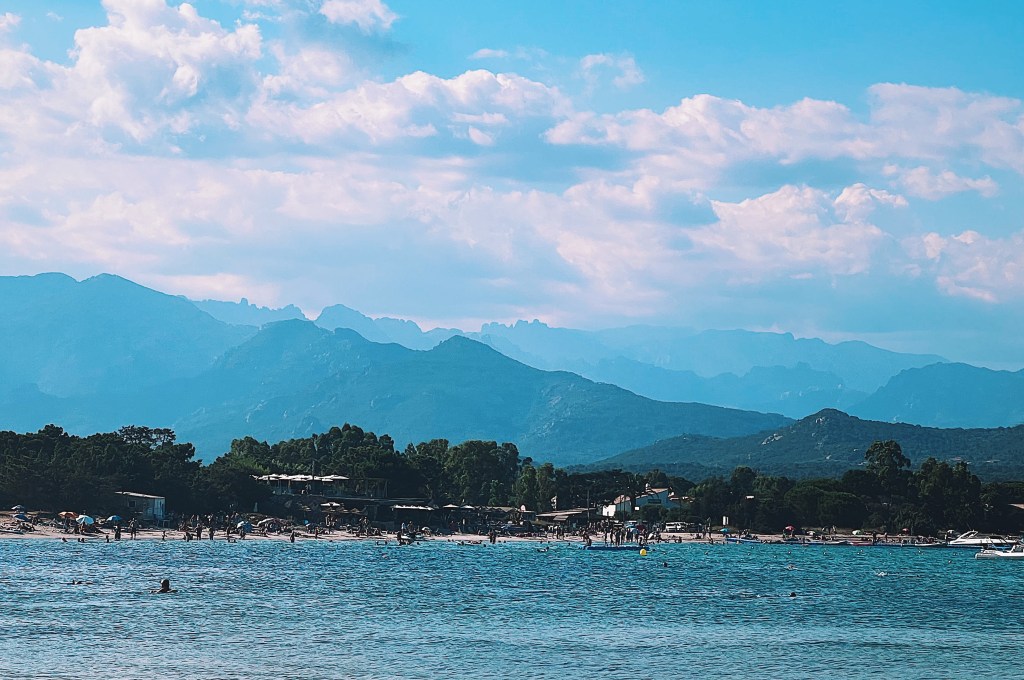
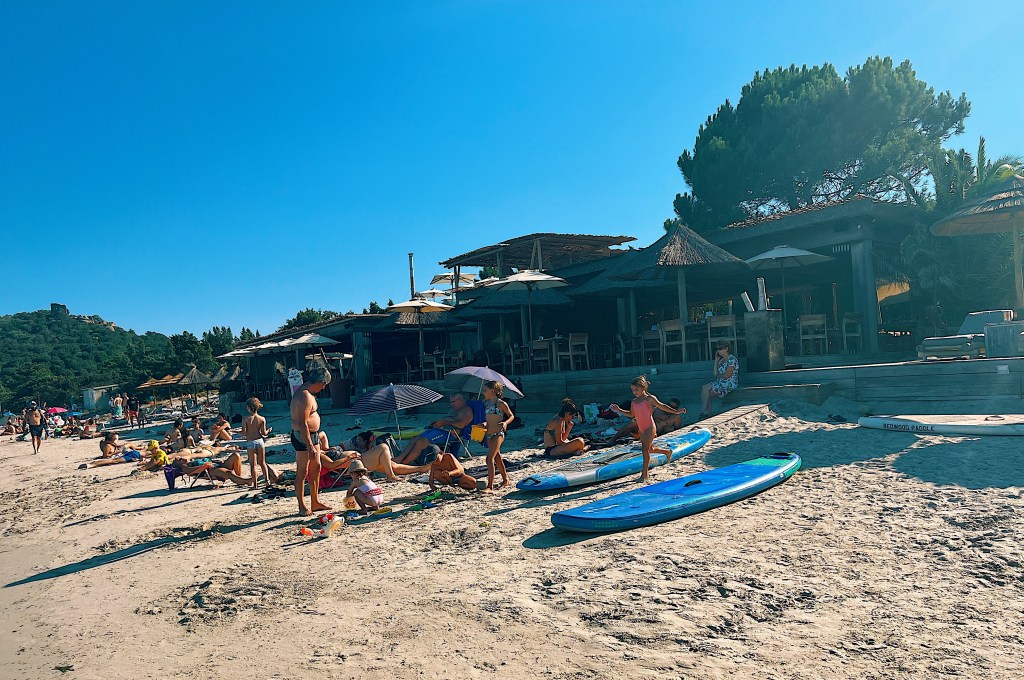
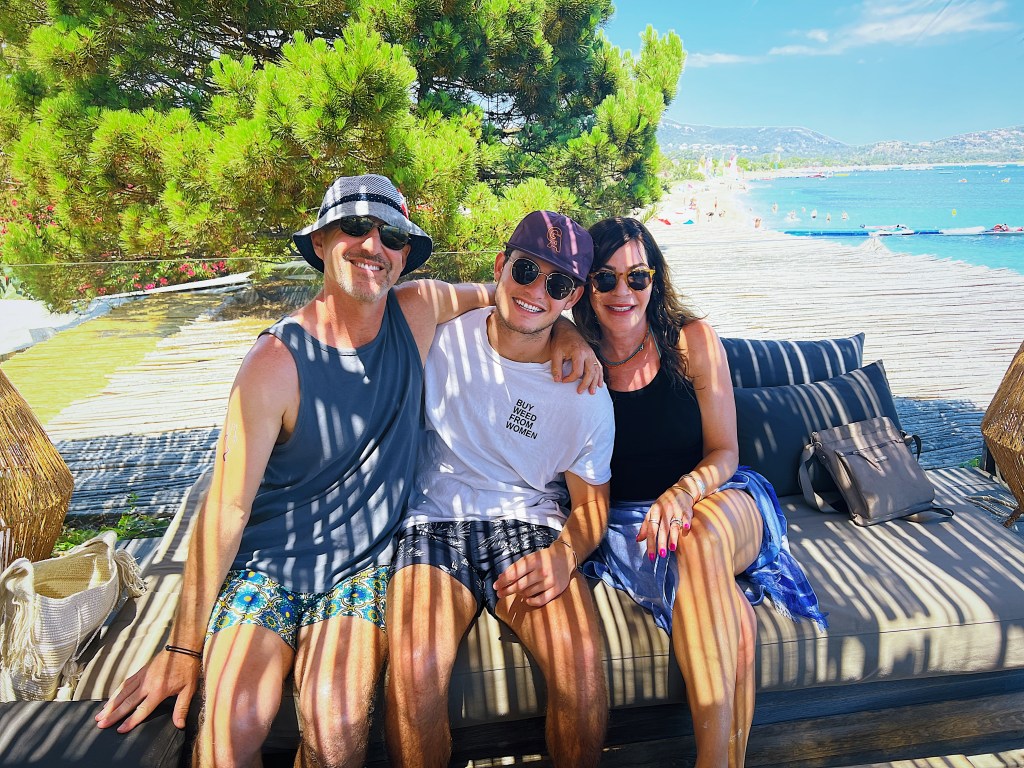
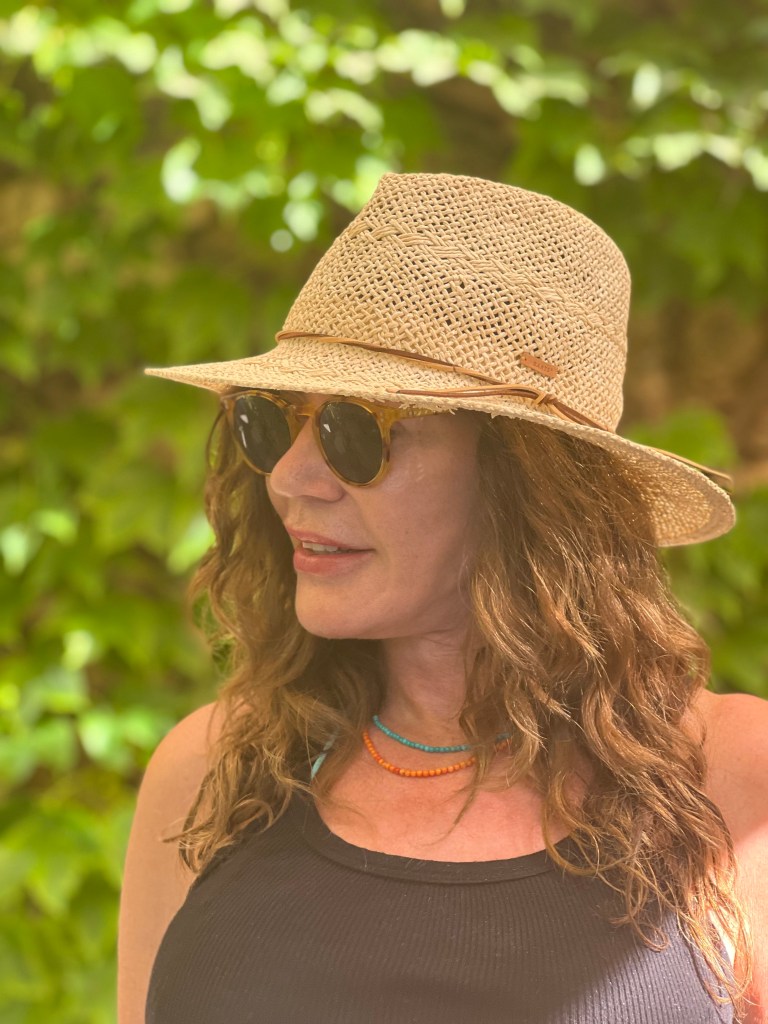
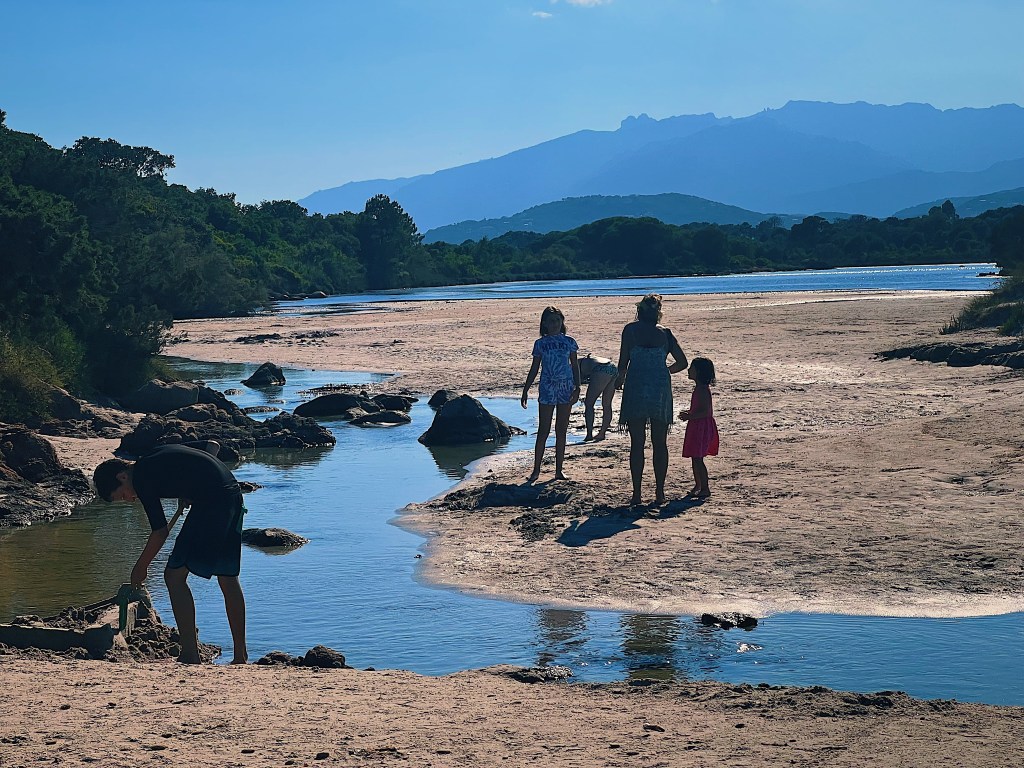
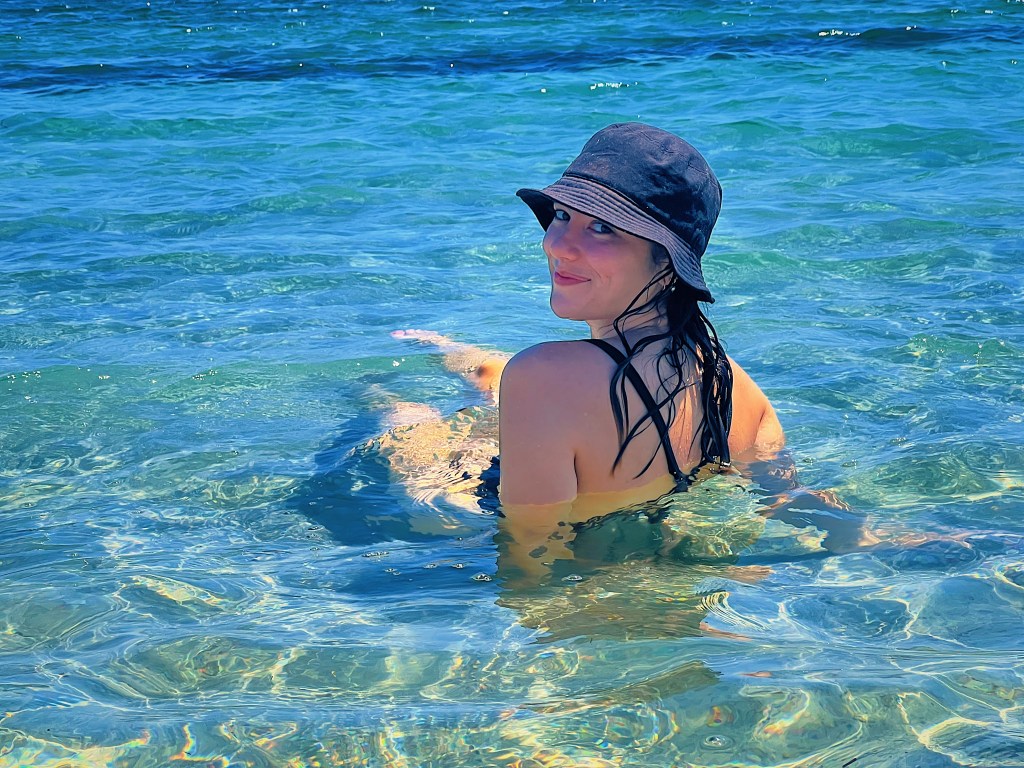
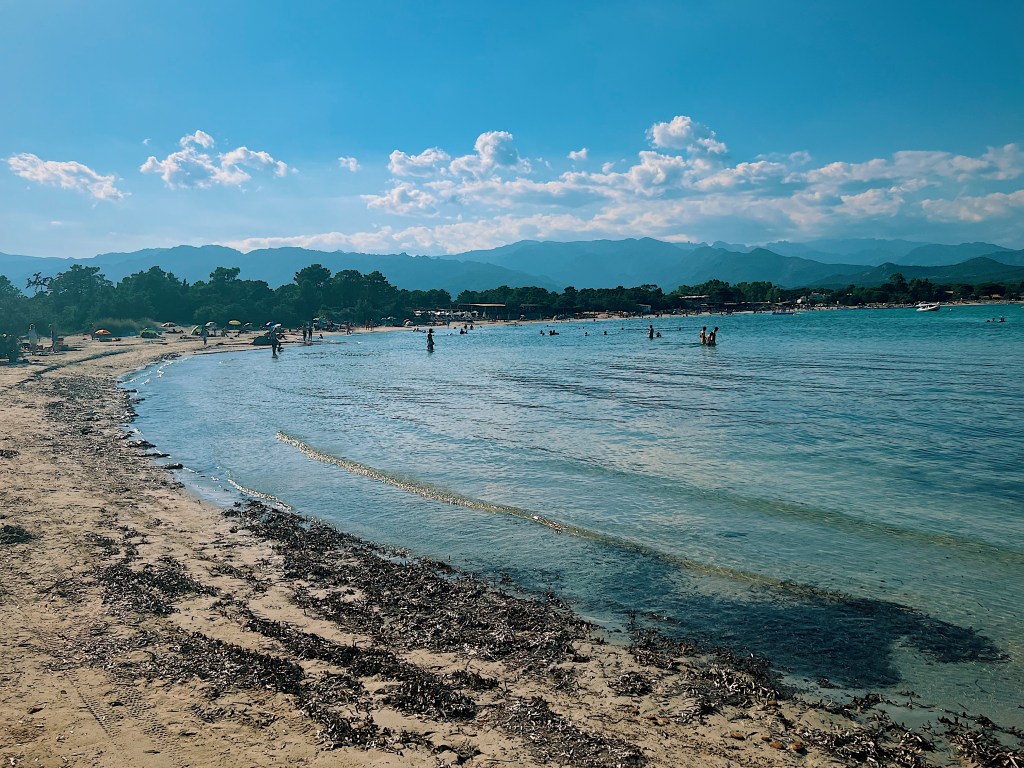
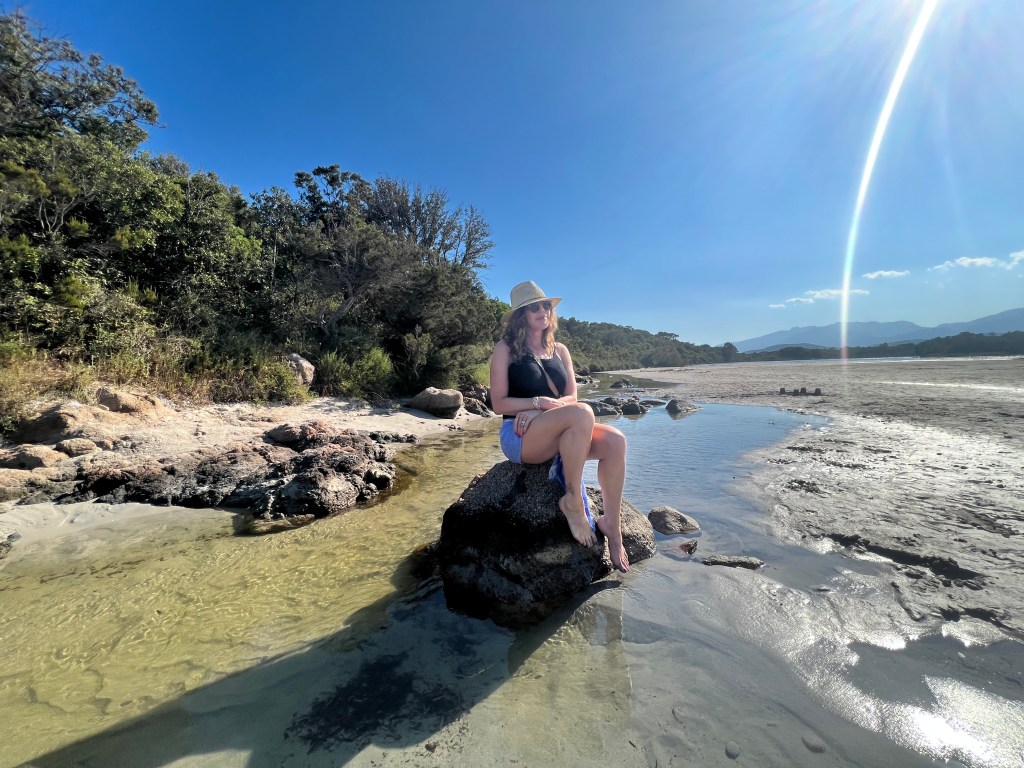
Another day, another beach. This time we made our way to Plage de Palombaggia, a more open beach than the others that we have visited, but no less beautiful. On such a sunny day, le lait protecteur (sunscreen) was essential. Les sauveteurs en mer (lifeguards), not so much, with shallow waters and not a wave in sight.
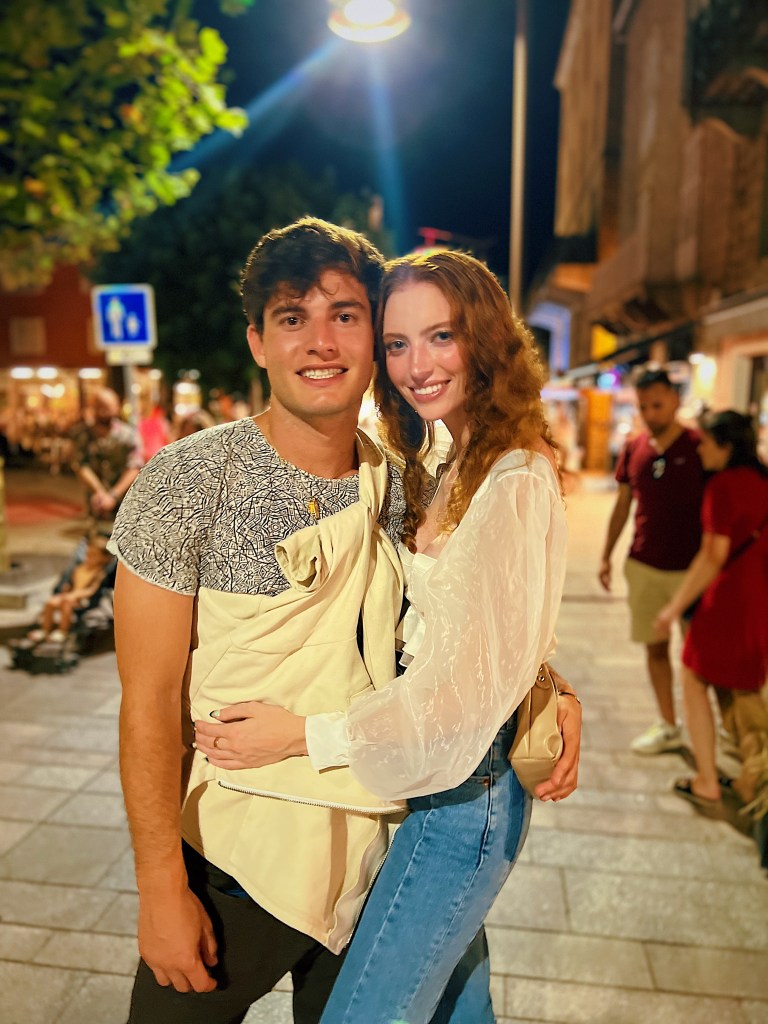
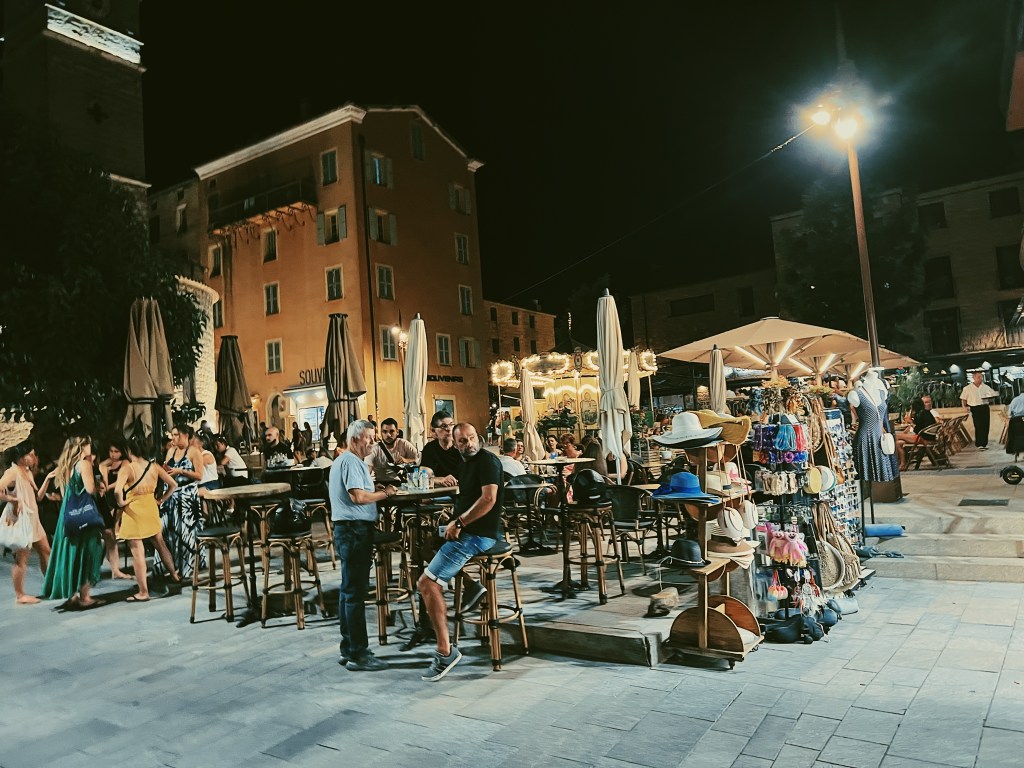
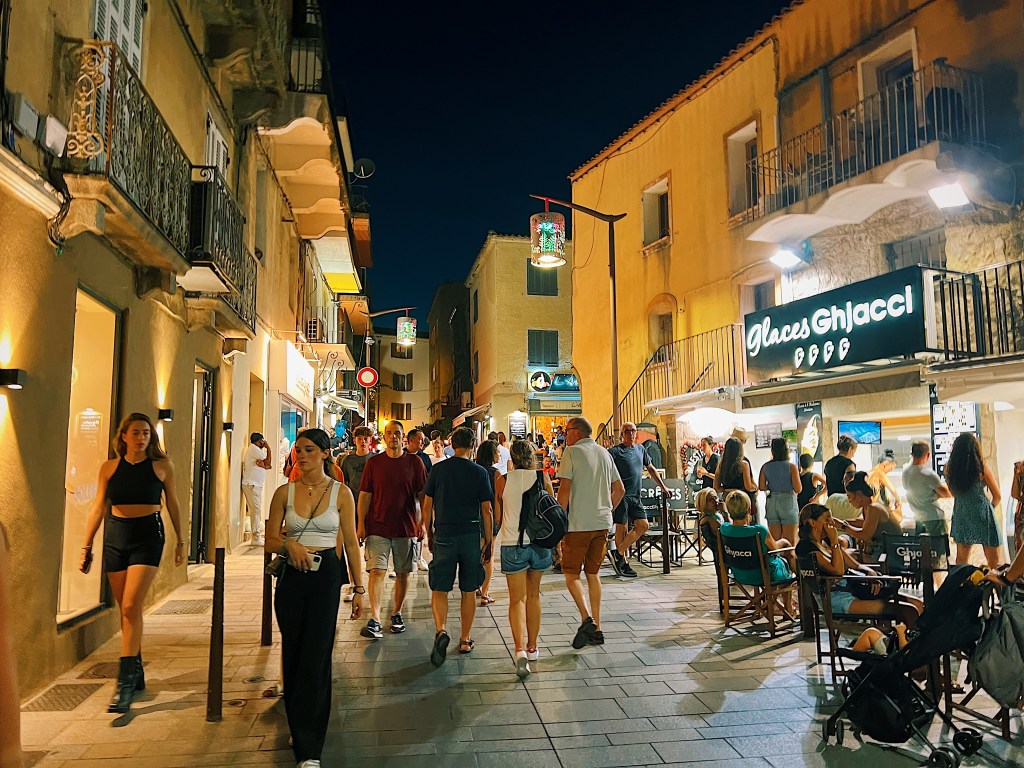
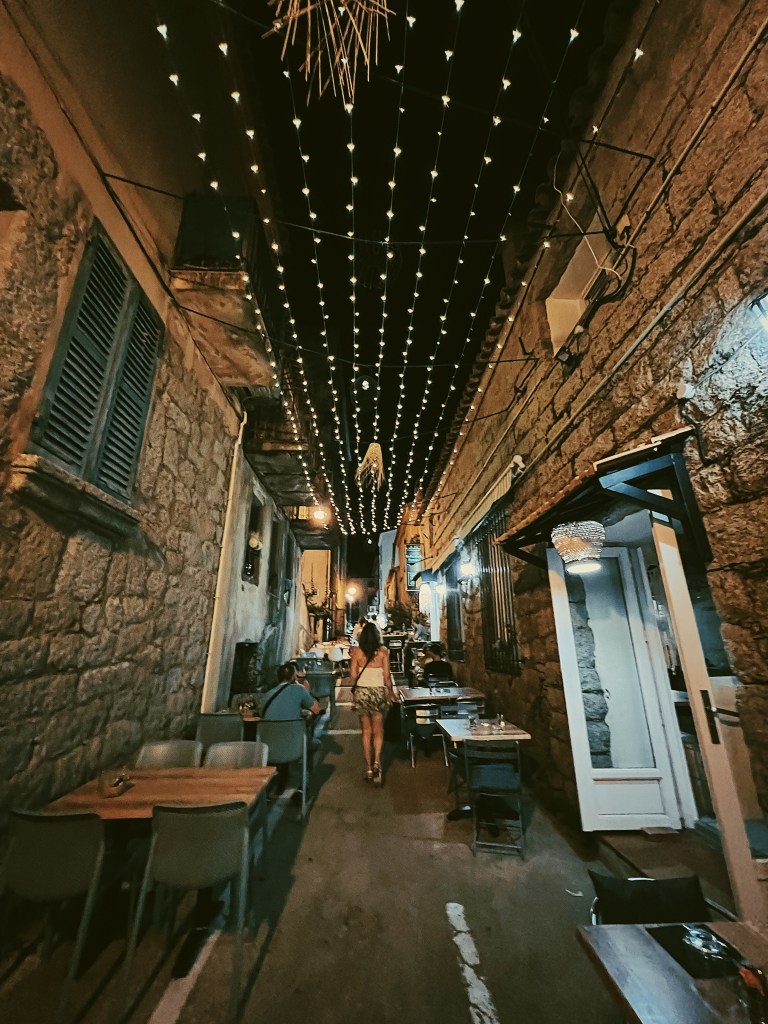
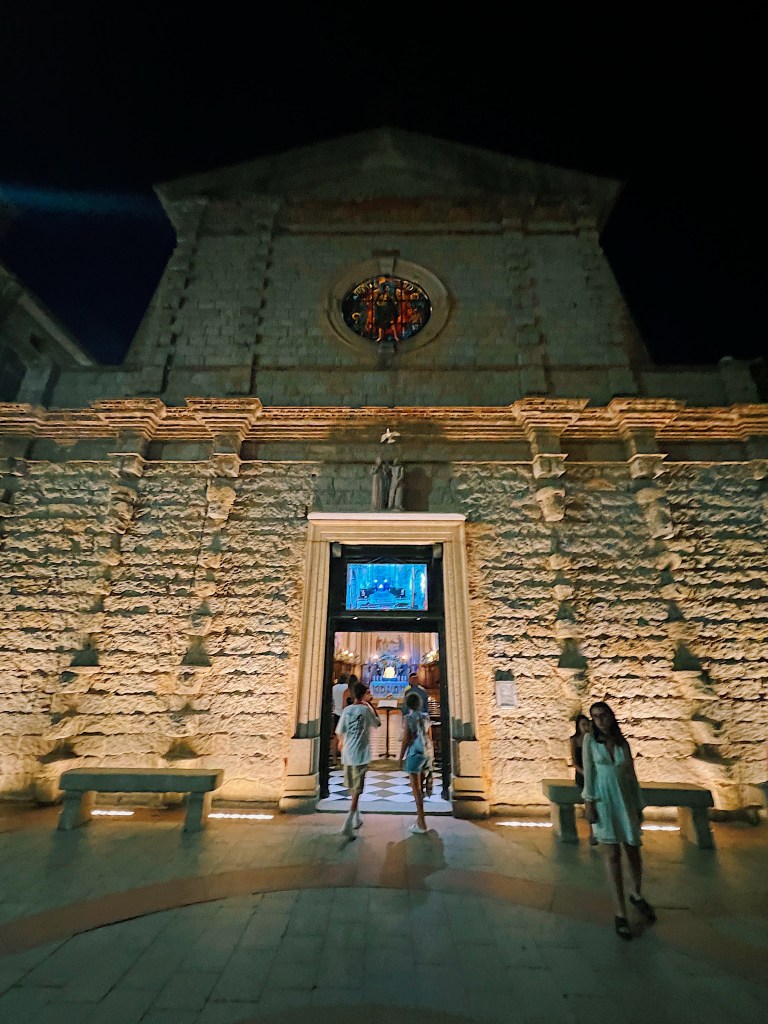
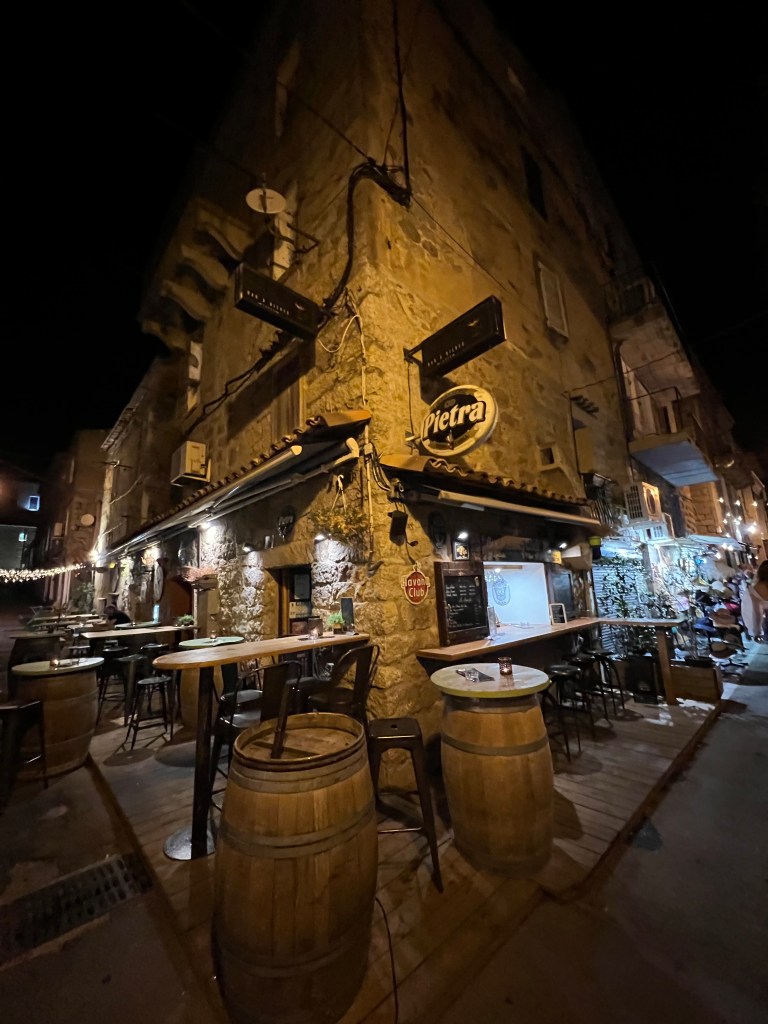
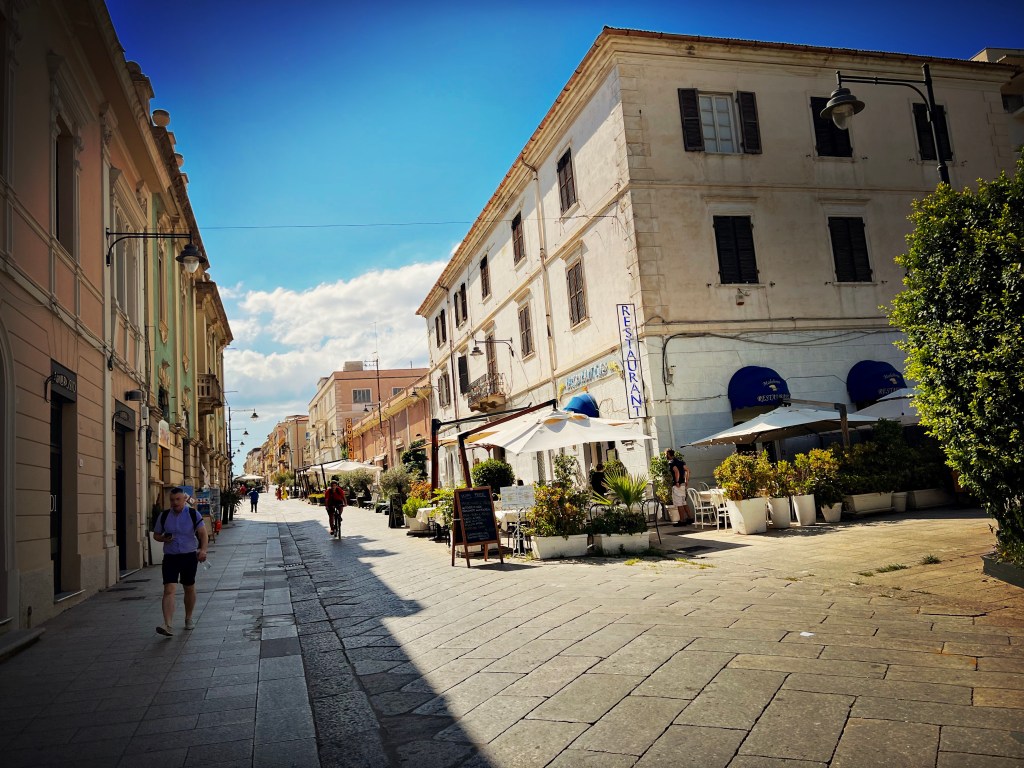
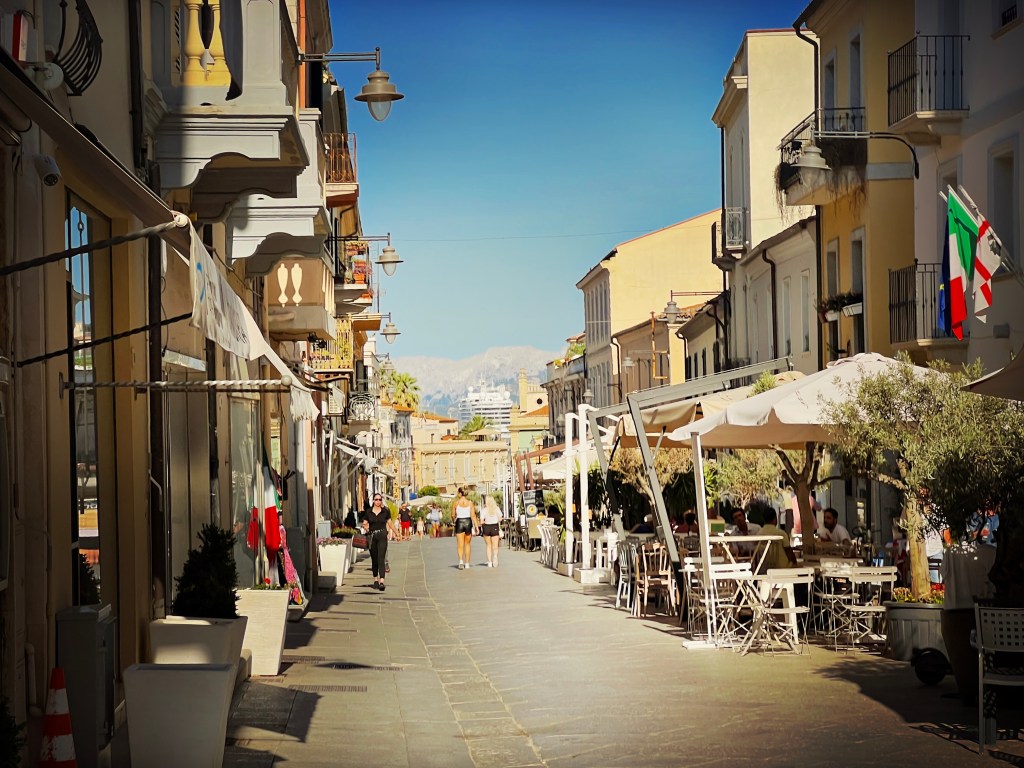
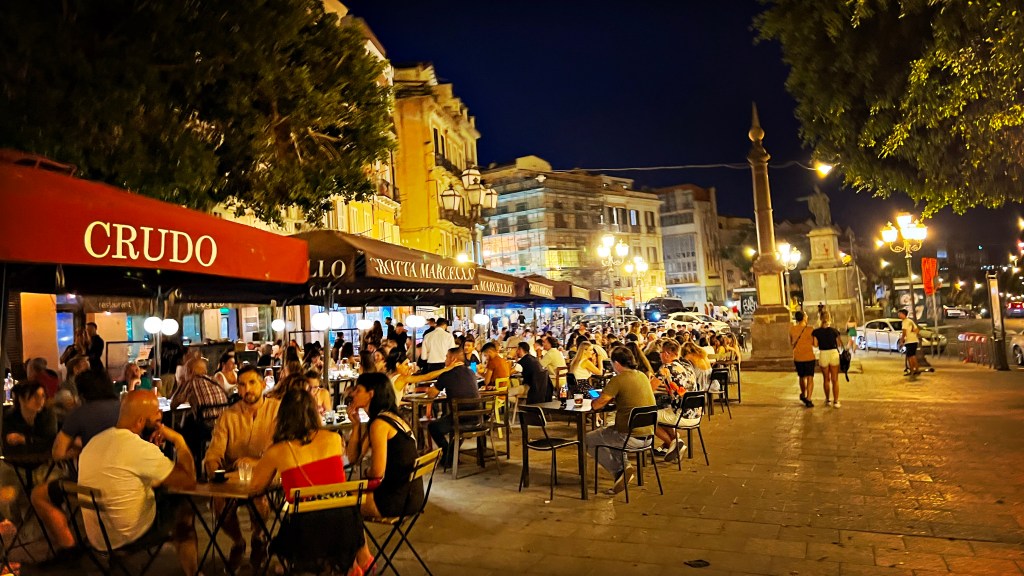
In the evening, we made our way to Porto Vecchio for dinner in the lively old town. We loved the fact that even late at night everyone was still out and about, from families with small children, to roaming groups of teenagers, to older couples. From what we could tell, most were French. We didn’t notice any of the Americans, Chinese, English or Germans that you often come across in Greece and Spain and other European tourist destinations.
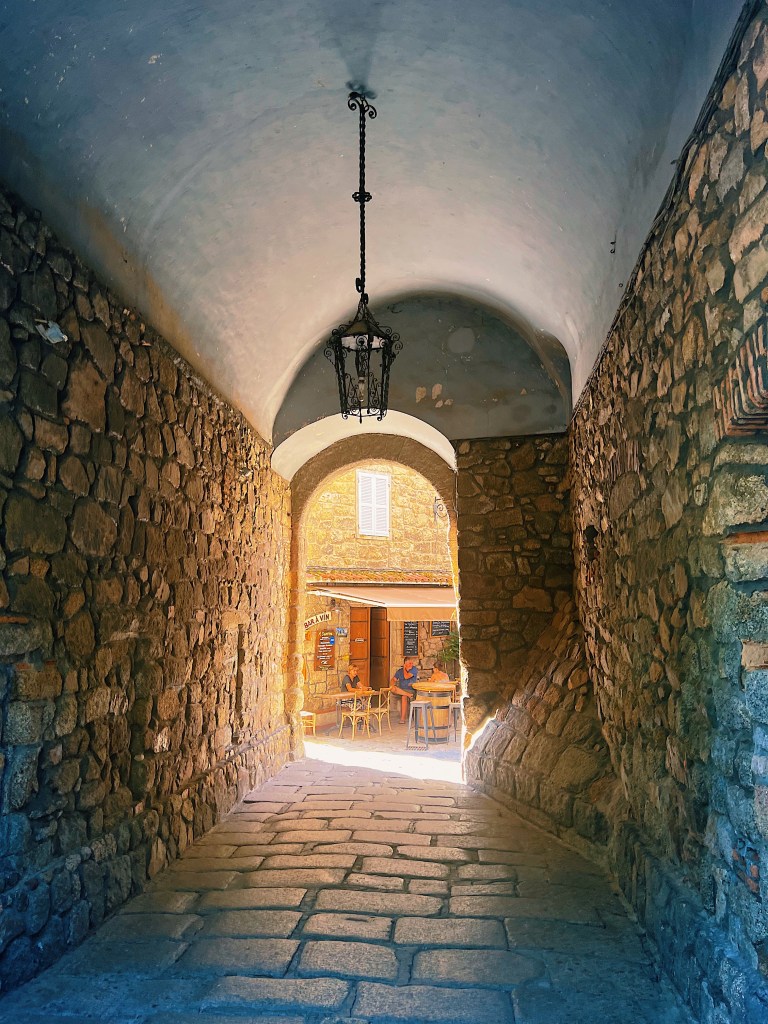
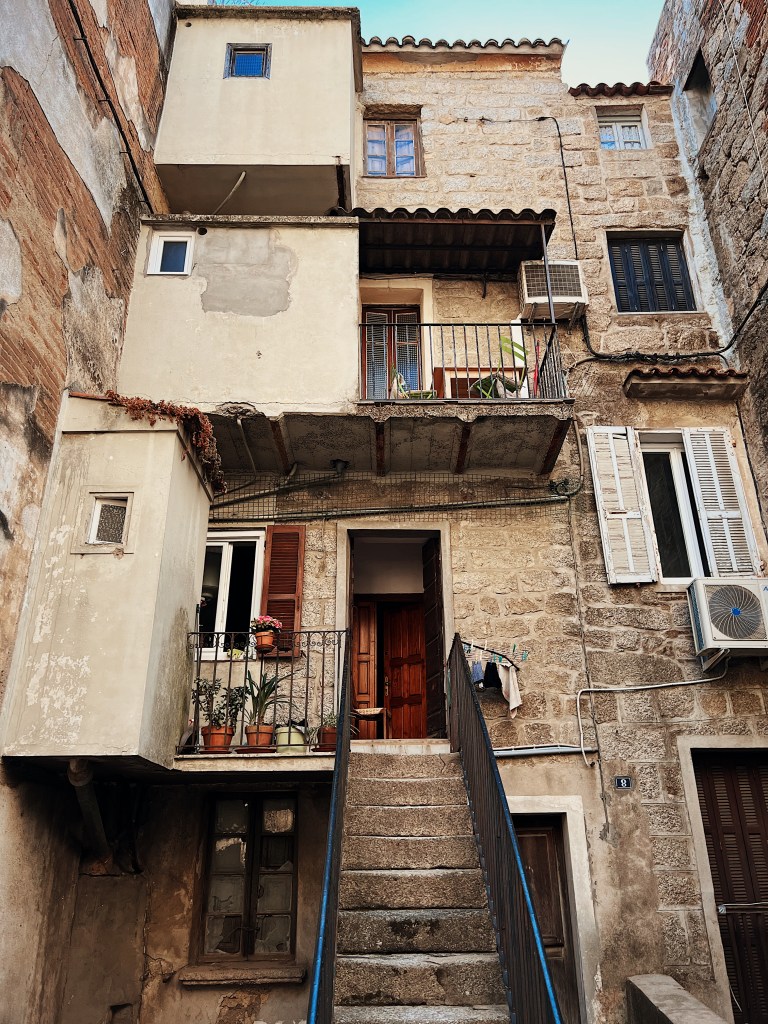
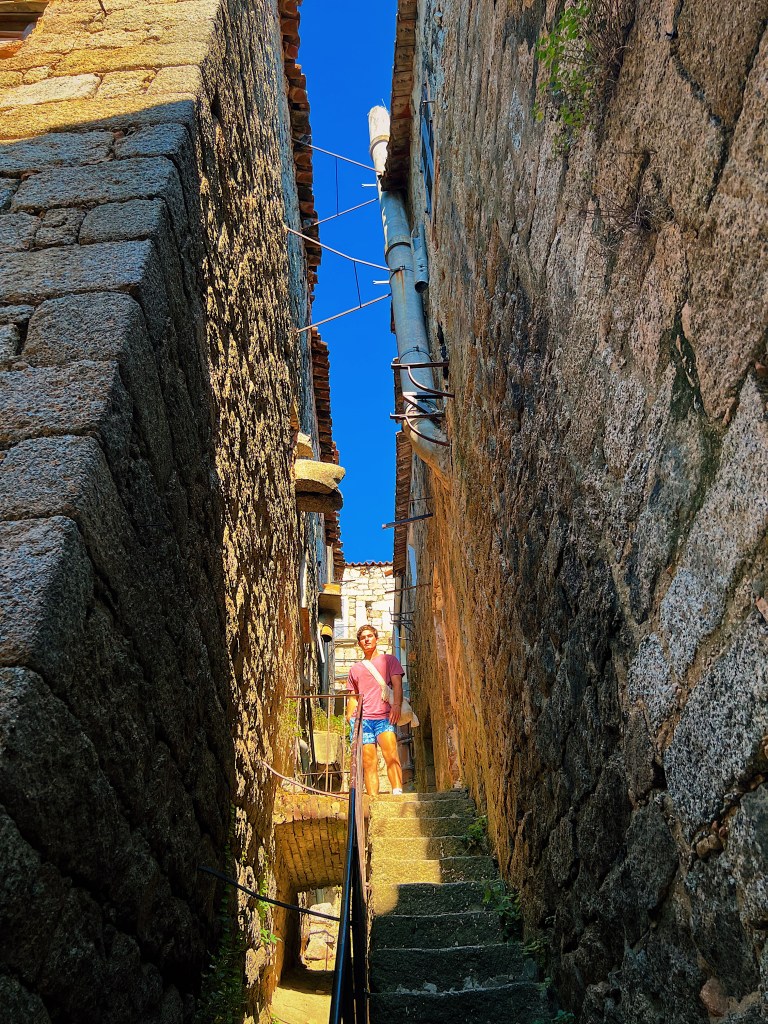
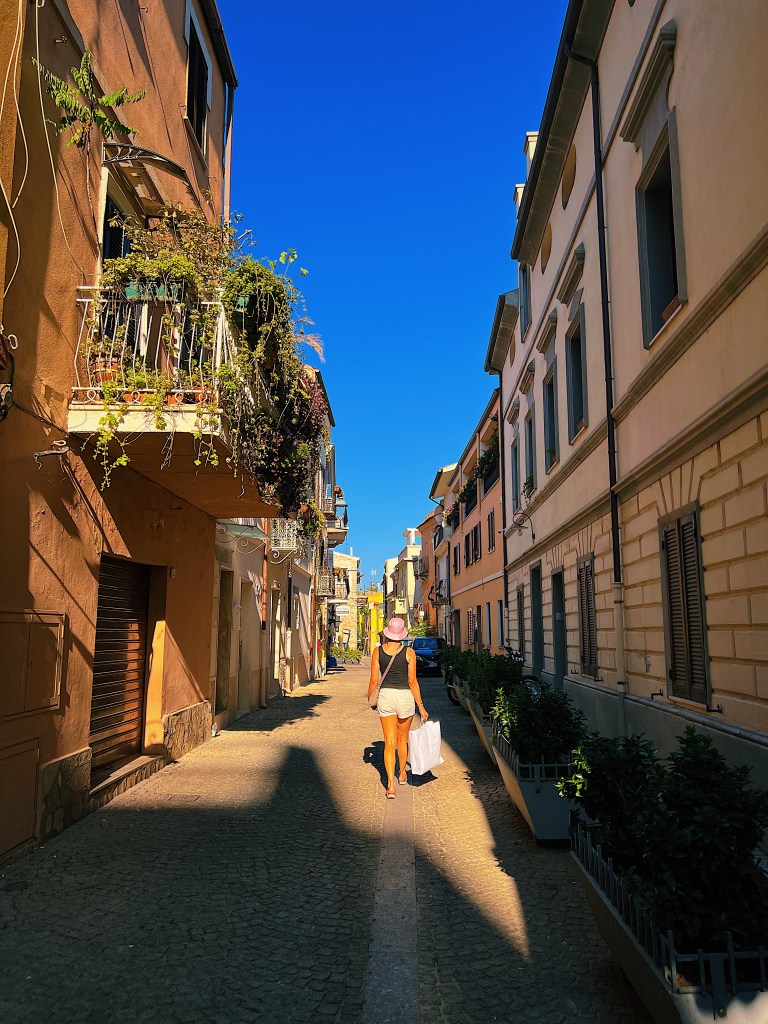
We took a two hour drive across the island to the hillside town of Sartene. It dates back to medieval times and granite buildings from the early 1500s still line some of its streets. Apparently, the town was a frequent target for pirates. One of the most infamous attacks happened in 1583 when pirates from Algiers took aways 400 of the town’s citizens. Today it is a sleepy town and on a hot day there was not much going on in its ancient streets.
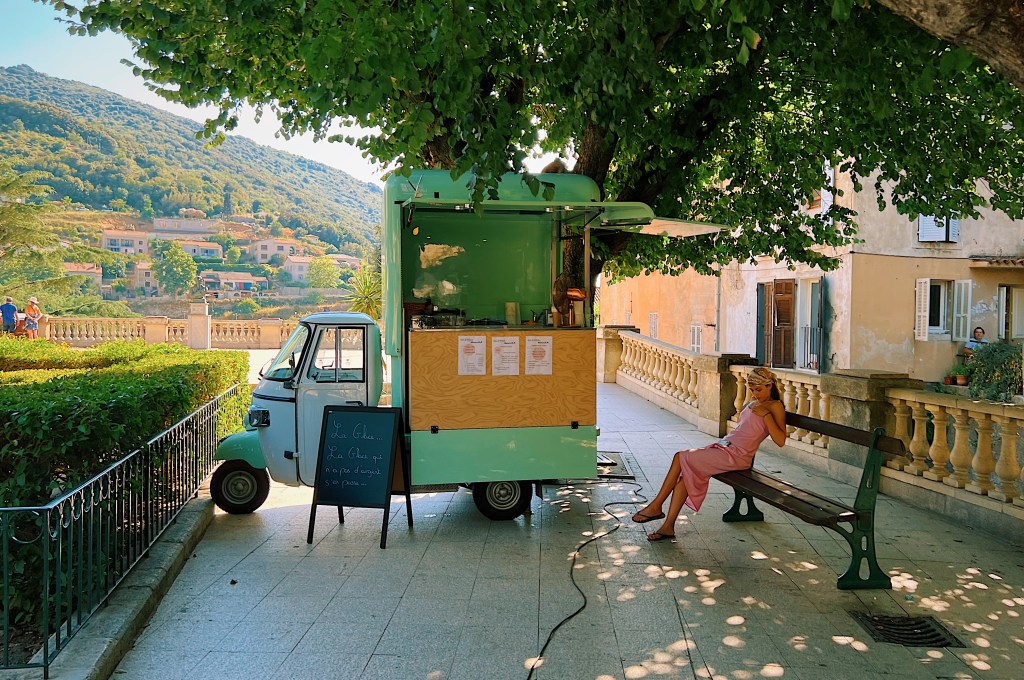
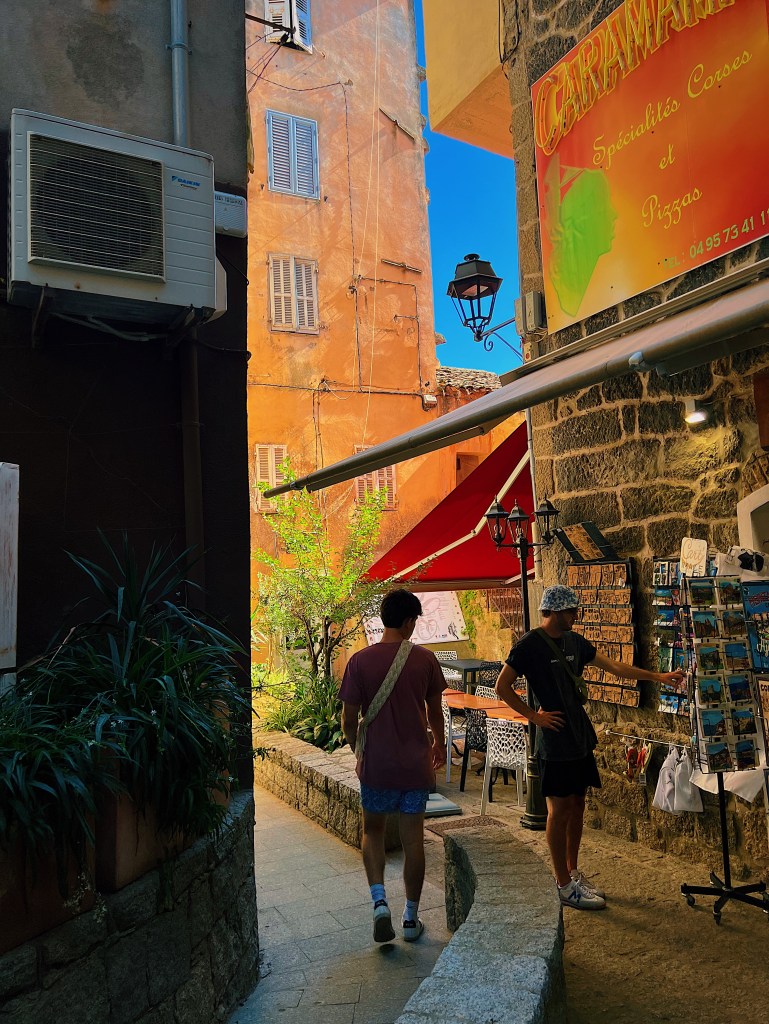
After lunch in the town square and a mandatory gelato from a little mobile mint green gelato stand, we started to explore its narrow streets. However, it wasn’t long before our group decided that on such a scorching day, a better course of action would be to head to the beach. So we drove down the stunning coastline and headed toward Plage de Rondinara.
Arriving in the late afternoon, we found Rondinara to be the most beautiful beach that we had come across so far in Corsica. It is a perfect horseshoe shape with only a narrow gap to the open ocean. Like all of the Corsican beaches that we visited, it also had a great beachside restaurant, so as the sun went down we enjoyed a beautiful meal and a couple of drinks before setting out on the winding road back to our AirBnB.
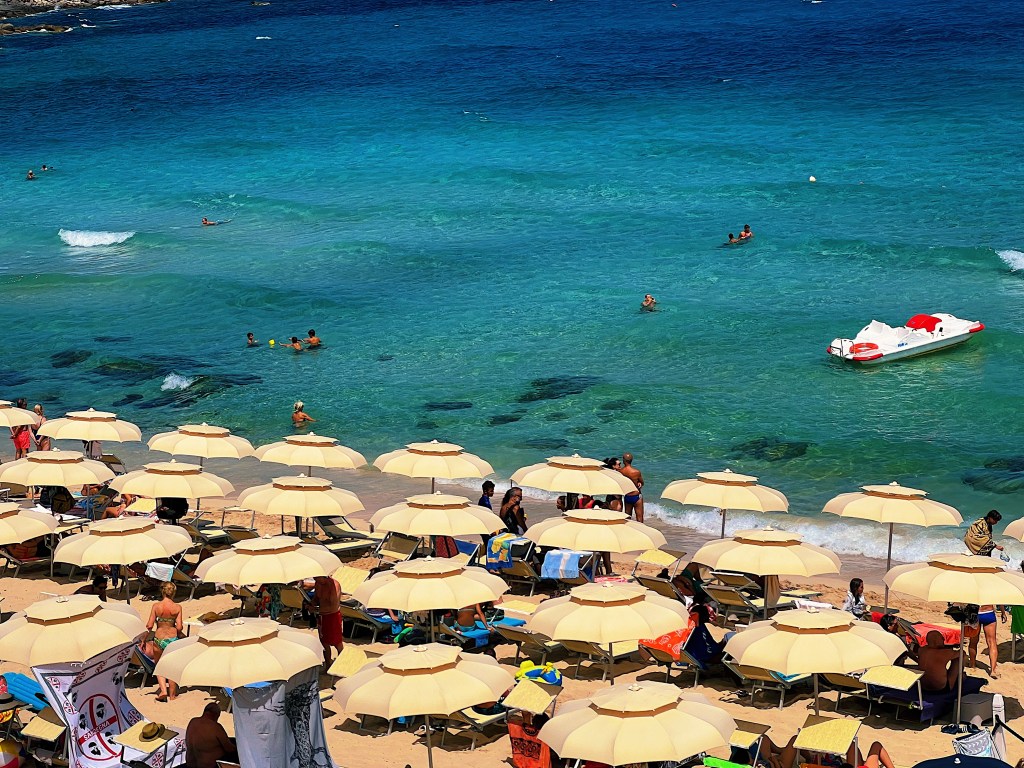
Named after one of Corsica’s patron saints, Santa Giulia, this beach set in a horseshoe bay, is one of Corsica’s most popular. As such, it was very crowded when we were there. Unfortunately, it also attracted more than its fair share of seaweed.
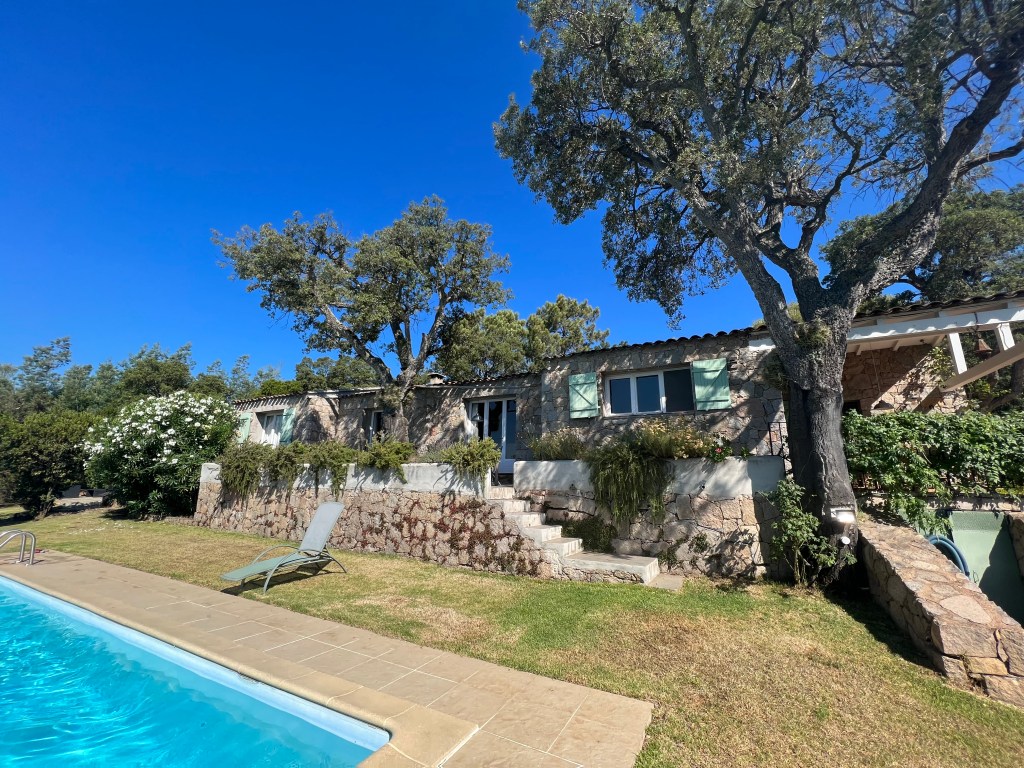
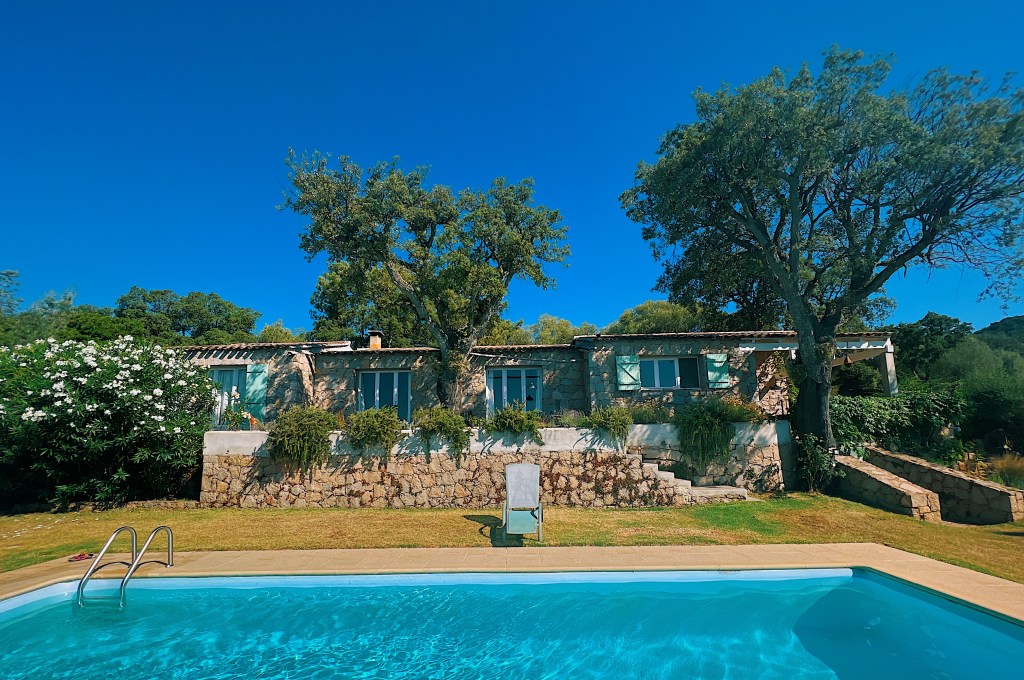
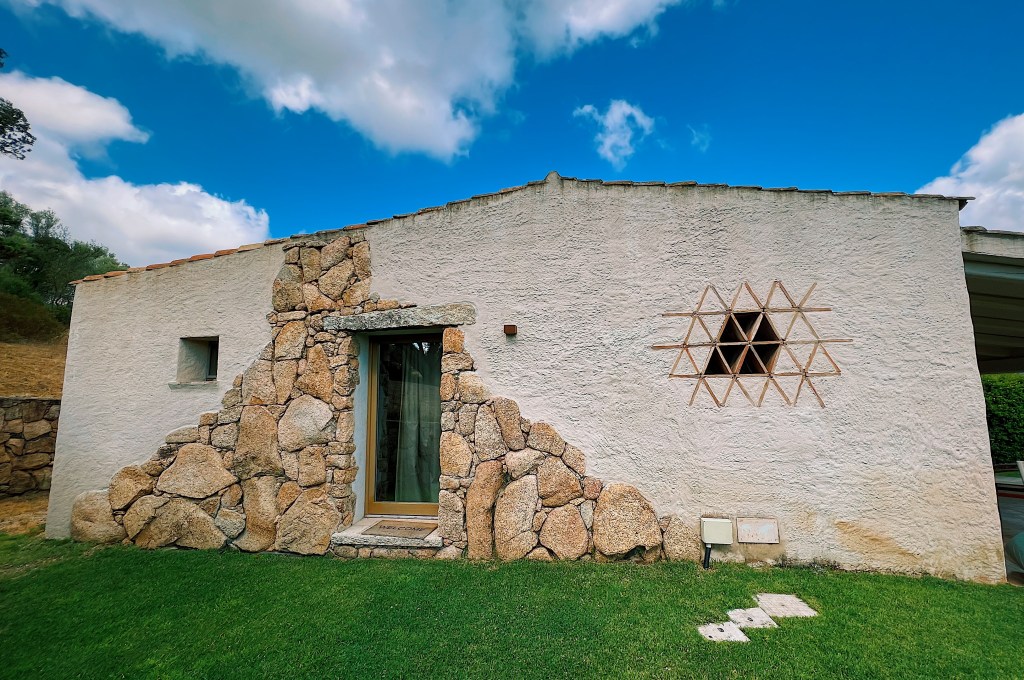
We spent the morning hanging around our beautiful AirBnB. The house was built in the 1970s but looks much older, having been constructed with hand carved stone.
In the afternoon, we drove to nearby Saint Cyprien for our first swim in Corsican waters. The beach was beautiful and not too crowded and the water was clear and warm. There was also a restaurant and bar right on the beach that sold excellent fresh food and refreshing drinks. It was a far cry from the fast food and supersize sodas you commonly find at American beaches.
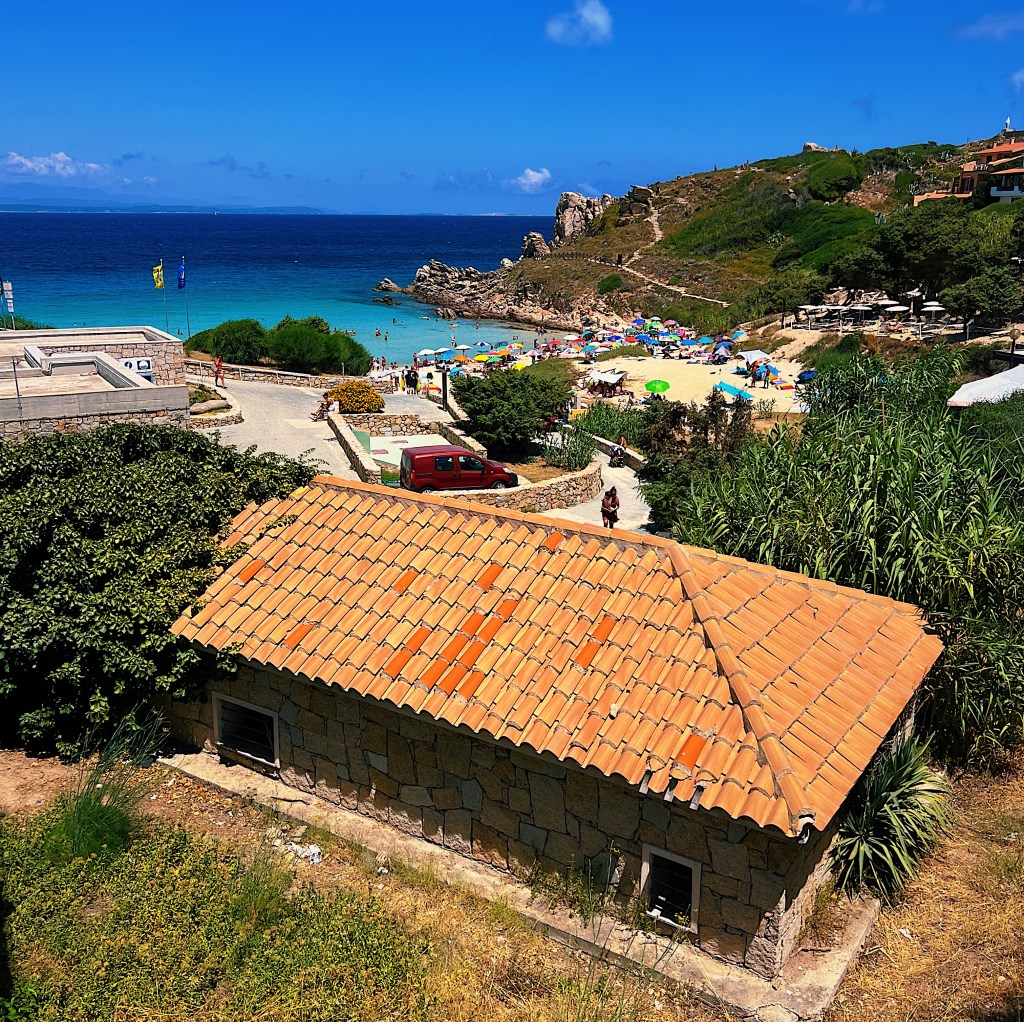
We had a look around Santa Teresa di Gallura while we were waiting for our ferry to Corsica. The town’s small crescent shaped beach was very crowded so we walked up the headlands overlooking the beach for some spectacular views.
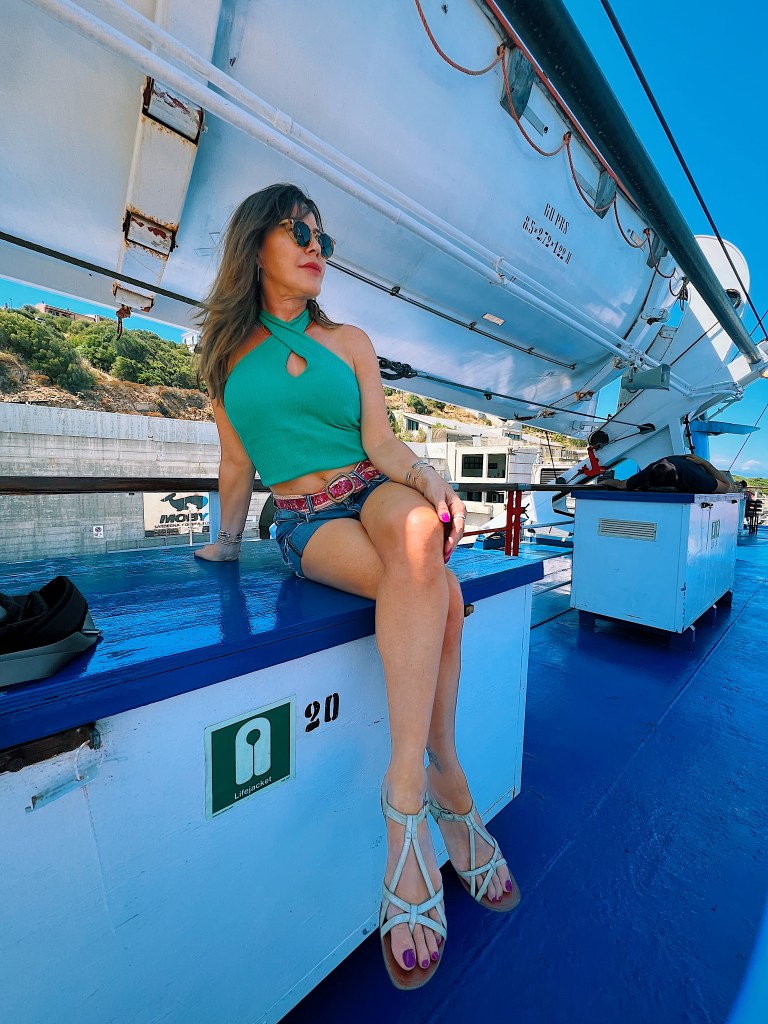
Then it was on to the ferry for the short ride across to Corsica.
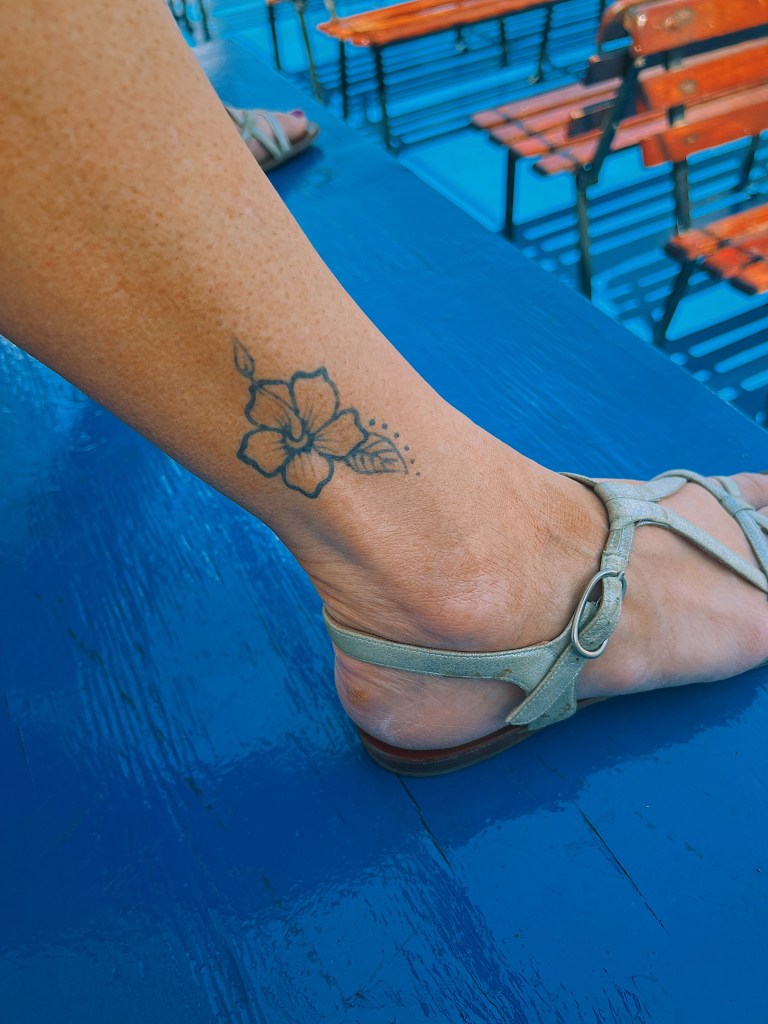
Time to show off our new tattoos (temporary).
After a short ferry ride we pulled into Bonafacio, the home of several massive oligarch yachts and a centuries old fort.
We drove north, arriving in Olbia in the late afternoon. Olbia is a pretty seaside town. It is much smaller than Cagliari with about 60,000 inhabitants and also has much less graffiti.
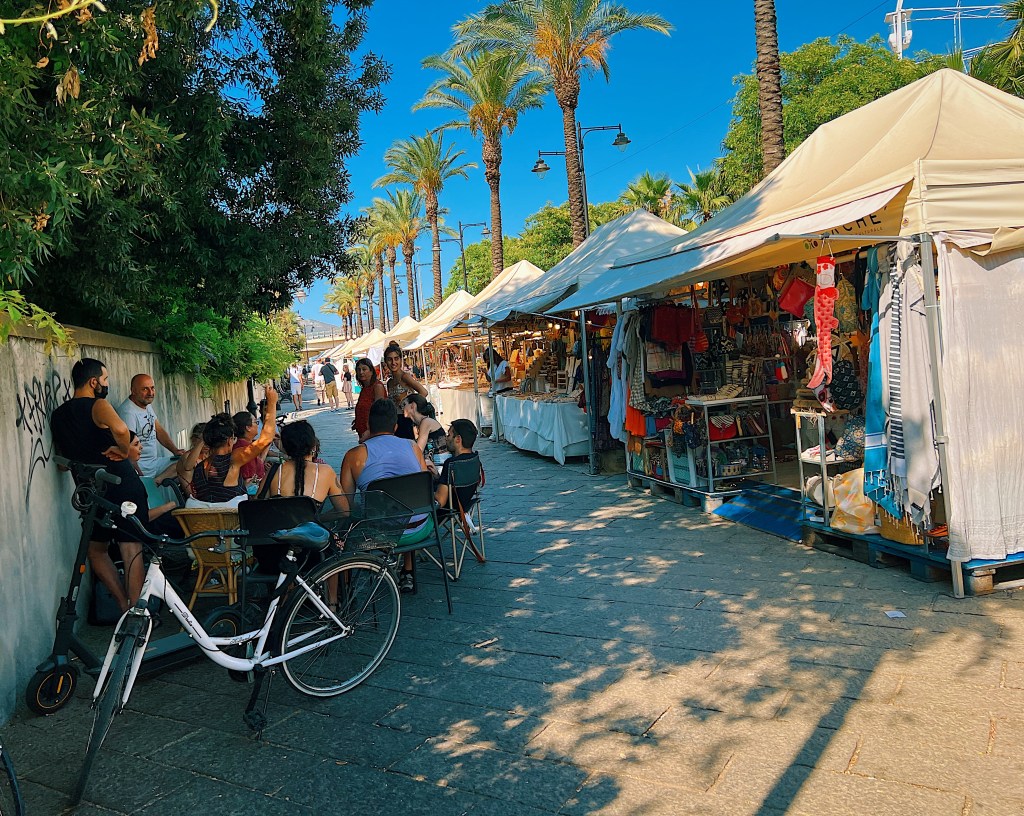
At the market the locals were engaging in a lively discussion. Unfortunately, our lack of Italian meant that we weren’t able to participate or even determine what was being debated.
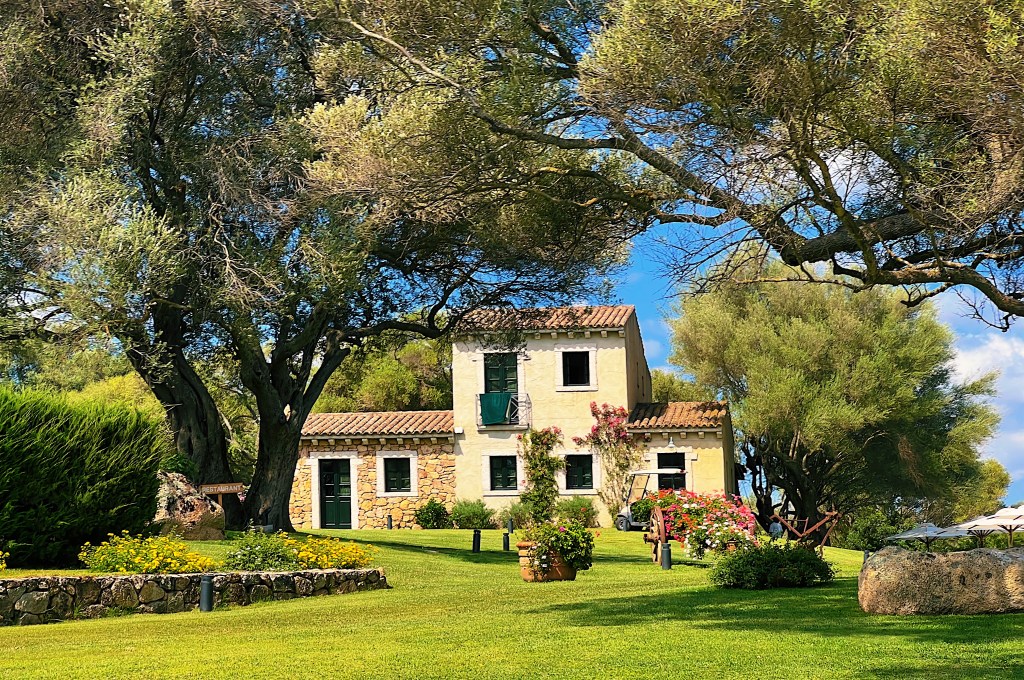
From Olbia we drove to nearby Sant’Antonio di Gallura where we spent the night at the Hotel Stazzo Lu Ciaccaru, which was set in idyllic countryside.
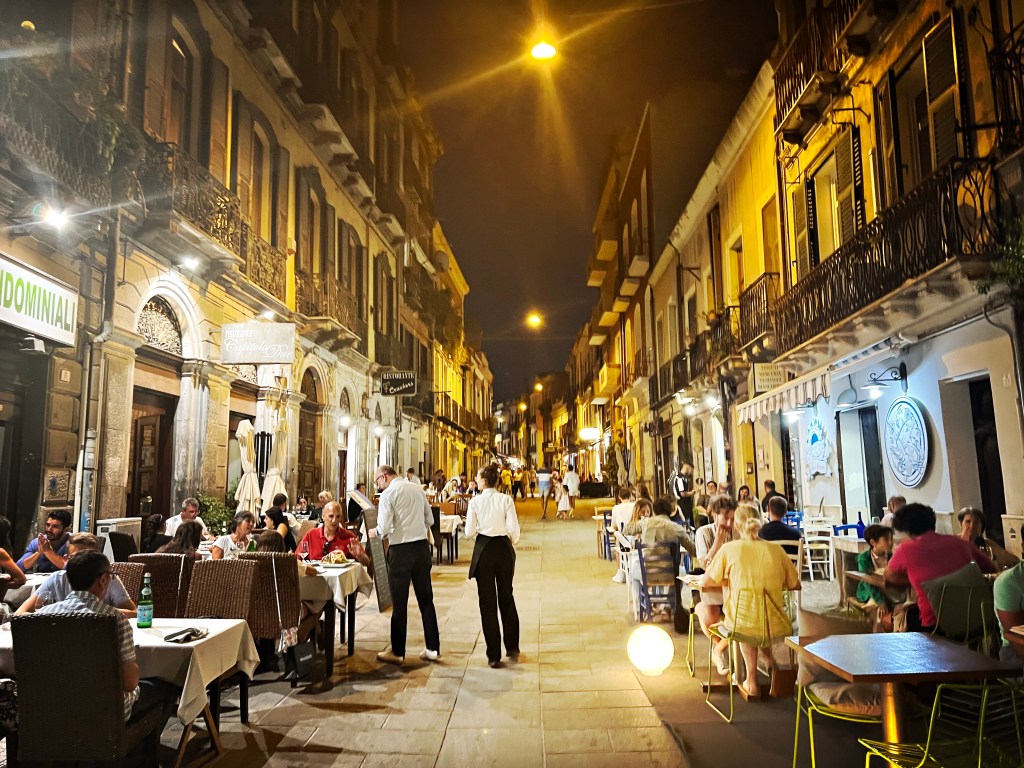
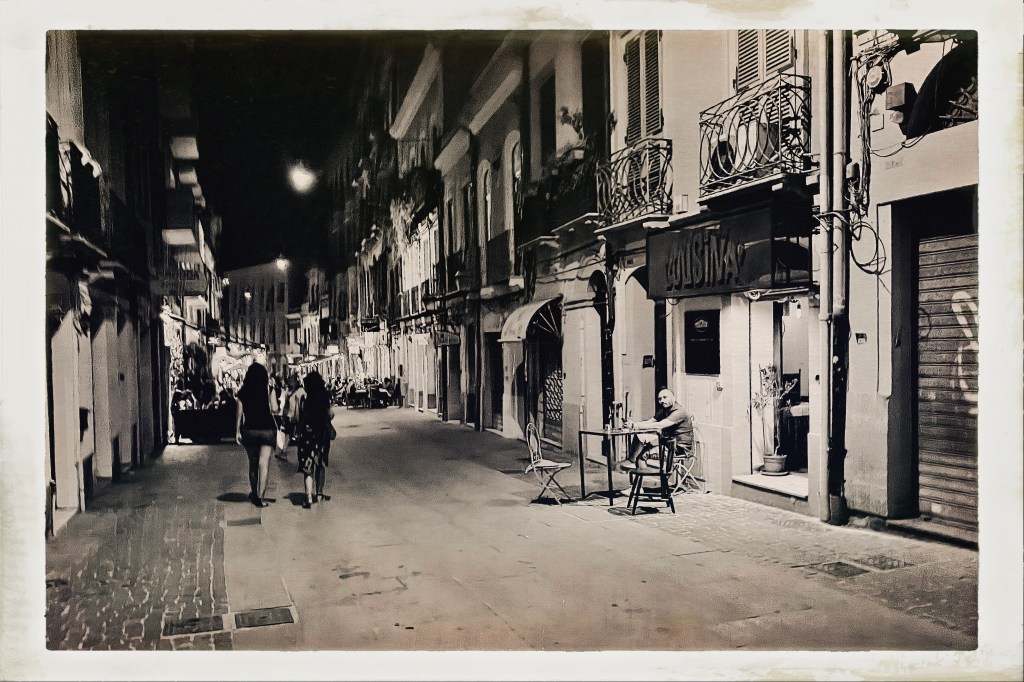
With close to half a million inhabitants, Cagliari is Sardinia’s largest city and also its capital. Arriving in the late afternoon, we checked into our hotel and walked to the nearby city center to get a late dinner. Well, we say late, but by Italian standards it was still early with most of the restaurants not filling up until after ten. One thing we like about European cities and towns is that they almost inevitably have a part of the town that is closed to cars and are lined with restaurants with outdoor seating. Cagliari was no exception.
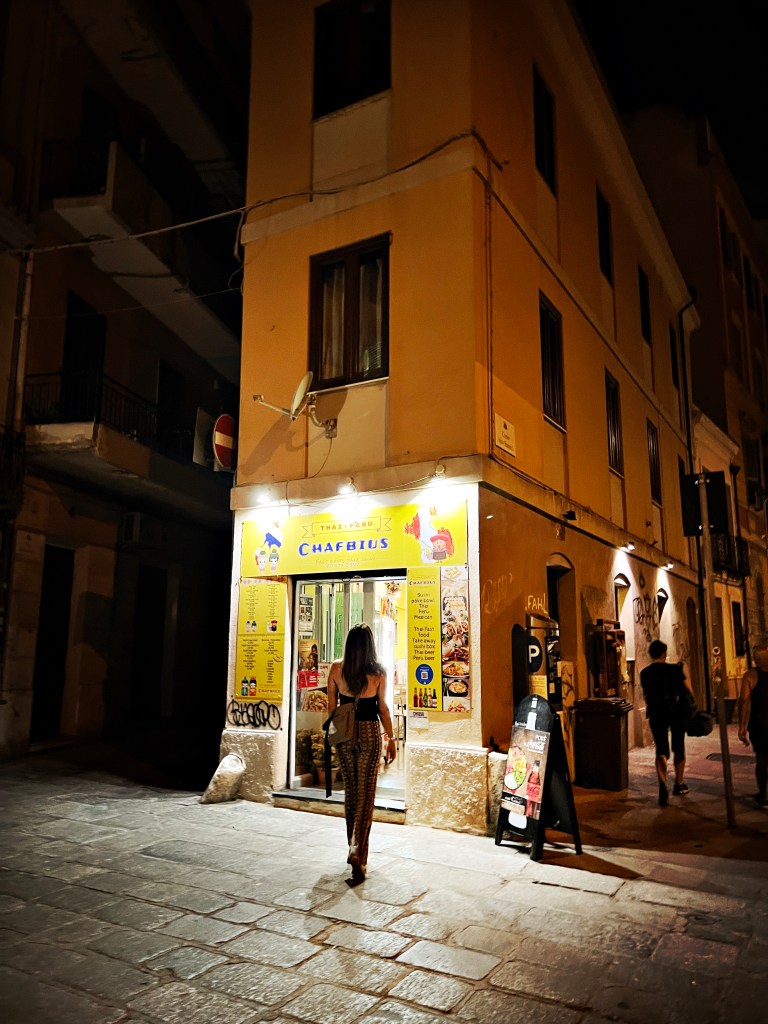
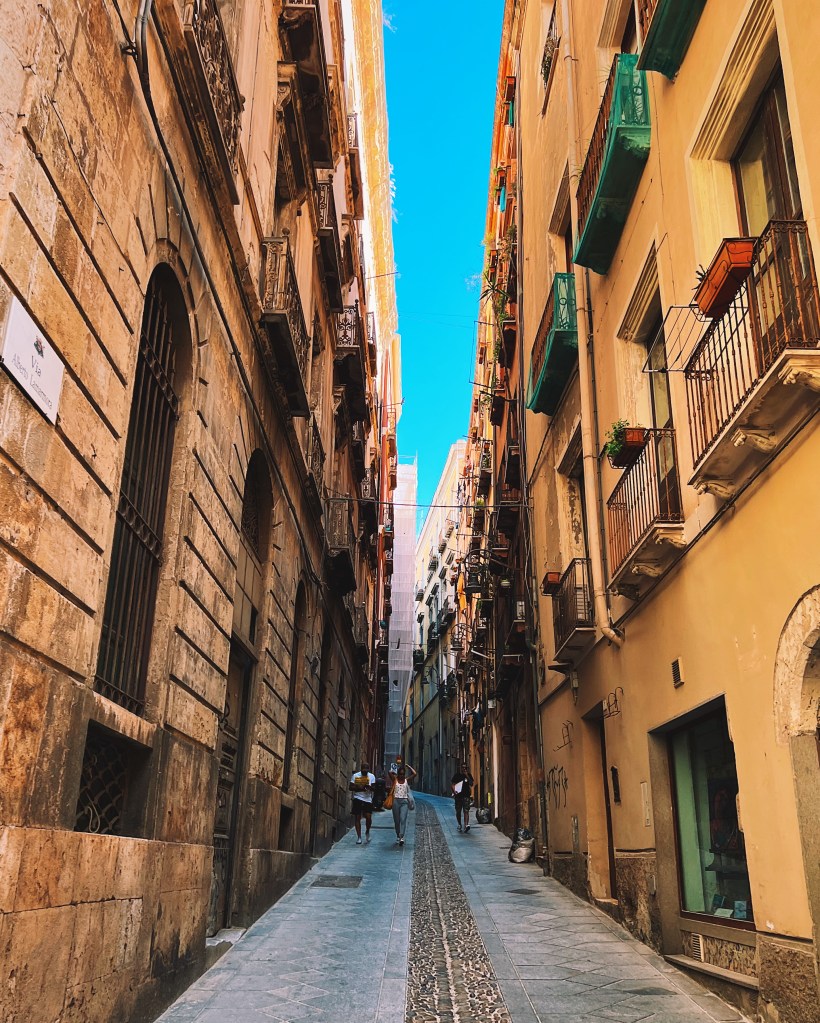
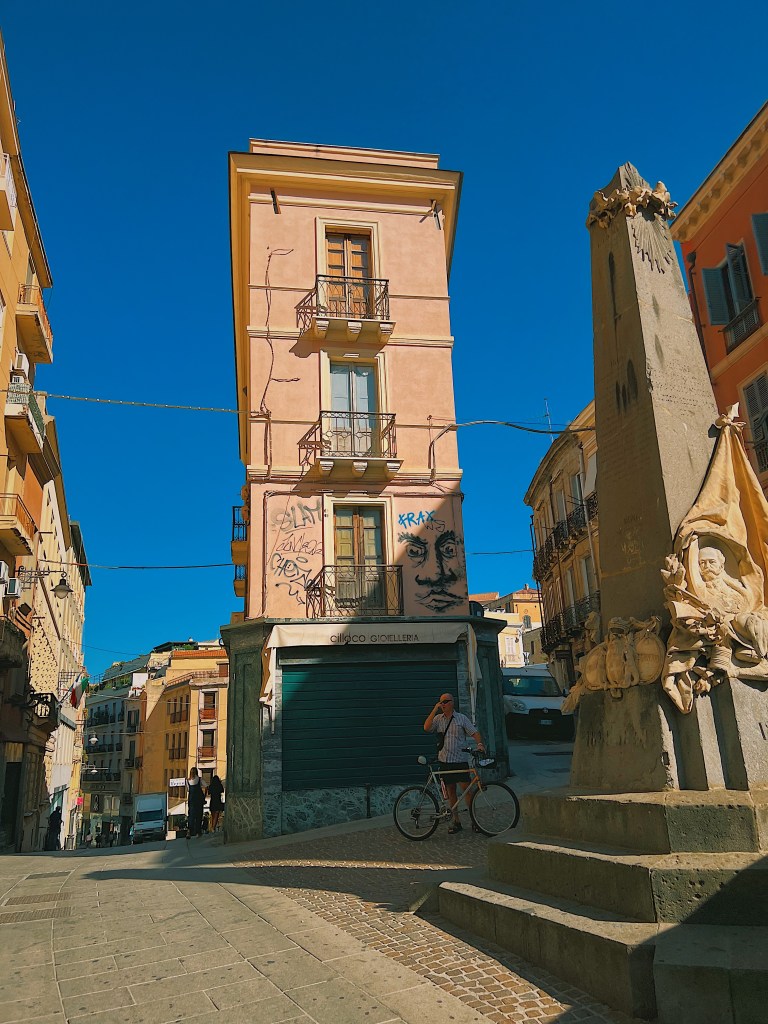
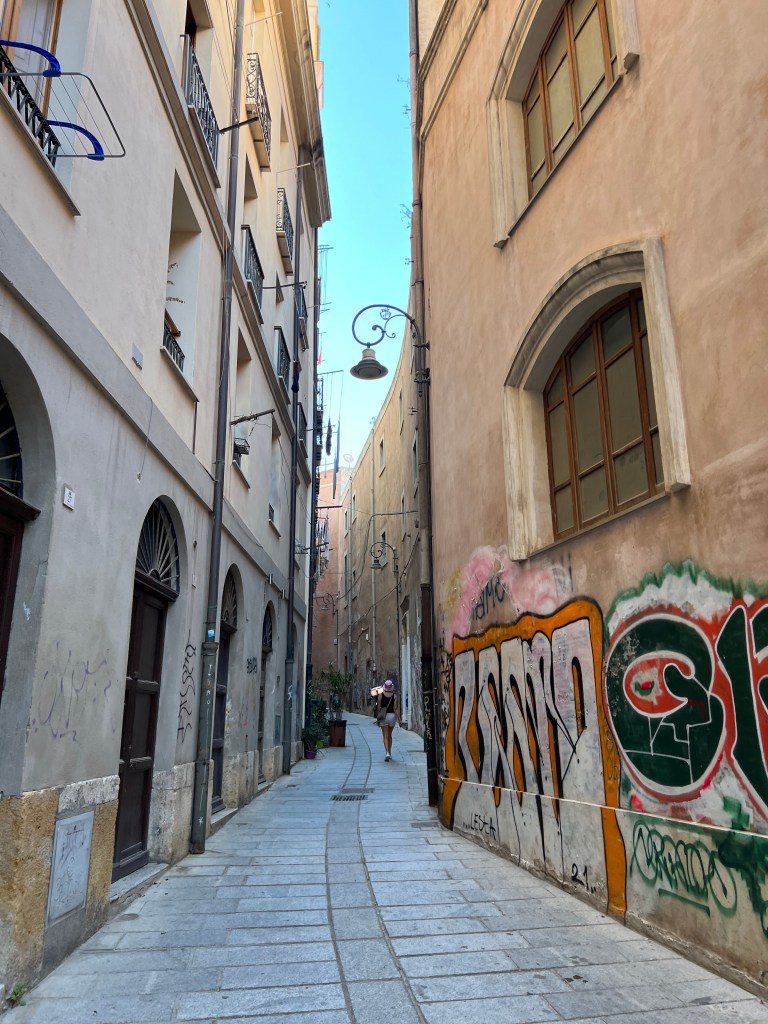
On the next morning we went for a walk through the town and up to the old walled city with beautiful views over the city. Apart from Melbourne, Australia, we have never come across a city with such an affinity for graffiti.
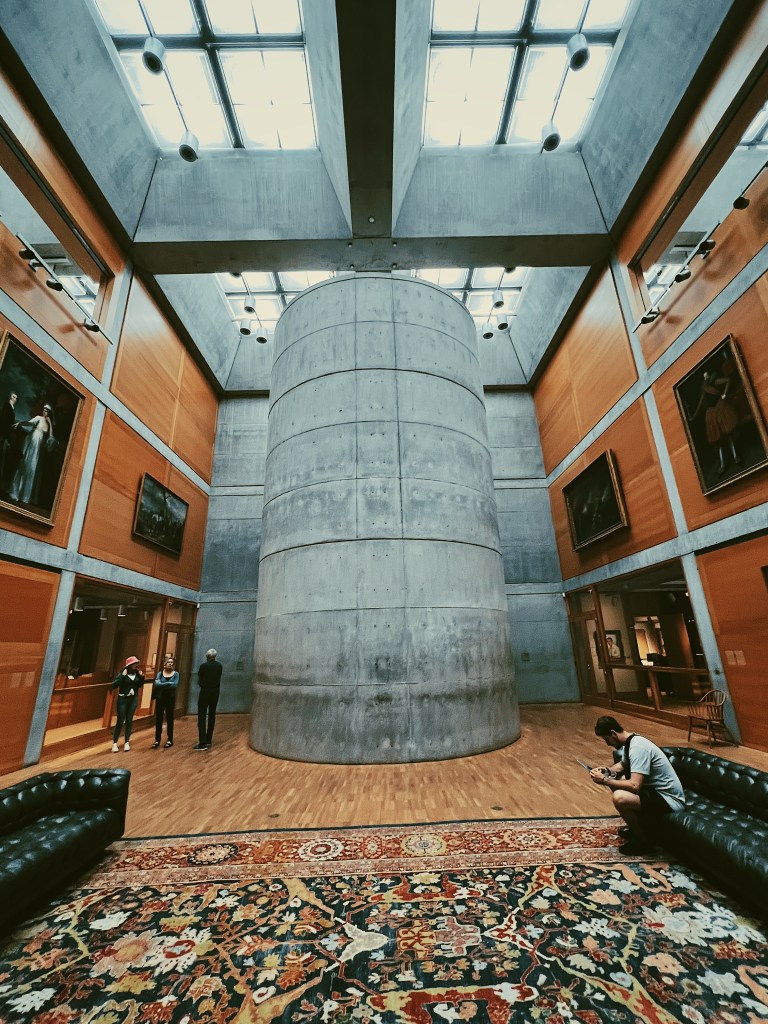
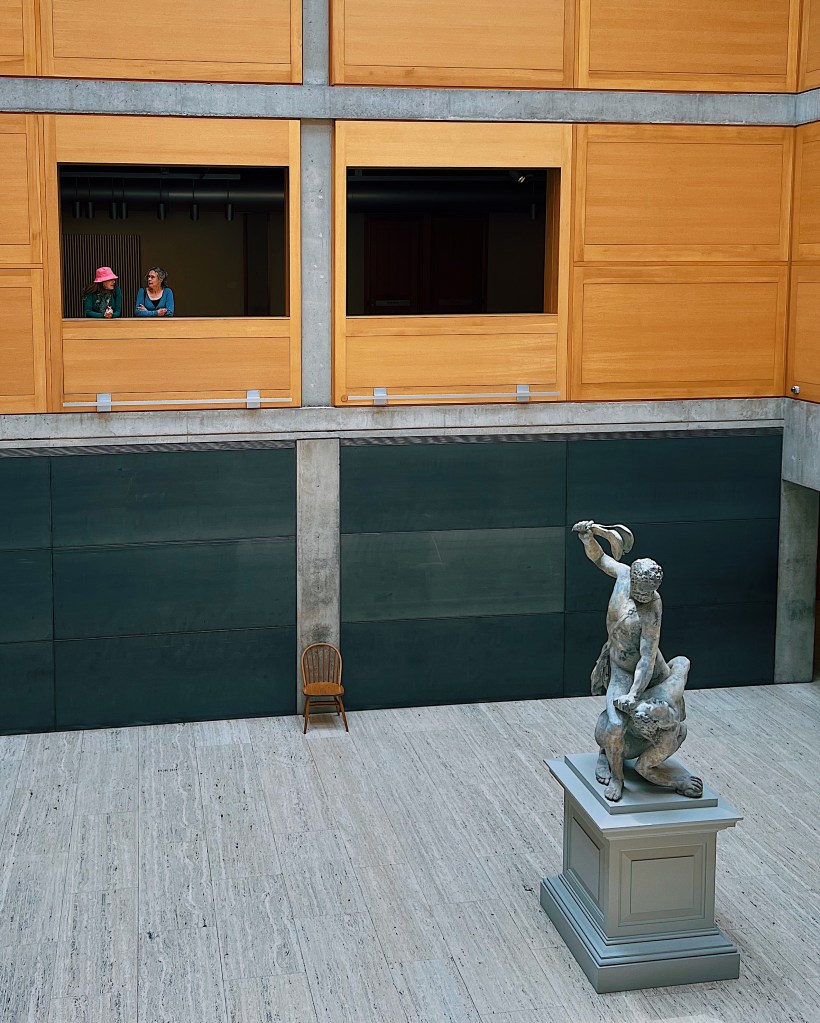
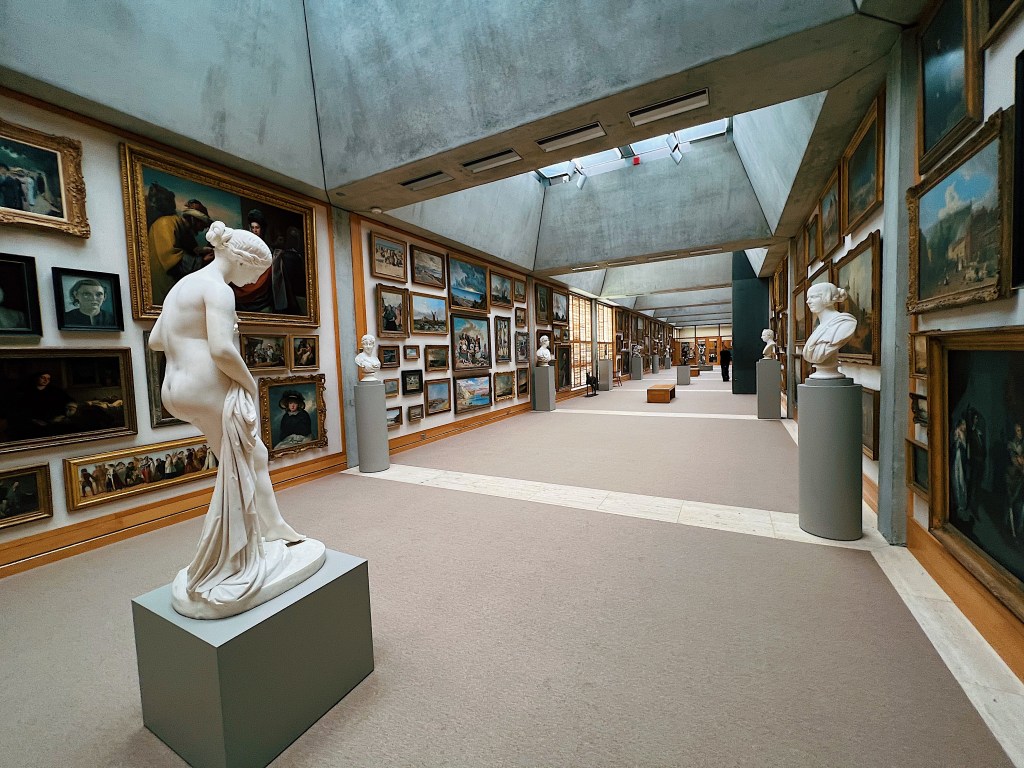
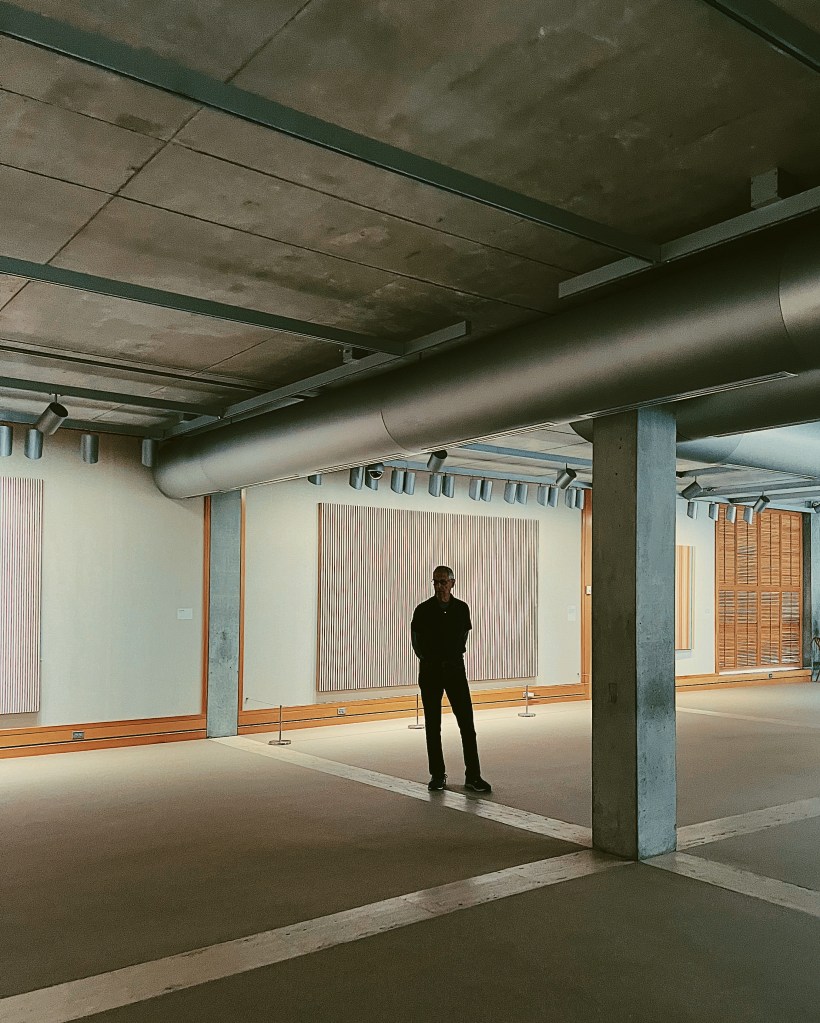
Joe and Dale led us on a tour of the Yale University campus in New Haven. We started out at the Yale Center for British Art. The museum houses the largest collection of British Art outside the UK. It is in a building designed by Louis Kahn, the famous American architect, who taught at Yale in the forties and fifties.
There were a number of paintings by Marc Quinn on display. Apart from the paint splattered across it, it was almost impossible to tell that the following is, in fact, a realist painting and not a photograph. The original photograph, taken by Jonathan Bachman of Reuters, is called Taking a Stand in Baton Rouge. It is of Ieshia Evans being arrested during protests in 2016, following the shooting by police of Alton Sterling.
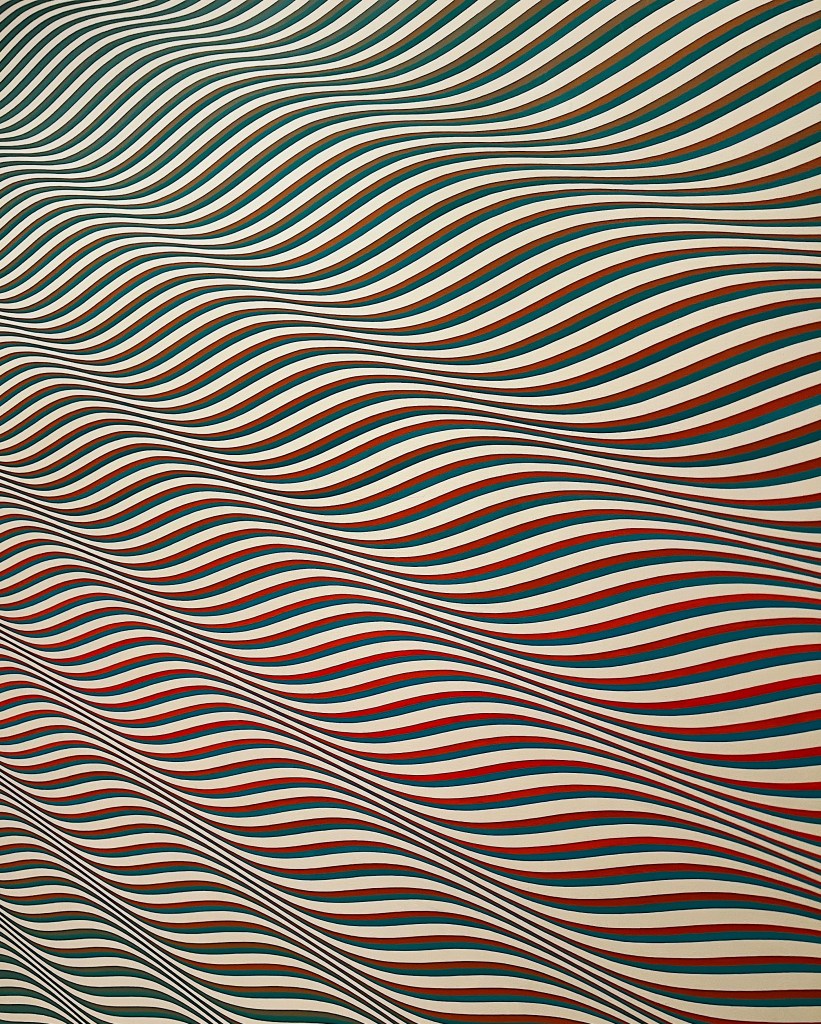
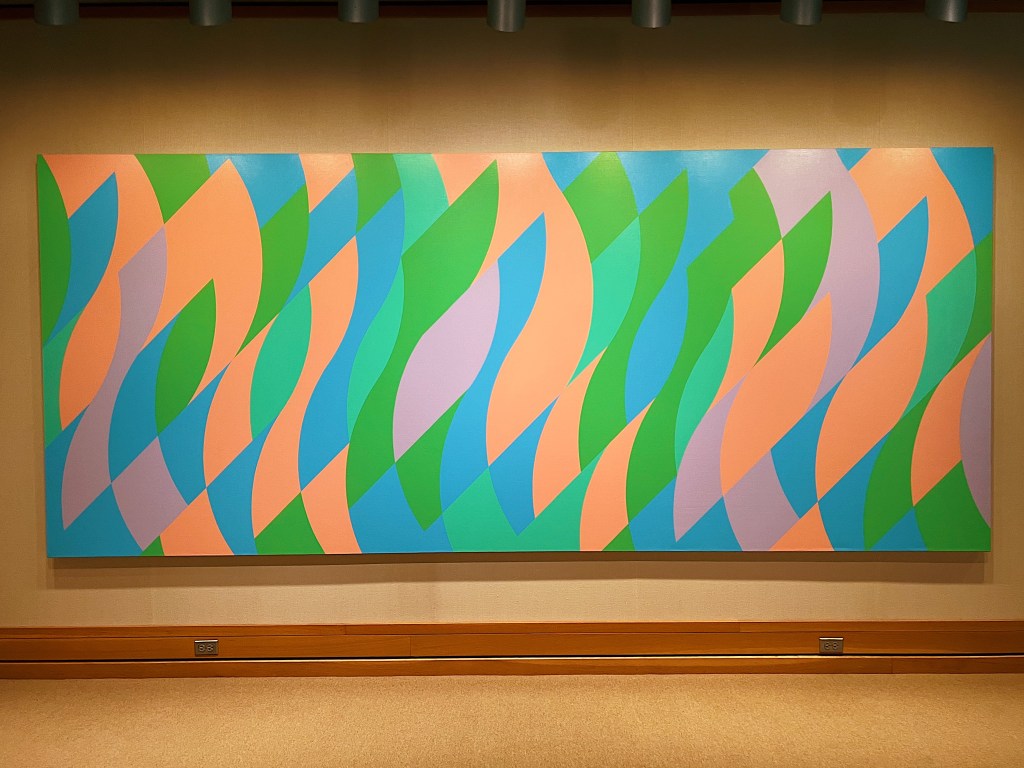
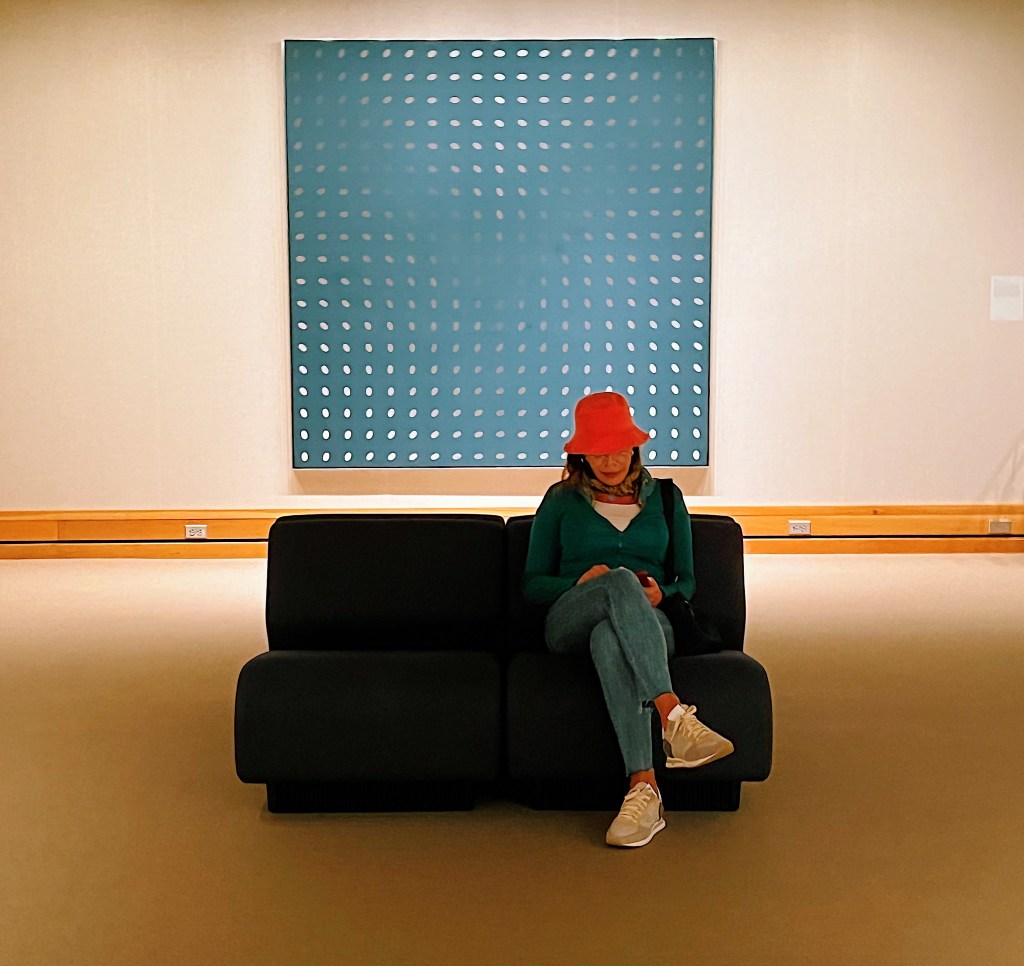
There was also a large exhibit of paintings by Bridget Riley. Many of the paintings were hard to look at without feeling somewhat dizzy. We got the sense that if we sat and looked at them long enough we were in danger of becoming hypnotized.
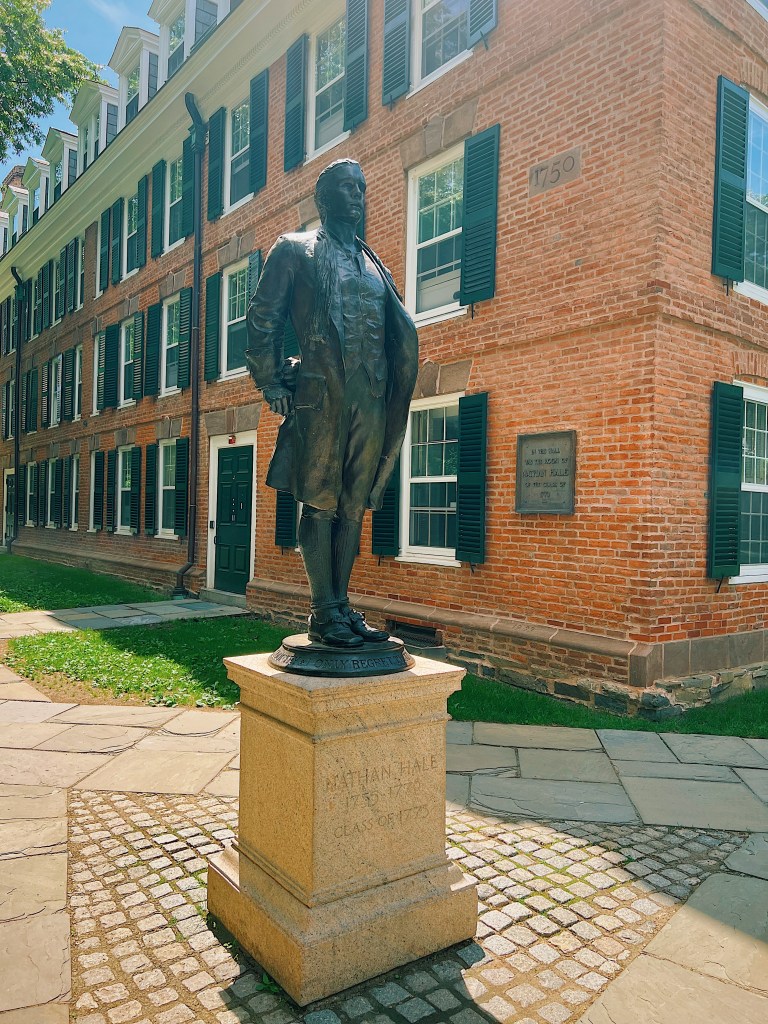
From the museum we set out on a stroll through the campus, guided by Joe, who had worked on a number of buildings at Yale. The original buildings on the campus were Georgian style. The brick building below called Connecticut Hall was built in 1750 and is the oldest building on campus. Standing outside the hall is a statue of Nathan Hale. Hale was a soldier and spy for the Americans during the Revolutionary War. He famously said “I only regret that I have but one life to lose for my country”. Hale studied at Yale and, in fact, had a room is Connecticut Hall.
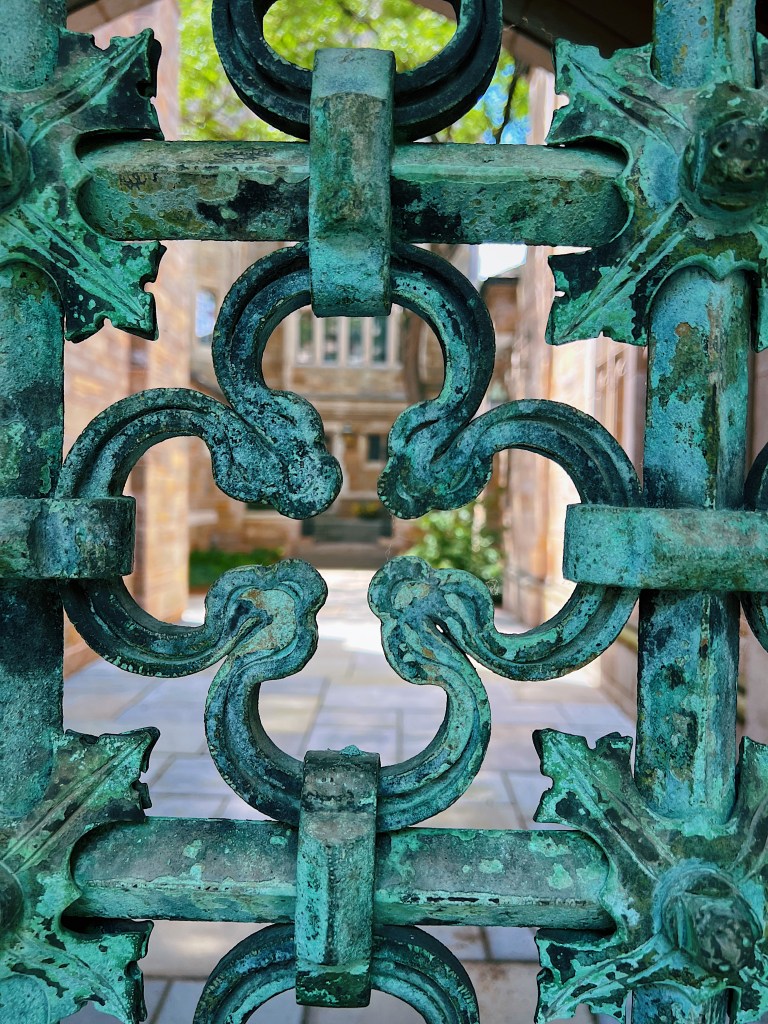
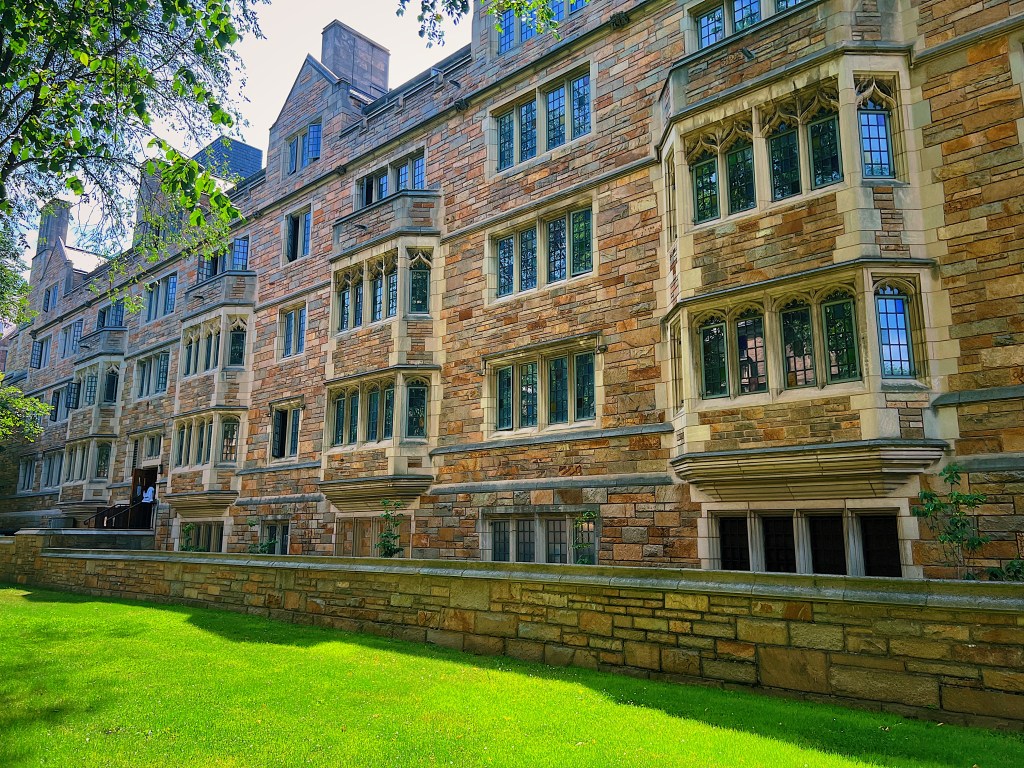
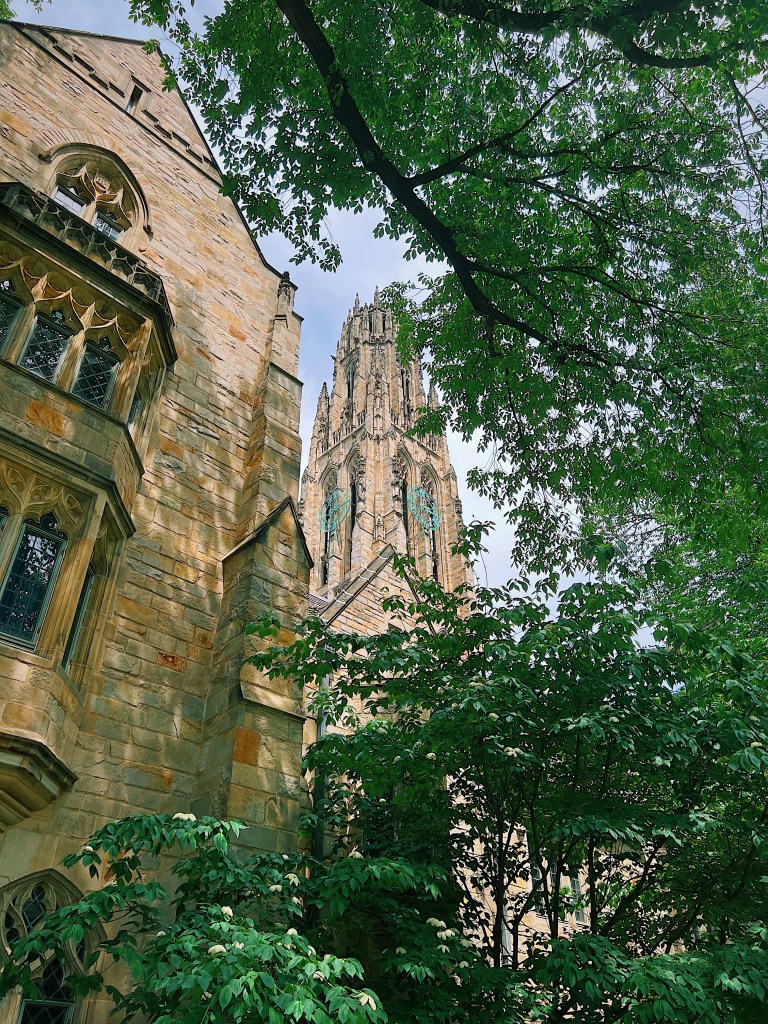
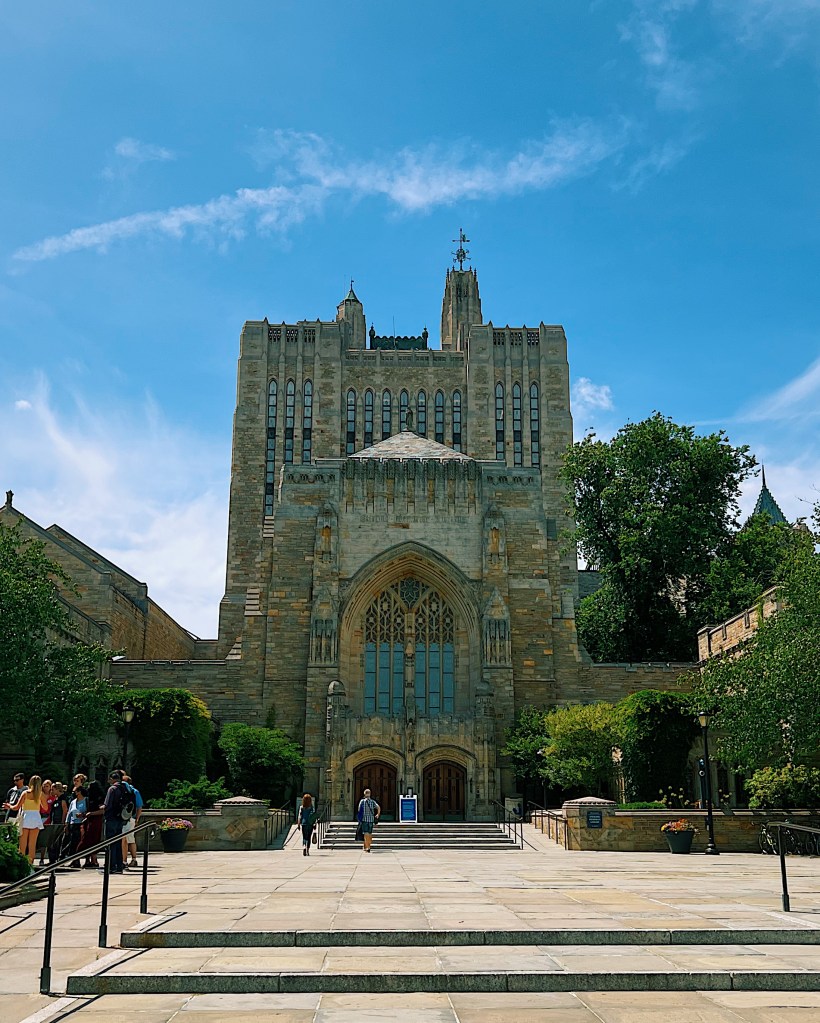
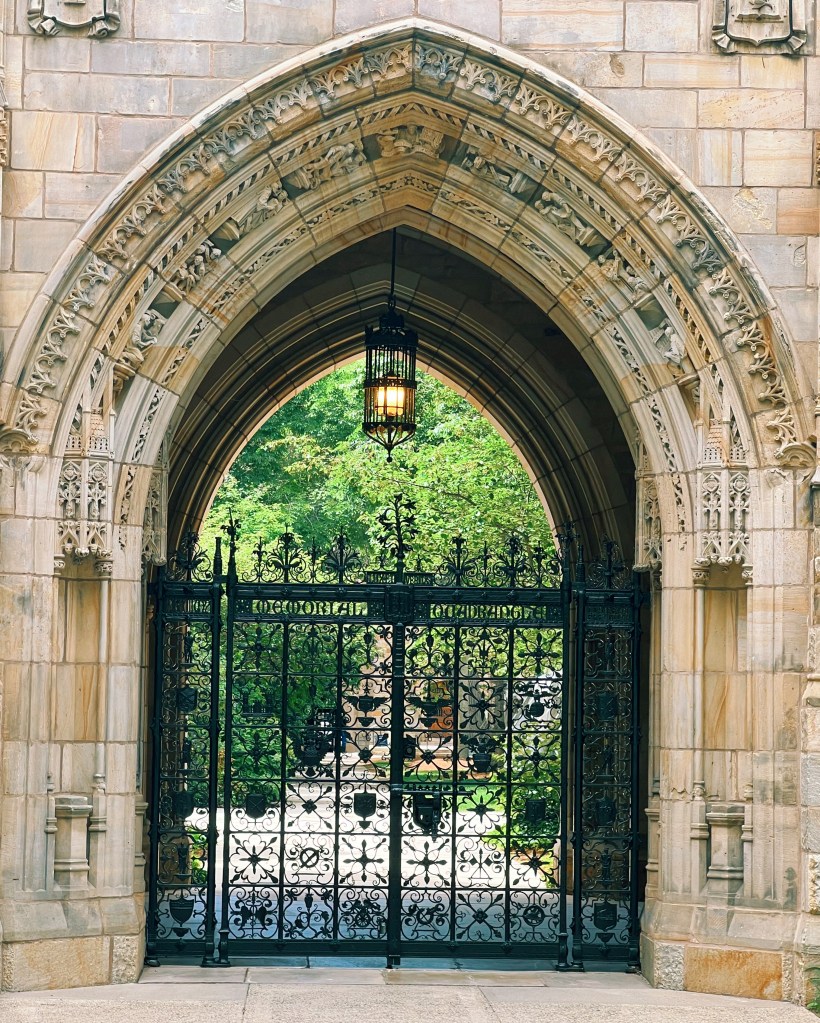
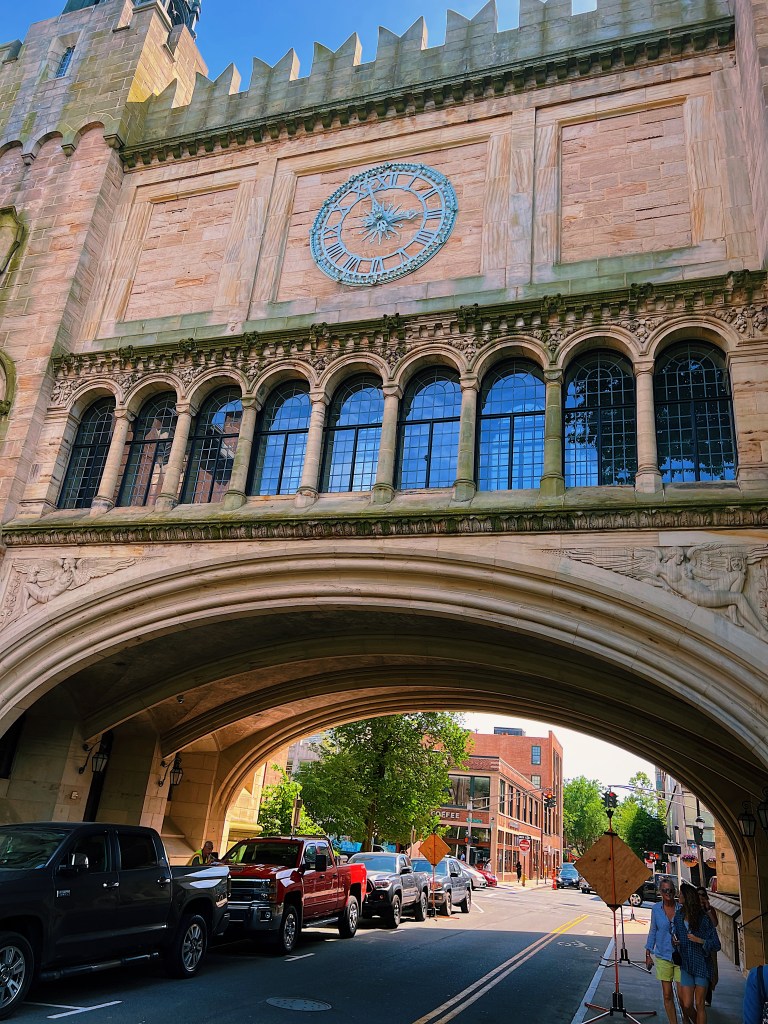
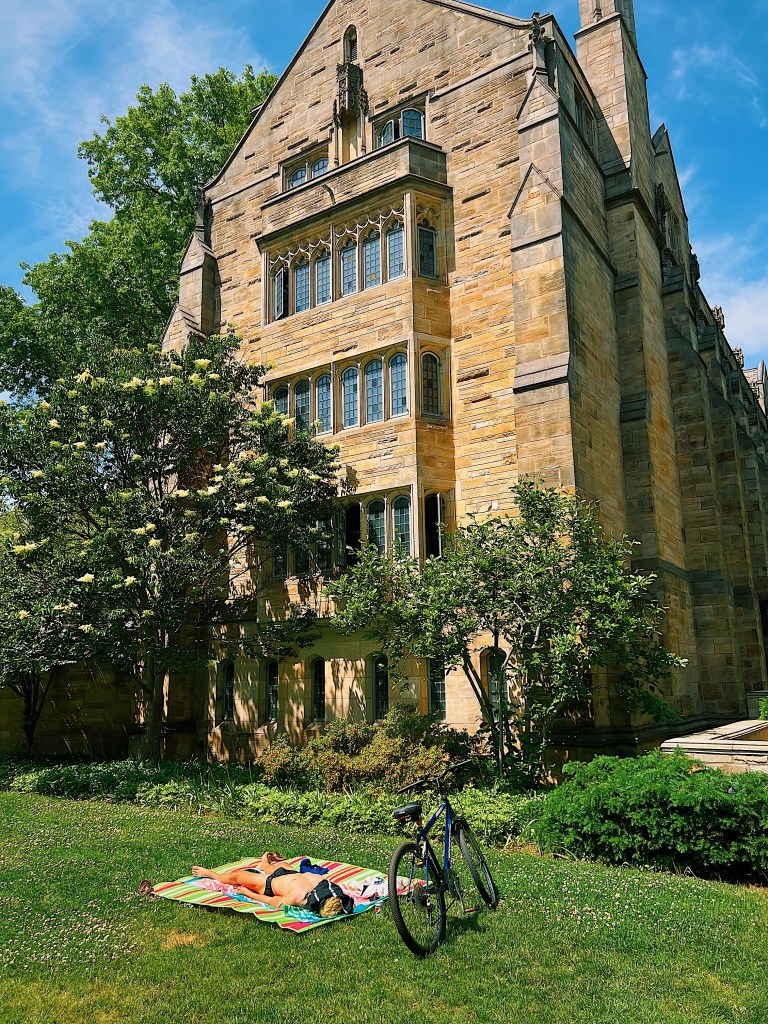
Now, most of the buildings on campus are Gothic Revival, and it is easy to imagine that you are in Cambridge or Oxford in England. Just as in those universities, Yale is divided into different colleges with their own residences built around private courtyards.
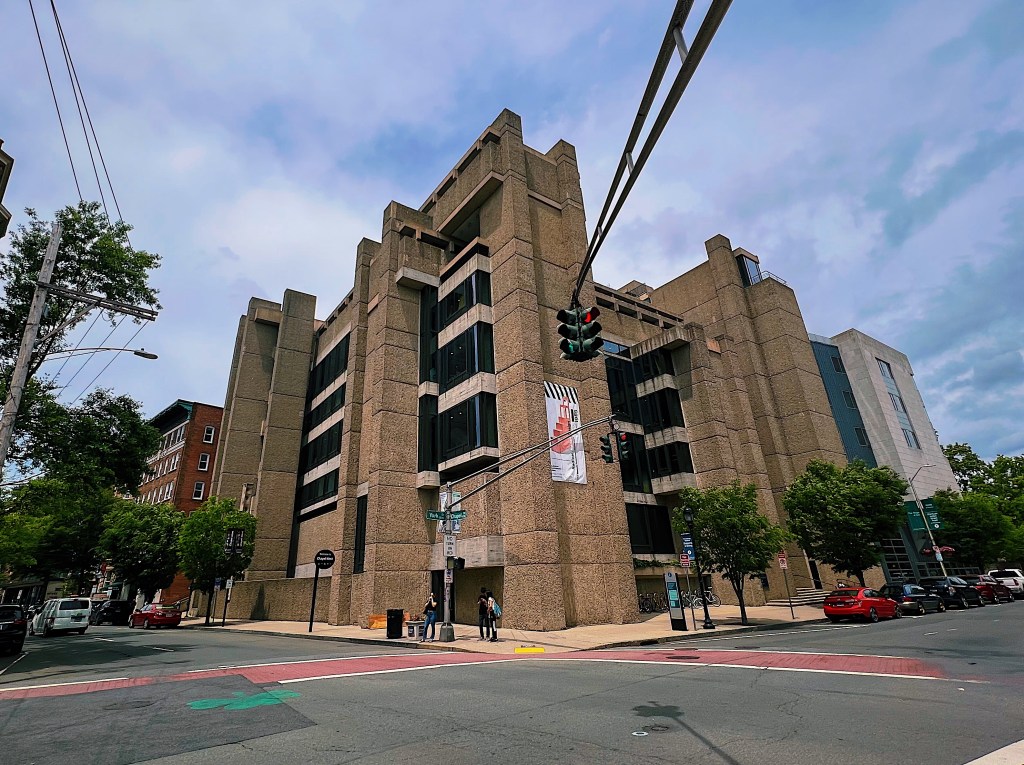
There were also a number of less traditional buildings, including this Brutalist gem. Designed by Paul Rudolph and completed in 1963, it houses the School of Architecture.
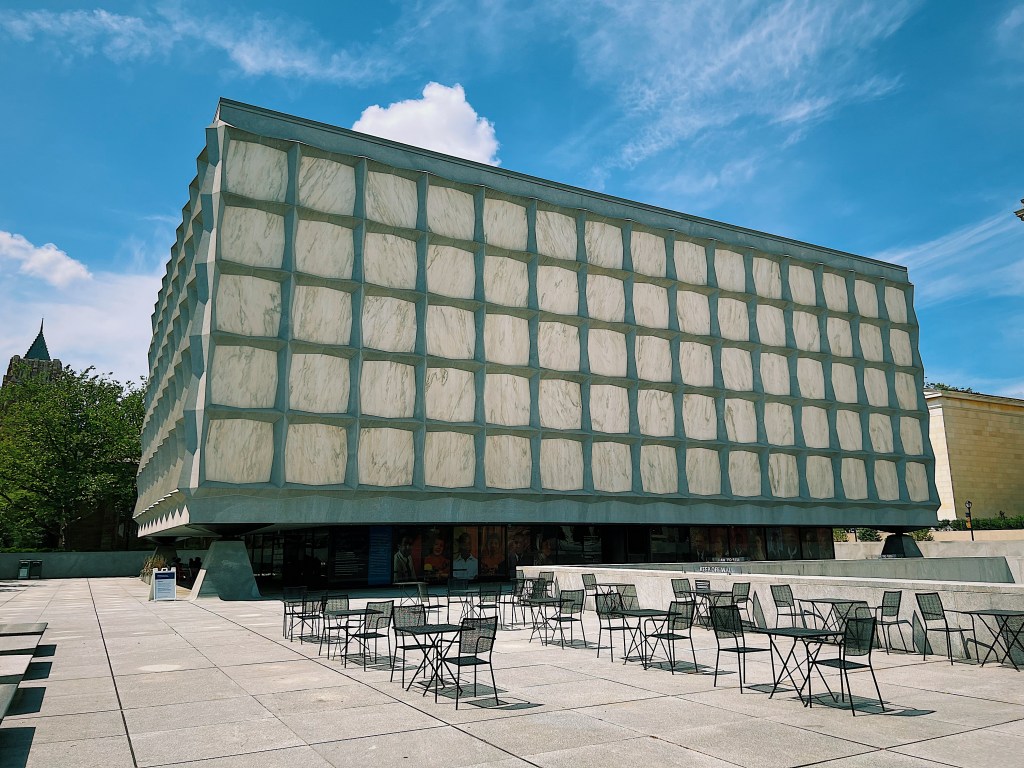
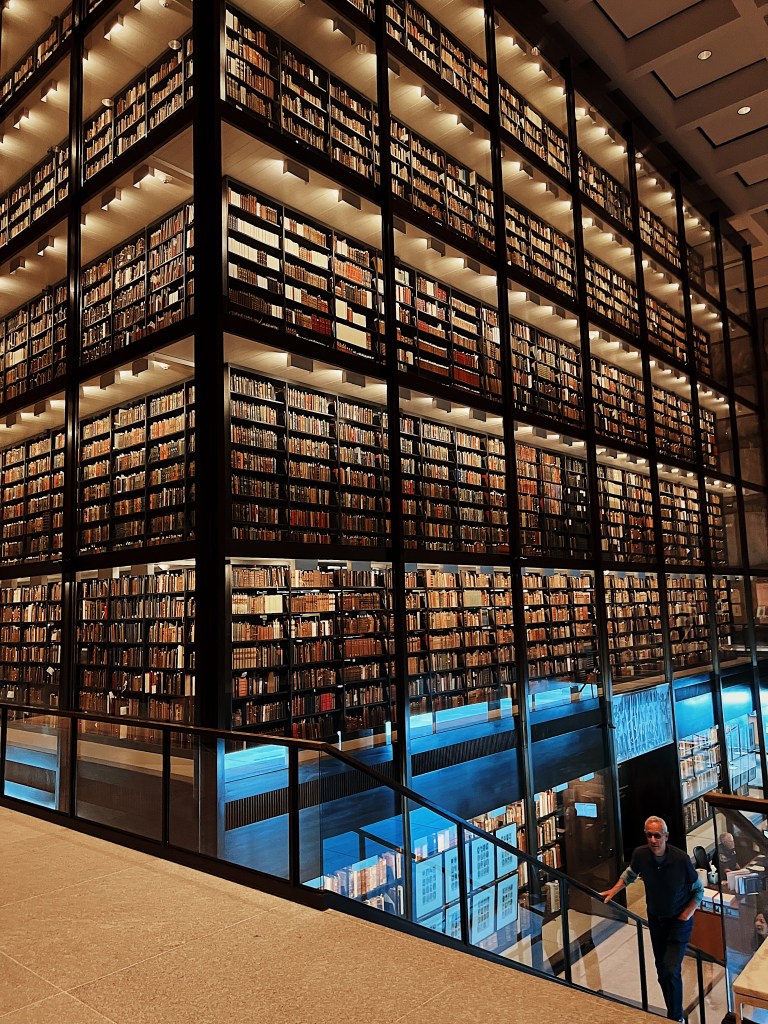
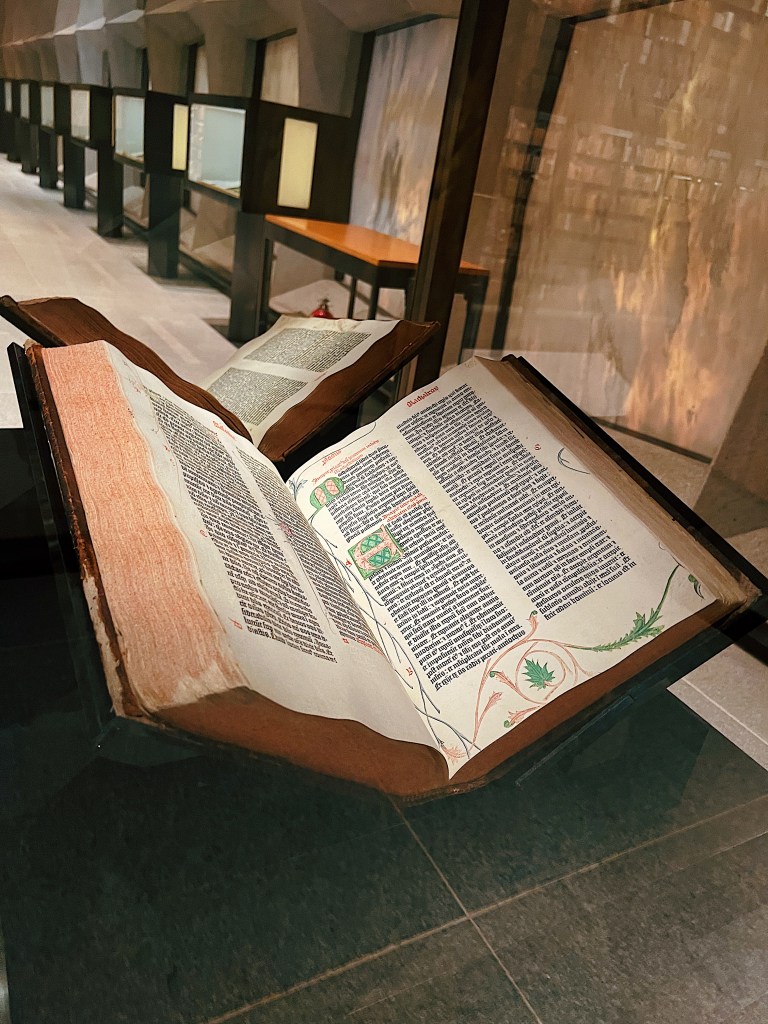
Our favorite was the Beinecke Rare Book and Manuscript Library. Designed by Gordon Bunschaft, its facade is constructed of translucent veined marble and granite. The marble is milled to a thickness of 1.25 inches, so that on a sunny day the marble transmits filtered daylight into the interior. The building surrounds an interior glass structure that protects the rare books and manuscripts.
The most famous book in the collection is one of the 49 surviving copies of the Gutenberg Bible, the earliest major book printed using mass-produced metal type. Although one has not been sold since 1978, the bibles are thought to be among the world’s most valuable books.
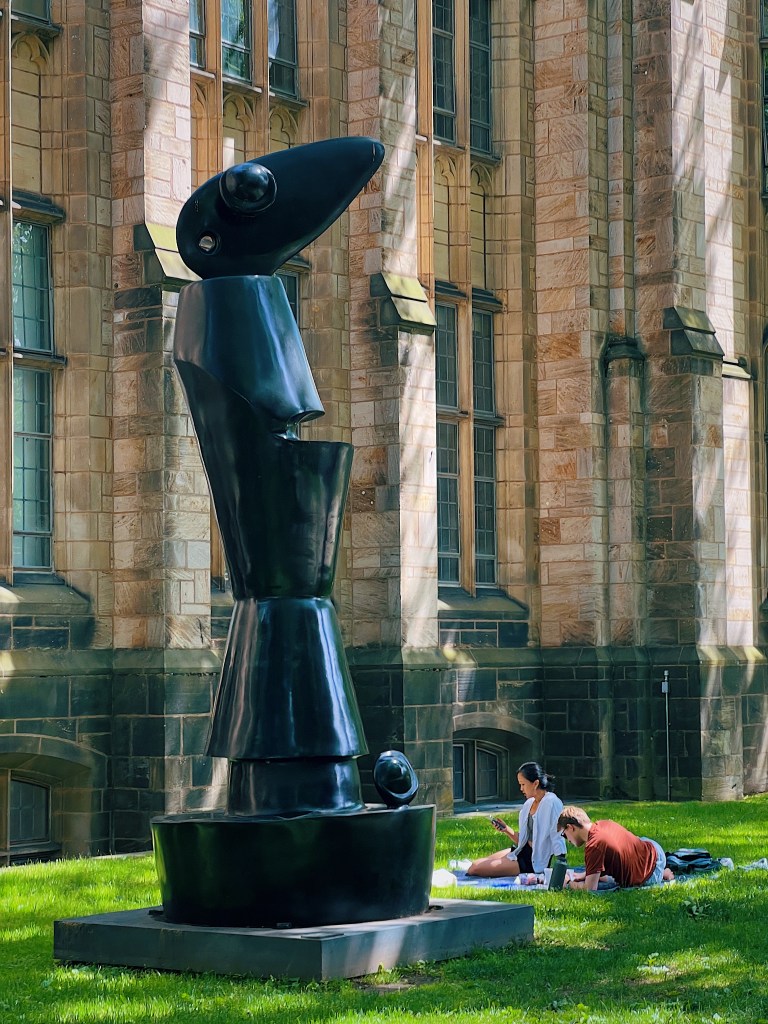
School had let out for the Summer, so there weren’t many students around. However, there were some out enjoying the sunny day.
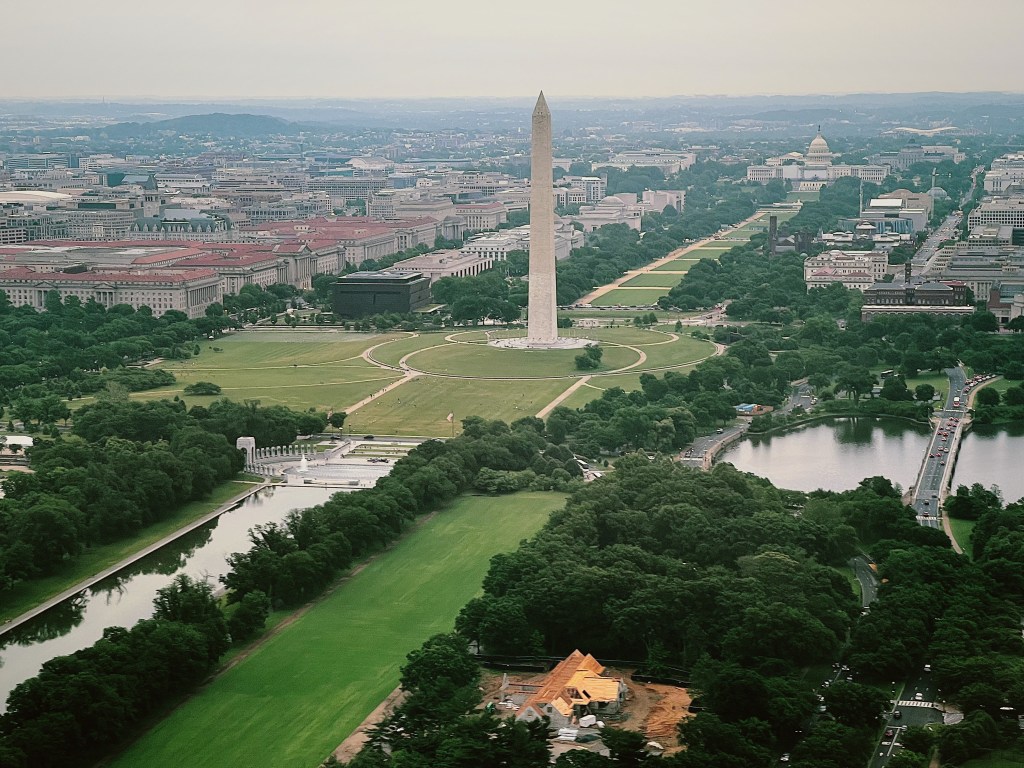
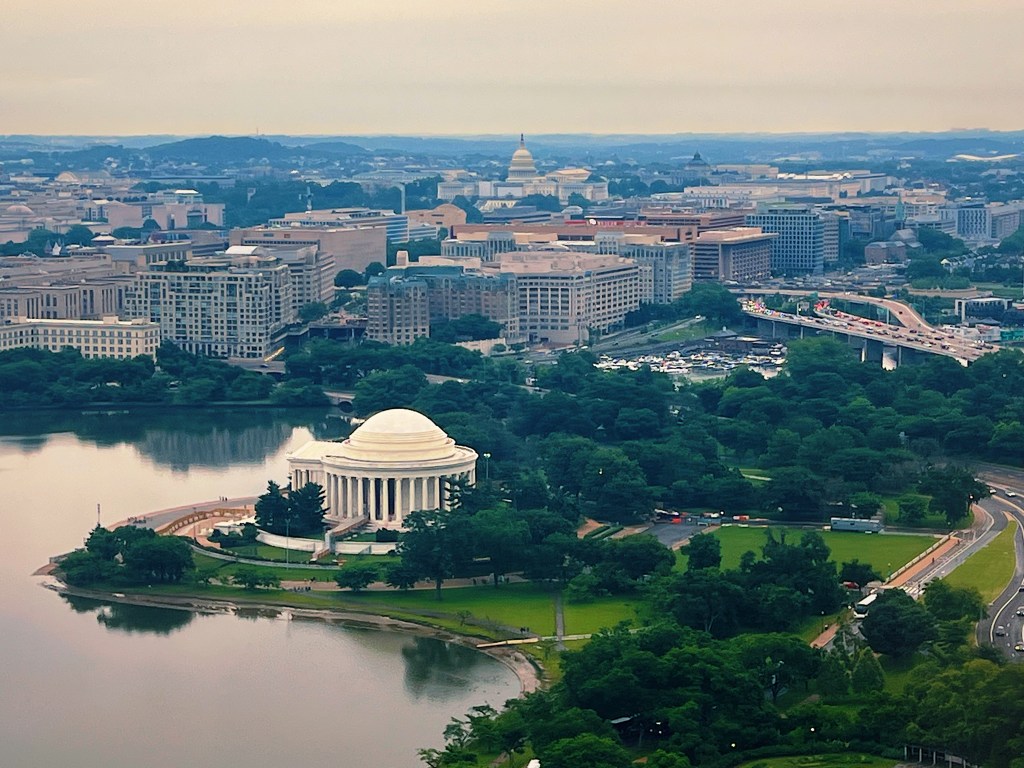
Later that day we flew back into Washington DC, and were treated to some great views of the city.
The Washington MonumentThe Jefferson MemorialThe Watergate Complex
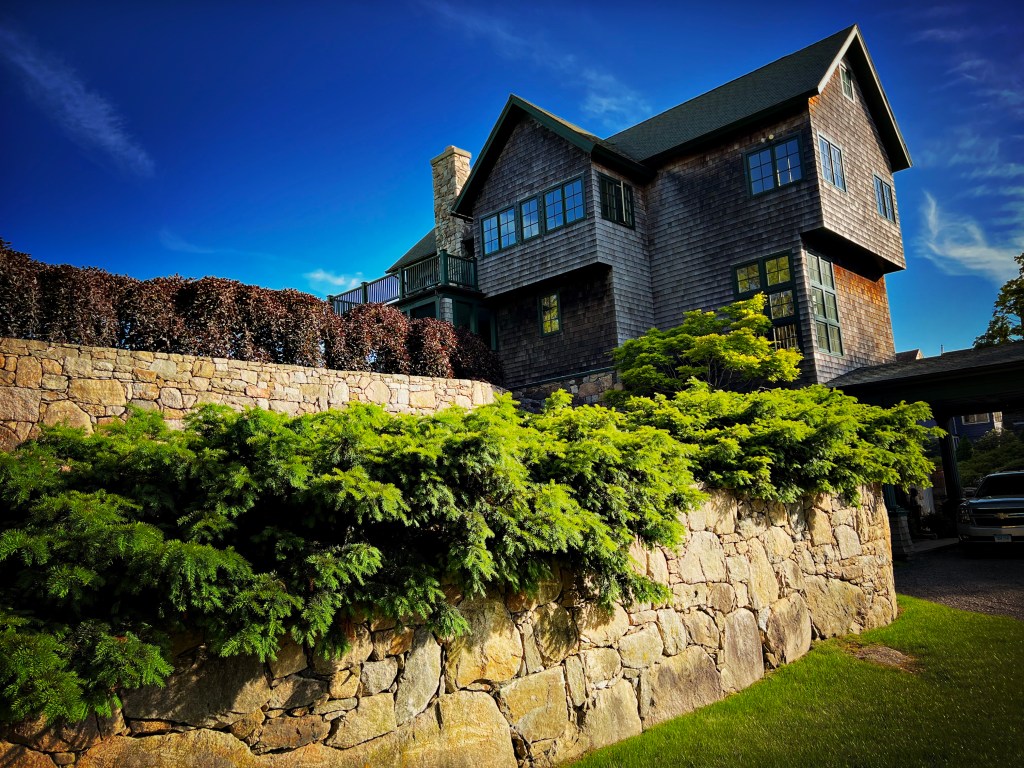
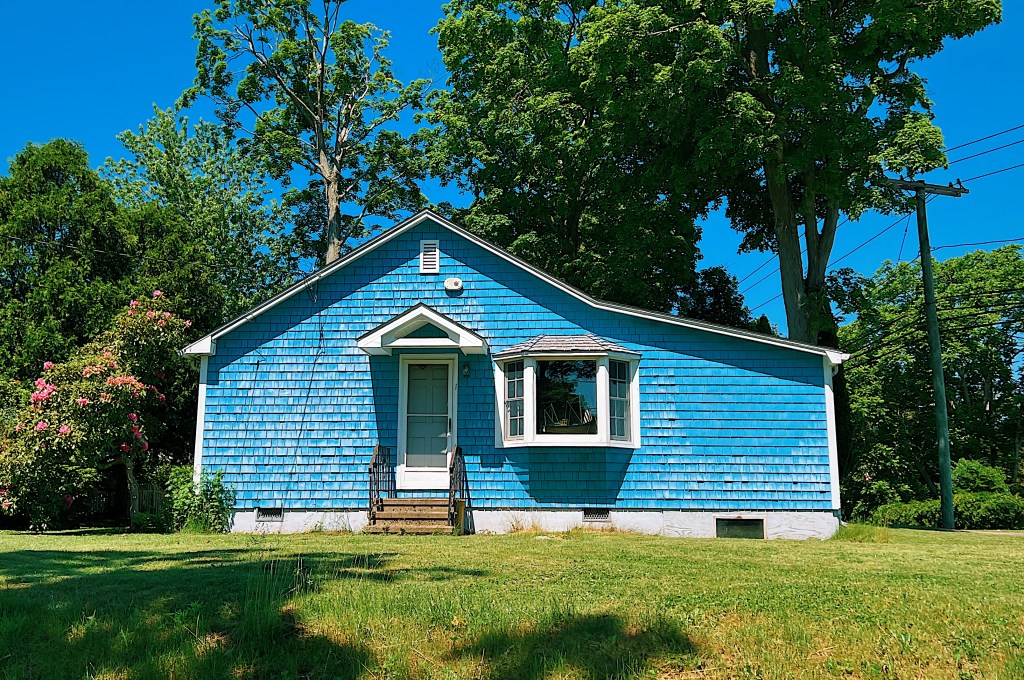
We spent a wonderful couple of nights staying with our dear friends Dale and Joe in the idyllic village of Stony Creek. Here they are outside their beautiful new home, designed by Joe.
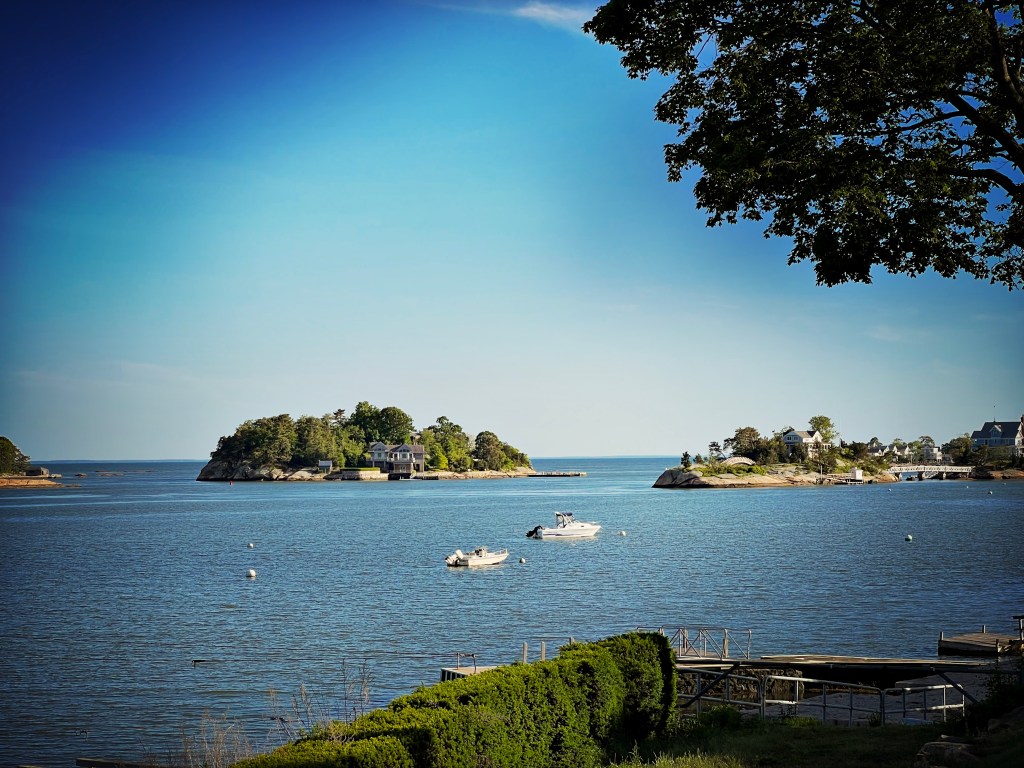
The village sits on Long Island Sound and just off shore are a number of small islands. Appropriately called the Thimble Islands, they are in fact an archipelago of small islands, many of which are just large enough to support one or two homes.
Thimble Islands
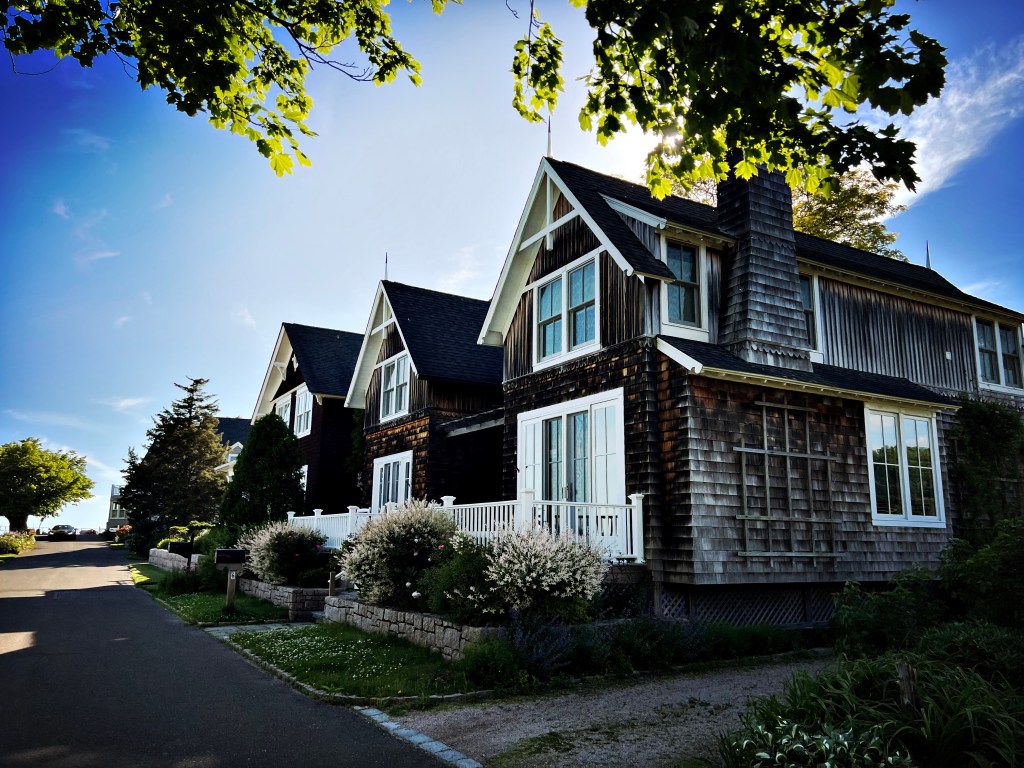
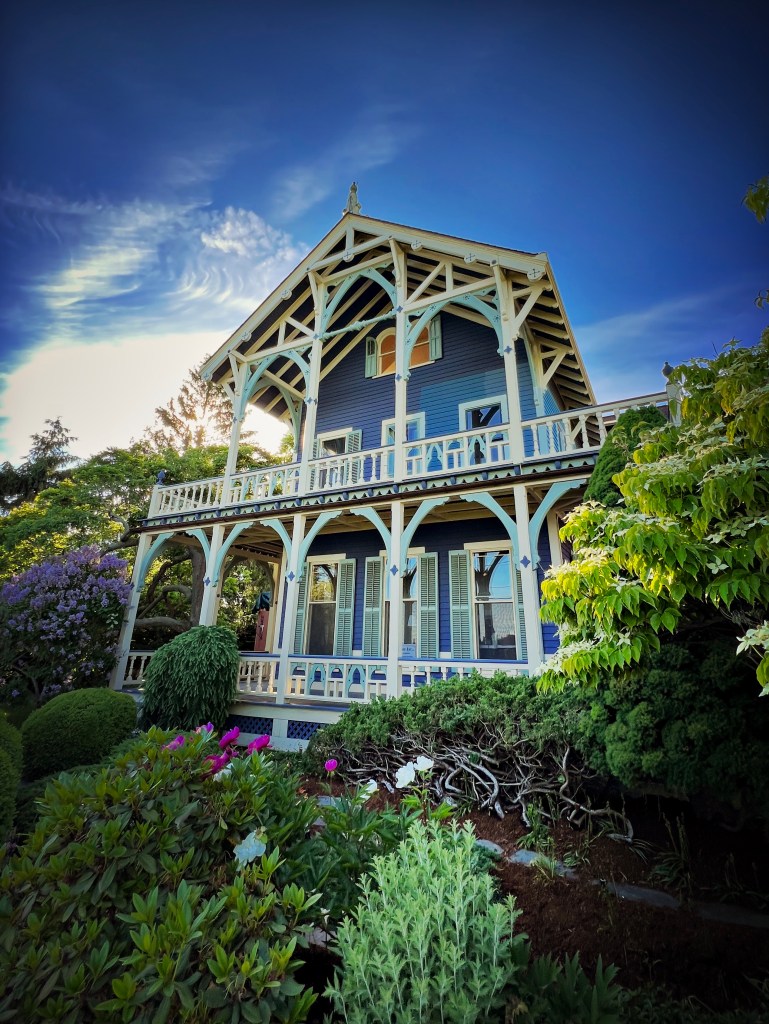
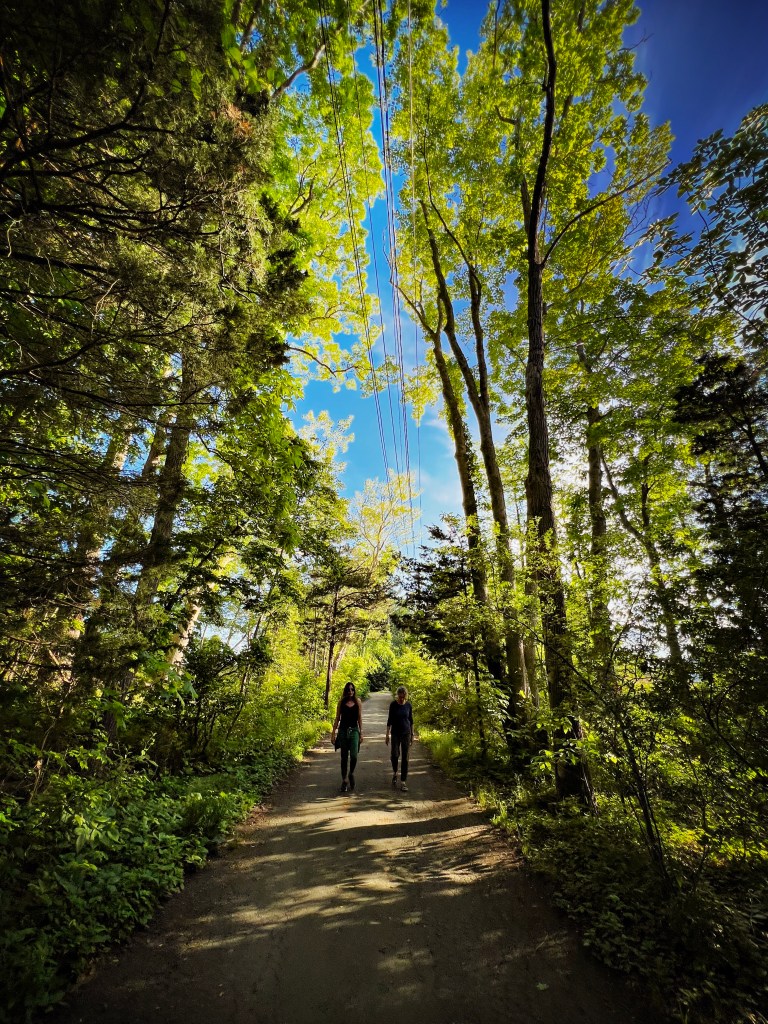
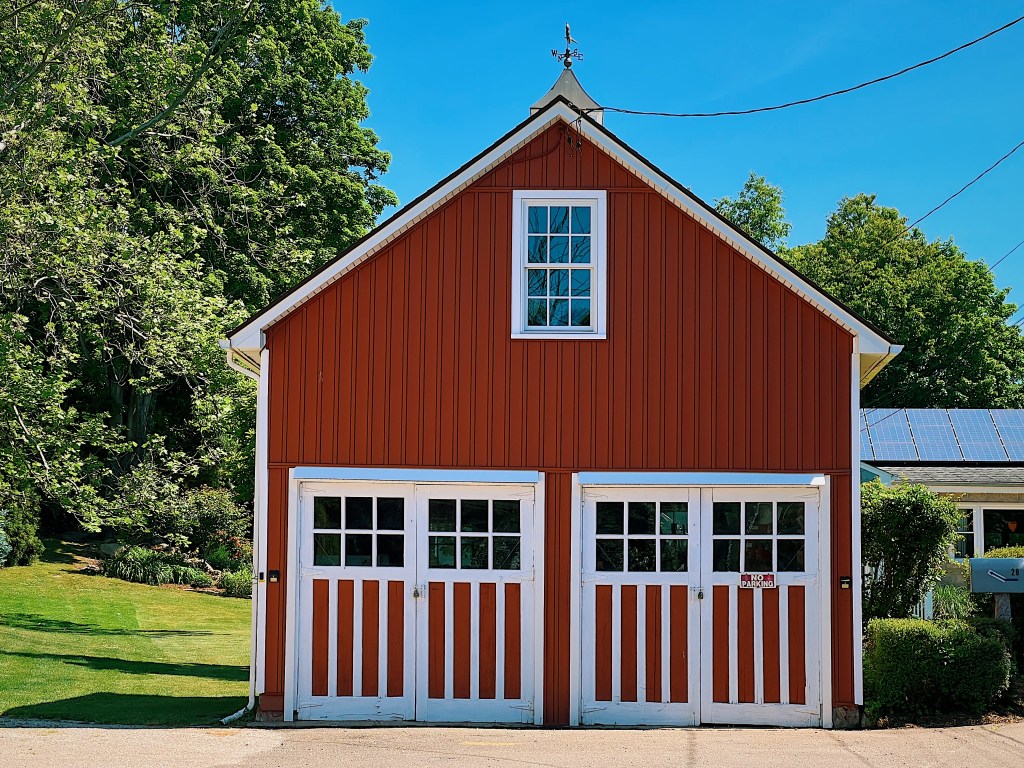
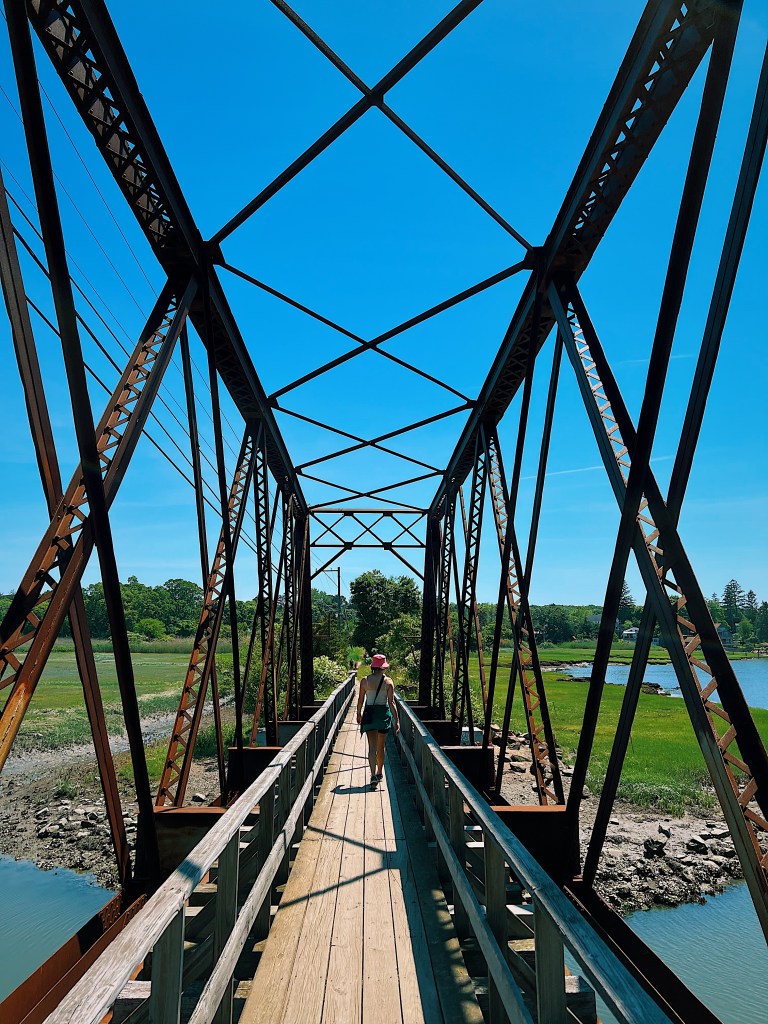
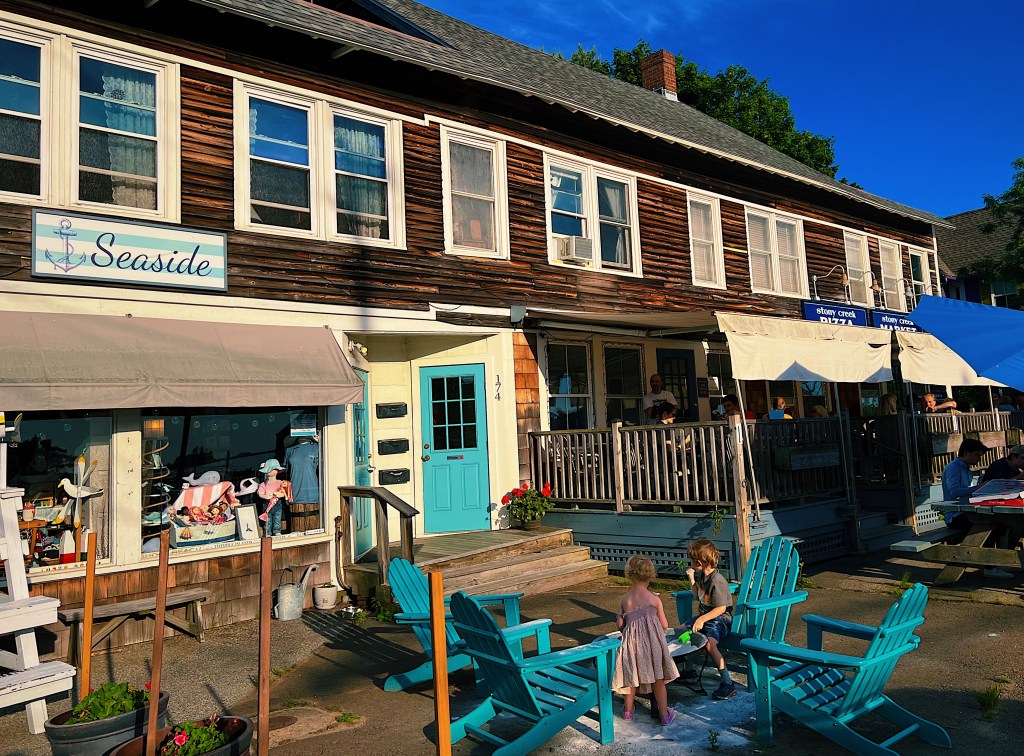
On the day we arrived, Joe and Dale took as on a stroll. Here are some of the beautiful scenes that we saw along the way.
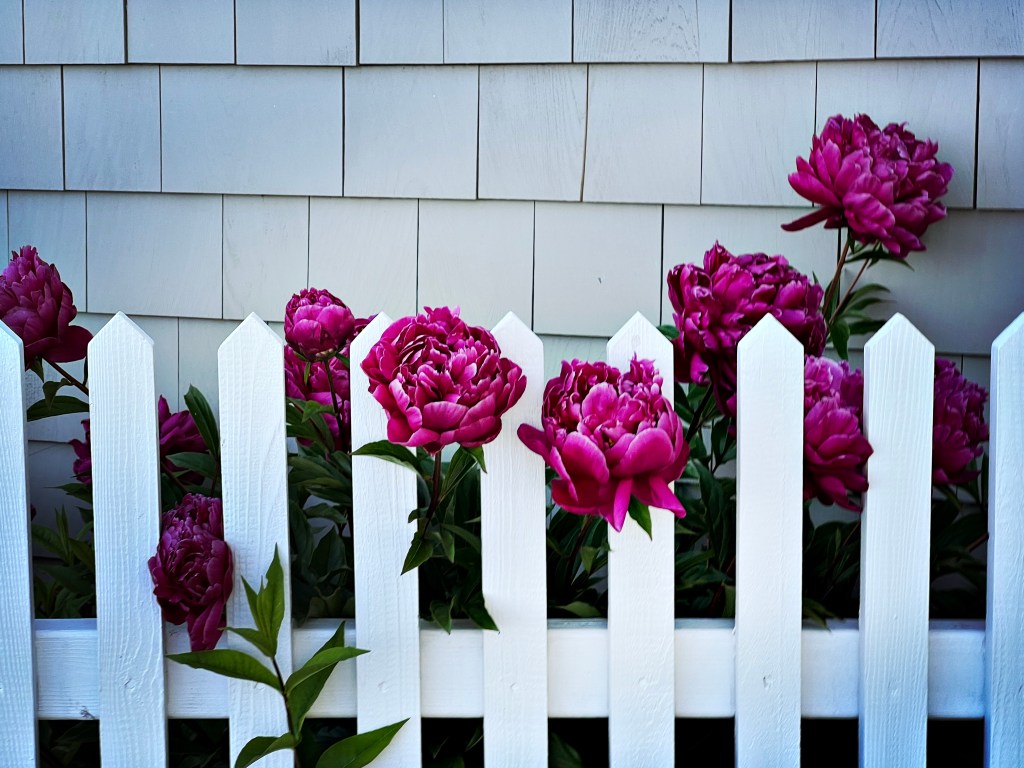
On the next morning, we continued exploring the village on our own.
Processed with VSCO with aga1 preset
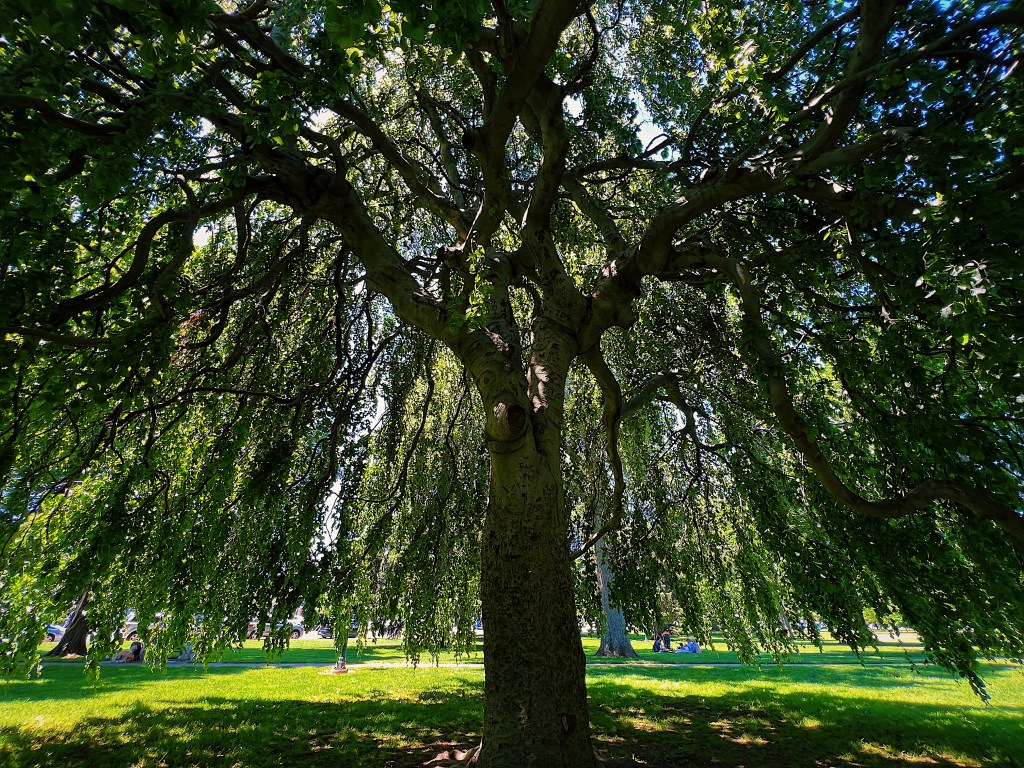
In the afternoon we drove over with Dale to the nearby town of Guilford with its beautiful town green.
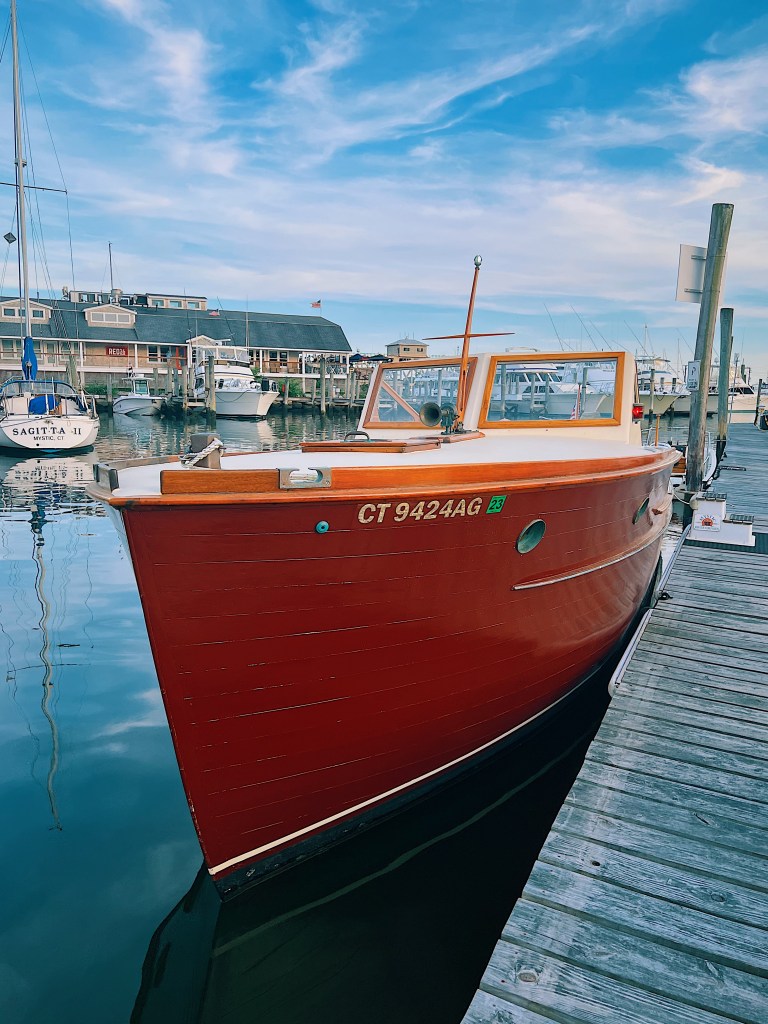
Then to cap off a wonderful day, we went for a sunset cruise on the Mystic river in a classic wooden speedboat. Some of you may know Mystic from the classic eighties romcom, Mystic Pizza, starring Julia Roberts in her first major movie role.
After spending a couple of days checking out one of Boston’s newest districts, we made our way over to Back Bay, a much more traditional neighborhood.
First stop was the Saturday market that surrounds Copley Square.
Sitting at the edge of the square is Trinity Church. Designed by Henry Hobson Richardson and built in the 1870s, it is the building that established Richardson’s reputation and is the birthplace and archetype of the Richardson Romanesque style.
Overlooking the church is another iconic Boston building. At 62 stories, The John Hancock Tower is the tallest building in New England. It was designed by Henry B. Cobb of the firm I.M. Pei & Partners and was completed in 1976.
The square is named for John Singleton Copley (1738-1815) who is regarded as one of the greatest and most influential painters in colonial America.
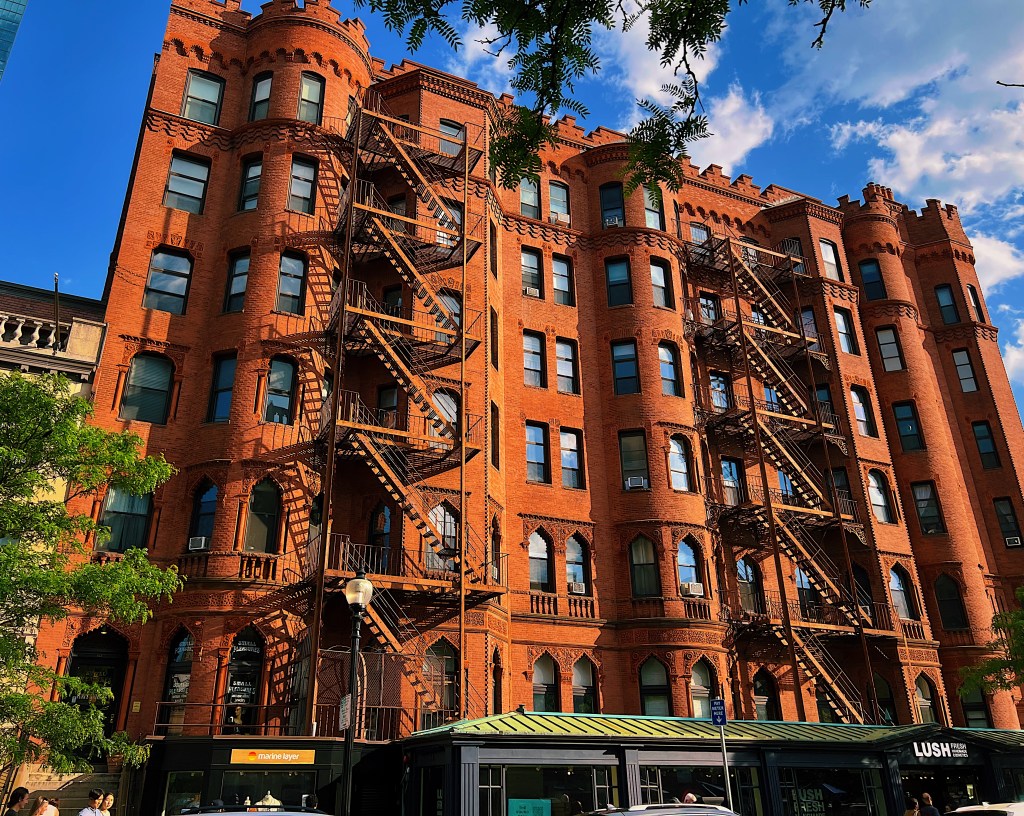
From Copley Square it was just a short walk to Newbury Street, which in our view is one of the world’s great shopping streets. It is named for the victory of the Puritans in the 1643 Battle of Newbury in the English Civil War. Not sure that the Puritans would approve of the high end retail stores, restaurants and bars that now line the street. It is lined with beautiful brownstone buildings that were originally homes before being converted into retail spaces.
Here is the crew midway through their day’s shopping spree.