September 9, 2021
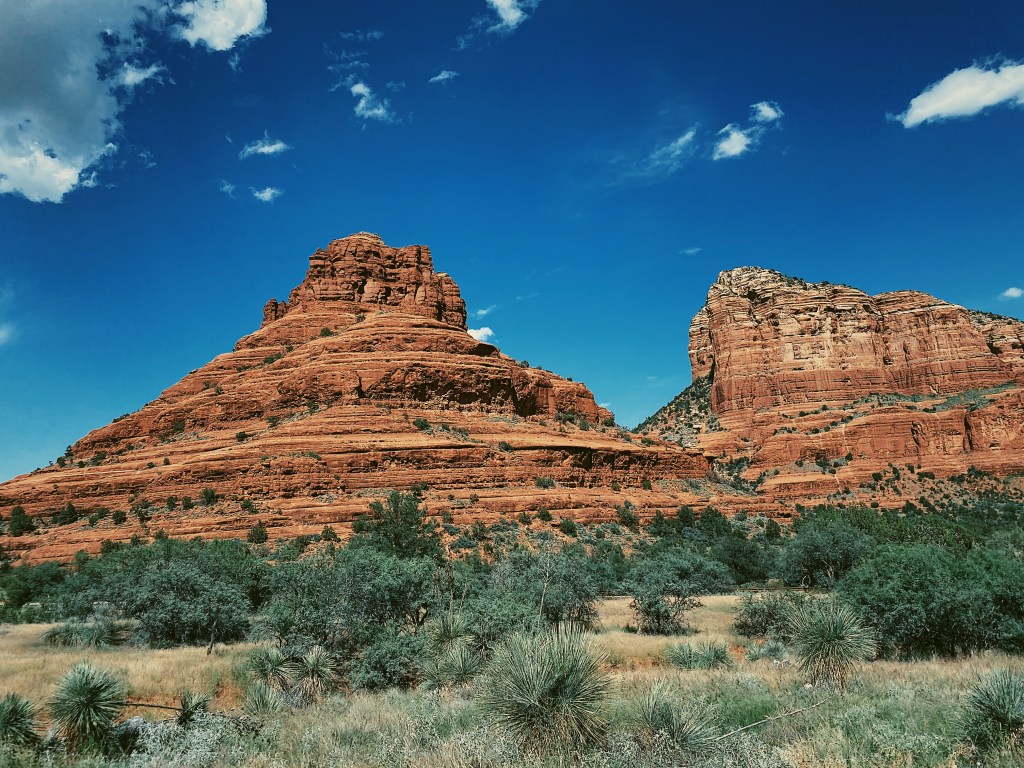
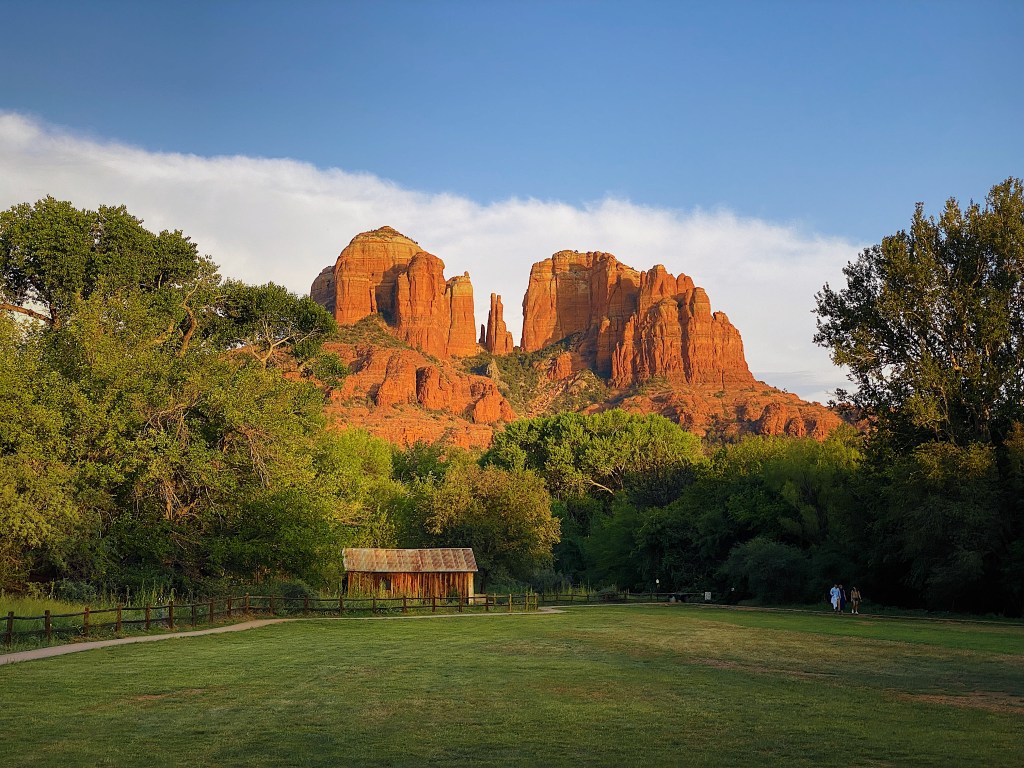
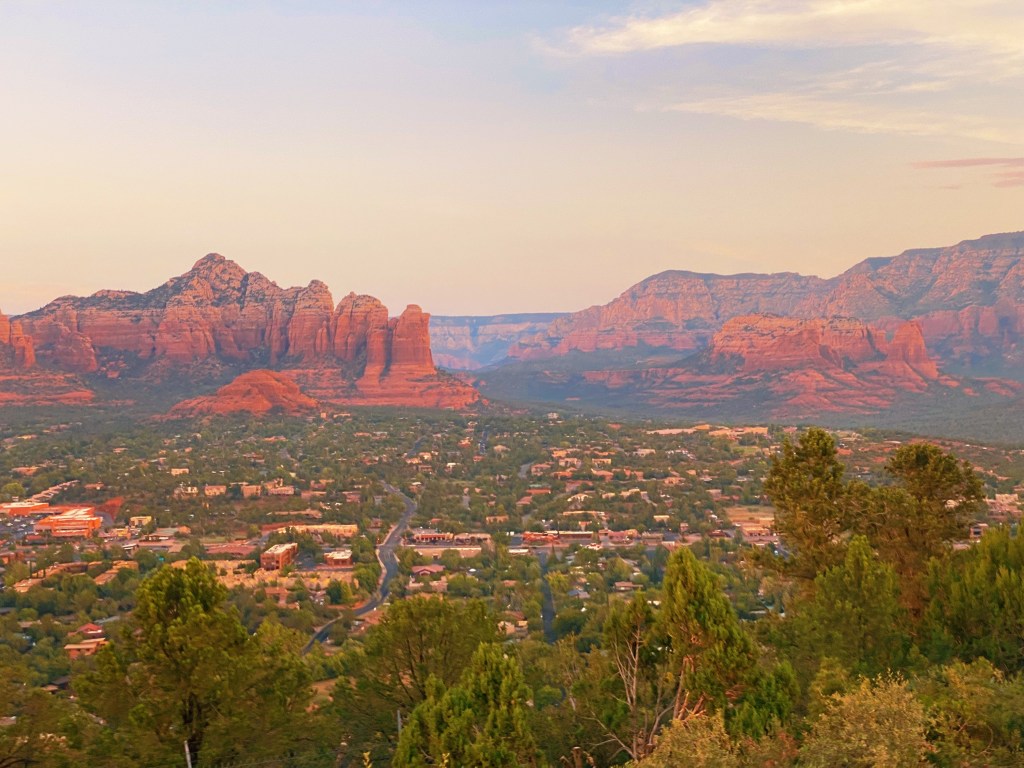
Sedona is a very pretty town, famous for its red sandstone formations. It is named for Sedona Schnebly, the wife of the city’s first postmaster. It has now become a center for natural healing. The following sign pretty much summed up the general feel of the place.

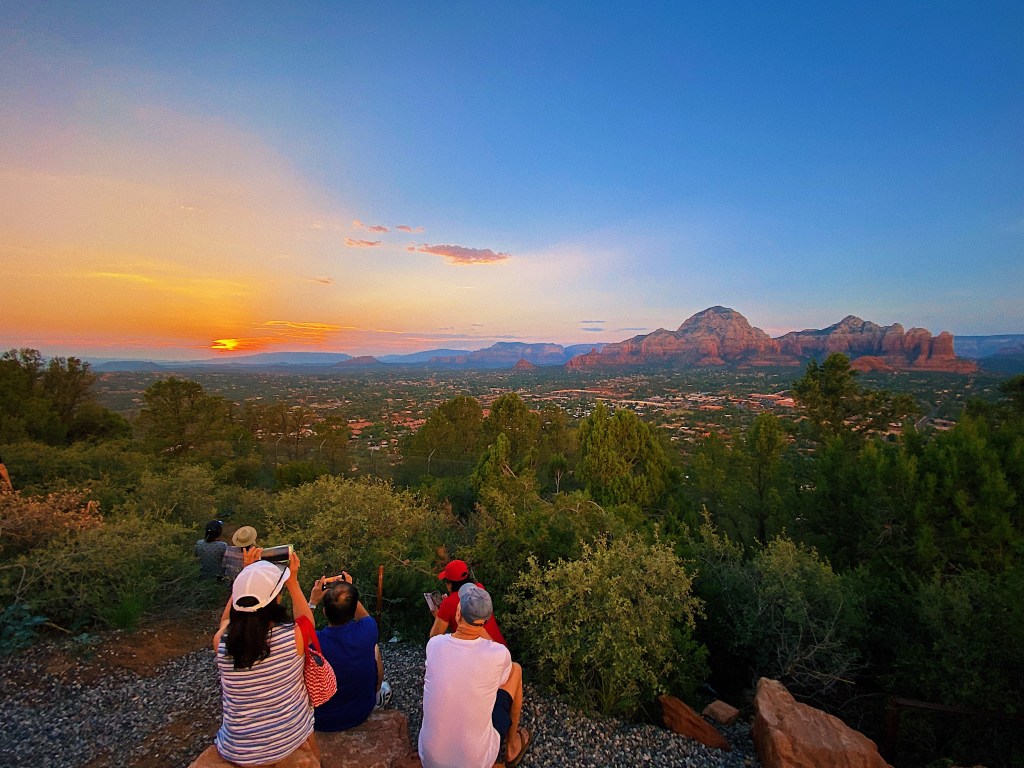
It’s easy to see how Sedona has become a spiritual and natural mecca. The massive red buttes that tower over the town provide a constant reminder of the grandeur and power of nature. The buttes did not spring out of the ground like mountains. Rather they are the result of millions of years of erosion that ate away at the surrounding land, leaving the buttes as a reminder of how high the land once stood in this area.

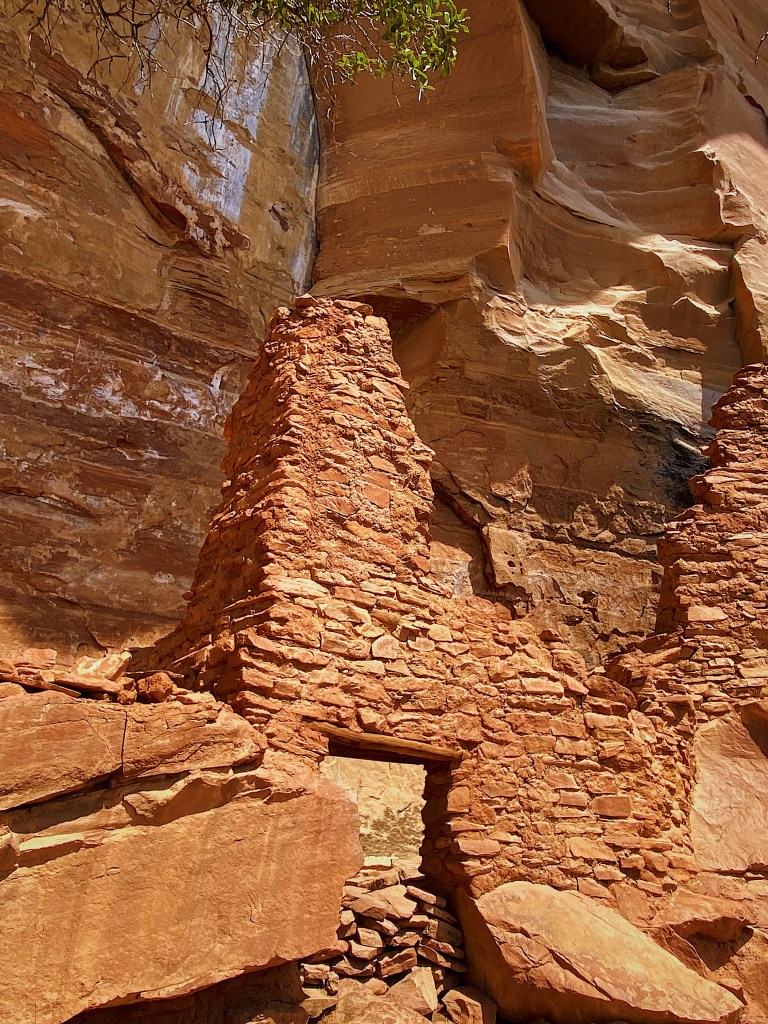
We drove out along a dusty bumpy road to the Palatki ruins, outside of town. The site has a set of cliff dwellings that were built somewhere between between 1000 to 600 years ago by the ancestors of the Hopi people. In the Hopi language, Palatki means ’red house’, which seems apt. There are still some finger prints left behind by the original builders in the clay of the surviving walls.
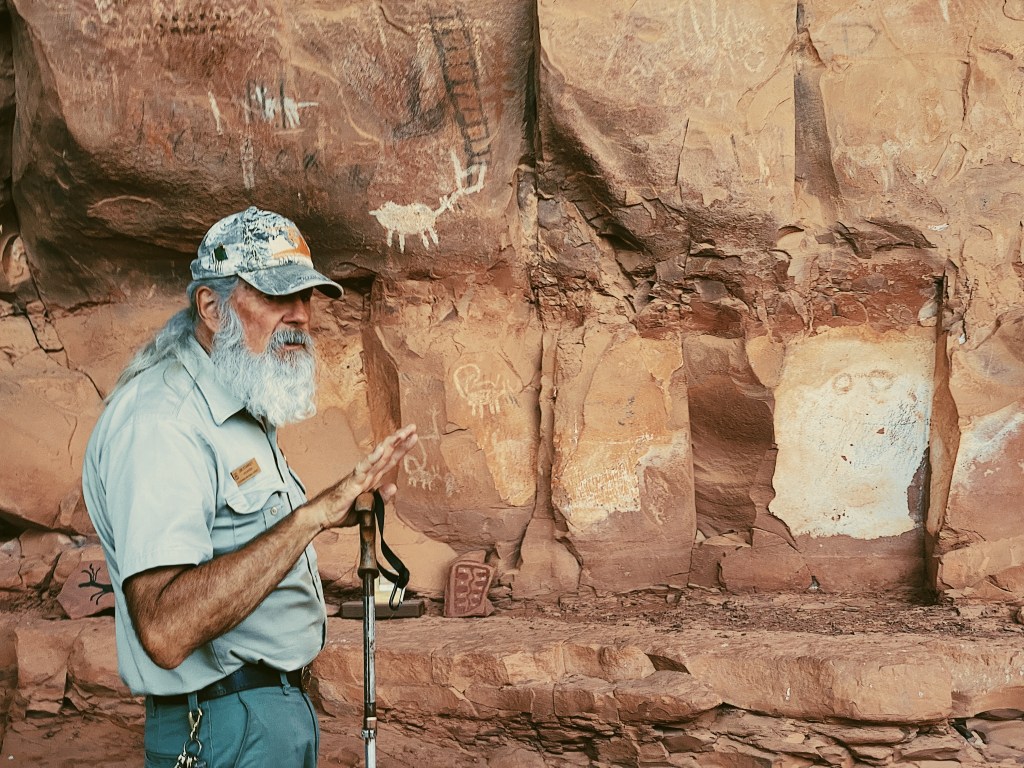
There were also some old wall paintings that were described to us by Jim, a ranger who appeared only slightly less weather beaten than the surrounding rocks.
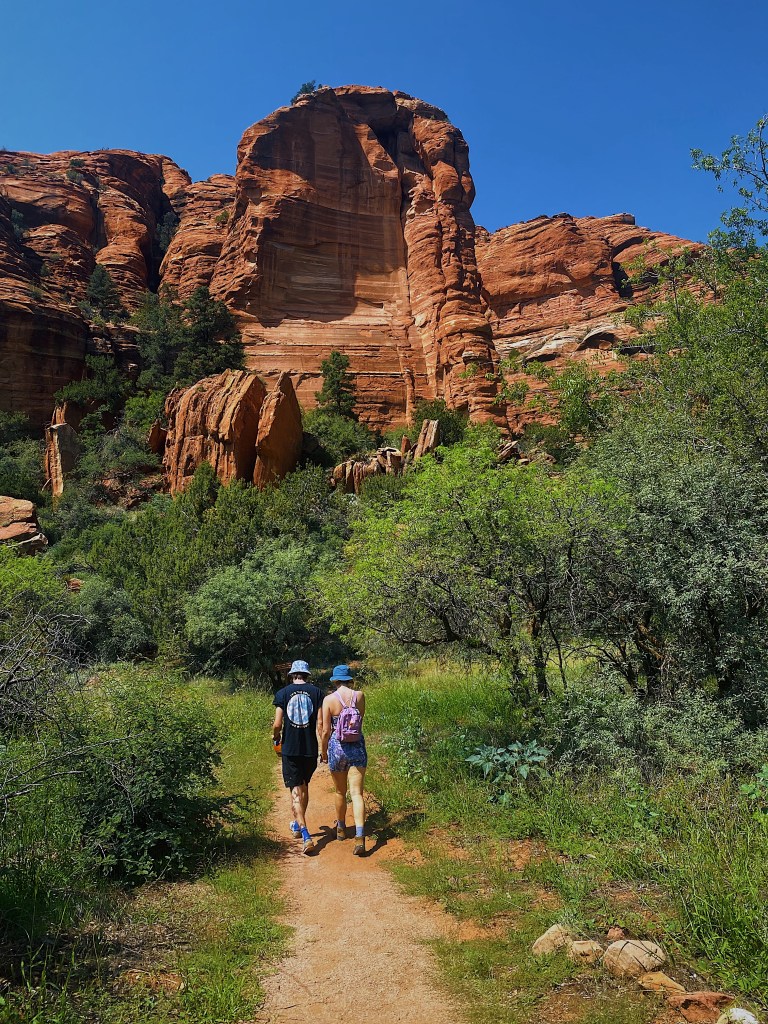
We could see why the villagers chose the location for their home. It was in a beautiful spot and easy to defend, built into a high cliff.

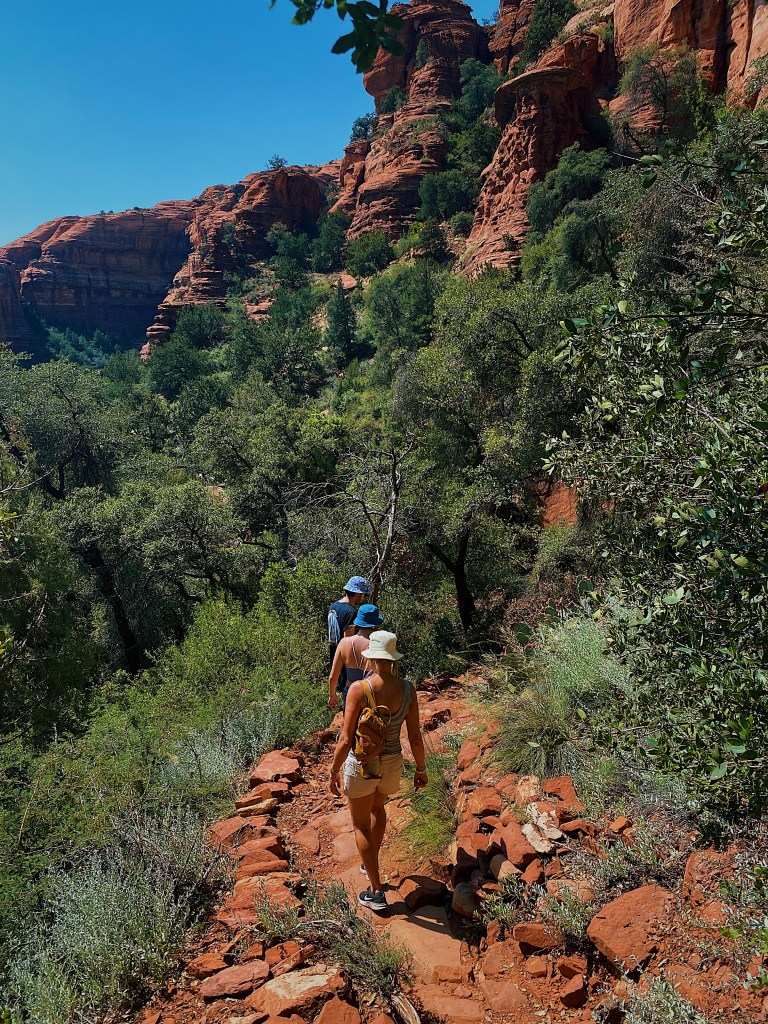
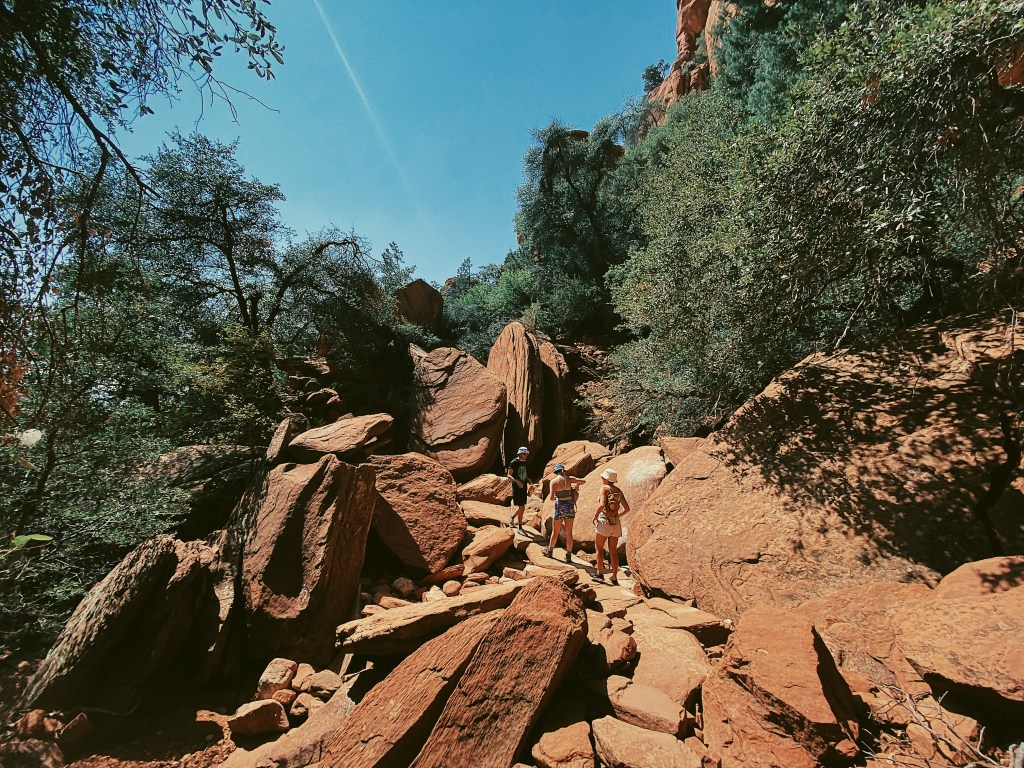


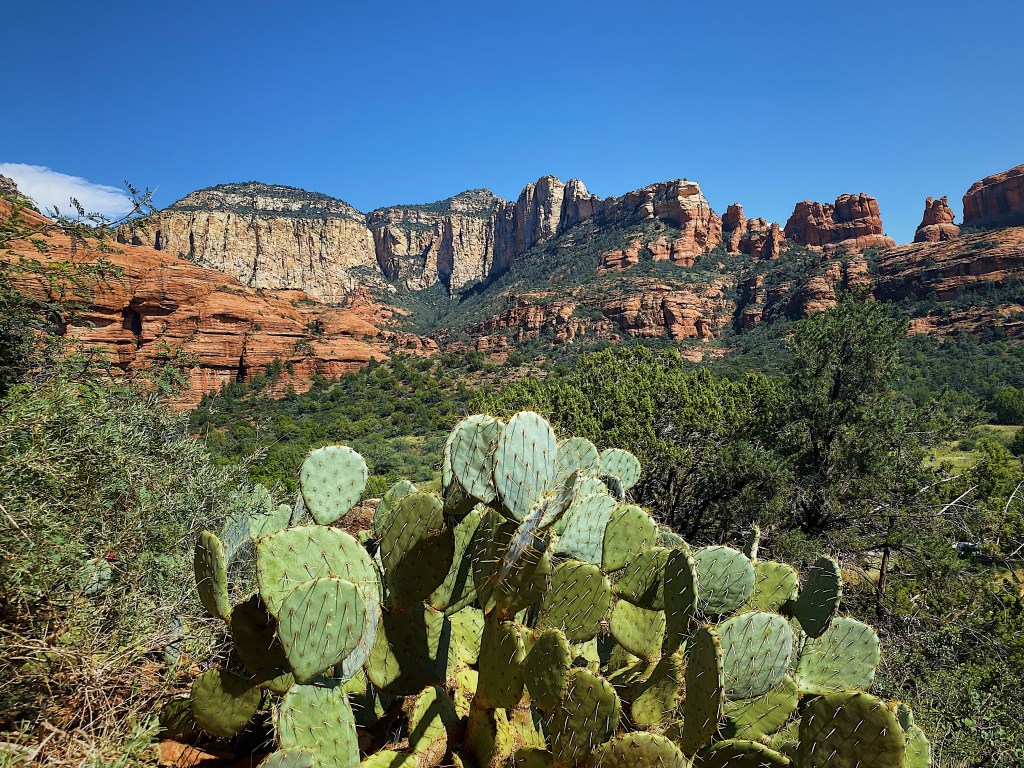

By this stage, it was hotter than we have ever experienced, with the temperature hovering around 106 degrees farenheit (41 degrees celsius). So we headed to Oak Creek for a swim, the only water source in the whole area.
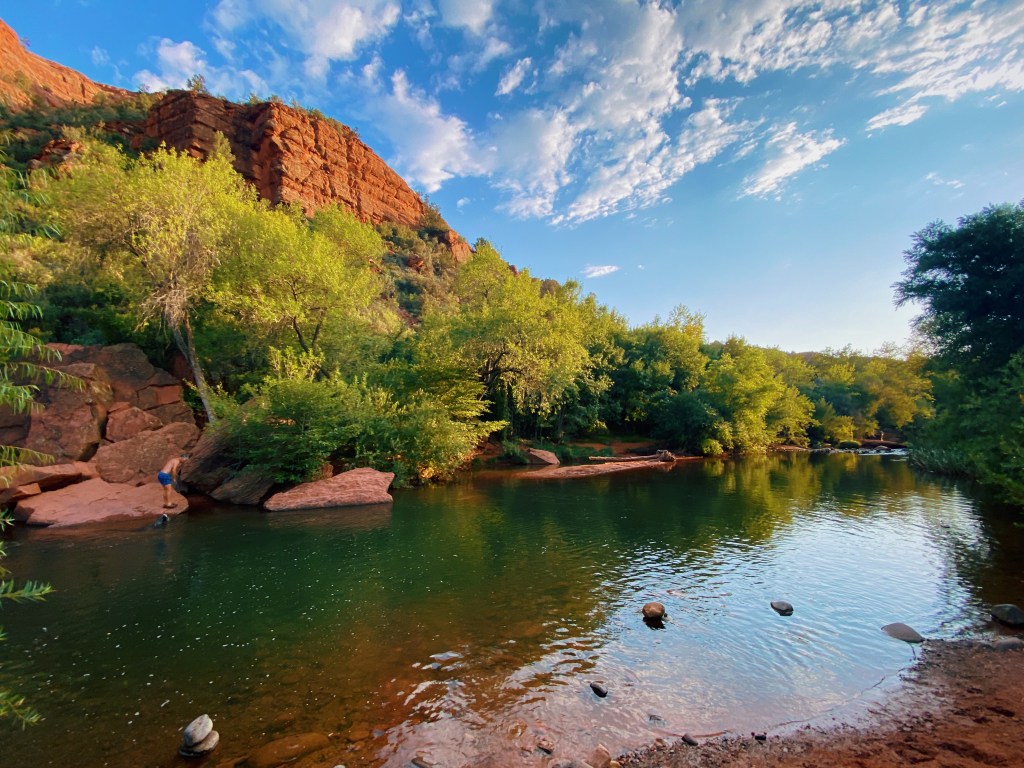

Also enjoying the cool water on a hot day were a couple of English setters.

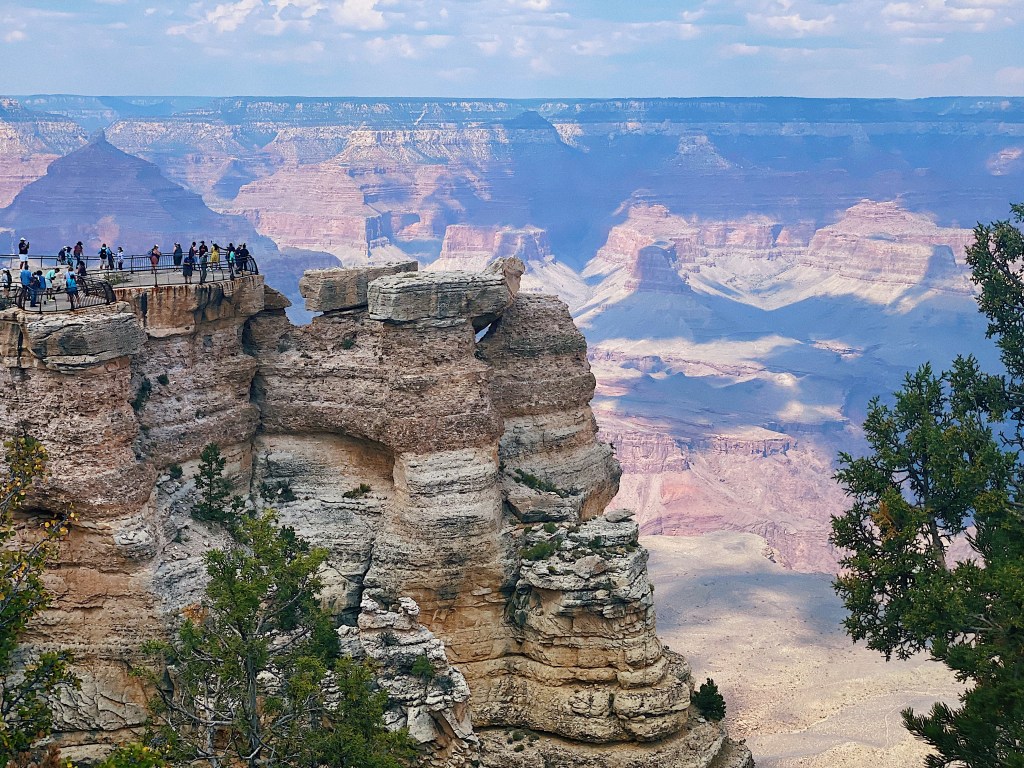

































































































 Mal and Lauren