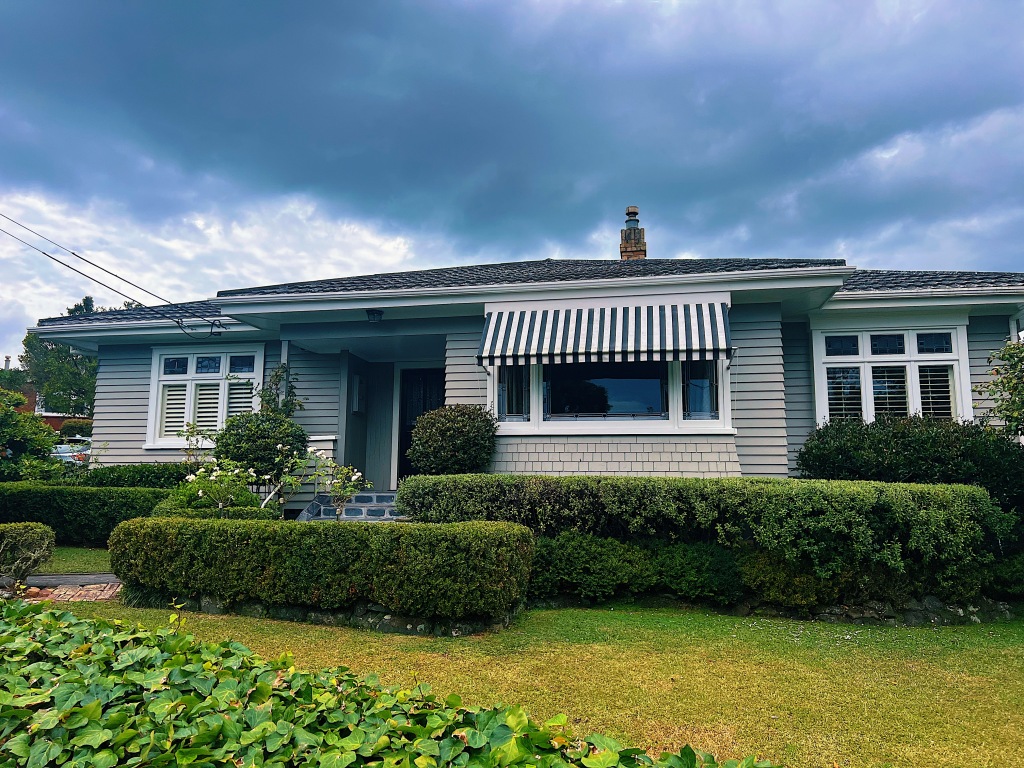
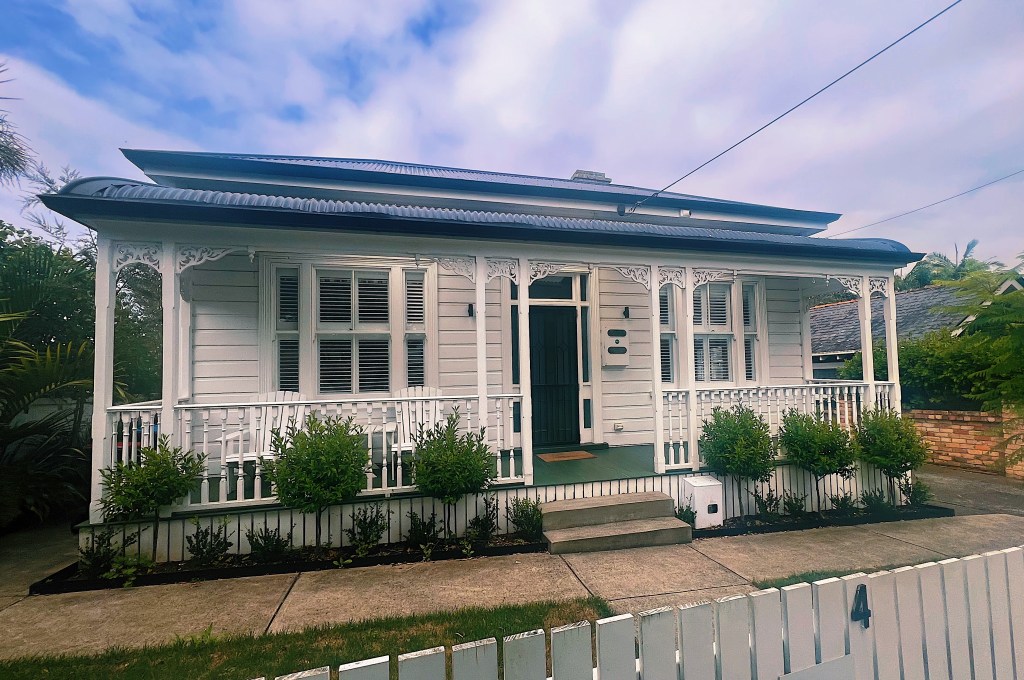
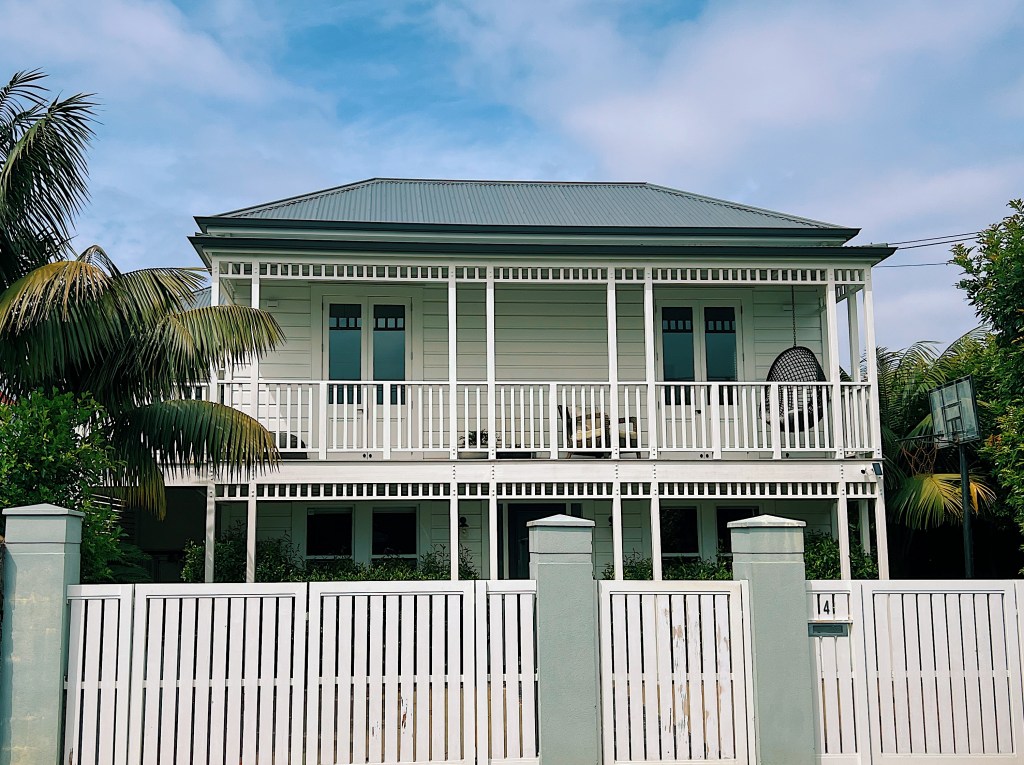
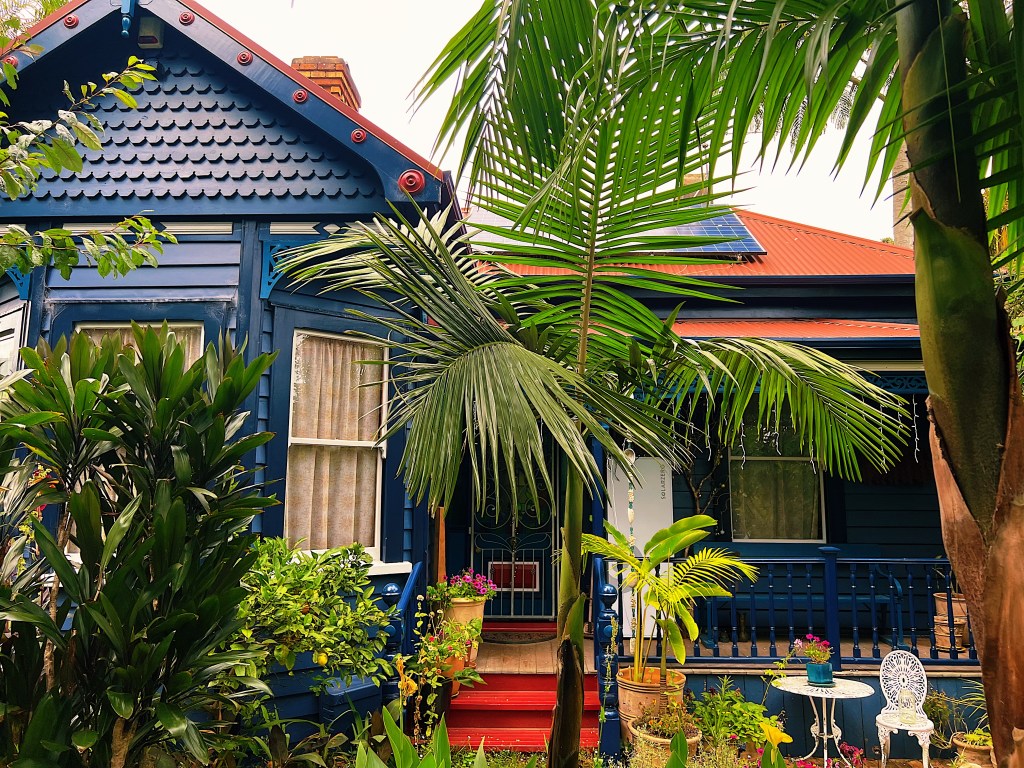
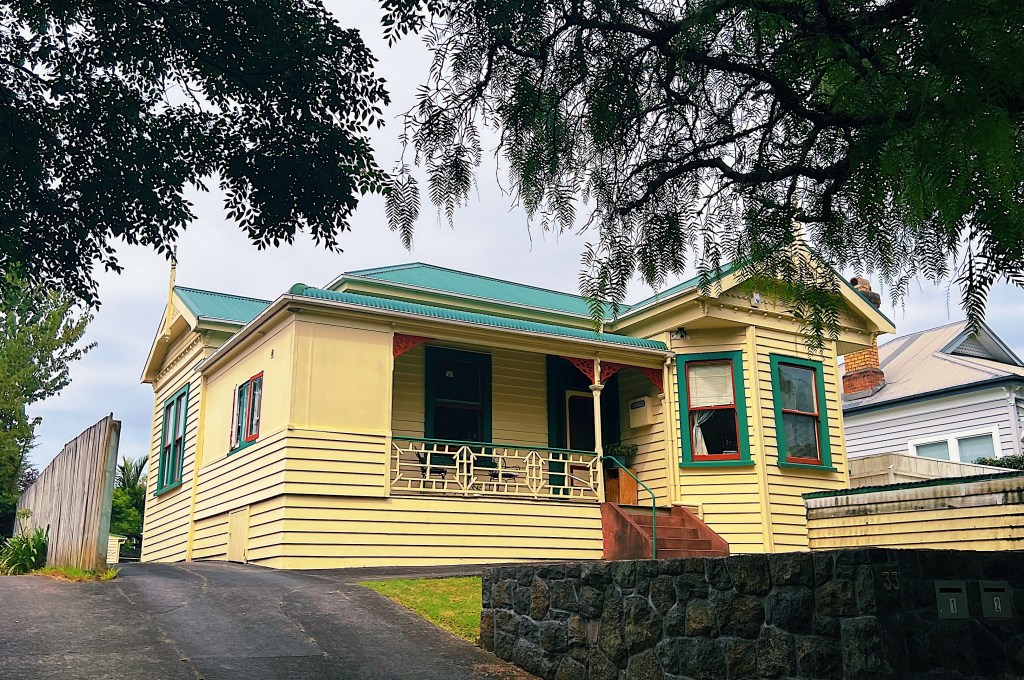
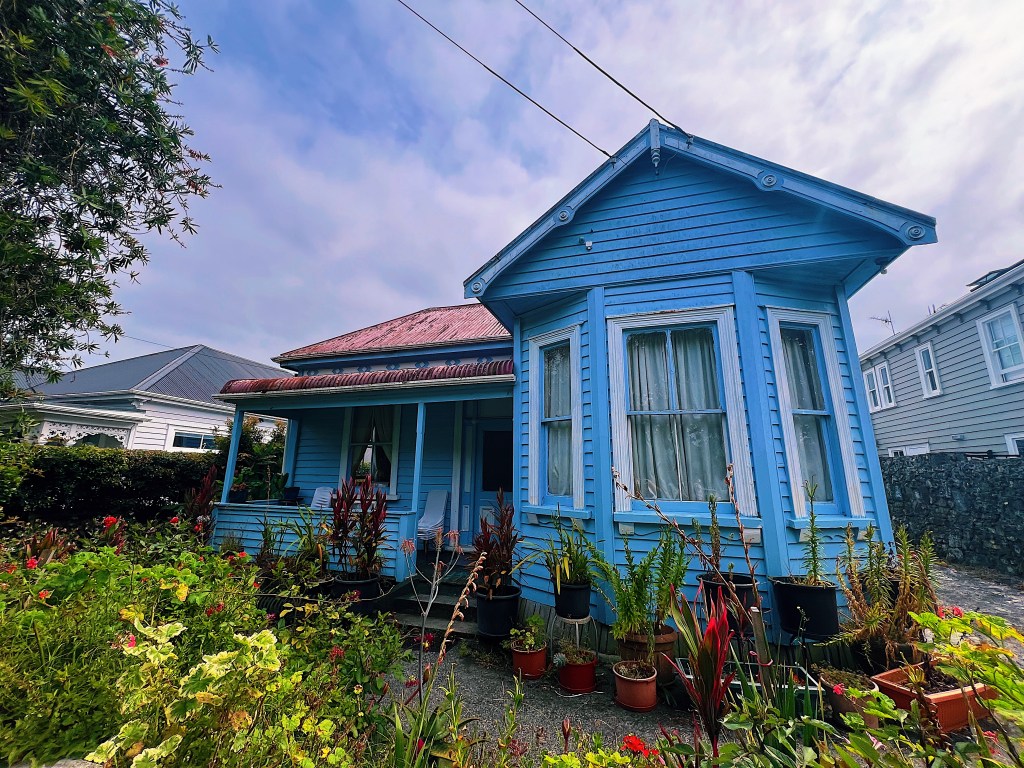
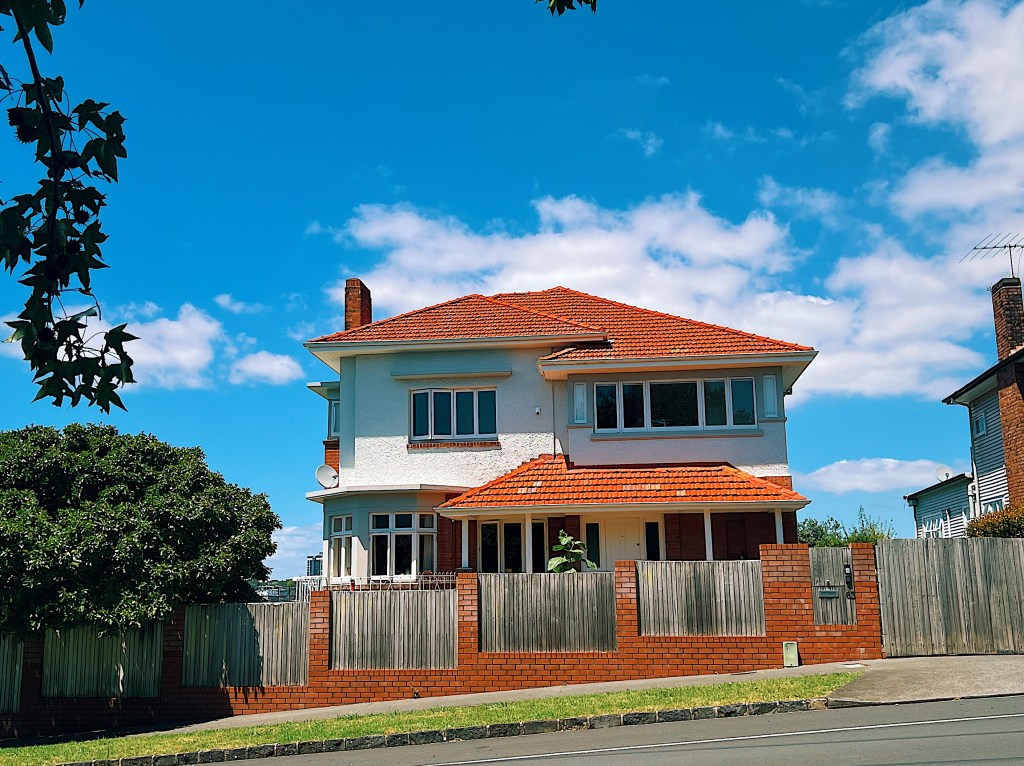
Today we returned to our old suburb of Remuera. This time we stuck to the south side of Remuera Road which is less hilly and made for a less strenuous walk. Like much of Auckland’s eastern suburbs, there was a lot of new infill housing tucked in behind the original homes. Here are some of the more traditional houses we passed along the way.
Auckland is built on a volcanic field and there are approximately 53 volcanoes in the area. Fortunately, they are all dormant. Many have now been built over and are now undetectable. However, there are still over a dozen that can clearly be seen, as they rise above the city and surrounding suburbs. Over the last couple of years we have been climbing those volcanos. Today, we finally climbed Auckland’s most recognizable volcano, Rangitoto.
Rangitoto is Maori for ‘bloody sky’, with the name coming from the full phrase Nga Rangitoto-i-totongia-a Tama-te-kapua (“the days of the bleeding of Tama-te-kapua”) Tama-te-kapua was a maori chief who was badly wounded on the island. ‘Bloody Sky’ also appears to be a particularly appropriate name for a volcano that last erupted only 600 years ago.
Not only is Rangitoto the area’s newest volcano, it is also the largest, at 5.5 km (3.4 mi) wide and 260 m (850 ft) high. It is also perfectly symmetrical and looks pretty much identical from any direction. It has that classic volcano look that children draw.
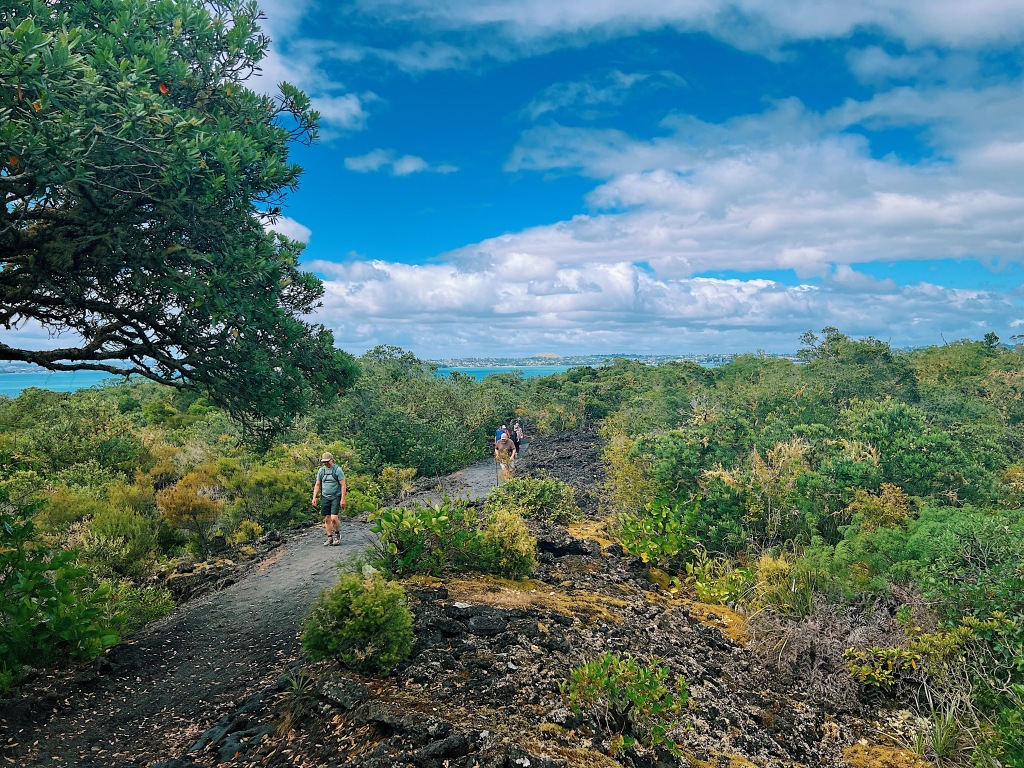
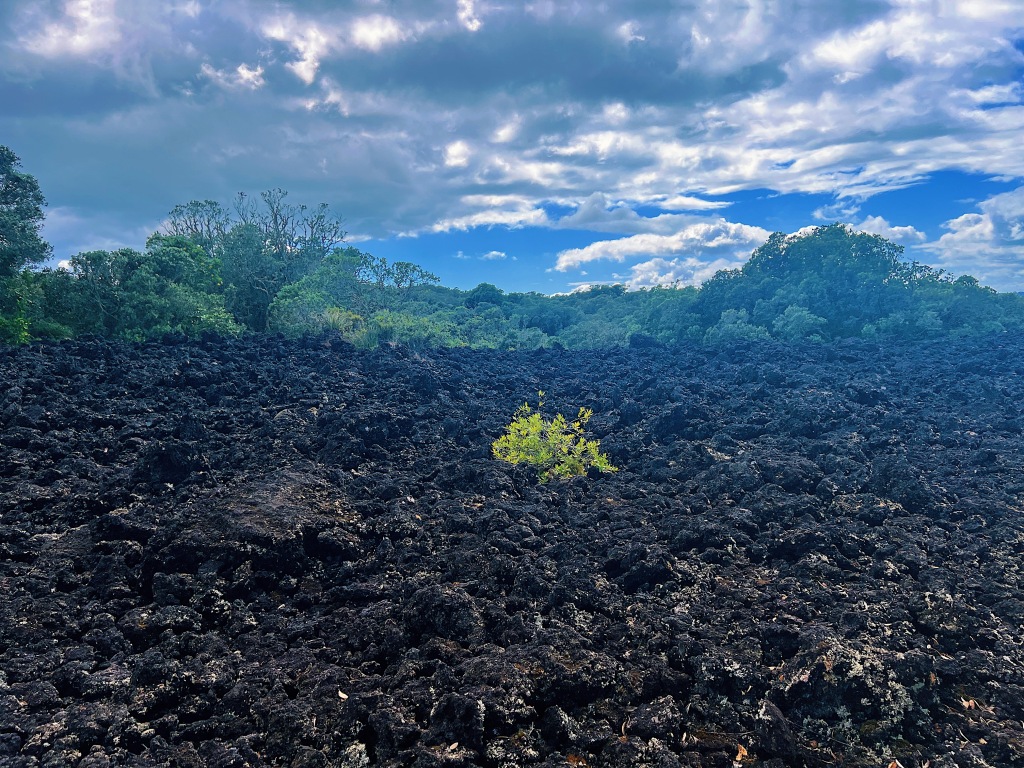
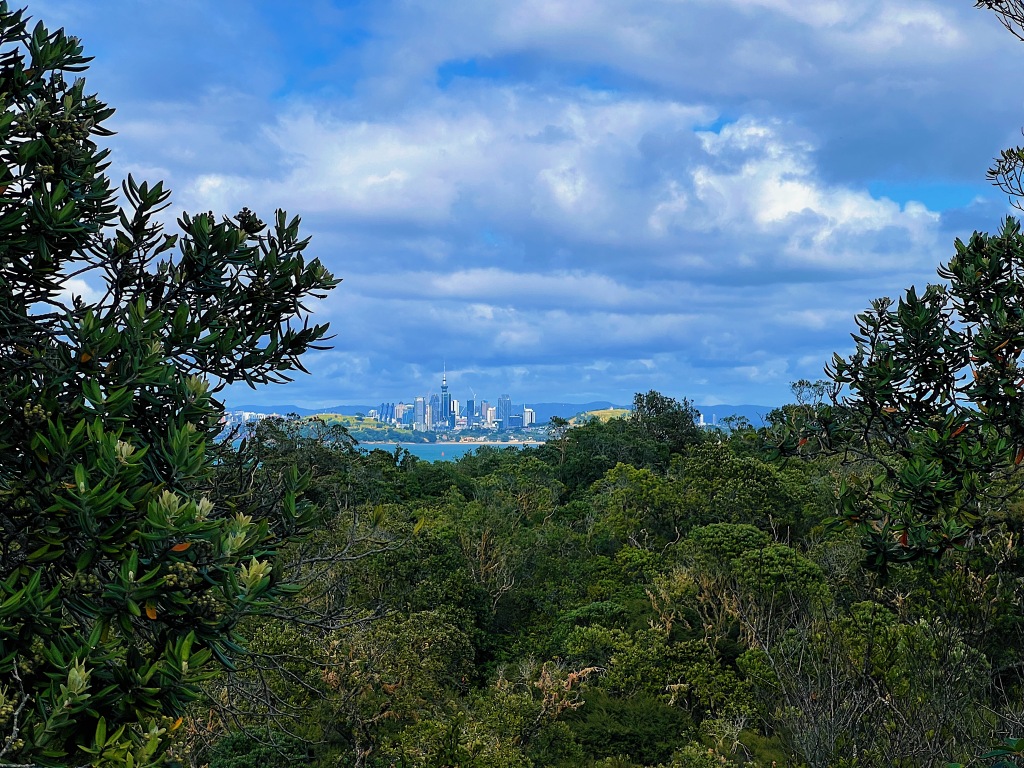
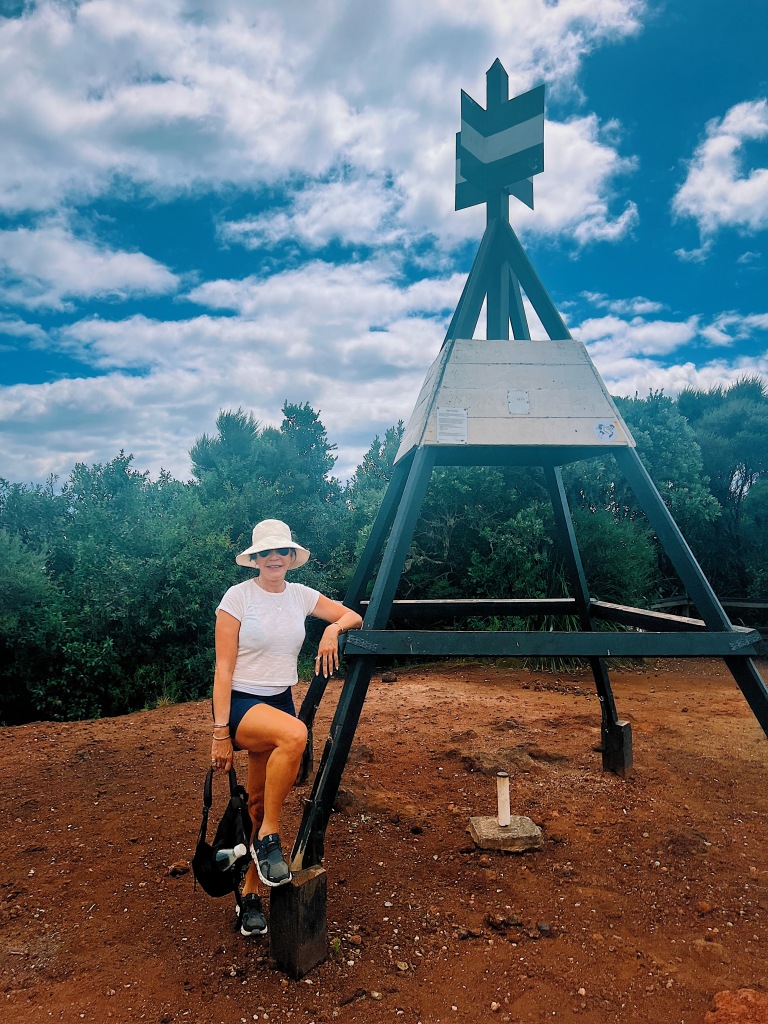
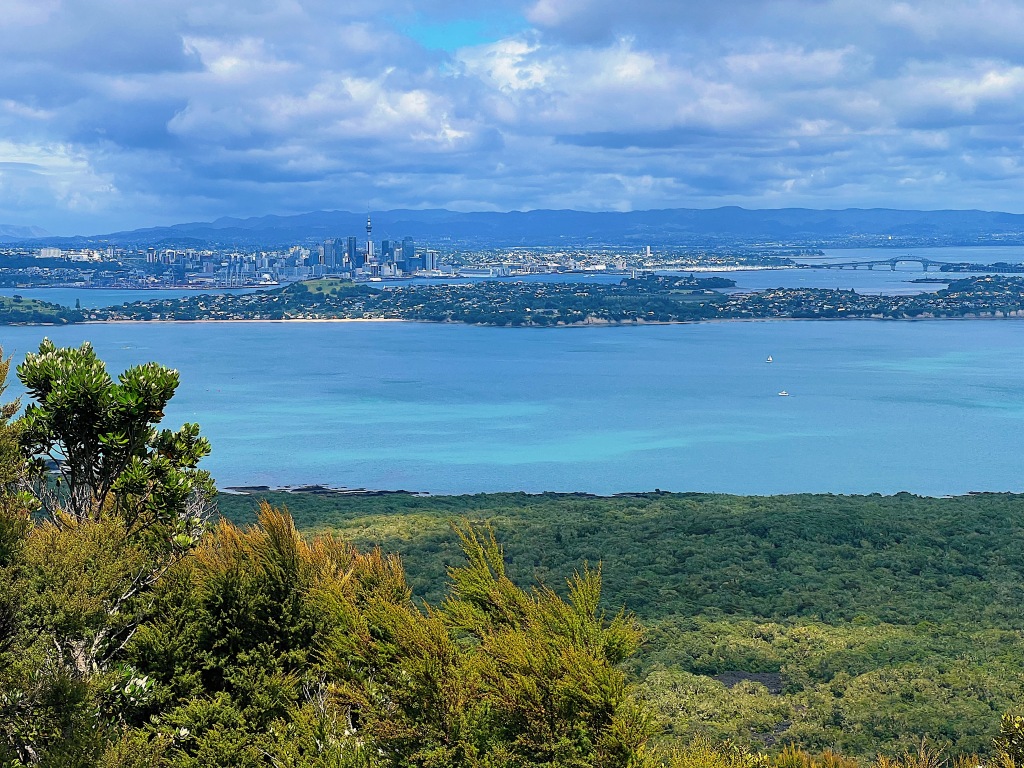
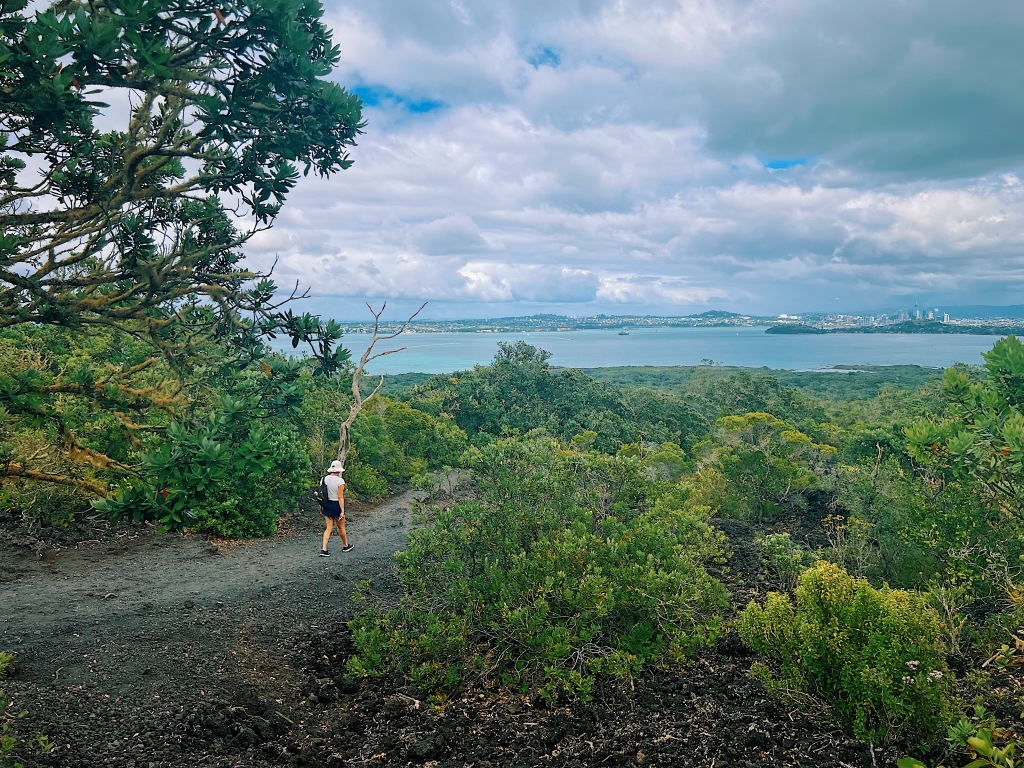
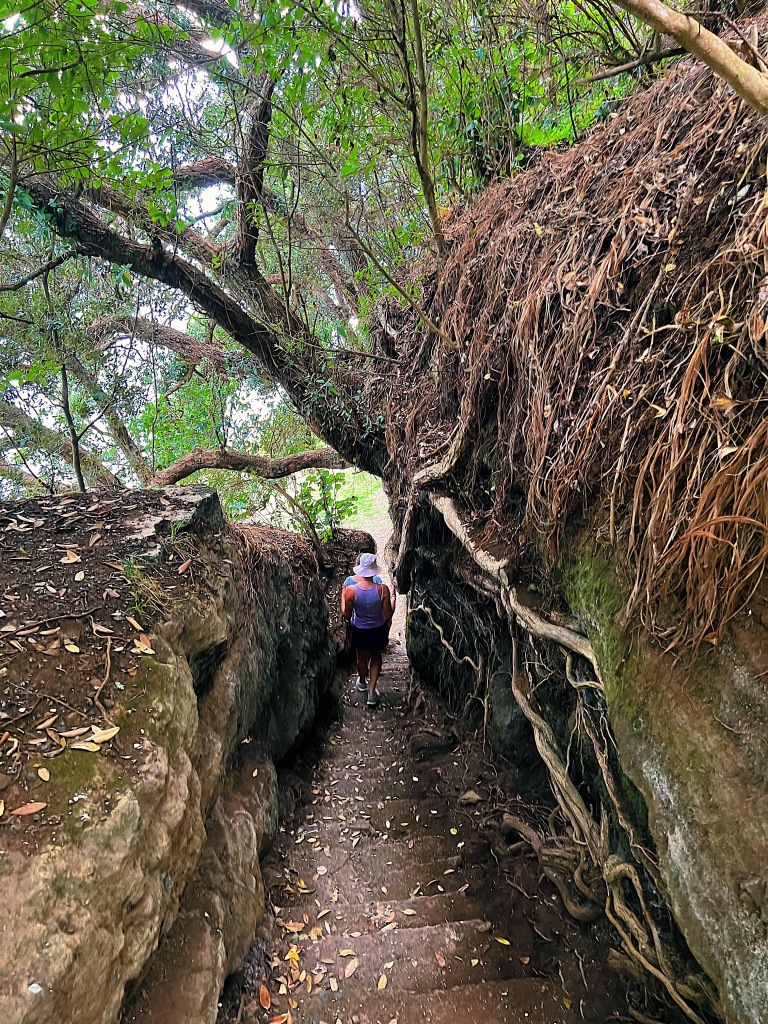
Rangitoto is an island that sits not too far from shore in the middle of Waitemata Harbor. It is a twenty minute ferry ride from downtown Auckland and is well worth the trip. We started our visit by making the one hour climb through lava fields and native forest to the summit.
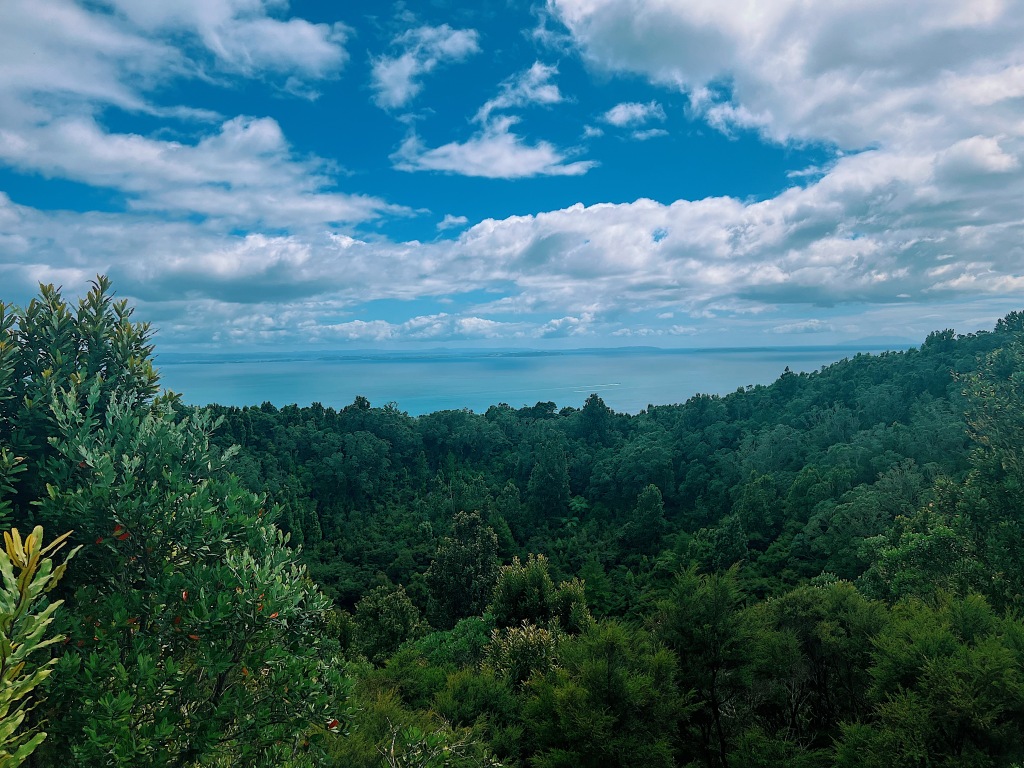
The crater is huge and filled with native forest.
The walk back down was much less strenuous.
There is a pretty pathway around the shore that passes some historic baches (pronounced ‘batch’, baches are what New Zealanders call beach homes).
There is a man-made pool that fills up for swimming at high tide. Unfortunately, the tide was out.
There is also a short boardwalk over the tidal marshland.
With our cousin, Annette, we headed across the Harbour Bridge to Devonport. We dropped in on our friend Astrid who has just moved to the neighborhood. She led us on a walk along the waterfront toward North Head (Maungauika), a dormant volcano that sits on a point with extensive views over the Waitemata Harbour.
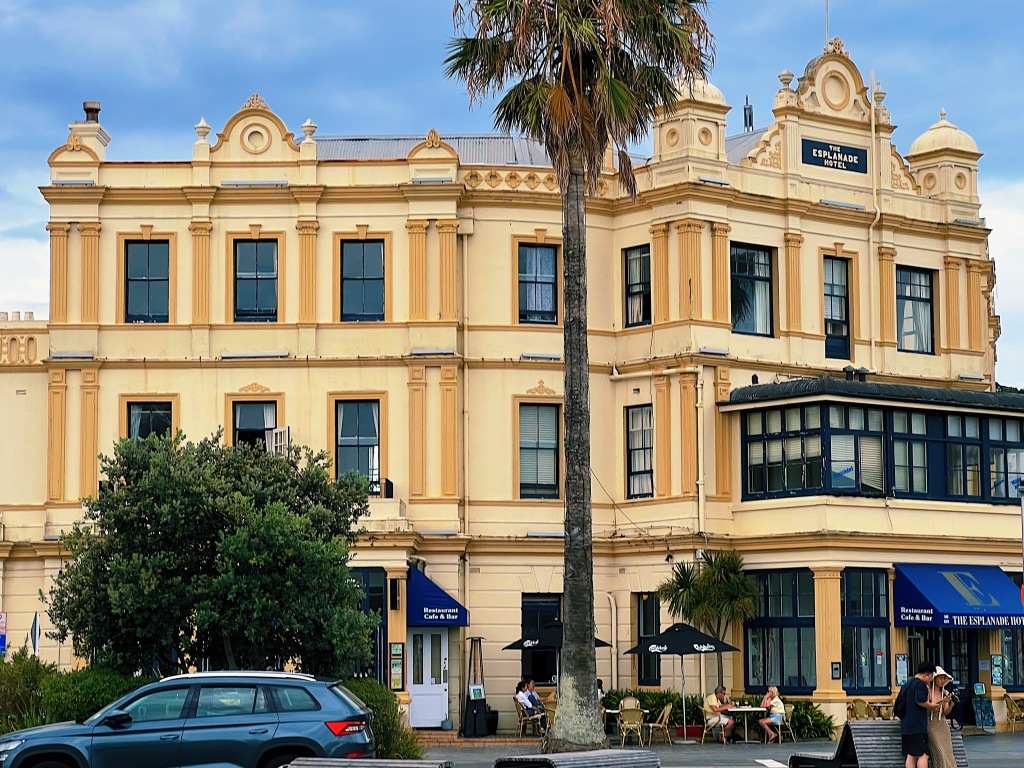
Walking through Devonport, it is easy to imagine that you are in an English seaside town, with its ornate Victorian buildings and homes.
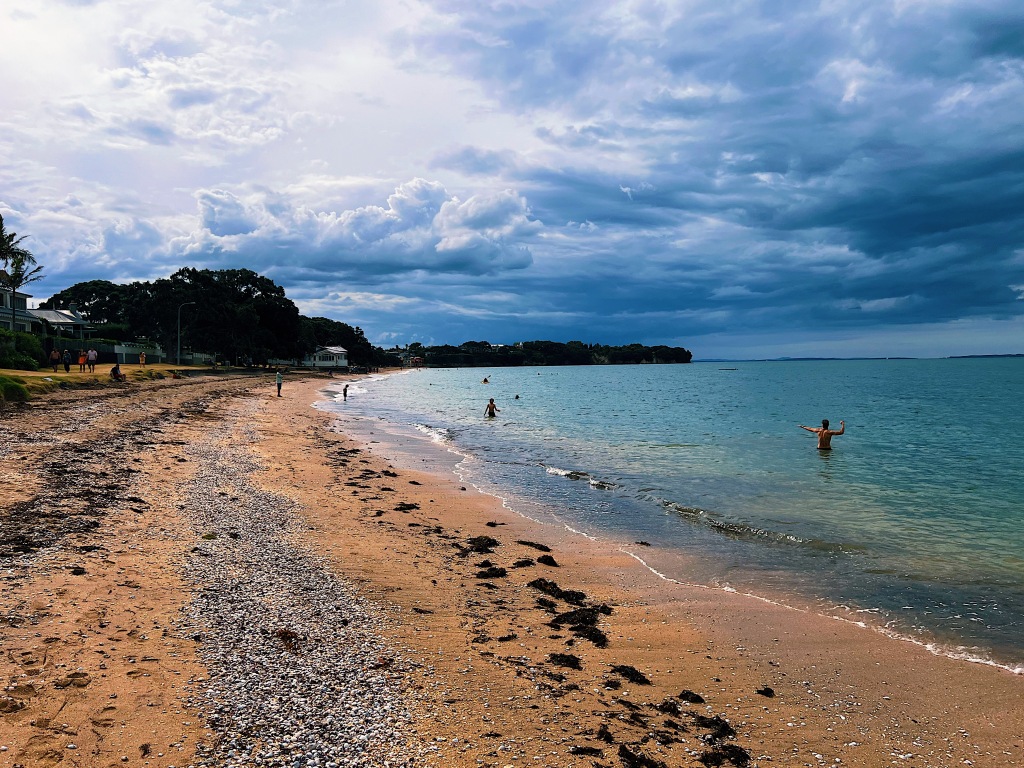
On a warm Sunday afternoon, a number of Aucklanders were out enjoying the beach.
Because of its prime position and sweeping views over the harbour, North Head was used by the military as a coastal defense installation and many bunkers and a few canons still remain.
Astrid led us down a path to an idyllic hidden cove. We made a note to return some time in the future for a swim.
From there, we made our way around the rocks for a walk along Cheltenham Beach before heading back to Devonport and back home.
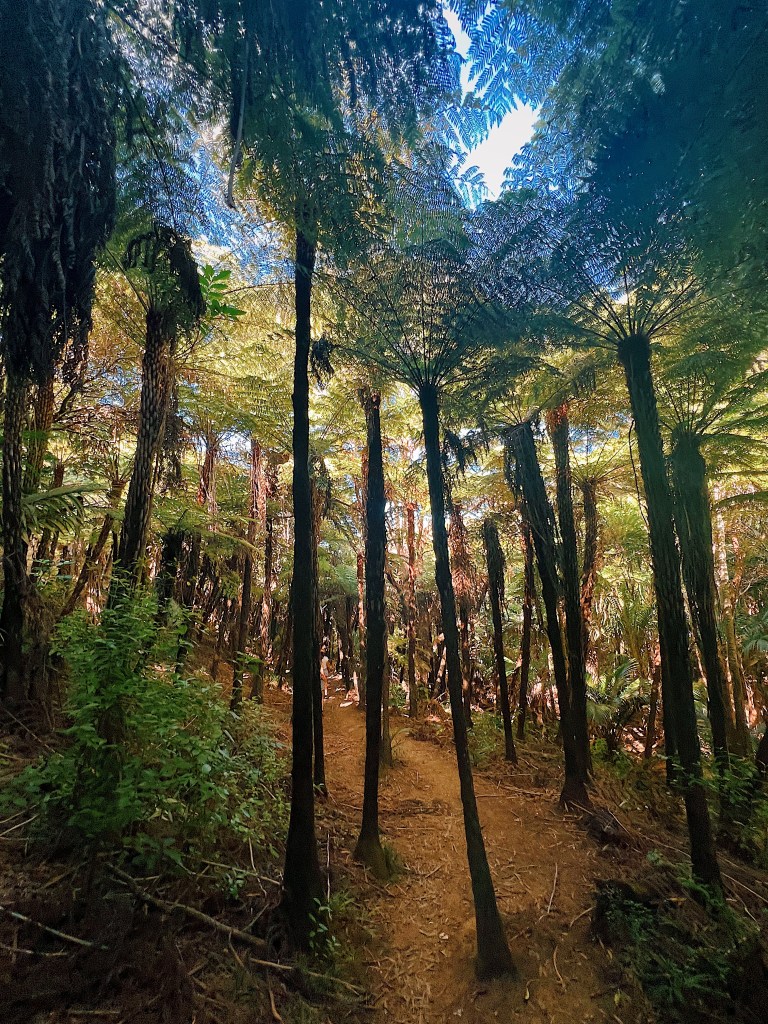
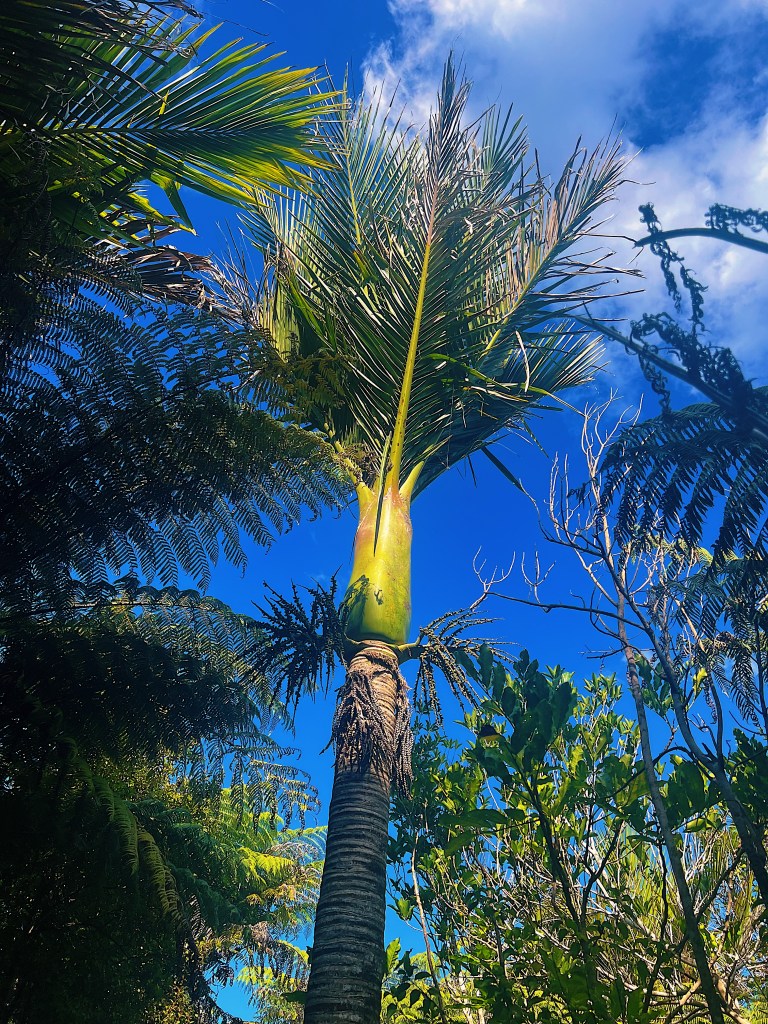
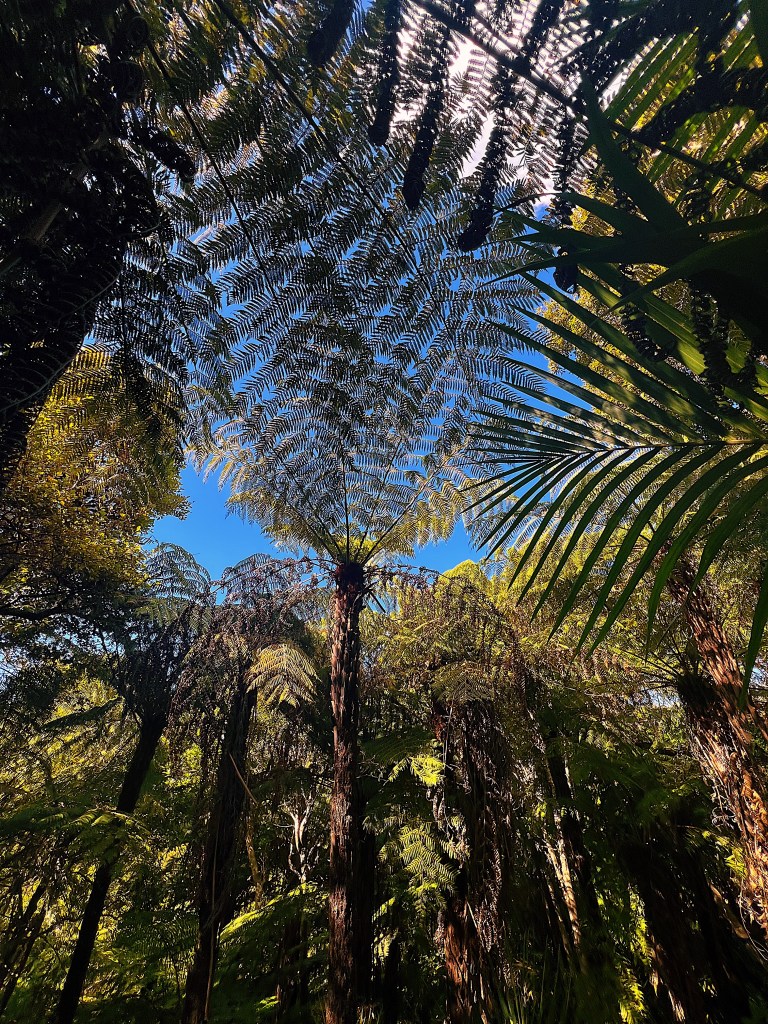
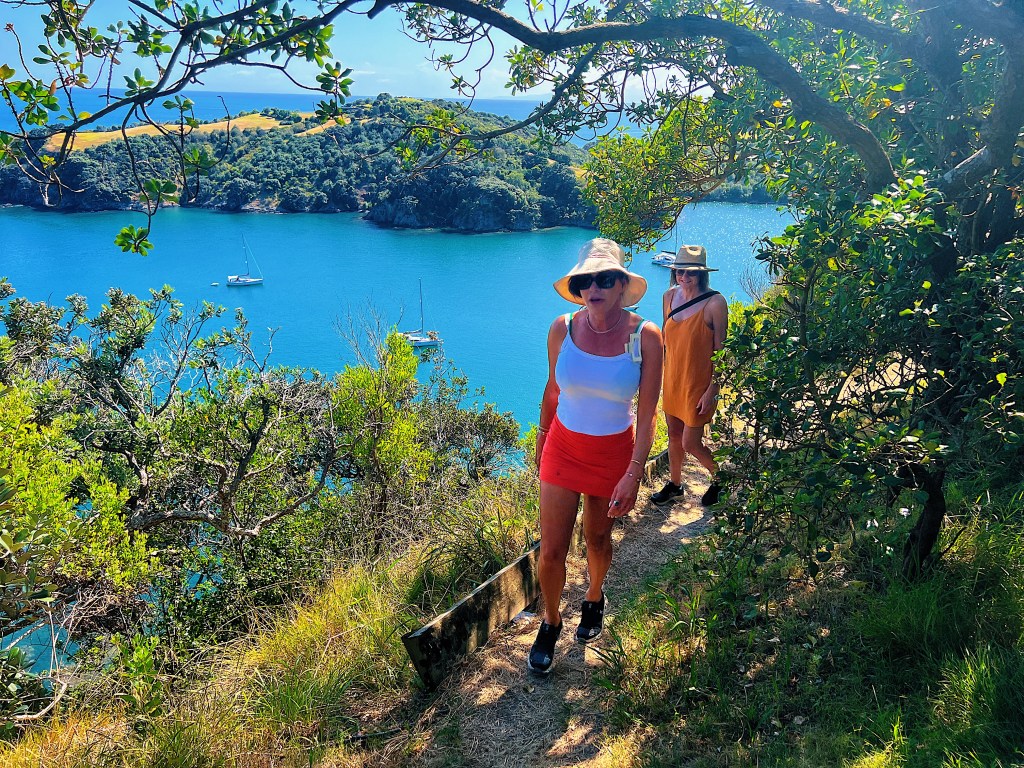
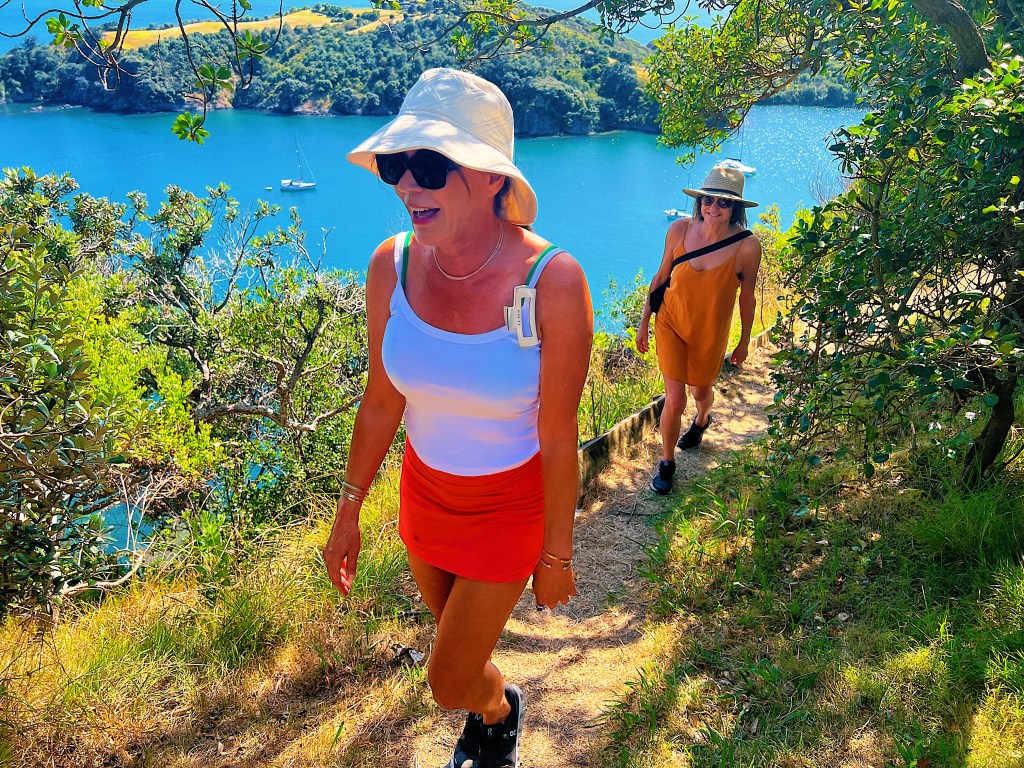
On our second morning on Waiheke we headed out for a bush walk. It was less strenuous than the previous day’s walk but just as beautiful.
Silver ferns have become a symbol of New Zealand and you will see them on the uniforms of most of the country’s sports teams, including the All Blacks and the New Zealand Olympic team. Actually, the top of the fern’s fronds are green and it is only the under-surface that is silver.
Many of New Zealand’s native birds are endangered and there is a massive nationwide program to catch and kill their predators, including stoats, rats and feral cats. Hence, we came across a number of traps along the path.
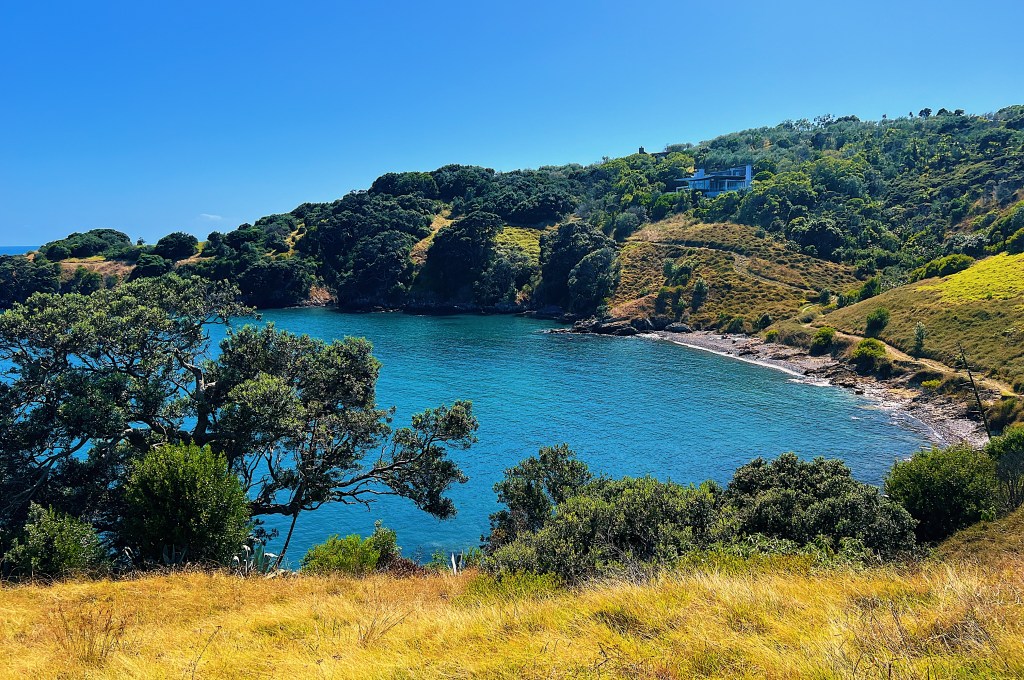
However, the conservation program faces an uphill battle and it is likely that many more species of native bird will be lost in New Zealand by the end of the century. Case in point, we ended the walk at a pretty little bay which is also a breeding spot for the New Zealand dotterel, a native shorebird that is near to extinction. There are actually two subspecies of dotterel in New Zealand. The southern subspecies is particularly endangered with estimates of under a hundred still surviving. The northern subspecies is more widespread but their numbers are still in the low thousands. Perhaps, not surprisingly then, we didn’t see any actual dotterels, just the two on the top of this beautiful sculpture.
And this cardboard cutout of a dotterel and her chick.
Waiheke Island is just a 45 minute ferry ride from downtown Auckland, but it is a world away from the hustle and bustle of New Zealand’s largest city. Ringed with beautiful beaches and coves and dotted with upscale vineyards and restaurants, it has become a popular destination for Aucklanders and visiting tourists.
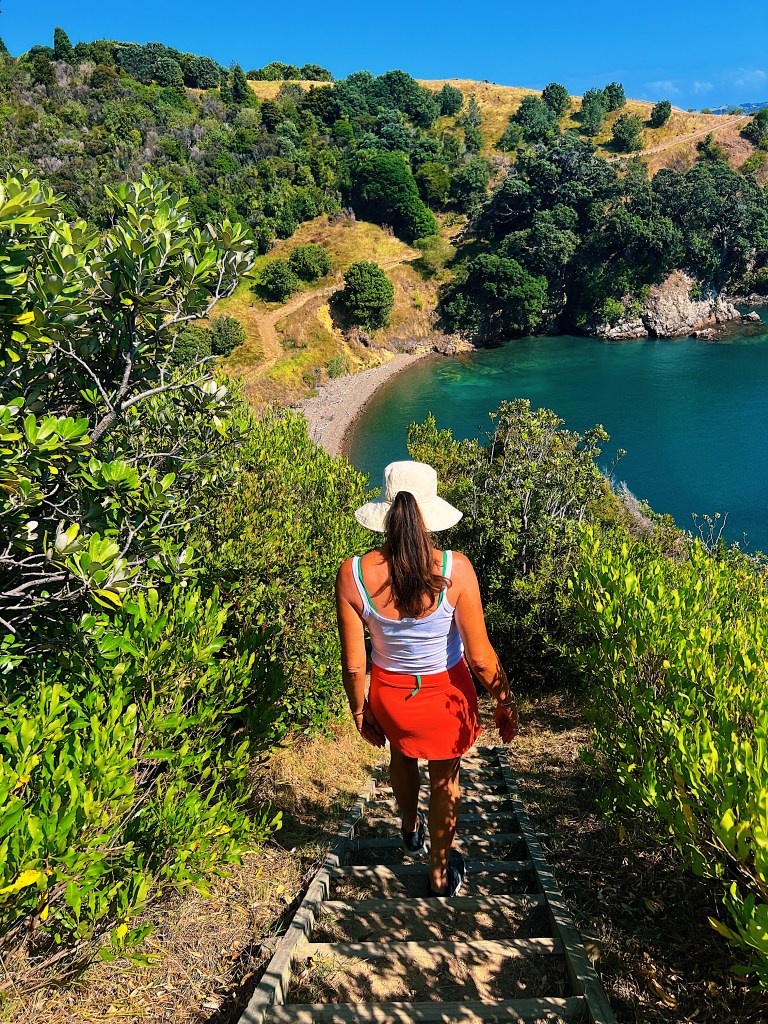
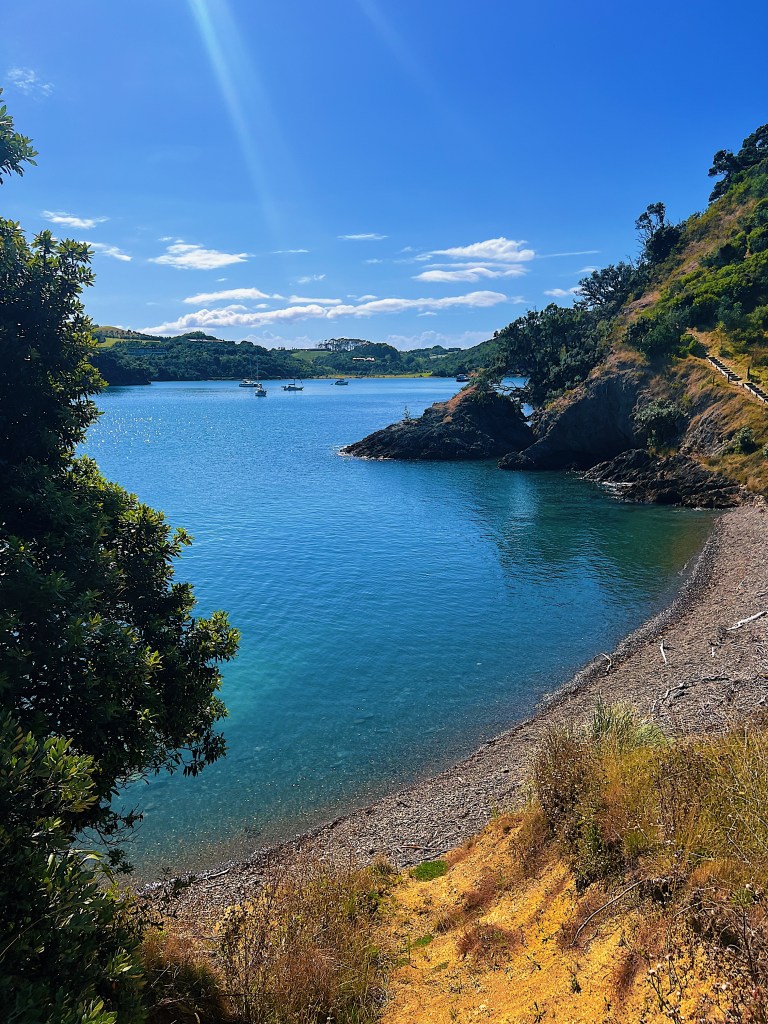
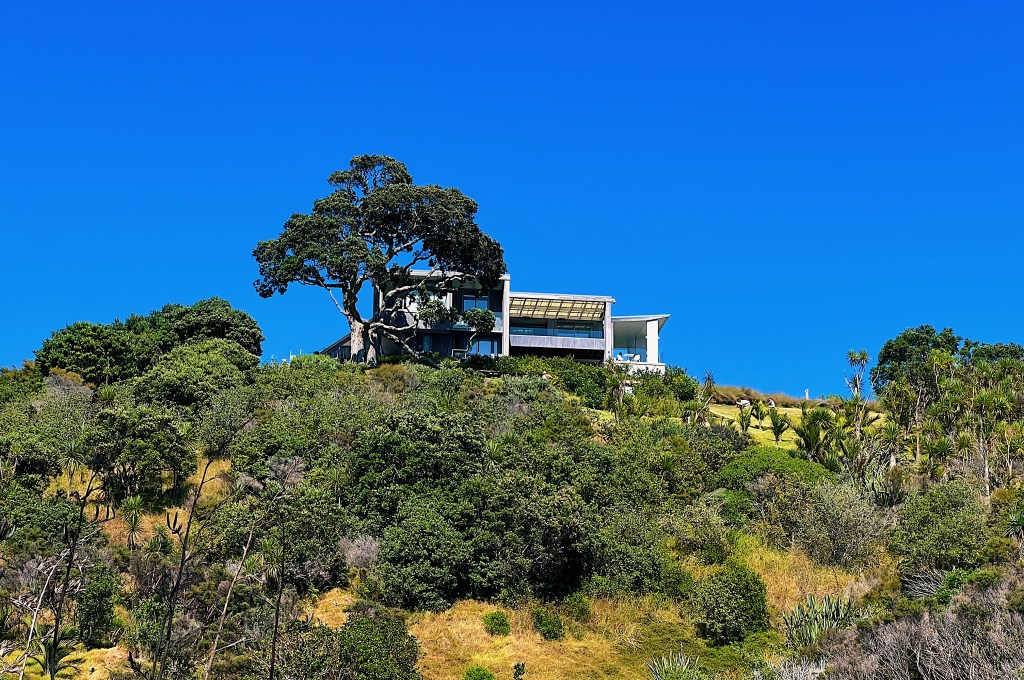
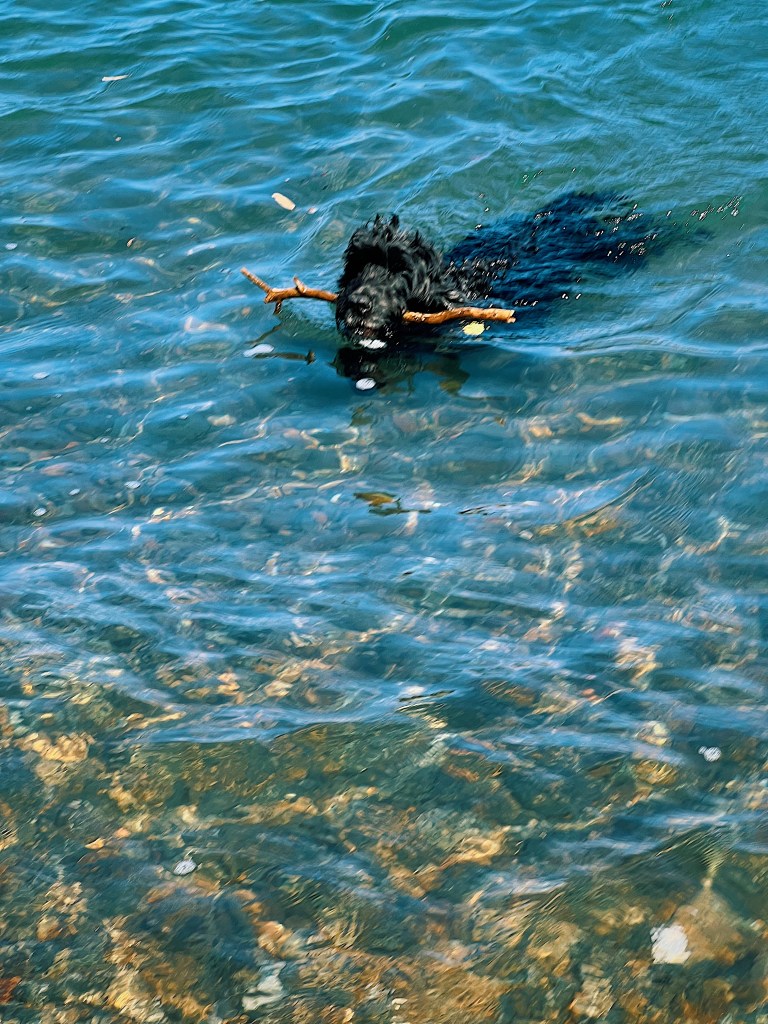
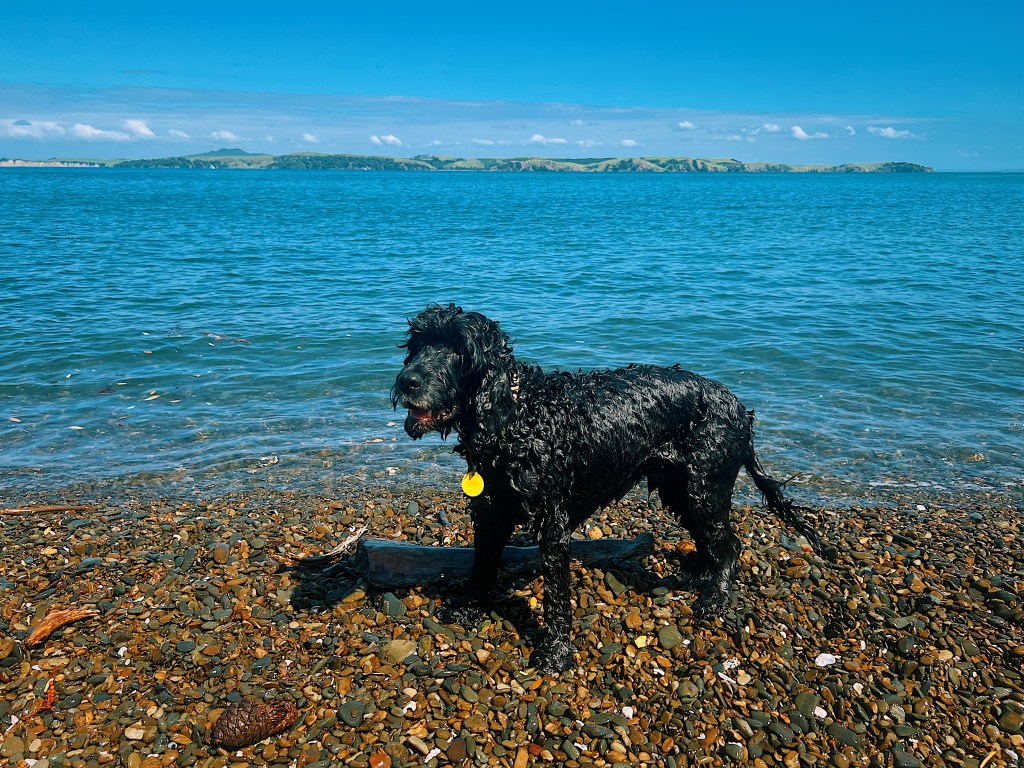
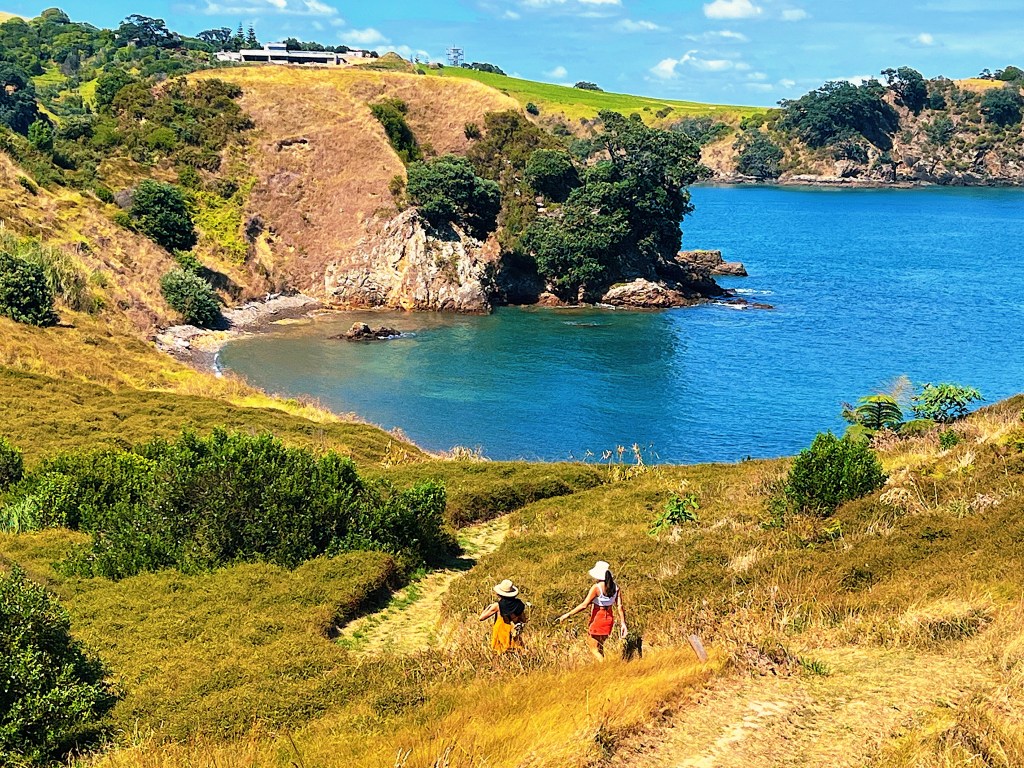
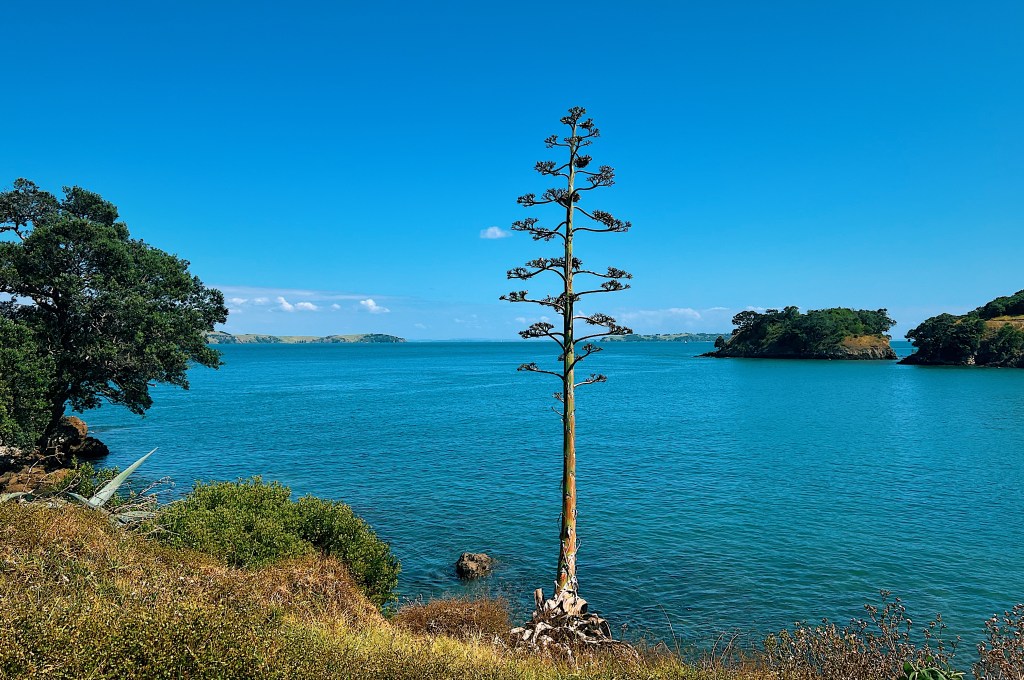
We spent two nights as guests of our good friend, Judi, who acted as our island guide. The weather was perfect, so on our first morning Judi and her two dogs, Cuzzie and Bro, led us on a beautiful coastal walk. It was not the easiest walks with lots of steep climbs, but the views made it worth the effort. Along the way, we passed some gorgeous homes, where Auckland’s rich and famous spend their summers.
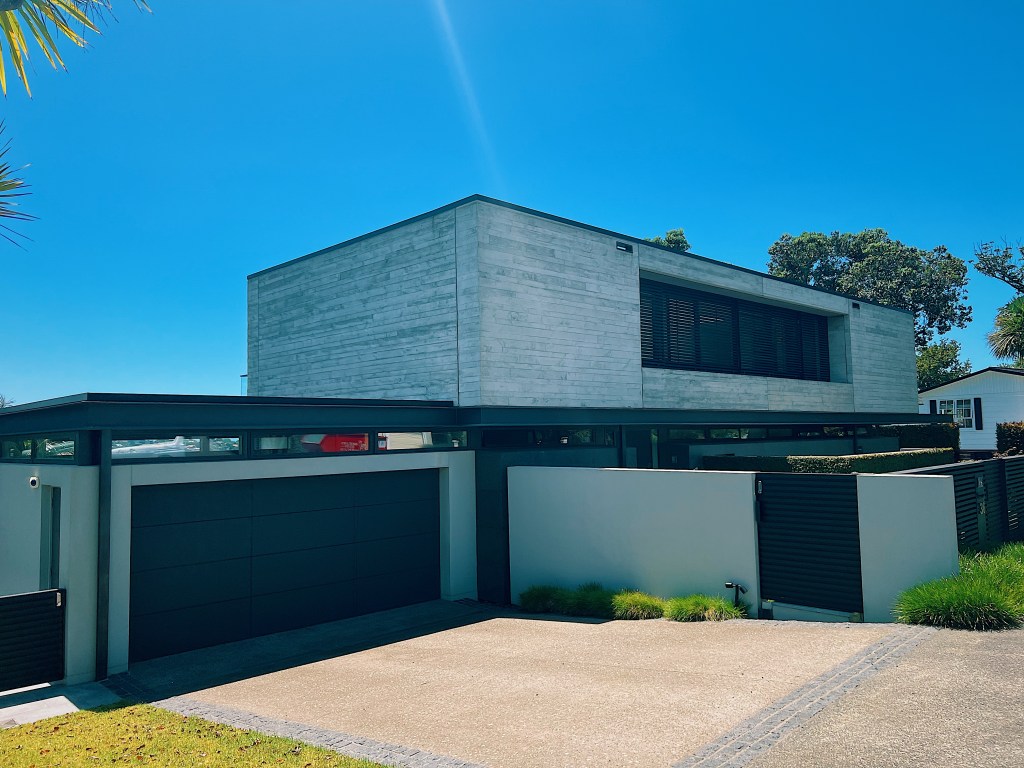
We returned to the quiet streets around Eden Park. Most of the villas you see in Auckland are painted white.
But, of course, there are exceptions to the rule.
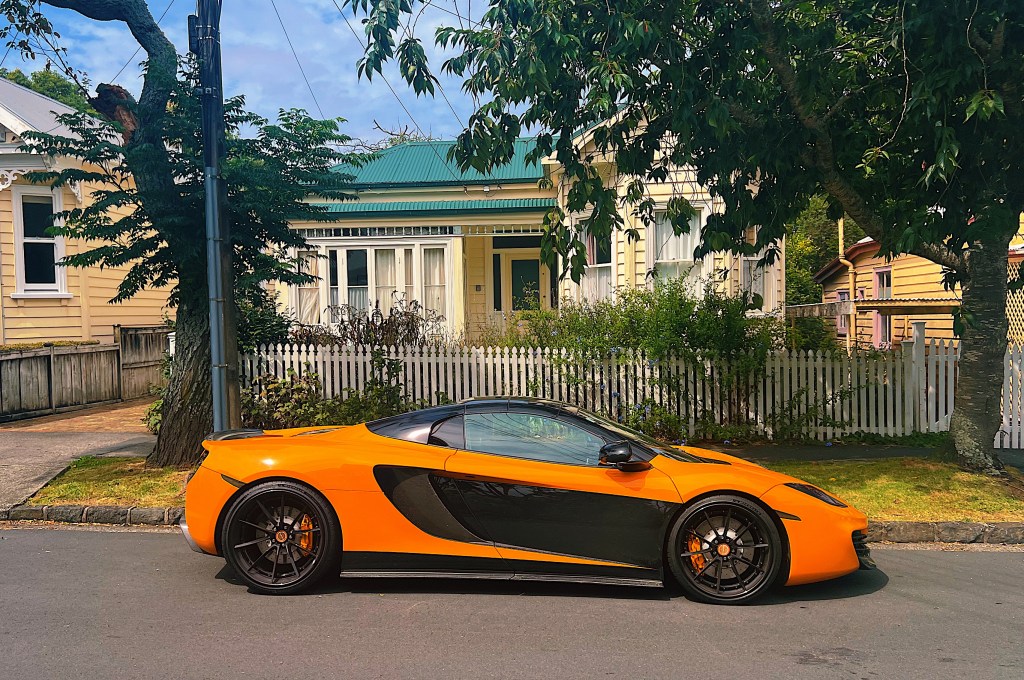
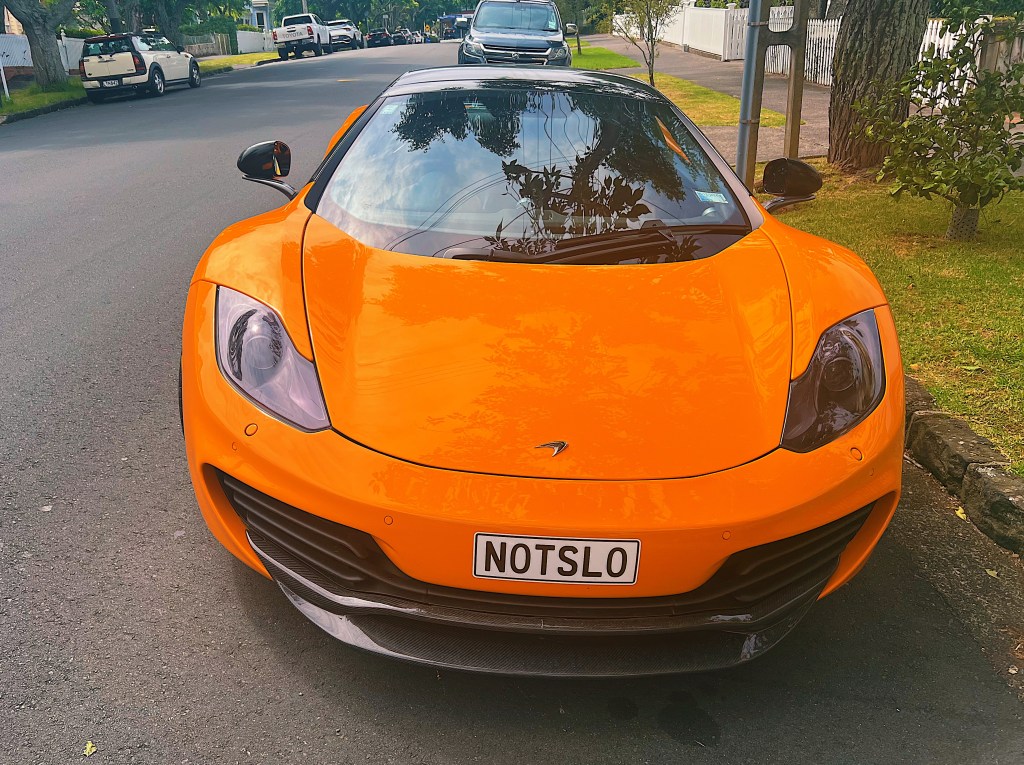
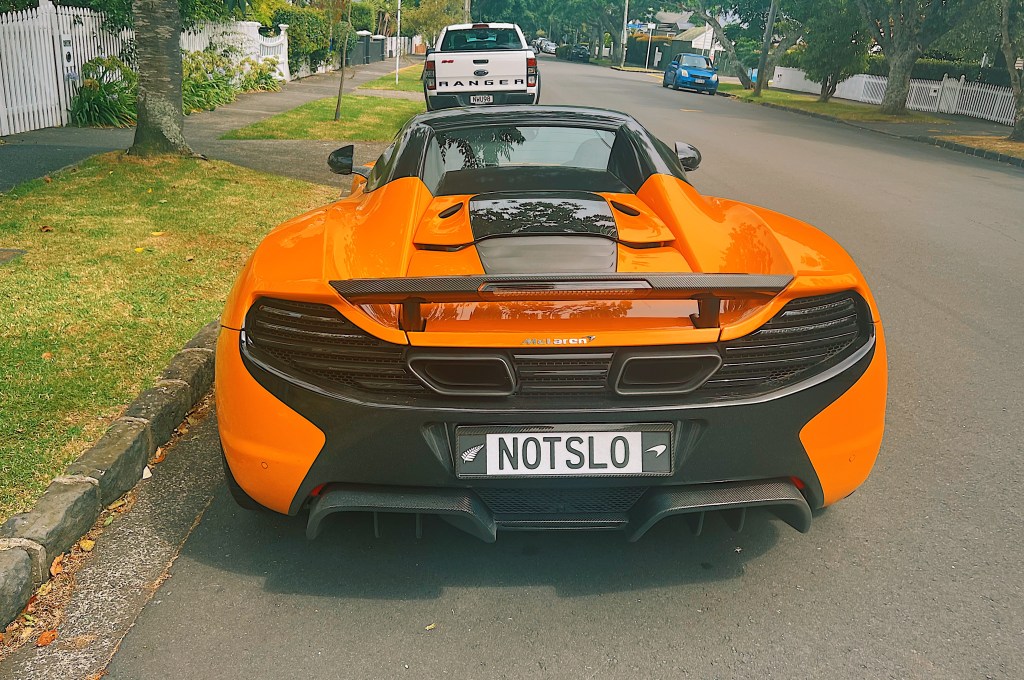
Speaking of colorful, today’s car of the day, is this bright orange McLaren. In fact, as followers of Formula I car racing will know, the actual color is papaya orange, the traditional color of the McLaren racing team. Although McLaren is a British team, it was founded in 1963 by a New Zealander, Bruce McLaren. Tragically, he died in a testing accident in 1970 at only 33 years old.
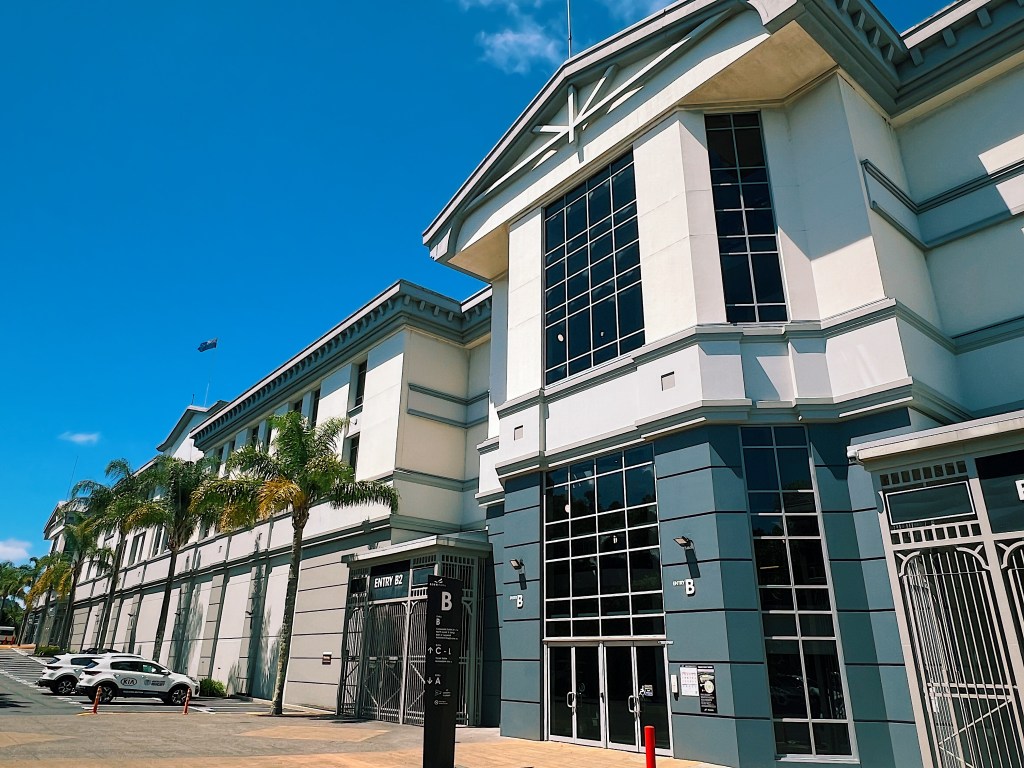
Eden Park is New Zealand’s biggest sports stadium with a capacity of around 50,000. It’s used primarily for rugby in the winter and cricket in the summer. It is considered one of international rugby’s most difficult grounds for visiting team to play. In fact, the New Zealand men’s rugby team, called the All Blacks, has been unbeaten there in 48 consecutive matches, stretching back to 1994.
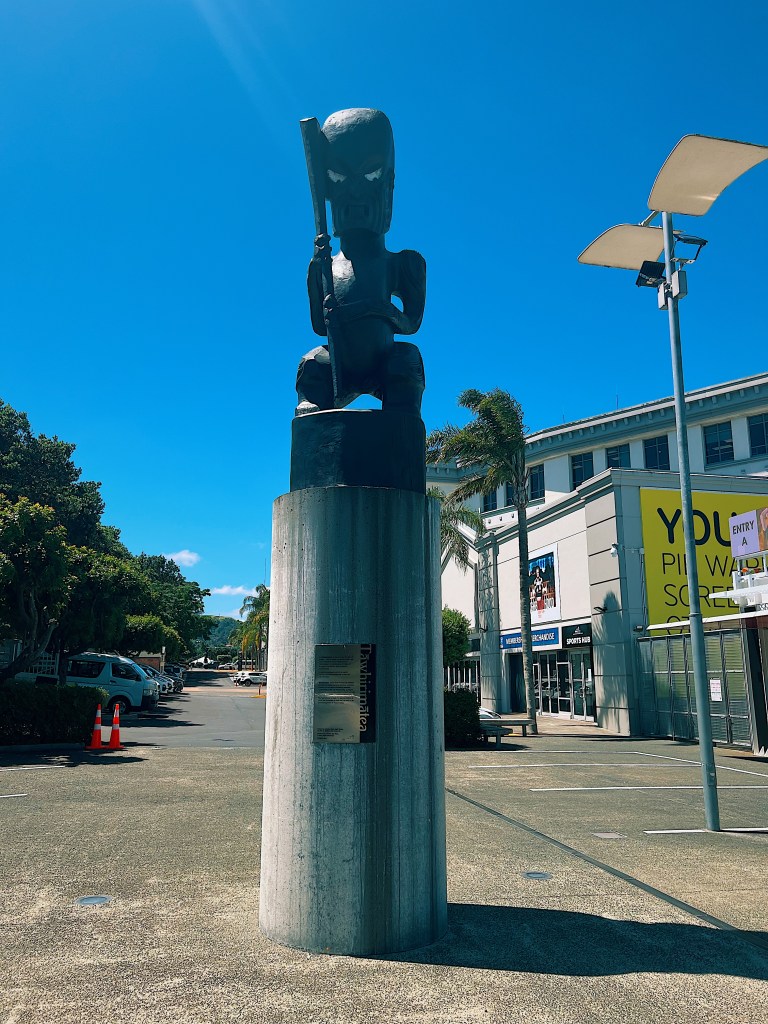
Outside the stadium were a number of statues. This scary looking guy is Tawhirimatea, the Maori God of wind and weather.
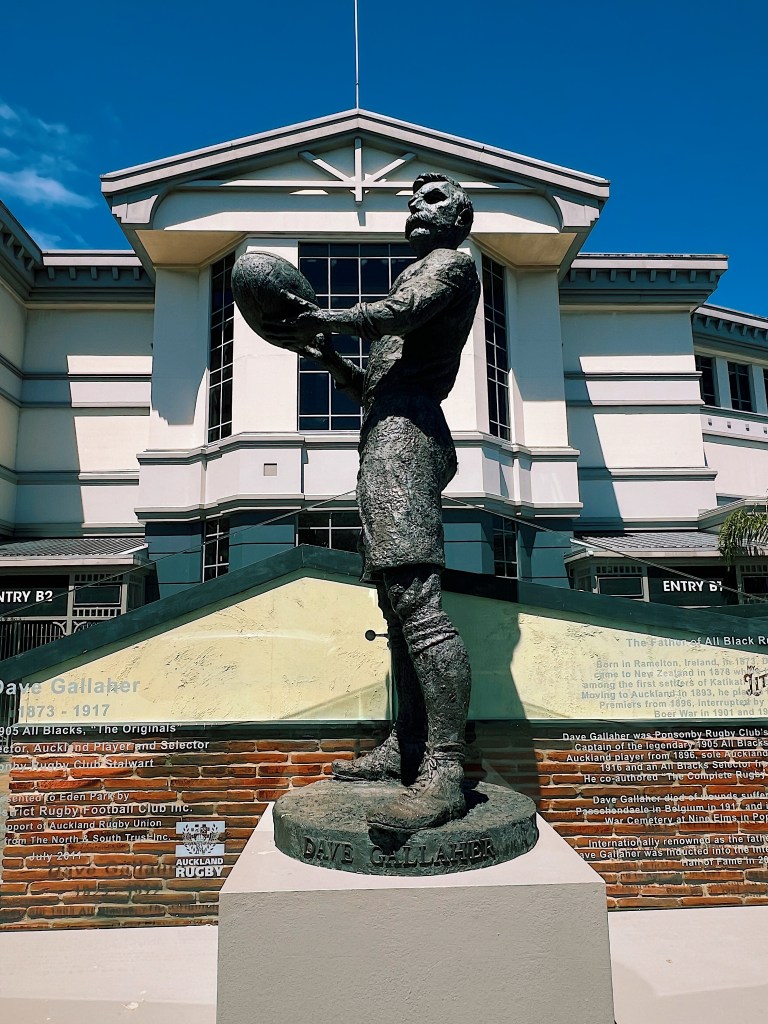
This hipster looking guy is Dave Gallaher who is sometimes known as the father of New Zealand rugby. Born in Ireland in 1873, he came to New Zealand as a child and was one of the country’s first All Blacks. Tragically, he was killed during World War I on the Western Front in 1917.
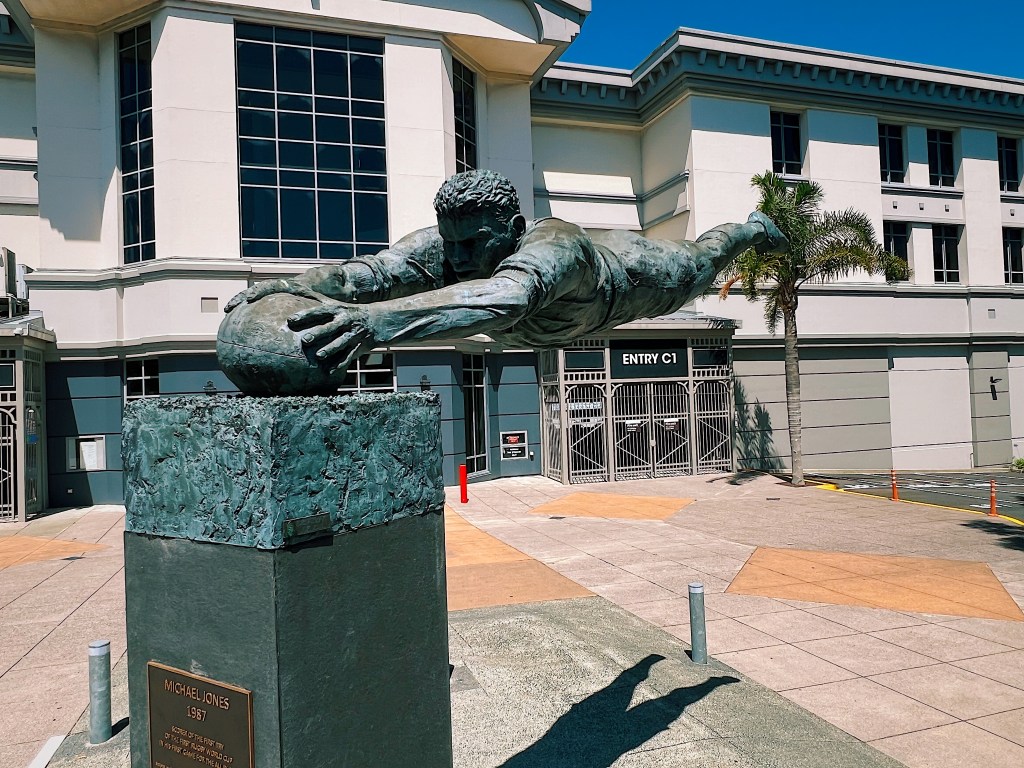
Finally, this high flyer is Michael Jones, who scored the first try of the final of the inaugural Rugby World Cup, that was held at Eden Park in 1987. New Zealand went on to beat Australia, 29-9.
Coincidentally, we had just watched a documentary about the 1981 Springbok tour of New Zealand, that brought back memories for Mal. For those who don’t follow rugby, the Springboks are the South African national rugby team, who happen to be the current World Champions. Back in 1981, South Africa was still an apartheid state. The New Zealand Rugby Union announcement that the Springboks would be touring New Zealand in 1981 left the country divided. Half of the population believed that participating in games against South Africa was showing support for a racist regime. The other half believed that sport should be kept separate from politics. The right wing government of the time agreed with the second group and allowed the tour to continue. Mal, at the time, was in his second year at university and was opposed to the tour. Rugby tours can take a number of months as the visiting side tours the country playing against regional teams as well as a number of Test matches (games between countries). During one of the games, protestors managed to get on to the field and the game had to be abandoned. From that time, protestors continued to try to get into the stadiums to disrupt the games. Mal was protesting at both the Springbok game against the Auckland side and another game when the Springboks played the All Blacks. Unlike most American football stadiums, Eden Park sits right at the center of a quiet suburban neighborhood, which it made the police difficult to defend. The police had created two special riot squads and they were the first to be issued with visored riot helmets and long batons. At the time, New Zealand police did not even carry weapons, so Mal can still remember the shock of seeing these riot police lined up. It was like something out of a movie. He can also remember the thrill of trying to getting around the police lines and the fear while running from a baton charge. During the Test match, a protestor flew a small plane low overhead and dropped bags of flour onto the field, one of which hit a player. It all added to the general confusion and mayhem. The surrounding streets were much quieter during today’s walk.
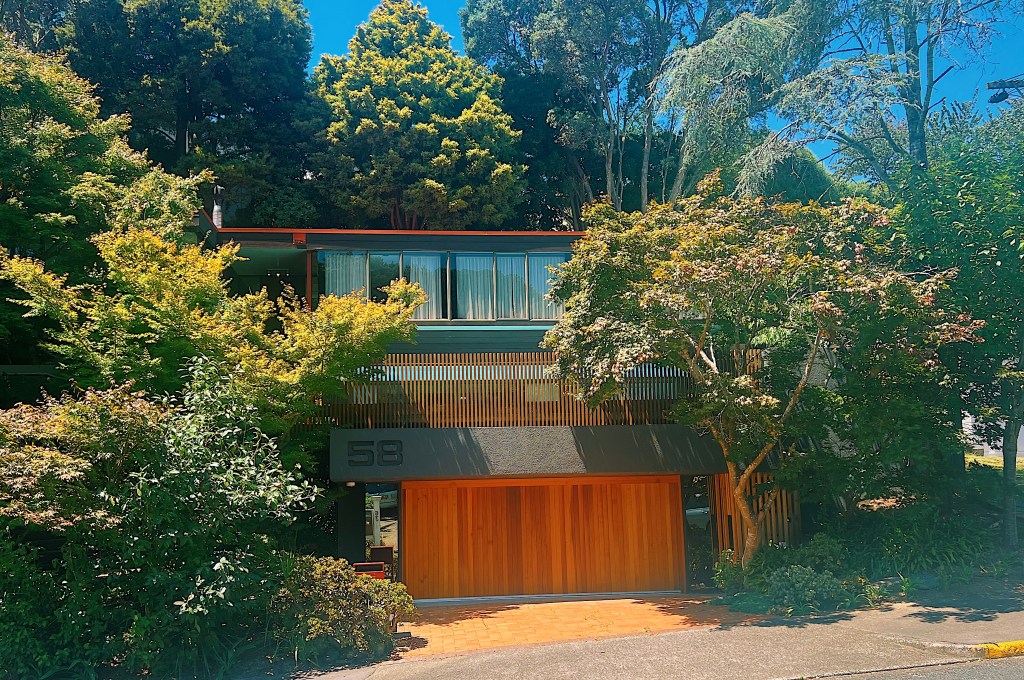
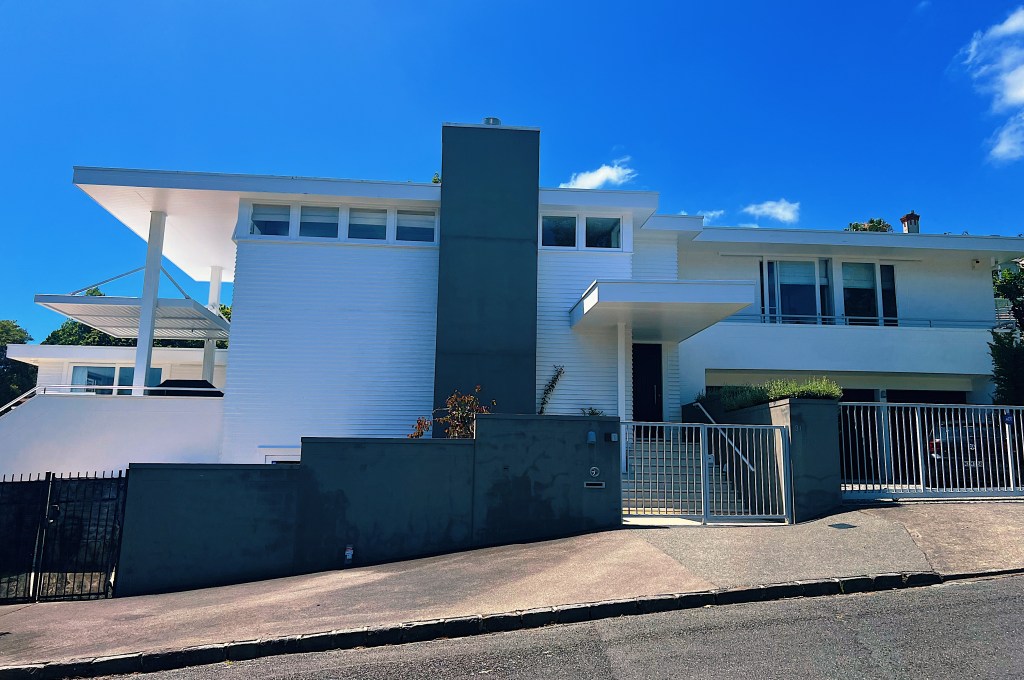
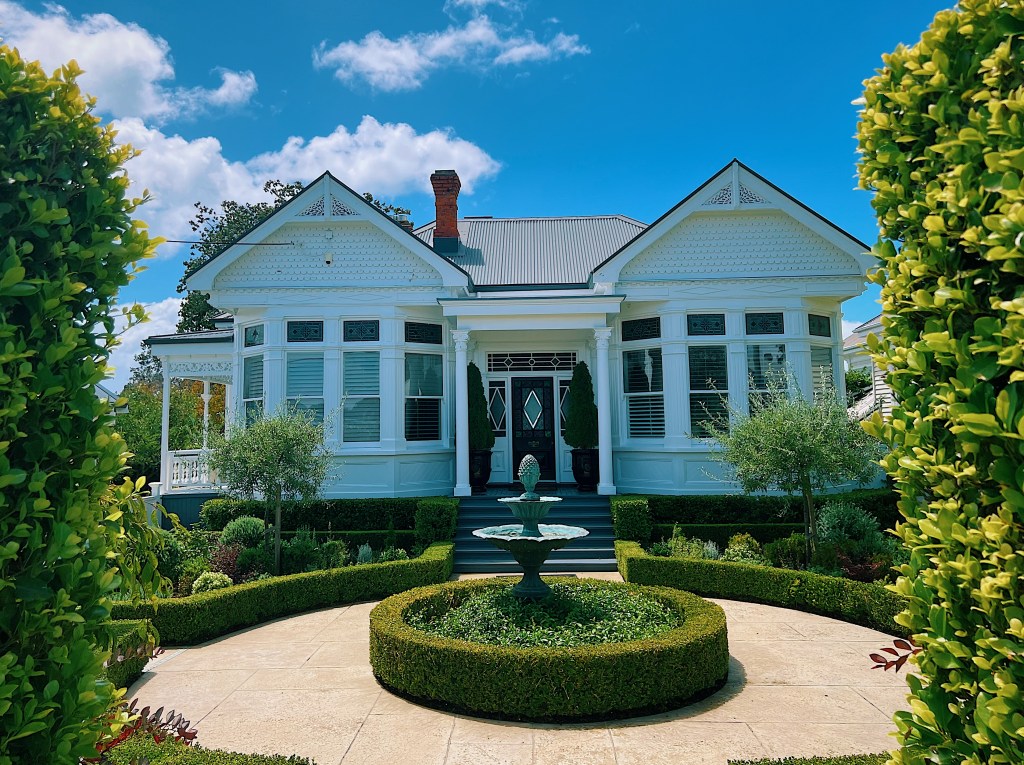
Remuera is one of Auckland’s most prestigious neighborhoods. It is also one of Auckland’s hilliest, so today’s walk was one of ups and downs. We lived in Remuera back in the eighties. It was a one bedroom place that has since been torn down. It looked nothing like the grand old and new homes you are about to see but was good value at $26 a week. At $13 each that would get you a couple of lattes or a fancy cocktail today.
We are always impressed when a house and accompanying car match.
Also impressive was this huge and immaculately kept hedge.
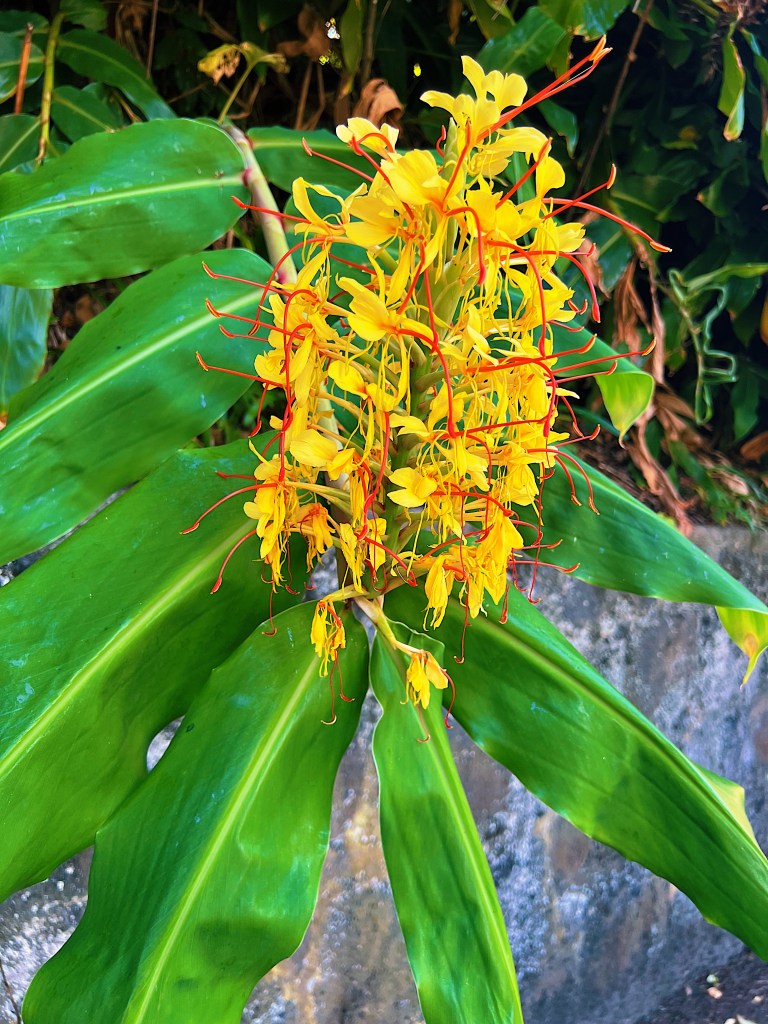
We also loved this tropical plant with its fragrant yellow flowers. If anyone knows what it is, please let us know.
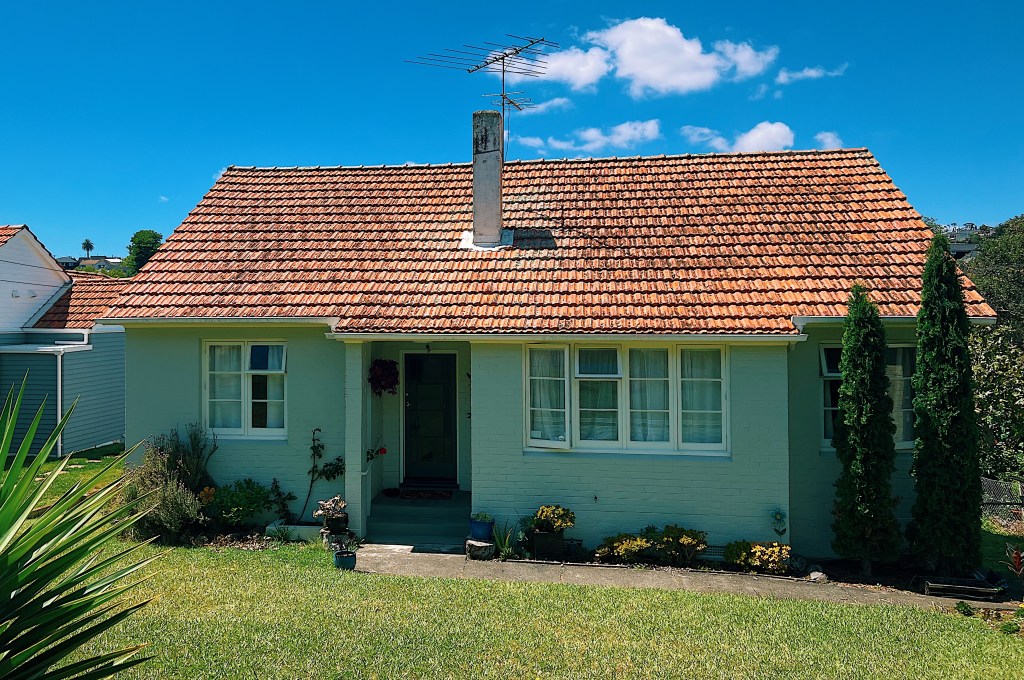
However, Remuera is not all big fancy homes. Dotted throughout the neighborhood, some of the original and modest state houses with their trademark orange tiled roofs have survived.
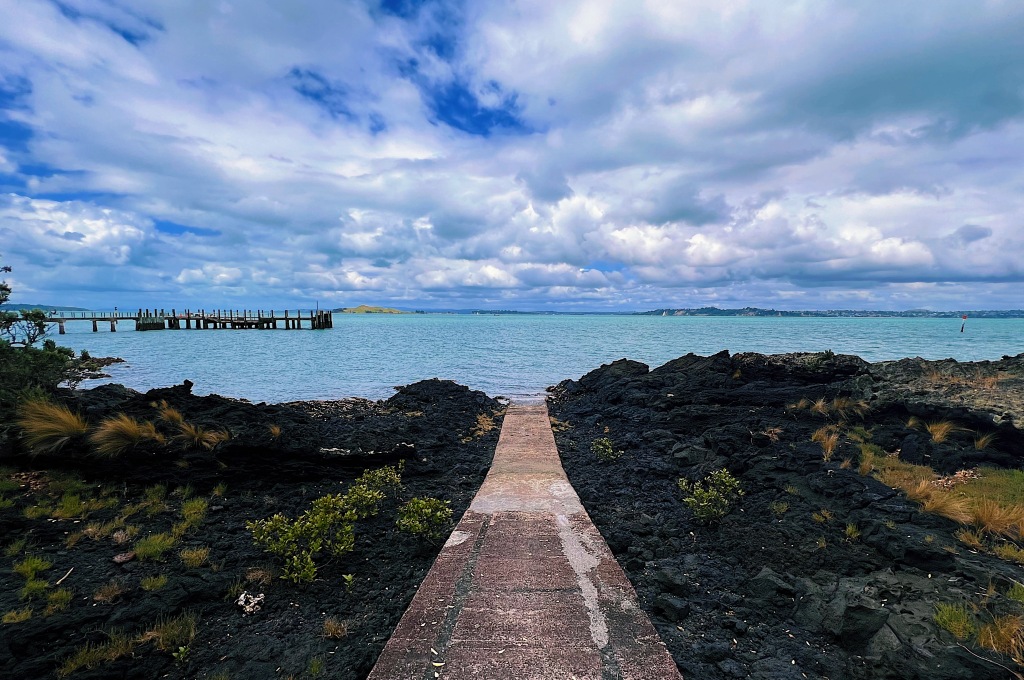
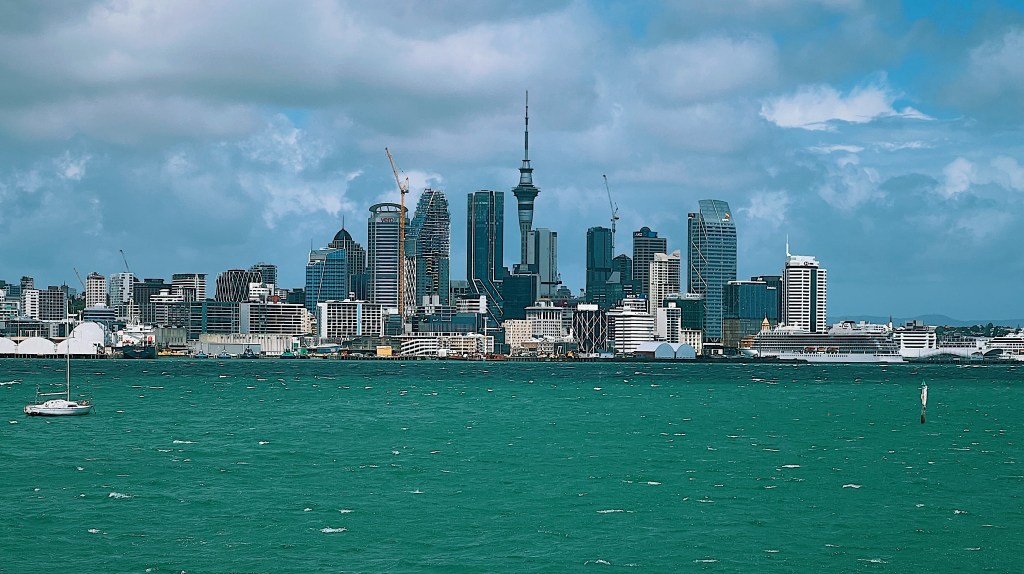
On a blustery day, we drove across the Harbour Bridge to the North Shore and the seaside suburb of Devonport. From there we started walking along the waterfront toward the adjoining neighborhood Stanley Point, enjoying the views to the city on the other side of the harbour.
Along the way, we passed Devonport Naval Base, home of the Royal New Zealand Navy (RNZN), also known as Taua Moana o Aotearoa (Sea warriors of New Zealand). The RNZN has approximately 2000 active personnel and 775 reserves. It has nine commissioned ships and Devonport is its only base that operates ships.
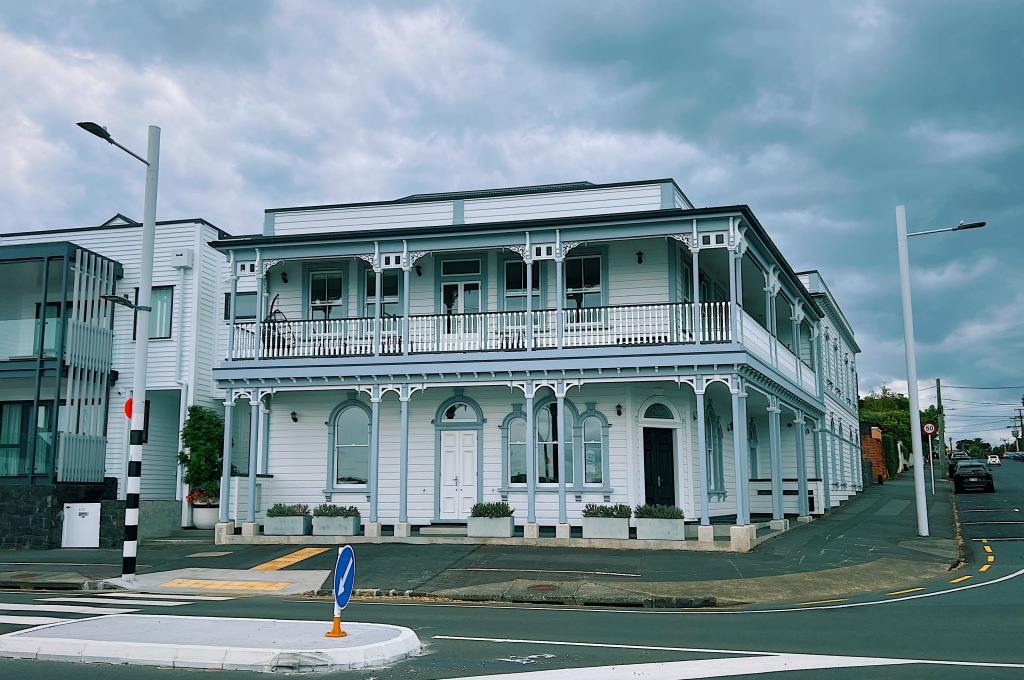
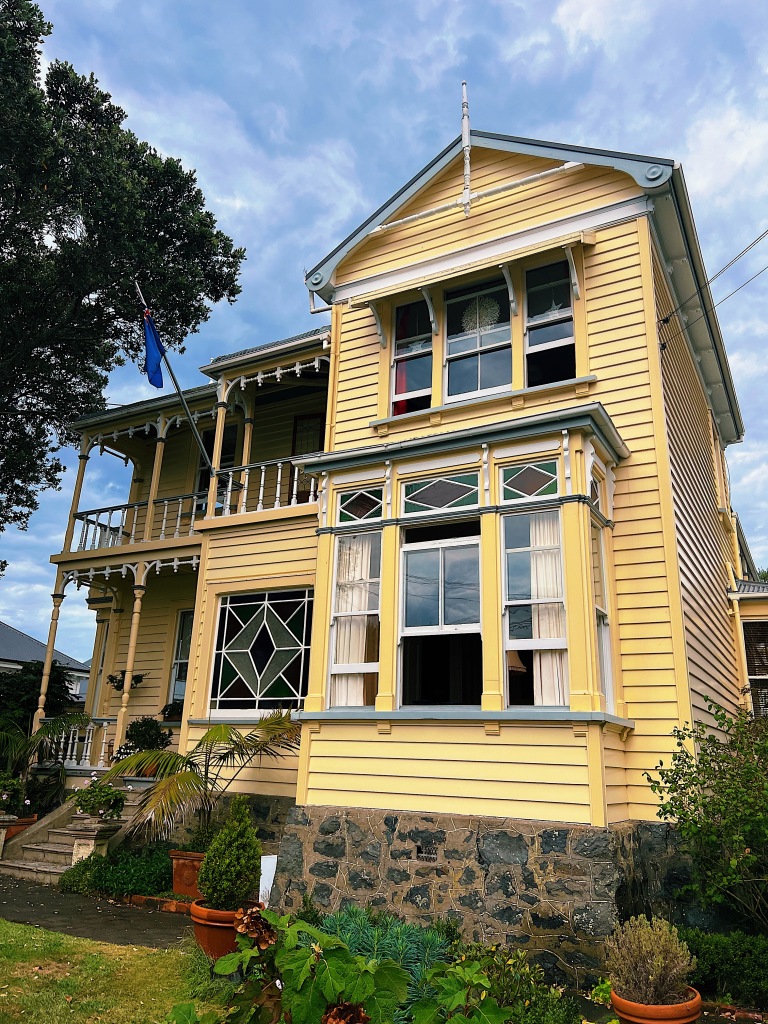
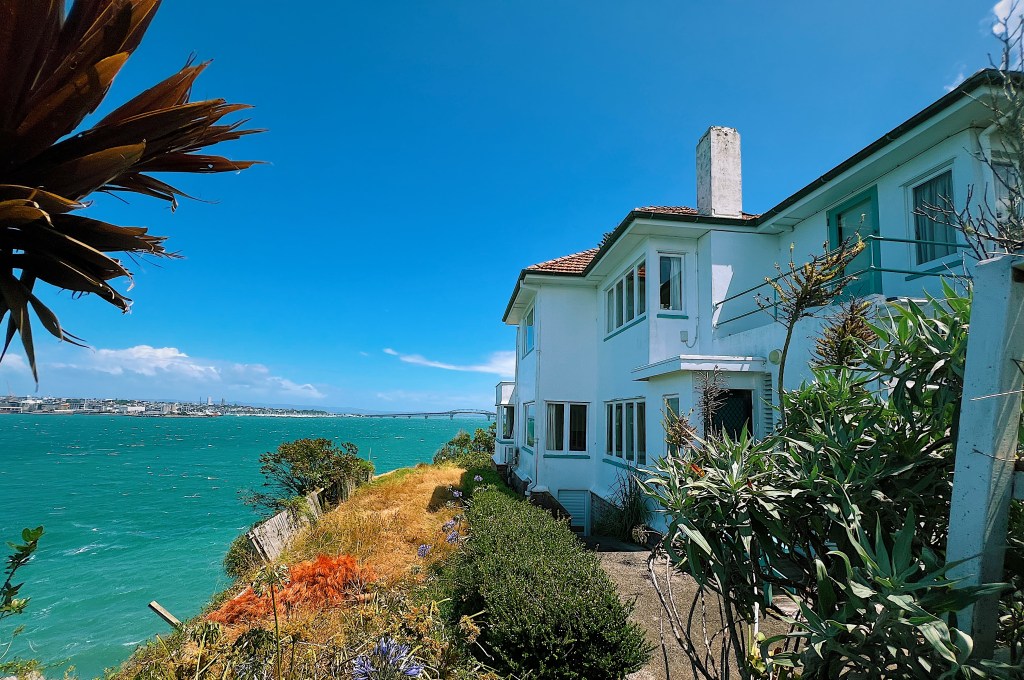
Stanley Point is a quiet residential neighborhood with a mix of old and new homes, many of which have beautiful views over to the city. Here are some of the homes we passed along the way.
There are also a number of small bays and parks by the water.
There weren’t too many people out and about. However, we were greeted by a few dogs as we walked by, including this little guy inviting us to join him for a service at a local church.
We decided to skip the service and seek nourishment of the body rather than the soul. Unusually for Auckland, we had to cover a few miles before finding a cafe to enjoy a coffee and an avocado on toast.
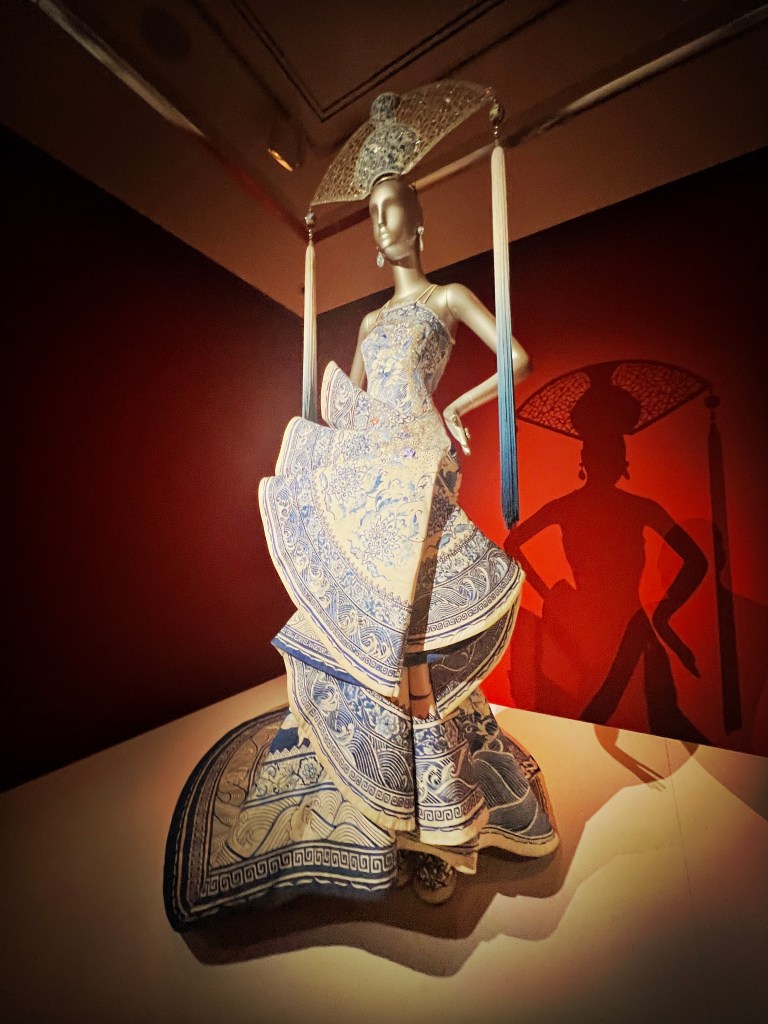
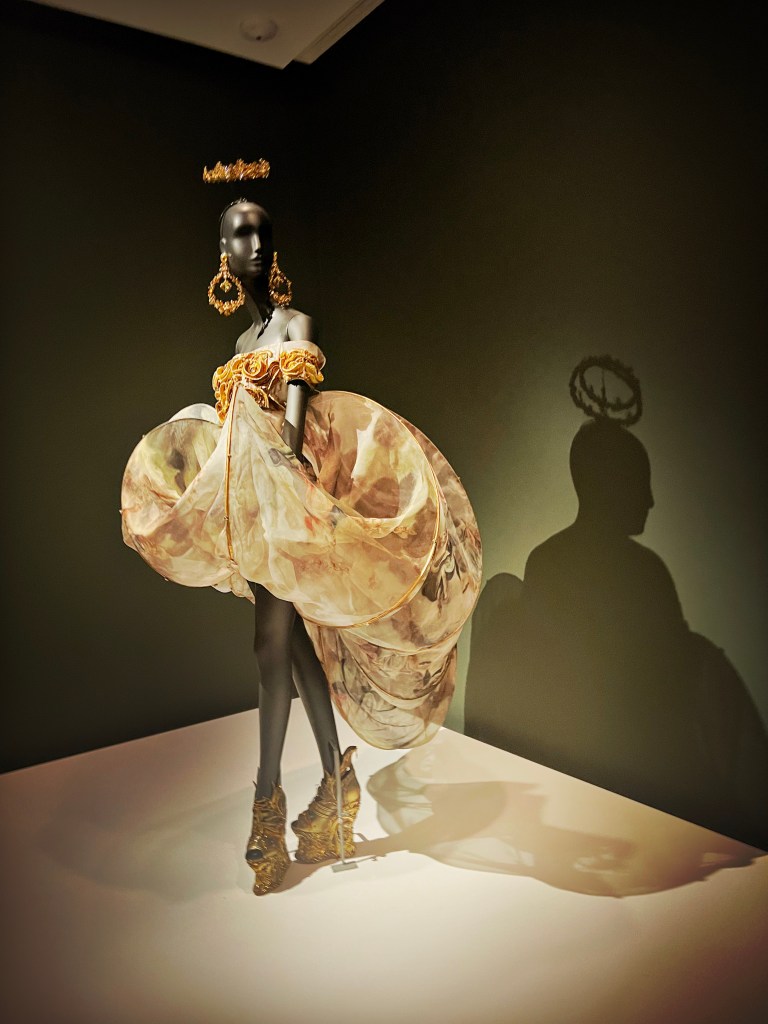
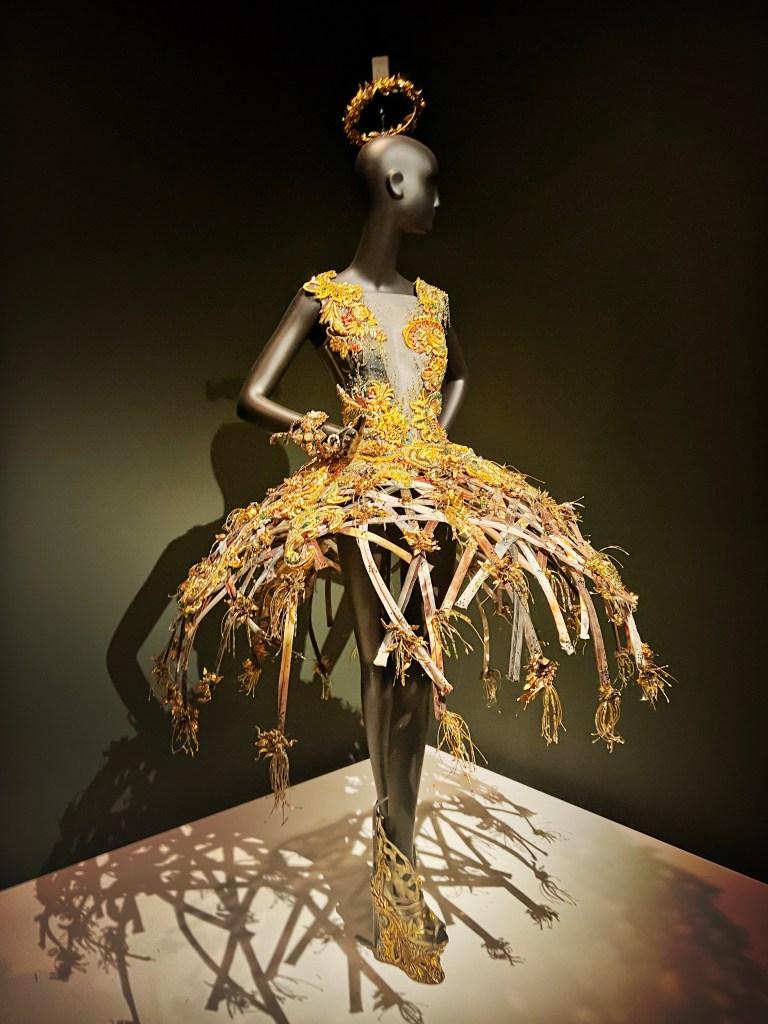
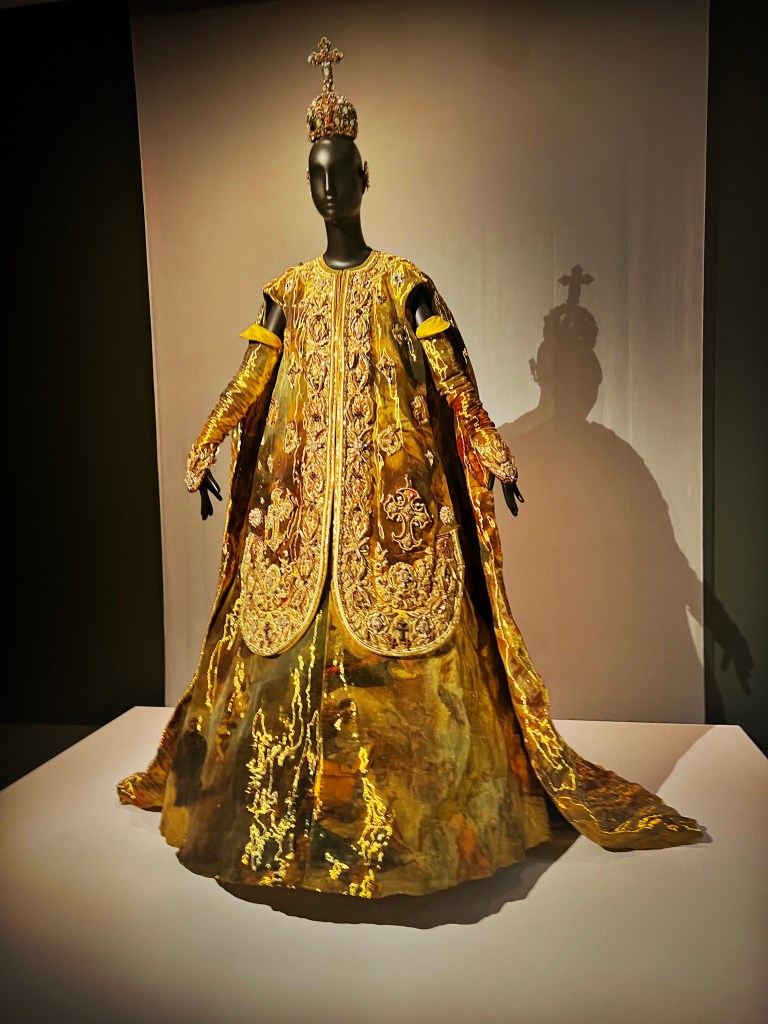
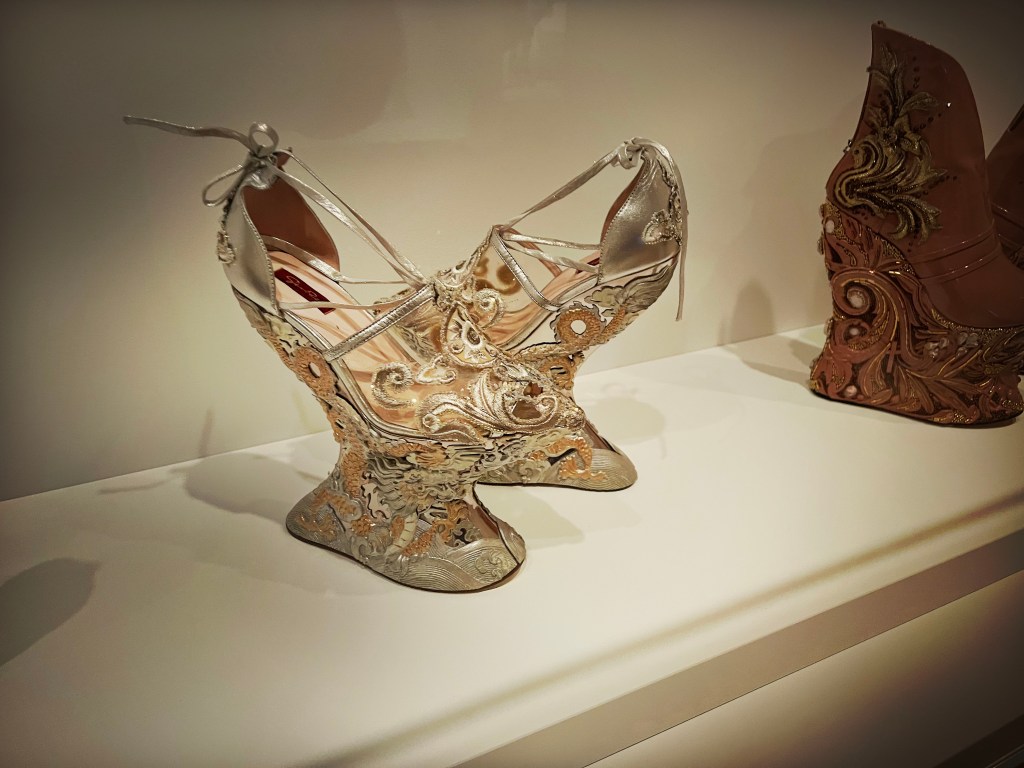
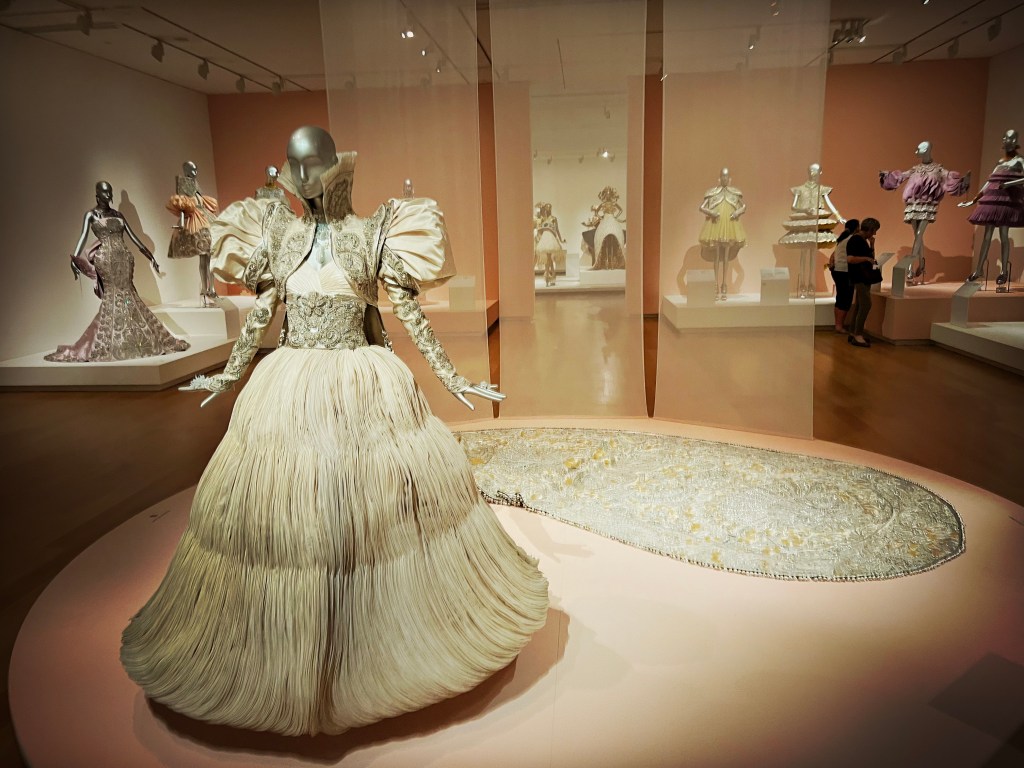
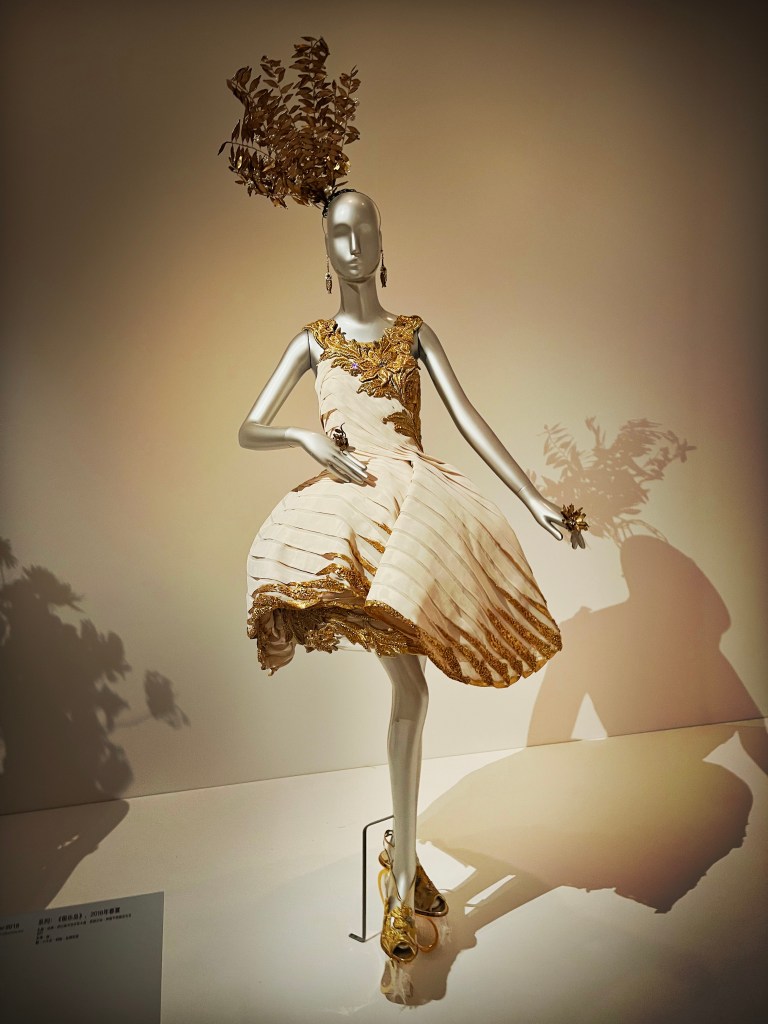
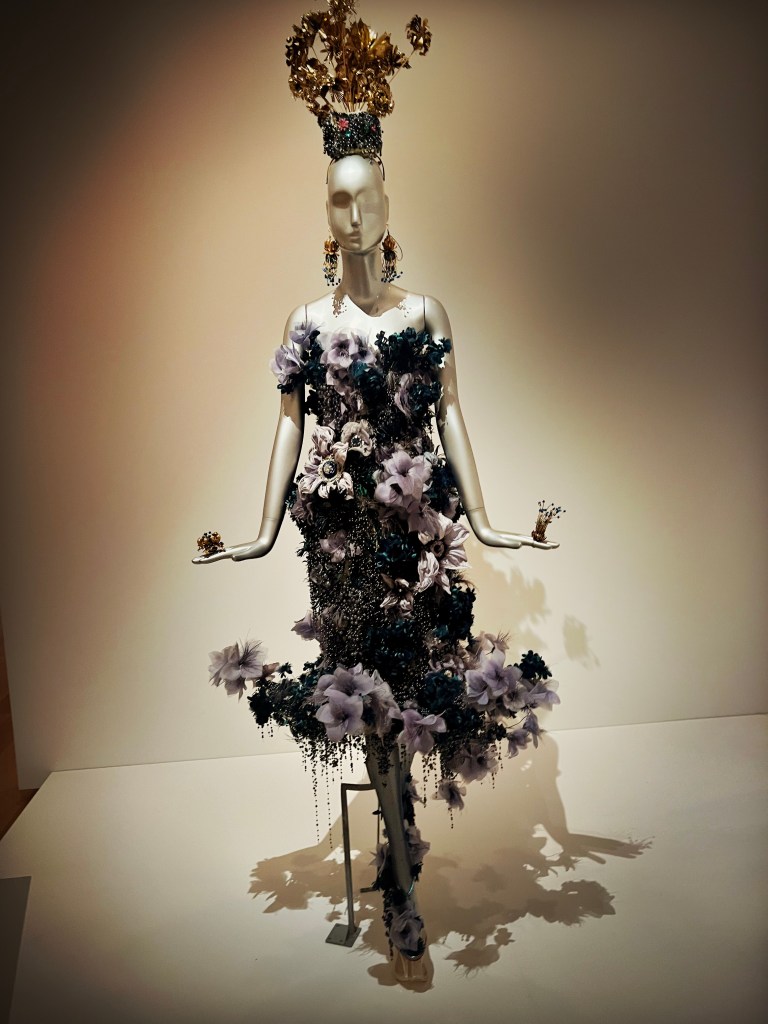
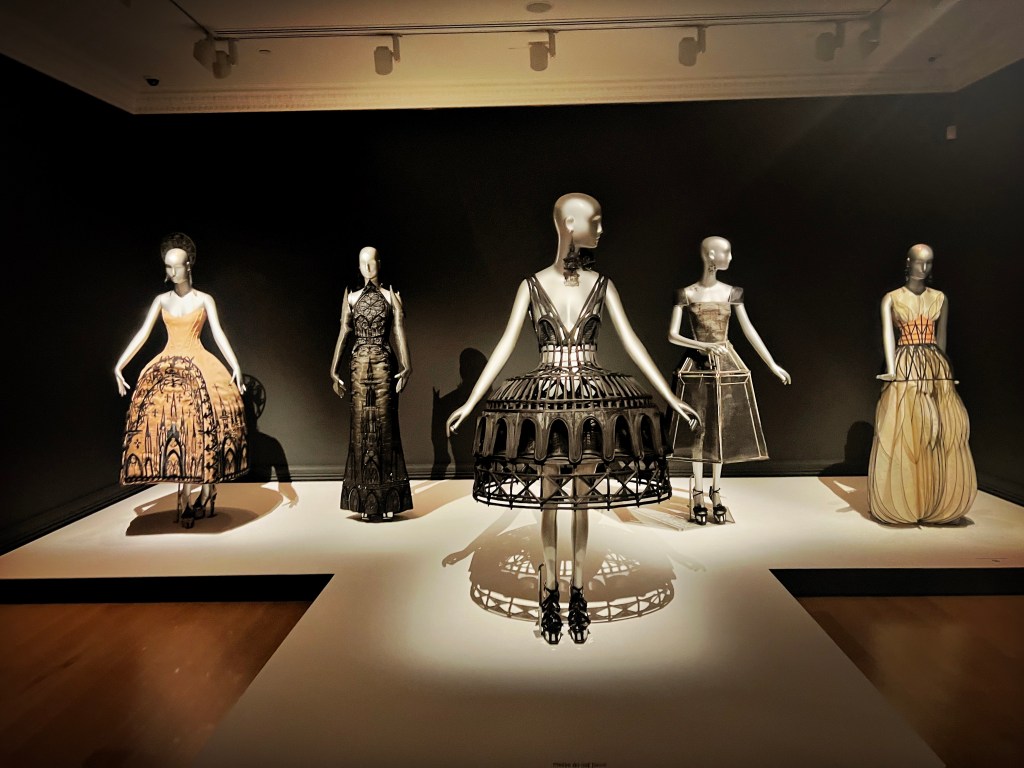
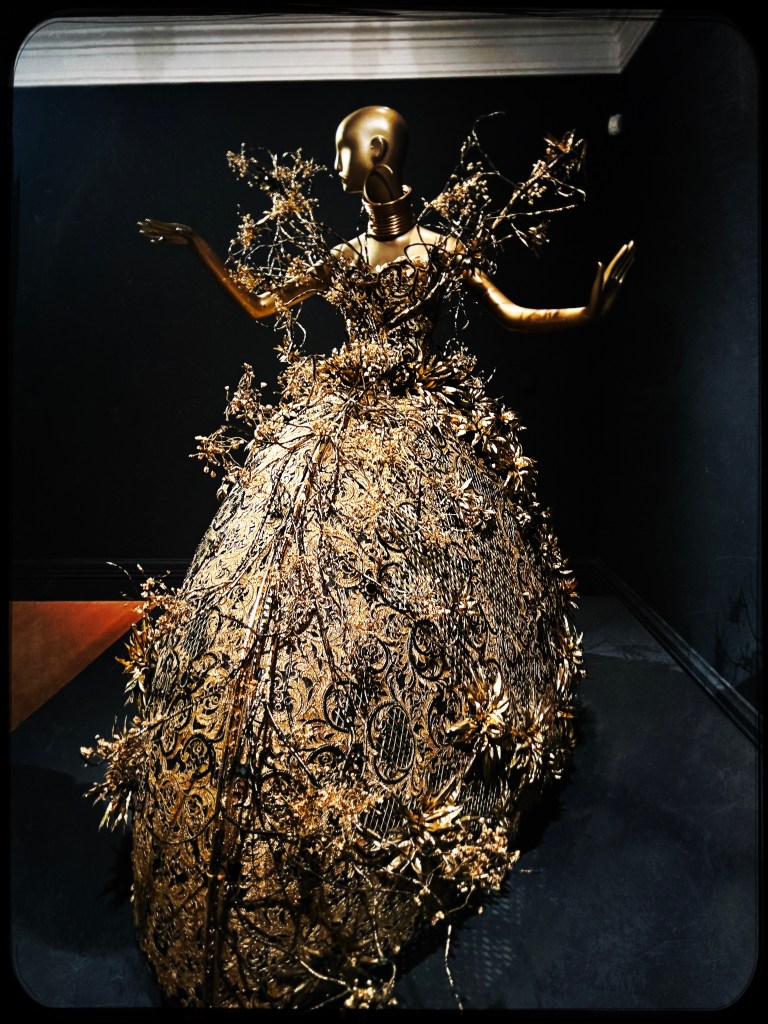
If you are in Auckland, we definitely recommend that you stop by the Auckland Gallery of Art to check out Fashion, Art, Fantasy, an exhibition of the extravagant, breath-taking fashions of Chinese designer Guo Pei. Many of the works are intricately embroidered and take over a year to make. Here is a sampling of the many pieces on display.
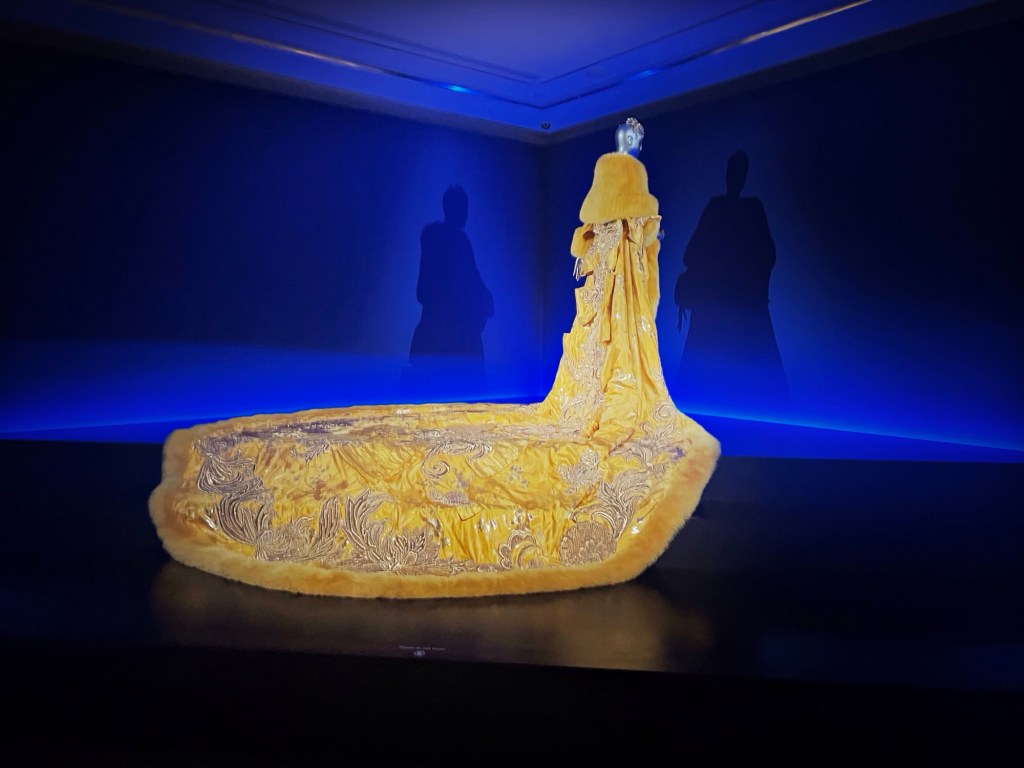
The exhibition culminates in Guo Pei’s most famous dress. Taking, approximately, 50,000 hours and 20 months to create, this canary yellow dress was worn by Rihanna to the Met Gala in 2015. Weighing about 25 kgs (55 lbs), it took a three person entourage to hold the long train.





















































 Mal and Lauren