Tiritiri Matangi Island

February 27, 2021

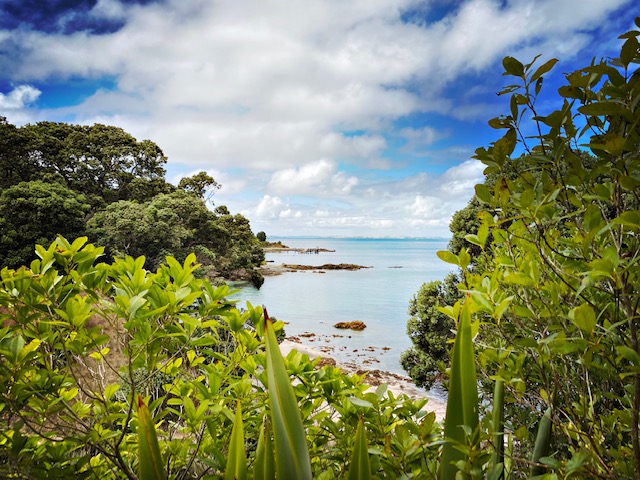
On a perfect sunny day we headed to Tiritiri Matangi joined by our good friend Louise. Tiritiri Matangi (Maori for “tossed by the wind”) is a nature reserve about ninety minutes ferry ride from the center of Auckland. Until the Maori arrived about 700 years ago, the only mammals in New Zealand were bats. The lack of predators meant that many species of native bird evolved without the ability to fly. Unfortunately, the introduction of rats, stoats, cats, possums and other mammals by Maori and Europeans has had a devastating effect on the country’s native birds and many have now become extinct or are endangered. New Zealand has now begun an ambitious campaign to become predator free by 2050. In the meantime, a number of sanctuaries have been established to protect native birds from predators. Many of these sanctuaries, such as Tiritiri Matangi, are on islands that are easier to protect from predators. The island is a great place to visit for a day to see native birds and bush, and to go swimming at one of its beautiful beaches.

We saw many native birds, some of which are quite endangered. Unfortunately, without a telephoto lens it is hard to get a photo of them. Here is a guide with pictures of some of the birds that we saw.
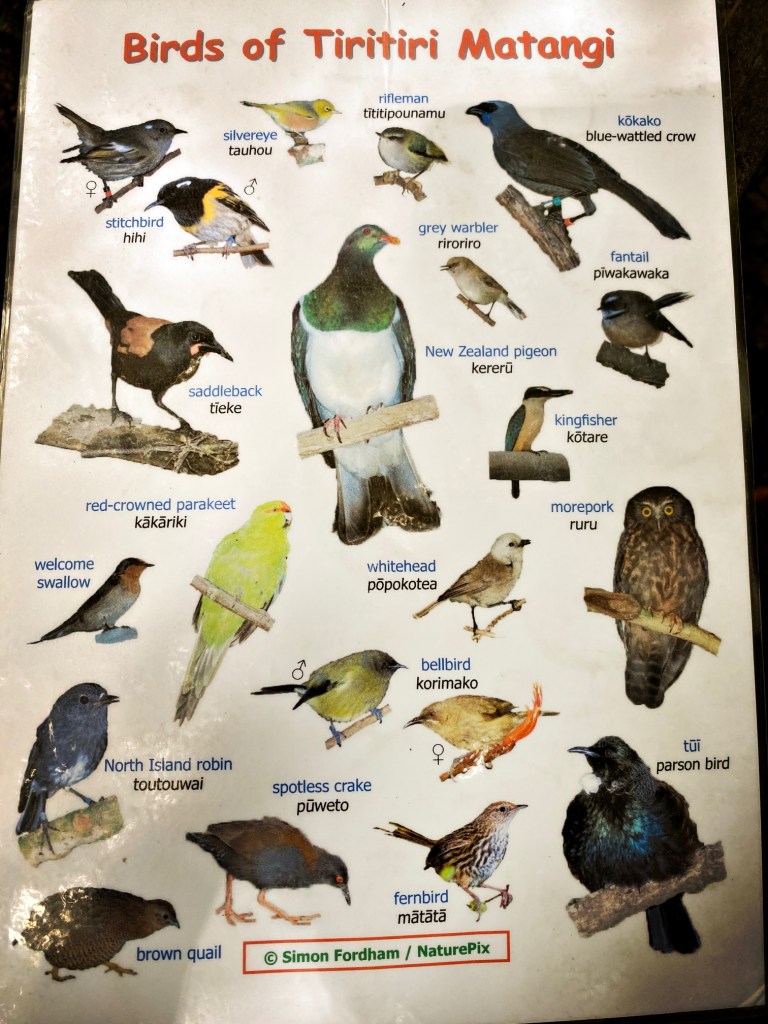
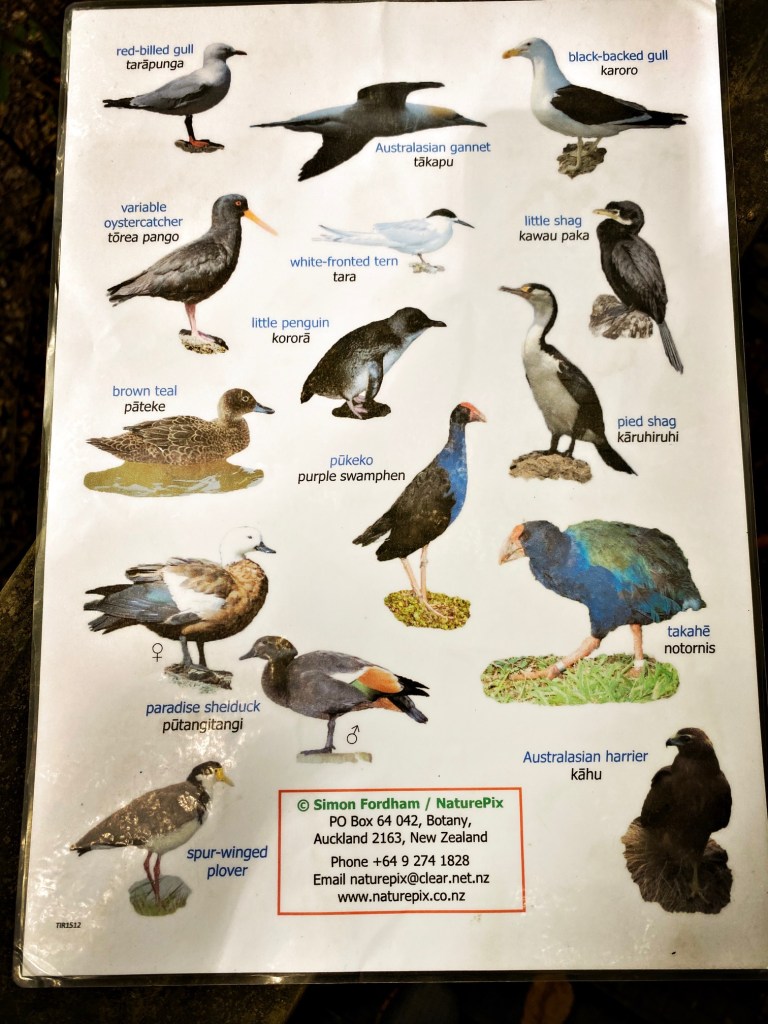
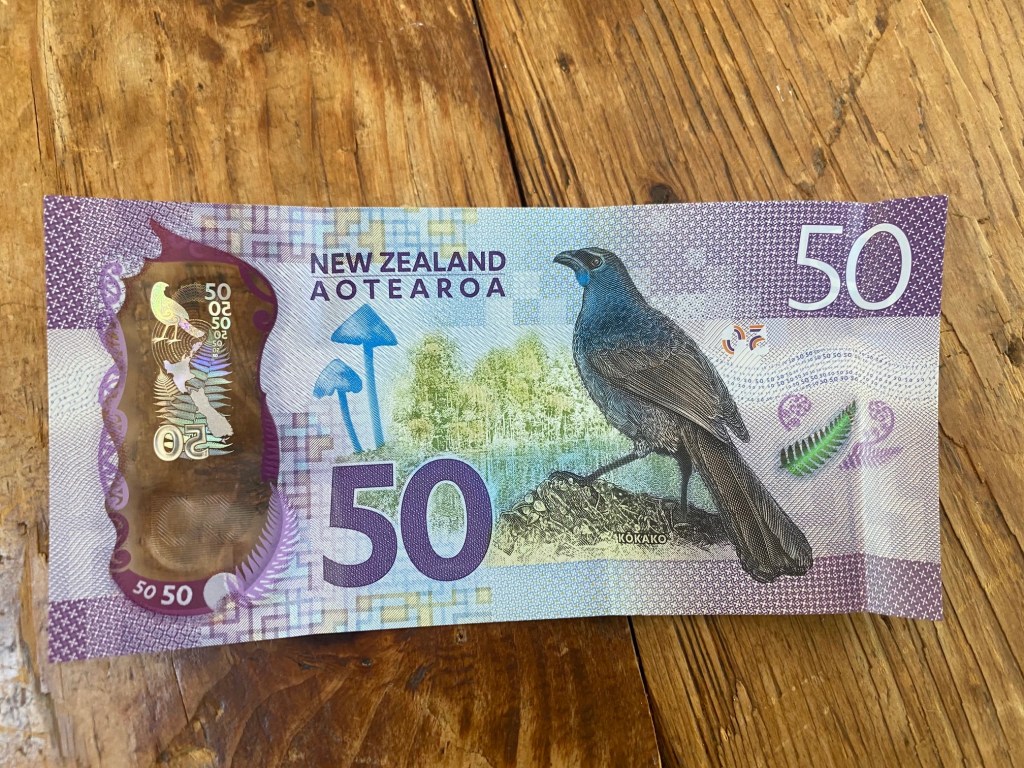
We were particularly excited to see a kokako as they are very rare. If you are in New Zealand and don’t get to see one in person, you can always see its picture on the back of the New Zealand 50 dollar note.
One very rare bird that we did get to see close up was the takahe.
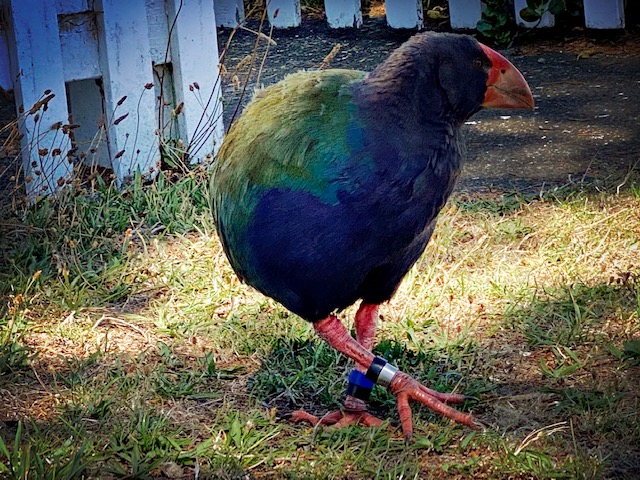
Takahe
Young Takahe

By the end of the 1800s, the takahe was thought to be extinct. However, in 1948 they were dramatically rediscovered in a remote valley in the mountains of the South Island. There are now about 400 in various sanctuaries.

In the 1980s and 1990s, volunteers planted close to 300,000 trees on the island, and there are well maintained tracks, so it is also a great place to see native forest.

One tree that has been on the island for a very very long time is this sprawling ancient pohutukawa tree. It is estimated to be 800-1000 years old.

It is hard to imagine that the giant pohutukawa that we saw started life as one of these tiny seeds.

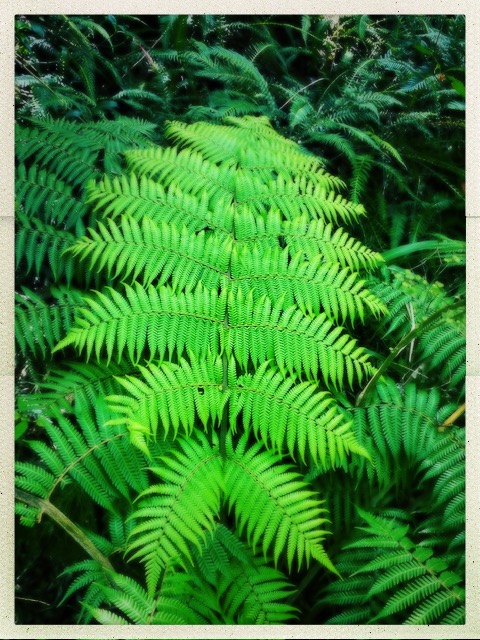
We saw many beautiful ferns

And a variety of other native trees and plants

Nikau Palms
Cabbage Trees
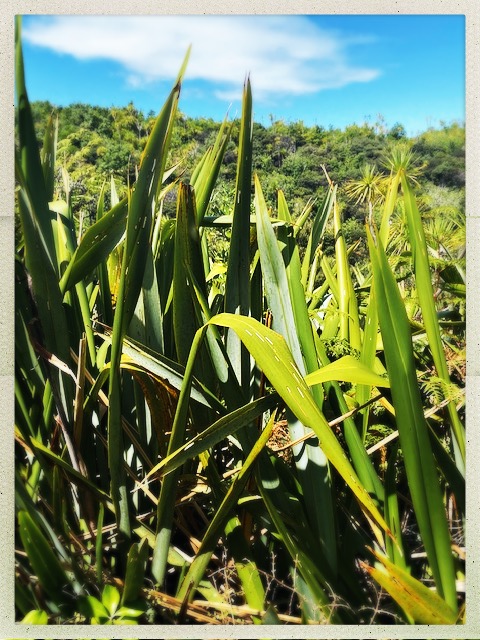
Flax

Many of you may have heard of manuka honey which is in demand around the world for its great taste and medicinal qualities. Here is a manuka shrub.

Manuka

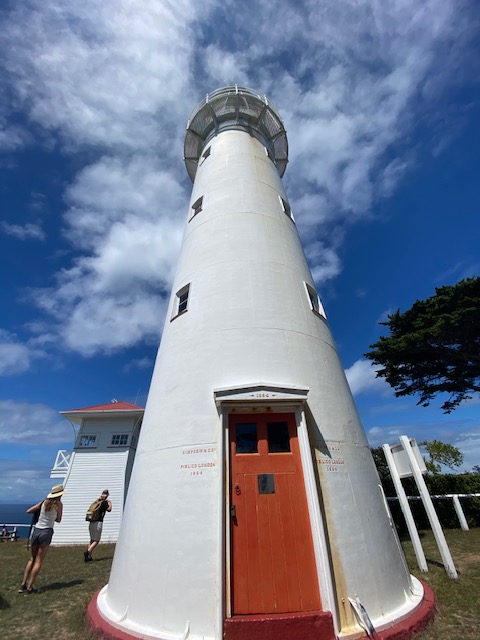
There is also a lighthouse on the island that has been in operation since 1865.

Waiheke Island, New Zealand

February 22, 2021

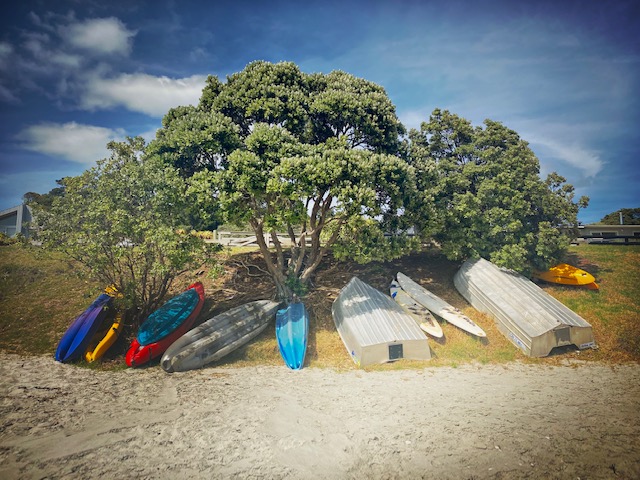
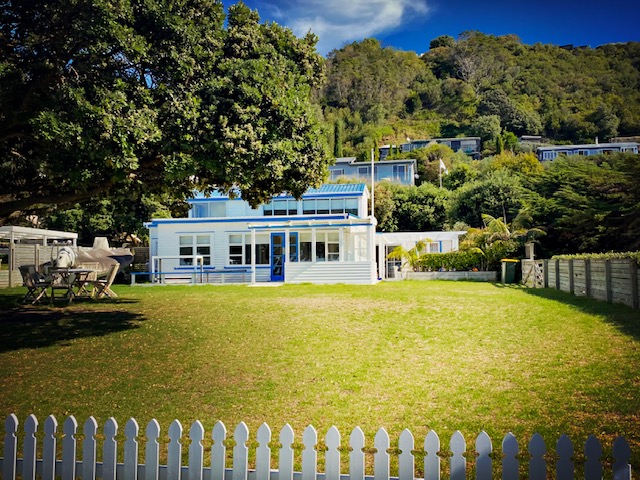
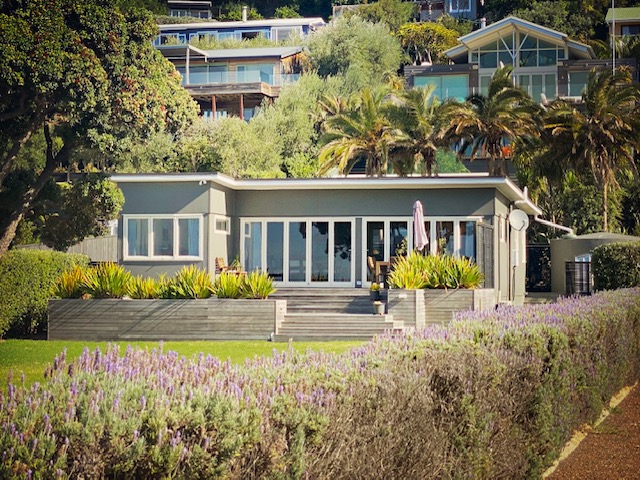
Waiheke Island is less than 40 minutes by ferry from the center of Auckland. It is the most populated and second-largest island in the Hauraki Gulf with a permanent population of just under 10,000 and an area of about 36 square miles. Meaning “trickling waters” in maori, it is also a popular holiday spot because of its beautiful beaches and close proximity to Auckland. Consequently, there are many holiday homes or what New Zealanders call baches (pronounced batch).

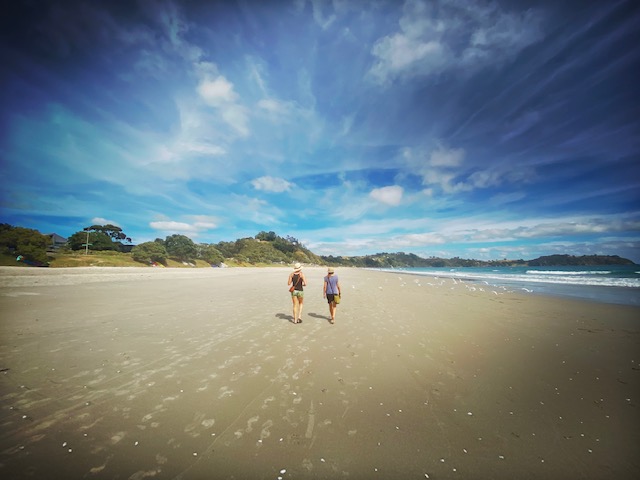
Walking on Onetangi Beach (meaning “weeping sands” in maori)

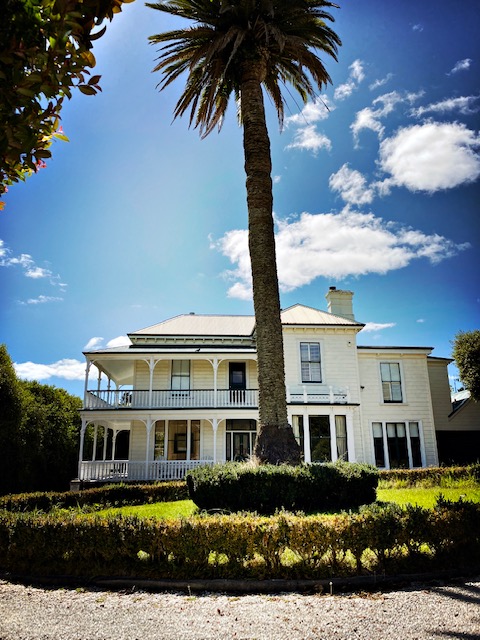
There are competing theories on why kiwis call their beach houses baches. Some say the origin of the word comes from a shortening of bachelor pad. Others think that it comes from the Welsh word for small. Here are some typical Waiheke baches.

The island is also well known for its vineyards. The climate is particularly suited to Bordeaux-type grapes though some Chardonnay and Sauvignon blanc varieties are also grown. The island is best known for its Syrahs.

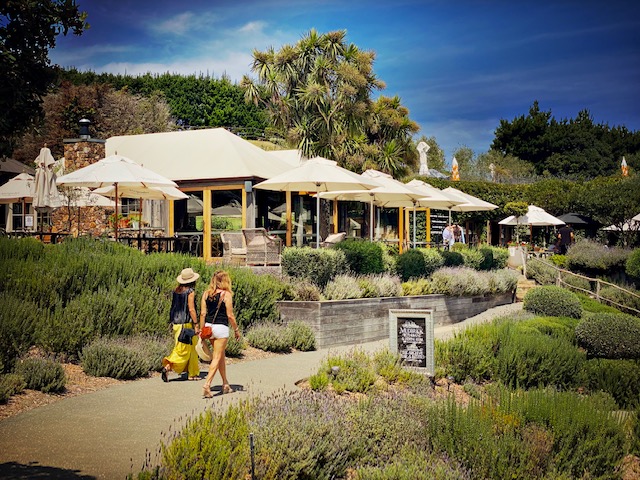
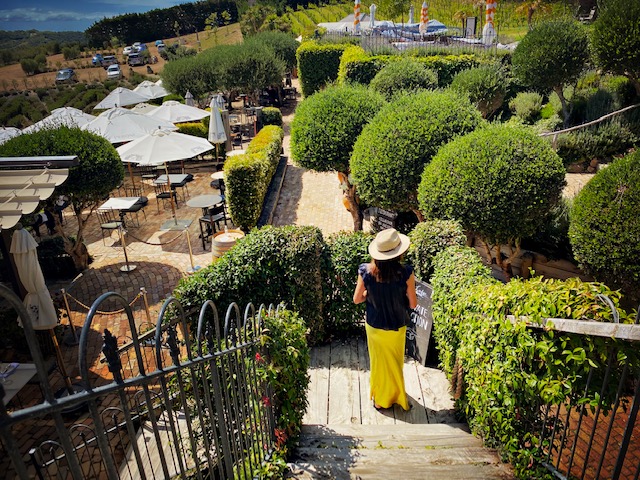
Many of the vineyards have restaurants and lodging attached. One of the most famous and most beautiful is Mudbrick.

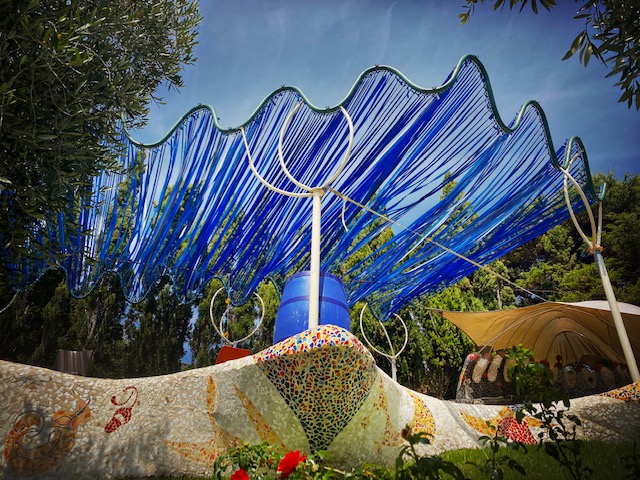
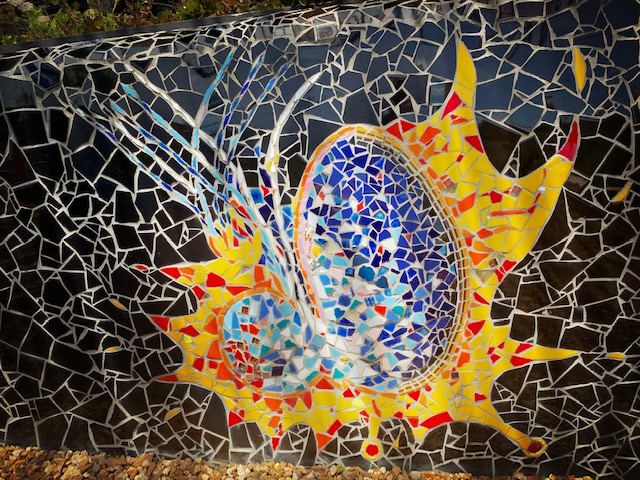
We also loved Casita Miro, which, as its name suggests, had a decidedly Spanish / Barcelona feel, complete with whimsical tiles.

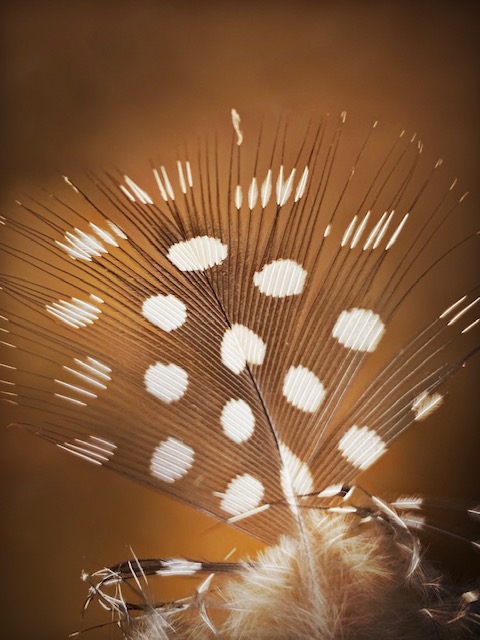
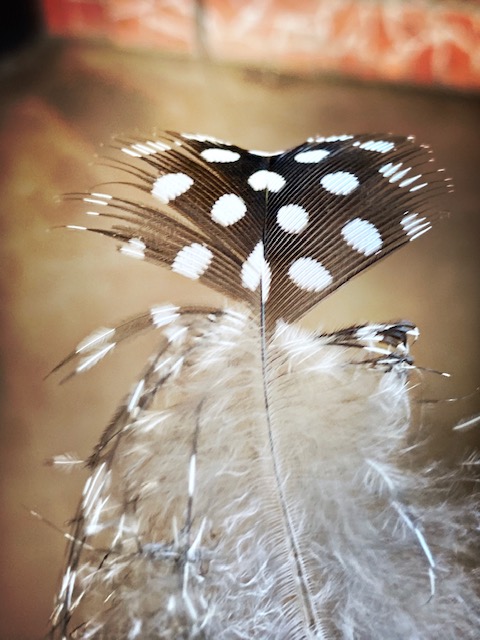
Nature wasn’t to be beat out when it came to beautiful patterns. We came across this feather.

Auckland, New Zealand

February 12, 2021

On an idyllic sunny day we went on a long walk through the neighborhoods that surround our house. We started out walking though St. Mary’s Bay and past the College it is named for.

St. Mary’s is a Catholic girls’ high school with around 1,000 students. Established in 1850 it is the oldest existing school in central Auckland.

We then headed down Jacob’s ladder, a set of stairs that dates back to the late 1800s. They are named for the famous biblical ladder that Jacob dreams about in the Book of Genesis. “And he dreamed, and behold, there was a ladder set up on the earth, and the top of it reached to heaven; and behold, the angels of God were ascending and descending on it!”

At the bottom of the stairs is Jacobs Ladder Bridge which spans the Auckland Northern Motorway and connects St. Mary’s Bay to Westhaven Marina.

The bridge, opened in 2012, is clad in a golden-color mesh and is designed to be reminiscent of maori fishing nets or fish traps.

Auckland is sometimes called the City of Sails, and when you walk along Westhaven Marina it is easy to see why.

Westhaven Marina with Auckland Harbour Bridge in background
We loved this little tug boat

Walking along the newly constructed boardwalk from the city to the harbour bridge is a great way to see the yachts.

Walking under the bridge we continued along the waterfront and up into Herne Bay, one of Auckland’s most affluent neighborhoods. Named after Herne Bay, an English seaside resort in Kent, it consists primarily of marine villas and Edwardian age homes, but there are a variety of other styles as well, including modern and deco buildings.

Running along the edge of Herne Bay is Jervois Road, the home of a number of trendy stores and restaurants. More traditionally, there is also this classic New Zealand dairy.

For those non-kiwis reading this, dairies are small owner-operated convenience stores, selling groceries, newspapers, etc. They are called dairies because they originally were licensed to sell perishables such as milk and eggs that were delivered to the shops from dairy farms.

Piha, New Zealand

February 11, 2021

One of our favorite spots in all of New Zealand is less than an hour’s drive from Auckland. Piha (pronounced pee-haa) is a scenic black-sand surf beach on the west coast. Many of the west coast beaches have dark sands because of their high iron content. It makes them hard to walk on in the sun as they get very hot. But they are also very beautiful as the sun sets. In fact, we don’t think that we’re exaggerating in saying that Piha has some of the most beautiful sunsets in the world.

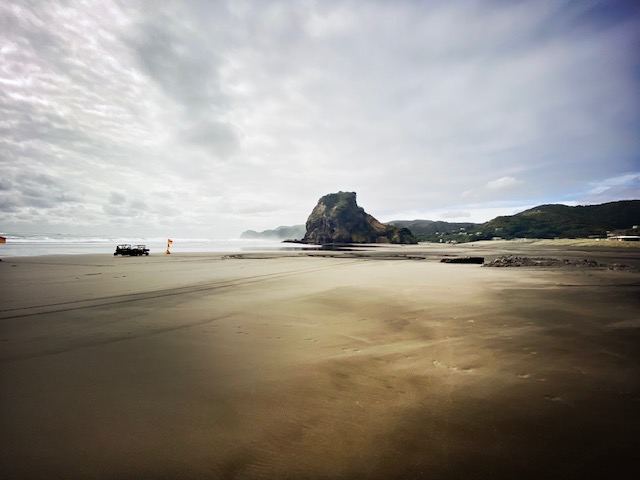
Piha is a maori word meaning the wave that comes off the bow of a ship as it moves through the water. It may get its name from the way the waves break around Lion Rock that divides the southern and northern beaches.

Lion Rock

We were visiting our two good friends John and Judi, brother and sister, who both have holiday homes there. They are the third generation of their family that have spent their holidays there. Judi’s home is on the more isolated north end of the beach and we had an enjoyable walk with her as her two dogs rushed around chasing seagulls.

North Piha
Bro on the run
Edge of the Pacific

We then headed to the south end of Piha where we went for another walk, this time accompanied by both Judi and John.

Rock Pool
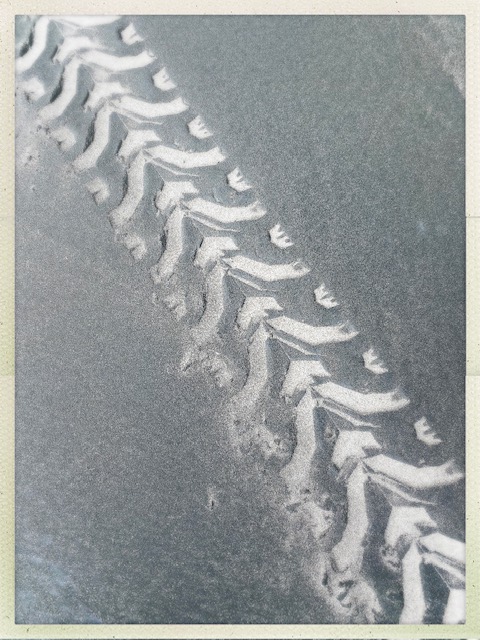
Tire tracks on the iron sand

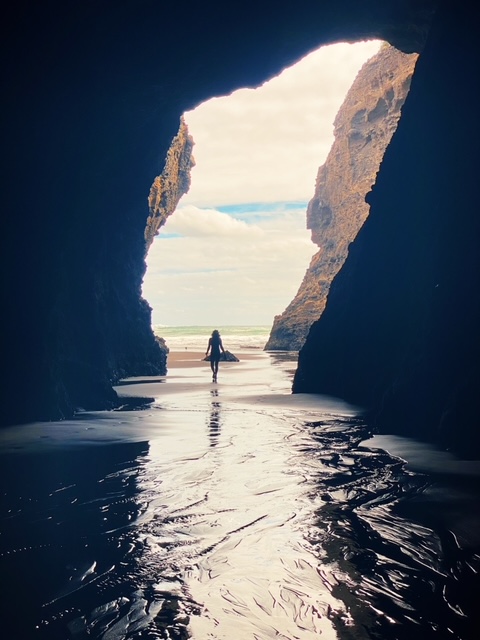
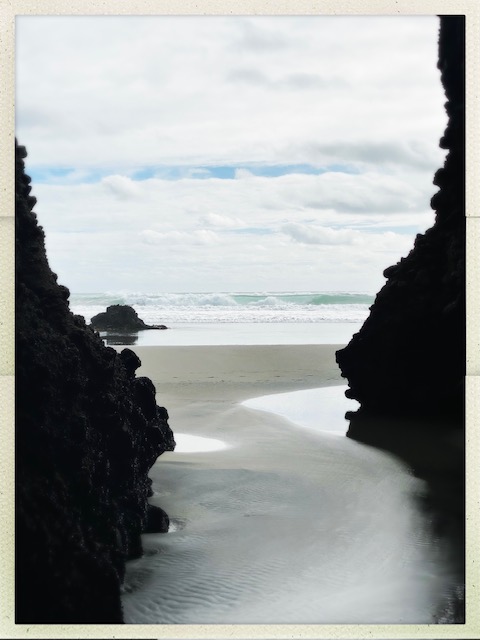
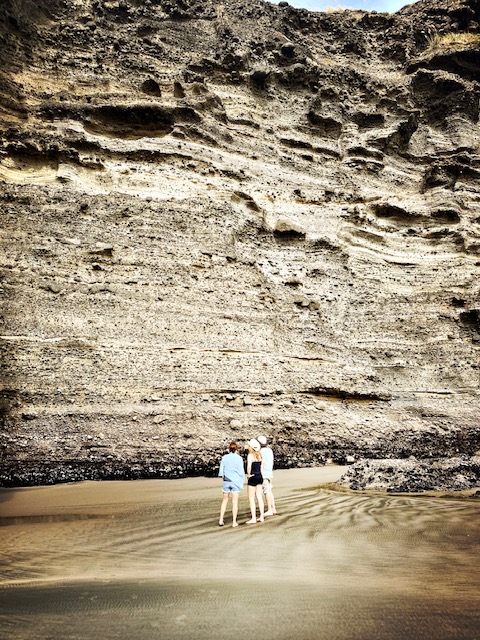
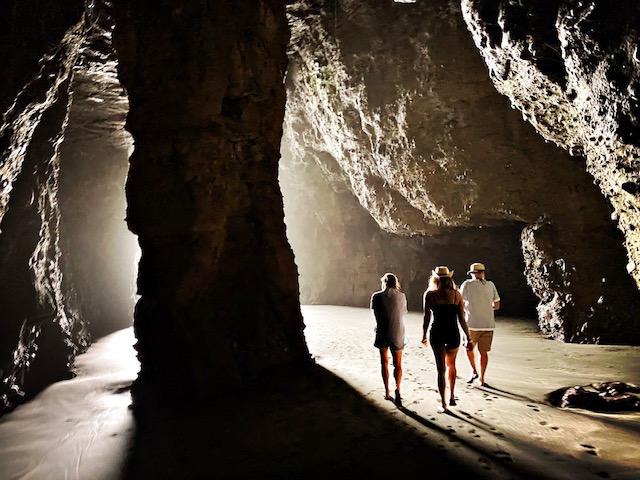
Around the south end of Piha is an isolated beach that used to be inaccessible except by boat. But recently, enough sand has washed in that it is possible to walk through a cave and onto the beach.

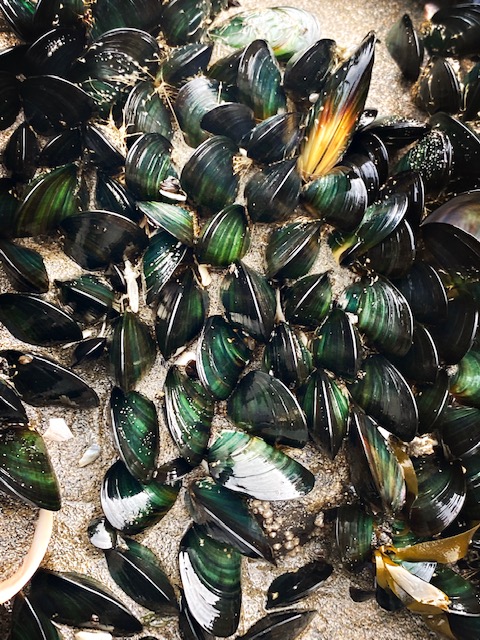
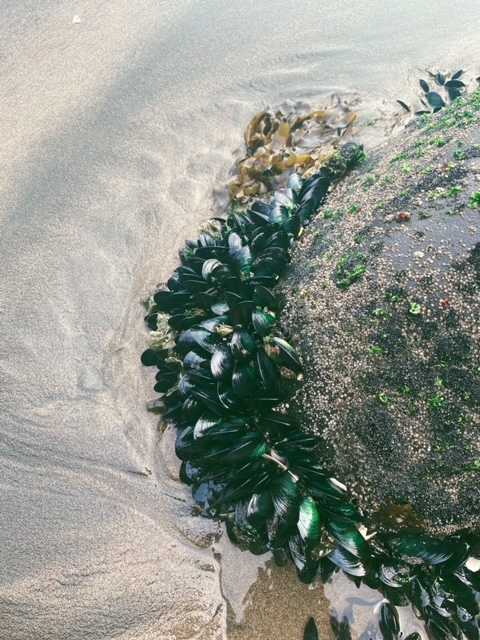
There were some beautiful green shellfish clinging onto one of the rocks.

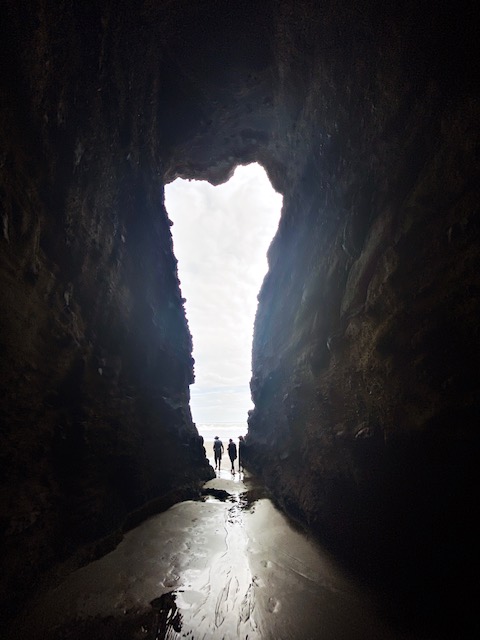
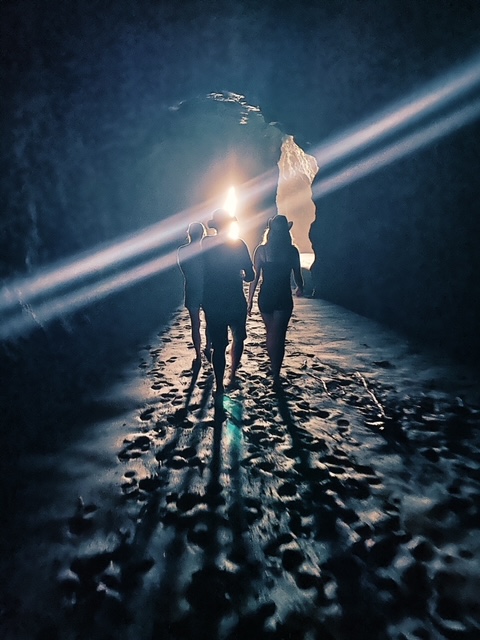
Along the beach are numerous caves. One was so deep that by the time we reached its end we were in complete darkness and the entrance was no longer visible.

There were some beautiful patterns on the beach

Including the one that looked strikingly like a bird.

And this one that looked like a fish

There is always something interesting to see lying on the sand.

Commodore Hotel, Christchurch, New Zealand

January 24 – February 4, 2021

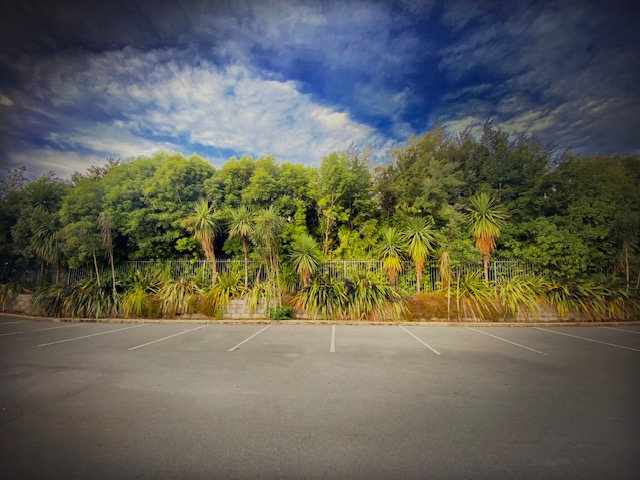
Welcome to New Zealand. At the moment, New Zealand is practically Covid-free, so it made sense for us to leave the northern winter and the rampaging virus behind and head to a safer and warmer spot. At the moment New Zealand is only open to its citizens and permanent residents which we fortunately are. All of those returning are required to spend two weeks in isolation at a quarantine hotel. The good news is that the New Zealand government covers all the accommodation and food costs if you are returning for more than three months. The bad news is that you do not get to choose which hotel or even city you will isolate in. So after a 12 hour flight from Los Angeles to Auckland we were shuttled on to a 90 minute flight to Christchurch, despite the fact that Auckland was where we ultimately wanted to be. As it turned out, we were lucky because the Commodore Hotel, which the government had chosen for us proved to be a great place to isolate. It is a relatively small hotel and we were on the second floor. Our room had a sliding door going out onto a small private deck that looked out onto trees and a garden. Our stay would have been much more claustrophobic if we had been isolated in a large hotel on a high floor with no opening windows. The hotel also had a large parking lot where we could walk around. We determined that each lap around the lot was a tenth of a mile so we tried to do twenty laps each day. There was not a lot to see, so we listened to podcasts while we walked, keeping distance from the other guests as we all walked in an anti-clockwise direction around the lot.

There was some beautiful New Zealand flax lining parts of the lot. New Zealand flax is quite distinct from the Northern Hemisphere variety and has played an important part in the cultural and economic history for both the indigenous Maori and the early European settlers. Maori used flax, which they call harakeke or wharariki, for a variety of uses, including weaving it into baskets, fishing nets and ropes and processing it to make clothing.

Someone had practiced their weaving on one of the flax in the parking lot

Flax was also one of New Zealand’s first exports, being used to make rope, twine, and matting. At its peak in 1916, 32,000 tons of fibre were being processed a year. By 1963 there were only 14 flax mills left, producing less than 5,000 tons of fibre a year and the last of the mills closed in 1985.
Some varieties of the flax are beautifully striped.