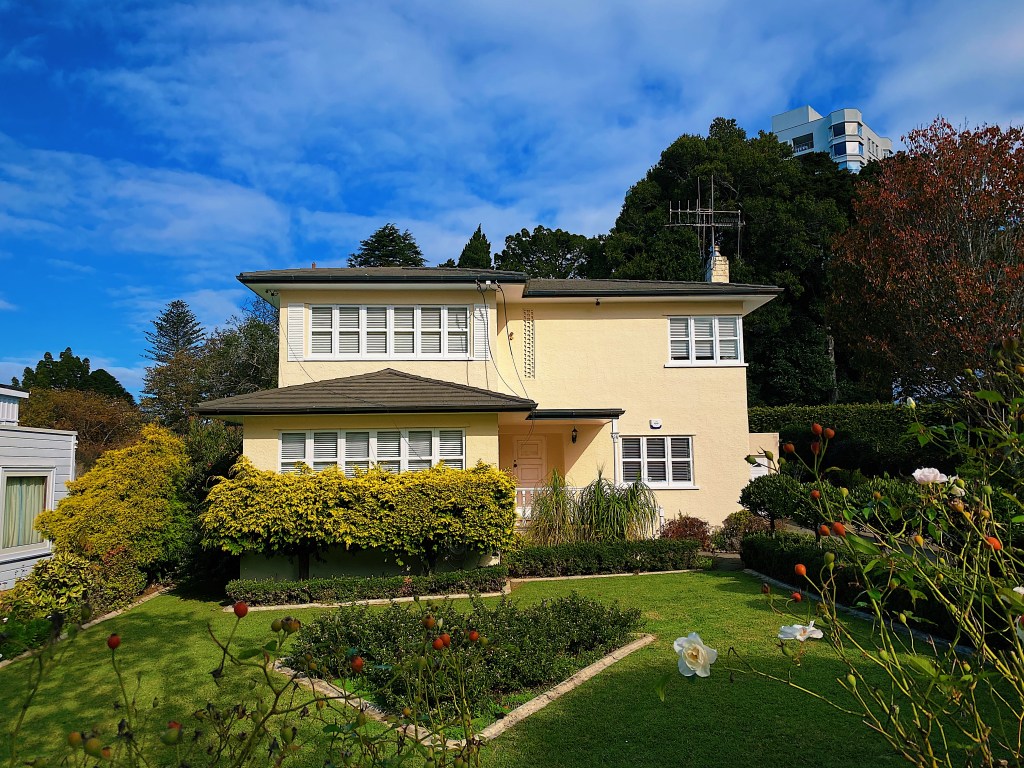
Today we circumnavigated Mt. Eden (Maungawhau), taking the streets surrounding the volcano. With their larger houses and established trees, the neighborhoods reminded us of some of the Washington DC neighborhoods that we have explored.
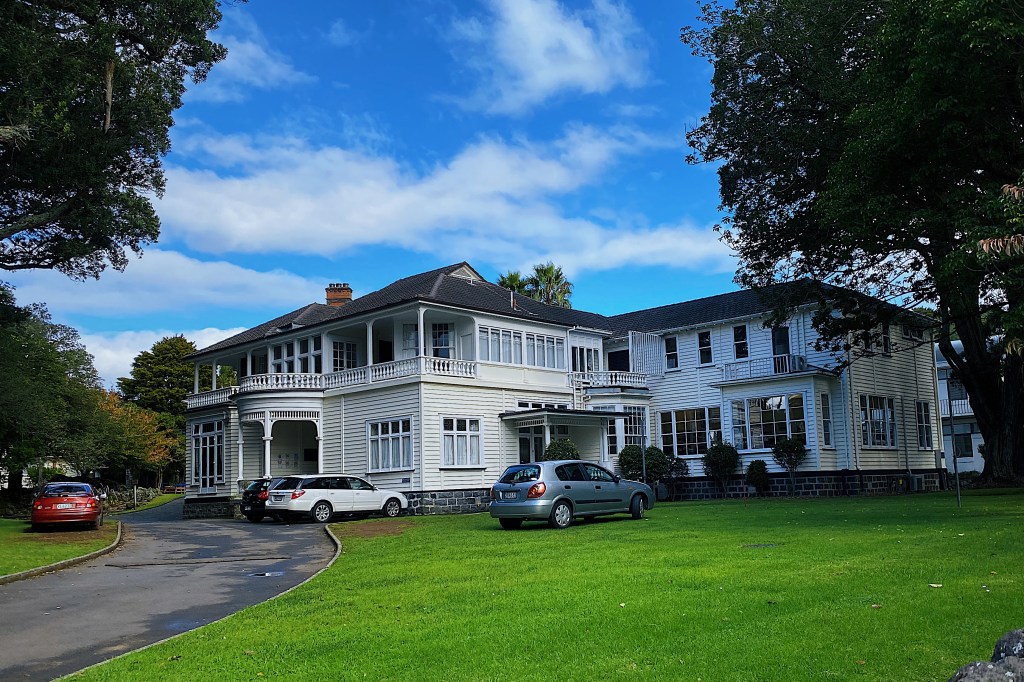
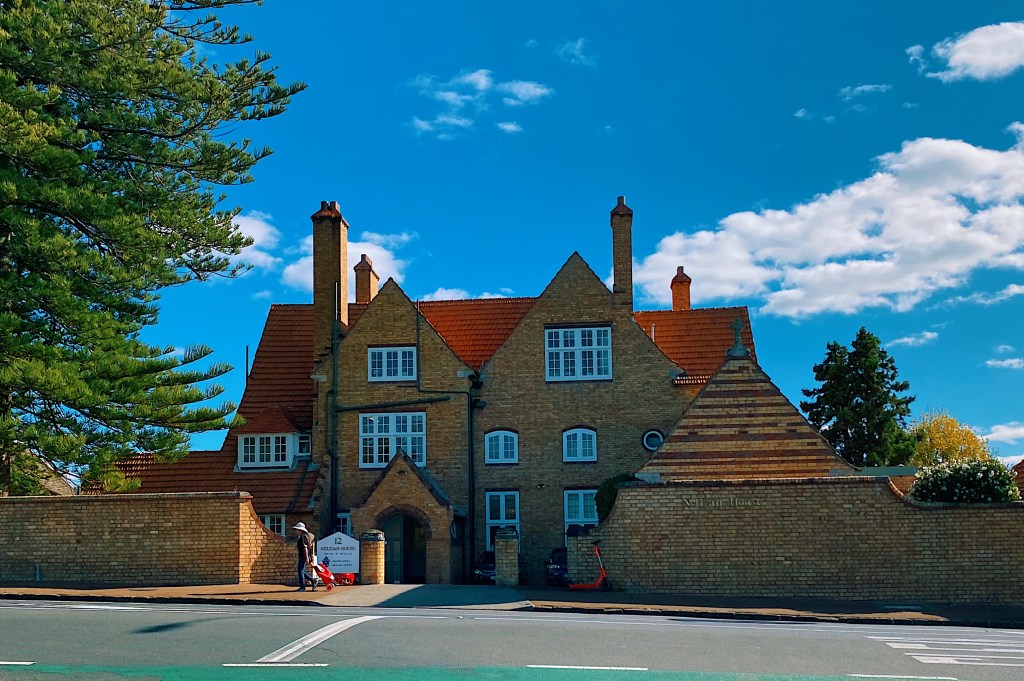
One of the largest of the houses is Tibbs House, a boarding establishment for boys attending neighboring Auckland Grammar. About 120 students currently live in the house and surrounding buildings.
We came across this amazing pohutukawa tree clinging to a retaining wall. It is incredible where pohutukawas can grow. It is not uncommon to see them clinging to the sides of steep oceanside cliffs where you wouldn’t believe any plant, let alone a large tree, could survive.
Because it is a volcanic region, most of the stone walls in Auckland, like the one the tree was clinging to, are built of scoria, a type of volcanic rock. Many of the volcanos have abandoned quarries dug into their side and Maungawhau is no exception. For example, the lower fields of Auckland Grammar, located next to the mountain, are in the site of a former quarry.
Now the fields are artificial but in Mal’s day they were still grass. Because they were laid on top of stone there was no drainage and on rainy days playing rugby on the fields was not too dissimilar to playing in a rice paddy.
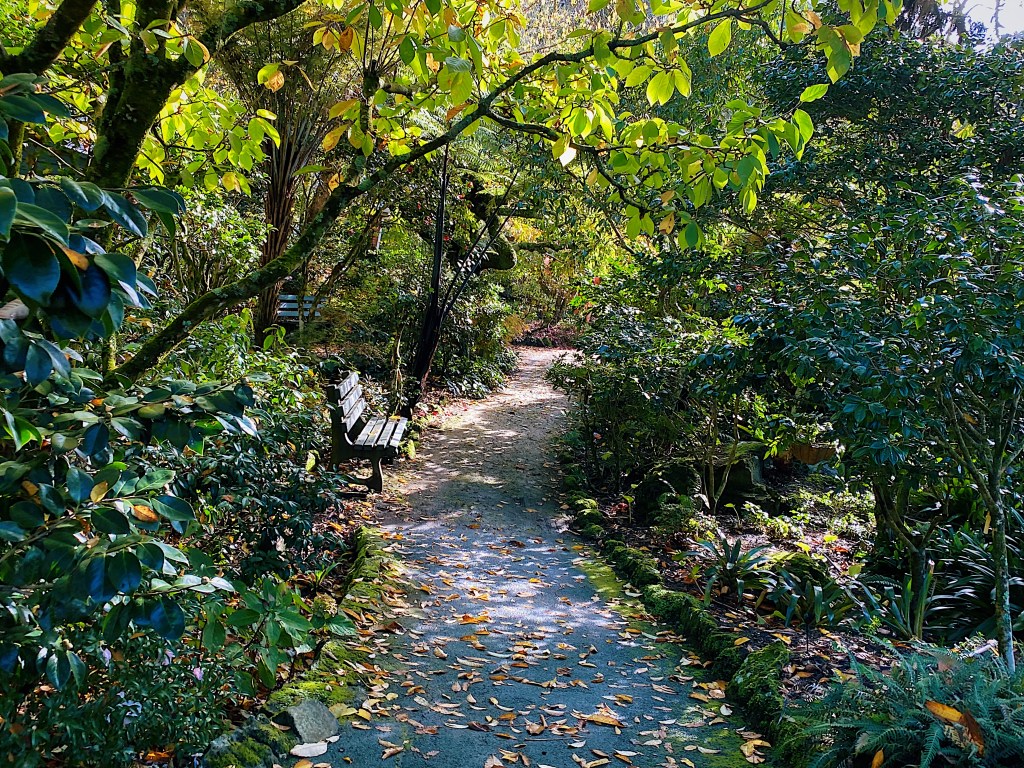
Another abandoned quarry on the slopes of Maungawhau is now the site of beautiful Eden Garden. With over five acres of mature trees and flowering shrubs, the feel is of walking through a rainforest. It is an idyllic place to wander the shady paths or sit on one of the many benches.
On a drizzly day we walked downtown to the Aotea Centre to pick up some tickets for the upcoming Auckland Writers Festival. The Centre is Auckland’s largest performing arts and events venue. Opened in 1990, it is not a particularly loved building. First, due to poor acoustics, the main auditorium required a refit just five years after it opened. Then in 2012, the whole building underwent refurbishment. As we passed it appeared to be undergoing even more work. The Sydney Opera House it is not!
The Aotea Centre
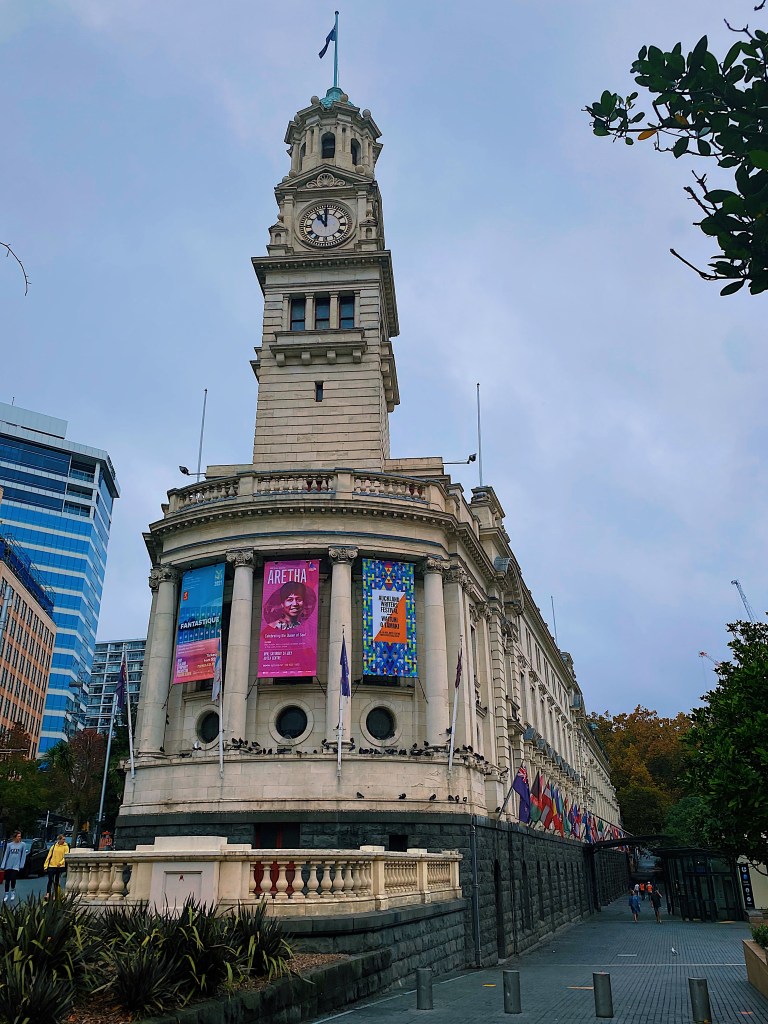
Across the square from the Aotea Centre is the Auckland Town Hall. Built in 1909, this Italian Renaissance Revival building is another popular entertainment venue and is the home of Auckland Philharmonia Orchestra. Back in the 1930s, Mal’s father, uncle and aunt performed there on a number of occasions in humorous skits written by their mother that were broadcasted live over the radio as part of a popular variety show.
Auckland Town Hall
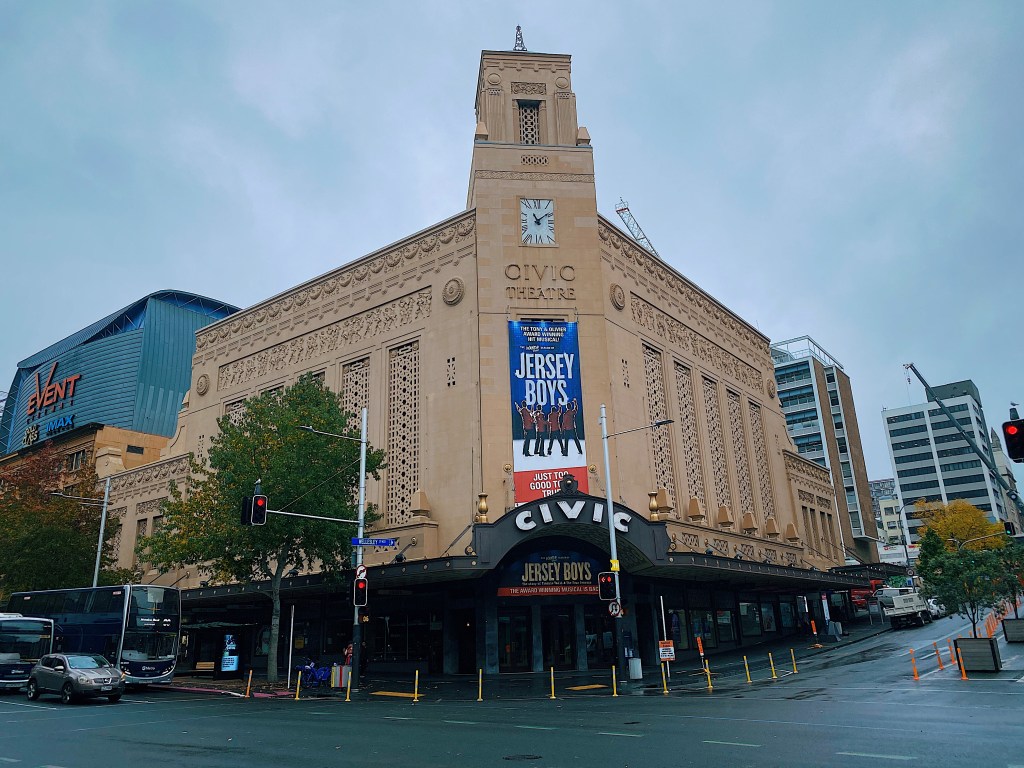
Just down Queen Street from the Town Hall is the Civic Theatre, one of the last remaining ‘atmospheric’ theatres in the Southern Hemisphere. It is now mainly used for live performances, but when it opened in 1929 it was as a movie theatre. We were lucky enough to see a number of movies there back in the eighties. It is, without doubt, the most beautiful movie theatre we have experienced. Sitting in the theatre, we were surrounded by beautiful colorful Moorish turrets, minarets and spires that remained dimly lit during the movie. On either side of the screen lay two massive golden Abyssinian Panthers whose eyes shone bright red when the lights went down. The ceiling was filled with thousands of lights that twinkled like stars. The overall effect was of enjoying the show on a beautiful star filled night in a Moorish garden.
The Civic Theatre
This part of downtown caters more and more to the many Asian students that study at Auckland University just up the hill. There are stores from all over Asia, including this one from Korea.
One classic Kiwi store that has remained is Smith & Caughey’s, New Zealand’s sole-surviving family-owned department store.
Smith & Caughey
Next to the department store is a beautiful arcade.
That leads from Queen Street to the quieter and prettier Elliott Street.
Elliott Street
During the walk we passed two classic British automobiles.
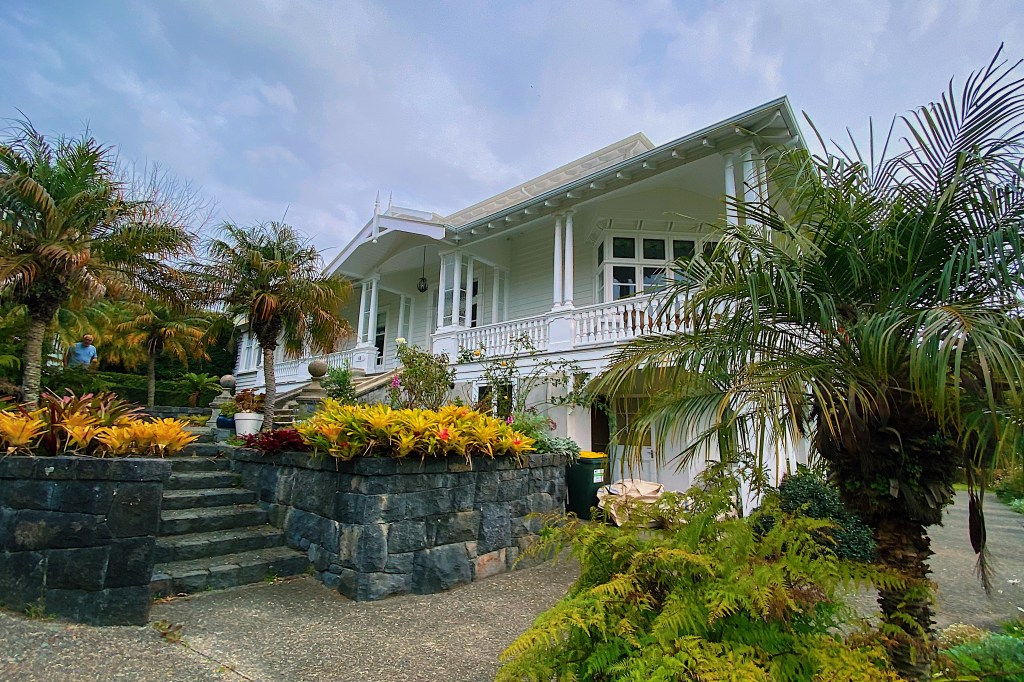
We started out today’s walk visiting Mal’s old school friend, Johnny, at his beautiful old villa in Parnell.
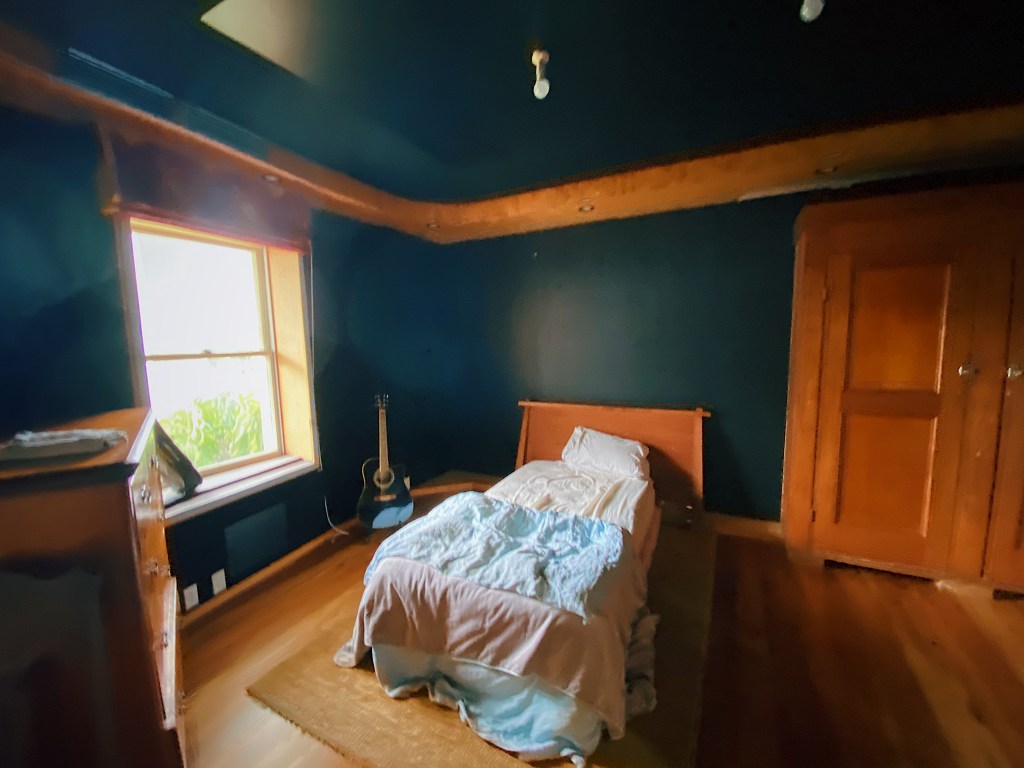
Johnny and his wife, Jo, bought their house from New Zealand music legend, Neil Finn, of Crowded House fame and one of the bedrooms in the house used to be a recording studio. You can still see the soundproofing and extra thick doors. Apparently, kiwi music icon, Dave Dobbyn, recorded his classic album “The Islander” in the house’s studio.
Prior recording studio
From Parnell we walked over to the nearby retail district of Newmarket. Along the way, we passed by this classic Alfa Romeo.
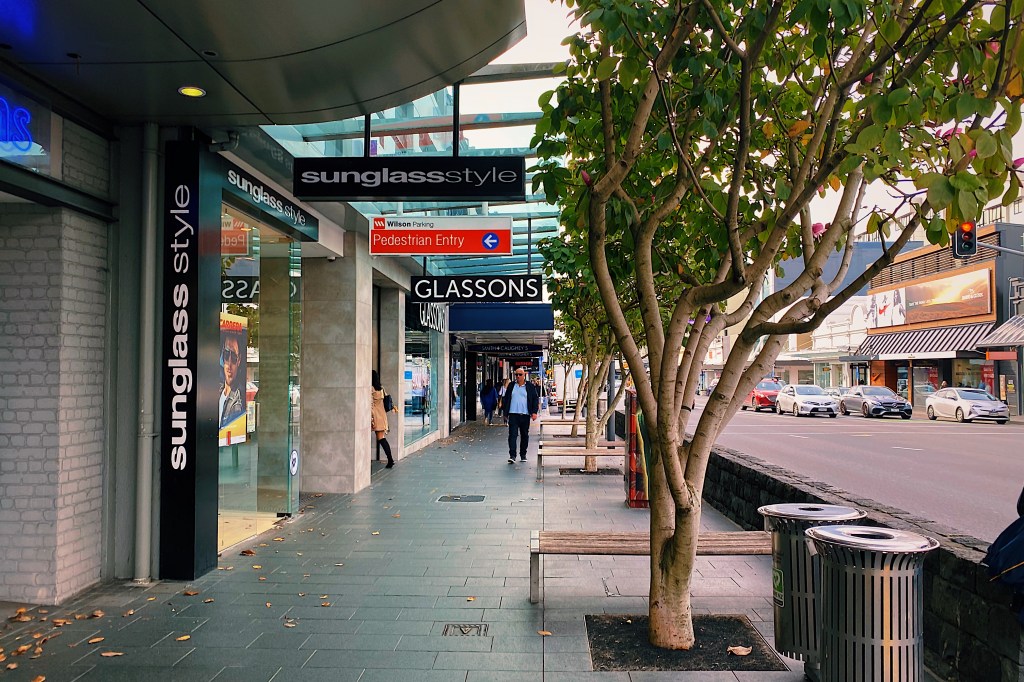
Many of the shops in Newmarket are on Broadway, the main street bisecting the neighborhood.
Including one of the city’s largest shopping malls.
Skater with Westfield Mall behind
But many of Newmarket’s best stores, restaurants and cafes are in its smaller side streets.
Normally by this time of the year we are back in Washington DC, so it has been interesting to experience an Auckland Autumn. It is not quite as flashy as in Washington but still beautiful in places.
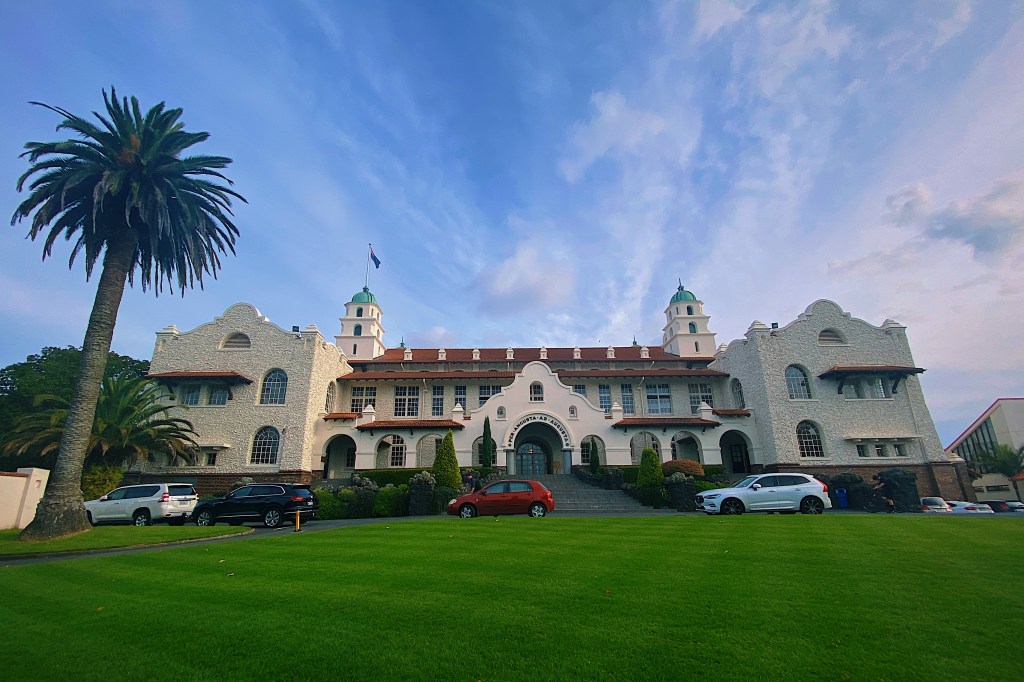
Just up the hill from Newmarket is Auckland Grammar School where Mal went to high school. Grammar, as it is commonly known, is a public boys’ school that was established in 1868. It is always one of New Zealand’s top ranking schools in academics and sports and is something of a family tradition with Mal’s father, uncle, cousins and nephews all attending over the years. With over 2,600 students, the school has more than doubled in size since Mal was a student there and there are many new buildings. One building that hasn’t changed is the Spanish Mission Style main building, constructed in 1916.
Over the main entrance is the school’s Latin motto ‘Per Angusta ad Augusta’ which translates to ‘Through difficulties to greatness’.
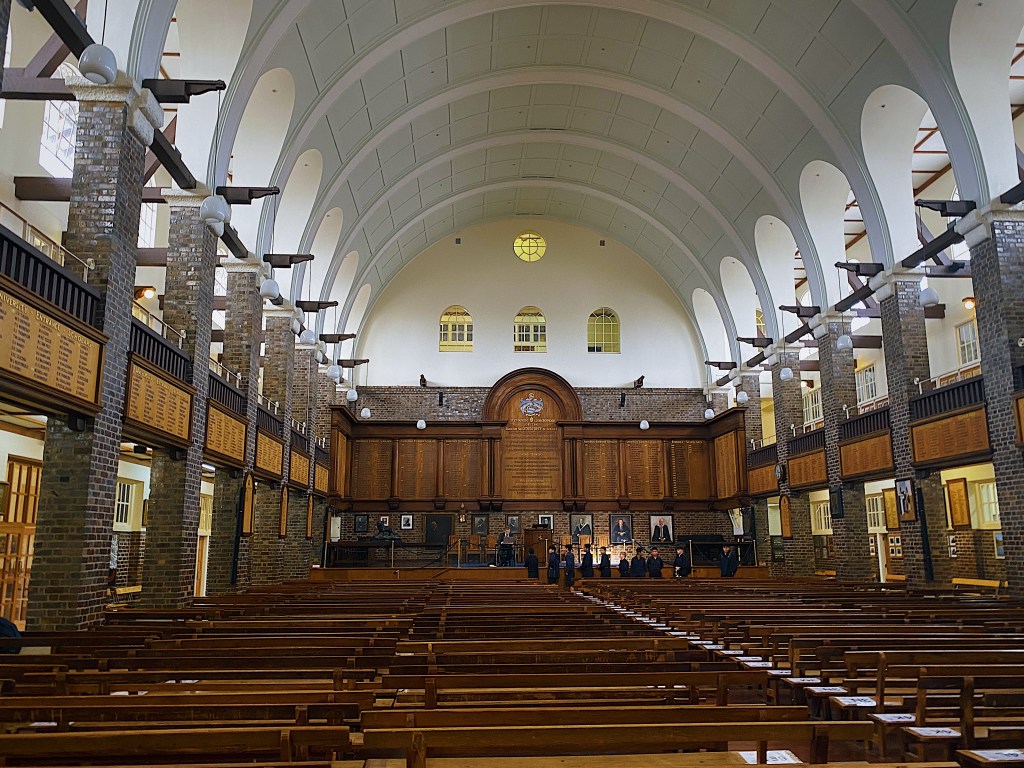
Every morning, the whole school gathers for Assembly in the impressive main hall. No doubt, things have changed now, but corporal punishment was the rule back in Mal’s time. He vividly recalls being caned (hit on the backside with a long flexible stick made of rattan) once for being spotted talking during Assembly. The only upside was that the caning took place privately and not in front of the whole school.
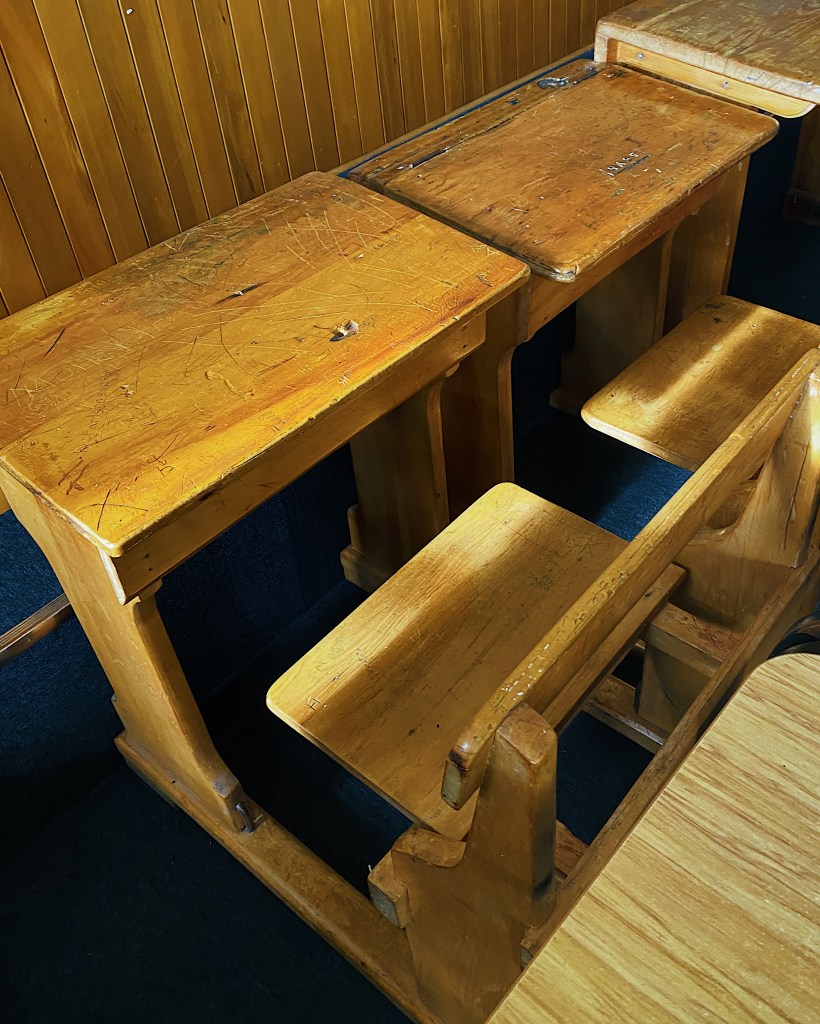
Mal was surprised to see in a classroom some of the desks that were in use during his days at the school. Even then they appeared to have come from the Victorian era.
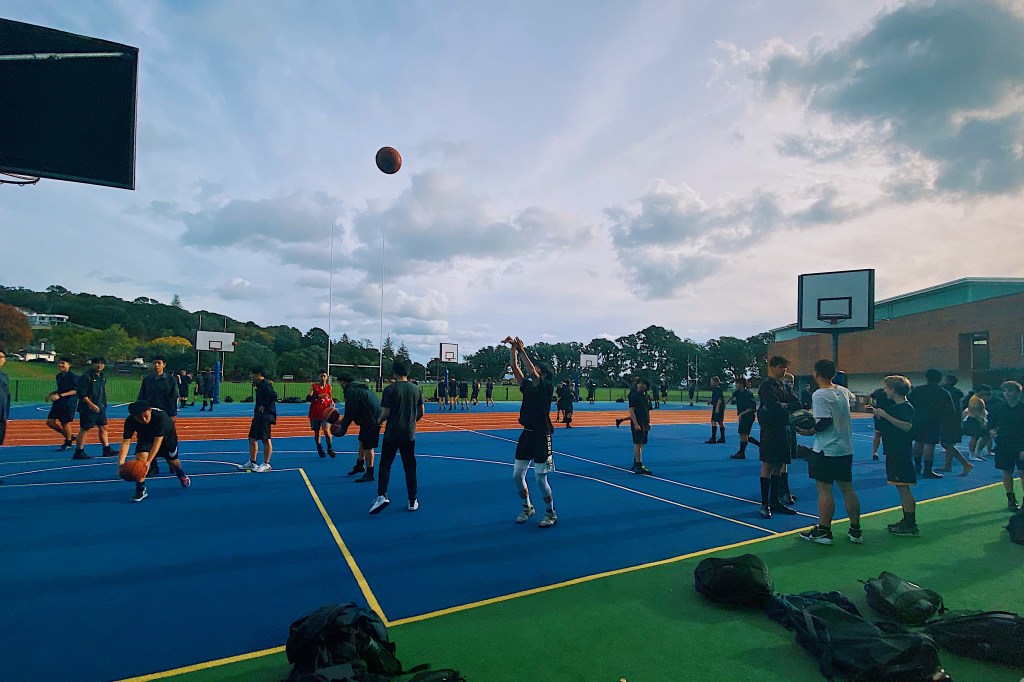
School had just finished for the day and a number of students were playing pick-up basketball. Like virtually all students in New Zealand, Grammar boys wear school uniforms. The Grammar uniform is navy blue shorts and shirt with black shoes and long socks in the winter and sandals in the summer.
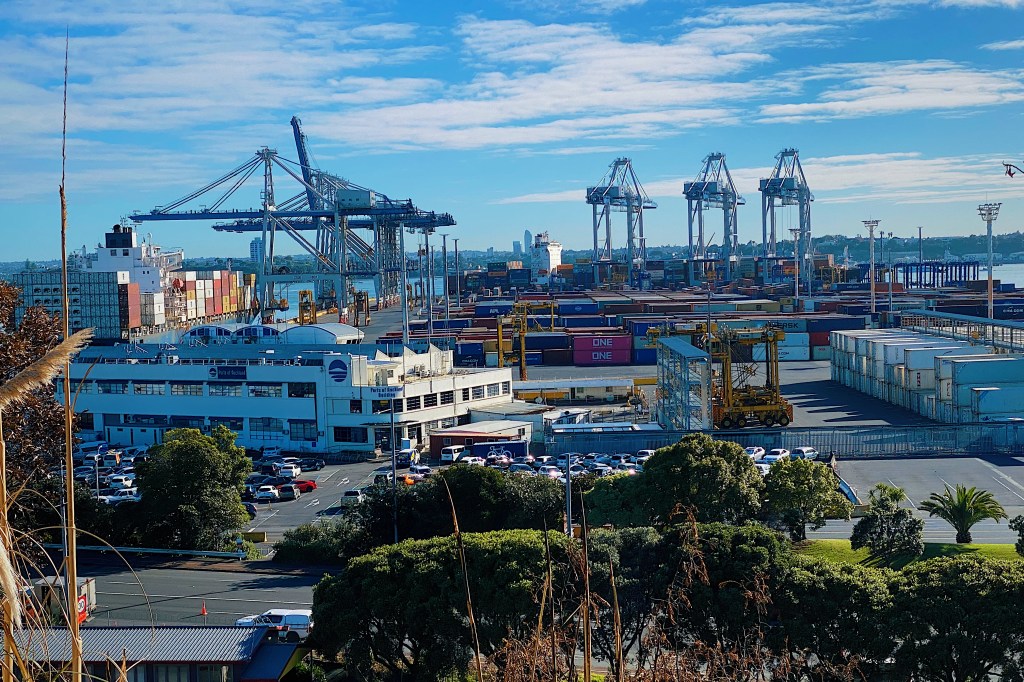
On a beautiful sunny morning we set out east from downtown along Tamaki Drive toward the inner city suburb of Parnell. Along the way we passed the Port of Auckland, New Zealand’s largest port. The three large cranes visible in the distance are a recent addition, costing $20 million a piece. Each is capable of handling four large containers at a time.
Across Tamaki Drive from the Port are the railway tracks that run in to Britomart Station at the bottom of Queen Street. We came across this train enthusiast.
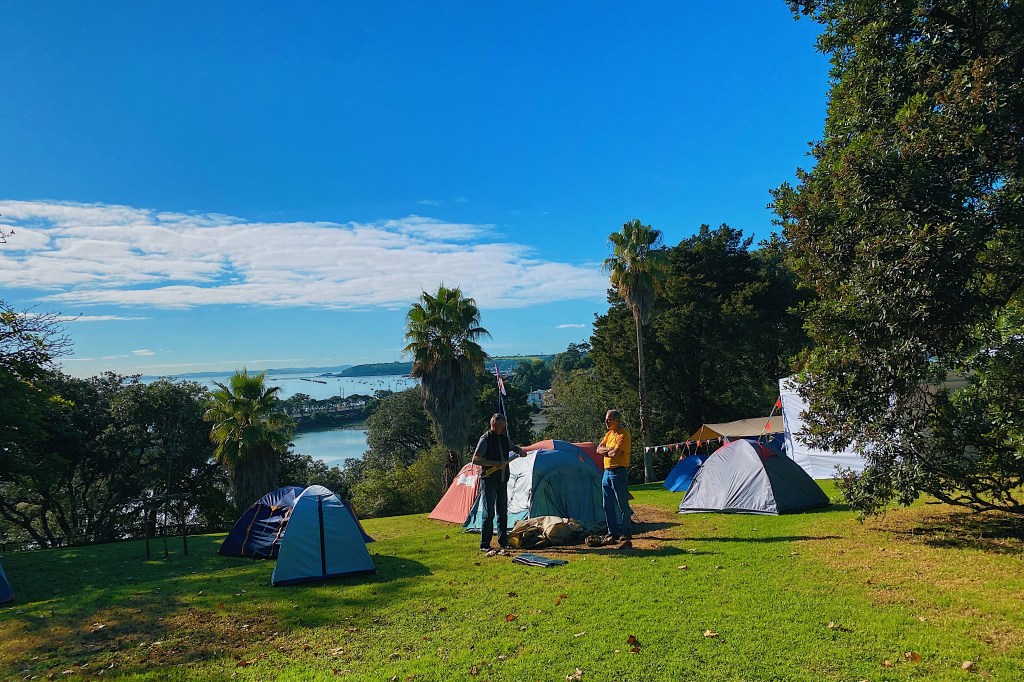
We then headed up into Dove Myer Robinson Park. Commonly known as Robbie, Robinson was Auckland’s longest serving mayor, serving two terms from 1959-65 and from 1968-1980. He is one of several Jewish Auckland mayors, although he rejected Judaism as a teenager and became a lifelong atheist. Walking through the park we came across a number of tents pitched on a beautiful slope overlooking the harbor.
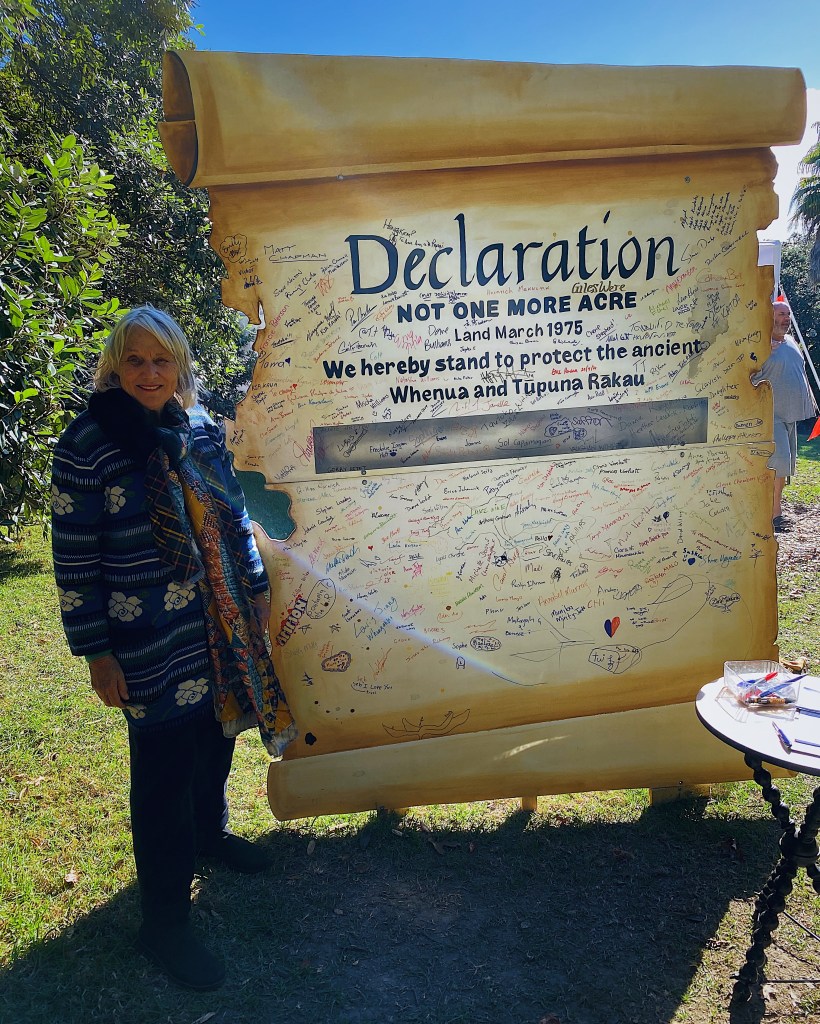
Our first impression was that it was a homeless encampment. We were surprised because, although such encampments are not an uncommon sight in Washington DC, we had not come across any in Auckland. But as we passed by we struck up a conversation with one of its inhabitants, Annie, who told us that the tents were there to stop the building of a large memorial to the Mt. Erebus disaster.
In 1979, Air New Zealand Flight 901 flew into Mount Erebus in the Antarctic killing all 237 passengers and 20 crew on board. Air New Zealand had been operating scheduled Antarctic sightseeing flights since 1977. The initial investigation concluded the accident was caused by pilot error, but public outcry led to the establishment of a Royal Commission. That Commission concluded that the accident was caused by a correction made to the coordinates of the flight path the night before the disaster, coupled with a failure to inform the flight crew of the change.
The protesters are not opposed to the idea of a memorial as such, although Annie pointed out that there are already numerous Erebus Disaster memorials in New Zealand. Rather, they are opposed to the large scale of the proposed memorial placed in the middle of a beautiful park, which also may lead to the loss of Auckland’s largest pohutukawa tree, which stands on the site.
The proposed memorialAnnie with DeclarationThe majestic endangered pohutukawa tree.
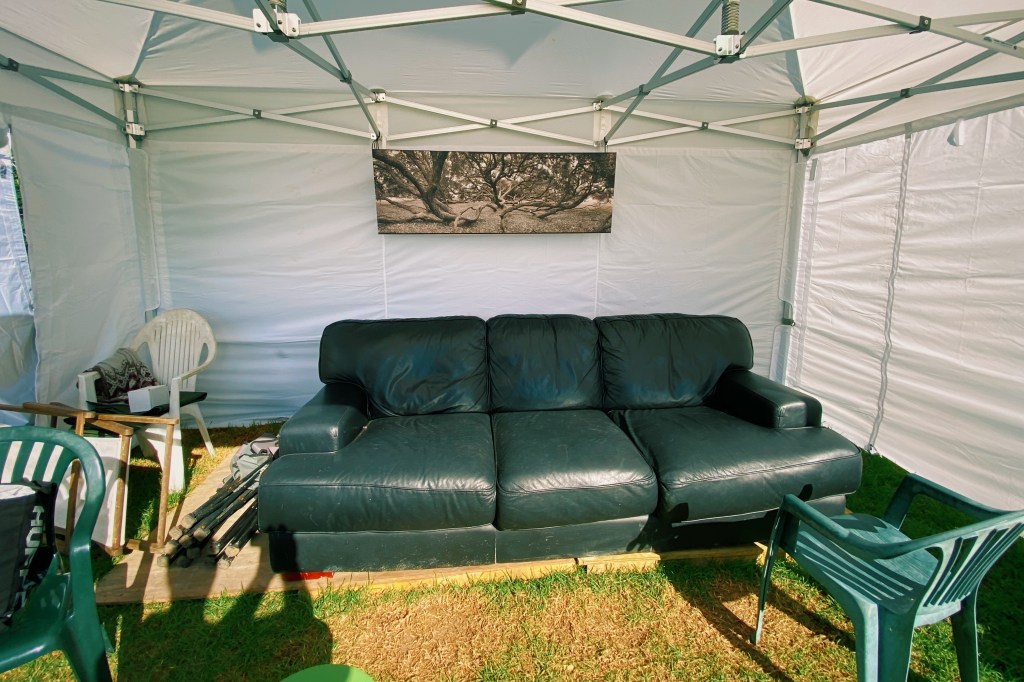
The camp was nicely appointed including a living area, complete with couch and beautiful photo of the endangered pohutukawa tree.
We continued on through the park down into Judges Bay. The bay is named for two early administrators of British Justice, Judge Martin and Attorney General Swainson, who lived in the bay in the 1840s. It is now separated from the harbor by the Tamaki Drive causeway.
Sitting alongside the Bay are the Parnell Baths. Public swimming pools in New Zealand are often called baths. Built in 1950, in modernist design, the baths are a popular attraction during the Summer but were closed for the winter when we passed.
The Parnell Baths with Judges Bay behind.
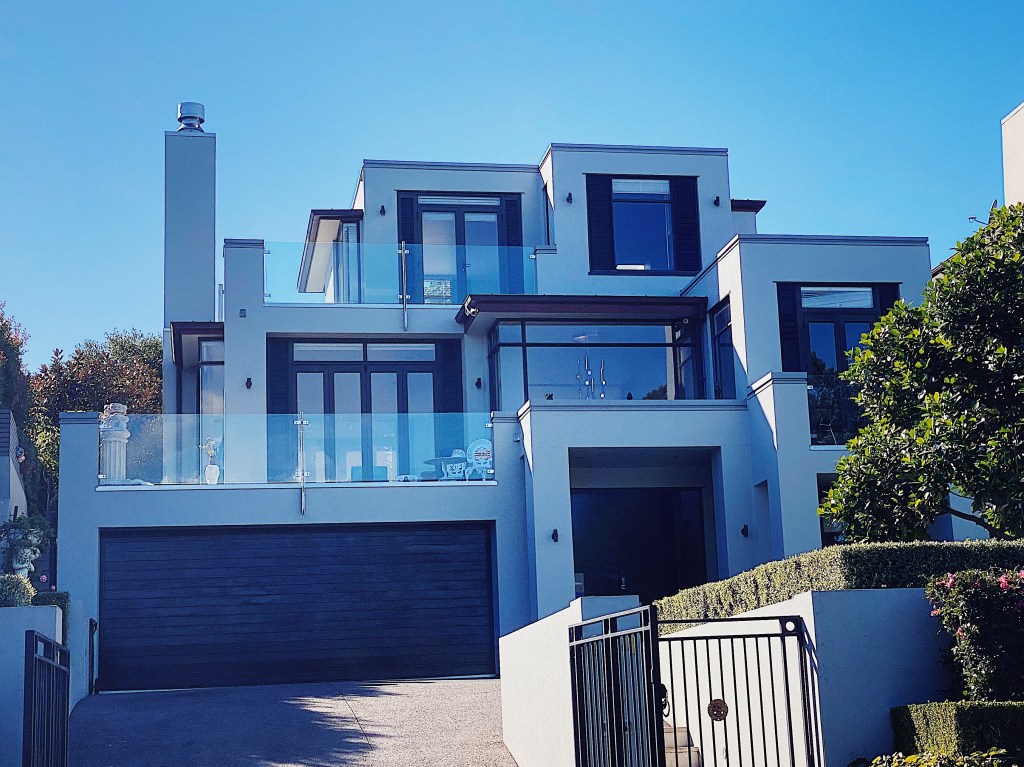
We then walked up and along St. Stephens Avenue, one of Auckland’s most prestigious residential streets. On the east side of the avenue, the houses sit on a cliff overlooking Hobson Bay. Perhaps because of their location, many of the original homes have been replaced with modern homes to better take advantage of the view.
Whereas, on the western side of the Avenue, many of the older homes remain.
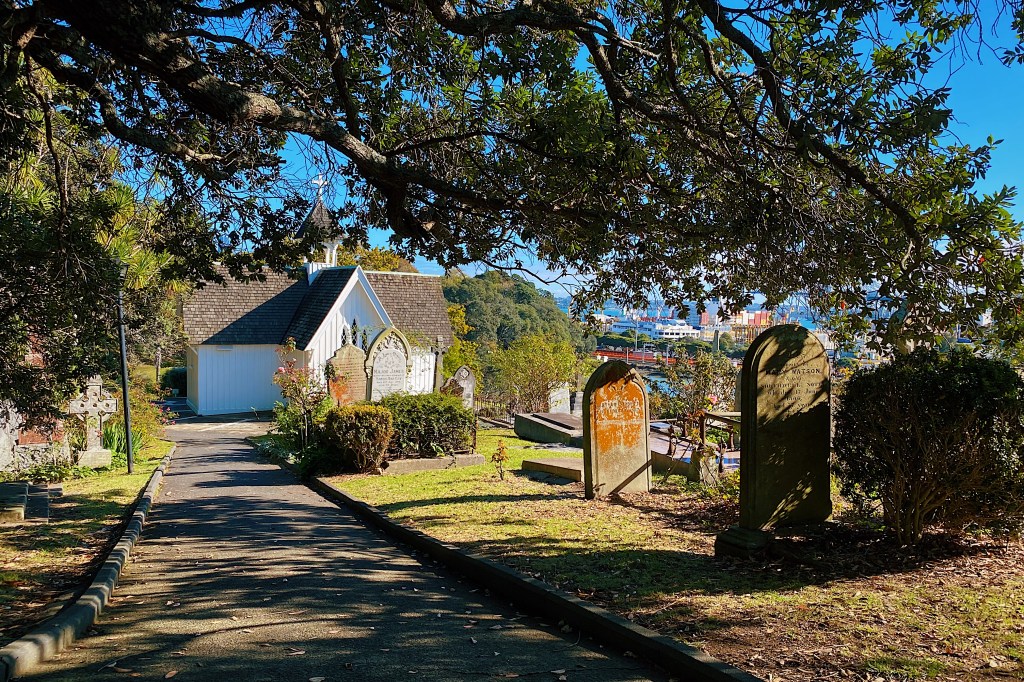
We passed by what may be Auckland’s smallest and largest churches. St. Stephen’s Chapel and surrounding graveyard date back to the 1850s. The chapel was built specifically for the signing of the constitution of the United Church of England and Ireland in New Zealand.
St. Stephens Chapel and Churchyard
At the other end of the Avenue is the Anglican Holy Trinity Cathedral which was built in the 1990s and can hold over 1,200 people.
Holy Trinity Cathedral
We finished up by walking down Parnell Road, the suburb’s main shopping street. This used to be one of Auckland’s premier retail and dining streets but it is much quieter today as Ponsonby Road and Britomart have become increasingly more popular. It has also been negatively impacted by Covid, as it was a popular tourist destination.
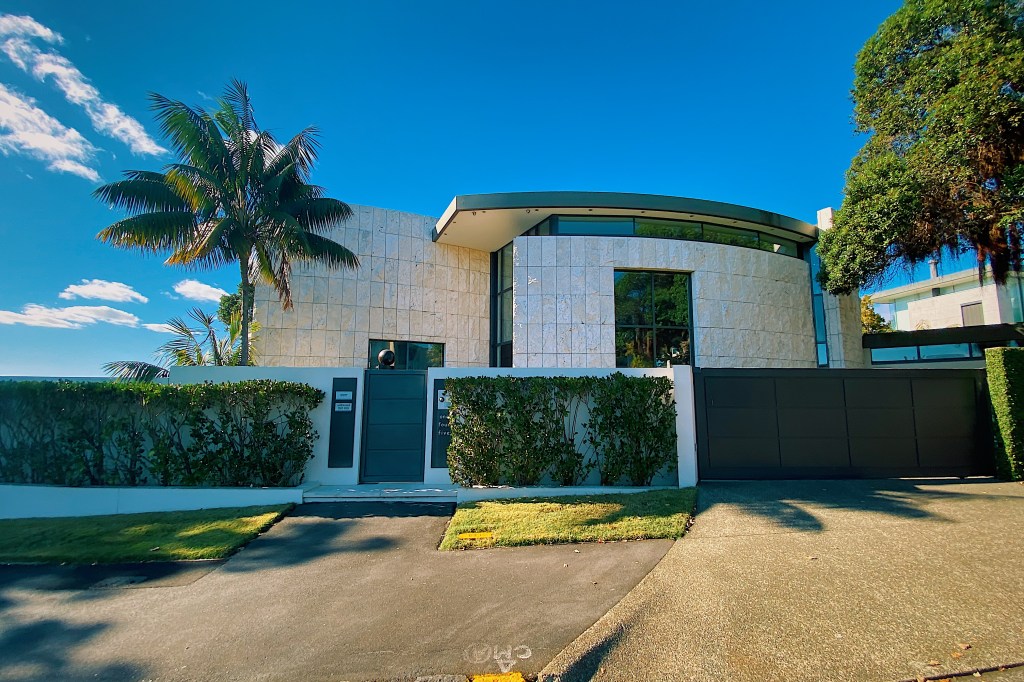
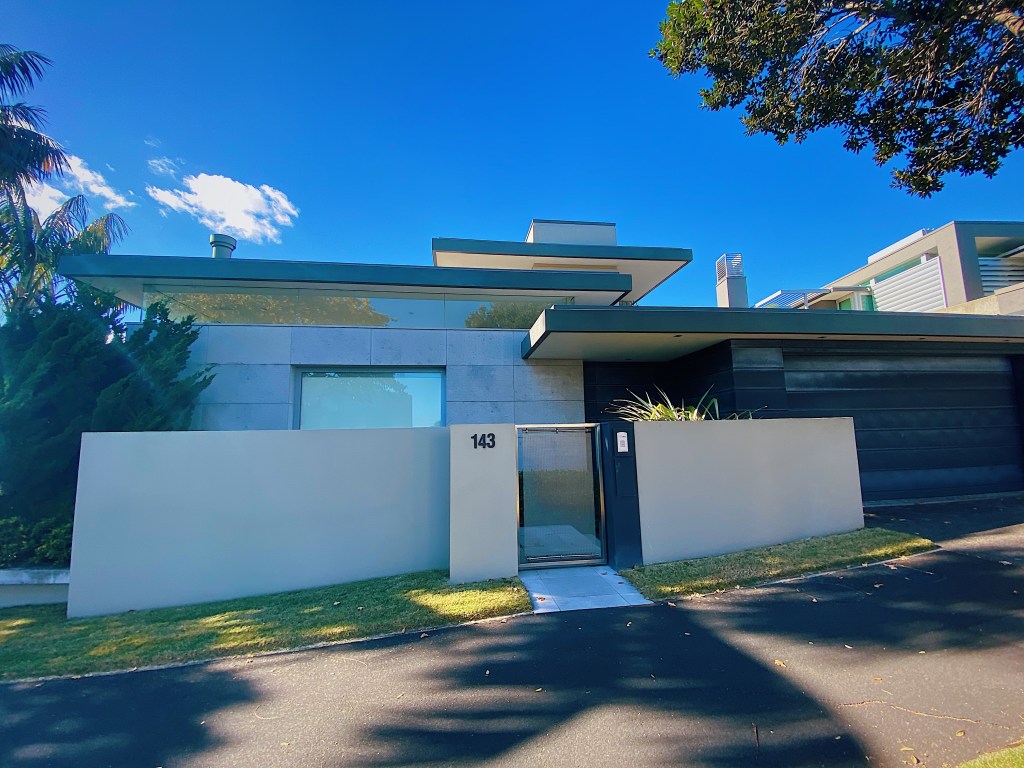
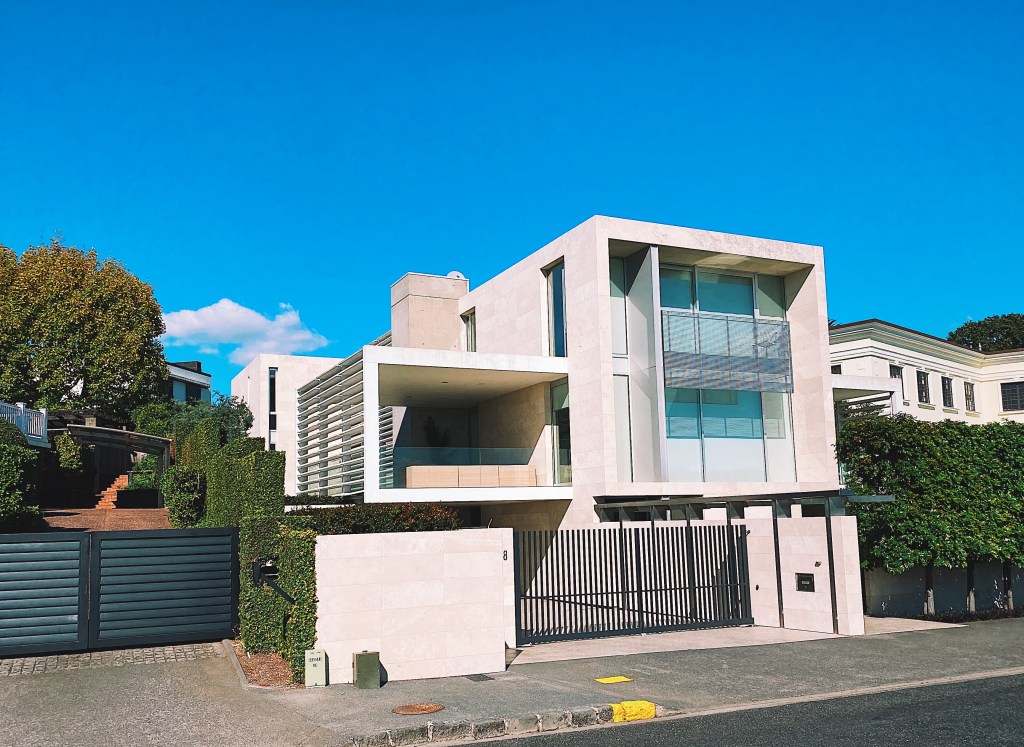
Paritai Drive, in the suburb of Orakei, is one of Auckland’s most exclusive addresses. The Drive follows around a point with expansive views of the harbor. The houses come in all shapes, styles and ages but only one size, extra large.
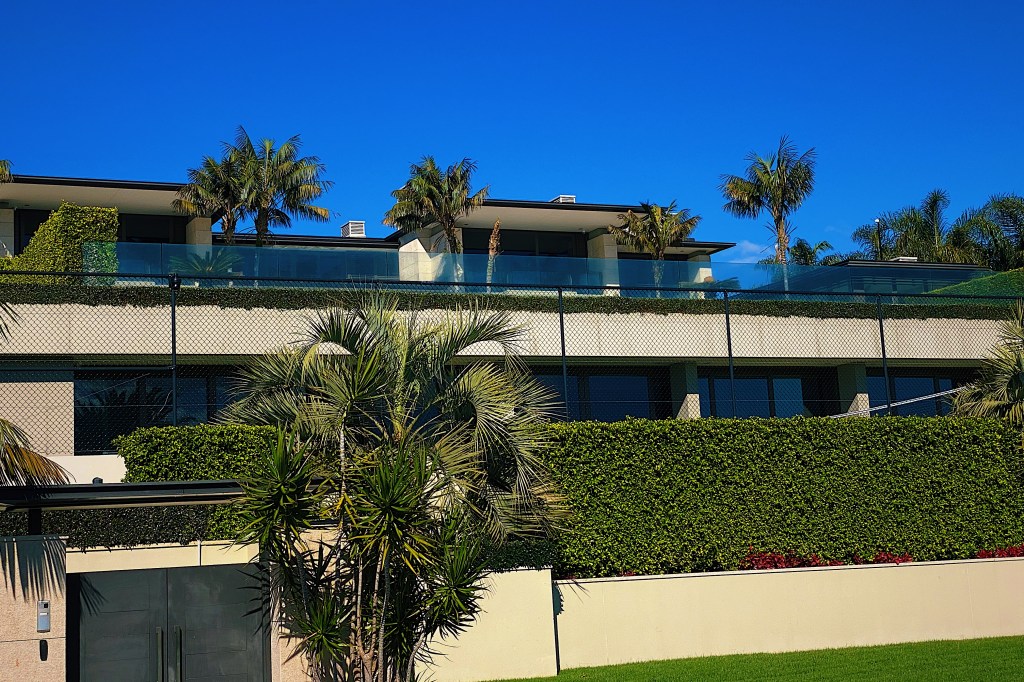
Dwarfing its already large neighbors is one of New Zealand’s most expensive houses. Taking up three lots, it has a tennis court, indoor and outdoor pools, parking for twelve cars and seven bedrooms. It is hard to see from the photo just how big it is, but take our word for it, it is truly enormous. When it last changed hands it was for the princely sum of 39 million dollars.
Here are some of the views that make the address so desirable.
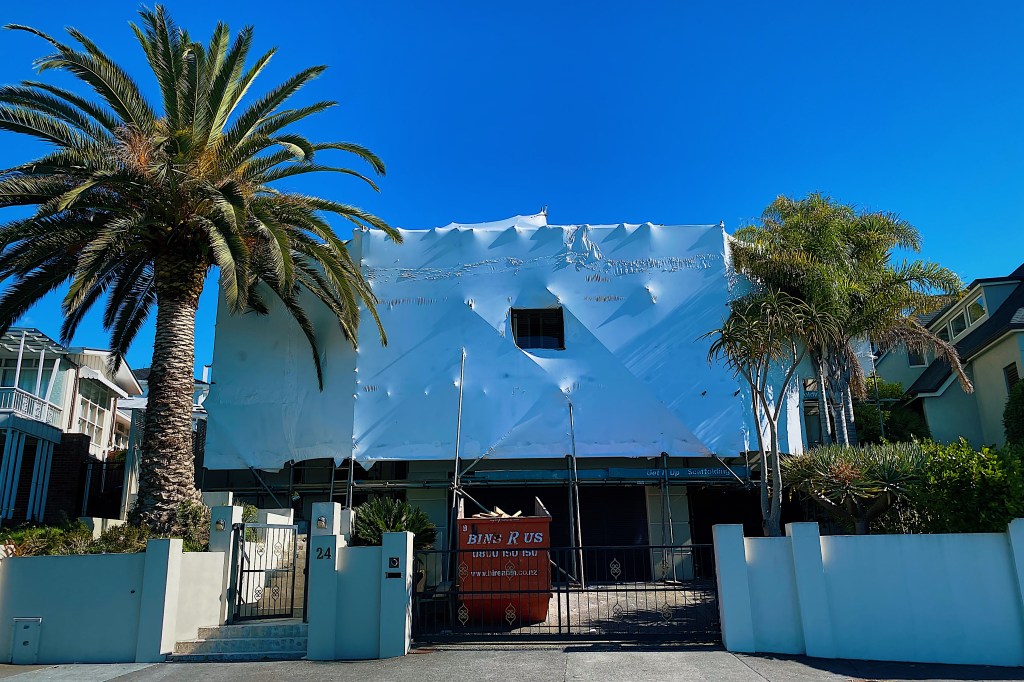
For some reason, it seems to be the practice in New Zealand to cover houses that are being built or renovated with plastic. We can only hope that it is reused, or at a minimum, recycled.
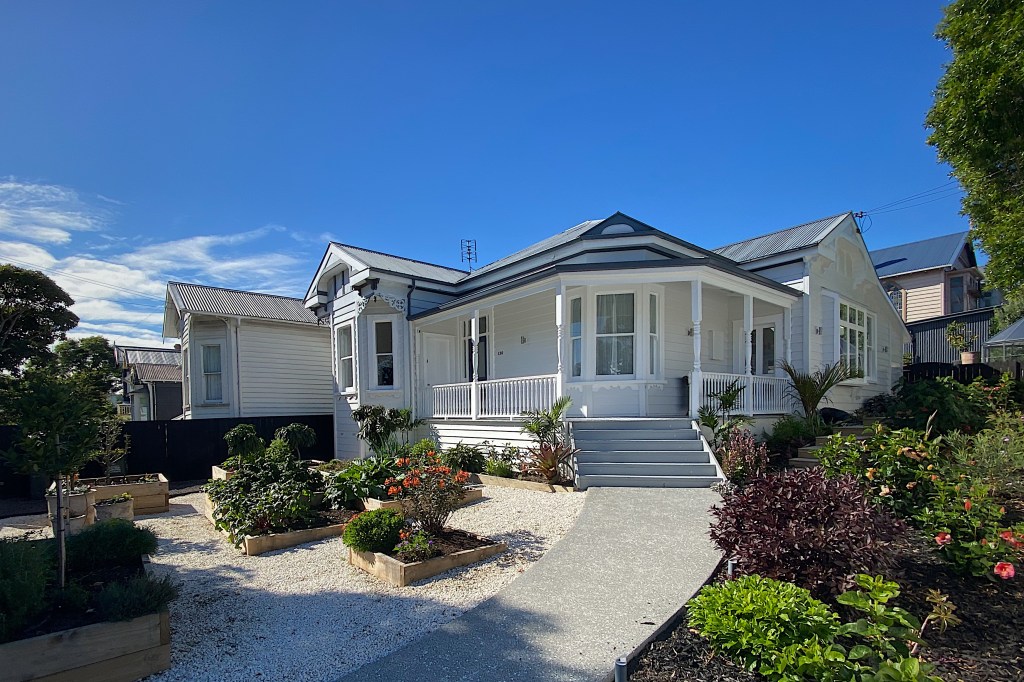
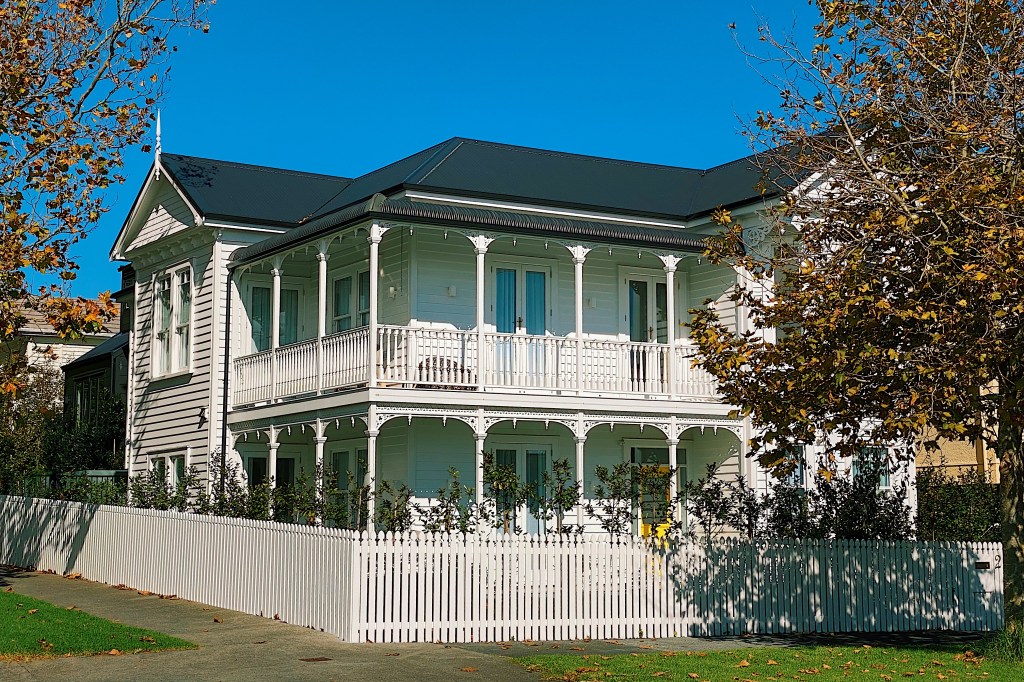
In the neighborhood behind Paritai Drive, the houses are generally less grand but no less interesting.
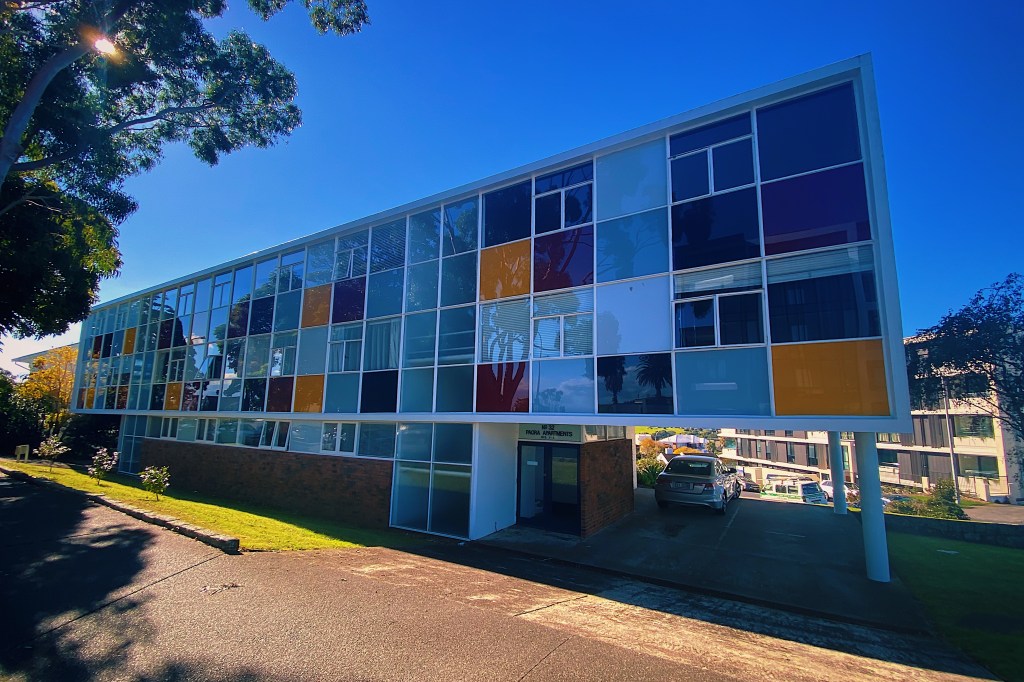
There were also some cool small apartment buildings.
The eastern end of Paritai Drive overlooks Okahu Bay. The name comes from the Maori, Okahu, meaning “the home of Kahu”. It was once the site of the home village of the Ngati Whatua iwi (tribe). However, in 1952, the Auckland City Council, deeming the village “a dreadful eyesore and potential disease center”, relocated the residents and razed the village. The move was, probably, precipitated by Elizabeth II’s royal tour of later that year. Today it is a popular bay where you can rent outrigger kayaks.
Go for a run
Or just sit and enjoy the view.
Across Tamaki Drive from the beach is a large sports ground used for cricket and rugby. There is also an adventure playground, complete with thatched roof.
The village may be gone but the Maori cemetery remains.
At the eastern edge of the bay is Kelly Tarlton’s Sea Life Aquarium. The aquarium is located below ground and, ingeniously, has been repurposed from no longer used storm water and sewage tanks. It holds over 1,500 fish, including stingrays and sharks. There is also a colony of king penguins and gentoo penguins.
On a beautiful early Autumn day we went for a walk around neighboring Grey Lynn. In many ways it is similar to our own neighborhood of Freeman’s Bay with lots of white wooden cottages and villas.
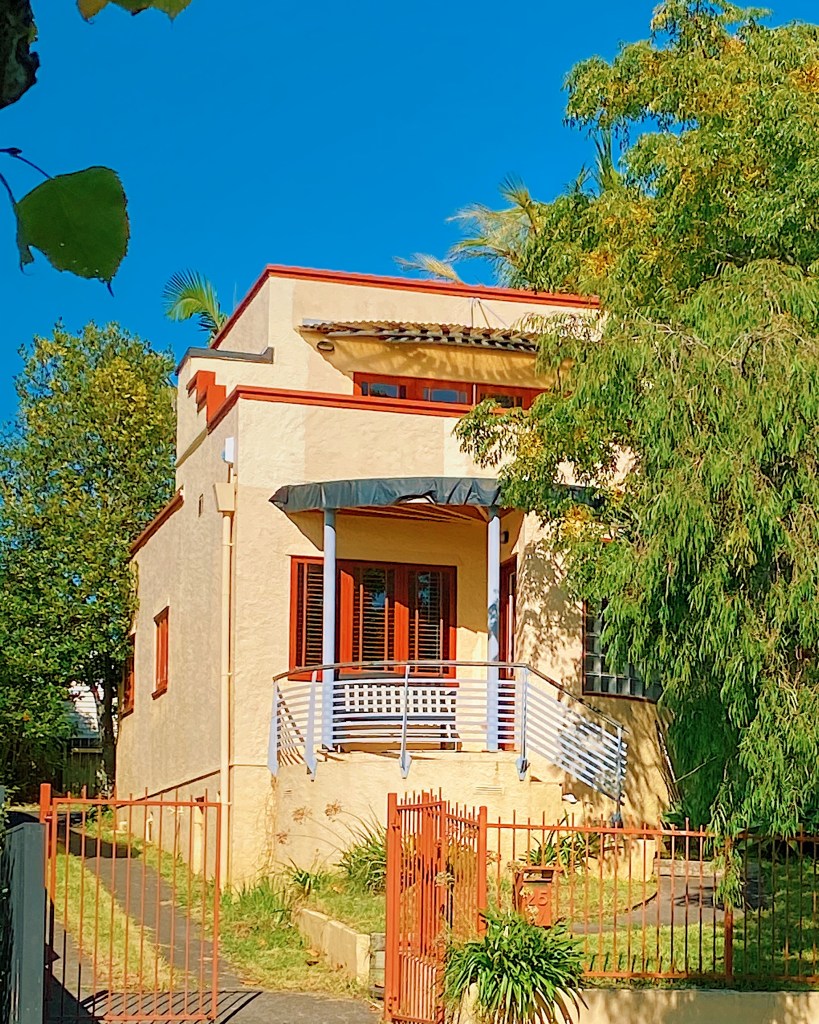
But there are also a variety of other types of houses, including this Spanish style home.
And these two that were less than welcoming.
Although most of Auckland’s villas and cottages are made of wood, there are exceptions.
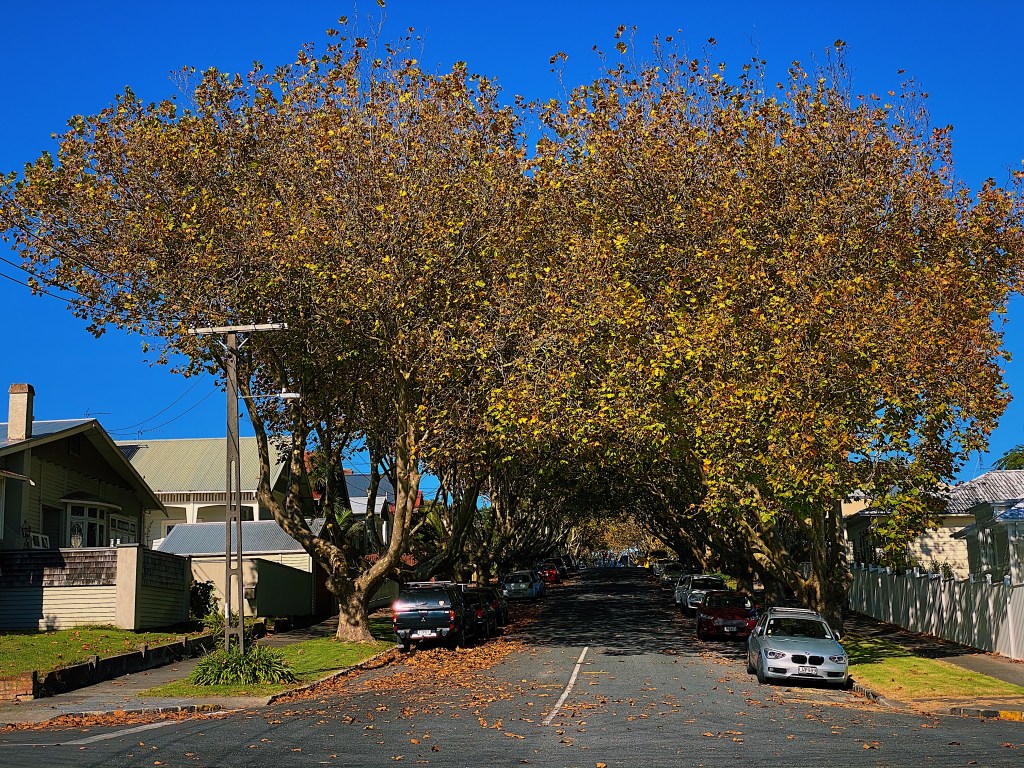
Another difference between Grey Lynn and the neighboring suburbs is the number of tree lined streets. At times we could almost have been back in Washington DC.
A friend of ours, visiting from the States, once described Auckland not so much as a city than as a series of villages. Certainly, each suburb appears to have its own little Main Street. Grey Lynn is no exception.
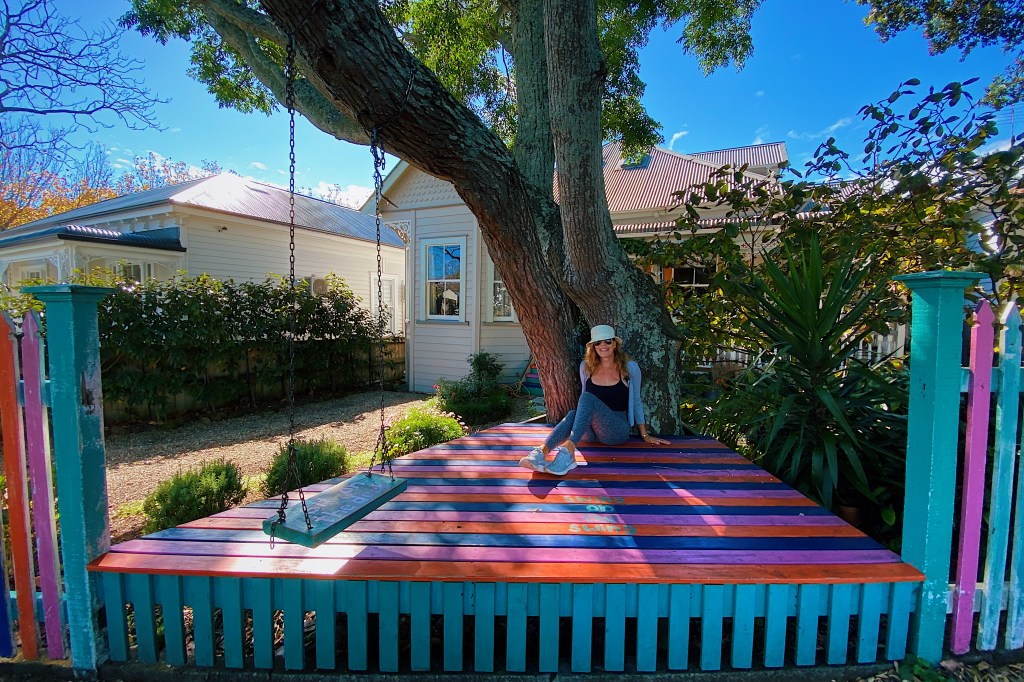
This home welcomed passers by to enjoy its colorful deck and swing.
And this one offered free reading material and tapes. We often come across little lending libraries outside homes in DC. This was the first that we have seen in New Zealand.
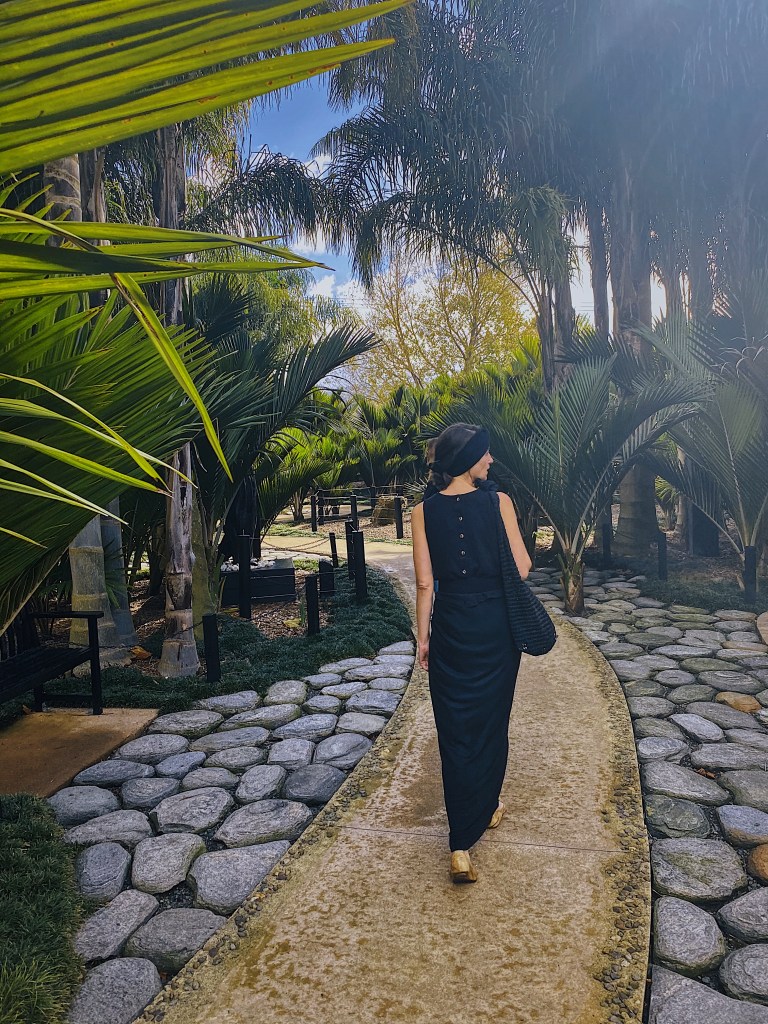
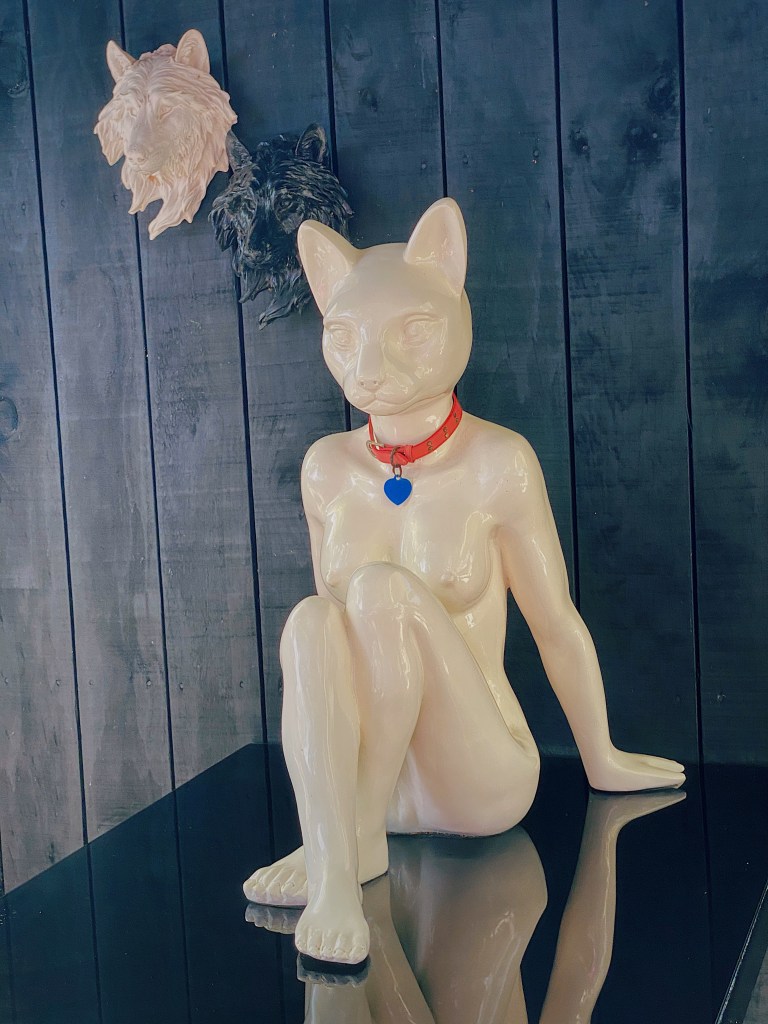
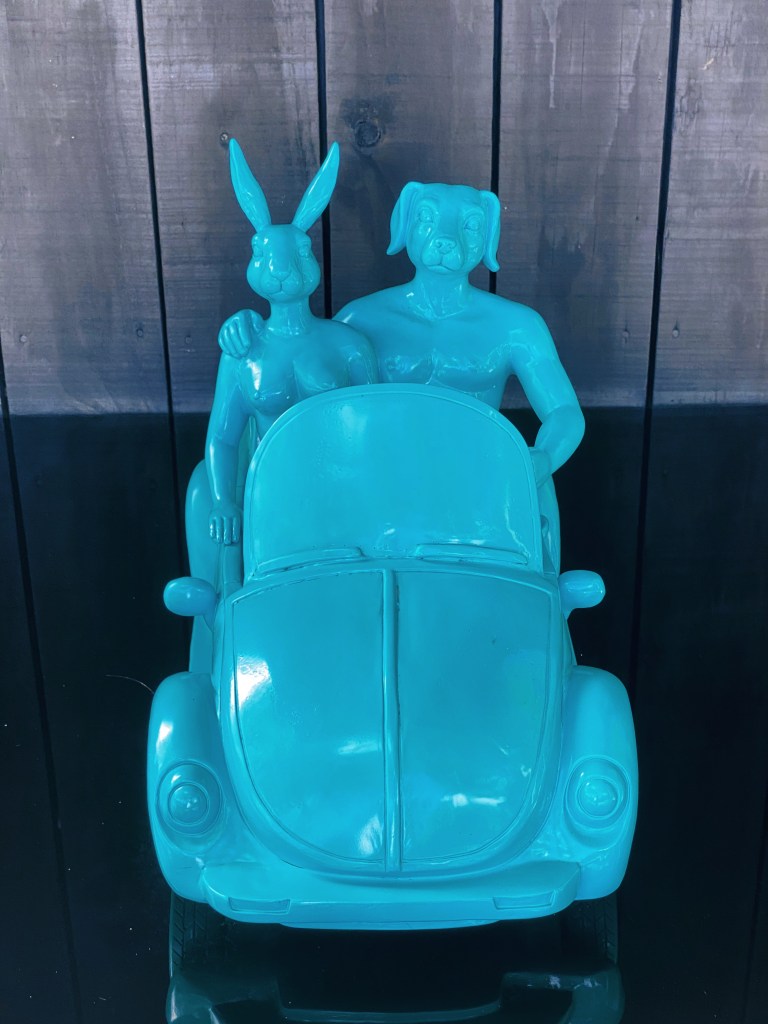
Our niece, Debbie, joined us on a visit to the Sculptureum. Just outside of Matakana, it is the home of some of the most beautiful palms and weirdest sculptures you are likely to find anywhere. With giant green rabbits, pink snails and multi-colored meerkats, this is not a place to visit under the influence of psychedelics.
The most disturbing were perhaps the sculptures of humans with animal heads.
The weather in the Auckland region is very changeable. The bad news is that you can set off for a walk in bright sunshine and five minutes later be drenched by a passing shower. The good news is that the region has more than its fair share of rainbows. Driving over the hill from Matakana to Pakiri, just north of Auckland, we were treated to a vibrant rainbow and some beautiful farmland.
We were on our way to stay with Mal’s sister, Christine, and brother-in-law, Bill, who live high on a hill overlooking Pakiri. Here was the view from their front lawn.
We headed across the Harbour Bridge to visit Takapuna, on Auckland’s North Shore. Taka is Maori for knoll or assembly and puna means spring. It probably refers to Lake Pupuke, a small lake lying about 200 meters inland which was created when a volcanic crater filled with fresh spring water.
The beach is very popular in the Summer when it attracts big crowds. On this warm Autumn afternoon it was much quieter.
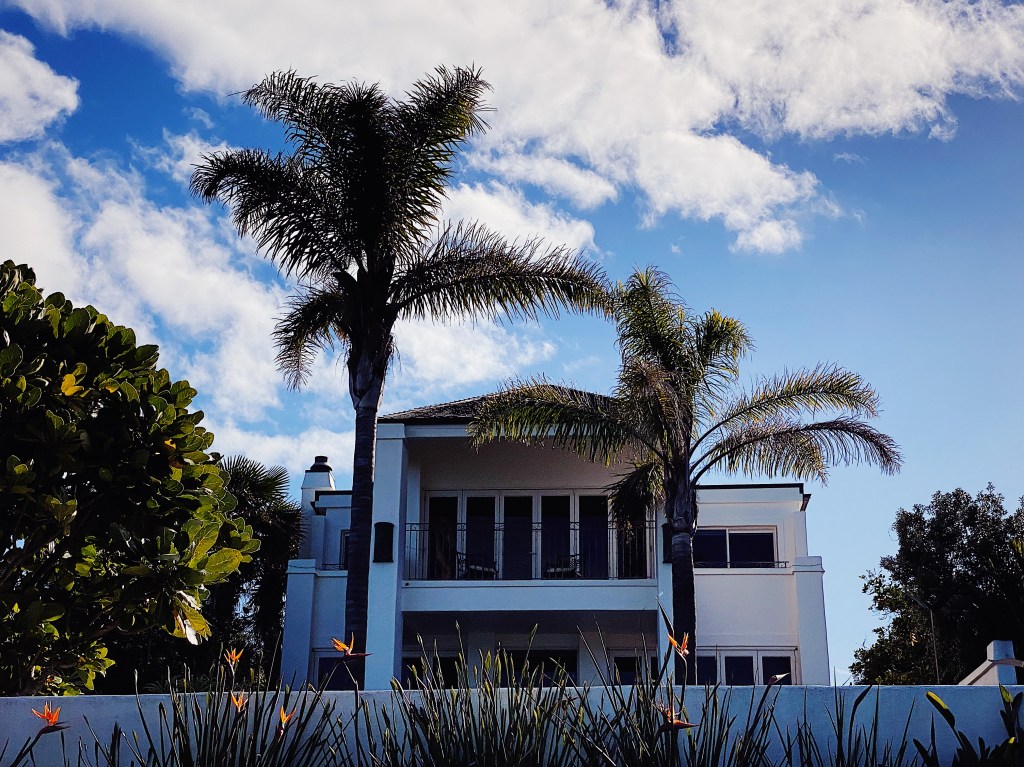
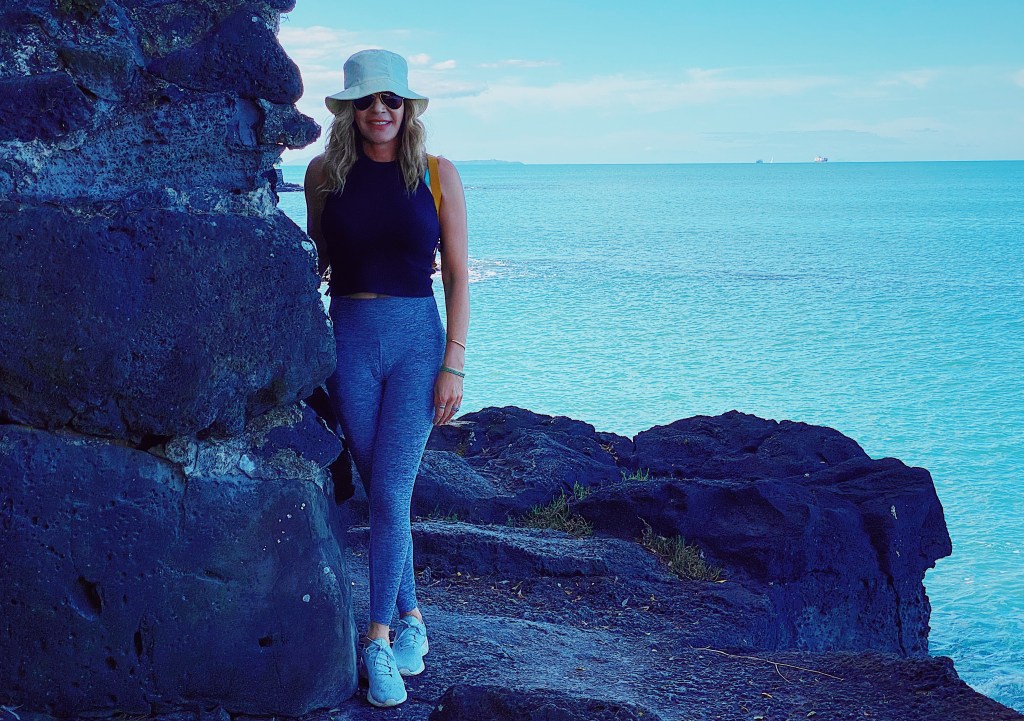
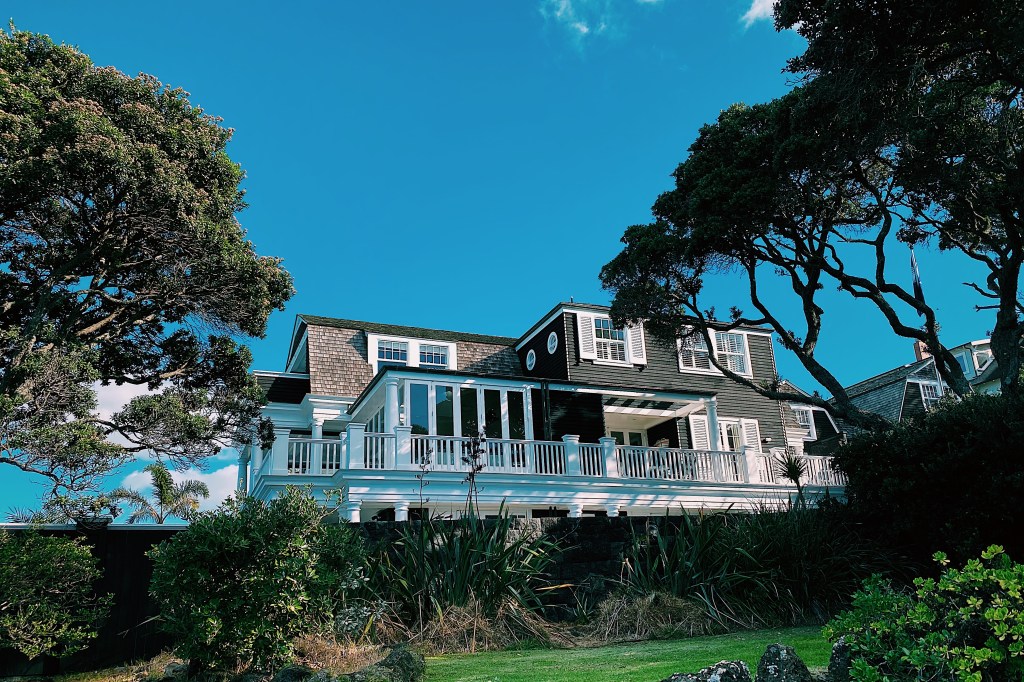
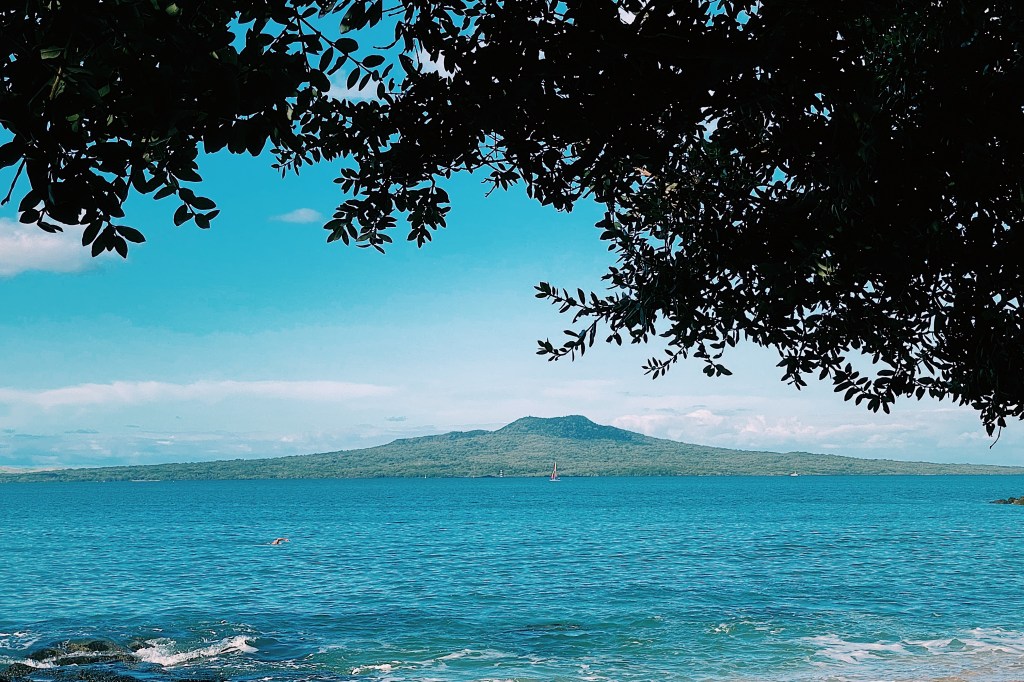
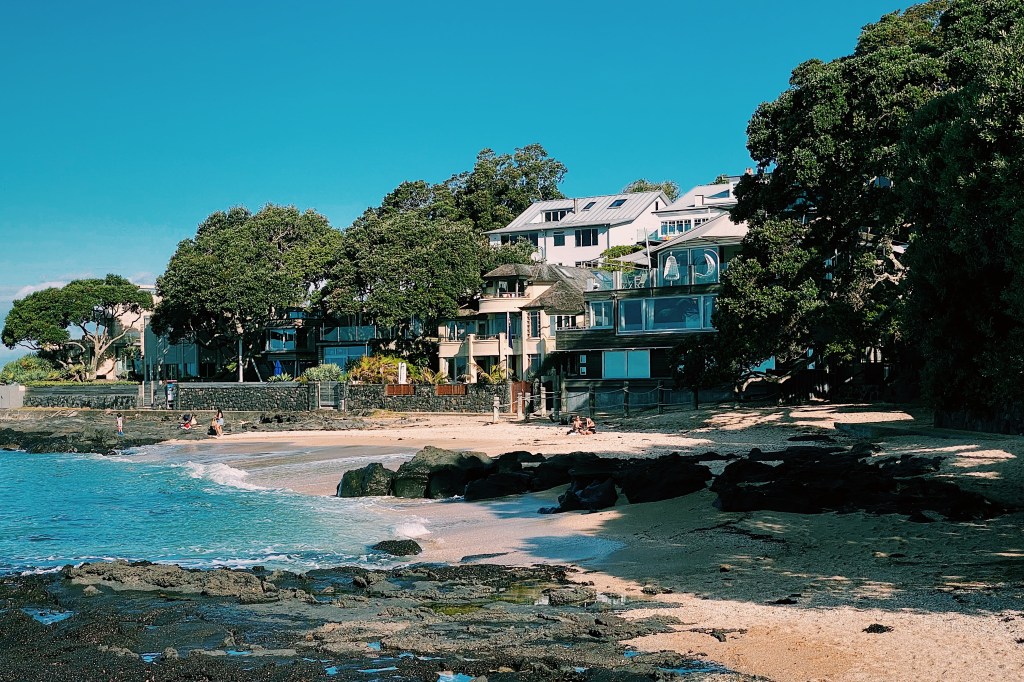
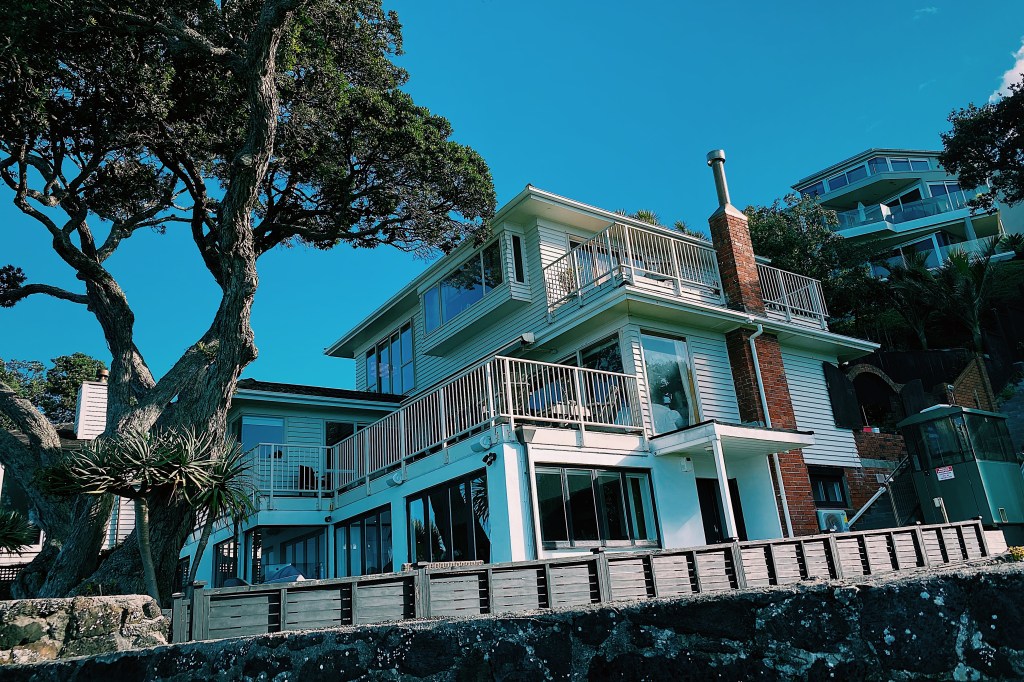
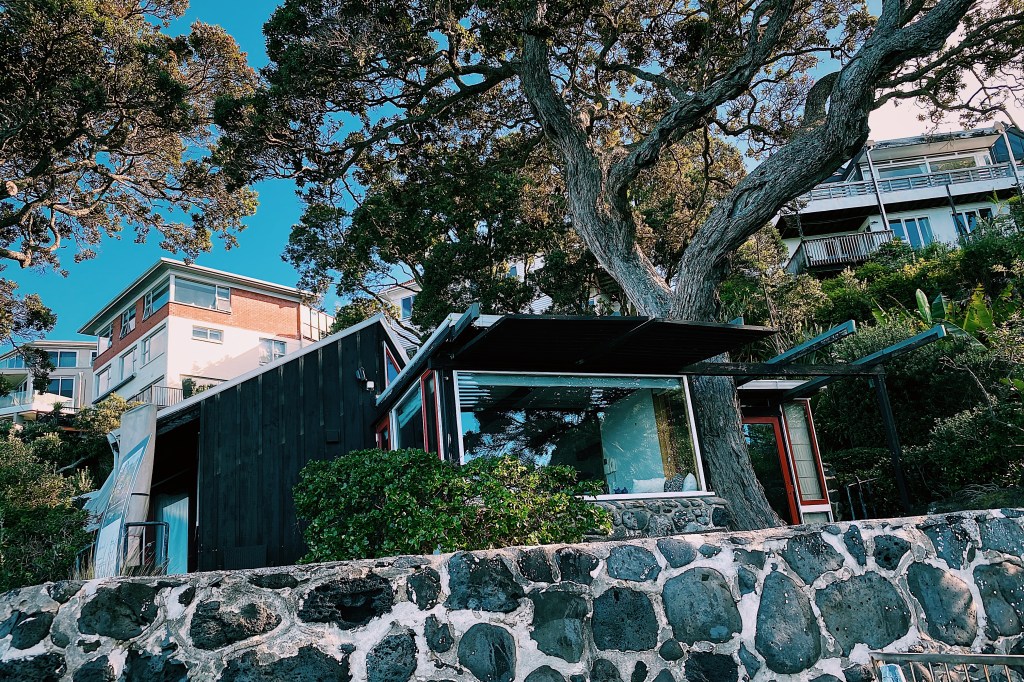
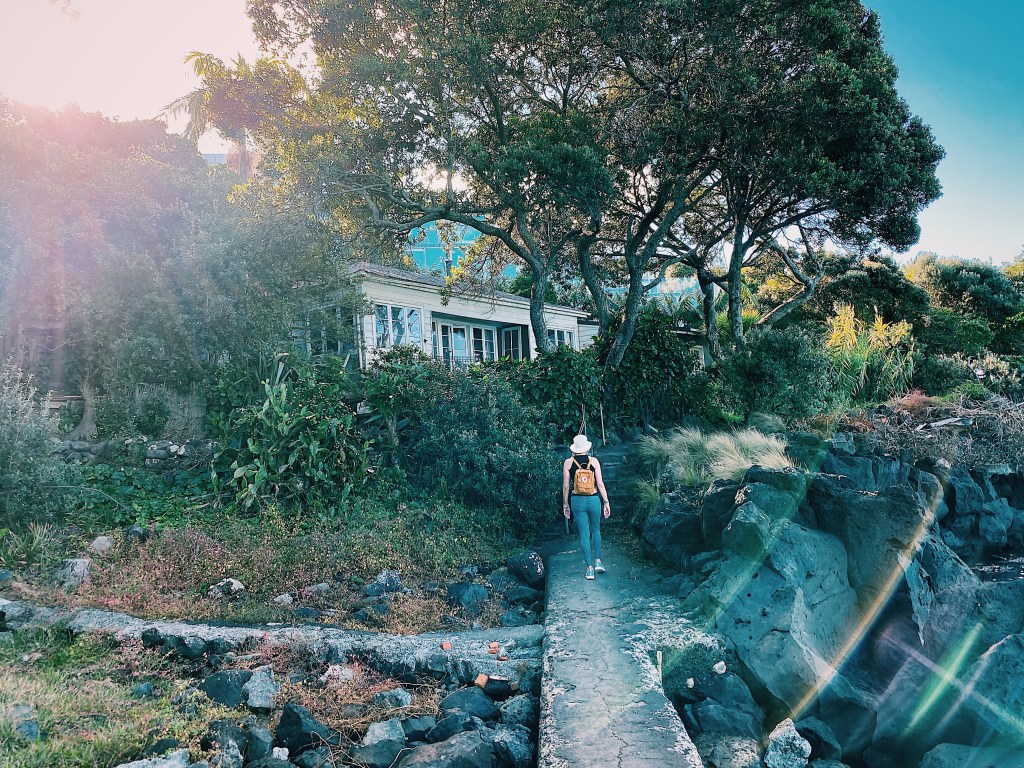
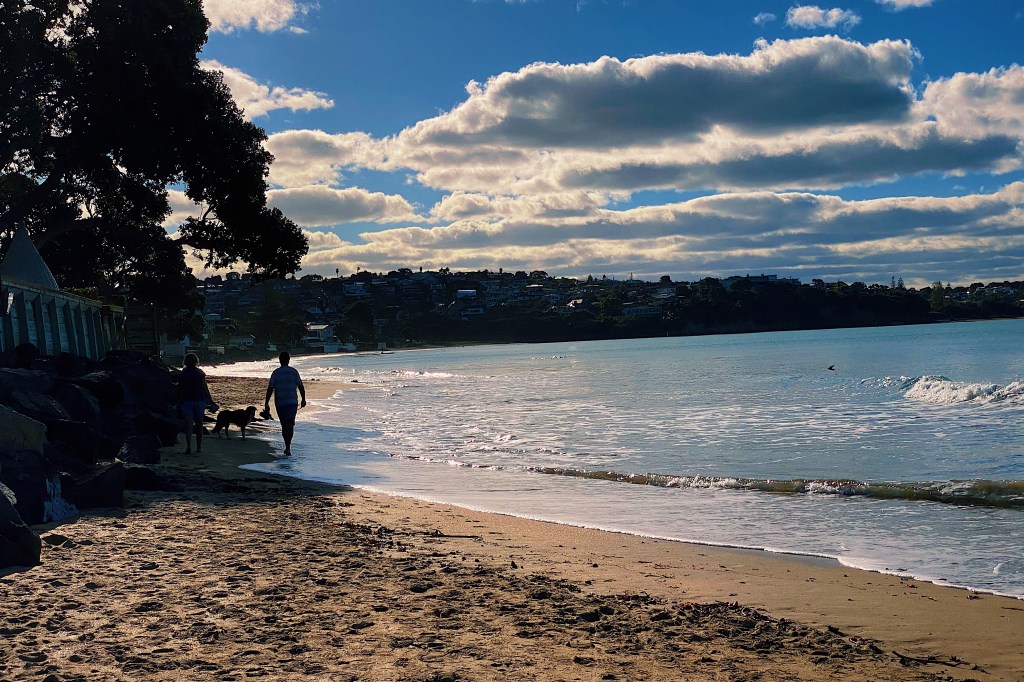
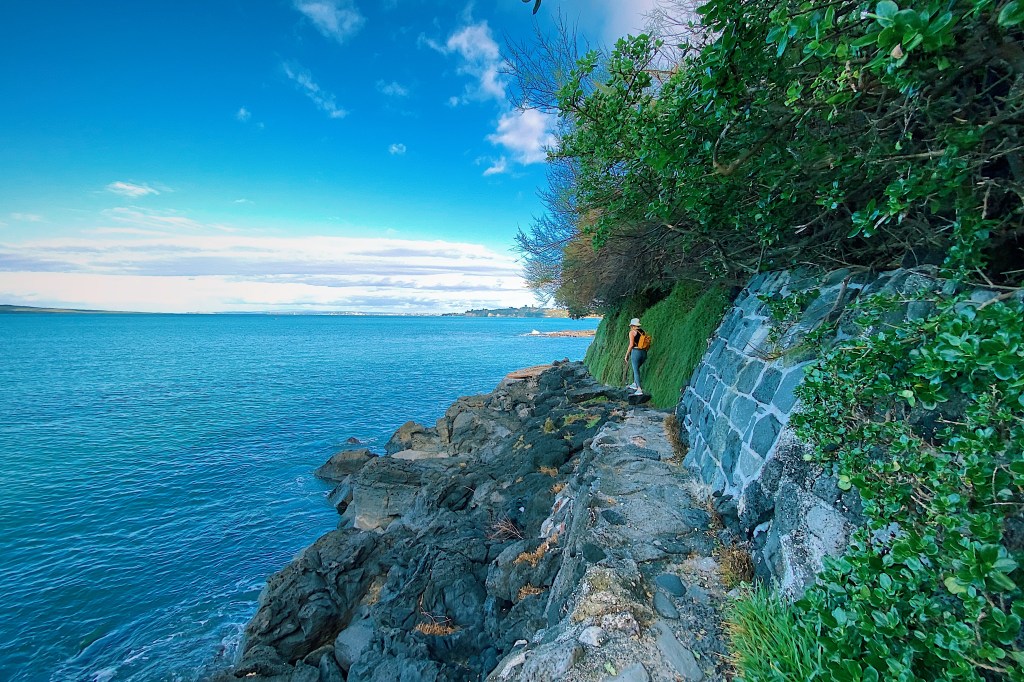
At the north end of the beach is a pathway that follows the shoreline around to Milford Beach, about a mile away. The path is lined with houses, ranging from modern large homes to small old shacks. Because of the location, even the smallest shacks are worth millions. Here are some of the sights that we saw along the way.
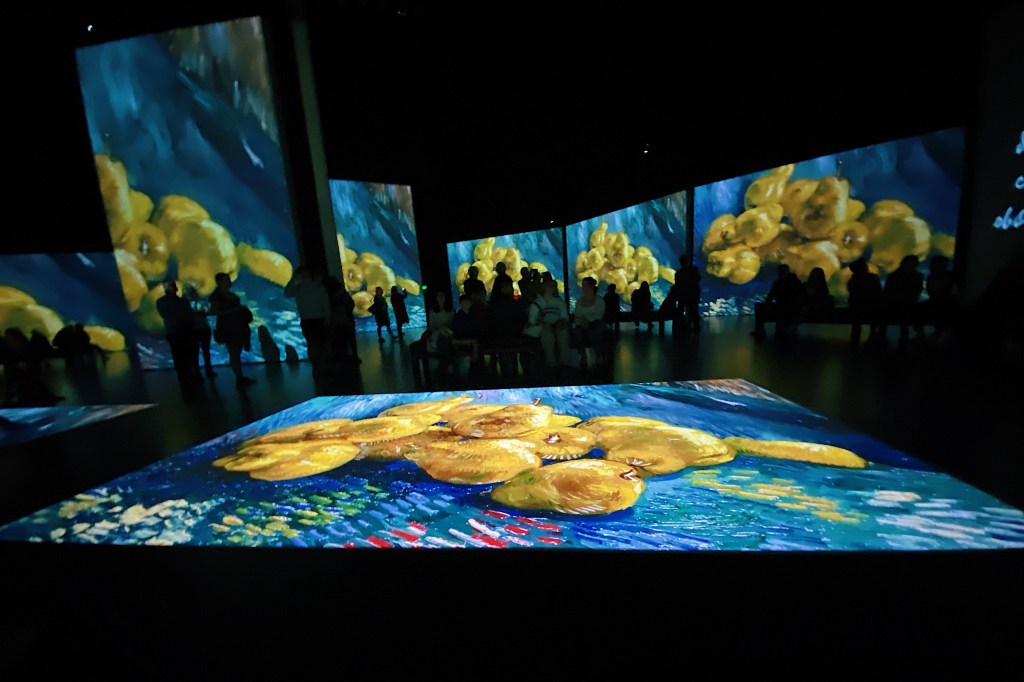
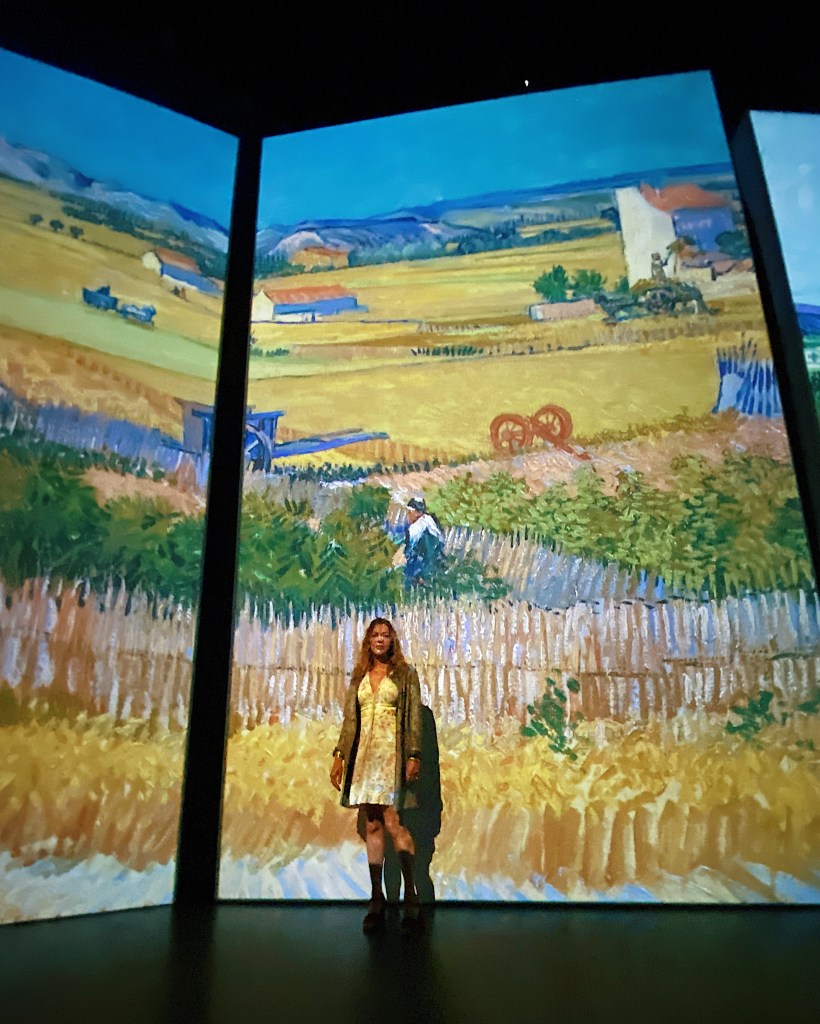
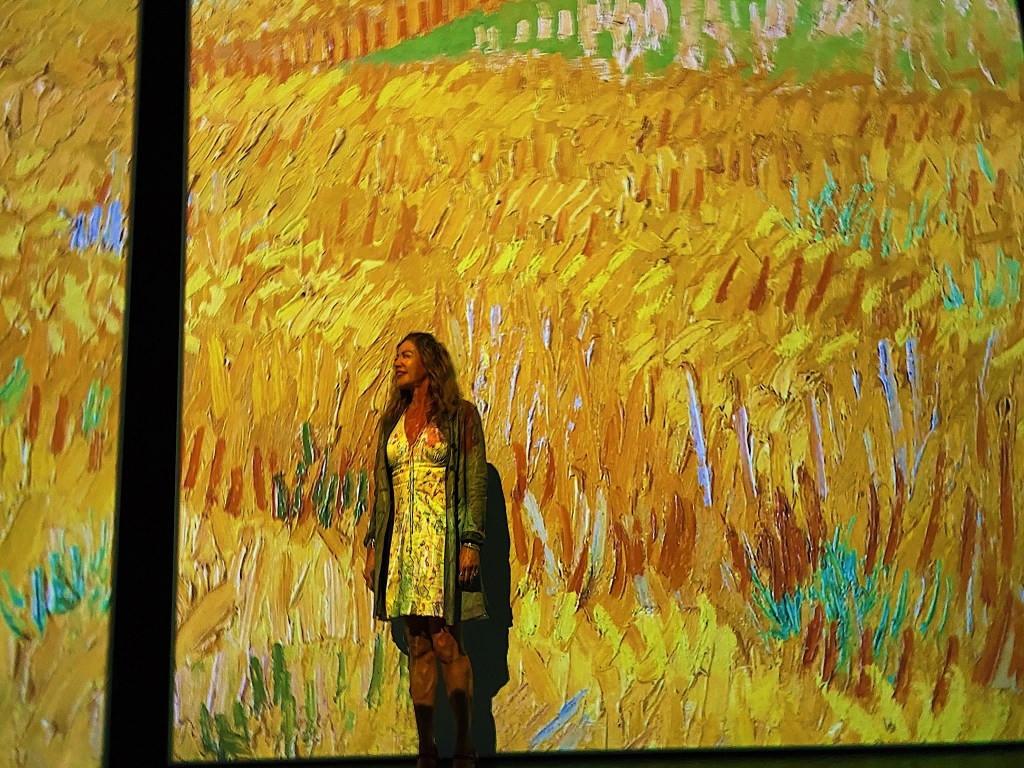
We went along to the Van Gogh Alive multi-sensory experience with our friends Howard and Carolyn. It was a beautiful experience seeing the tormented artist’s work on huge screens in vibrant color with classical music playing in the background. The colors and texture of his works make him an ideal artist for such a show. The works were also accompanied by many poignant quotes by the artist. We particularly liked his foresight when he wrote “I can’t change the fact that my paintings don’t sell. But the time will come when people will recognize that they are worth more than the value of the paints used in the picture.”




















































 Mal and Lauren