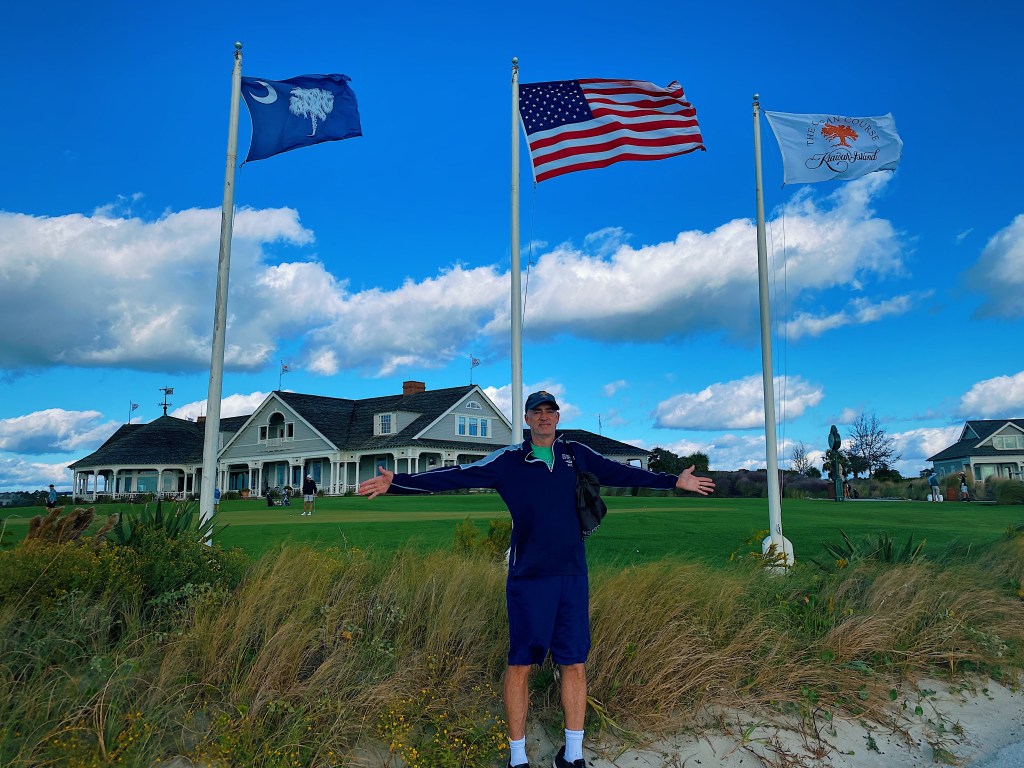
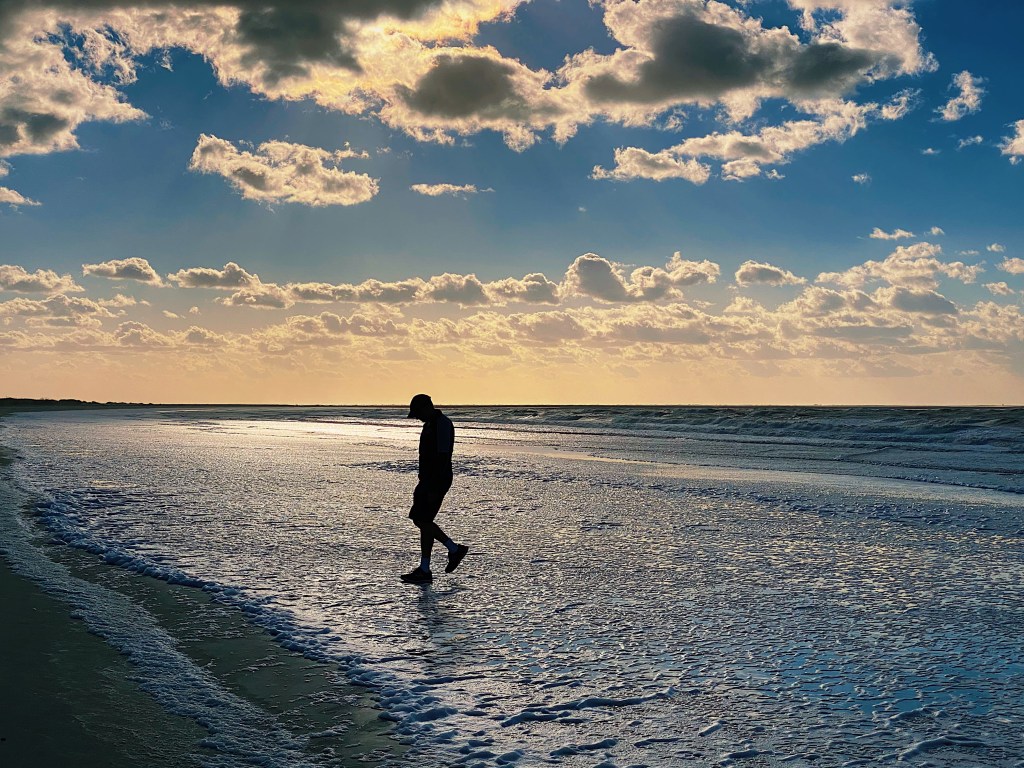
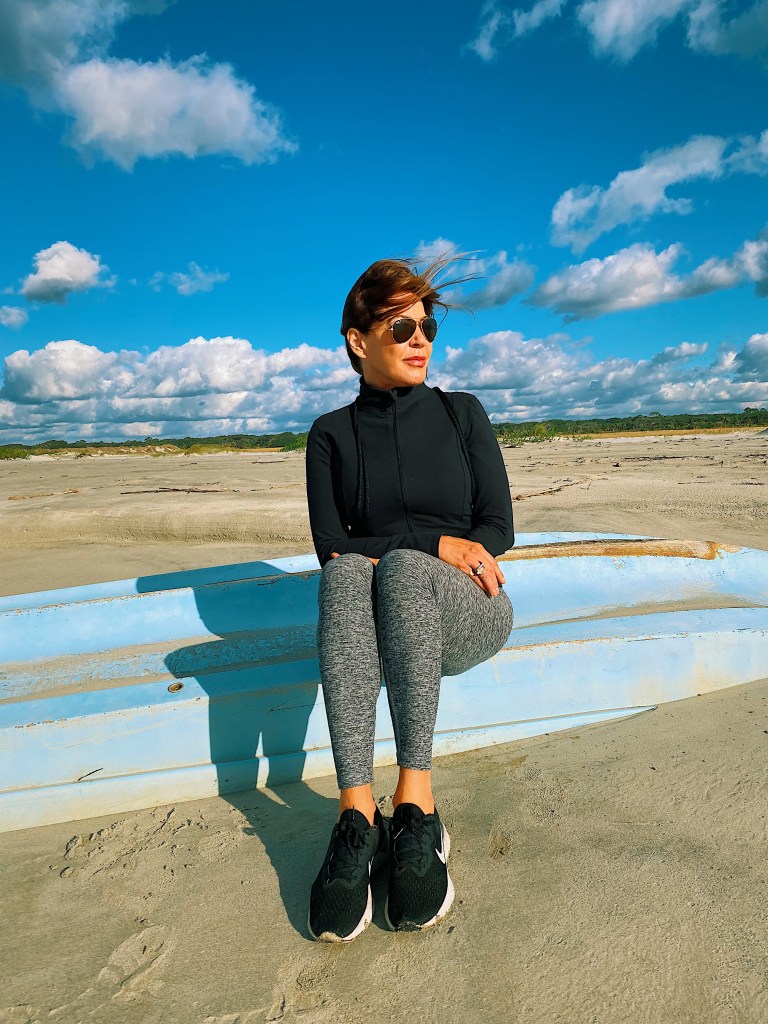
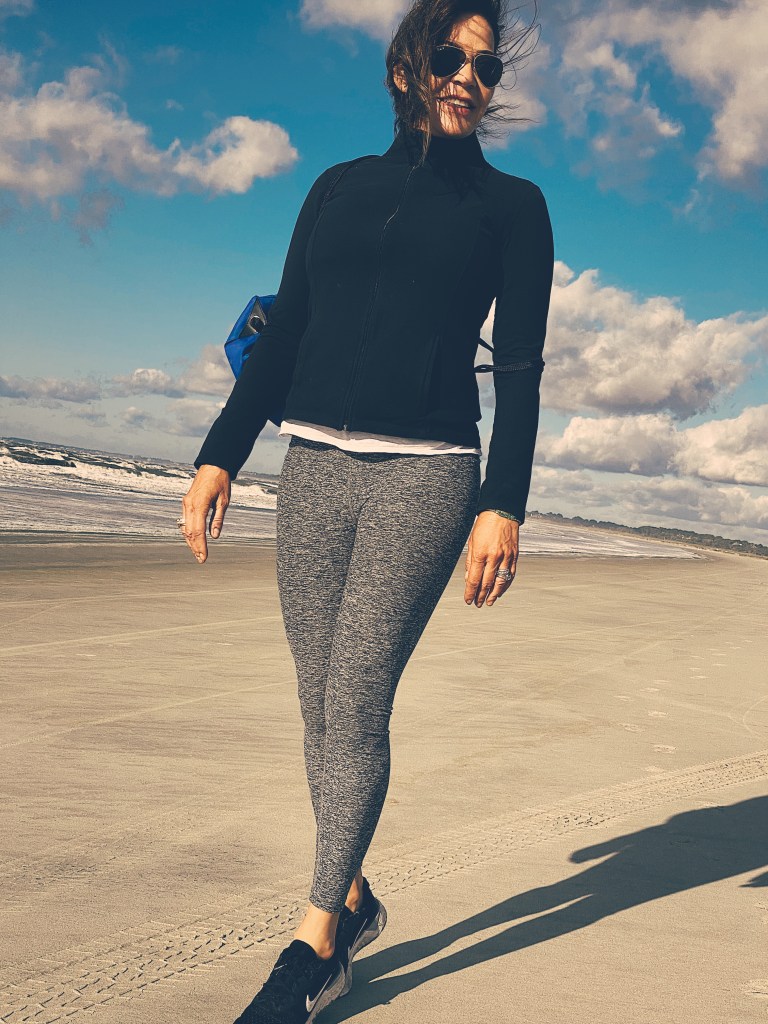
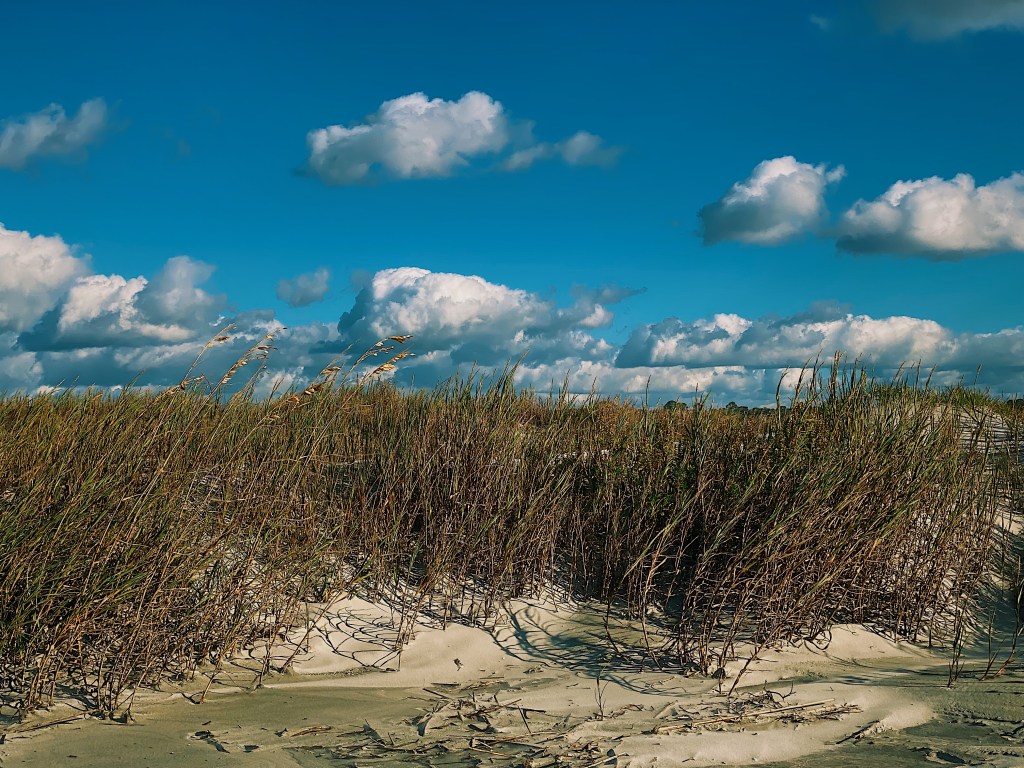
We just got back from a very enjoyable long weekend with our good friends, Jasper and Eve, at their place on Kiawah Island. Kiawah is a barrier island on the Atlantic about 25 miles south of Charleston in South Carolina. Named for the Kiawah Indians who lived in the area, it is primarily a beach and golf resort. On its 13.5 square miles, there are no less than seven golf courses, including the prestigious Ocean Club that has hosted numerous PGA tournaments, including the 1991 Ryder Cup and the 2012 and 2021 PGA Championships. We rode bikes over to the Ocean Club, which sits beside the beautiful long beach that spans the length of the island. The wind was very very strong and playing golf must have been extremely difficult. Nevertheless, there were lots of golfers on the practice range getting ready for their rounds. Fortunately, we weren’t there to play golf. Rather, Jasper led us on a walk along the empty beach to the tip of the island. Here are some photos from along the way.
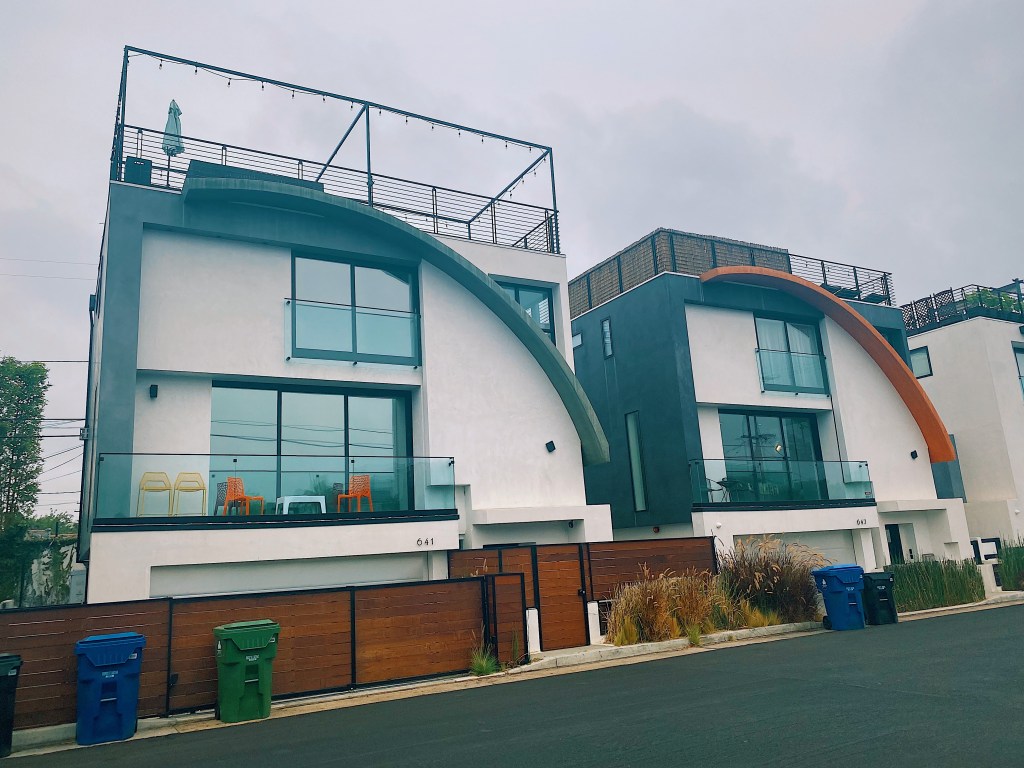
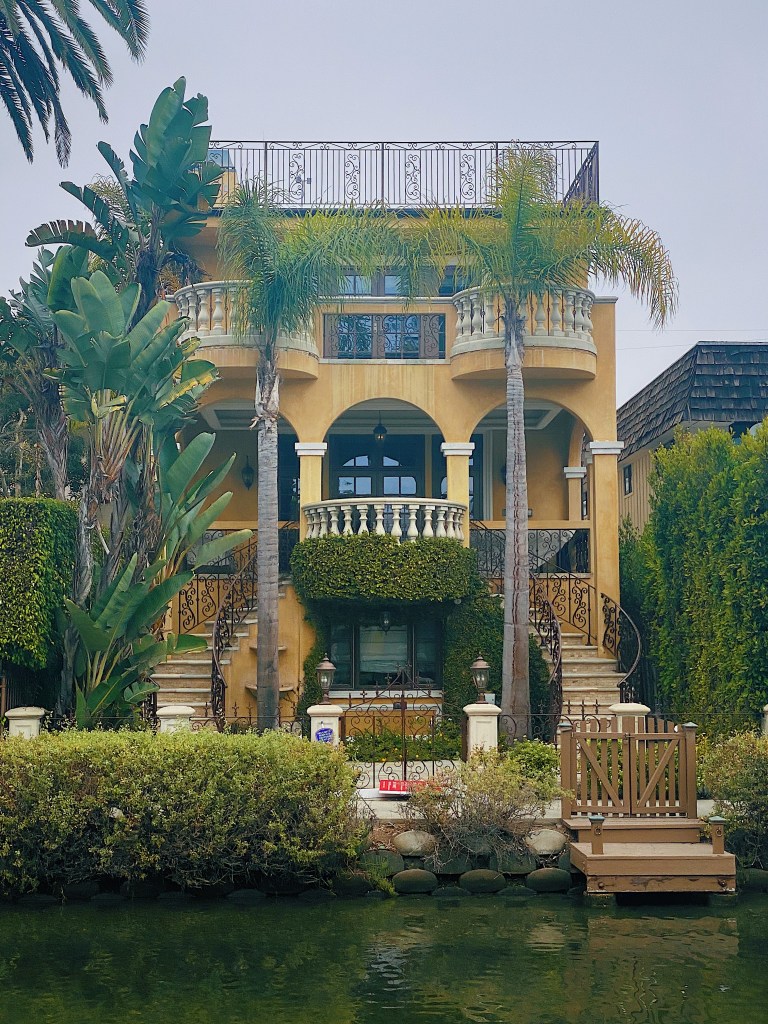
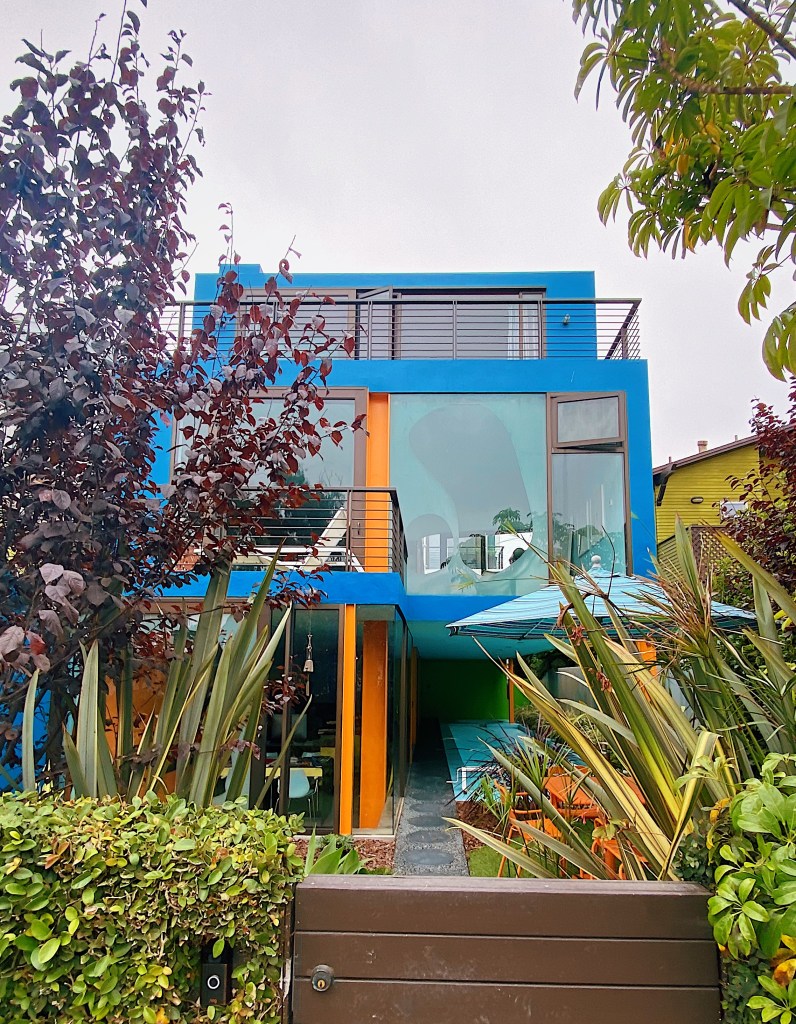
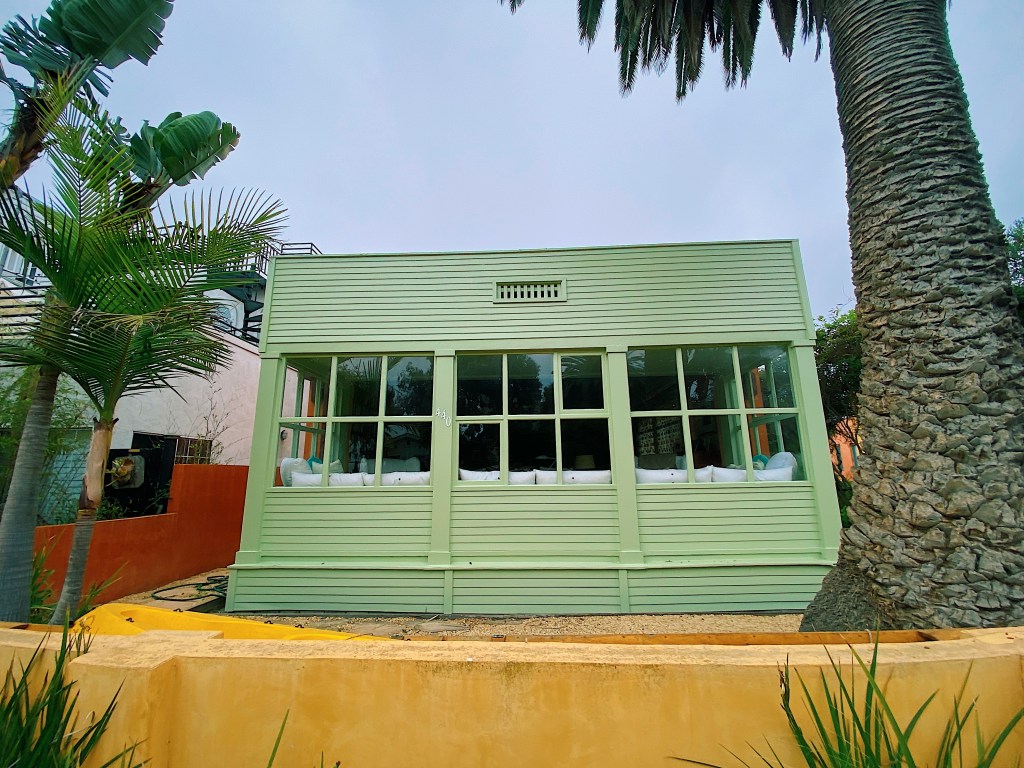
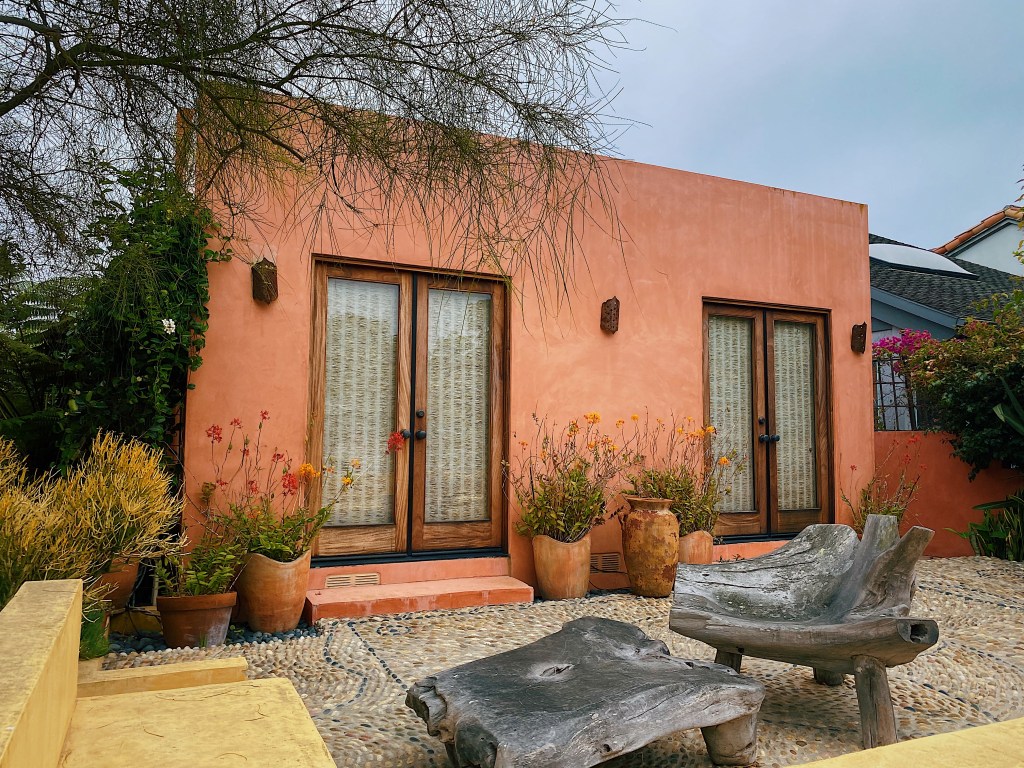
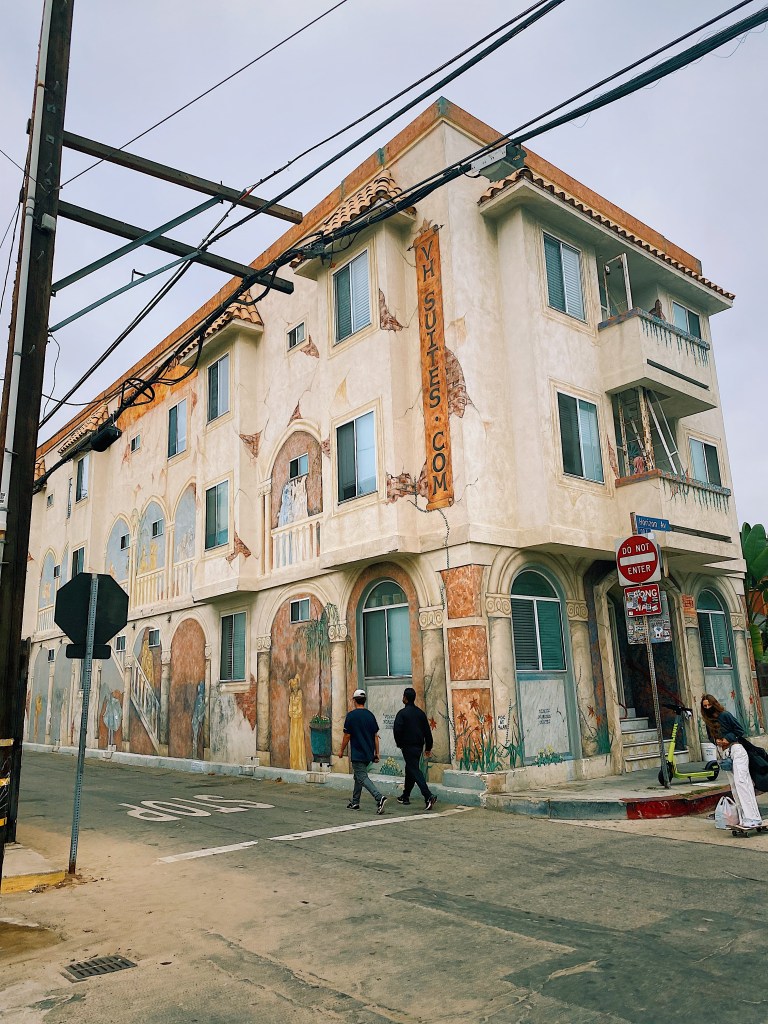
By the mid-1900s, Venice had fallen into neglect and become labeled as the “Slum by the Sea”. However, recently it has become an increasingly desirable neighborhood, with some homes selling in the millions of dollars. The result is that it is now an interesting mix of old and new. There are still a lot of the original small homes, many of which have retained their bohemian character. But interspersed among those old homes are many large modern concrete and glass houses.
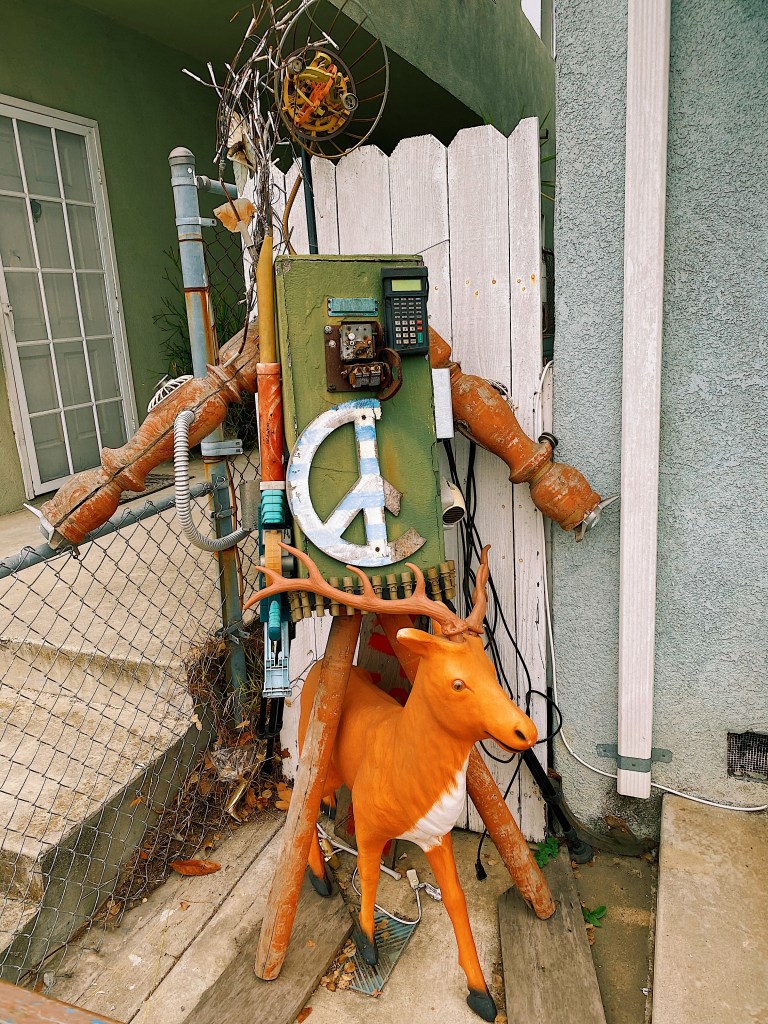
We liked this home’s quirky sculpture
And this home’s living wall
As examples of the old and new that exist in Venice, look no further than these two shops on Abbot Kinney Boulevard. On one side is the original smoke shop. Directly, across from it is a brand new and very chic cannabis boutique. To add to the look, a Tesla was parked out front.
Speaking of Teslas, we have seen many during our time in Los Angeles. Teslas are only built in five colors (silver, black, white, blue and red). Those who want something a little different are forced to get custom paint jobs. Here’s an example.
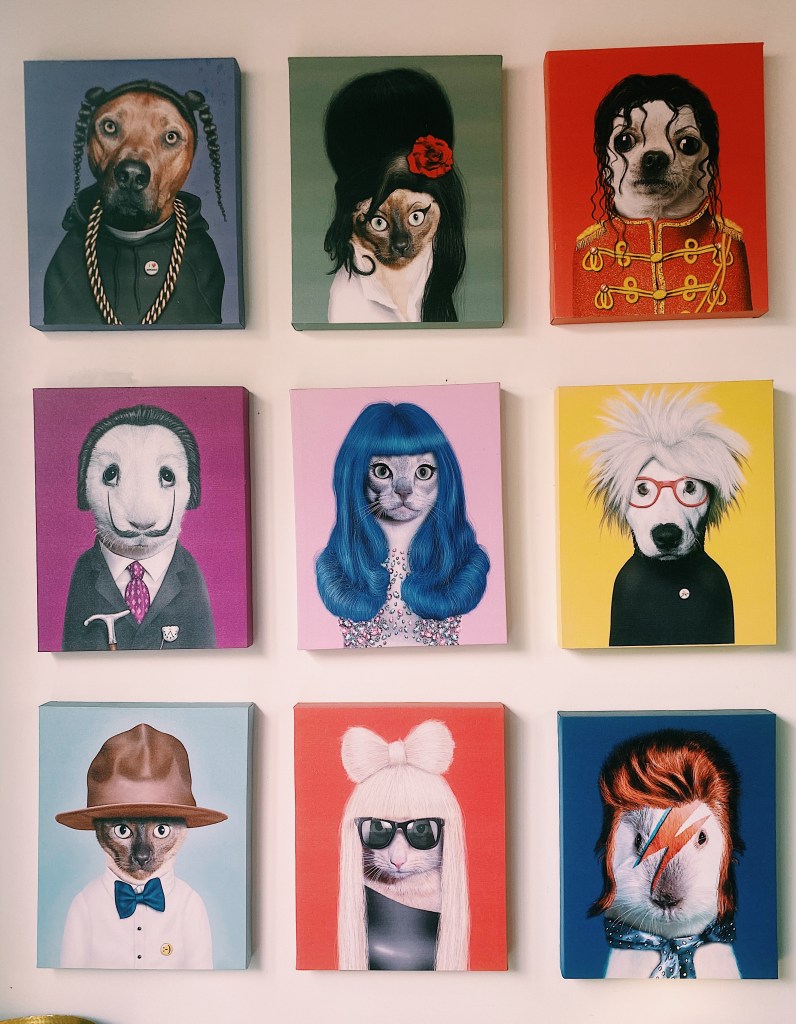
In our AirBnB, there is some interesting artwork, so we decided to start todays post with a quiz. Pick which celebrity each of the following paintings depict. The answers are at the end of the post.
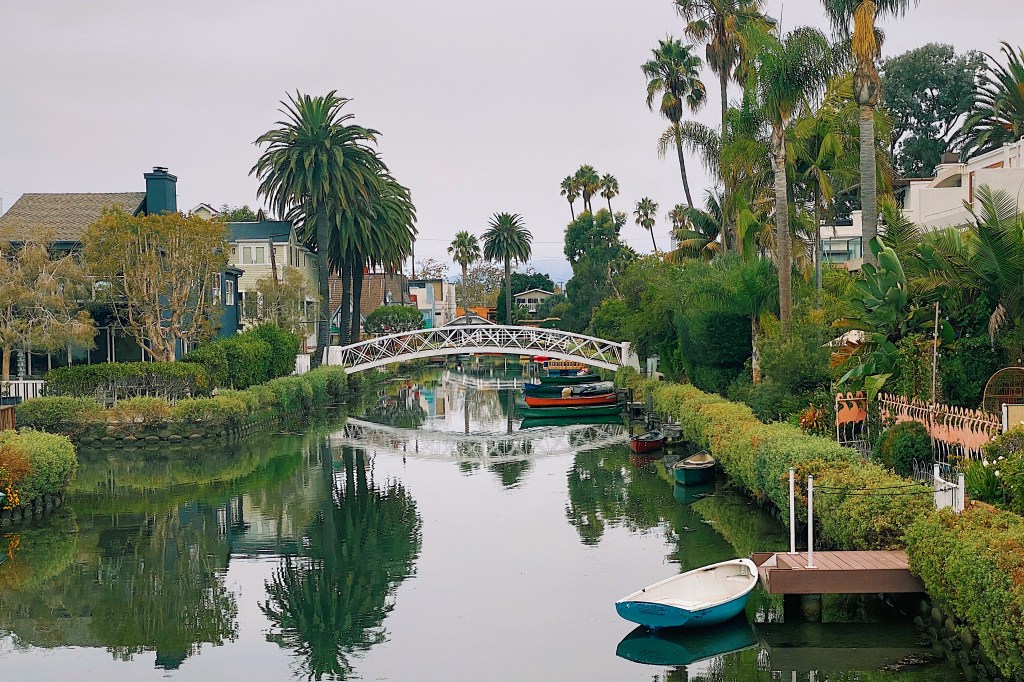
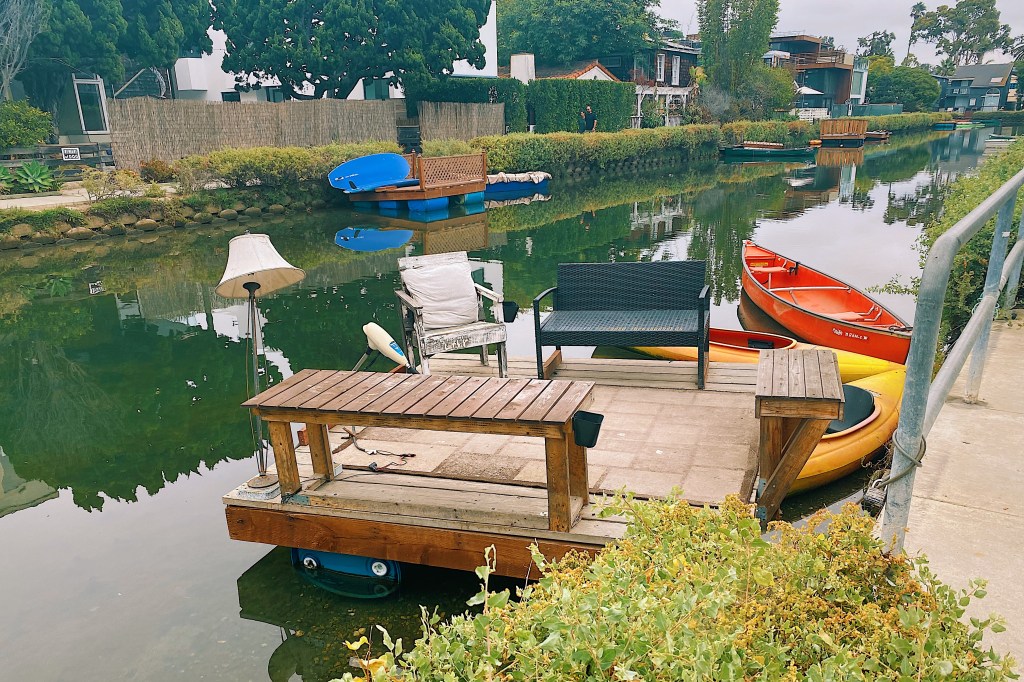
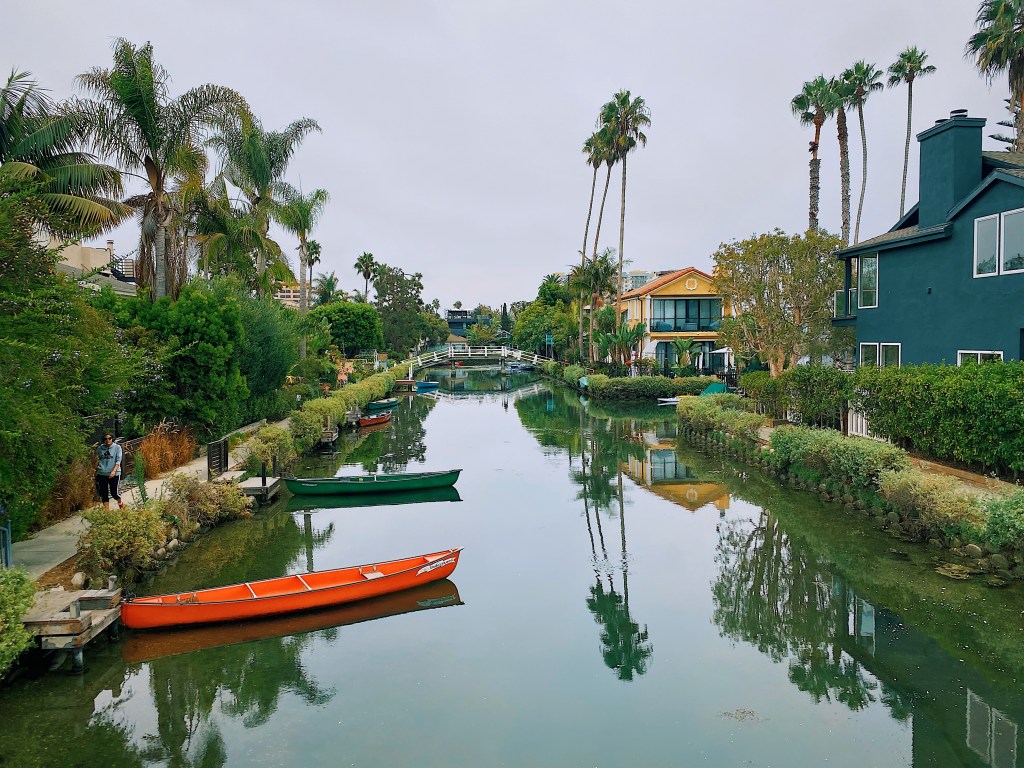
At the start of the 1900s, wealthy developer, Abbot Kinney, set about building a new seaside resort, south of Santa Monica. In order to drain existing marshes, Kinney built a canal system and named the new resort after Venice, Italy. We went for a walk around the canals, which are lined by a wide variety of homes.
This guy was quietly perusing passers-by.
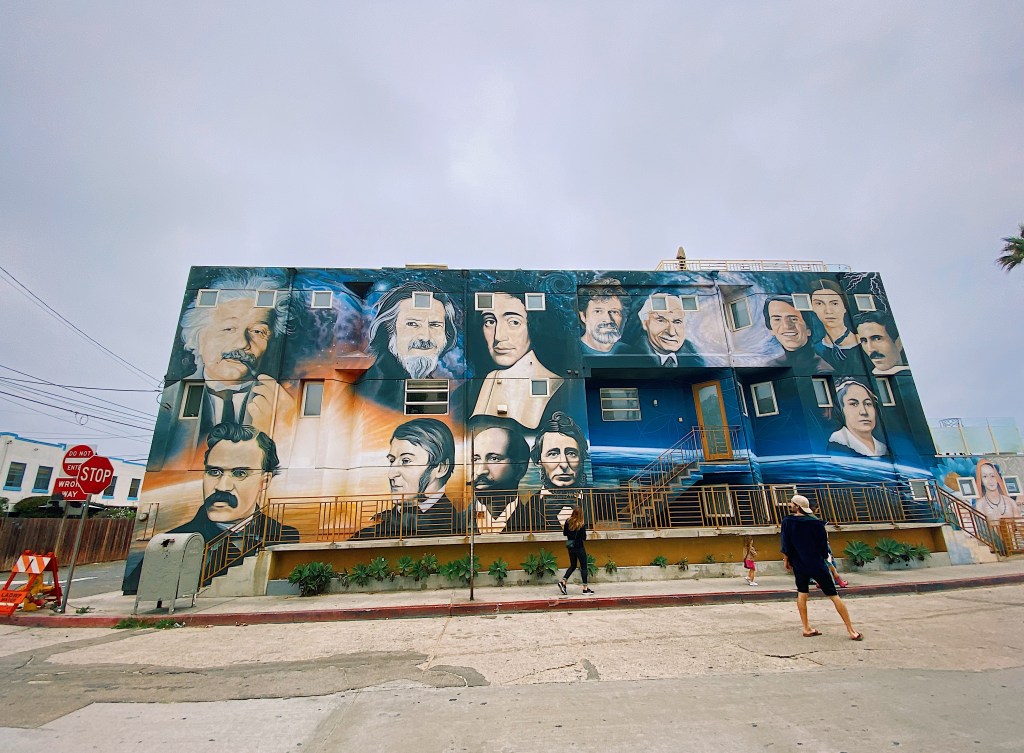
It’s just a couple of blocks from the canals to the beachfront, so we once again made our way down to the free-for-all that is Venice Beach. We passed this large mural, titled ‘Luminaries of Pantheism’. According to the dictionary, pantheism is a doctrine which identifies God with the universe, or regards the universe as a manifestation of God. It’s also a worship that admits or tolerates all gods. So here’s the second contest of the day. Name the luminaries. Once again the answers will be at the end of the post.
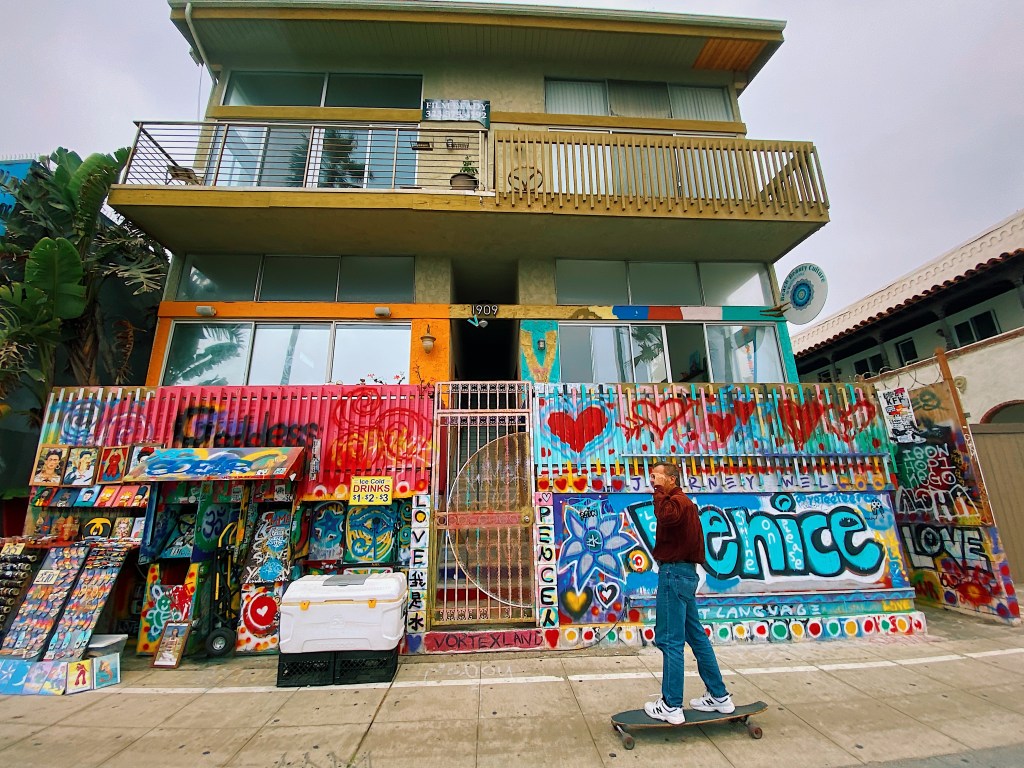
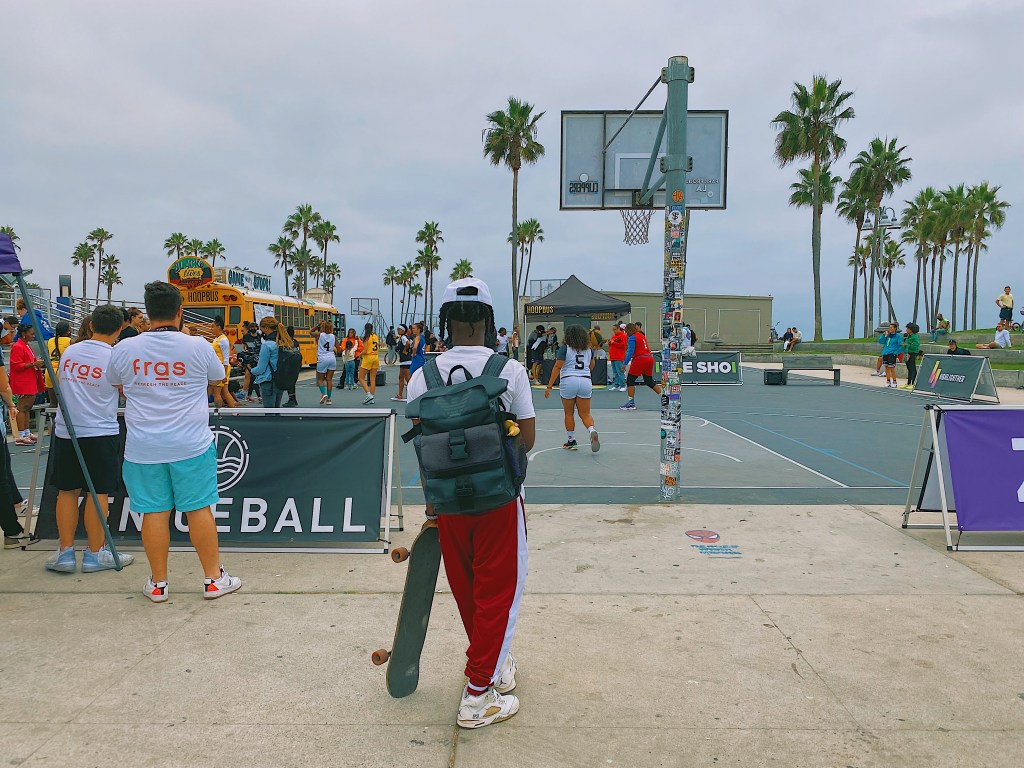
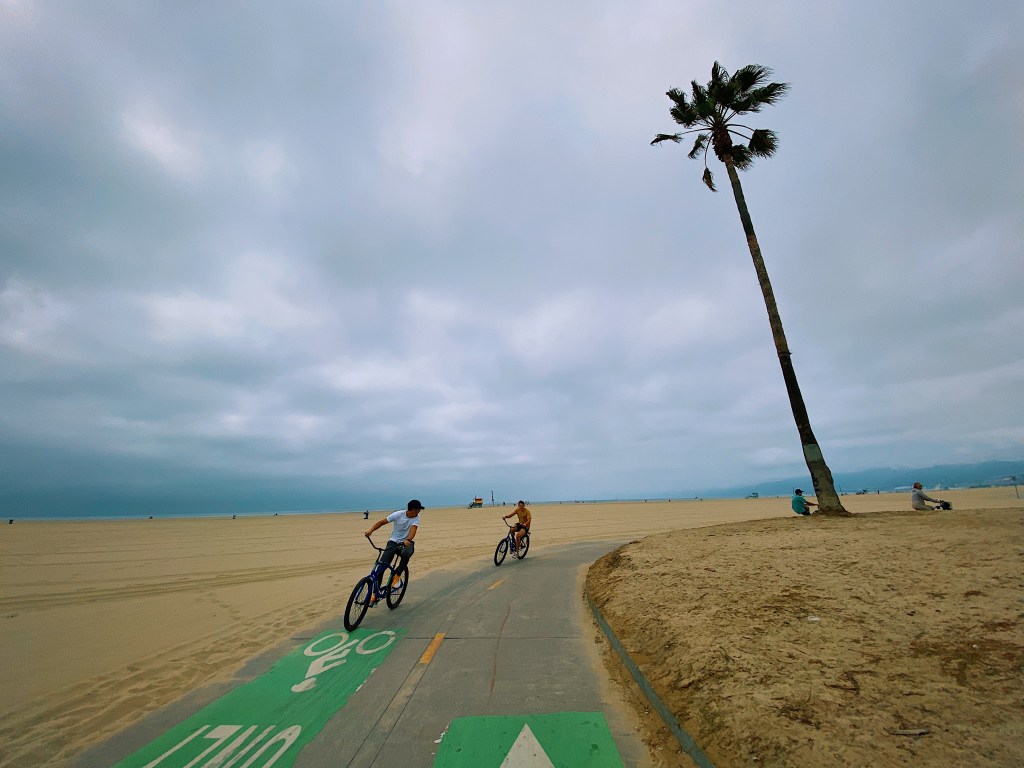
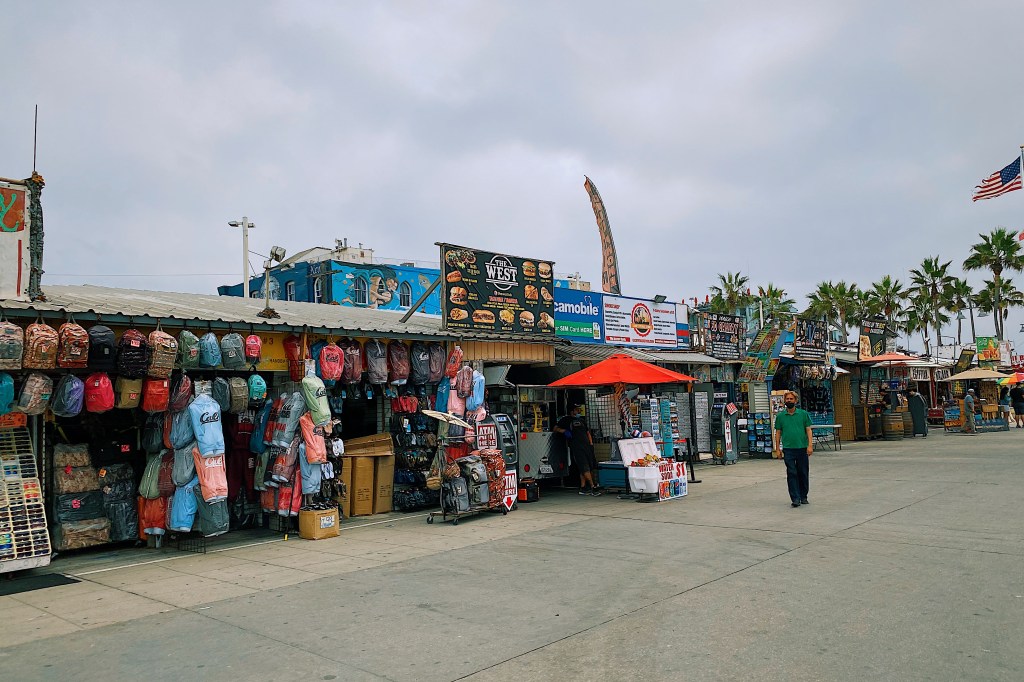
There’s always plenty to see at Venice.
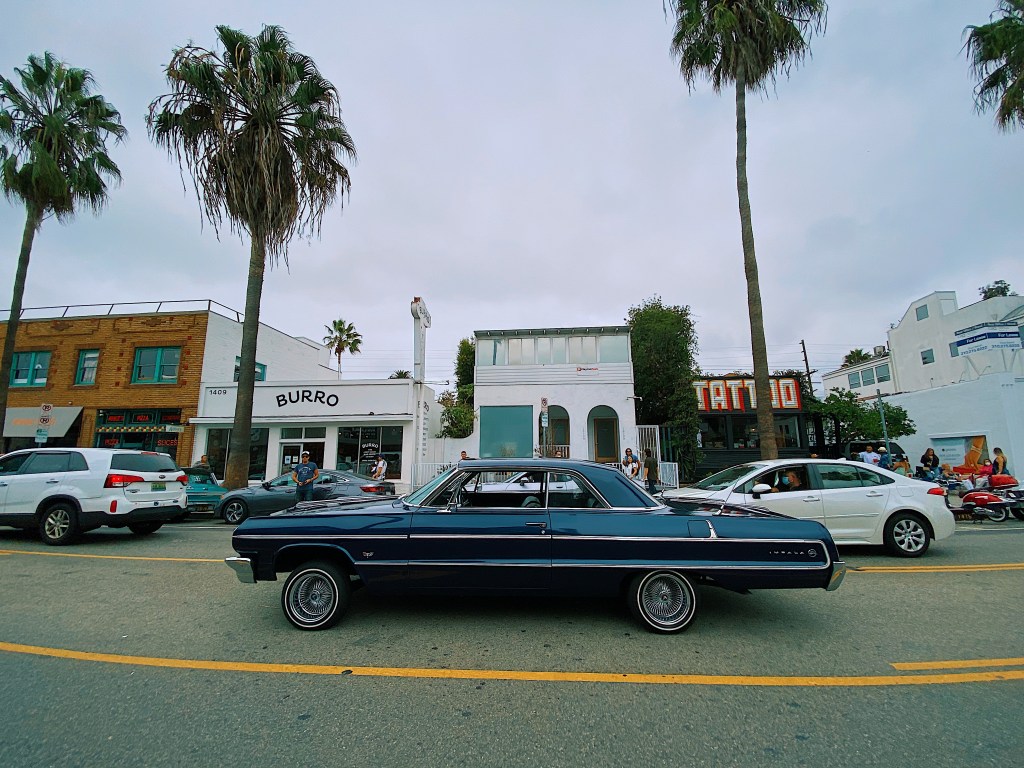
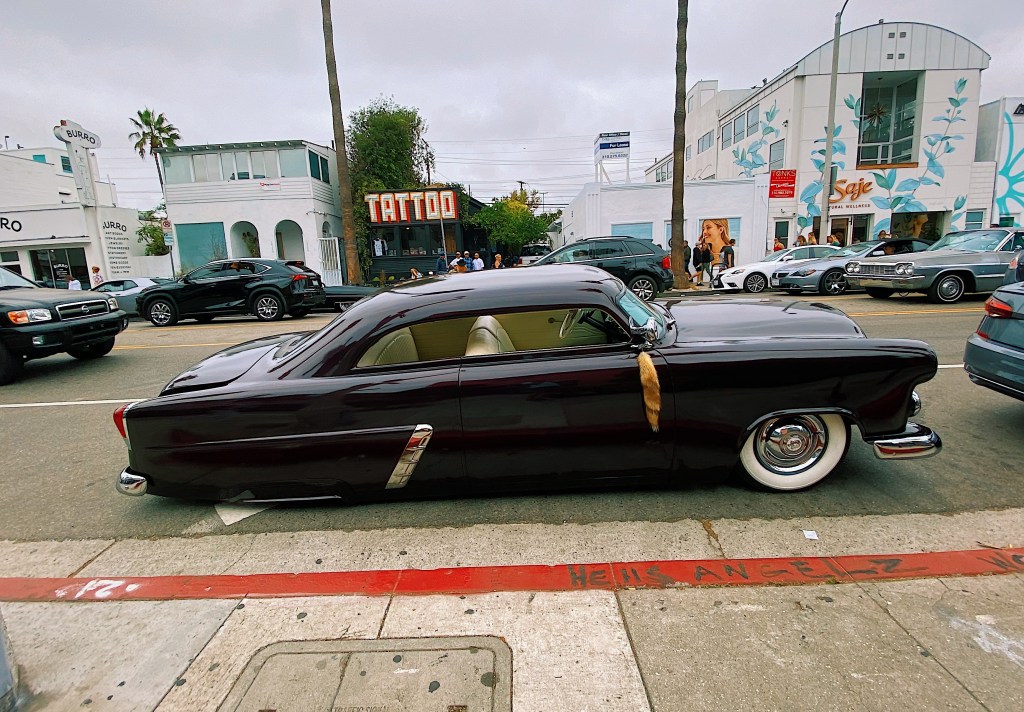
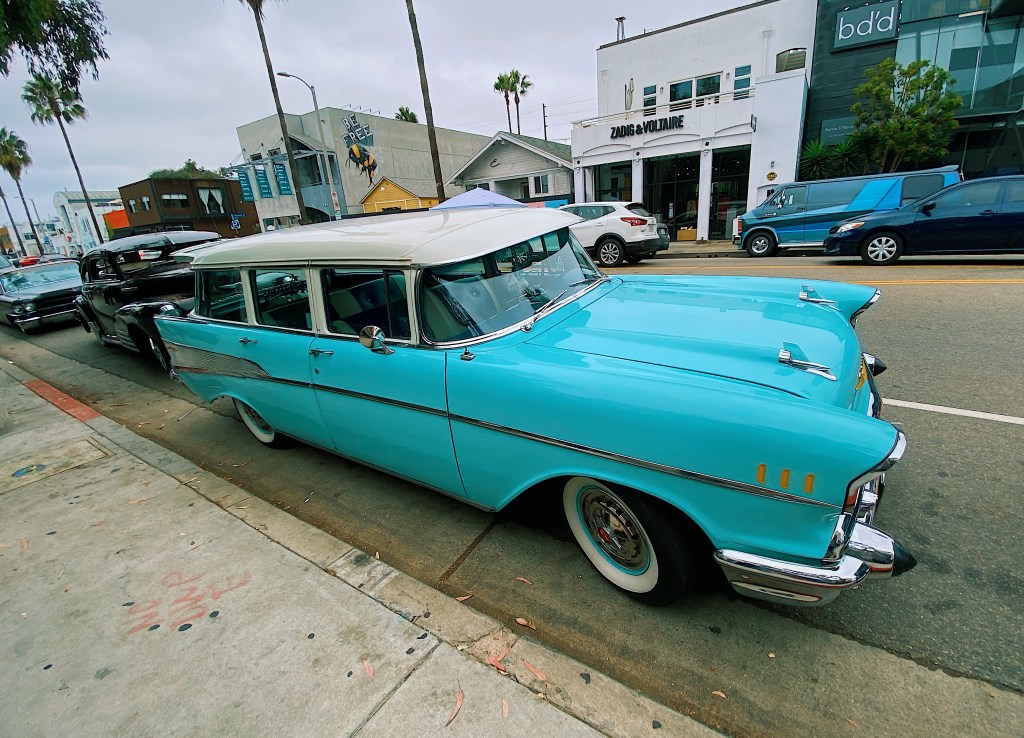
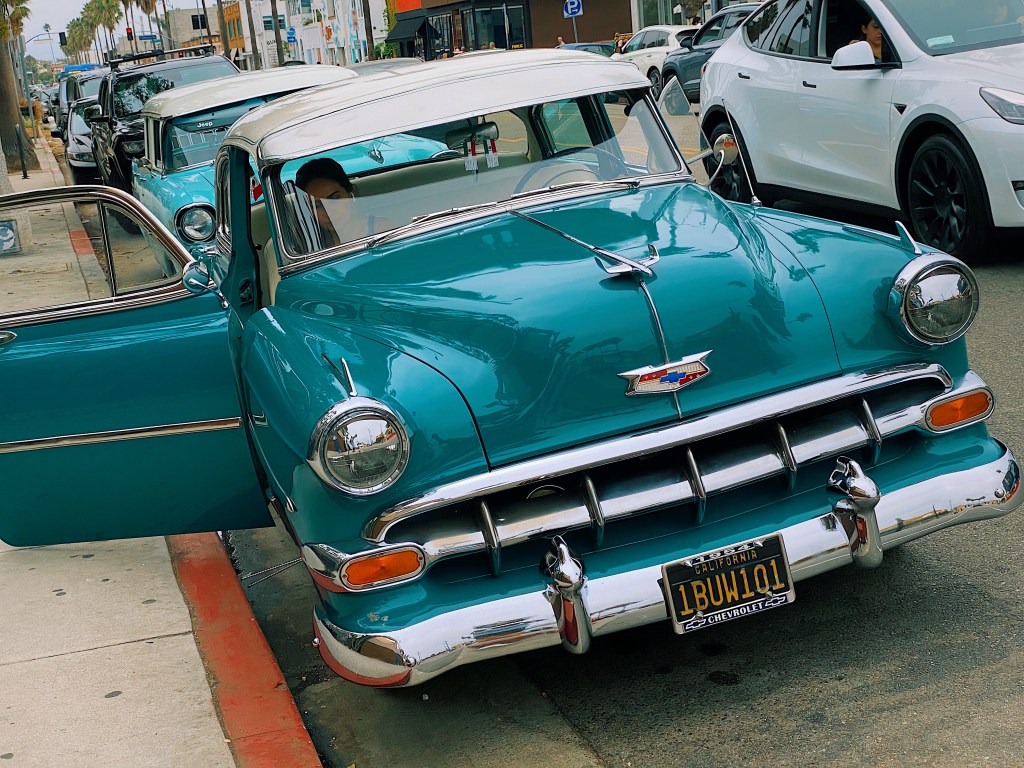
We then headed inland to Abbot Kinney Boulevard, a mile-long road lined with trendy shops, restaurants and galleries. Happily, there was a gathering of Lowriders while we were there. Lowriders are customized cars with low bodies that are also equipped with hydraulics so they can bounce up and down at the driver’s discretion. They are closely identified with LA, having originated there in the mid-1900s in the hispanic community. But now they have become popular throughout the USA and internationally. They have a particularly strong following in Japan, where there are more than 200 lowrider clubs.
And so, here are the answers for today’s quizzes.
Luminaries of Pop
Top (left to right): Snoop Dog; Amy Winehouse; Michael Jackson
Middle: Salvador Dali; Katy Perry; Andy Warhol
Bottom: Pharrell Williams; Lady Gaga; David Bowie
Luminaries of Pantheism
Top: Albert Einstein; Alan Watts; Baruch Spinoza; Terrence McKenna; Carl Jung; Carl Sagan; Emily Dickenson; Nikola Tesla
Bottom: Friedrick Nietszche; R.W. Emerson; W.E.B. Dubois; Henry David Thoreau; Elizabeth Cody Stanton
We took advantage of the bikes that came with our AirBnB and took a long ride through the surrounding wine country and into Sonoma town.
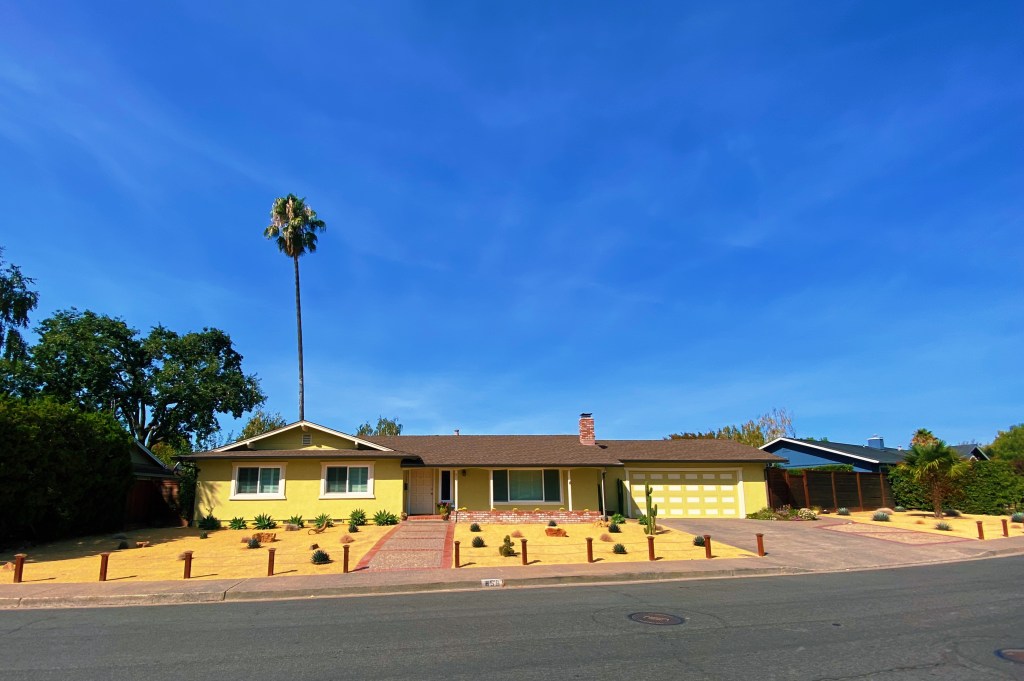
We rode through Sonoma’s suburbs, checking out the houses. These similar houses were across the road from each other. They were taking different approaches to landscaping, with one sticking to the traditional grass, while the other had converted to the more environmentally friendly desert look.
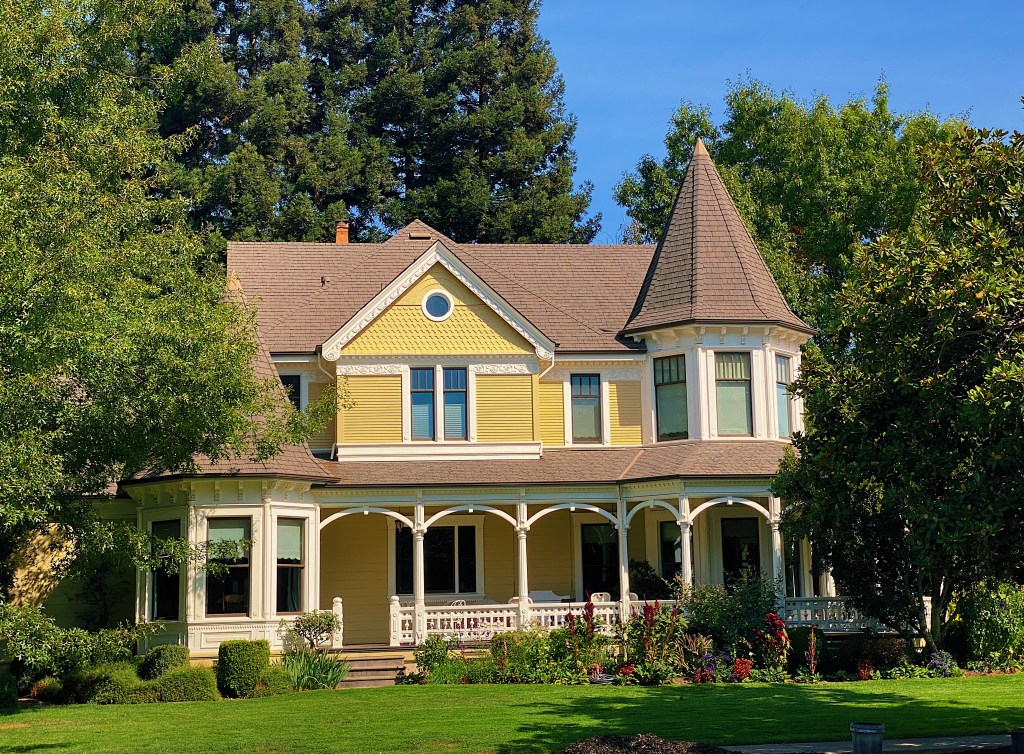
There were a number of large victorian style houses that were reminded us of neighborhoods back east.
This massive historical home took up a whole block.
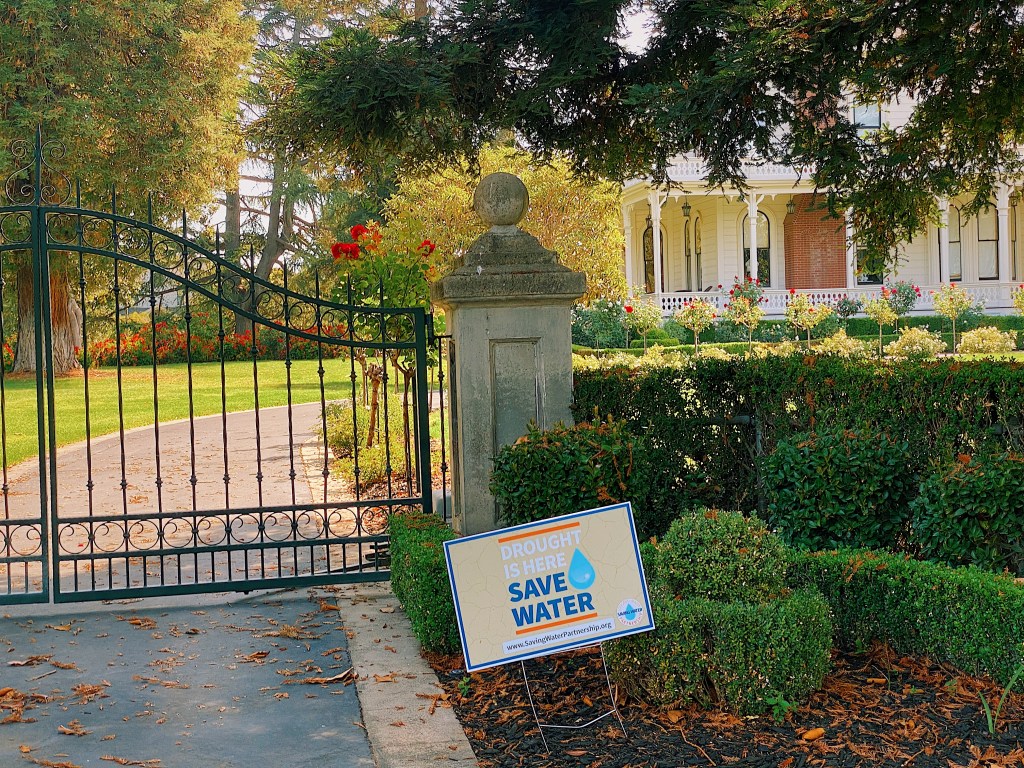
We are not sure if the owners were trying to be ironic or were completely self-unaware but their conserve water sign seemed at odds with the massive green lawns. Perhaps some eco protestor had snuck in the sign without the owners noticing.
We particularly liked this house with its shady verandah.
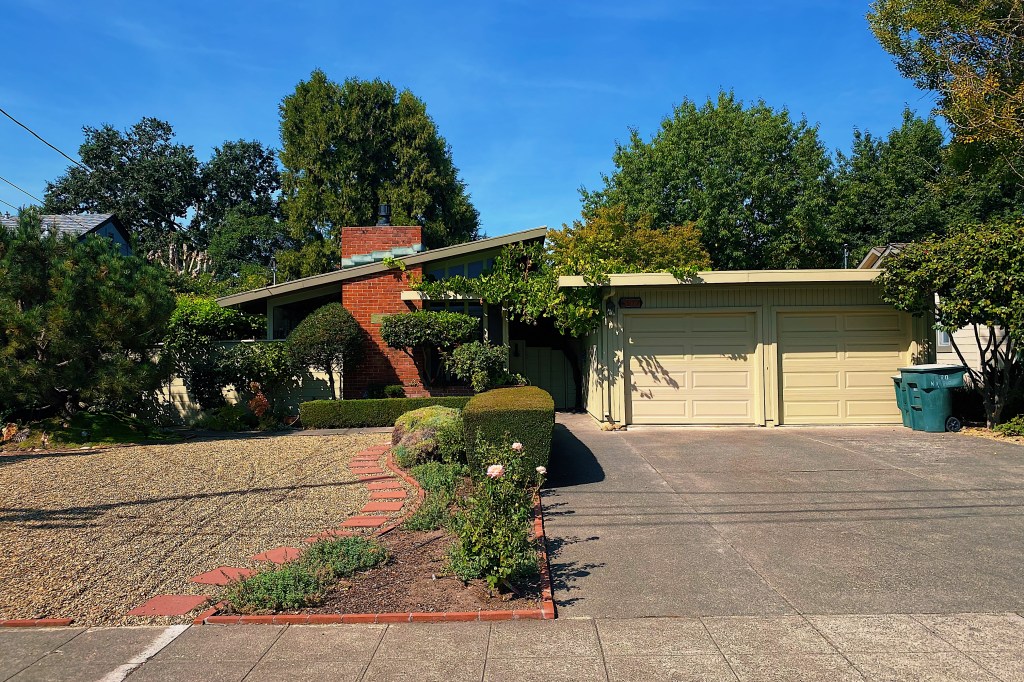
And this mid-century modern home.
We stopped by the original Williams Sonoma store, started in the 1950s by Chuck Williams. Now Williams Sonoma is a massive kitchenware retail chain with over 600 stores nationwide.
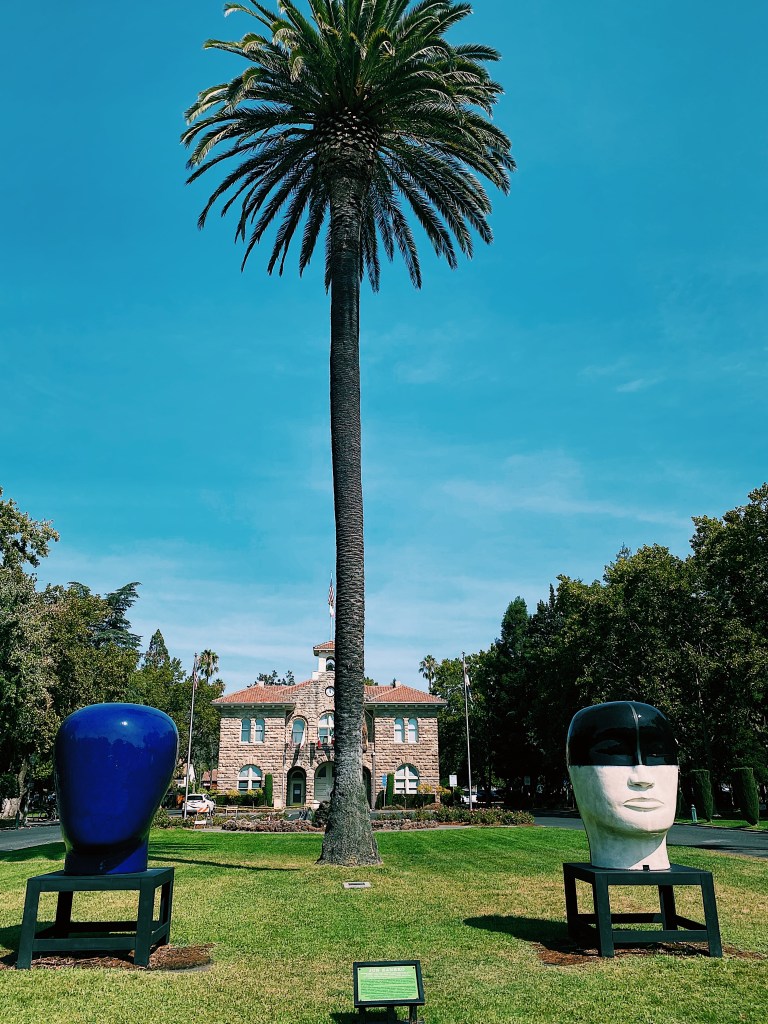
The town surrounds a beautiful and large town square with the city hall at its center.
The hall is guarded by two large untitled heads, sculpted by Jun Kaneko, a Japanese ceramic artist who lives in Nebraska.
There is something comforting about a park that is confined on all four sides by traditional buildings. With its shady trees and ponds, it was definitely an inviting space.
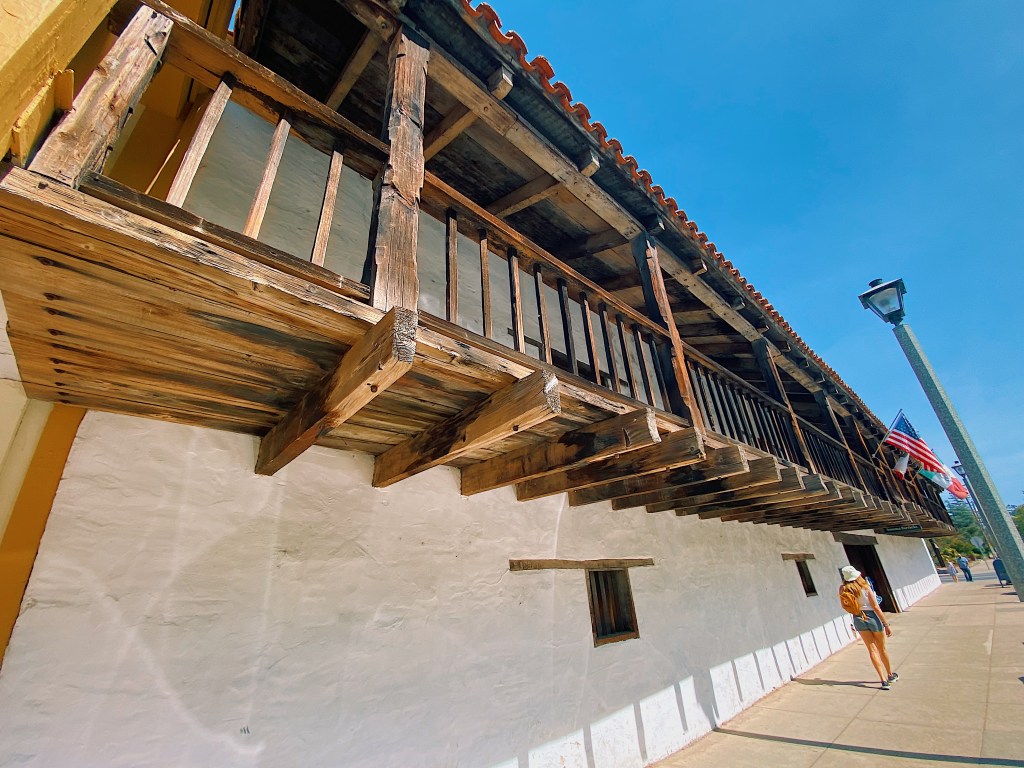
On one side of the square, there were various historic buildings.
Toscano HotelToscano KitchenServants QuartersToscano HotelBarracksMission of San Francisco Solano
Unlike many visitors to the Napa and Sonoma valleys, neither of us are wine lovers. But we still had a great time exploring the two valleys.
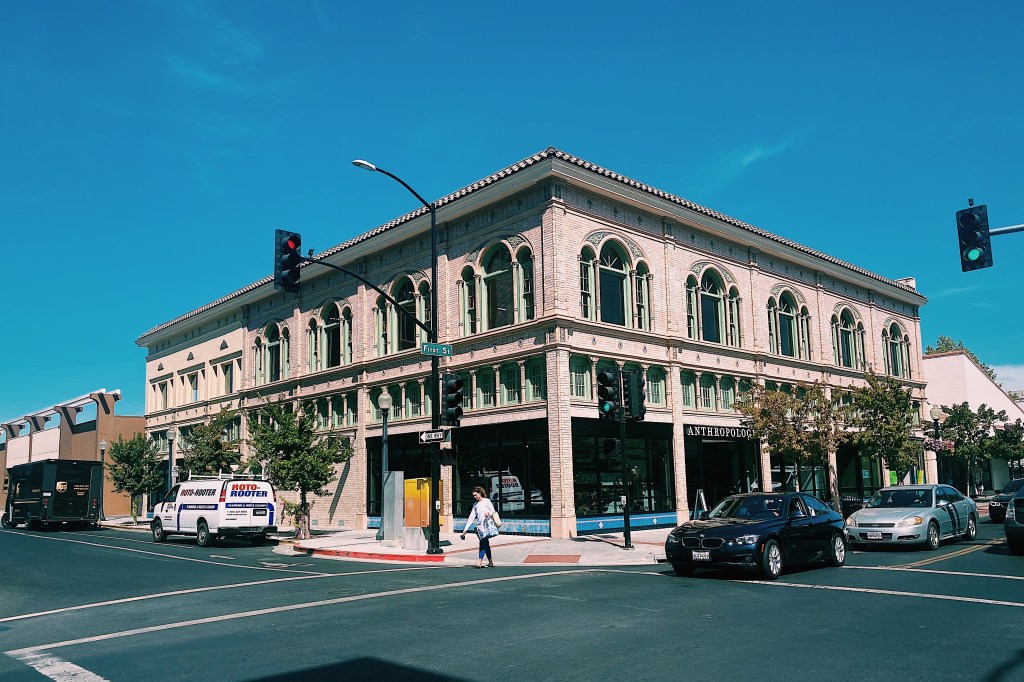
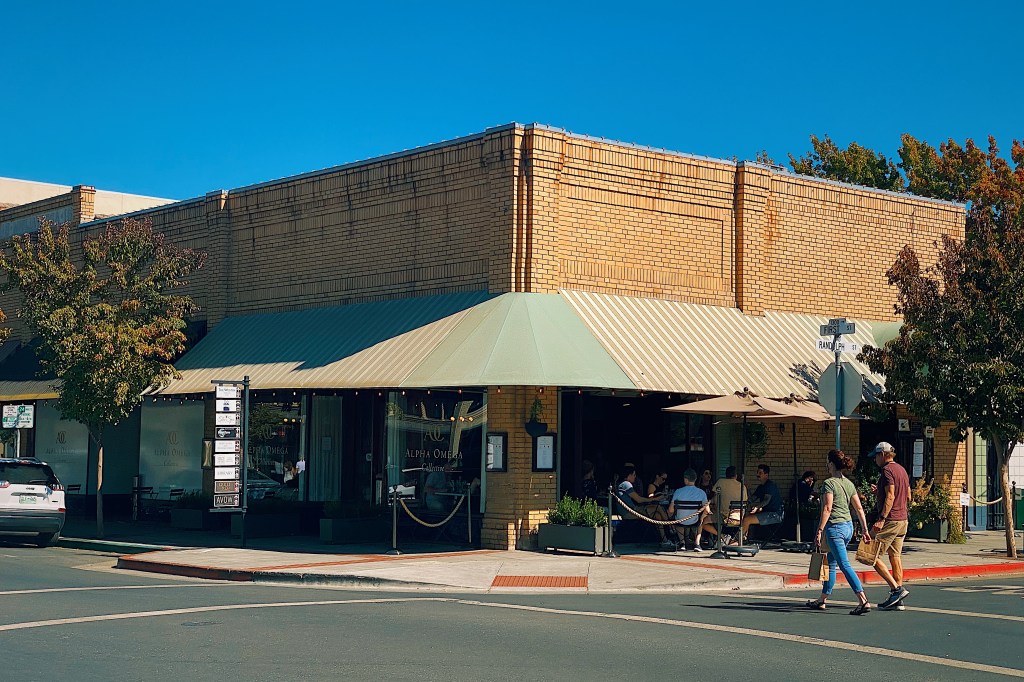
We were staying in Sonoma but made the short drive to nearby Napa to have a look around. There was a devastating earthquake in Napa in 2014 and many of the old buidings were destroyed and damaged beyond repair. As a result, downtown Napa is less charming than Sonoma with a newer more commercial feel. However, some of the older buildings have survived.
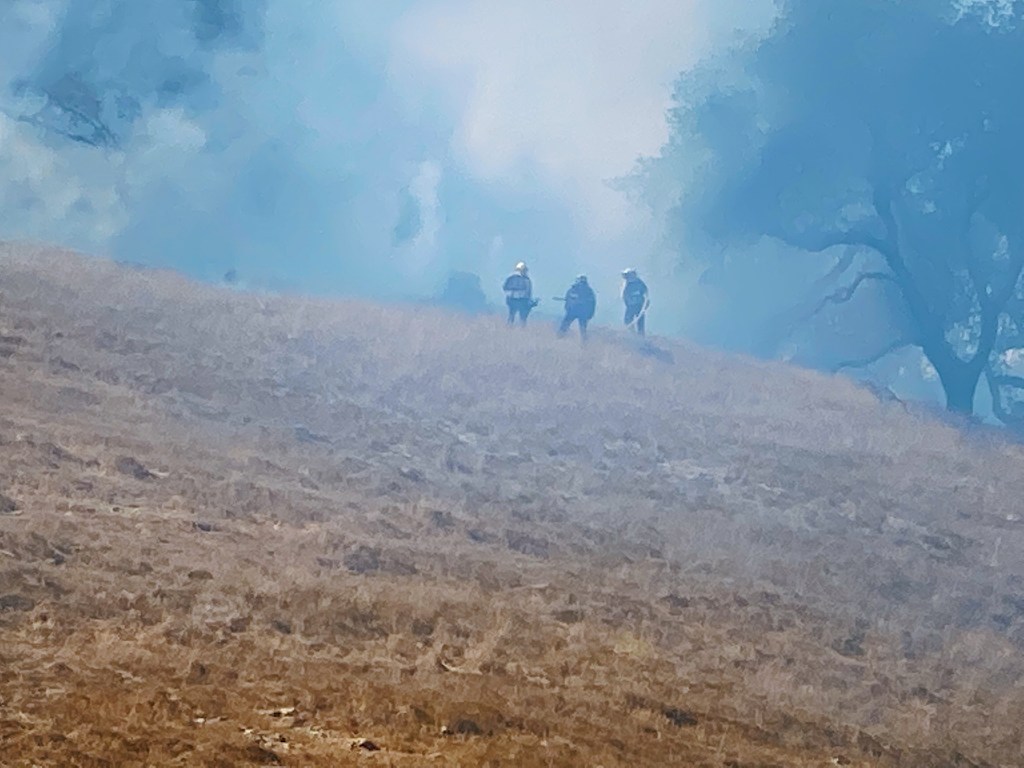
2021 is shaping up potentially to be one of driest years on record for California and it shows. The whole area is devastatingly dry and it’s easy to see why fires are such a problem. We saw these dangers first hand on our drive back from Napa to Sonoma. Only three hours earlier we had passed over the same road and everything was quiet and peaceful. However, in that short period of time, a fire had started and on our return to Sonoma we found ourselves driving directly toward a massive tower of smoke.
Fire engines and trucks carrying earthmoving machinery were converging on the fire from all directions. By the time we passed we could see firefighters trying to contain the fire. With the wind continuing to fuel the blaze it was hard to see how they could succeed. They did ultimately contain the fire, but only after it had consumed about 120 acres of vegetation. It was a terrifying reminder of how disaster is just a spark away in this tinder dry region.
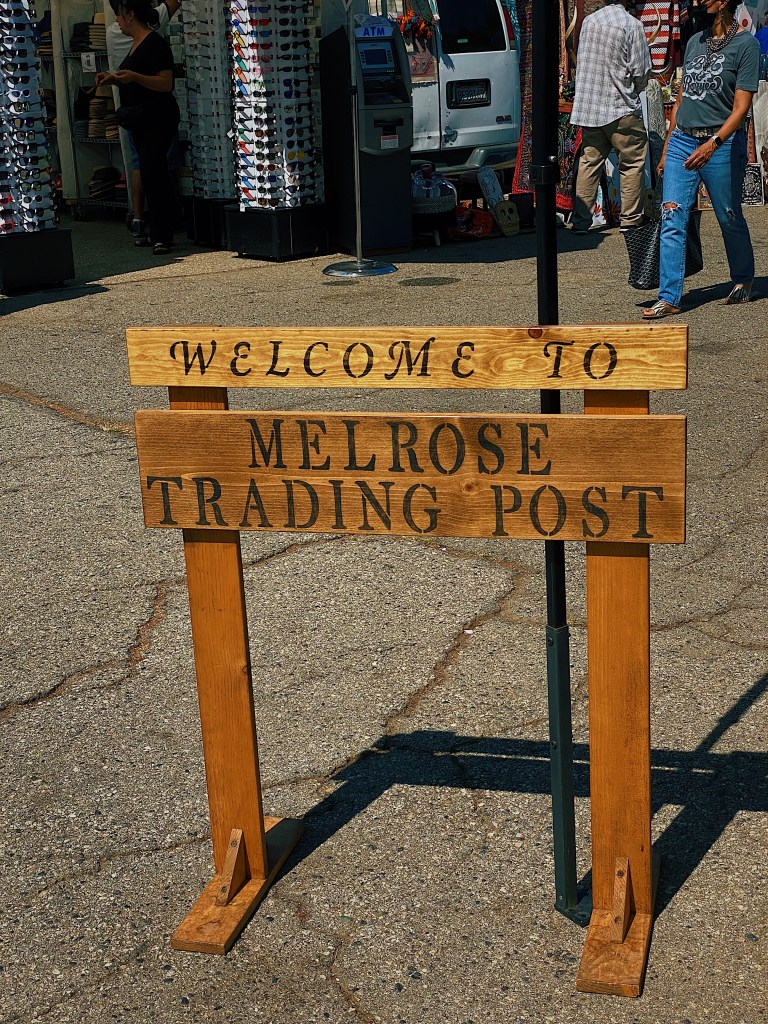
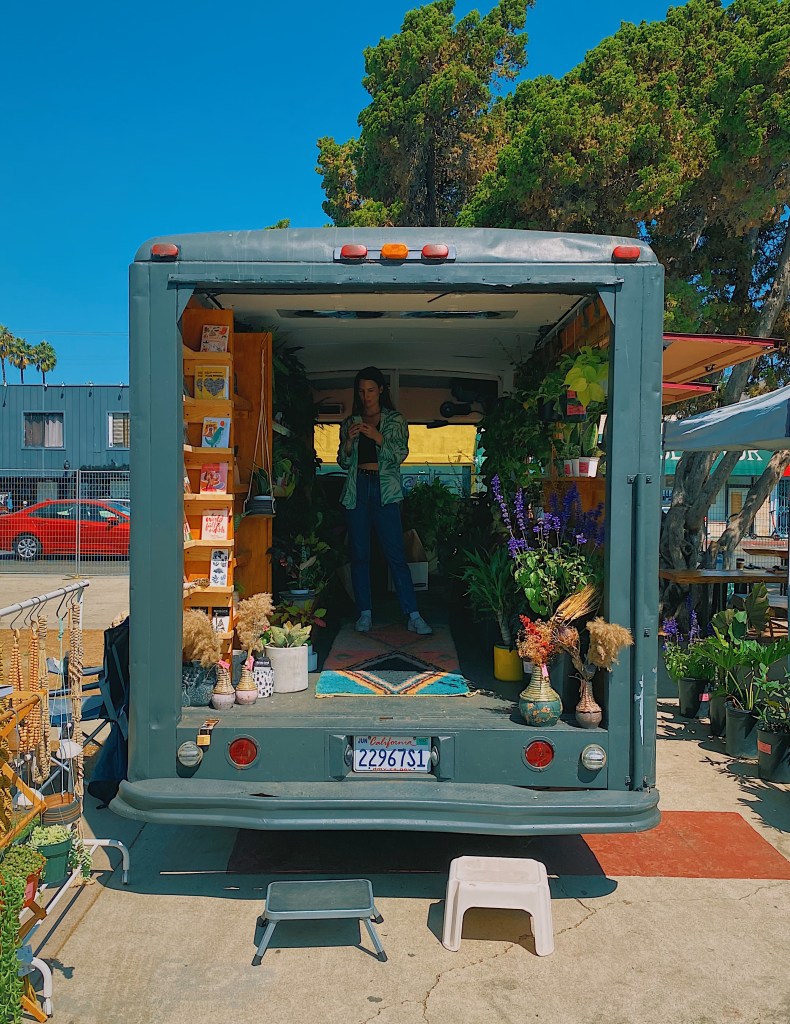
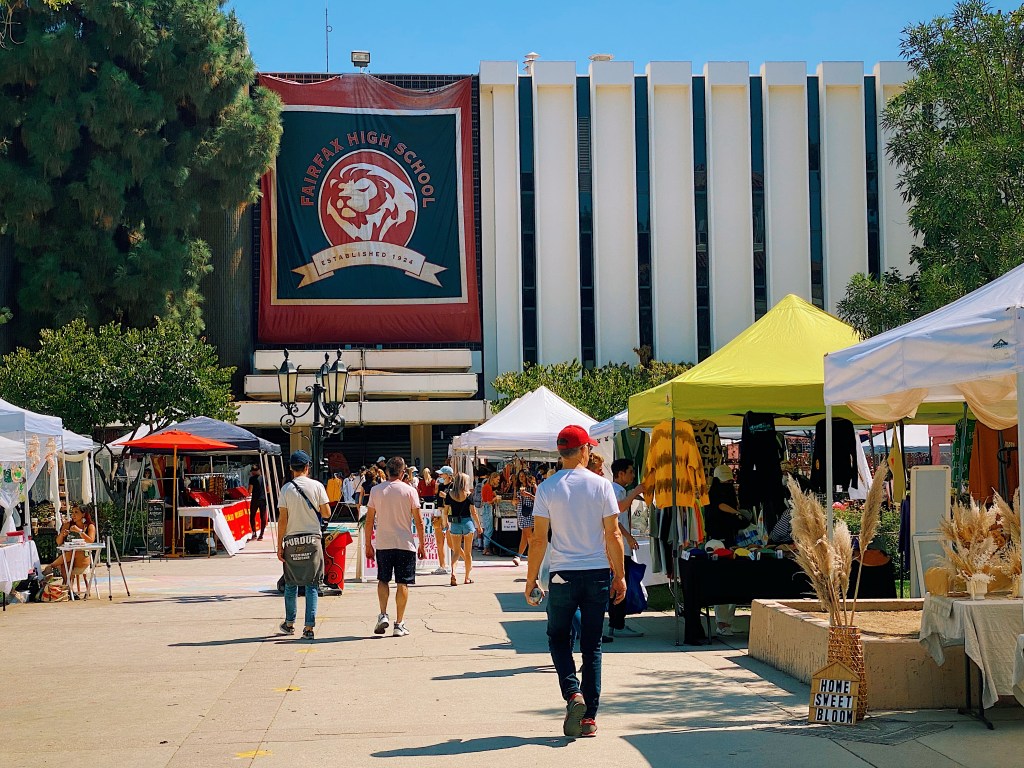
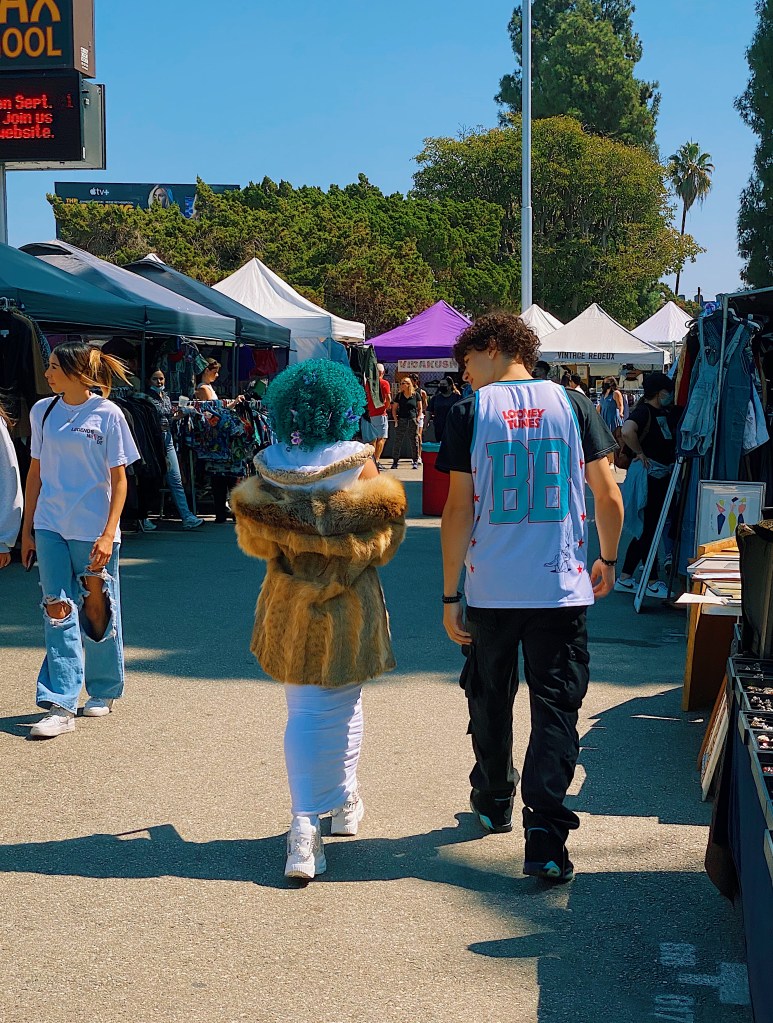
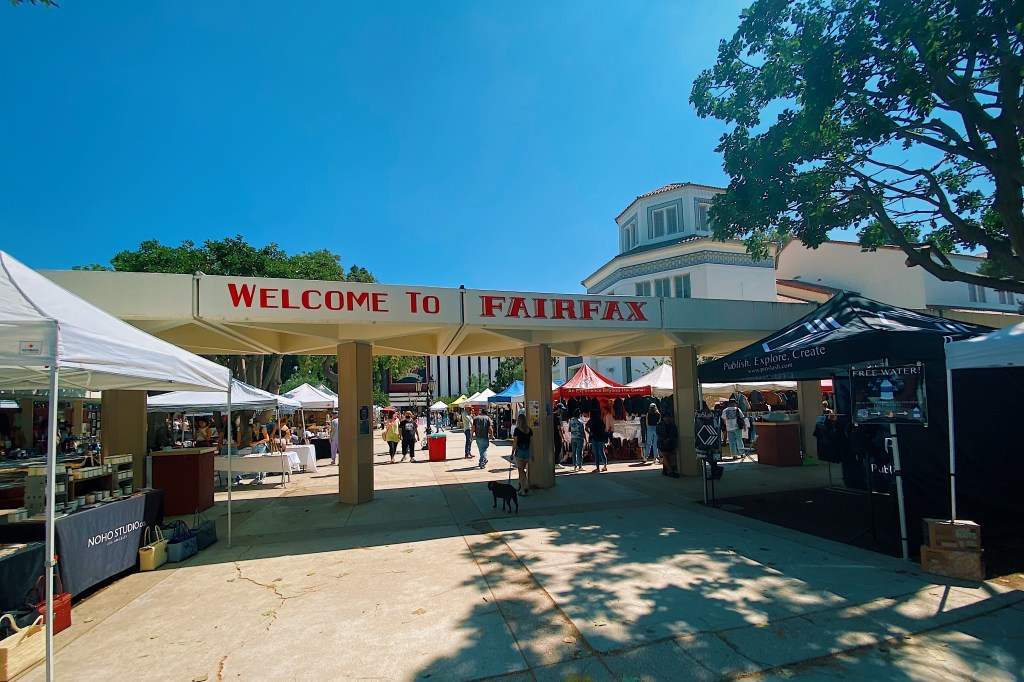
The Melrose Trading Post is LA’s favorite flea market. Held every Sunday on the grounds of Fairfax High School, it is one of the largest markets we have visited, selling everything from jewelry to furniture. Mostly, however, it is a prime spot to pick up vintage clothing, attracting large numbers of teens and hipsters checking out the different vendors.
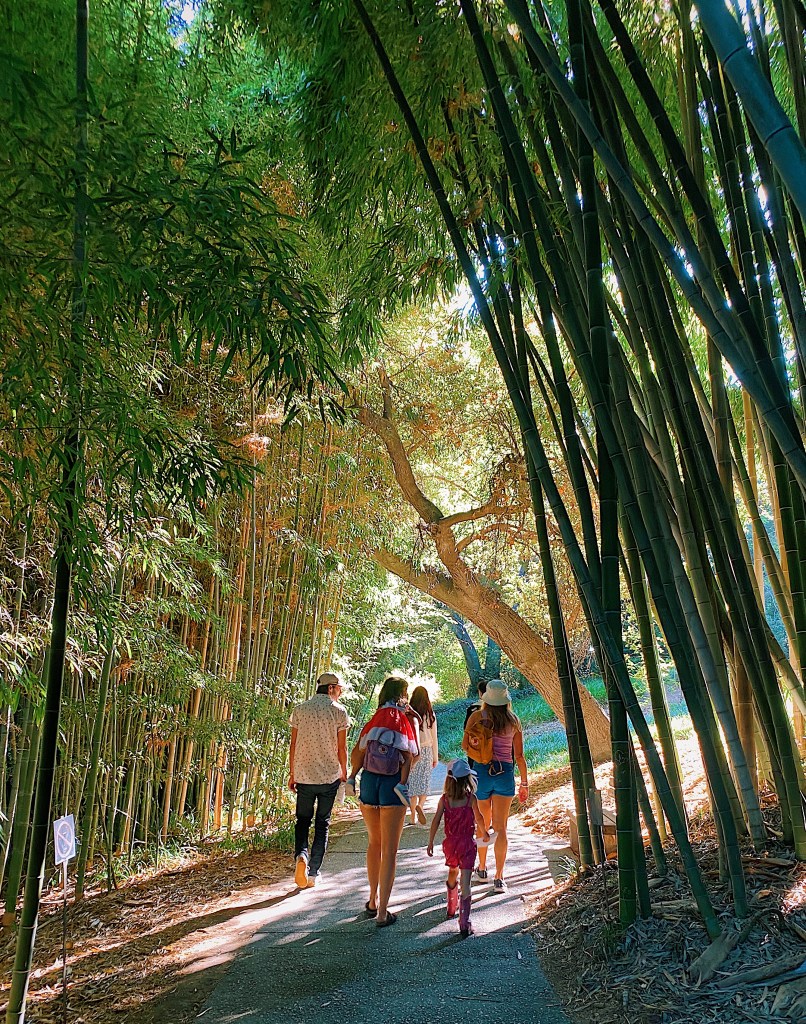
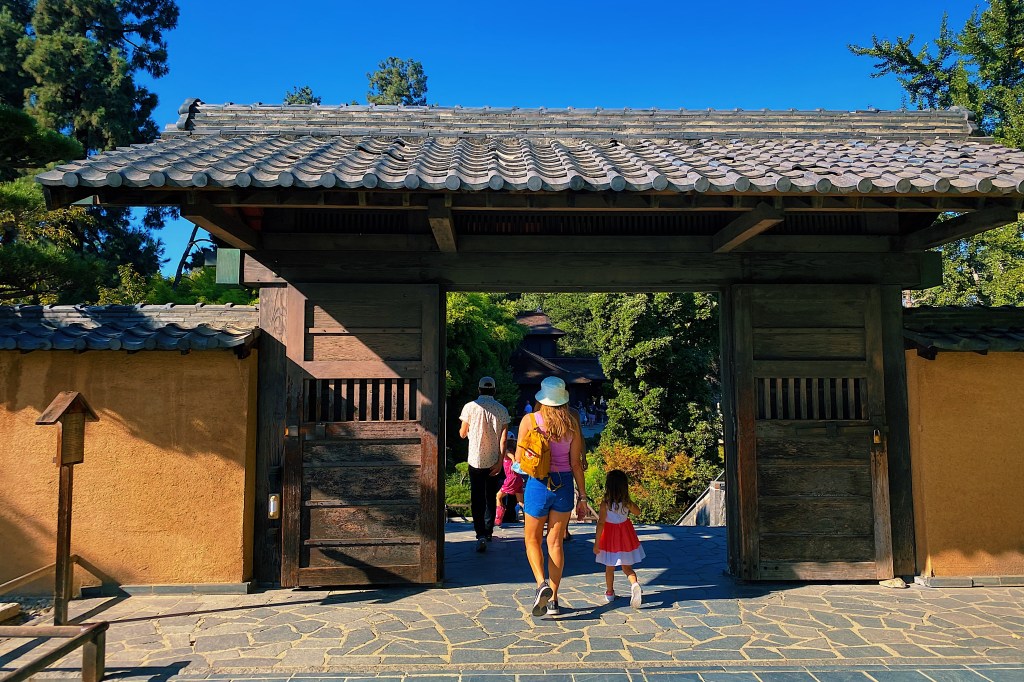
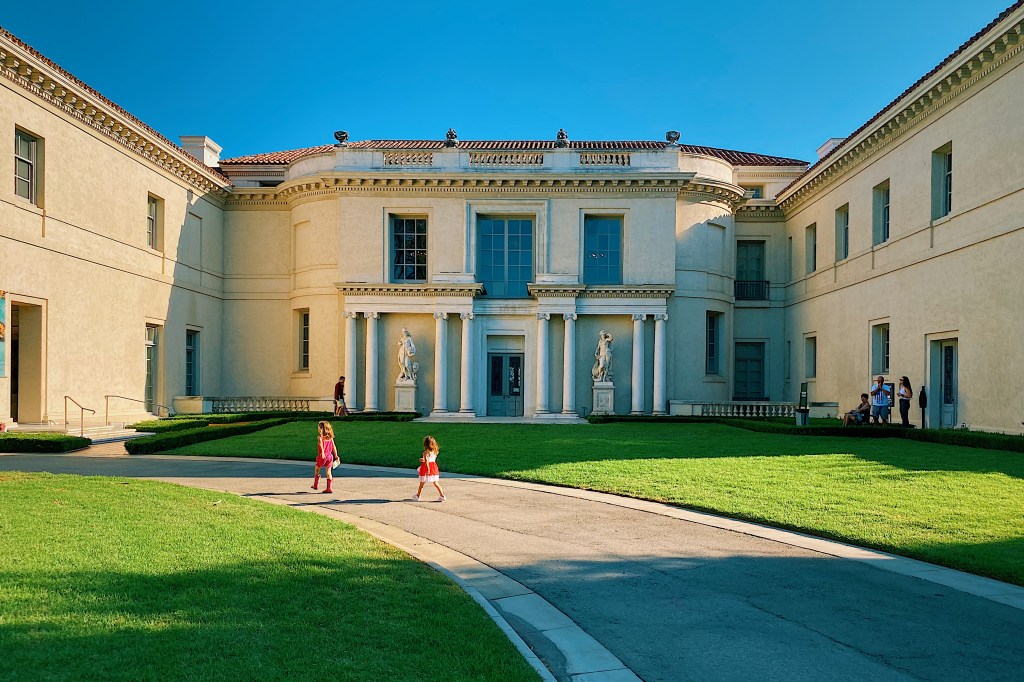
The Huntington is a beautiful place to spend a lazy day. Established in 1919 by Henry and Arabella Huntington, it contains a library, art museum and approximately 120 acres of gardens. Unfortunately, we didn’t have time to visit the library or museum this time around but we have visited them in the past. The Library has an incredible collection of rare manuscripts. Highlights include: one of only eleven vellum copies of the Gutenberg Bible known t o exist; manuscripts by George Washington, Thomas Jefferson, Benjamin Franklin and Abraham Lincoln; Isaac Newton’s personal copy of his Philosophiae Naturalis Principia Mathematica with annotations in his own hand; and the first seven drafts of Henry David Thoreau’s Walden. The art collection includes works by many famous Europeans and Americans, including most famously, The Blue Boy by Thomas Gainsborough.
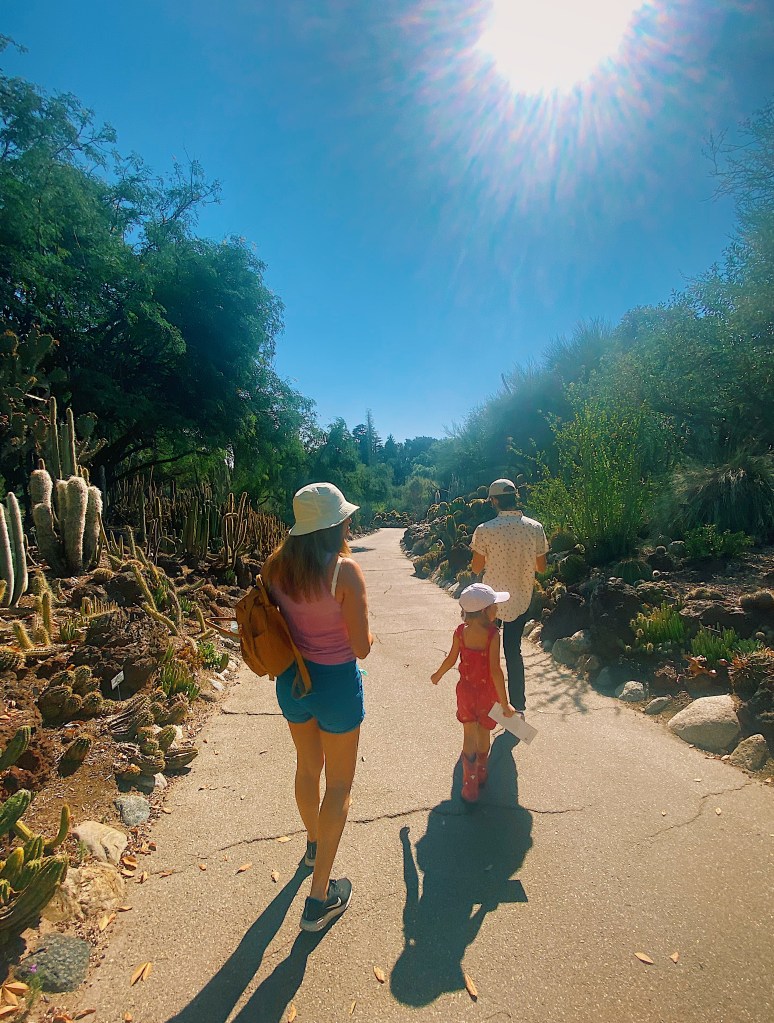
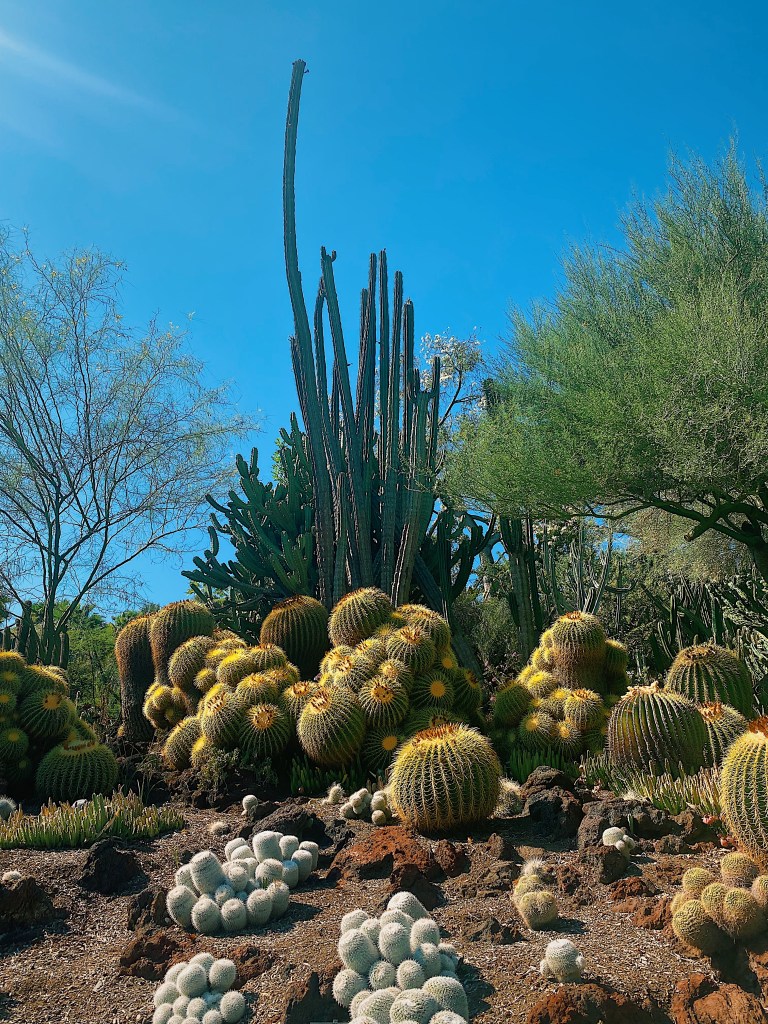
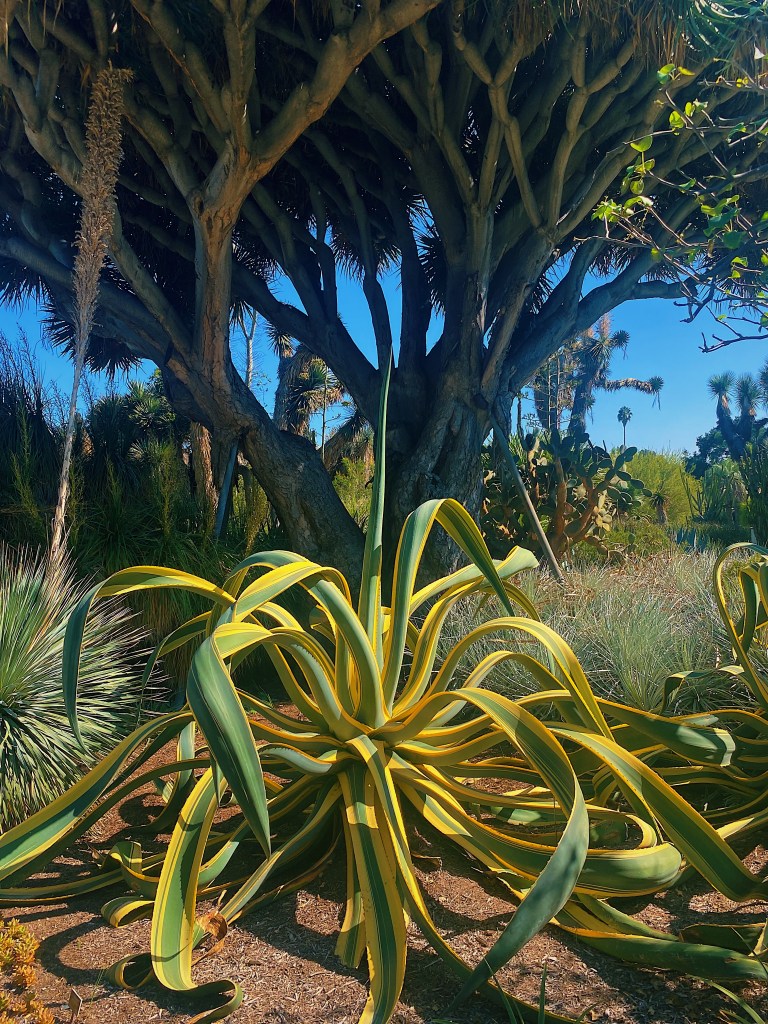
We started our stroll through the grounds by exploring the extensive Desert Garden, with its incredible collection of cacti and succulents. Then it was a stop at the Koi pond before walking through the Australian, Chinese, Japanese and Rose gardens. Here are some photos.
Today, we visited the Los Angeles County Museum of Art. LACMA, as it is more commonly known, is the largest art gallery on the West Coast. The museum complex was originally designed by William Pereira in 1965 with six separate pavilions. Recently, four of the original buildings have been, controversially, demolished to make way for a new $750 million structure, designed by the Swiss architect Peter Zumthor.
We started our visit, like many do, at the instagram favorite, Urban Light, by Chris Burden. The 2008 installation consists of restored street lamps from the 1920s and 1930s. Most of them once lit the streets of Southern California. Tragically, Burden died of melanoma in 2015 at 69 years old.
The different museum buildings are connected by covered walkways, held up by bright red steel girders.
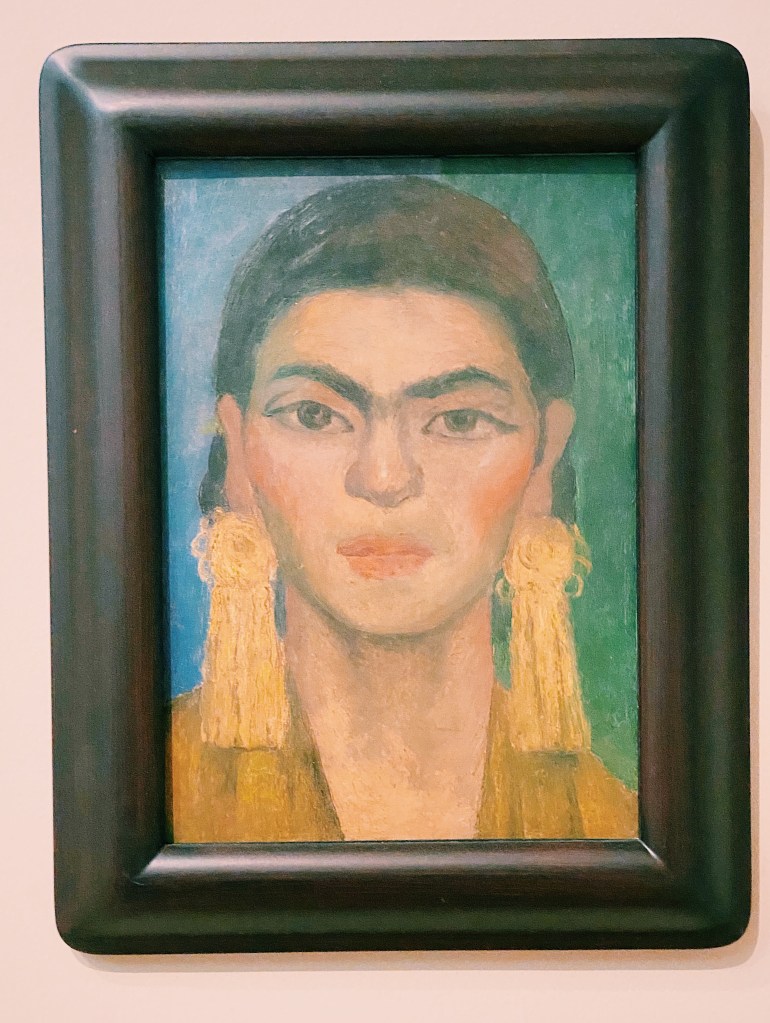
The museum has an impressive permanent collection, including a whole room of Picassos. One of our favorites was this small Diego Rivera portrait of his lover Frida Kahlo.
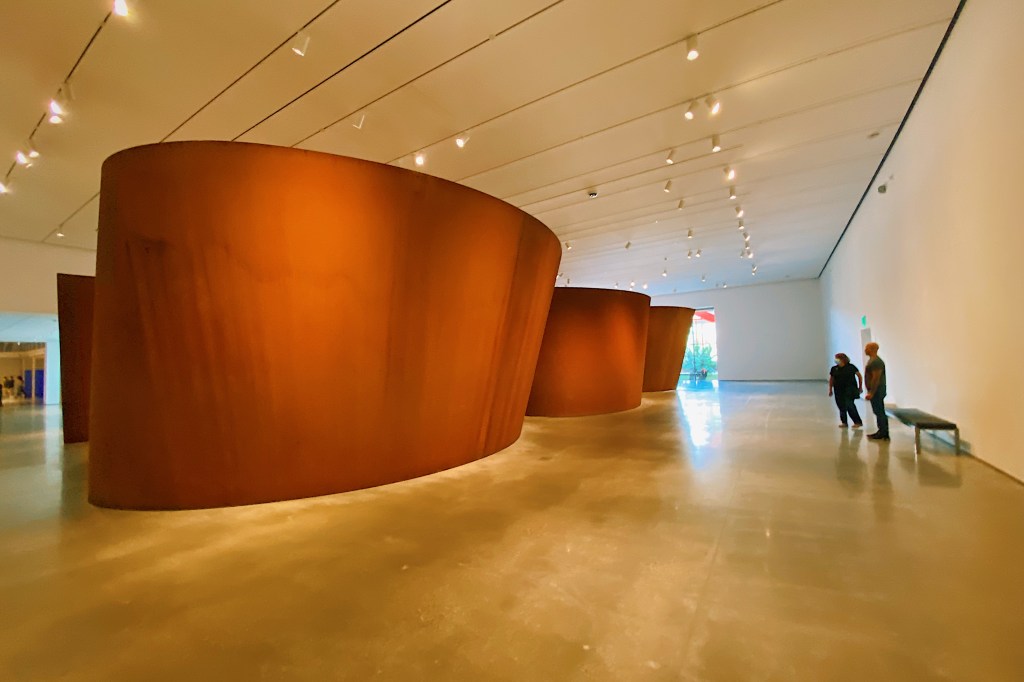
There is also a massive gallery containing Richard Serra’s Band. At roughly twelve feet high and more than seventy feet long, the sculpture is vast even by Serra’s monumental standard.
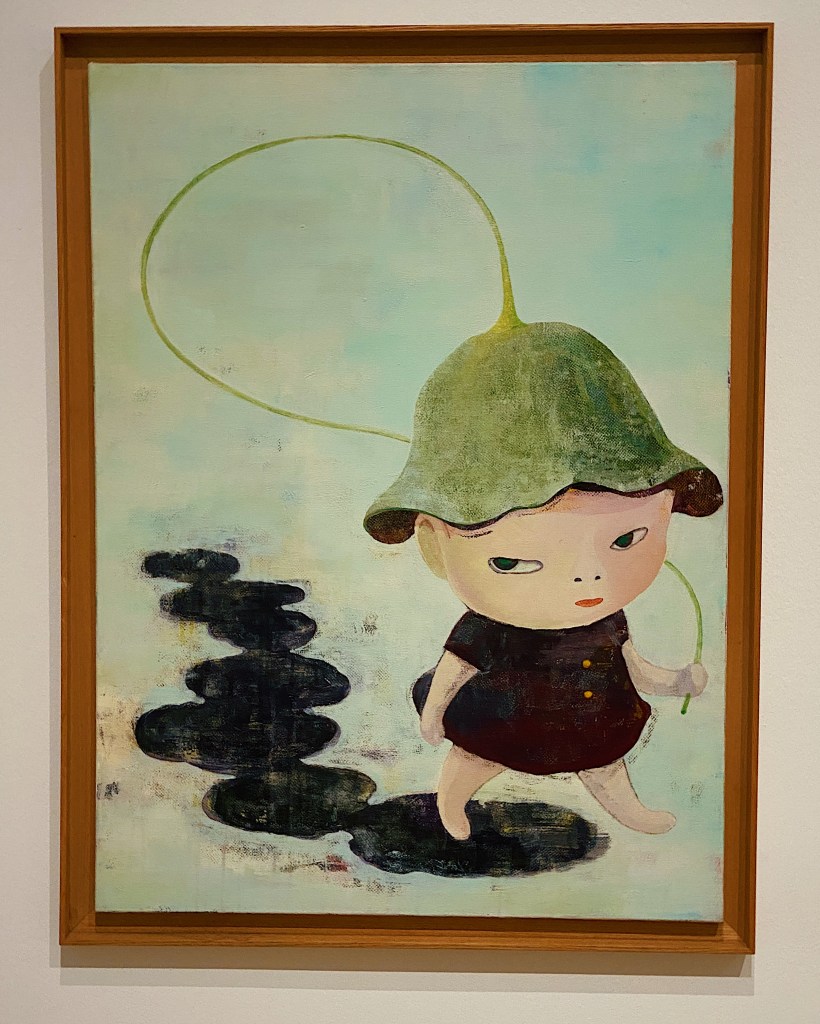
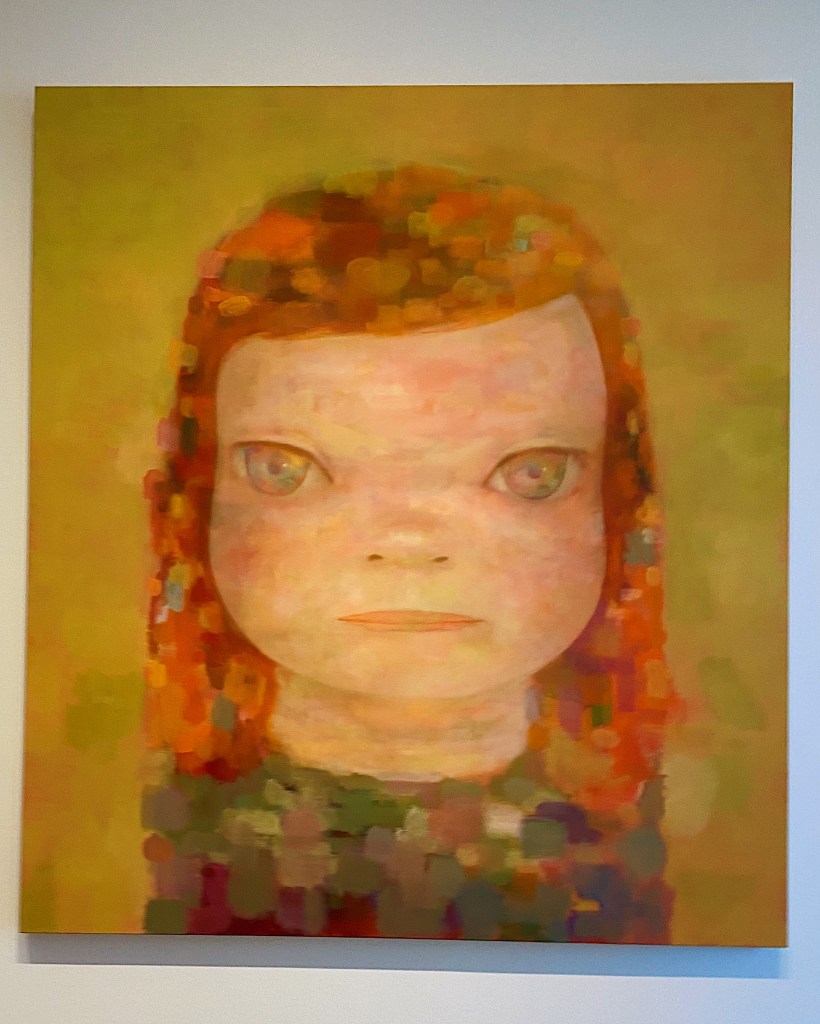
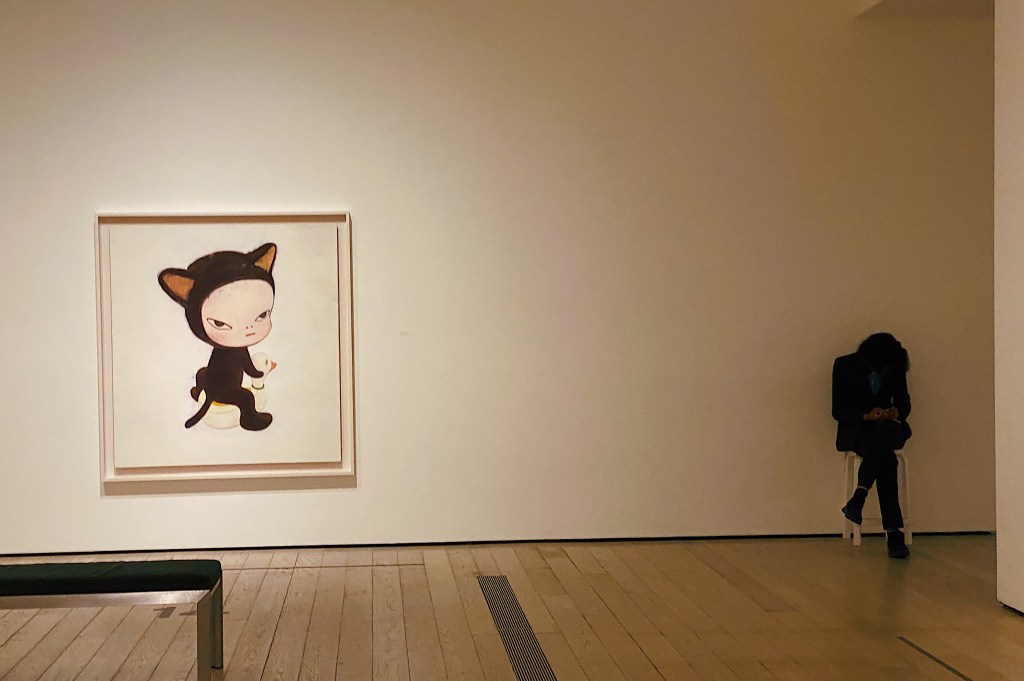
There was also a whole floor devoted to a retrospective of the work of Japanese artist Yoshitomo Nara. According to the museum’s biographical blurb, he is one of Japan’s most beloved artists. Frankly, we found the repeated paintings of young girls with piercing eyes kind of strange.
There was also an installation by Korean artist Do Ho Suh, who makes full-size fabric reconstructions of places he has lived. This particular installation was of an apartment that he lived in at 348 West 22nd Street in New York.
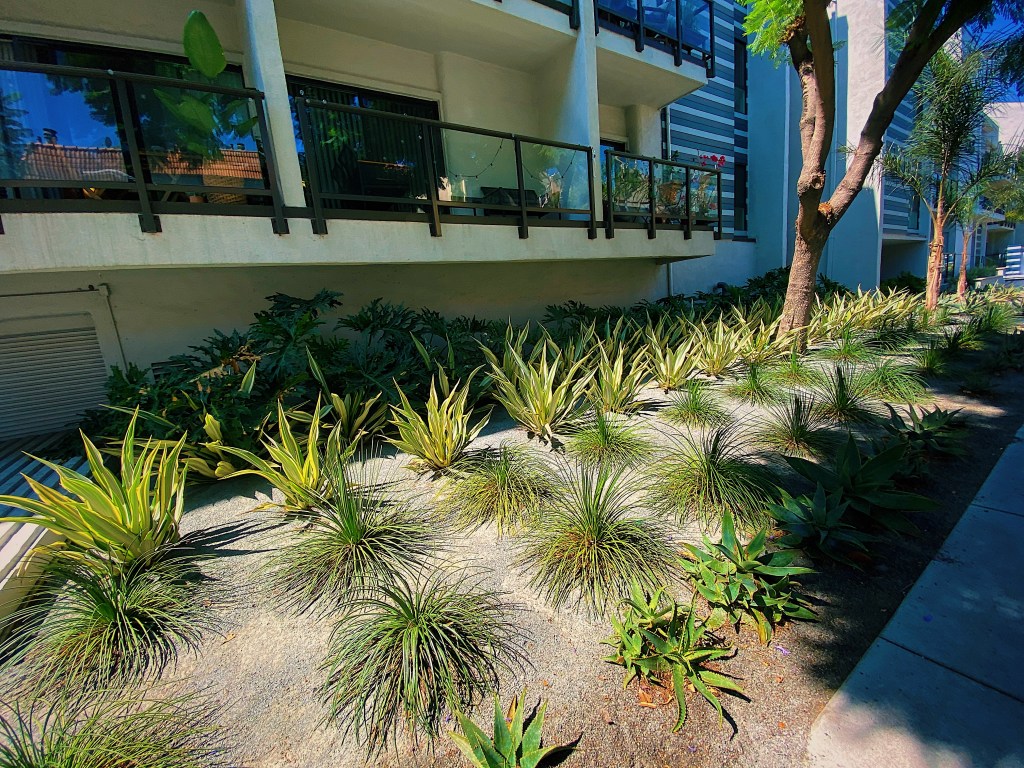
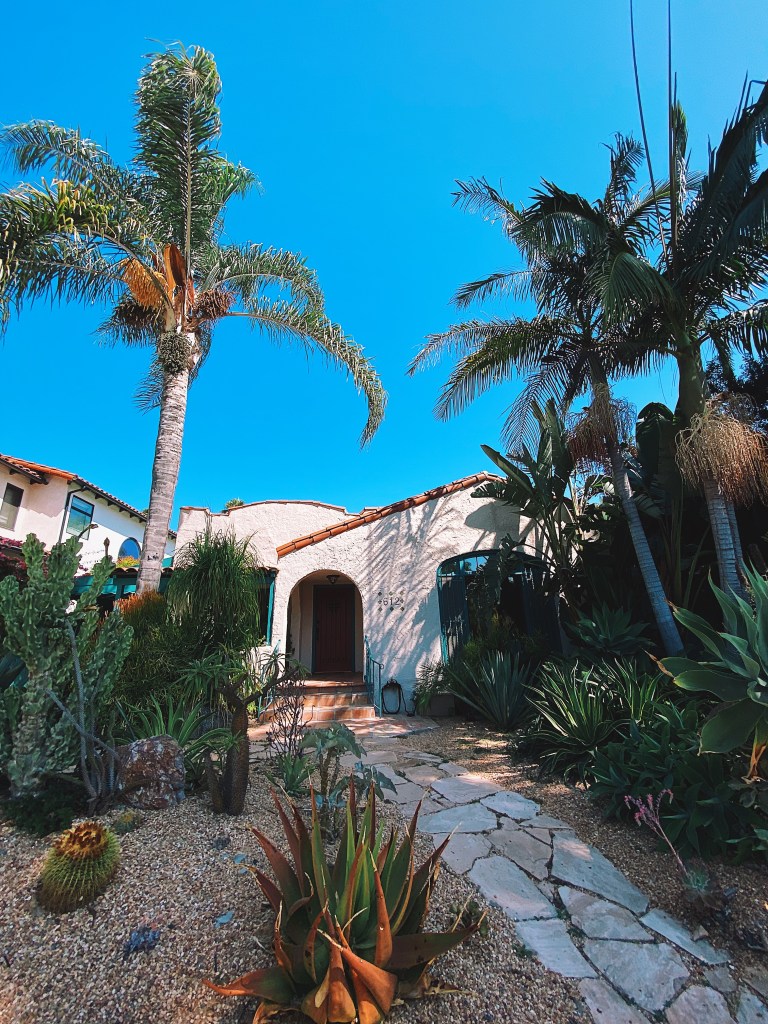
We continued to explore West Hollywood and neighboring Fairfax and La Brea on another sparkling day. Here in Southern California, where water is a precious commodity, many of the local residents have transformed their front lawns into desert gardens.
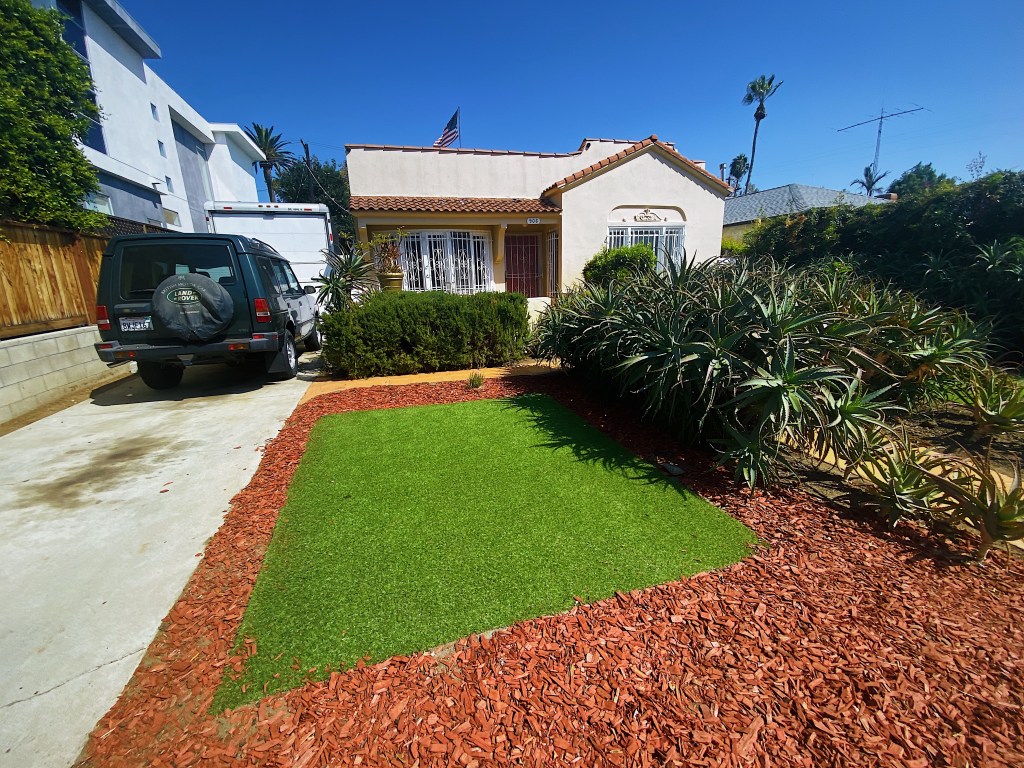
Another reasonably common option is very realistic fake grass, although this perhaps is not the best example.
This tree was spreading its roots far and wide in search of water.
We have come across relatively few deco buildings and houses. This is a rare example.
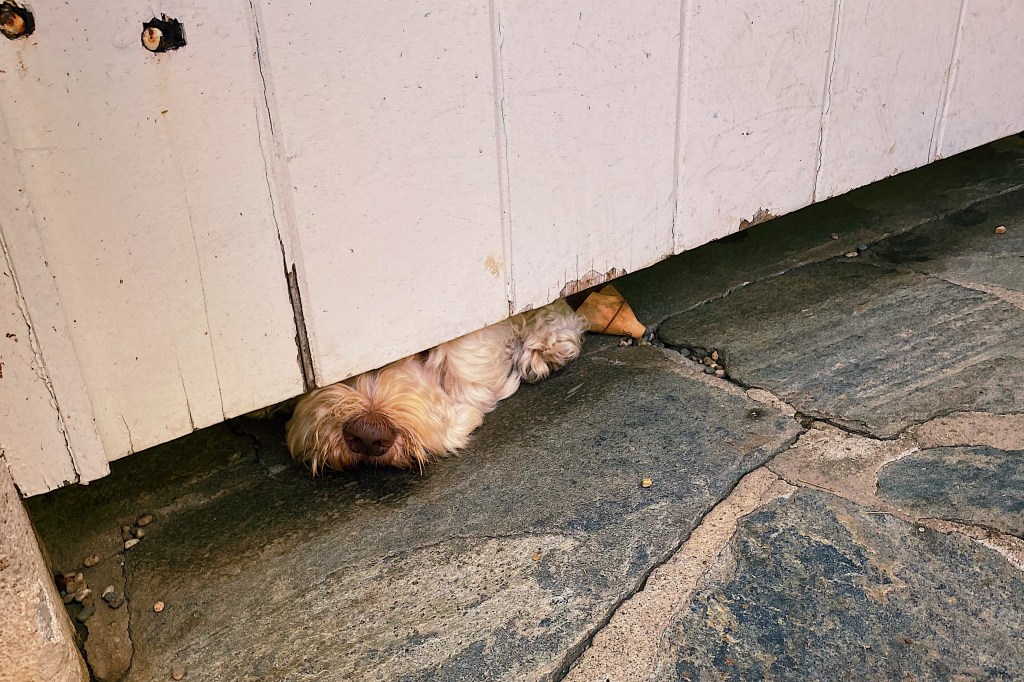
This guy was doing his best to check out the world outside his yard.
In neighborhoods where every second car appears to be a Tesla, it was surprising to come across this classic gas guzzling muscle car.
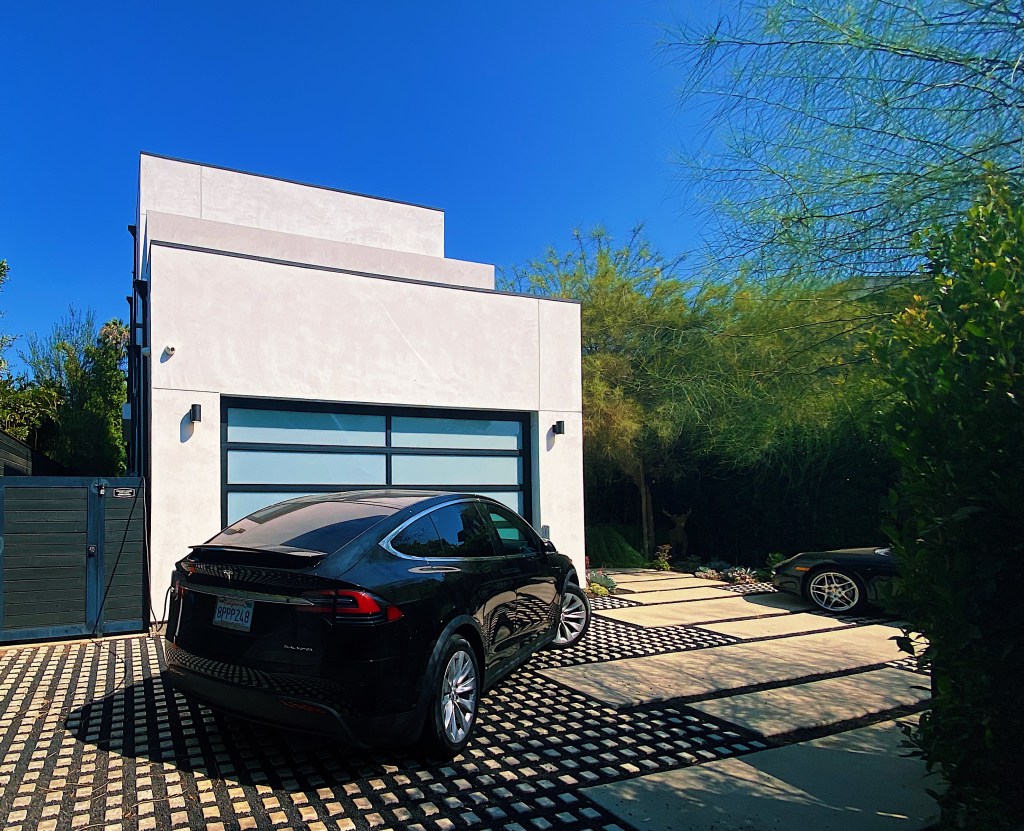
Speaking of cars, we have noticed that some residents appear to have chosen their vehicles to match their homes.
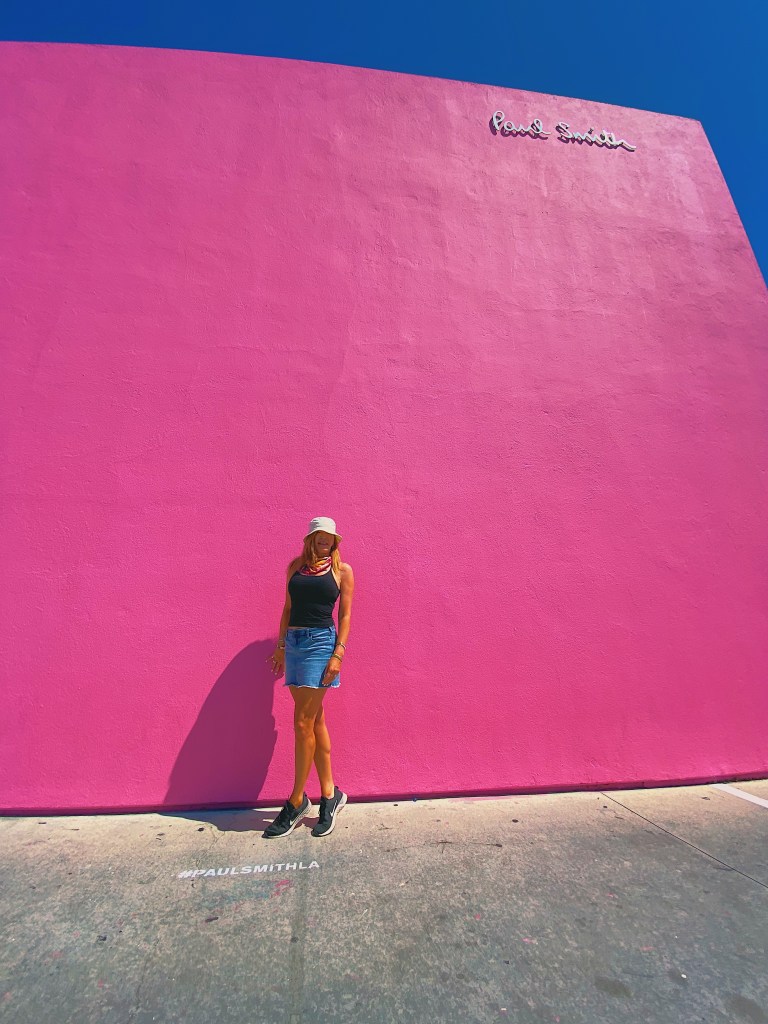
Walking along Melrose we passed by the Paul Smith clothing store. Its shocking pink wall has become a favorite instagram selfie spot. So we jumped on the bandwagon.
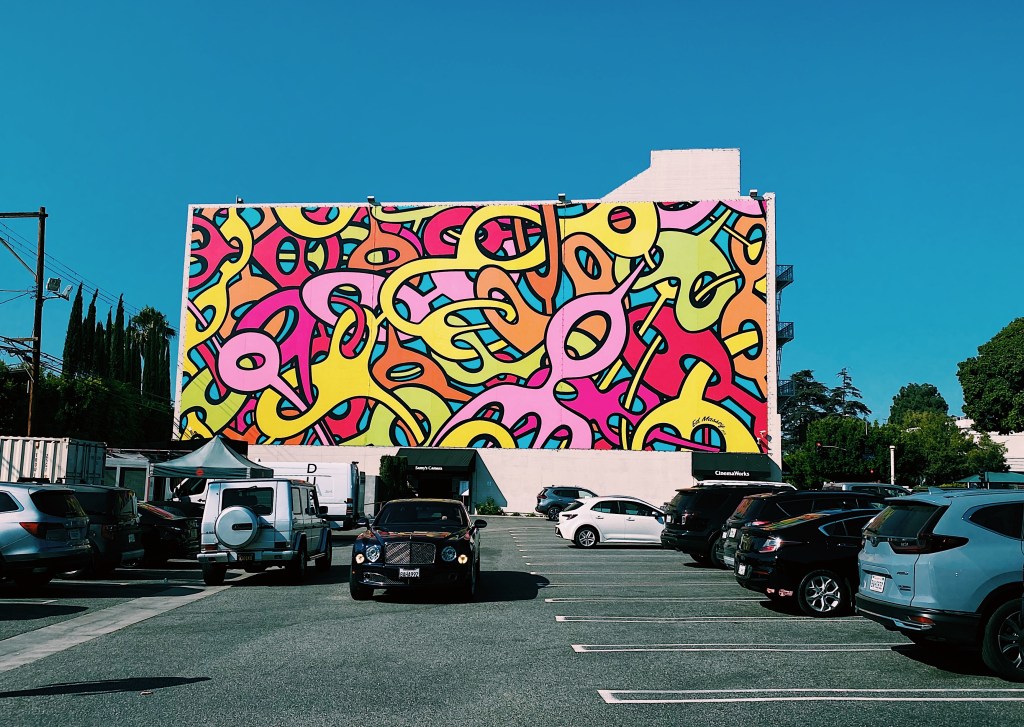
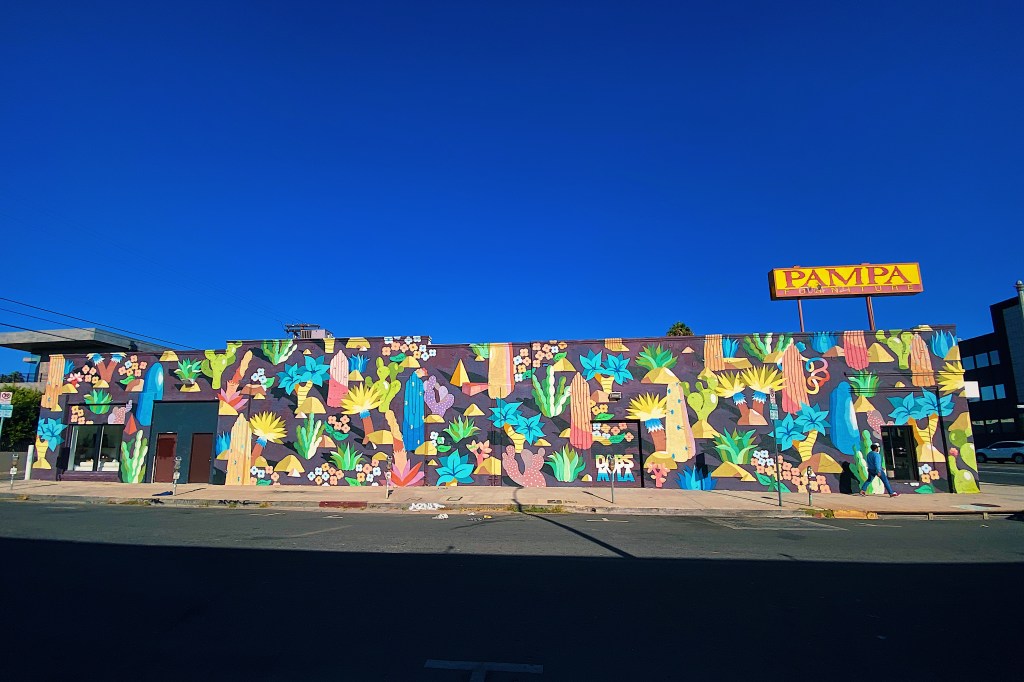
Los Angeles is indeed a city of colorful walls.
We stopped for lunch at The Original Farmers Market in La Brea. First opened in 1934, it isn’t so much a farmers market as an area of food stalls, sit-down eateries and prepared food manufacturers. It’s also a big tourist attraction.
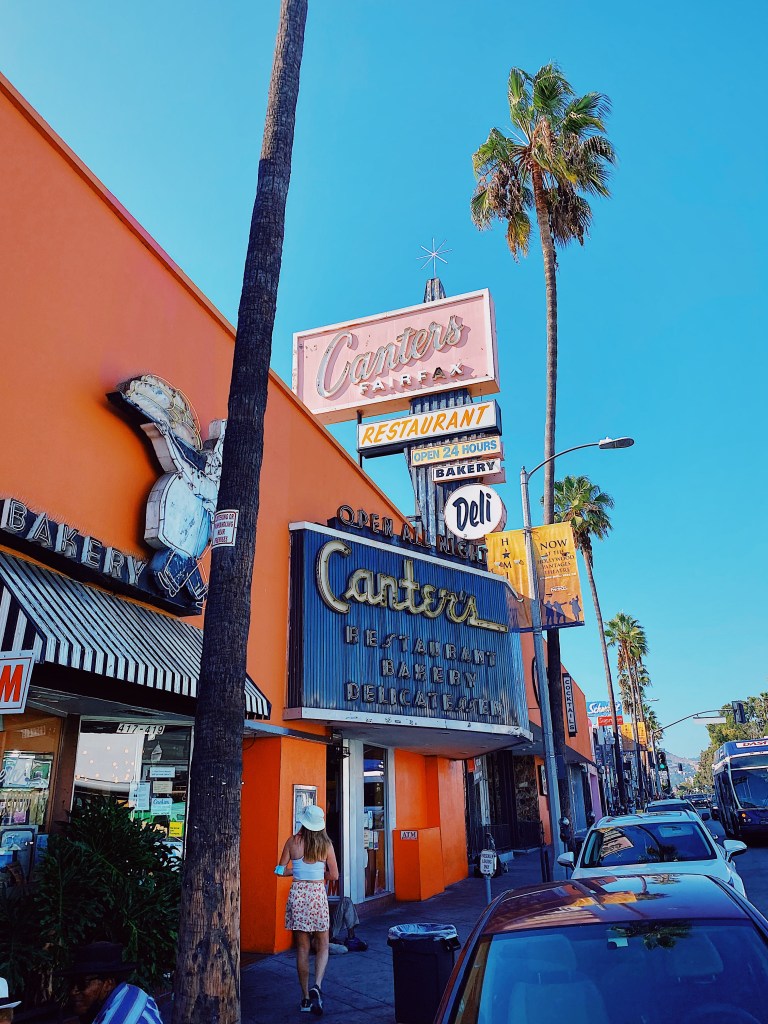
Near to the market is another iconic LA food establishment. Canters is perhaps LA’s most famous deli. Opened in 1931, it is the perfect place to satisfy your hankering for lox and bagels or matzoh ball soup.
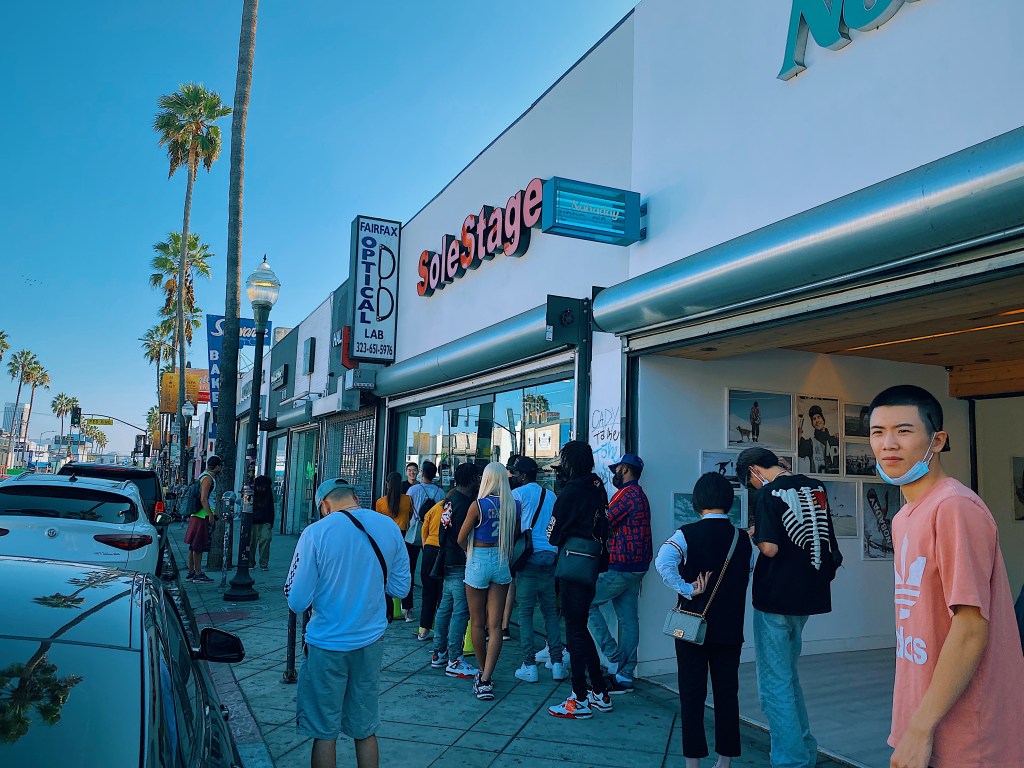
Further up Fairfax Avenue, we passed a number of streetwear retailers. If you ever need evidence of the influence of marketing, go no further than the streetwear world, where two otherwise identical oversize t-shirts can differ in price by a hundred dollars just because of the brand name on them. Case in point, there was a line outside one store. Meanwhile, its neighbors, that as far as we could tell sold pretty much identical clothing, were empty. It struck us that the streetwear industry can only thrive in the modern world, where influencers can spread the name of a favorite brand to millions of followers in real time through instagram, youtube or TikTok. In the past, that kind of reach could only have happened through expensive advertising.
\-
We liked this quirky store that appeared to be devoted almost entirely to cat lovers.
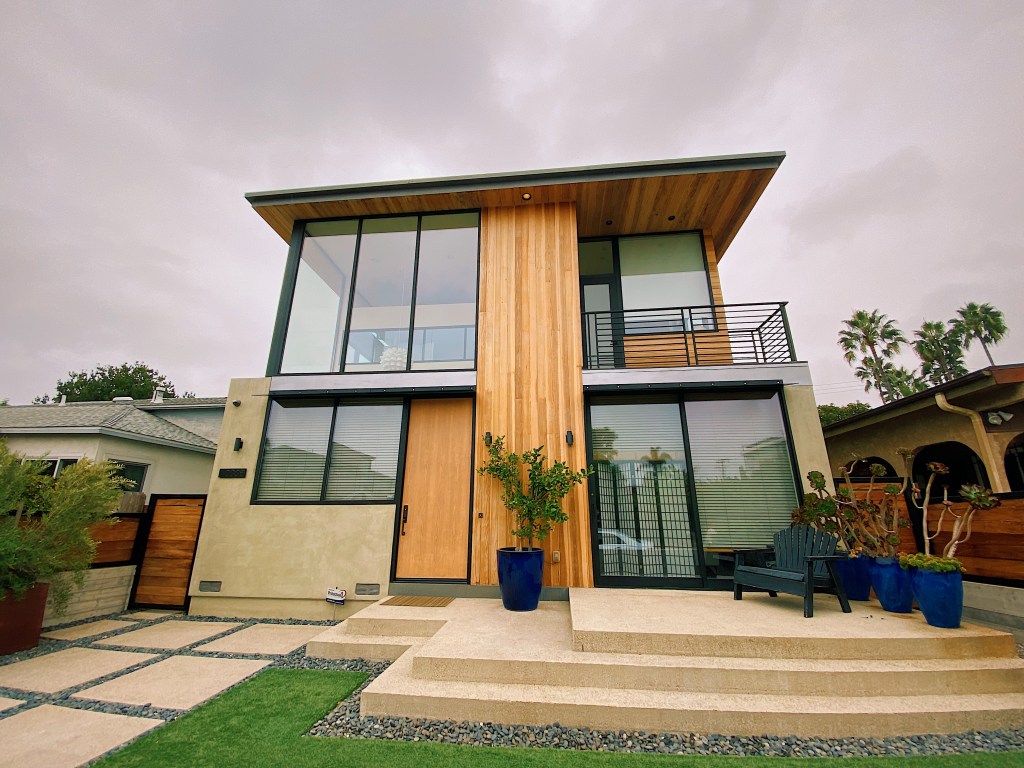
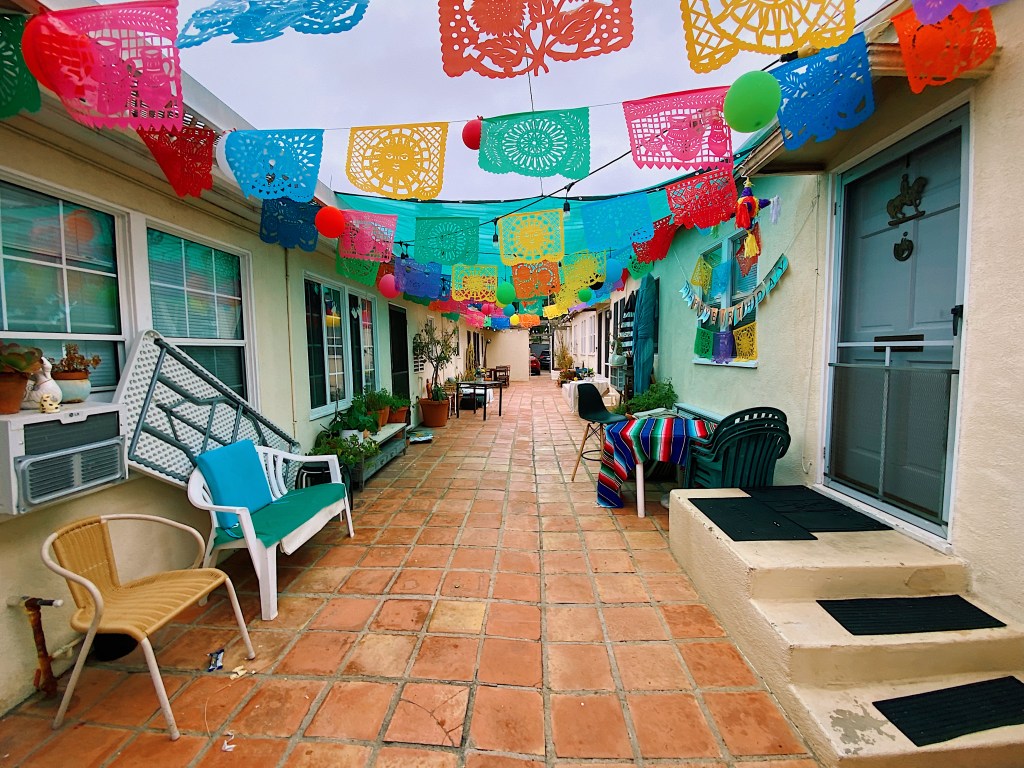
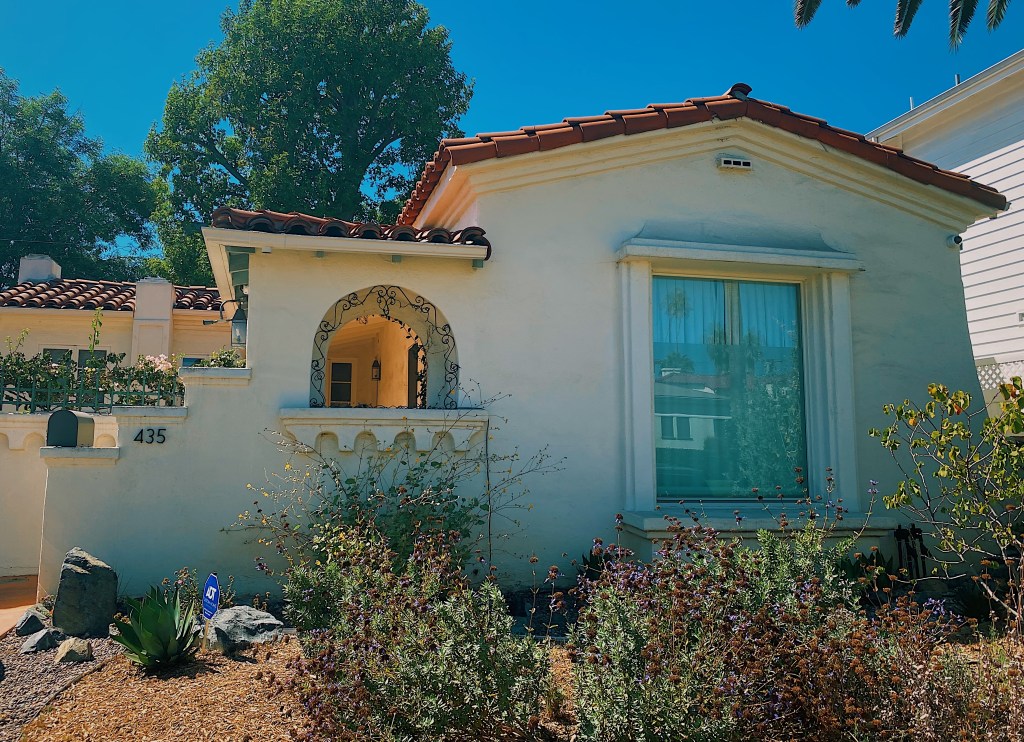
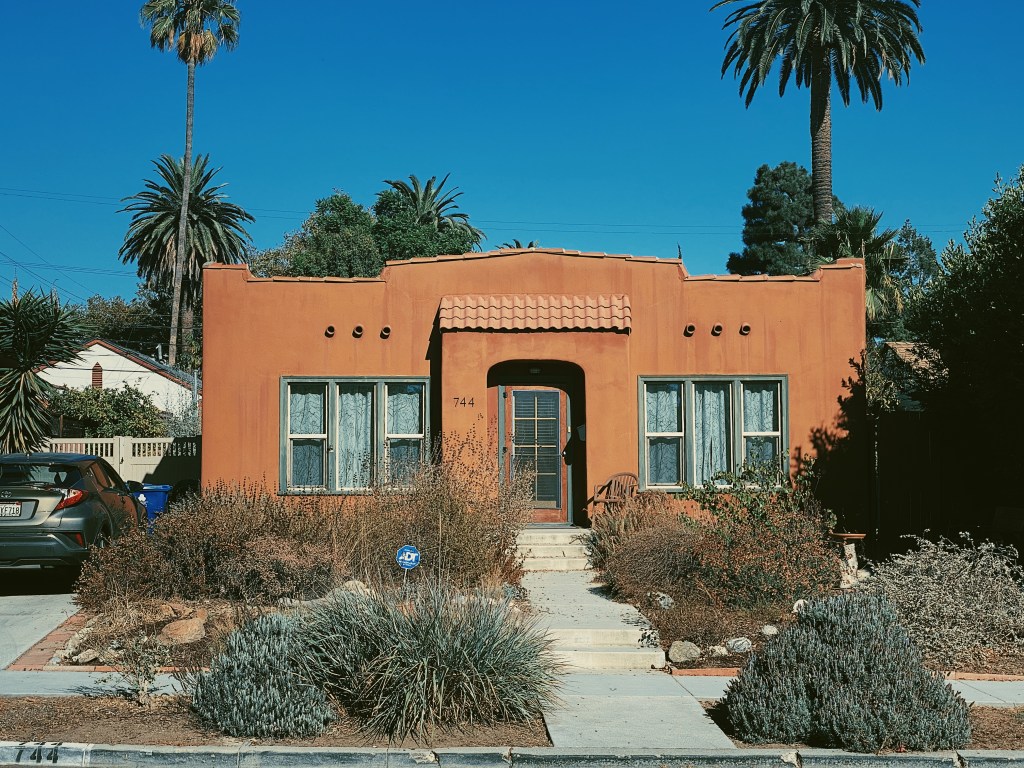
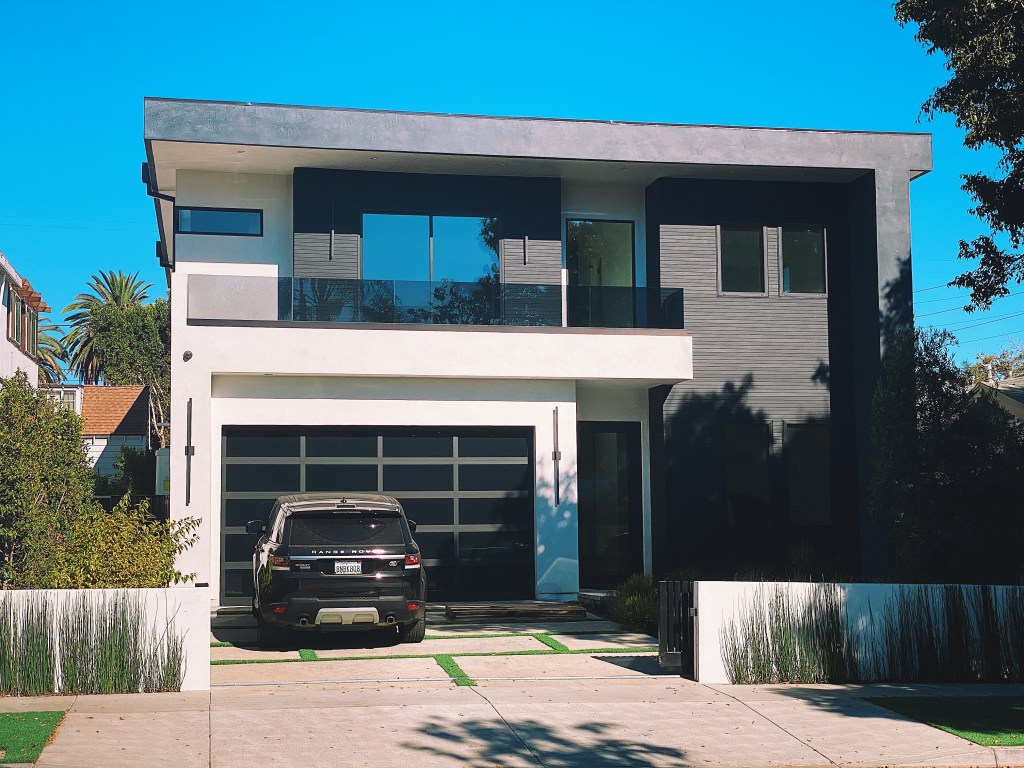
We are currently staying in an Airbnb in West Hollywood, so went out for an explore through the surrounding neighborhoods. In a way it was similar to the neighborhood we stayed at in Long Beach but without the California bungalows. Most of the homes were small Spanish style houses, although there were more than a few modern style homes thrown into the mix.
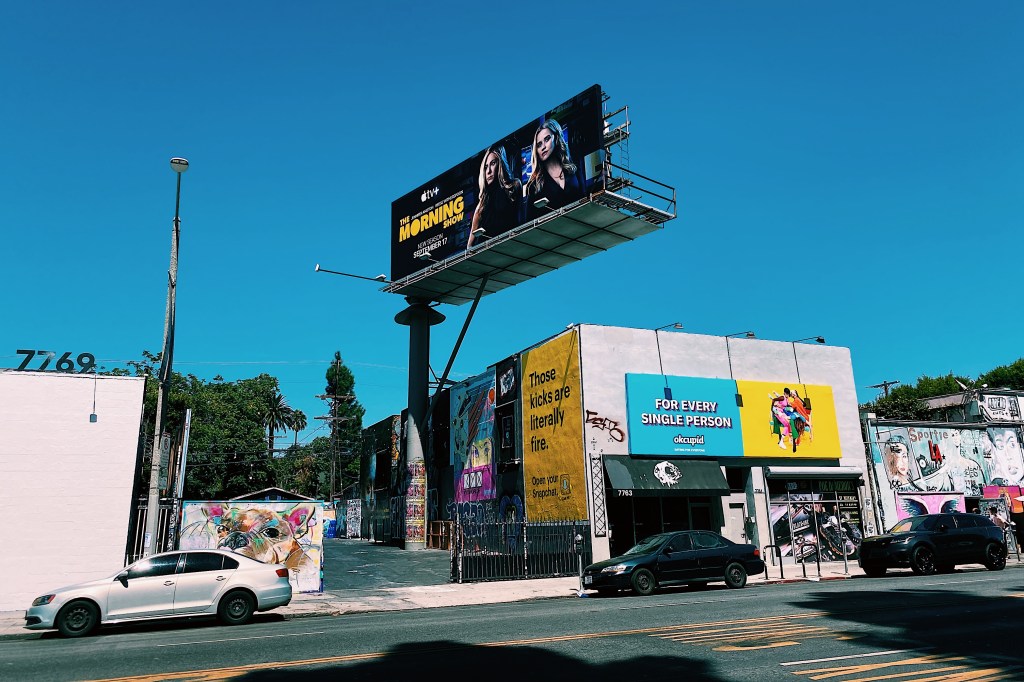
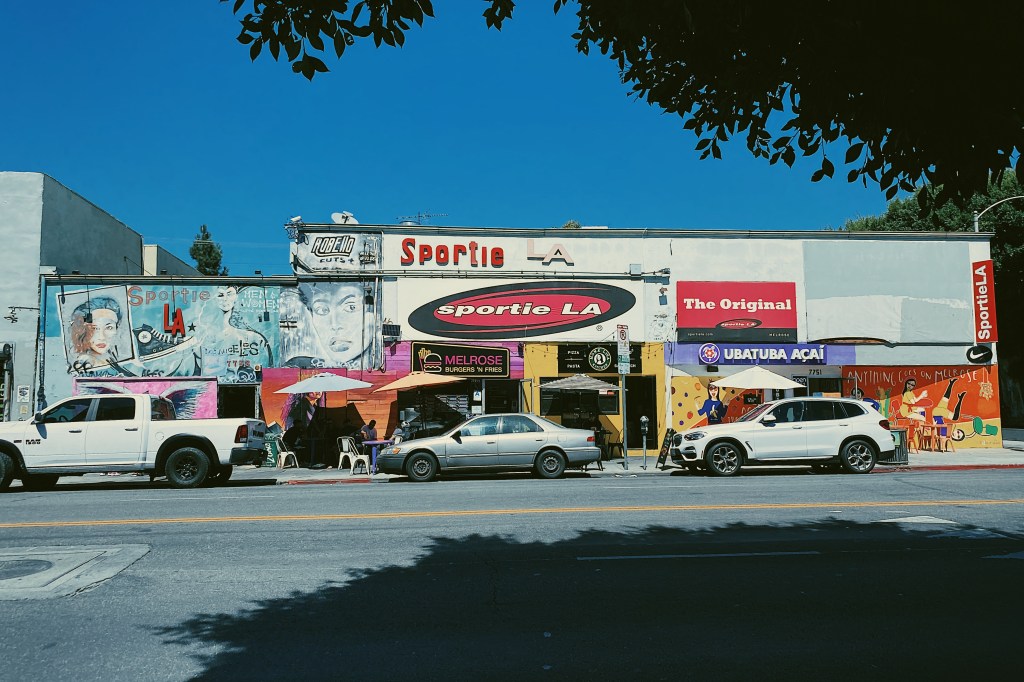
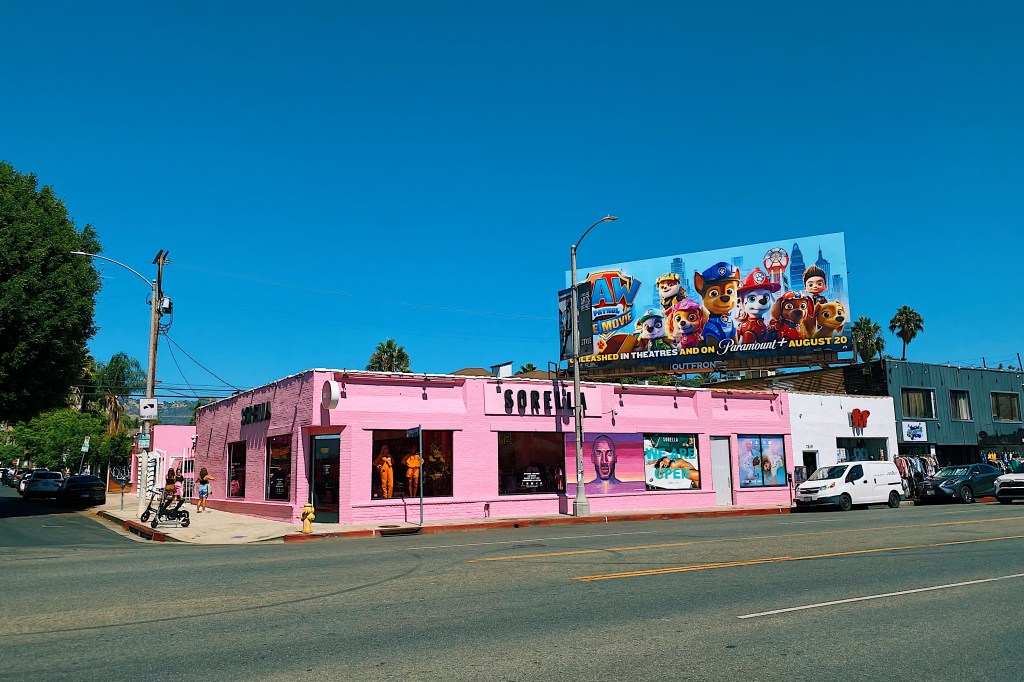
We walked along Melrose Avenue which is the capital of streetwear in Los Angeles, with numerous shops selling expensive sneakers and oversize t-shirts.
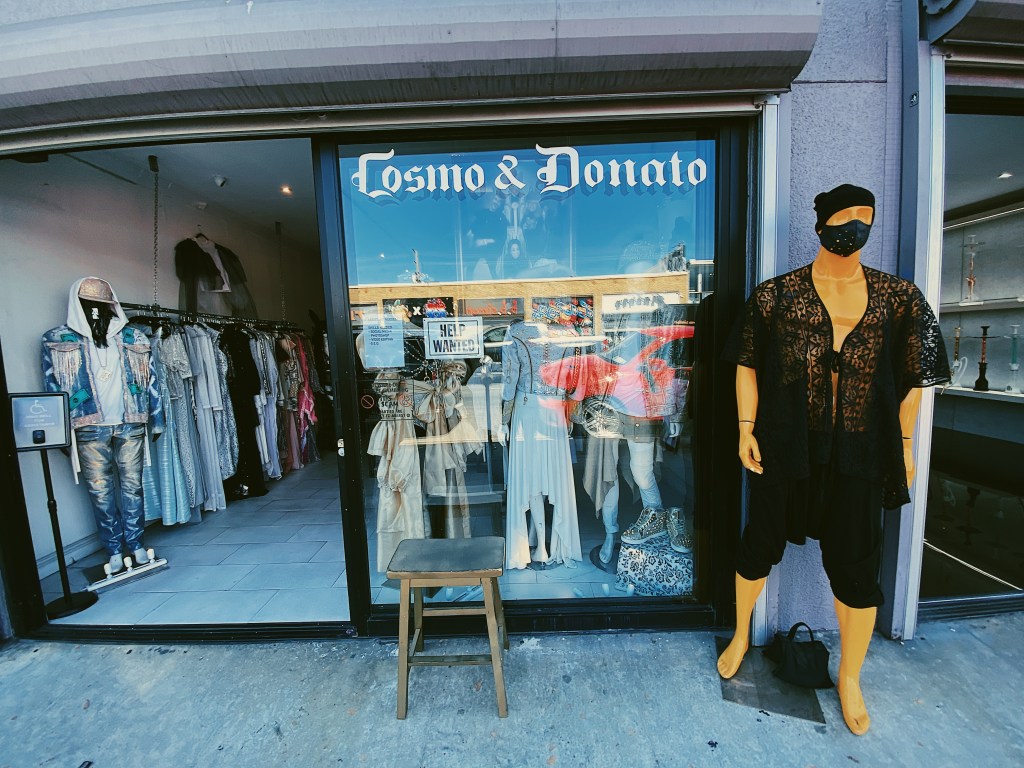
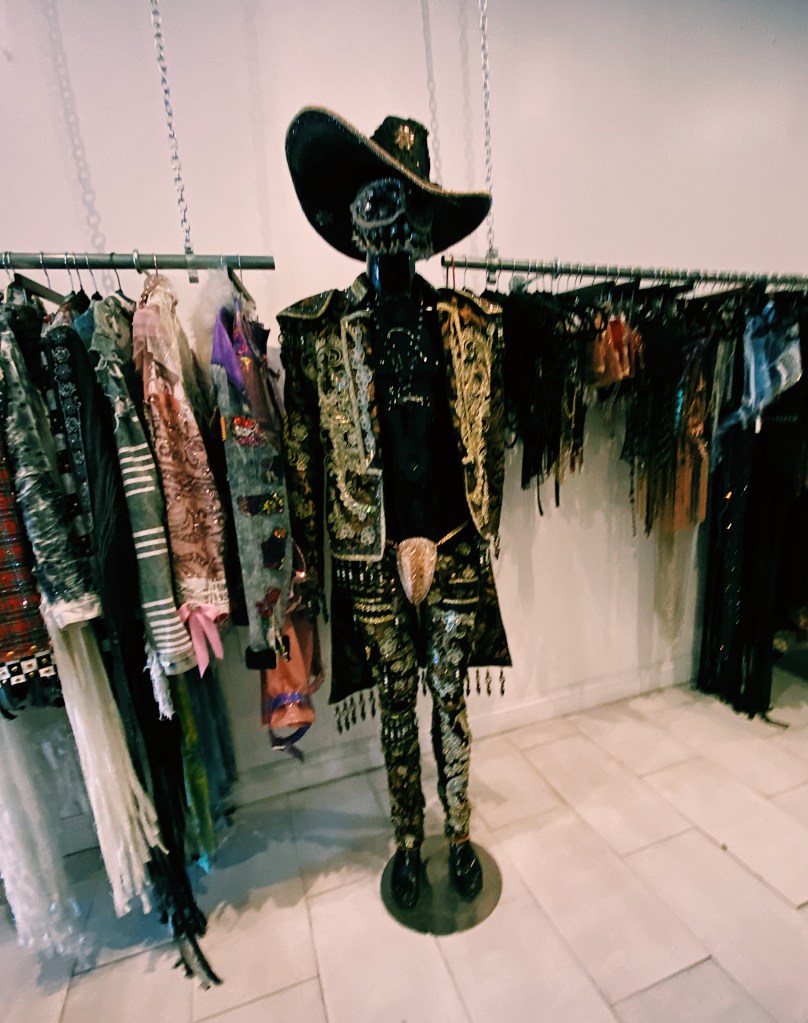
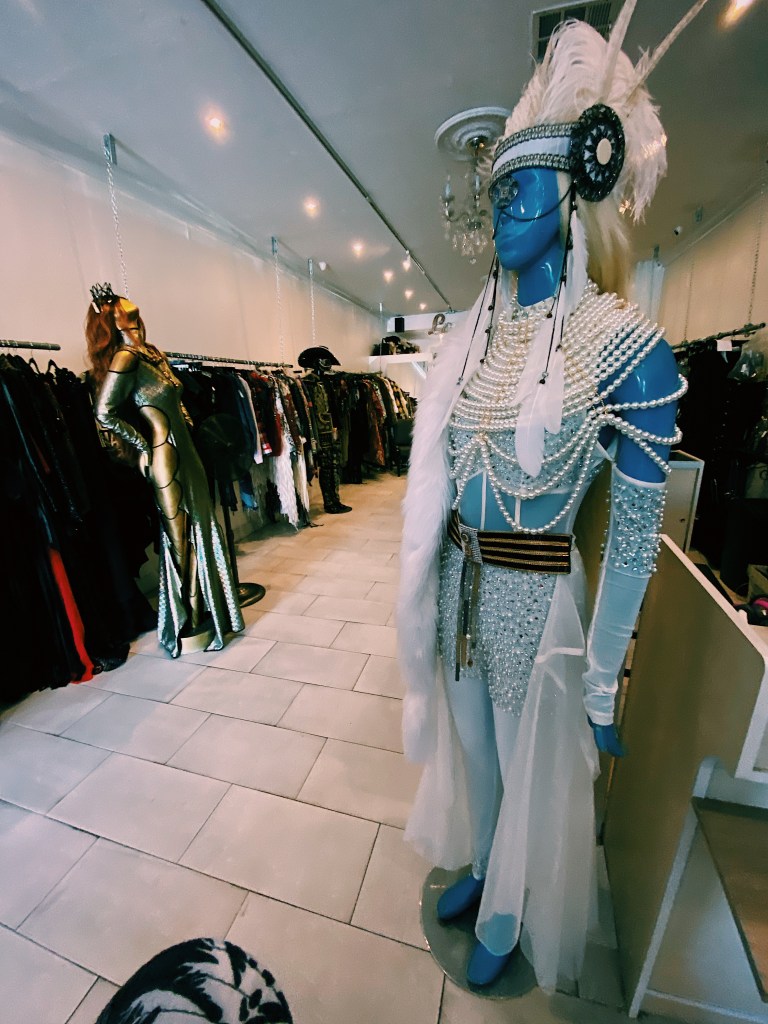
Among the streetwear retailers, we came across this store which sold some very extravagant clothes. If you are thinking of attending the next Burning Man festival and looking for an outfit then Cosmo & Donato is the store for you.
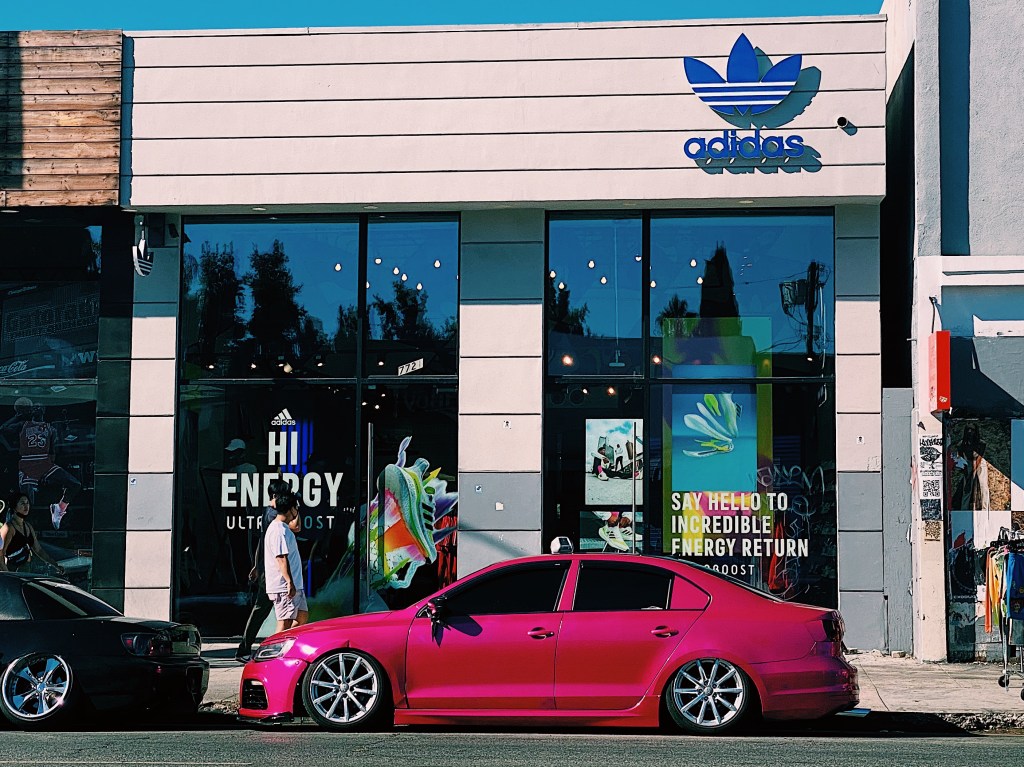
Anglelinos appear particularly fond of giving their cars custom paint jobs, often in bright metallic colors. Here a couple of examples.


































































 Mal and Lauren