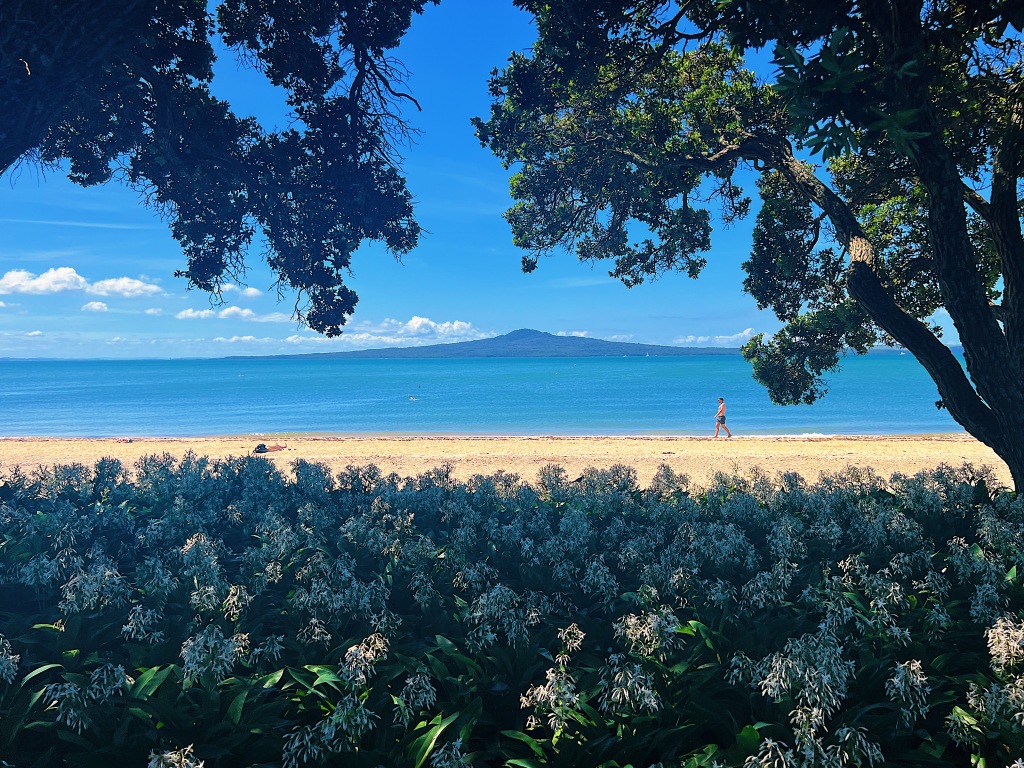
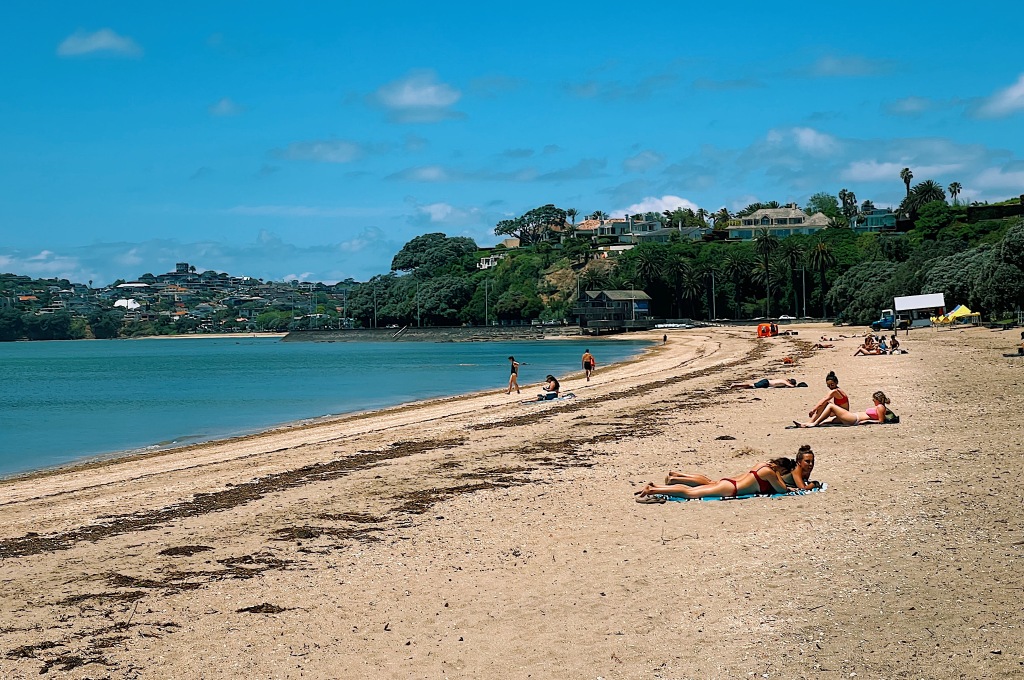
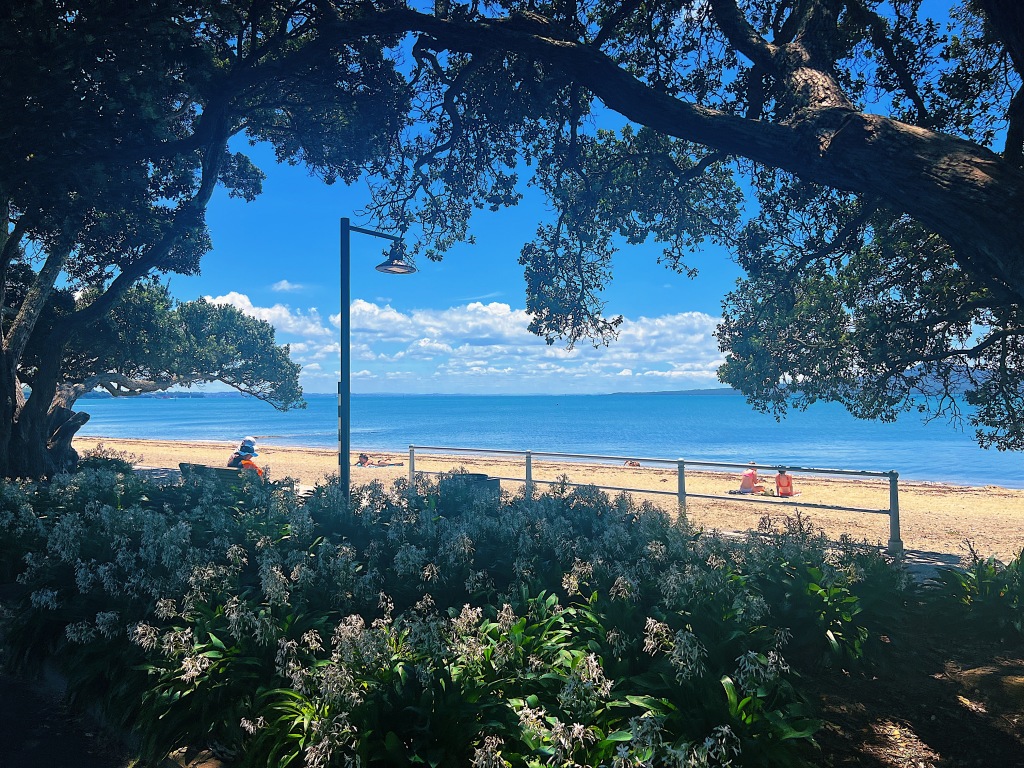
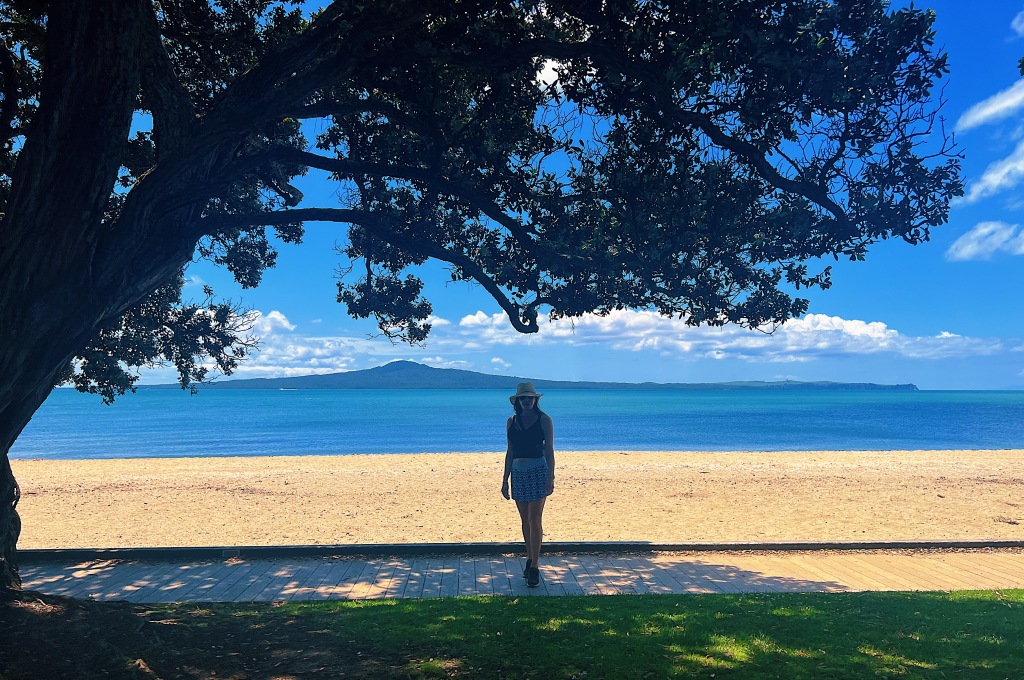
Kohimarama, commonly known simply as Kohi (pronounced koey) is a coastal residential suburb of about 4,400 residents that centers around a beautiful beach and a large park. In maori, Kohimarama, apparently refers to the gathering of the scattered wood chips that are left from the carving of waka (canoes).
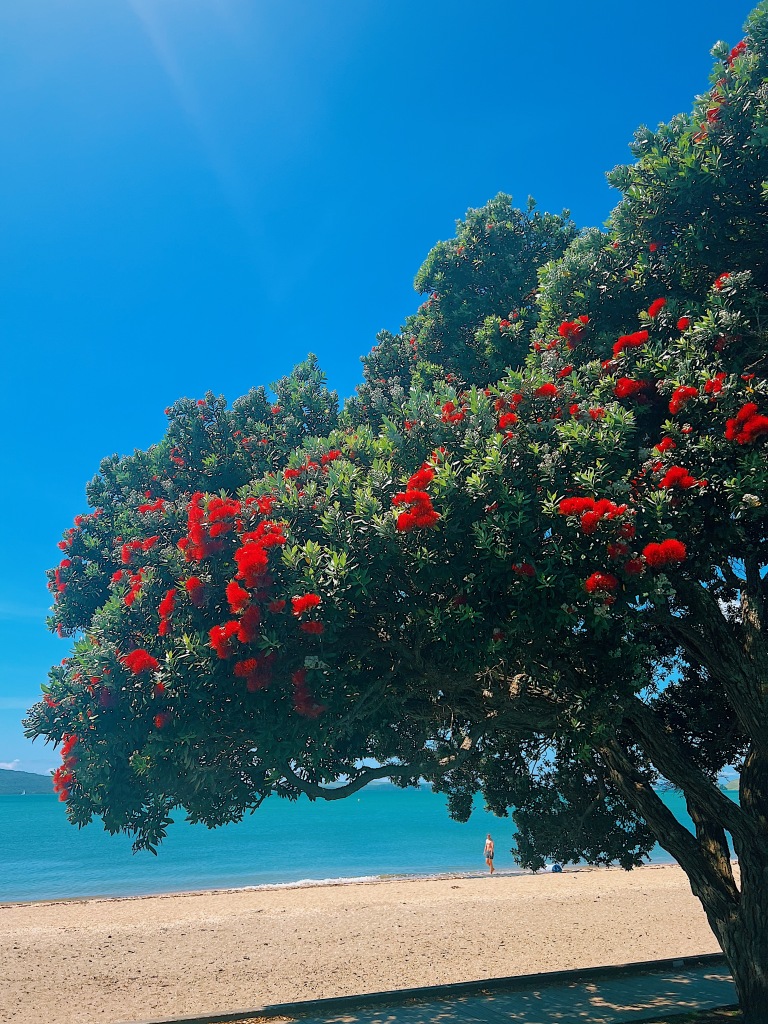
After a delicious lunch at the Kohi Cafe, we decided to go for a stroll. We started by heading along Kohi beach.
Setting out from Kohi Cafe
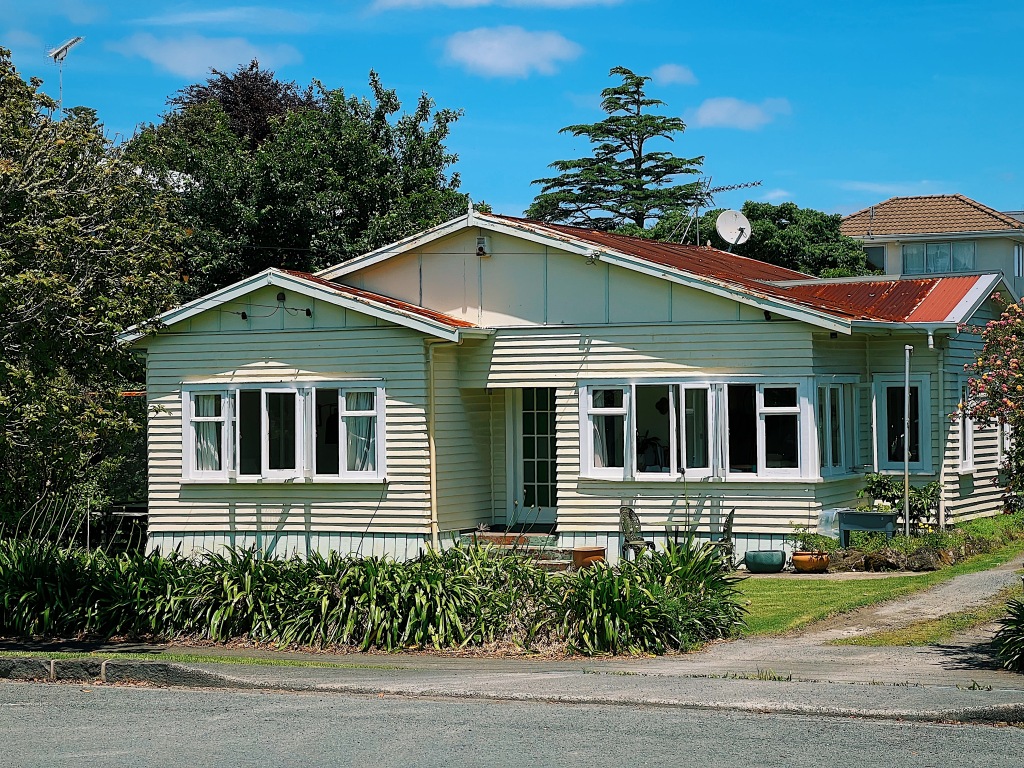
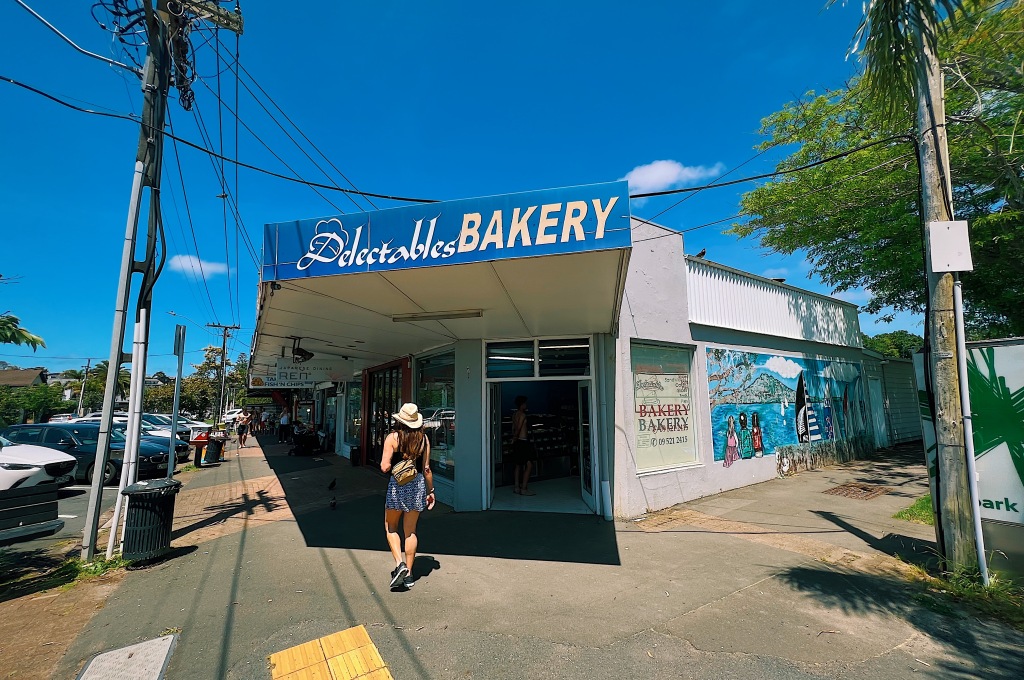
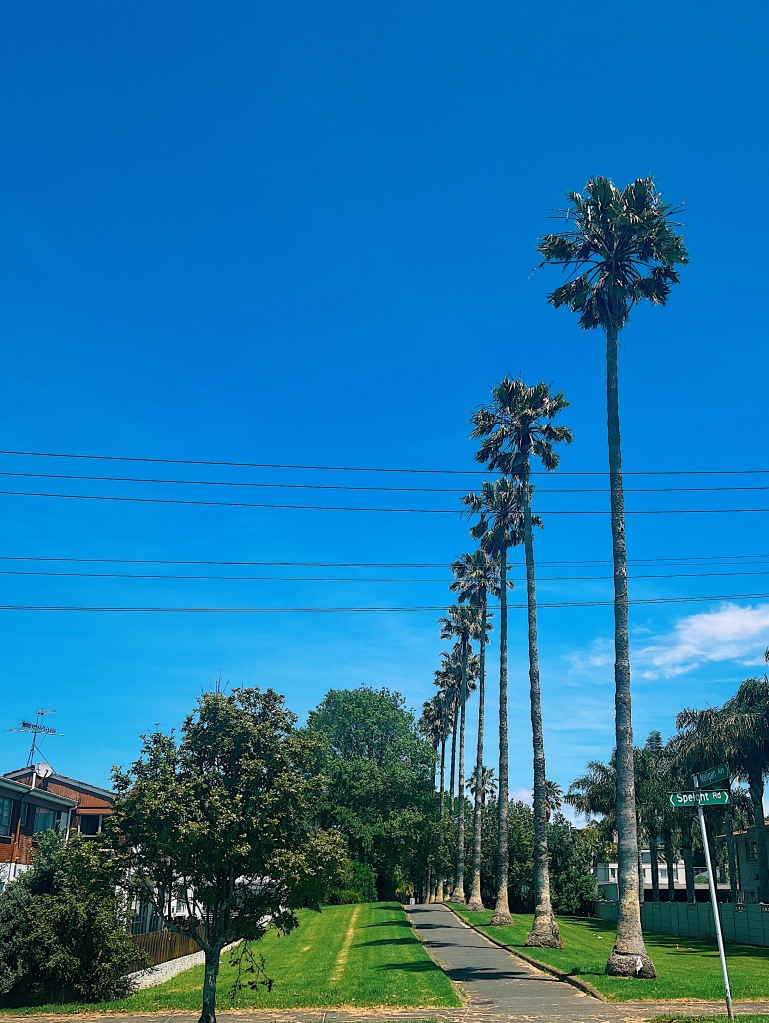
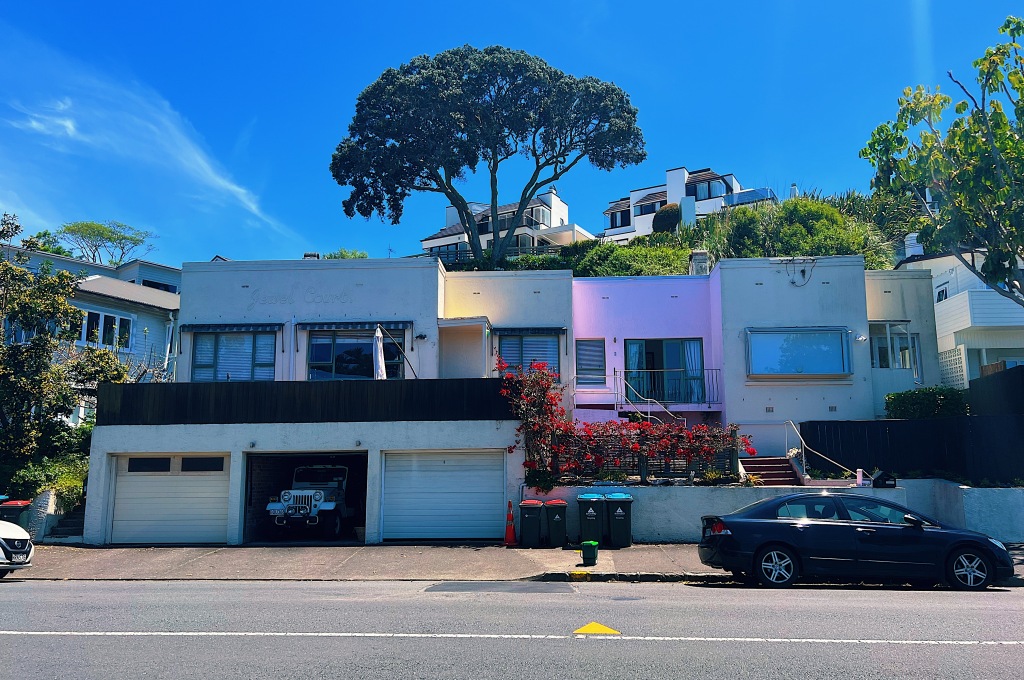
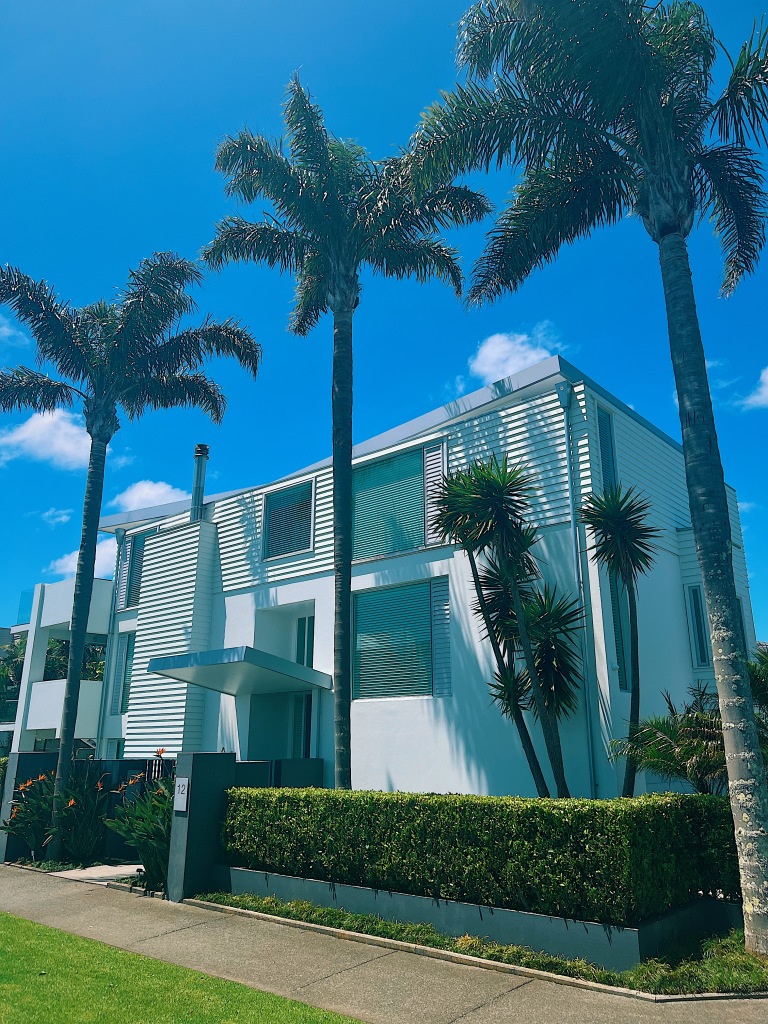
Before heading inland to explore the suburb and its wide variety of houses.
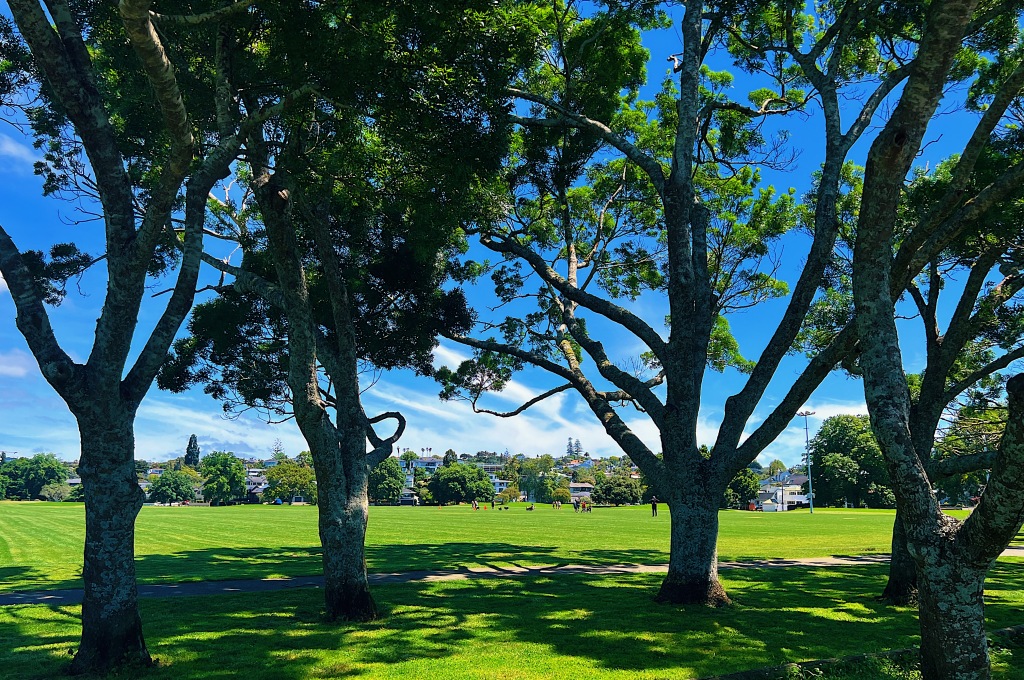
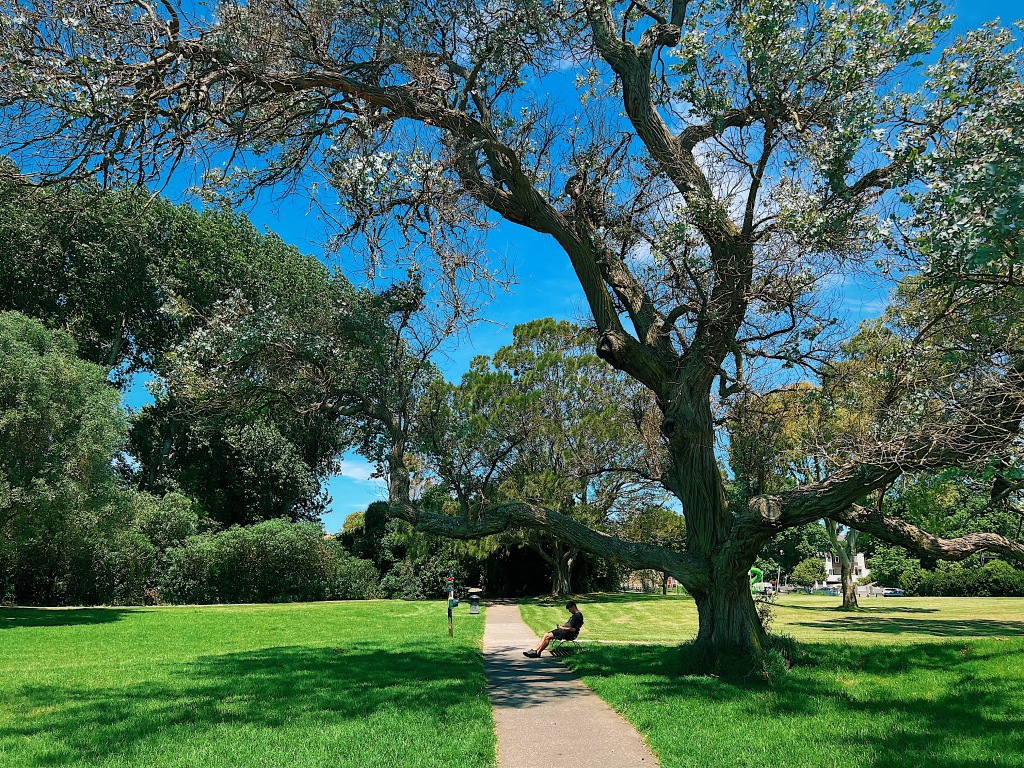
Finally we headed into Madill,s Farm Recreation Reserve with its wide open playing fields.
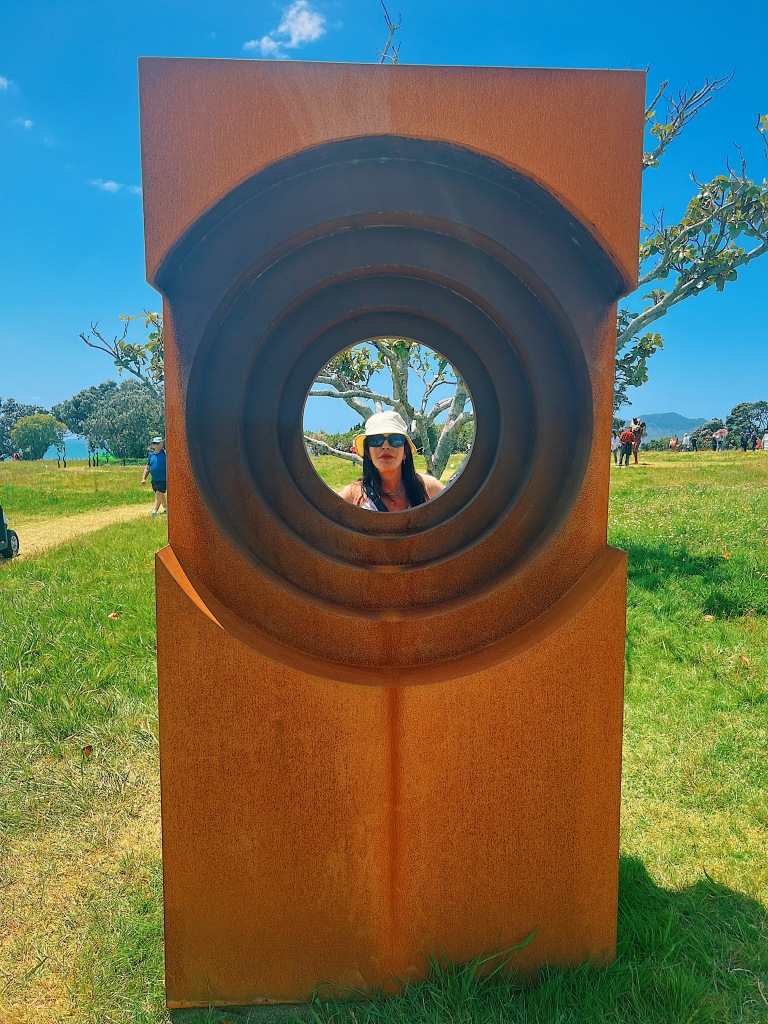
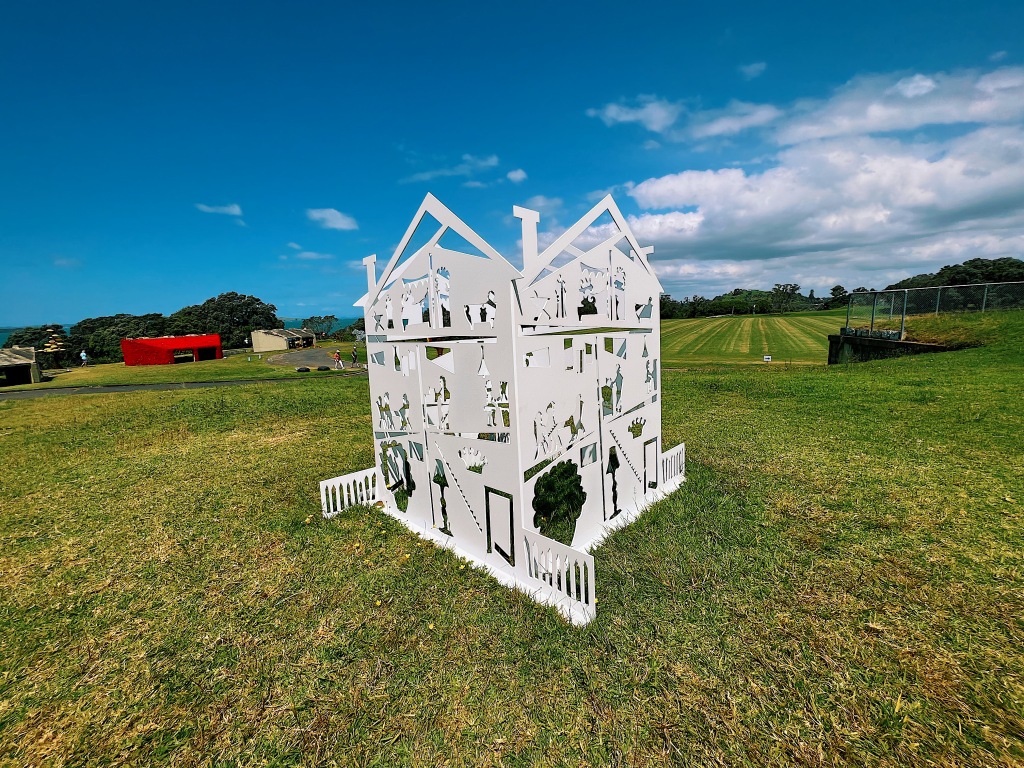
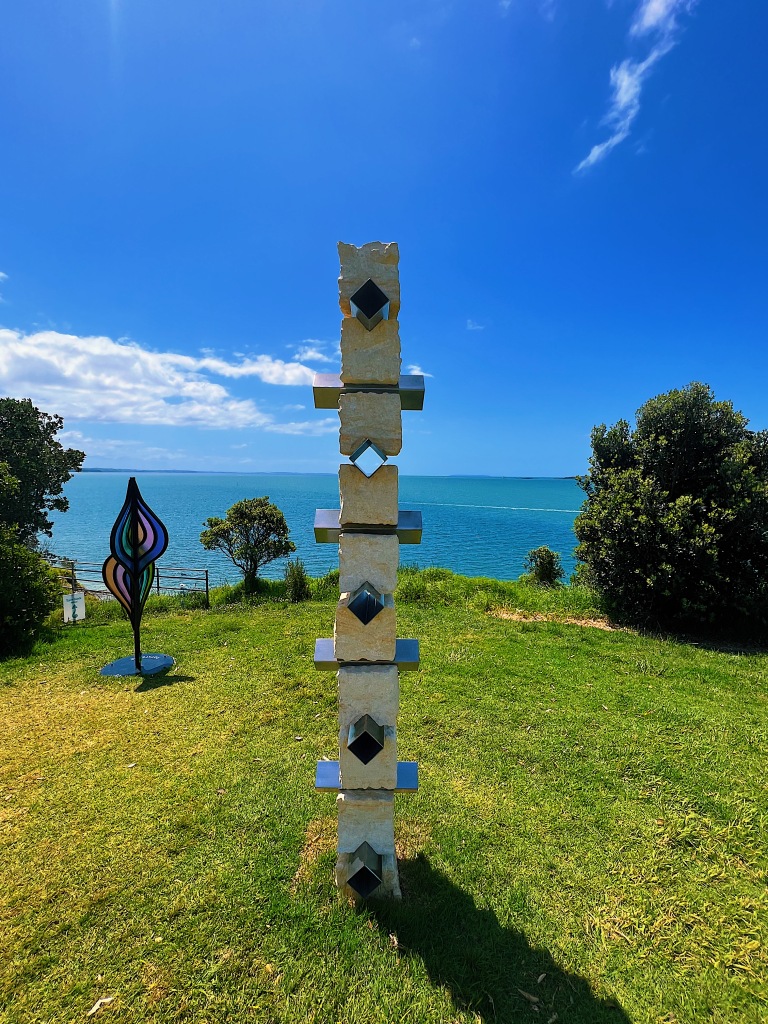
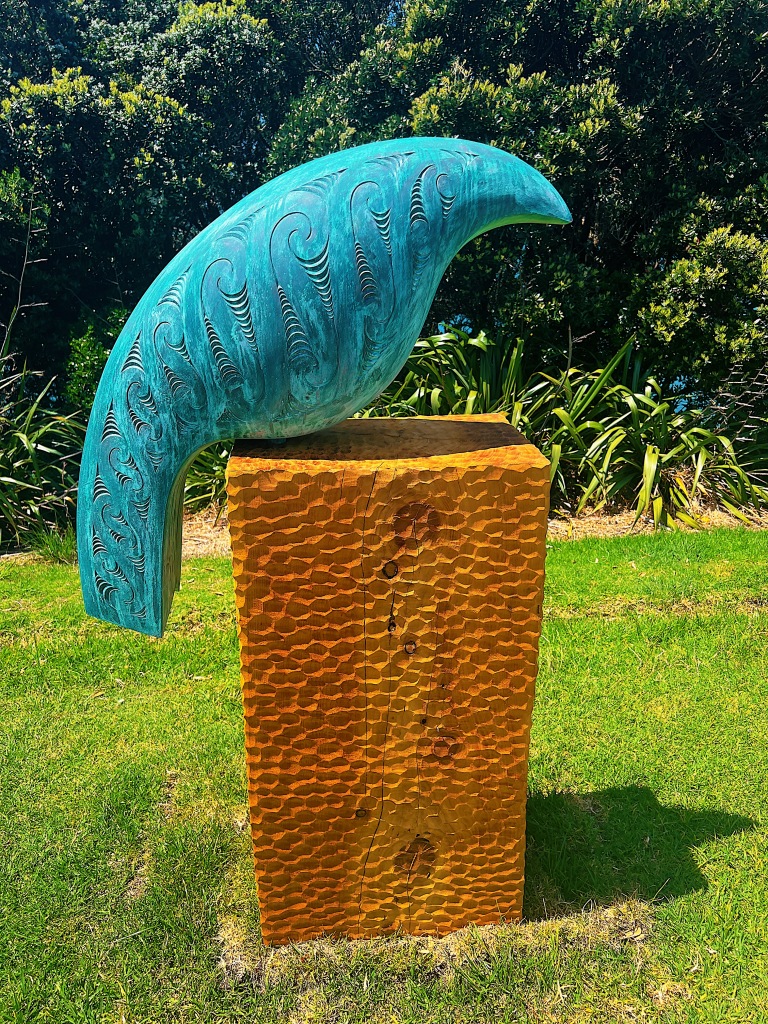
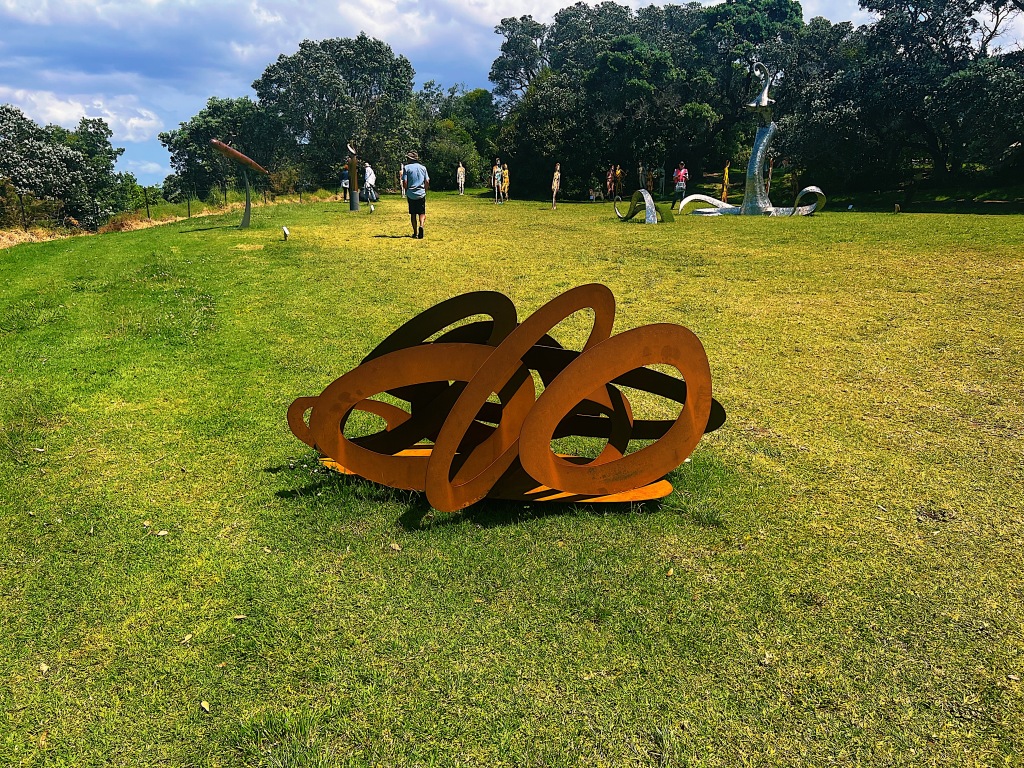
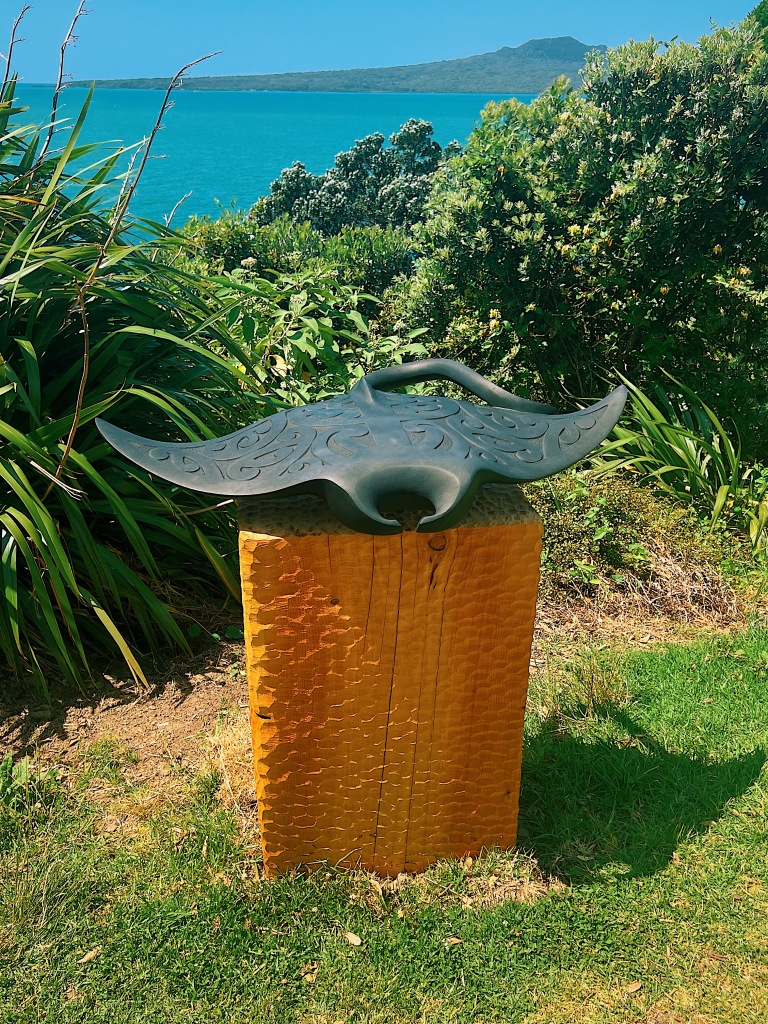
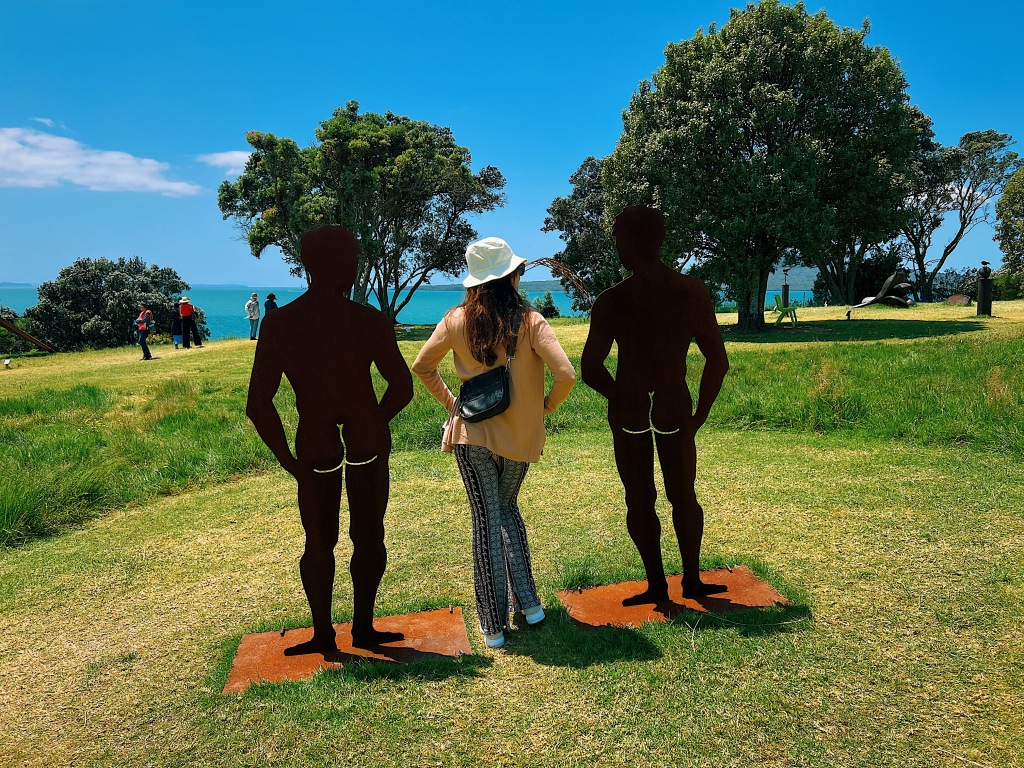
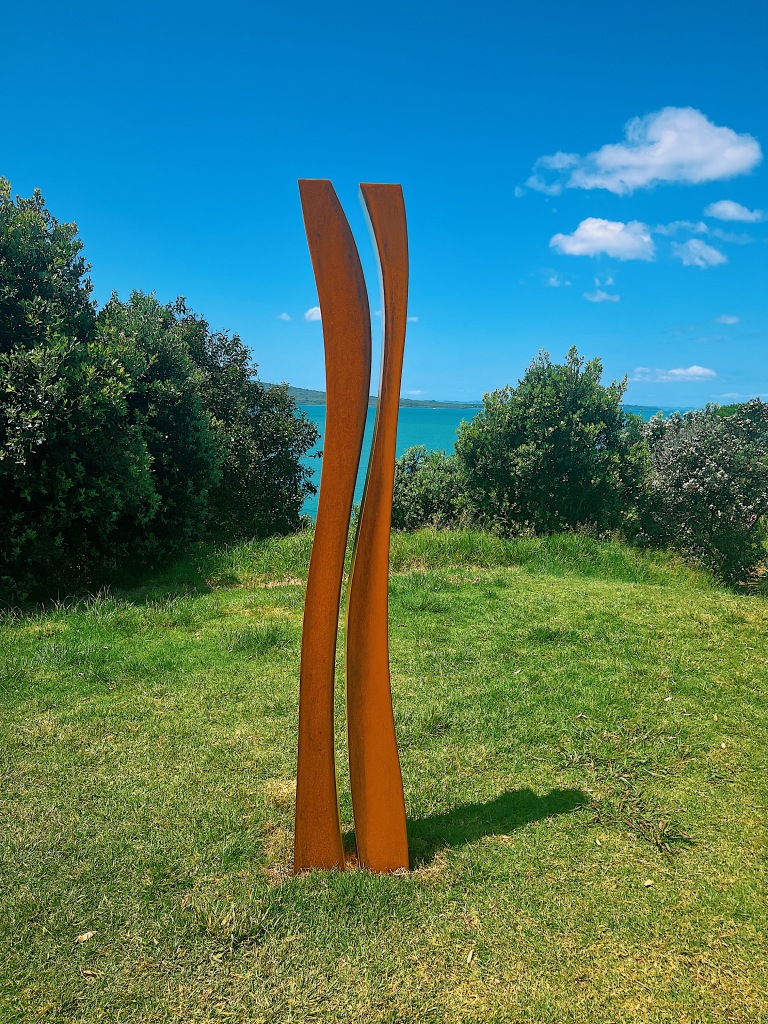
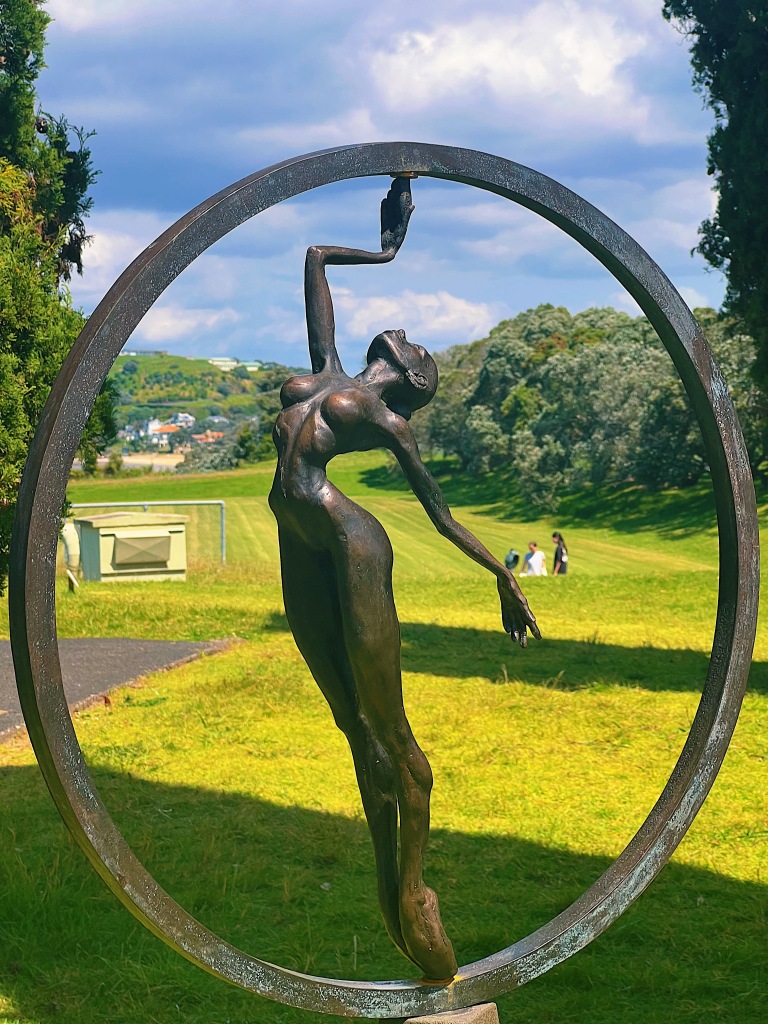
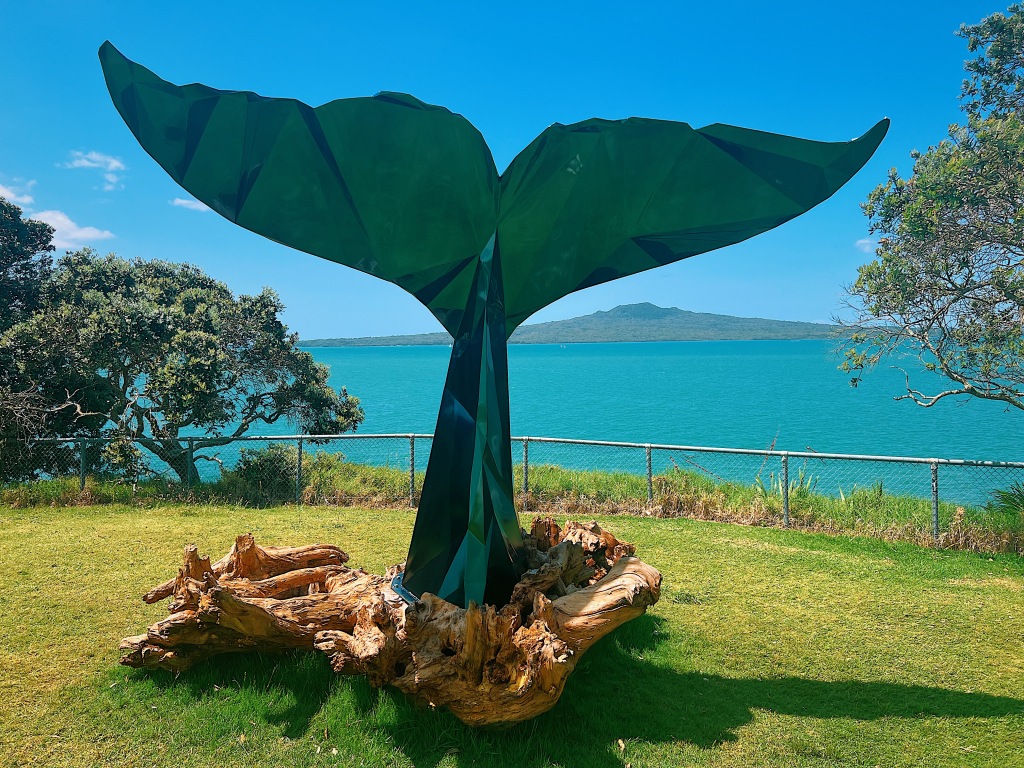
On a beautiful point overlooking Narrow Neck Beach on Auckland’s north shore, we visited a large sculpture show, raising funds for Women’s Refuge. With over 130 works by 100 artists, it was a spectacular show to visit on a beautiful sunny day. Here are some of the stunning works.
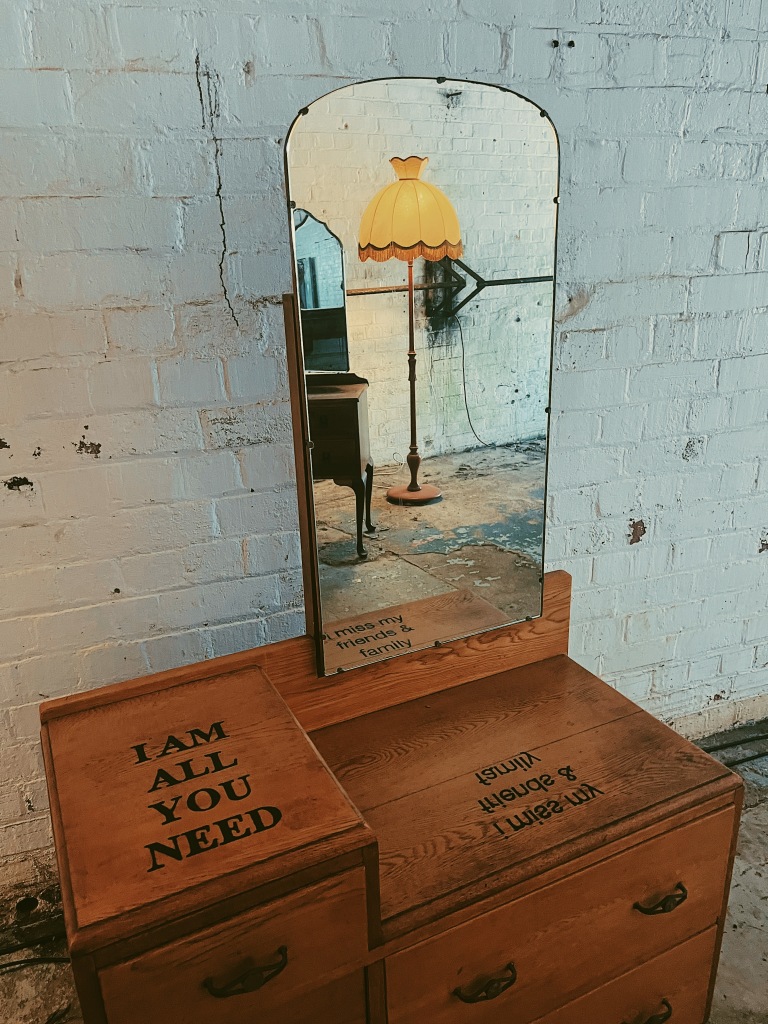
The most powerful and moving installation, by far, was called and then they kissed me, by Turtle Sarten and Bernie Harfleet. It consisted of a number of rooms in an old bunker, each of which contained a devastating statement on domestic violence. According to a sign posted outside the installation, police in New Zealand receive 480 family harm calls each day (that’s one every three minutes). In 2022, police attended 175,573 family harm incidents in New Zealand. On average 14 women are killed each year and a child is killed every 5 weeks.
These pieces of furniture had carved into them common statements made by abusers. When you looked into the mirror you could see the abused victim’s truth.
Each of the medallions in the following photo represented a woman killed in incidents of domestic violence. Each of the kiwis represented a child killed in acts of domestic violence. There were many more not visible in the photo.
Please consider making a donation to Women’s Refuge at womensrefuge.org.nz
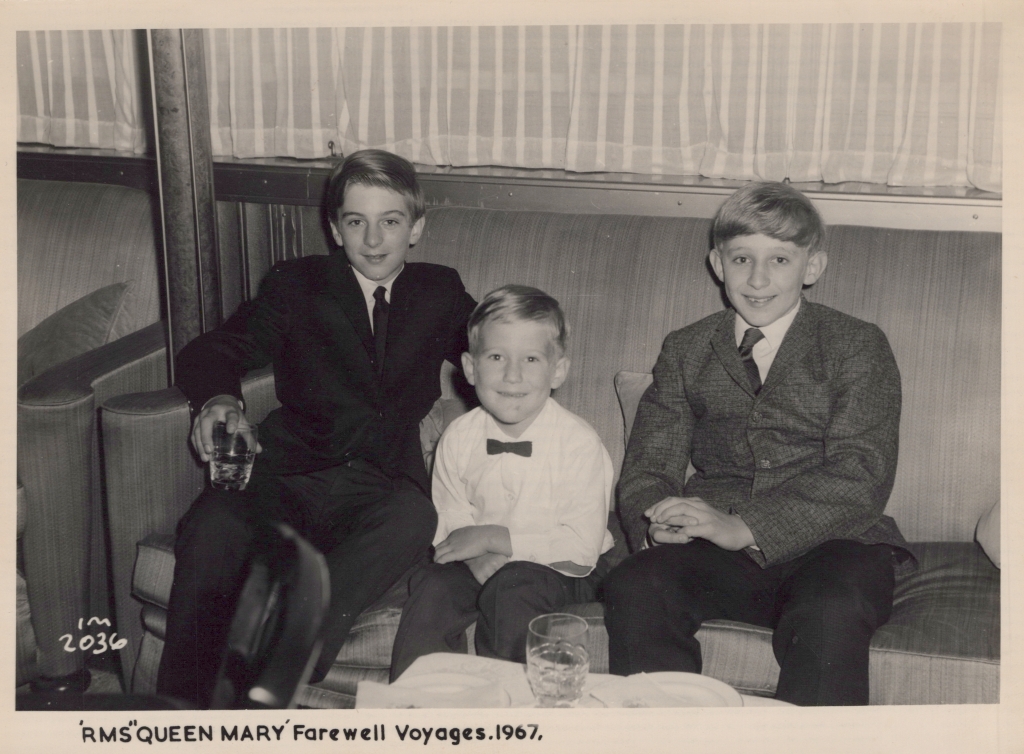
In September of 1967, Mal and his family took The Queen Mary across the Atlantic from New York City to Southampton, England, on one of the iconic ship’s final voyages. Soon after, it was retired from service and entered into its new life as a hotel in Long Beach, California. Fifty six years after he last stepped on board, Mal went for a visit, along with our daughter-in-law, Kylie. This is Mal on board back then (in bow tie).
And this is Mal on board now.
At an overall length of 310.7 meters and a weight of 81,237 tons, The Queen Mary held 2,140 passengers and 1,100 crew. That might seem big but it doesn’t compare to today’s largest cruise ships. The Wonder of the Seas, for example, is 362 meters long, weighs 236,857 tons and holds up to 6,988 passengers. Here is the actual Queen Mary.
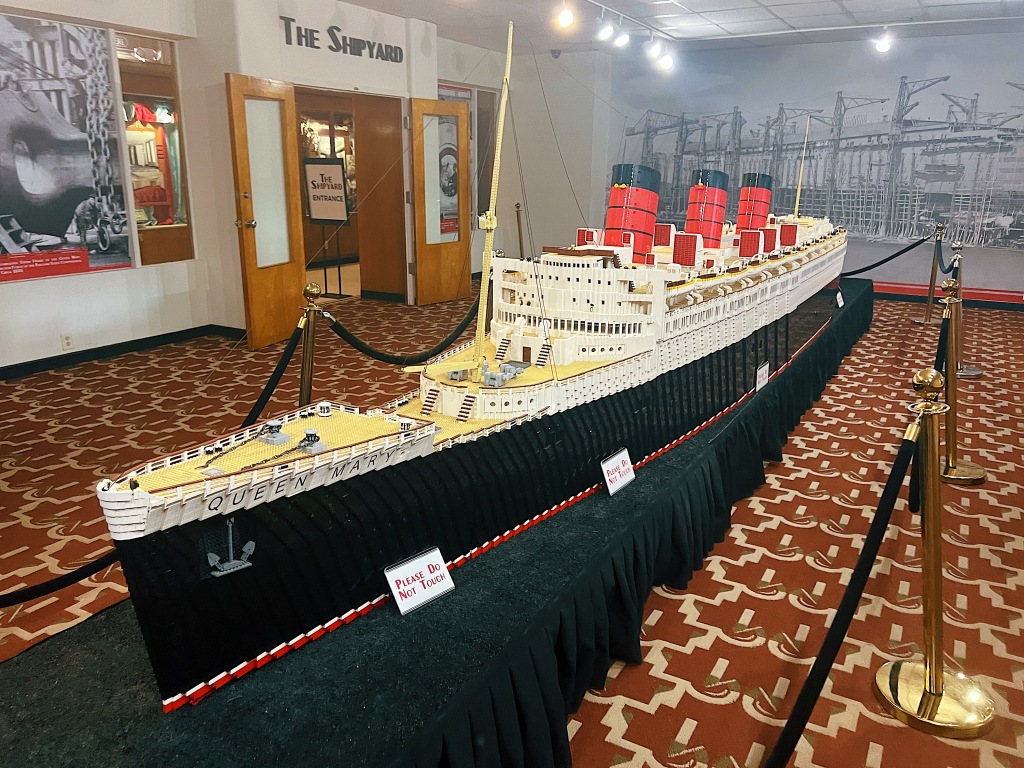
And here is the lego version, which just happens to be the world’s longest lego model of a ship. At 25’11” long, it is made of approximately 250,000 bricks.
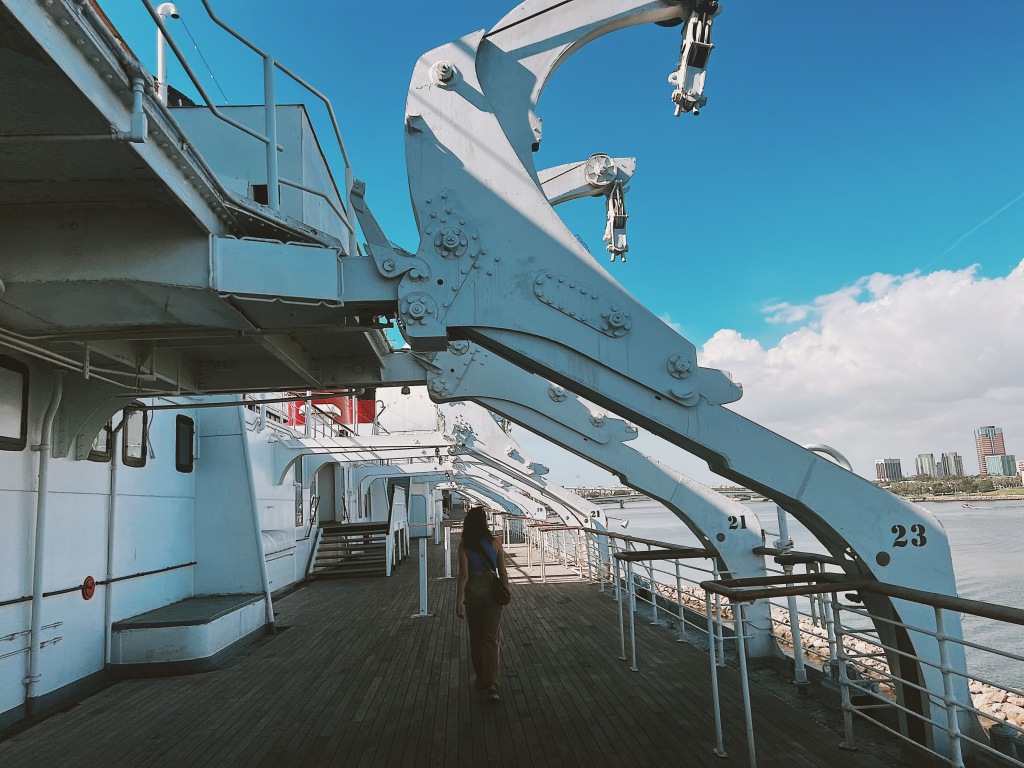
We walked the decks
And the beautiful wood paneled halls.
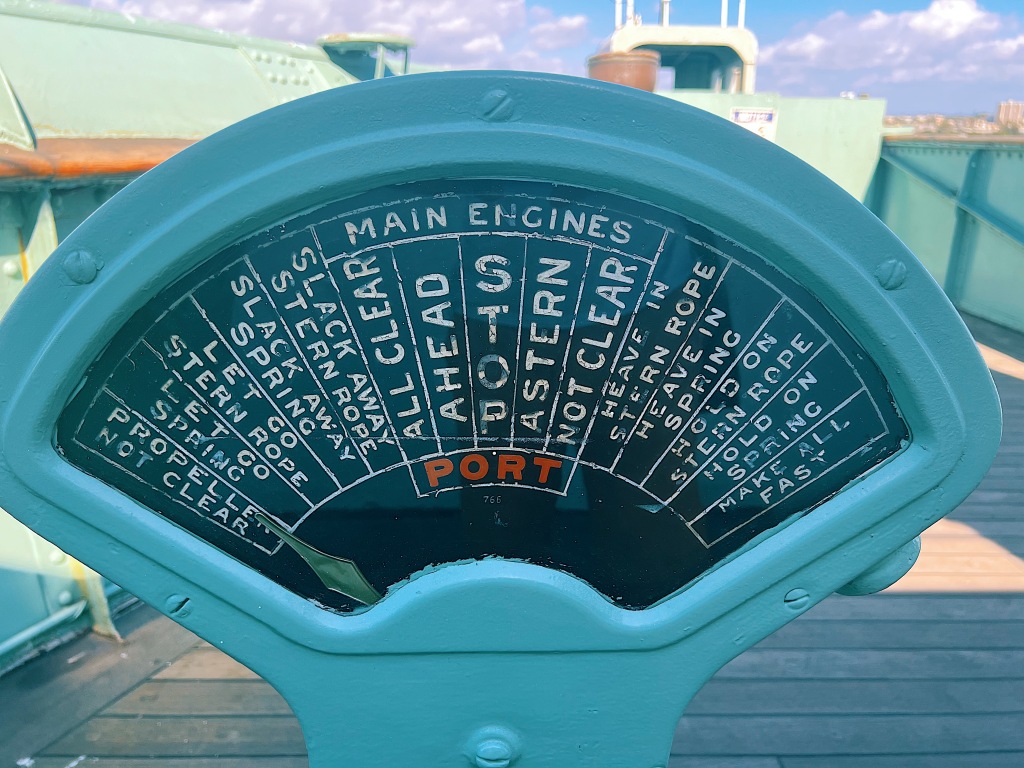
We visited the Bridge
And the Captain’s cabin which was tucked in behind the Bridge. Not his main cabin, which we expect would be much fancier. This is the one he used in potentially dangerous seas where his leadership might be urgently needed.
We played a little shuffleboard
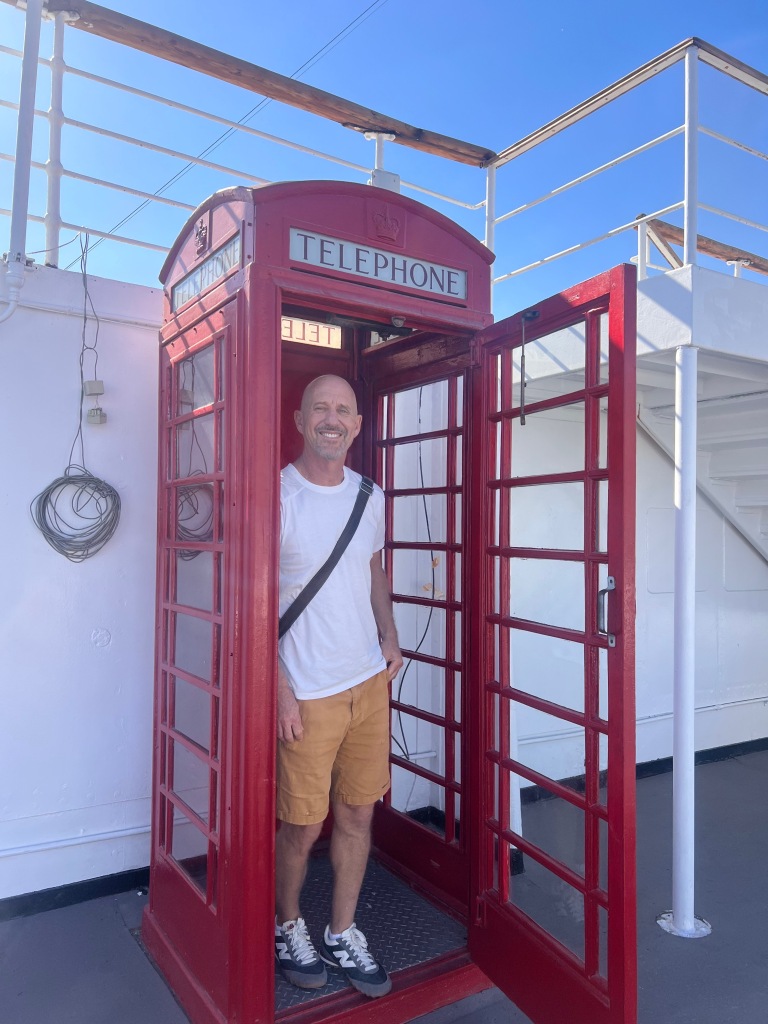
Spoke on the phone.
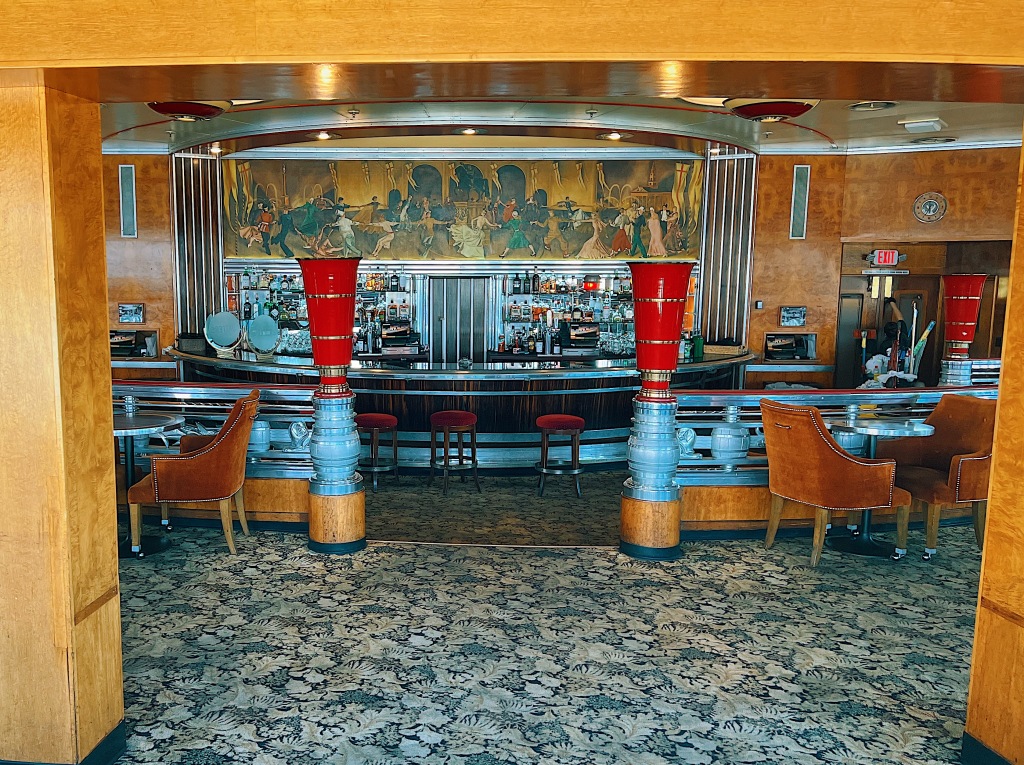
Checked out the bar
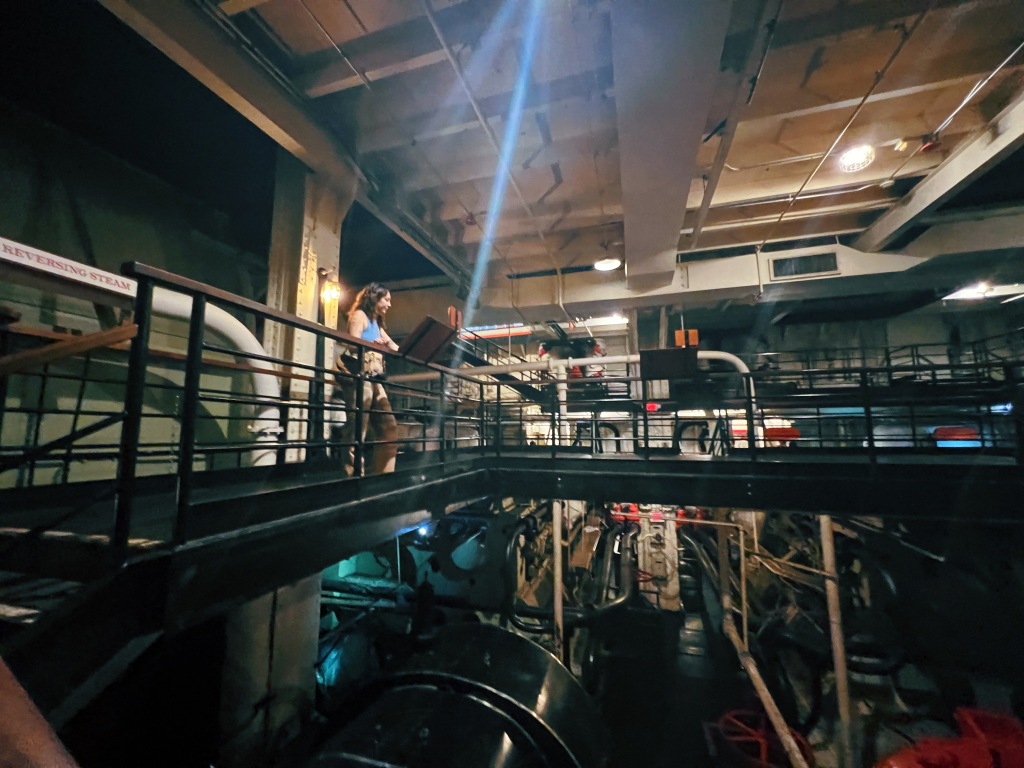
And, finally, the engine room.
Special thanks to Kylie for indulging Mal on his trip down memory lane.
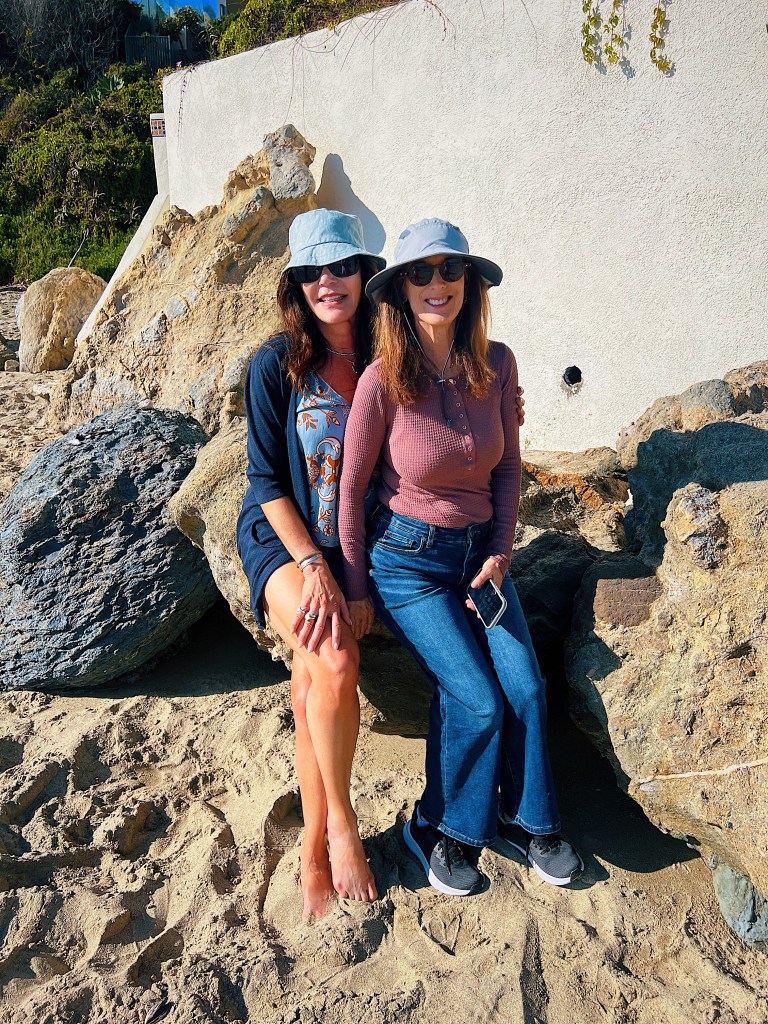
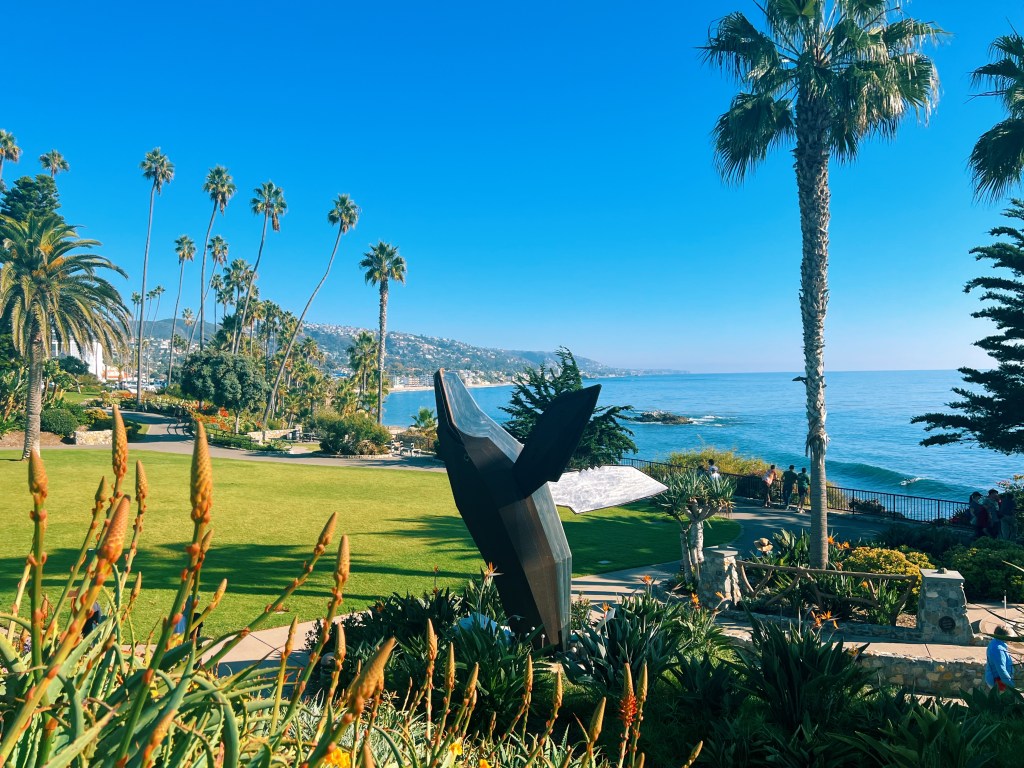
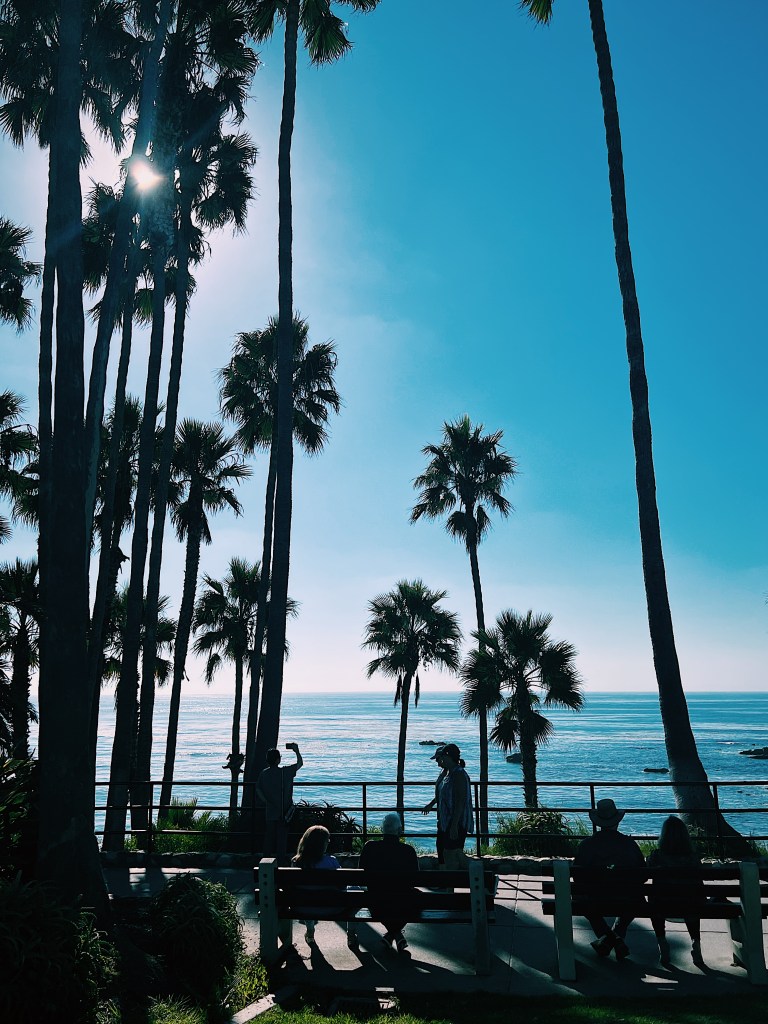
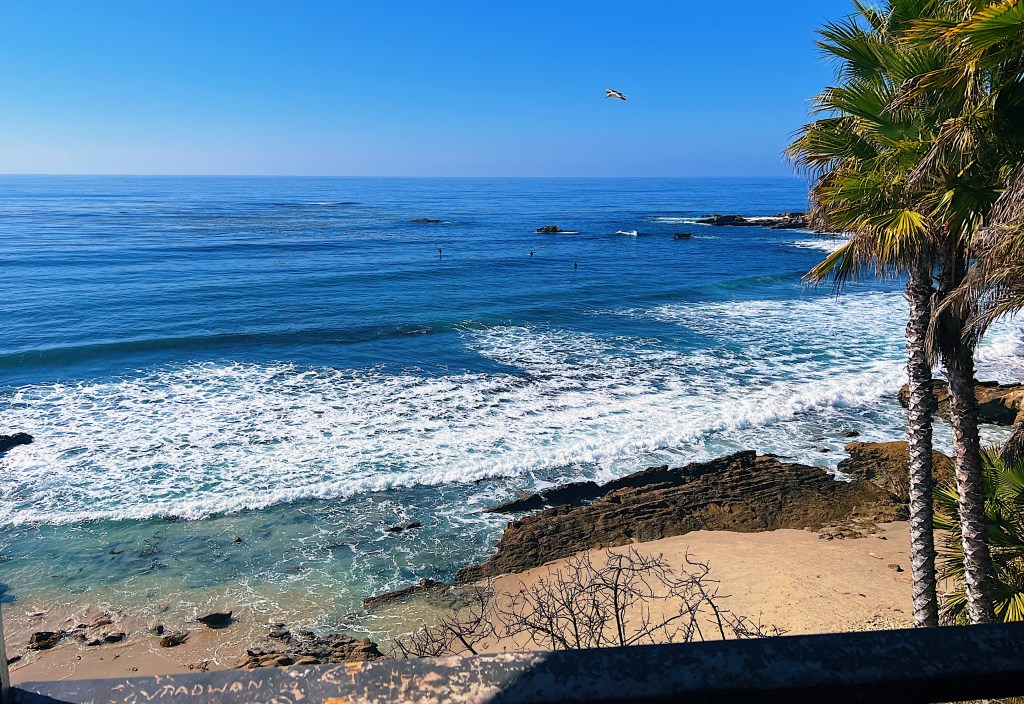
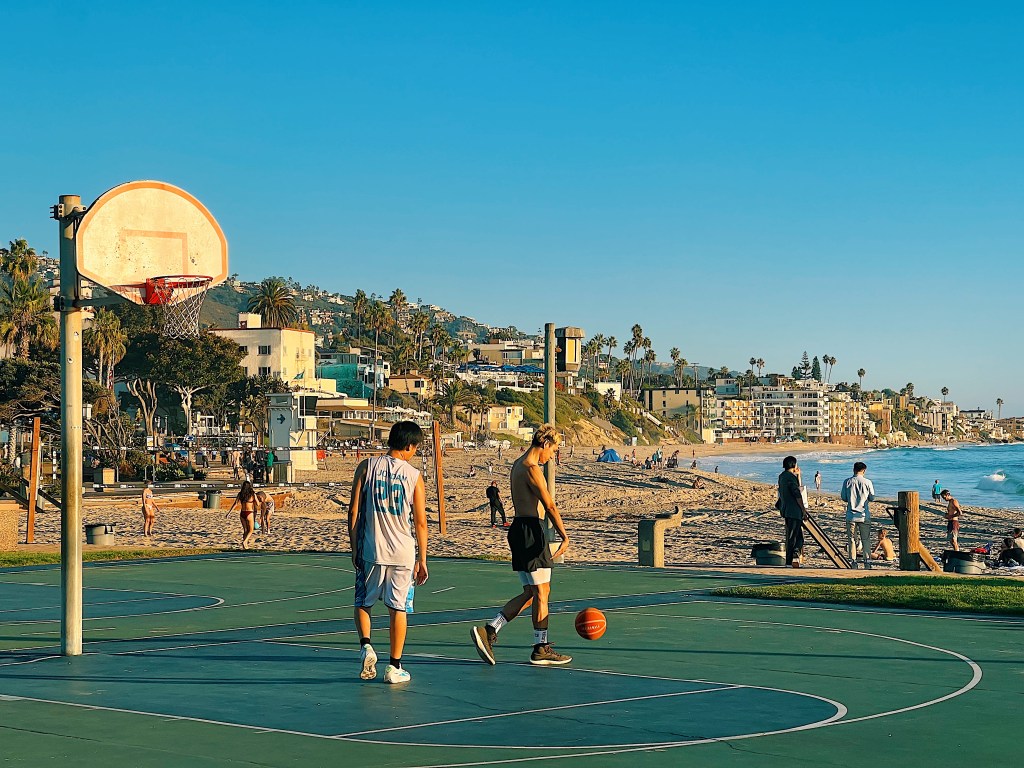
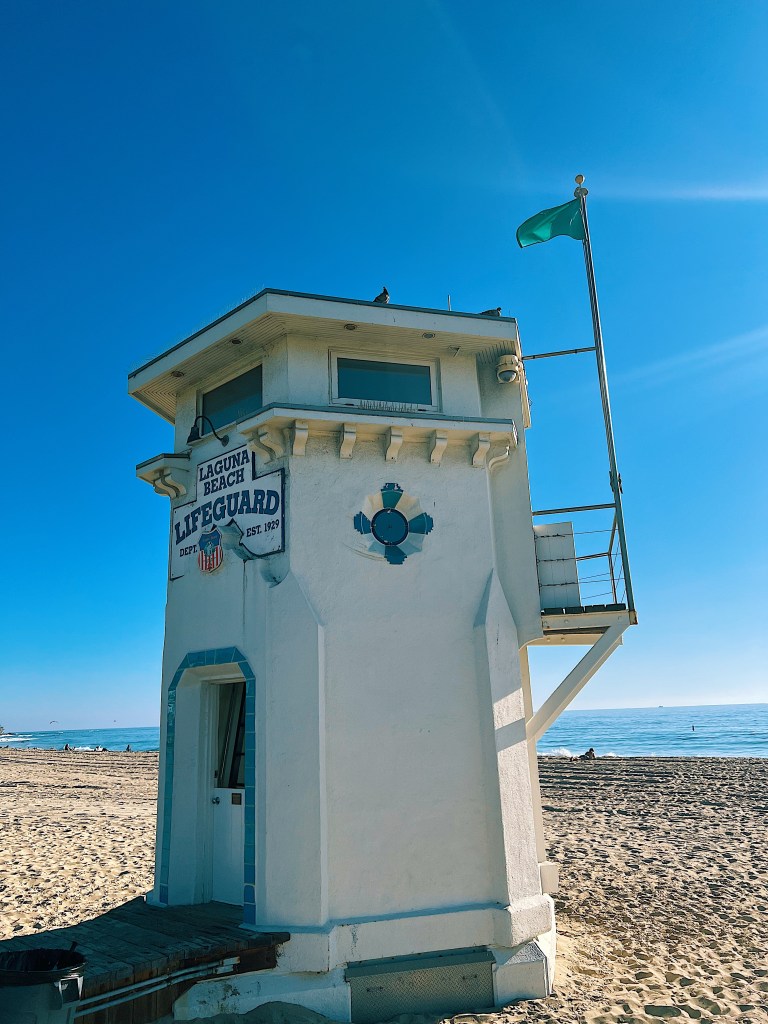
About an hour’s drive down the coast from LA is scenic Laguna Beach. We made the drive down to meet Lauren’s old school friend Lisa and her husband Dave. After a beautiful lunch at Las Brisas restaurant, sitting high on a point overlooking the beach, we went for a stroll along the coastline and into town. Here are some of the sights.
Named after Griffith J. Griffith (cool name), who donated the over three thousand acres on which it sits, the Griffith Observatory is the place to go for extensive views of Los Angeles and the nearby Hollywood hills. Opened in 1935, it is a beautiful deco style building that has featured in numerous movies, perhaps most famously in Rebel Without a Cause and more recently in La La Land.
Griffith’s legacy was marred by his notorious shooting of his wife in 1903. The shot did not kill her but left her disfigured and she lost her right eye. He was charged with assault with a deadly weapon with intent to commit murder. However, under cross-examination, his wife testified that Griffith was subject to paranoid delusions. Consequently, he was convicted of the lesser charge of assault with a deadly weapon and sentenced to two years in San Quentin State Prison.
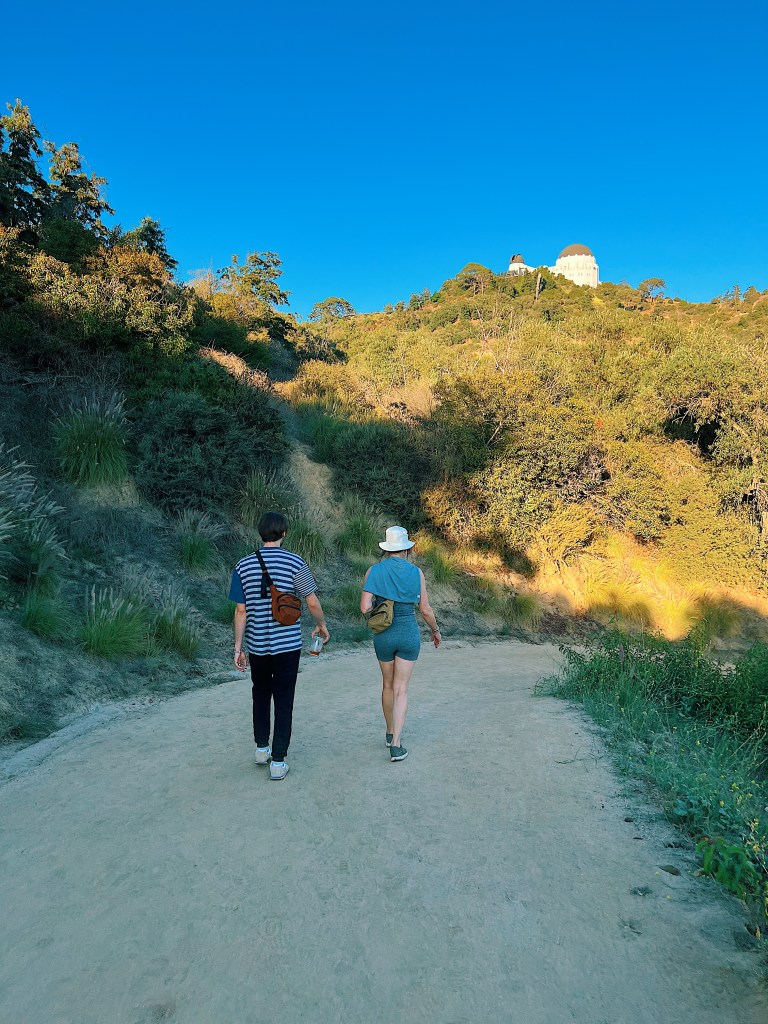
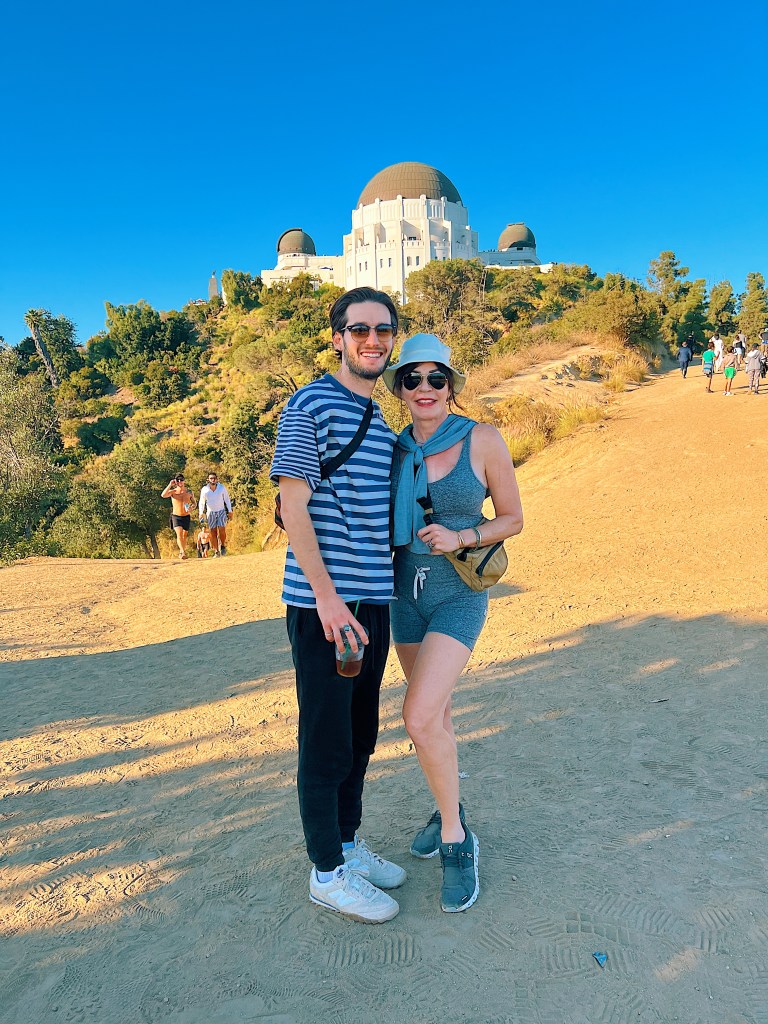
We parked down the hill In the surrounding parklands and along with our son, Jake, started the long winding walk up to the observatory.
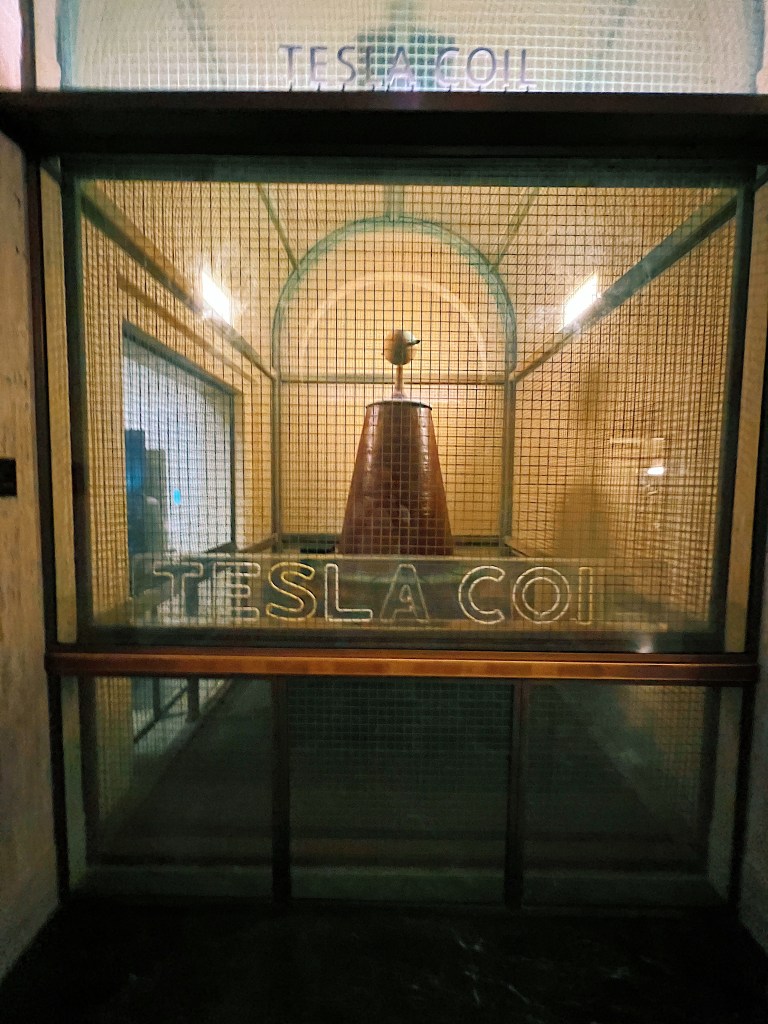
Along with the amazing views, the Observatory also offers informative space and science related exhibits, that include a Tesla coil
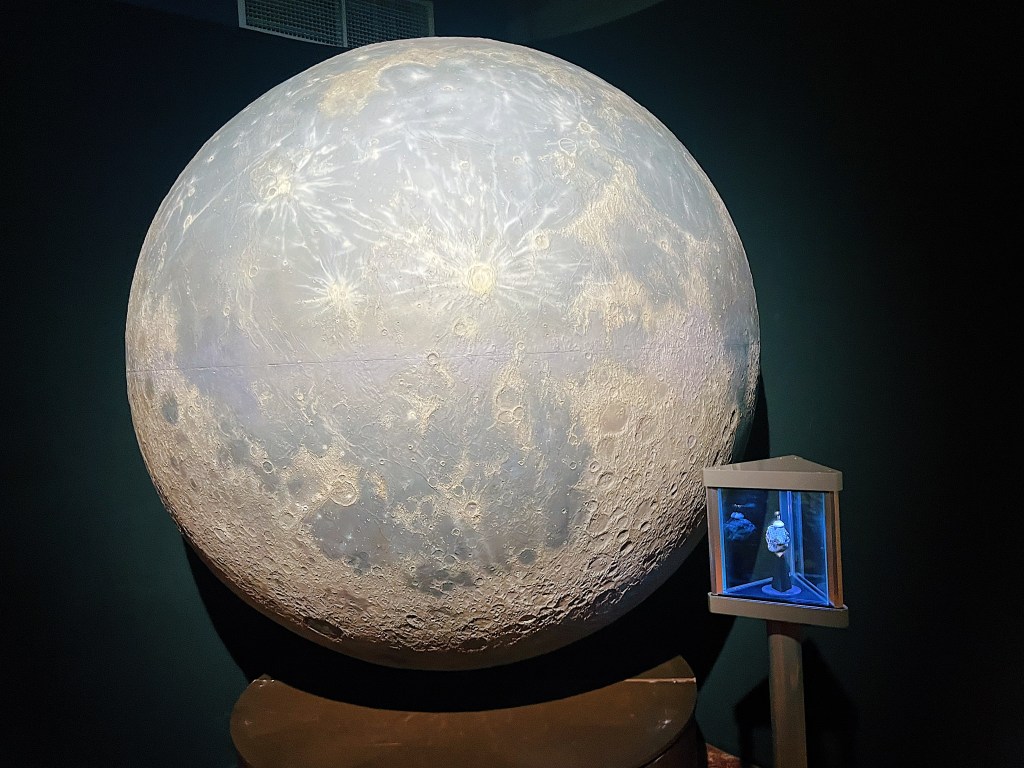
And a piece of moon rock
The observatory is surrounded by beautiful decks from which to enjoy the views.
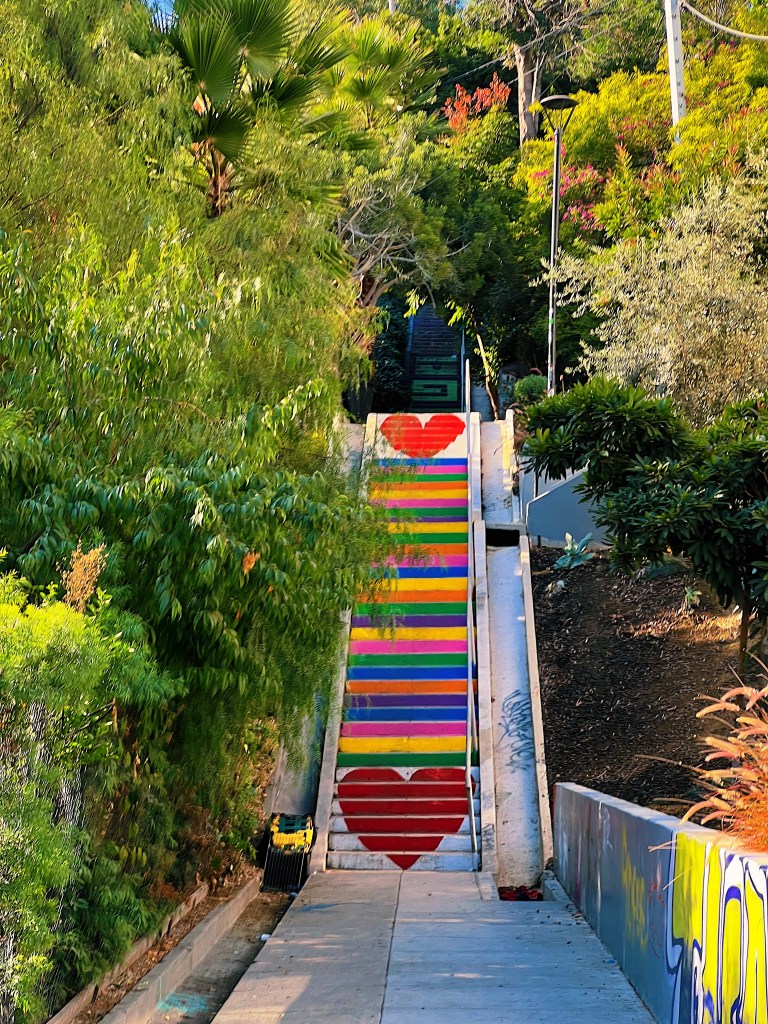
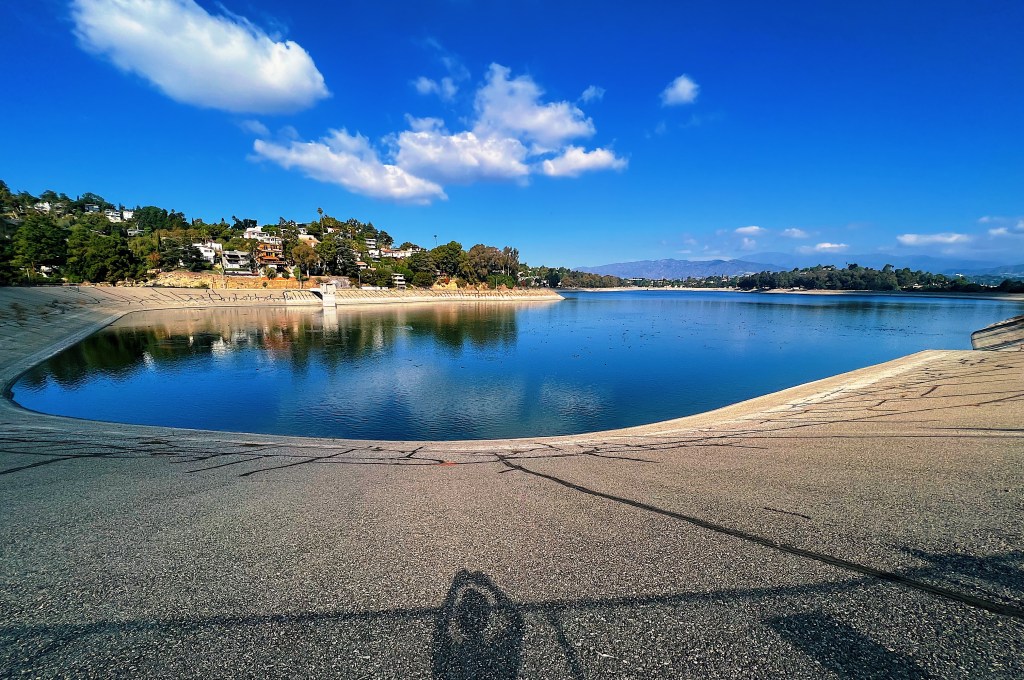
Silver Lake is a hip suburb in Los Angeles. It is east of Hollywood and straddles across Sunset Boulevard. Our son, Ben, recently purchased a property there. On yet another sunny LA day, we headed out to explore the neighborhood. It was quite a strenuous walk as it is very hilly in this part of LA. With its staircases cutting down to the main streets, narrow windy streets and many Spanish style homes, we were often reminded of Europe.
Ben’s home
The neighborhood gets its name from the reservoir that sits at its center. Built in 1907, the reservoir is named for Herman Silver, a LA Water Commissioner
Sitting among the houses lining the reservoir is the Neutra VDL Studio and Residences. An original building, designed and built in 1932 by the famous Austrian-American architect, Richard Neutra, as his home and studio, was destroyed by a fire in 1963. It was rebuilt by the architect’s son, Dion, with his father’s oversight. The original footprint of the house was preserved, although a number of changes were made in the design. It is now listed on the National Register of Historic Places.
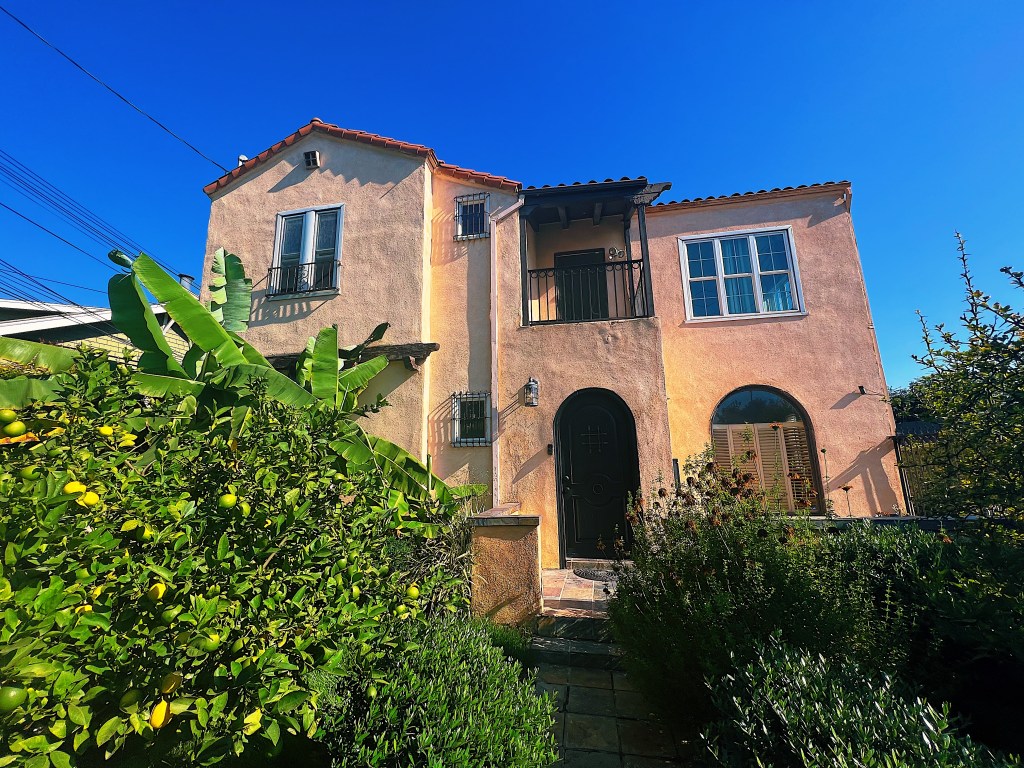
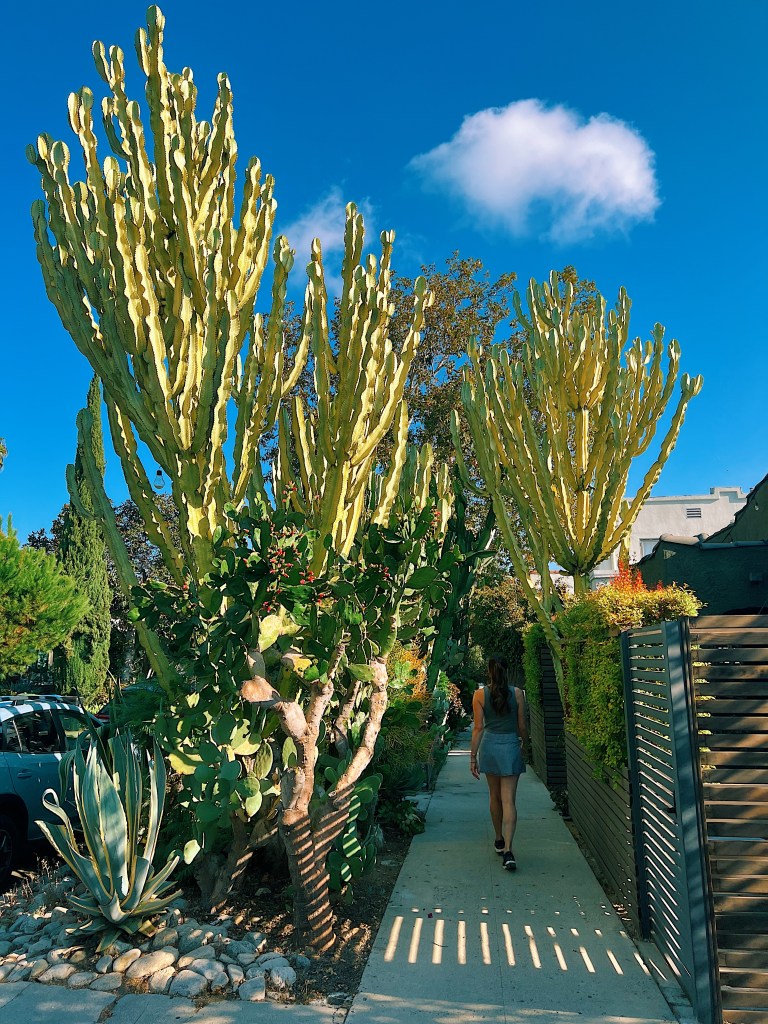
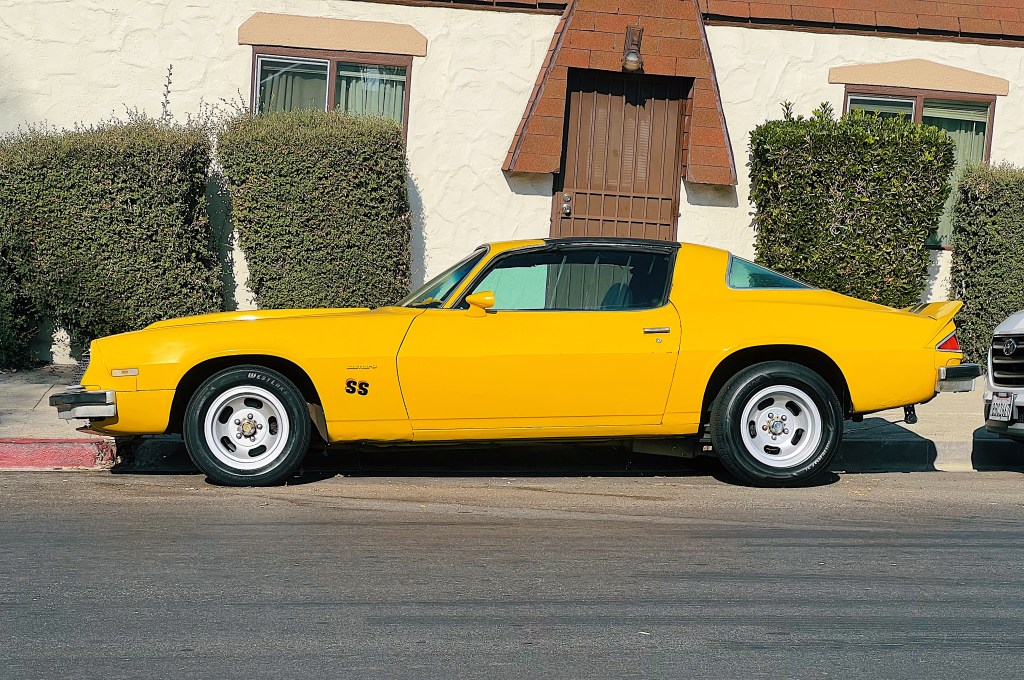
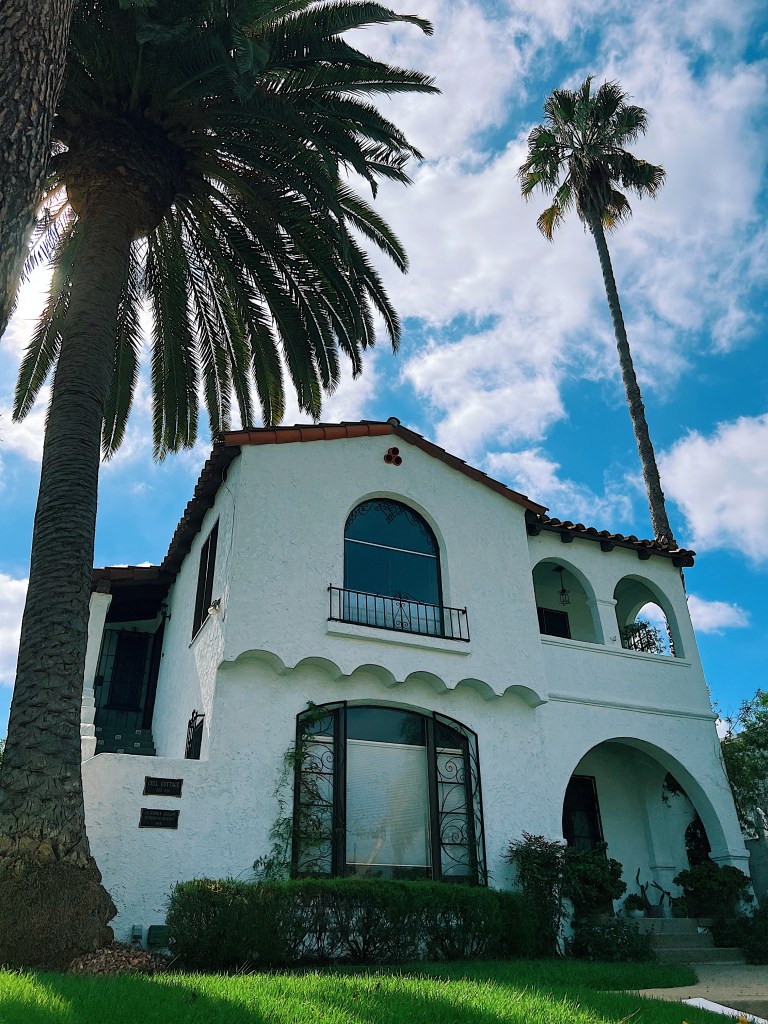
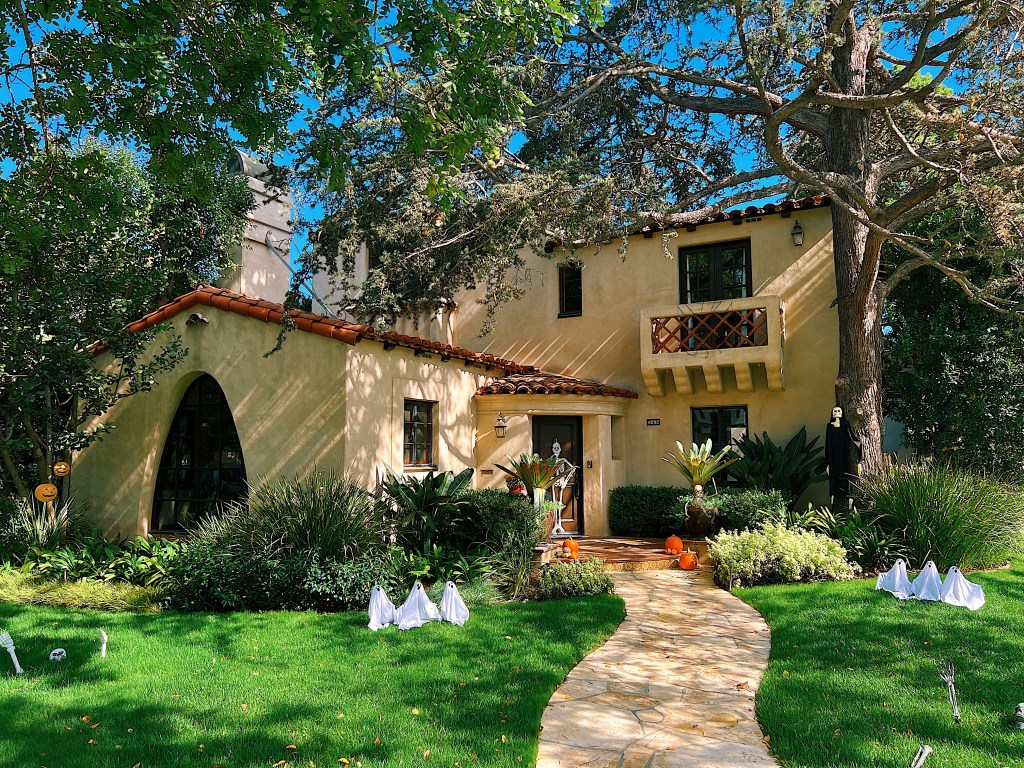
Our son, Jake, and daughter-in-law, Kylie, recently purchased their first home. It is a beautiful Spanish Colonial Revival house in the California Heights historic district that was developed in the late 1920s. Jake and Kylie took us for a tour through the neighborhood. Here are some of the houses we passed, starting with Jake and Kylie’s home.
Apart from the coyote threat and the constant drone of the small planes flying overhead, it truly is an idyllic neighborhood.
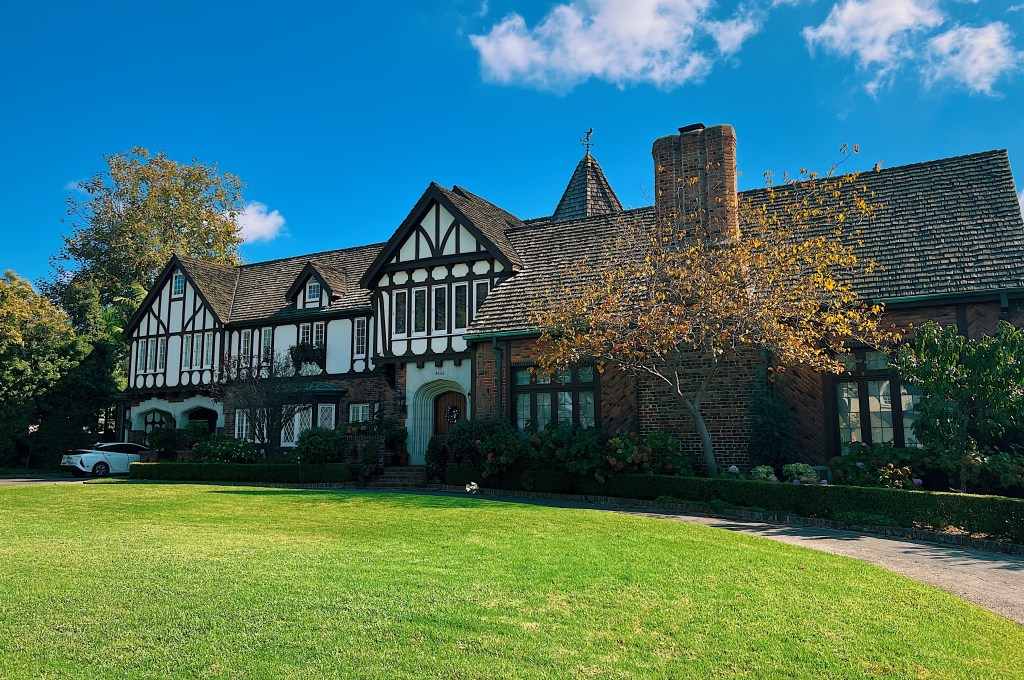
We wandered over to nearby Los Cerritos. Established in 1906, the Los Cerritos neighborhood consists of larger homes, some of which you may recognize from the movies, including this home from Ferris Bueller’s Day Off.
And this home from Donnie Darko
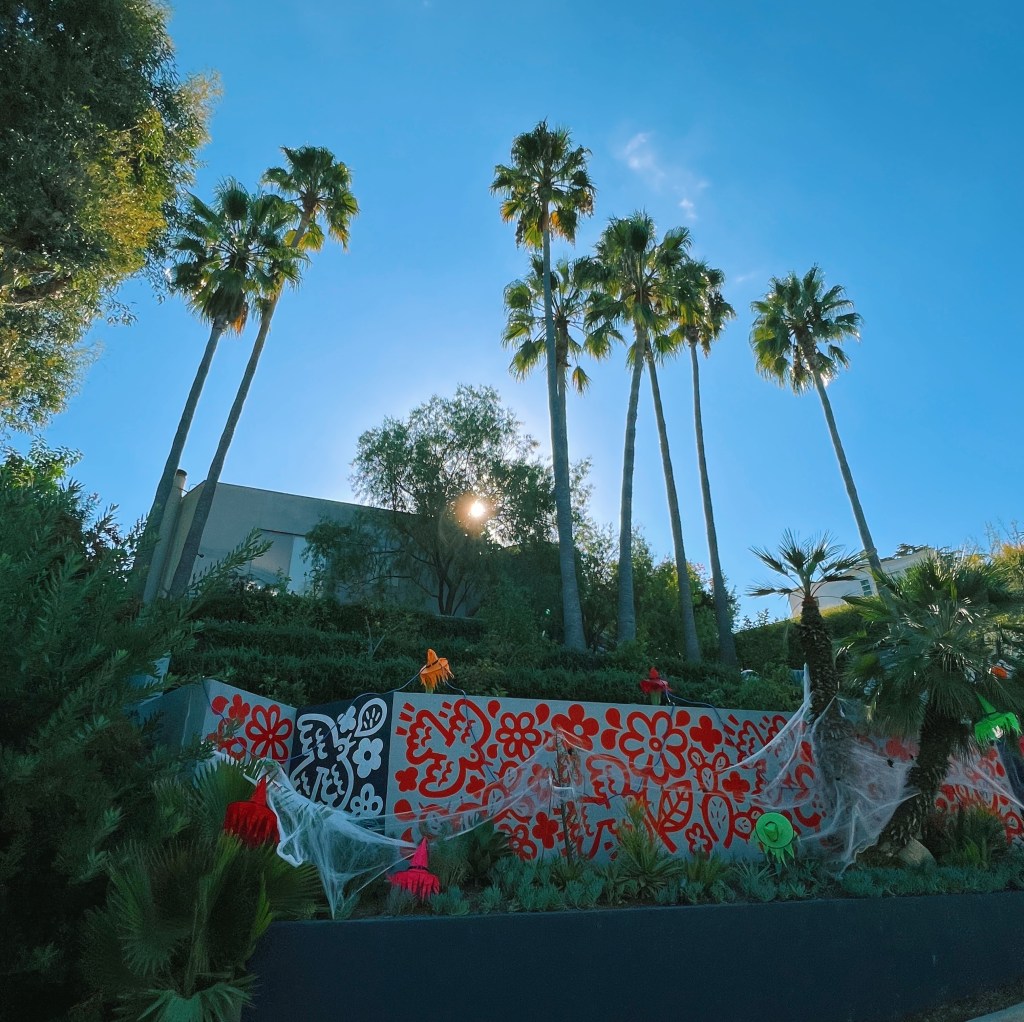
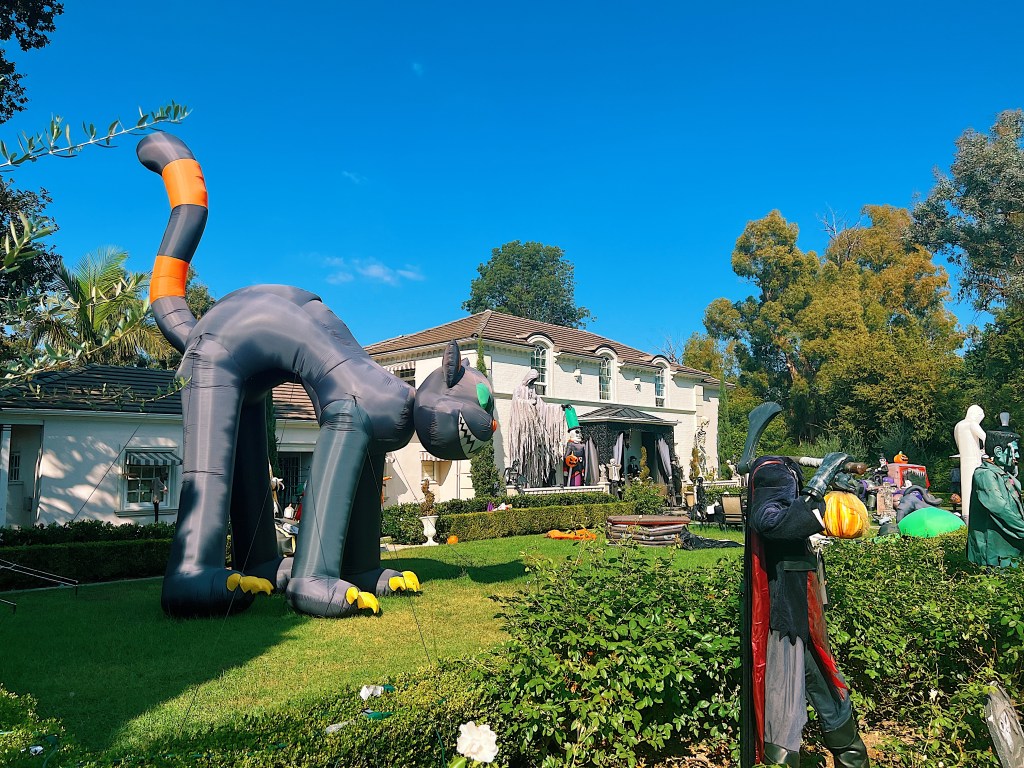
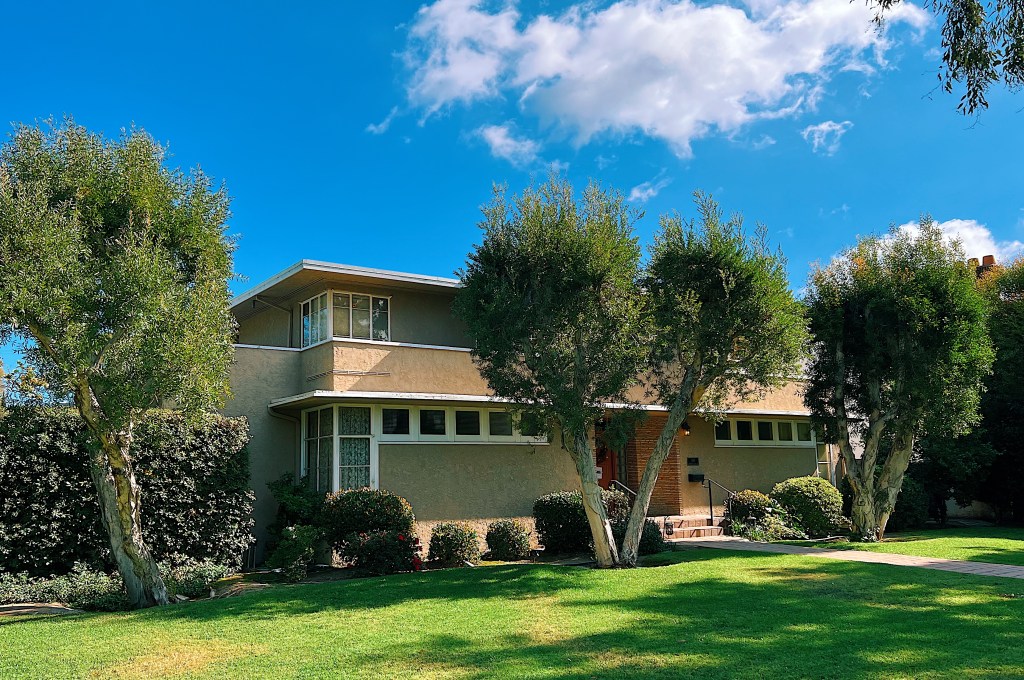
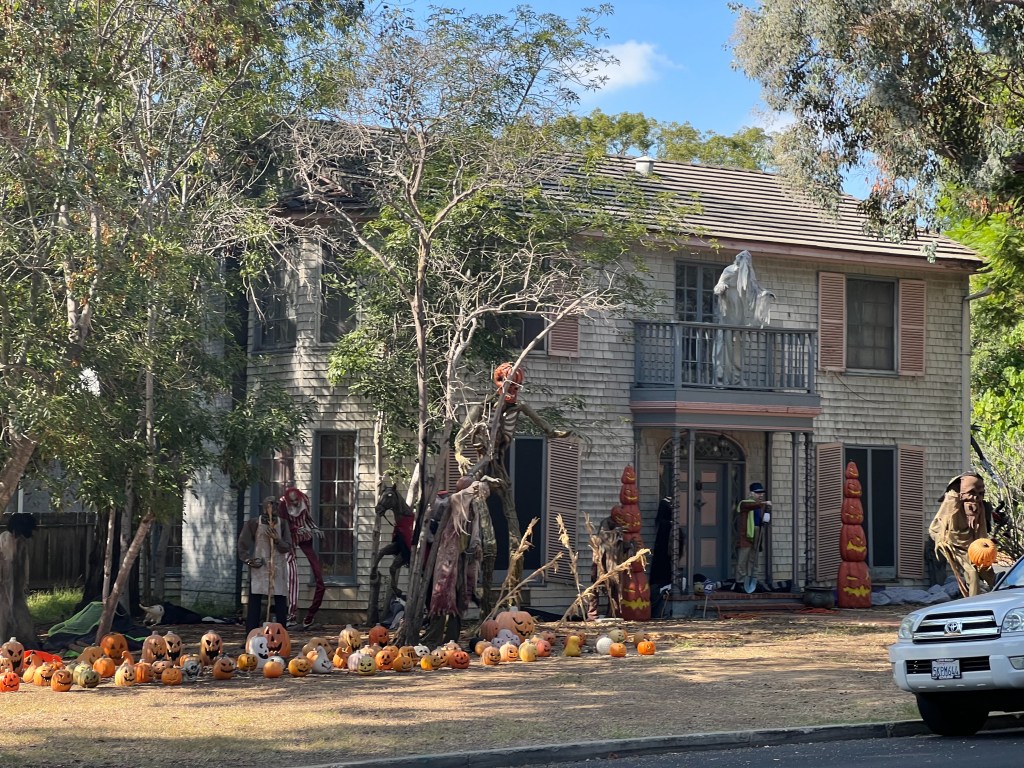
Here are some other homes from the neighborhood. With Halloween just a few days away, some had gone all in with their decorations.
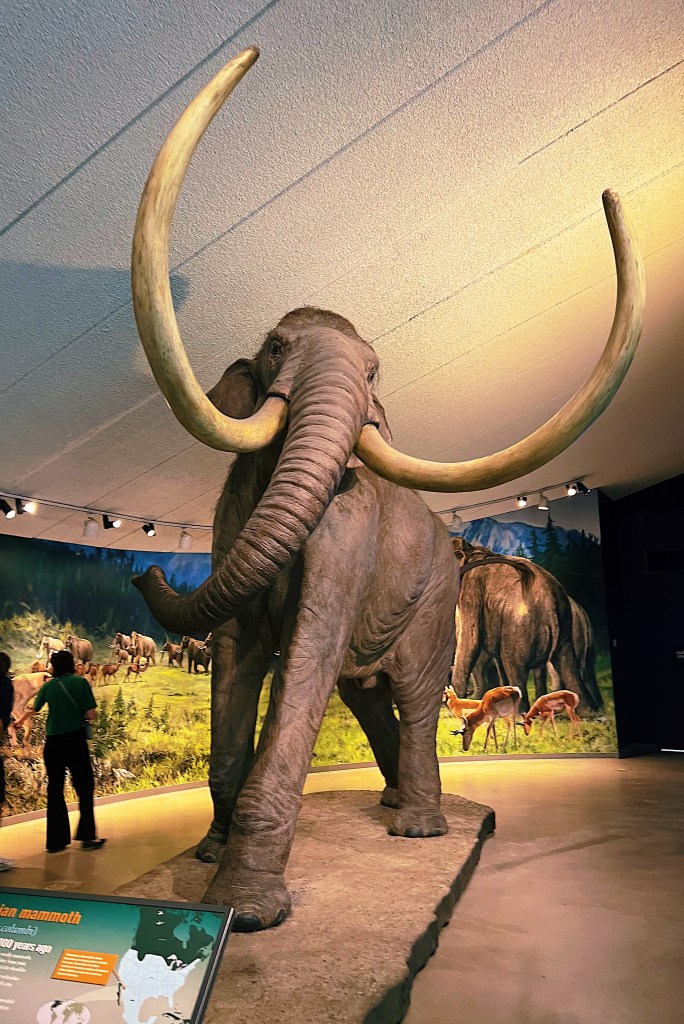
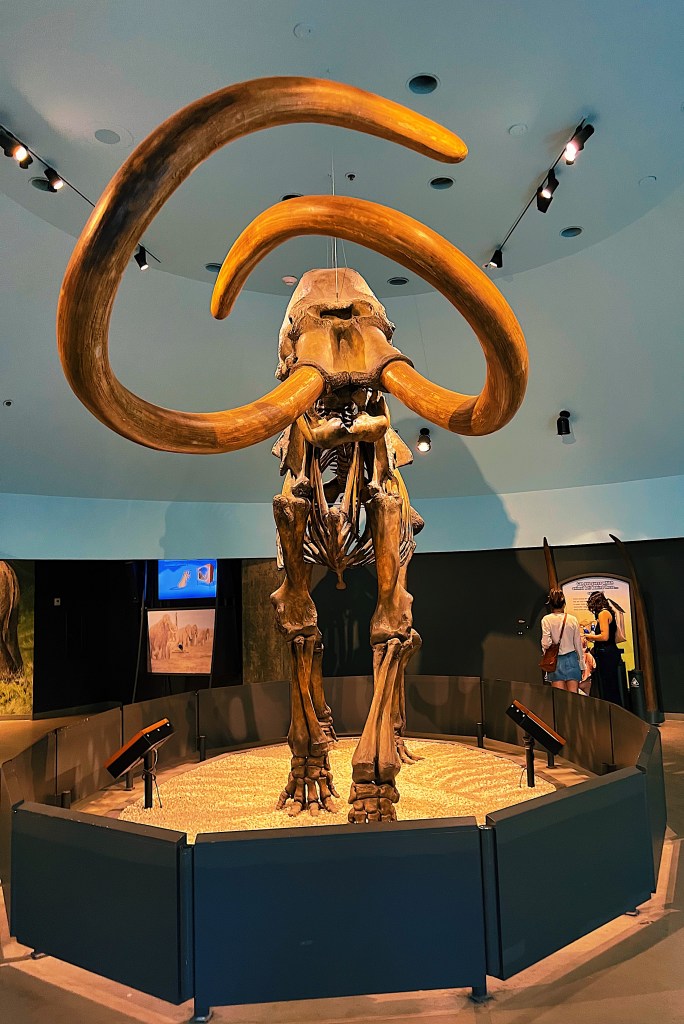
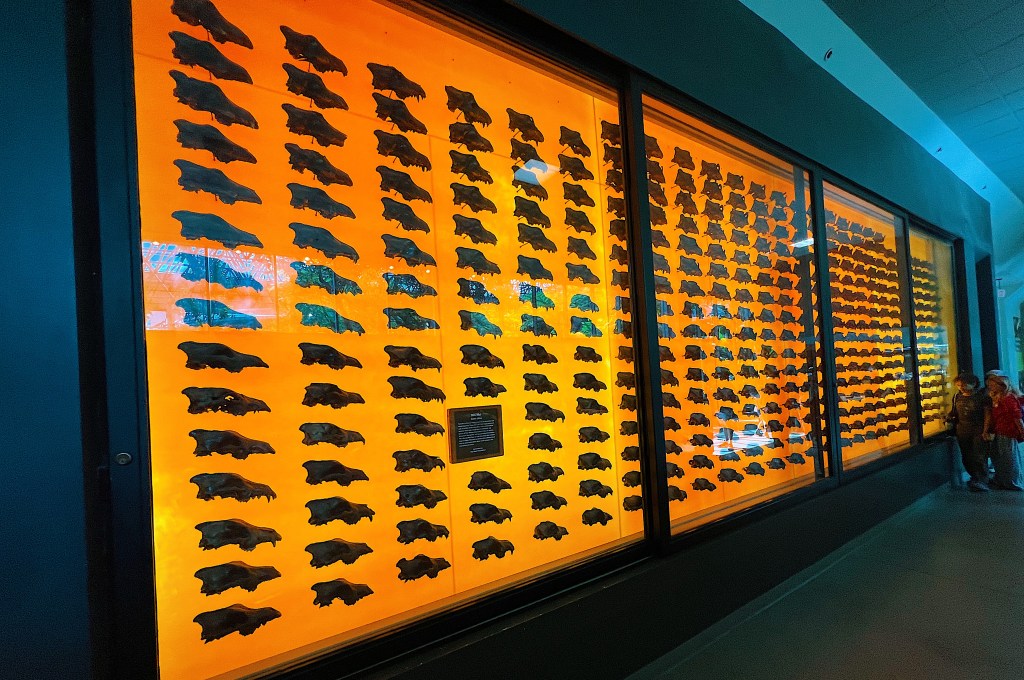
In the center of Los Angeles, next to the Los Angeles County Museum of Art (LACMA) are the La Brea Tar Pits, an active paleontological research site. Over many centuries, animals ventured into the pits and became stuck and their bones have been preserved. There is now a museum on the site displaying a sample of the over 750,000 specimens that have been discovered there. Among the prehistoric species found at the Pits are mammoths, dire wolves, giant sloths and saber-toothed cats.
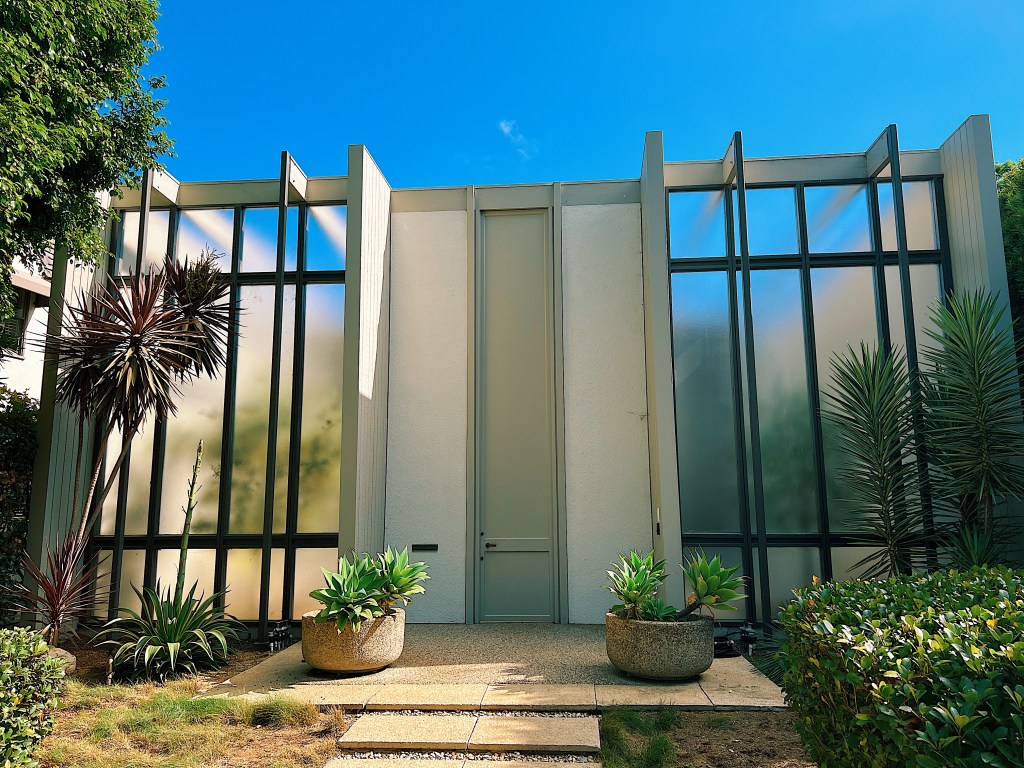
Museum entranceMammothMammoth skeletonEmma and friendDire wolf skullsDire wolf skulls
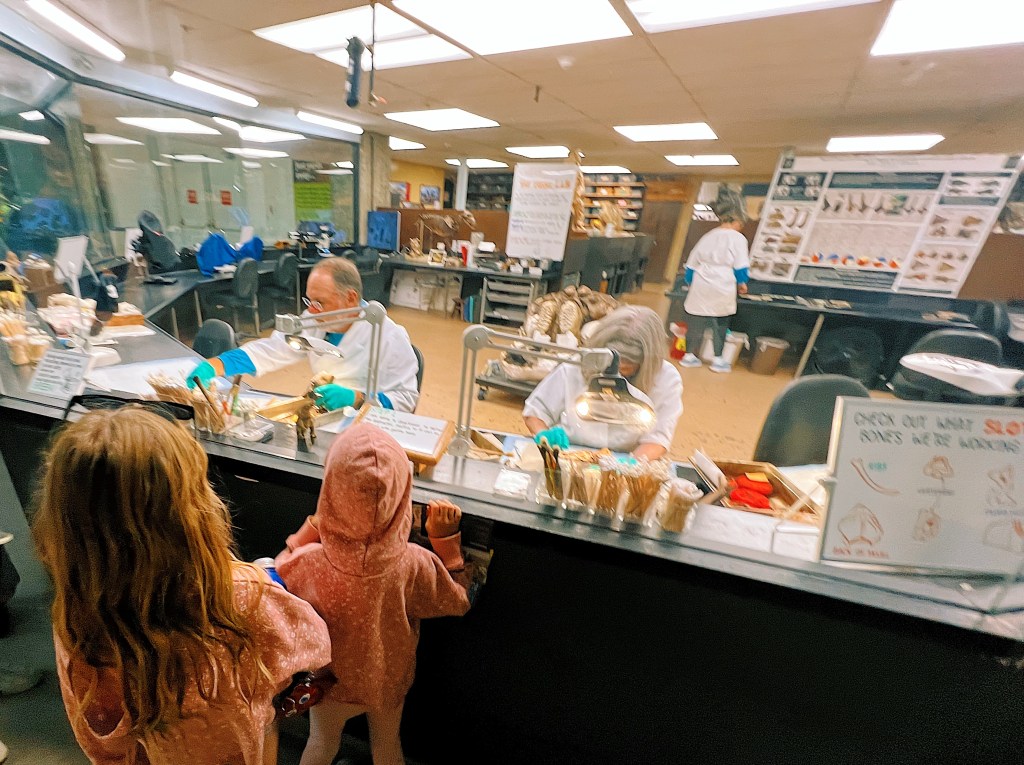
The scientists are still uncovering, preserving and studying bones.
Pit 91Preserving sloth bones
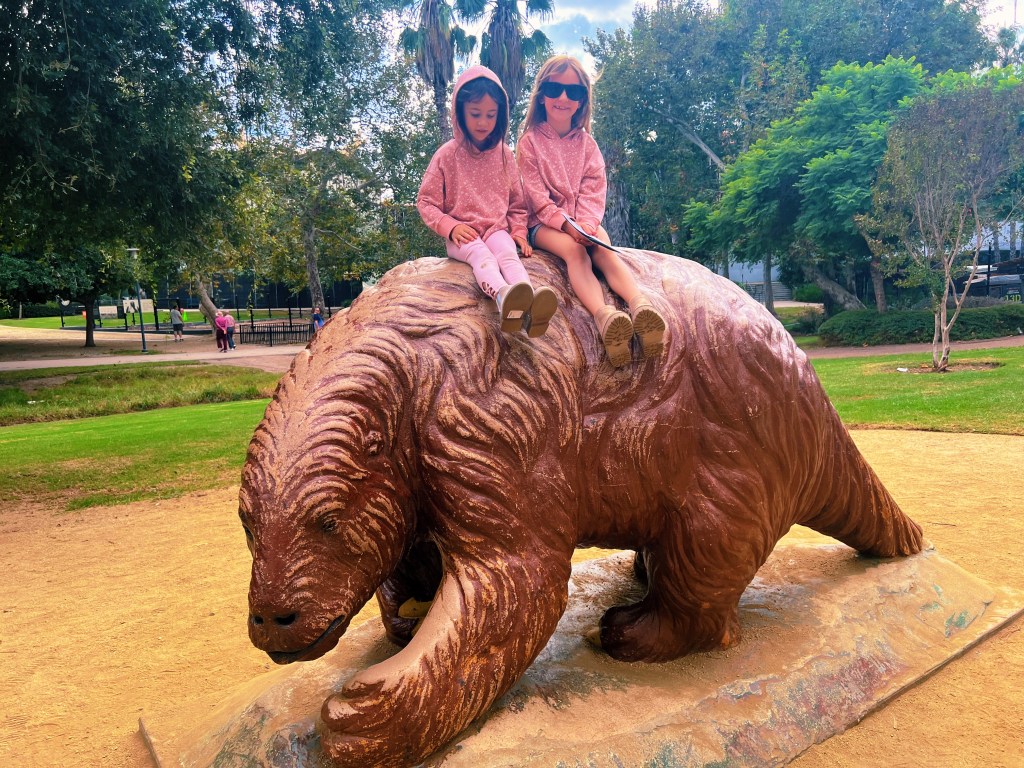
Here is the skeleton of a Harlan’s ground sloth.
And here is what it would look like if it was still roaming about today.
Outside Charlottesville, high up on a hill, is Thomas Jefferson’s home, Monticello. The name derives from Italian, meaning “little mountain”. Originally, the property consisted of a 5,000 acre plantation growing tobacco and labored on by slaves. Jefferson designed the home at the age of 26 and the similarities with the University of Virginia (UVA) campus buildings which he also designed is easy to see. Today, the home, along with the UVA campus have been designated a UNESCO World Heritage Site.
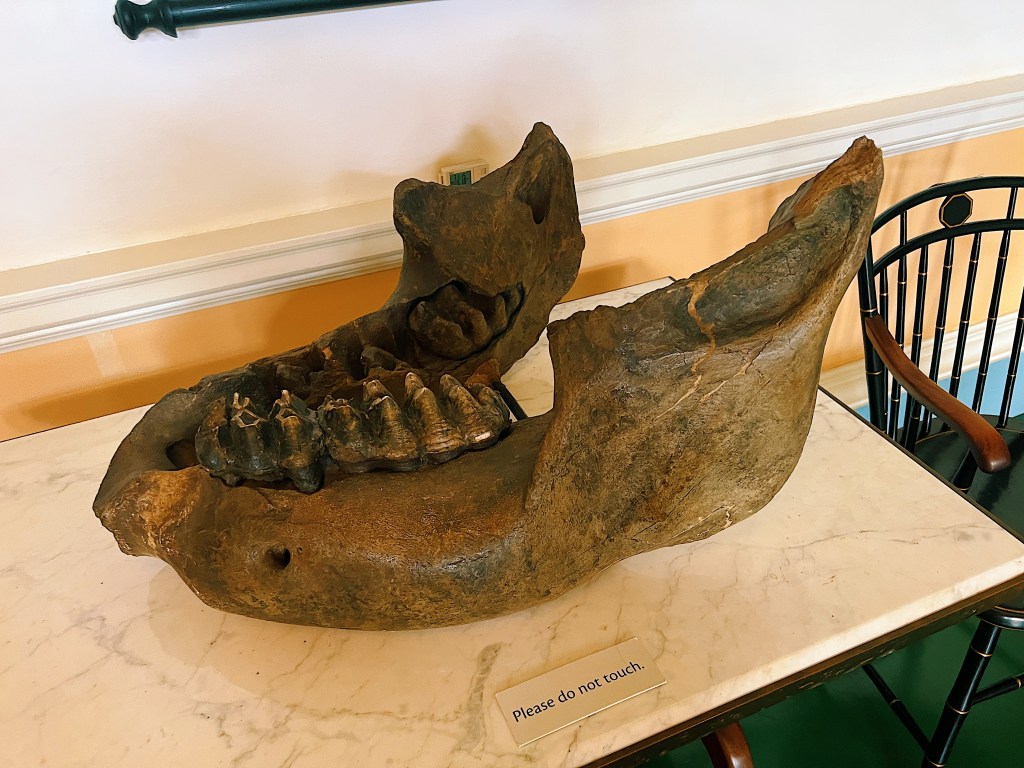
Jefferson was very much a renaissance man and you get an idea of his various interests as you walk through the home. There is everything from a mastodon jaw
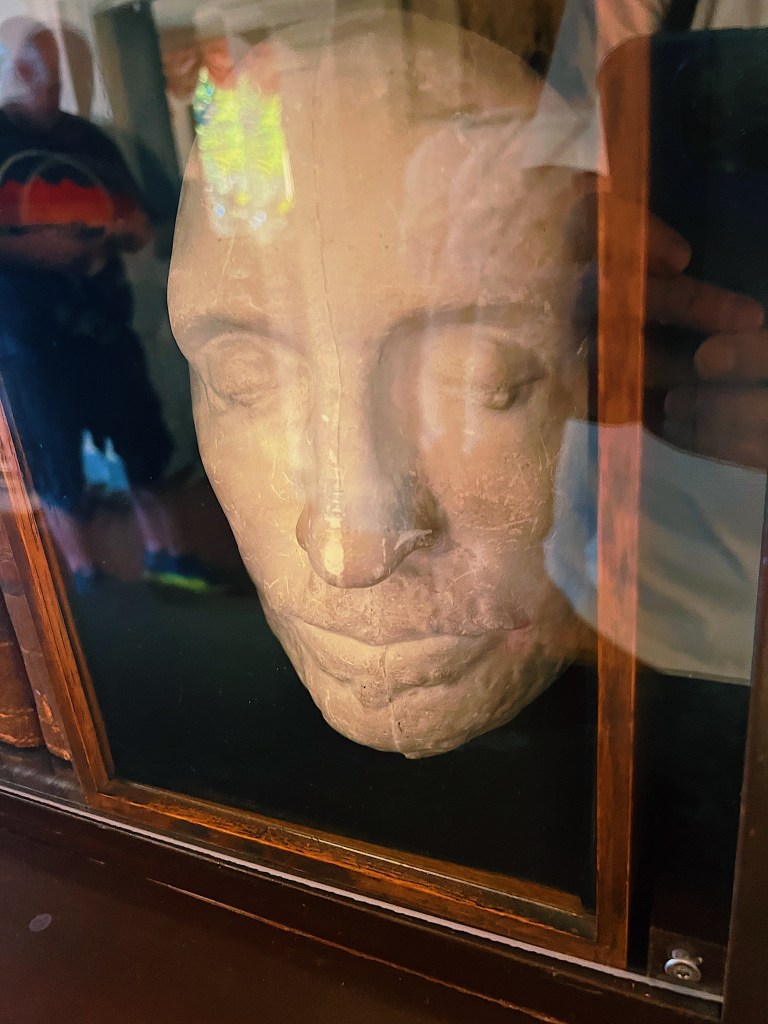
To Oliver Cromwell’s death mask.
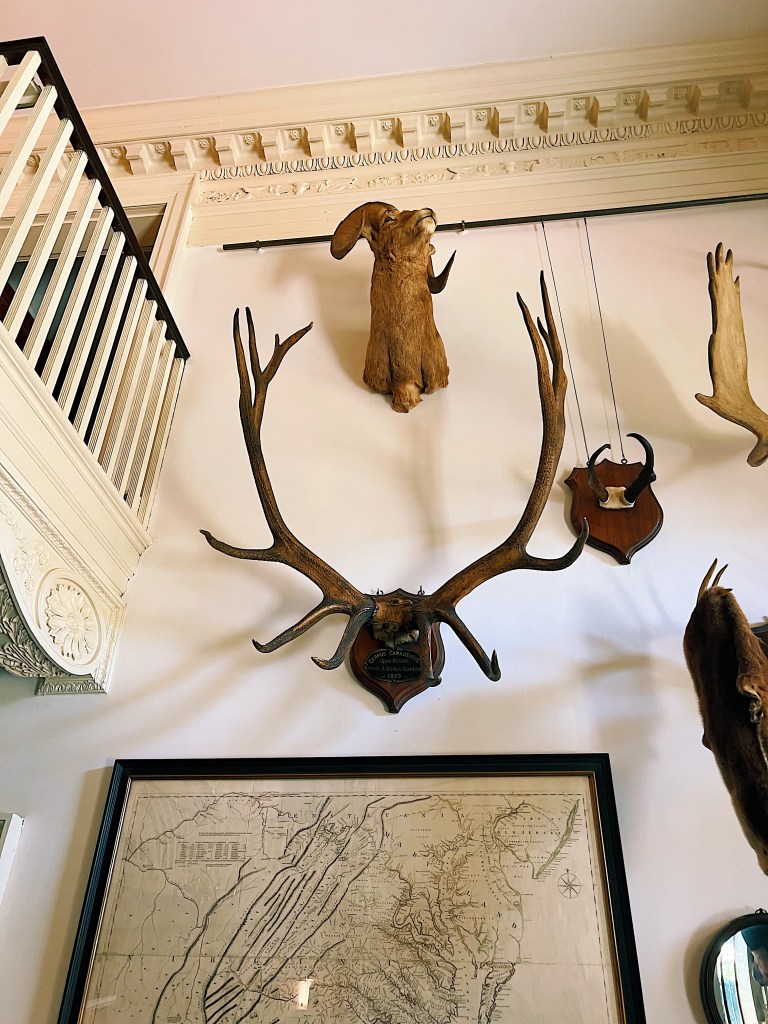
To Elk horns brought back from the Lewis and Clark expedition.
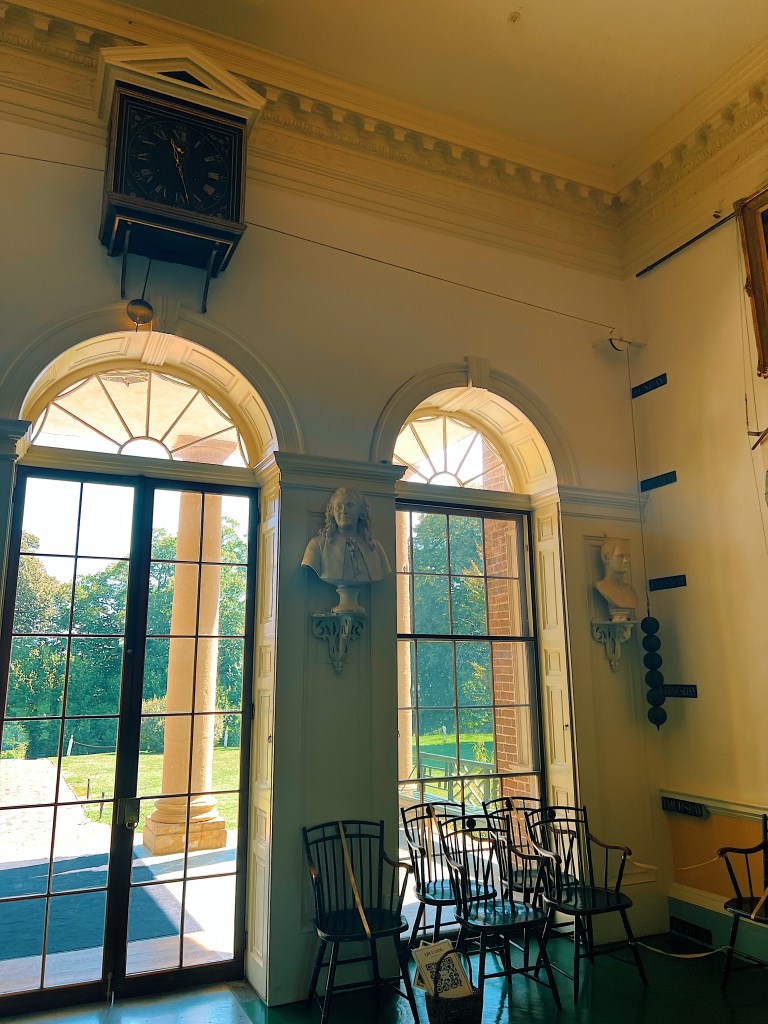
Jefferson even designed a clock hanging in the entrance hall that tells, not only the time of the day, but also the day of the week. If you look at the following photo you can see weights hanging down the side of the wall that worked the clock by gravity. Jefferson realized that the slow falling of the weights as the week progressed could also be used to tell the day. It’s not visible in the photo, but the black stripes on the wall actually have the days of the week, starting from Sunday. Looking at the top weight you can see that we were there on Tuesday morning.
Jefferson loved a gadget. He wrote the Declaration of Independence on a swivel chair of his own design and he used a polygraph which enabled him to make exact copies of everything that he wrote. His use of the machine has been a boon to historians as he kept copies of many letters that he wrote. You can see both the swivel chair and the polygraph in his office in the following photo.
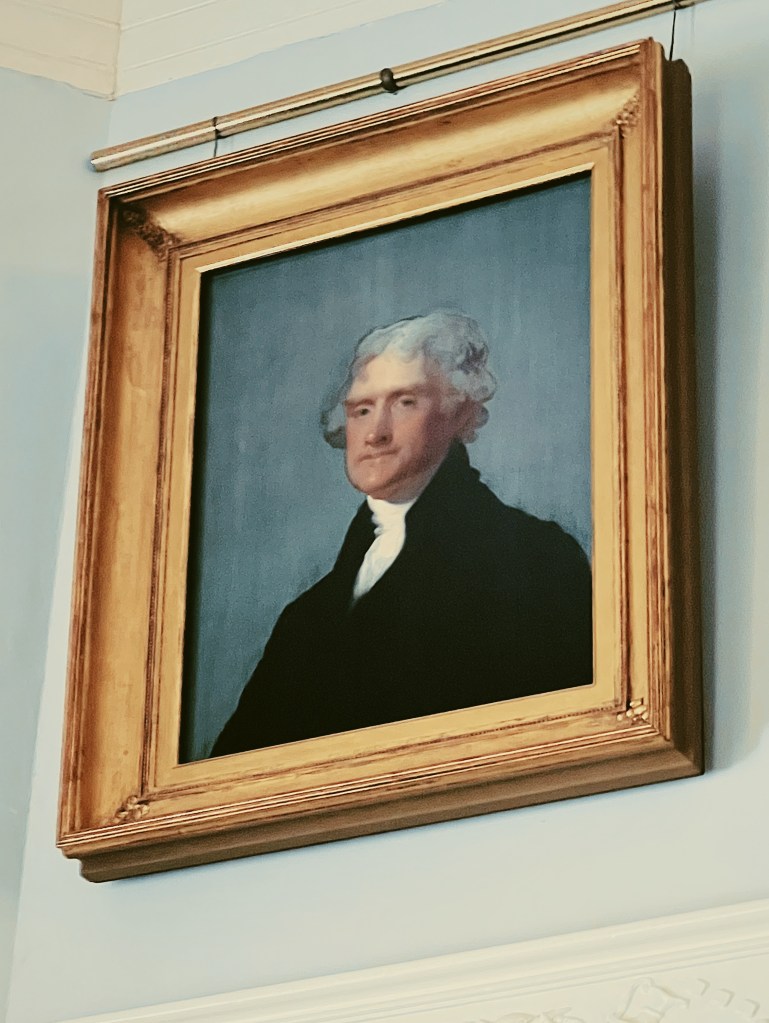
Here is a portrait of the great man. The likeness in this painting was used for his portrait on the United States two dollar bill.
Here are his actual boots. They have aged remarkably well and look rather comfortable.
And here is a map of the United States showing the country when he became President in 1801. Jefferson also had a good nose for a bargain. During his presidency, the size of the country would double with the Louisiana Purchase in 1803, under which the United States acquired 828,000 square miles in the middle of the continent from the French for a mere fifteen million dollars.
After his wife Martha died, Jefferson spent a number of years in France. While there, he noticed that the French would sometimes locate beds in alcoves in the walls of homes to save space. On returning to Monticello he adopted the practice.
The outside of the house is reminiscent of The Rotunda at the University of Virginia, which Jefferson also designed. It is also depicted on the tails side of the United States five cent coin (nickel). Jefferson, himself, is on the heads side.
By the standards of the time, Jefferson lived a long life, dying aptly enough on July 4, 1826 at the age of 83. Coincidentally, his friend and rival, John Adams, the second President of the United States, died later the same day. Jefferson is buried on the grounds under an epitaph that he wrote, “Here was buried Thomas Jefferson, Author of the Declaration of American Independence, of the Statute of Virginia for Religious Freedom, and Father of the University of Virginia.”
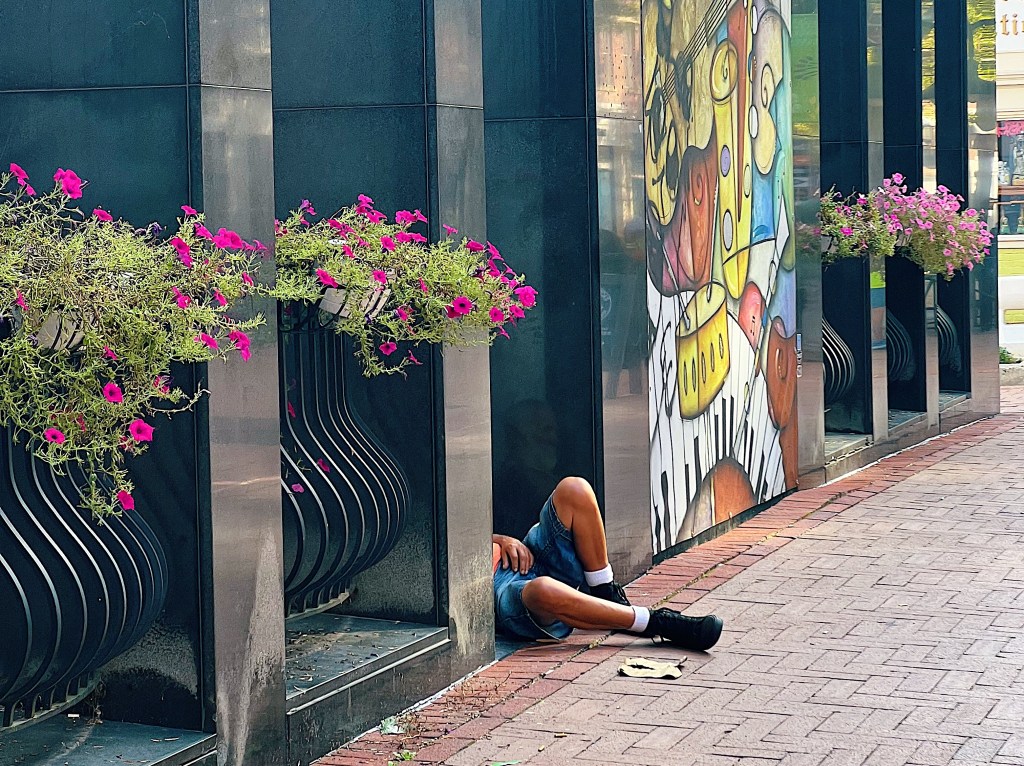
On a scorching hot Labor Day, we found ourselves In Charlottesville, Virginia, home of the University of Virginia, commonly known as UVA. We headed down to the pedestrian mall, in the historic part of town.
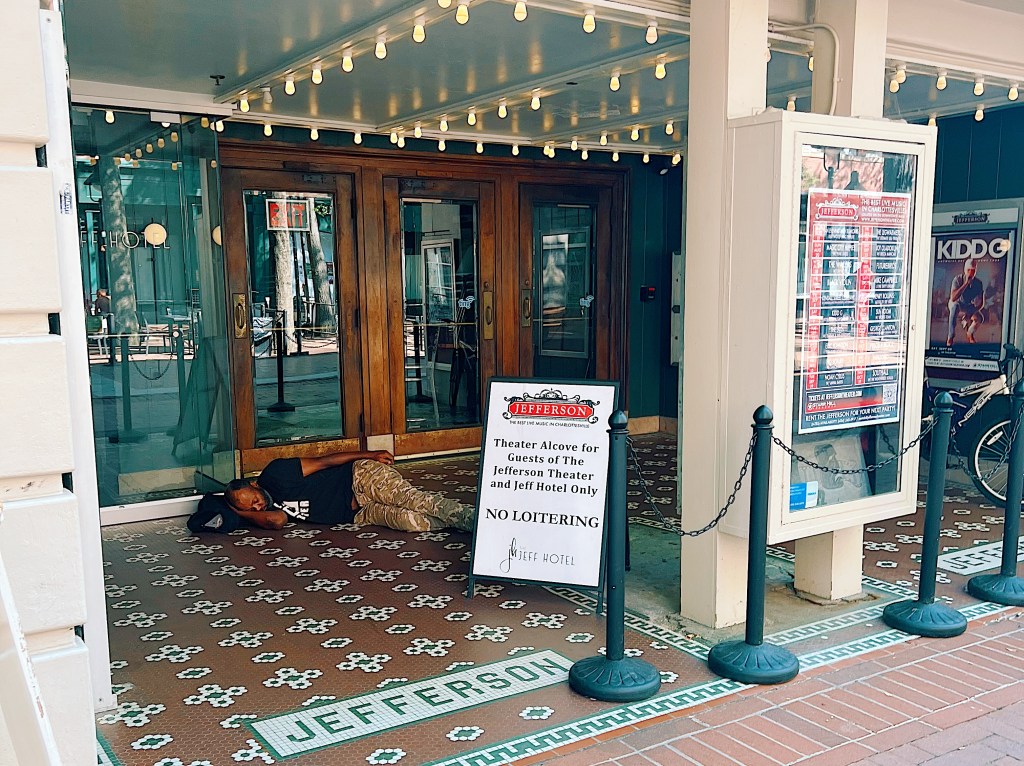
But with most places closed due to the holiday and temperatures soaring into the high nineties there weren’t too many people about (apart from the occasional homeless person trying to keep out of the sun).
With nothing much going on downtown, we headed over to the UVA campus, which was much more lively with students heading between classes, carrying their mandatory backpacks. We tried, unsuccessfully, to remember if backpacks were a thing during our college years. UVA was founded in 1819 by Thomas Jefferson and most of the architecture is unsurprisingly, Jeffersonian, the mix of neo-classicism and neo-palladianism that America’s third president favored. It is a massive campus, taking up 1,135 acres and catering to over 25,000 students.
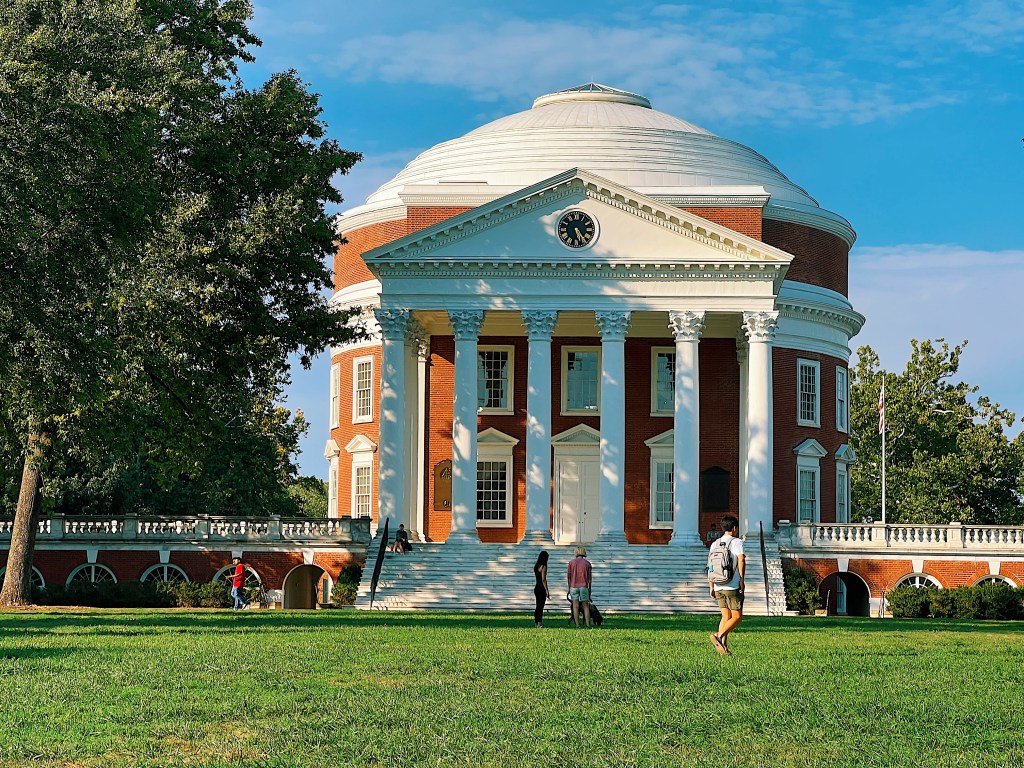
At the center of the University is its most iconic building, The Rotunda. It was designed by Jefferson, modeled after the Pantheon in Rome and accommodated the University’s library. The campus was unique at the time, as other universities in the English-speaking world surrounded a Church. Thus, to many, The Rotunda, symbolizes Jefferson’s belief in the separation of church and education.
The Rotunda
The Rotunda looks over a large lawn that is framed on two sides by The Range, which includes rooms for a select group of 54 fourth-year undergraduate students. Each room includes its own rocking chairs. The rooms were included in Jefferson’s original design and have housed many famous Americans, including President Woodrow Wilson and writer Edgar Allan Poe. In fact, Poe’s room has been preserved. Fittingly, for a writer who specialized in horror, it is number 13.
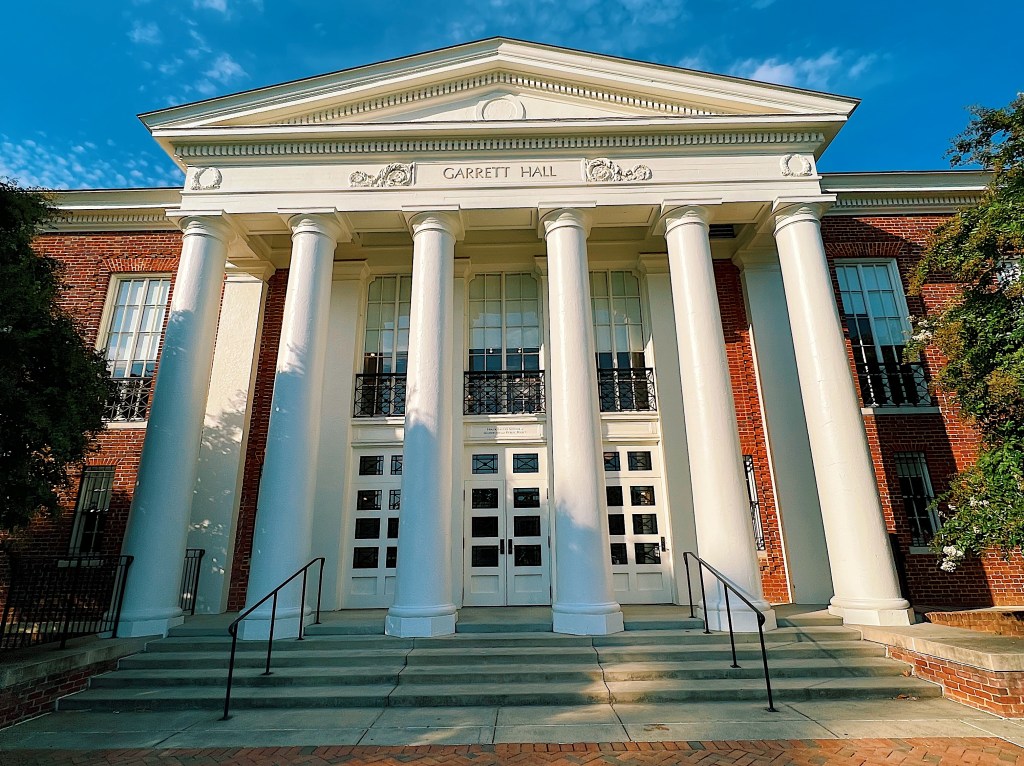
Here are a couple of other Jeffersonian buildings that we passed on campus.
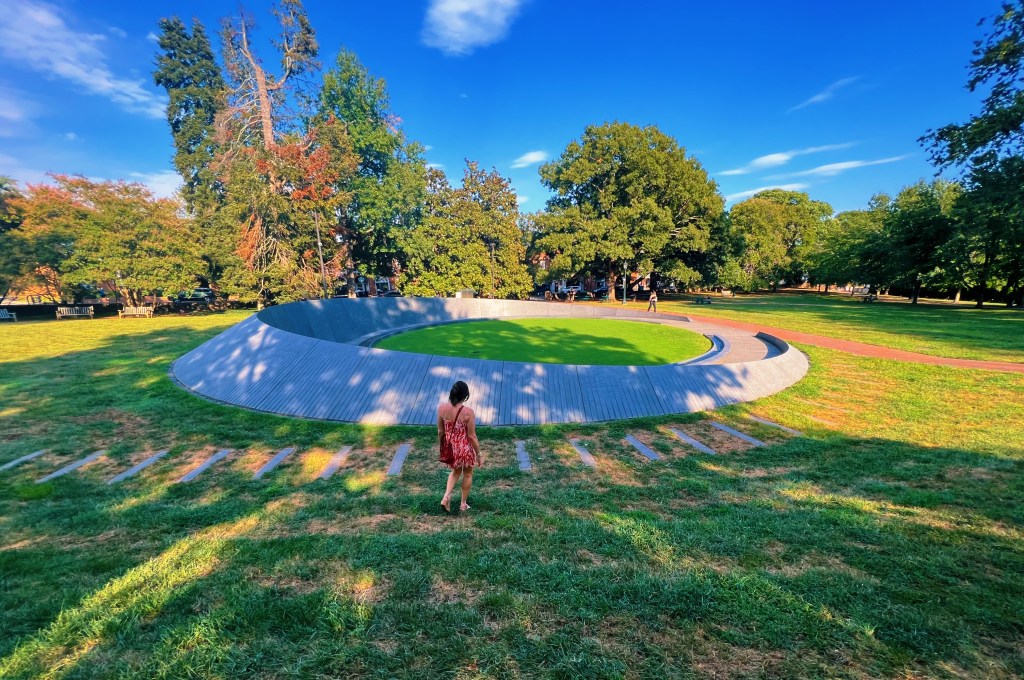
There is a memorial to the over 4,000 enslaved laborers who built and maintained the University. Completed in 2020, its beautiful simplicity reminded us of the Vietnam War Memorial in Washington DC.






























































 Mal and Lauren