January 15, 2023
Wellington is not well known for its great weather. We lived there for eighteen months back in the eighties and neither of us could remember a day to match the three recent days we spent there, which were all spectacular.
Perched on a sheltered harbor at the bottom of the North Island, Wellington is New Zealand’s capital and its third largest city with a population of over 400,000 in its metropolitan area. It is named after the same Duke of Wellington that defeated Napoleon at the Battle of Waterloo. Its Maori name is Te Whanganui-a-Tara which translates as The Great Harbour of Tara. Tara was the son of the Polynesian explorer Whatonga, whose descendants lived in the area.
We started the day exploring the waterfront and the Sunday market.


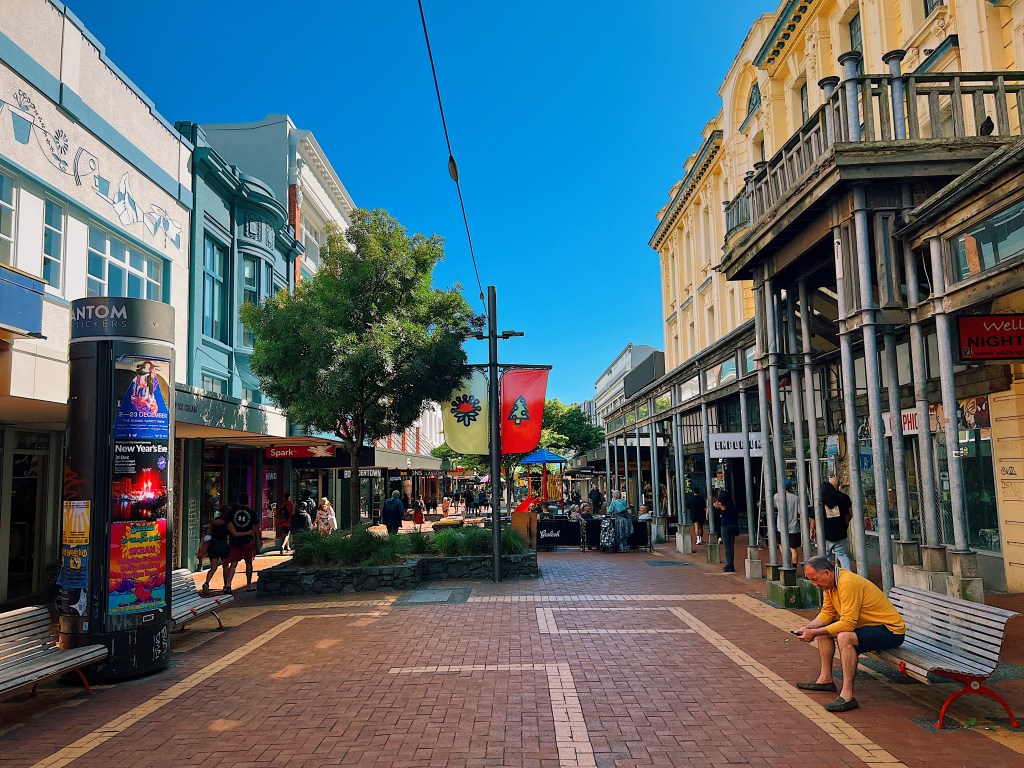
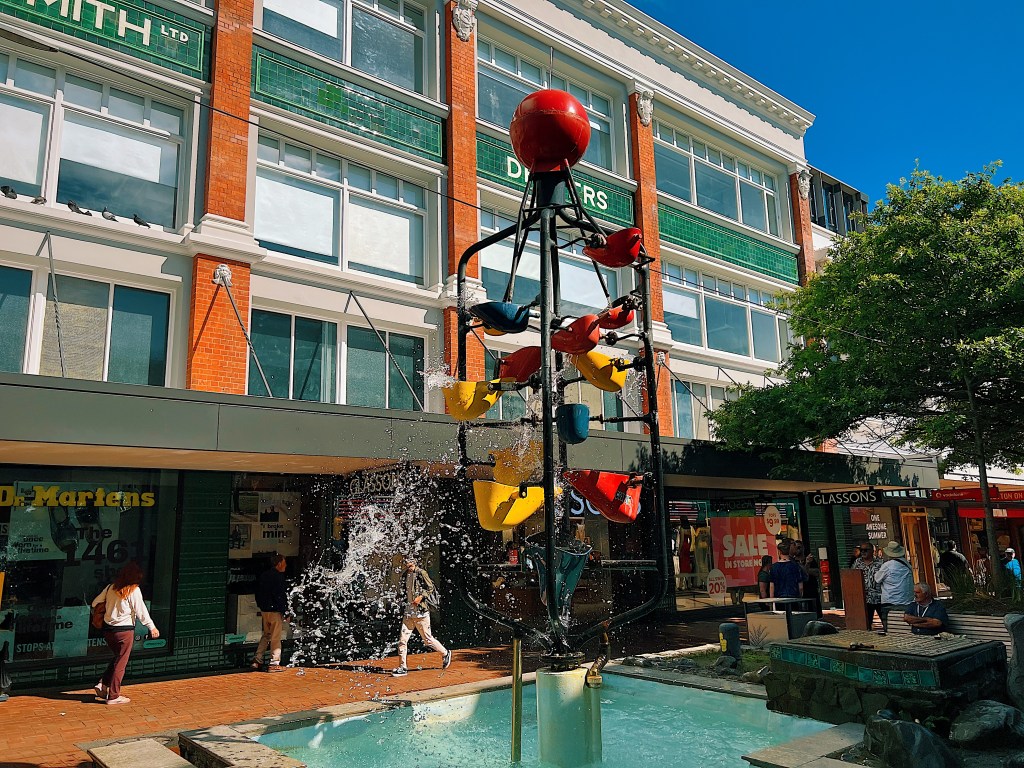
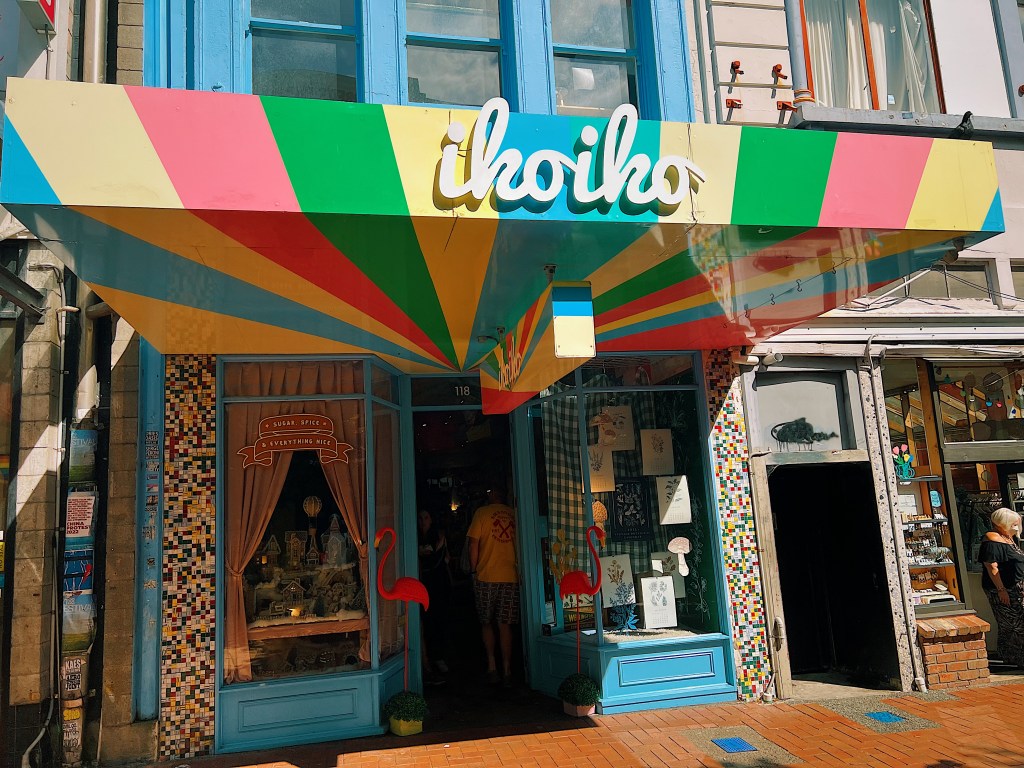
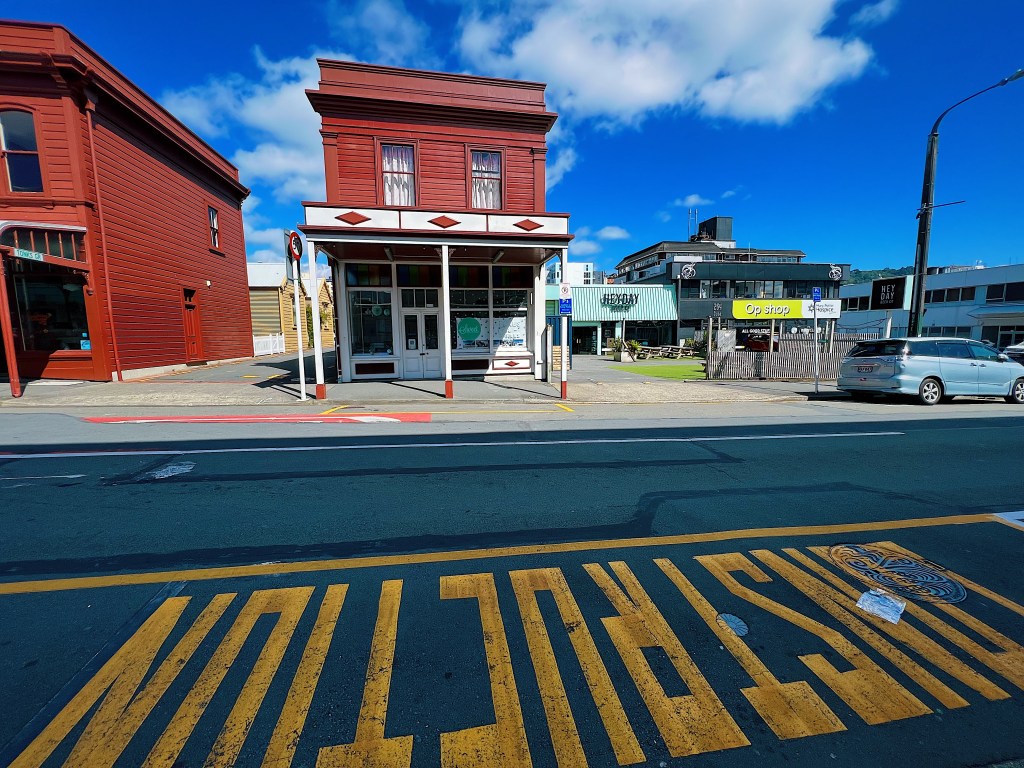
From there we walked along nearby Cuba Mall, a popular and somewhat quirky shopping street. Lauren used to work on the street but through the fogs of time couldn’t remember exactly where.


We are not sure if Roger would be our choice if we were in the market for a tattoo, seeing as he has spelled it two different ways on his storefront.

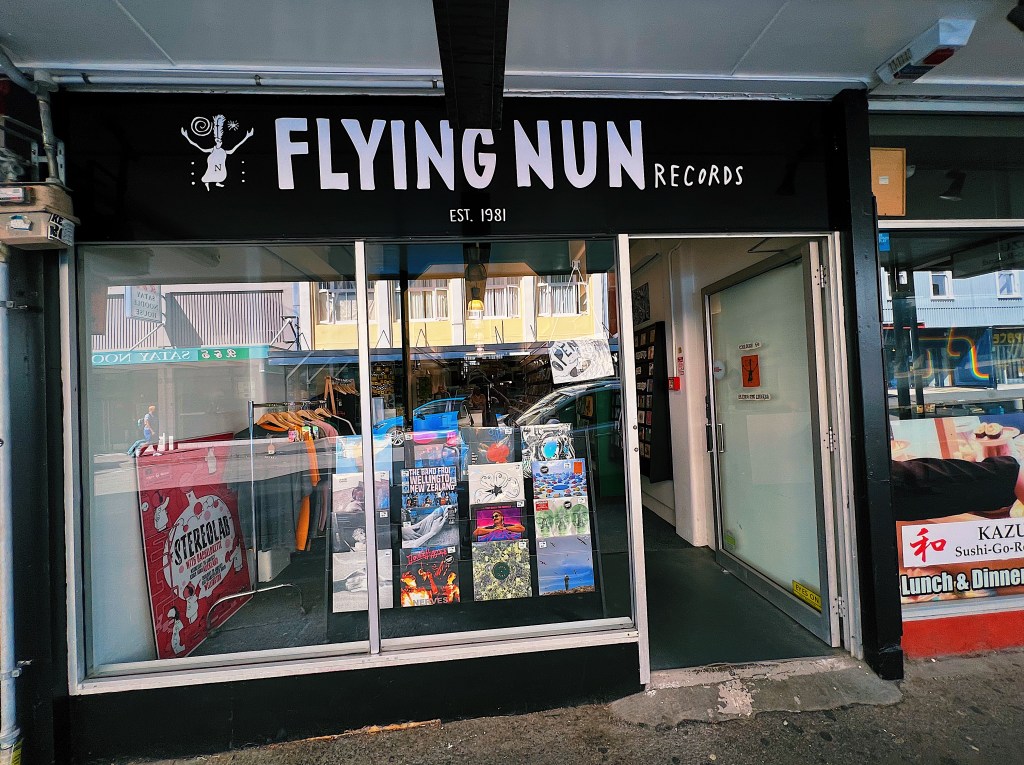
We passed by the Flying Nun record store. Flying Nun is a New Zealand independent record label. Started in the eighties, it is home to such iconic indie bands as The Chills, The Clean, The Bats, Straitjacket Fits and The Headless Chickens.
After a mandatory coffee, we headed up to nearby Zealandia.

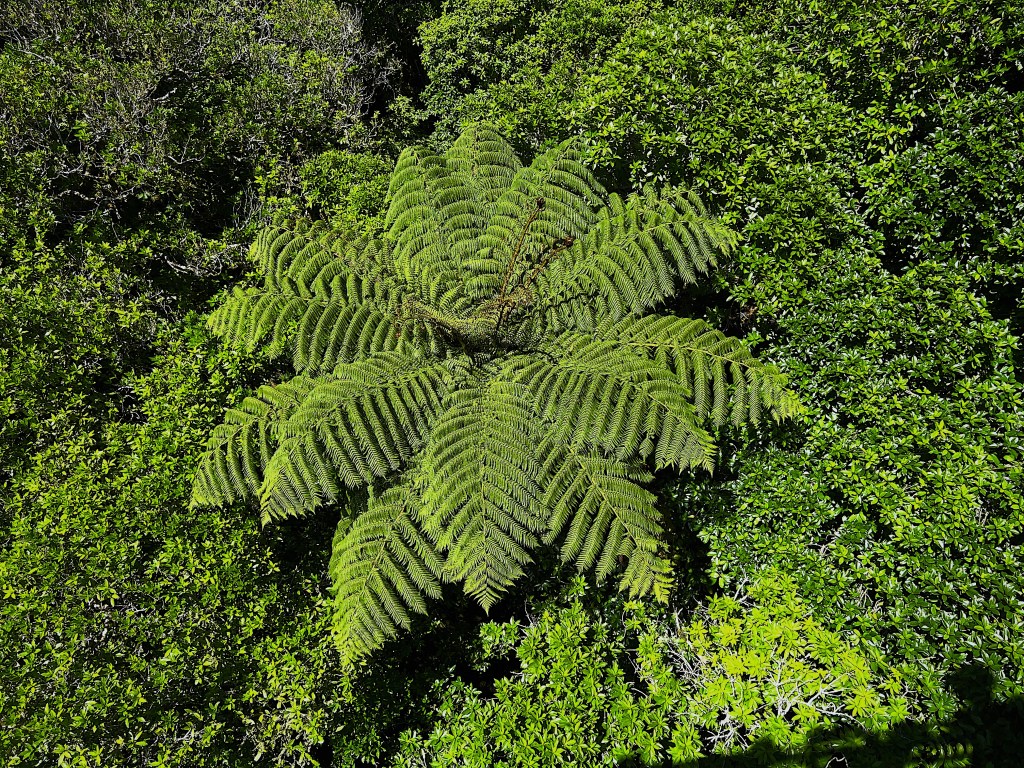
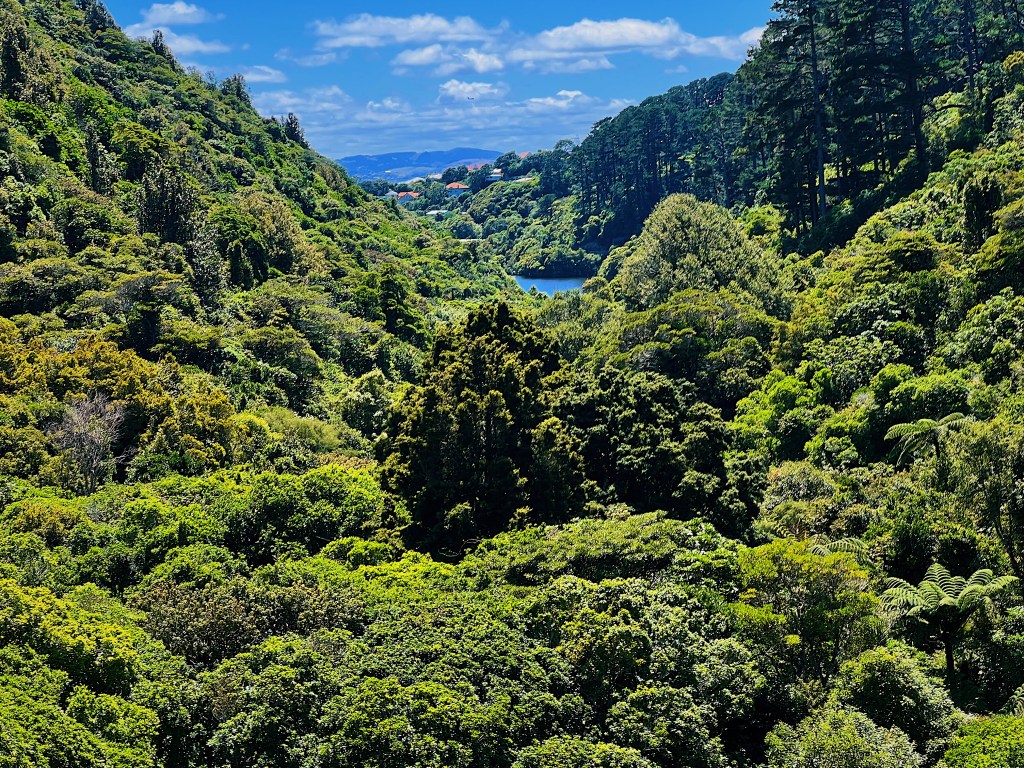
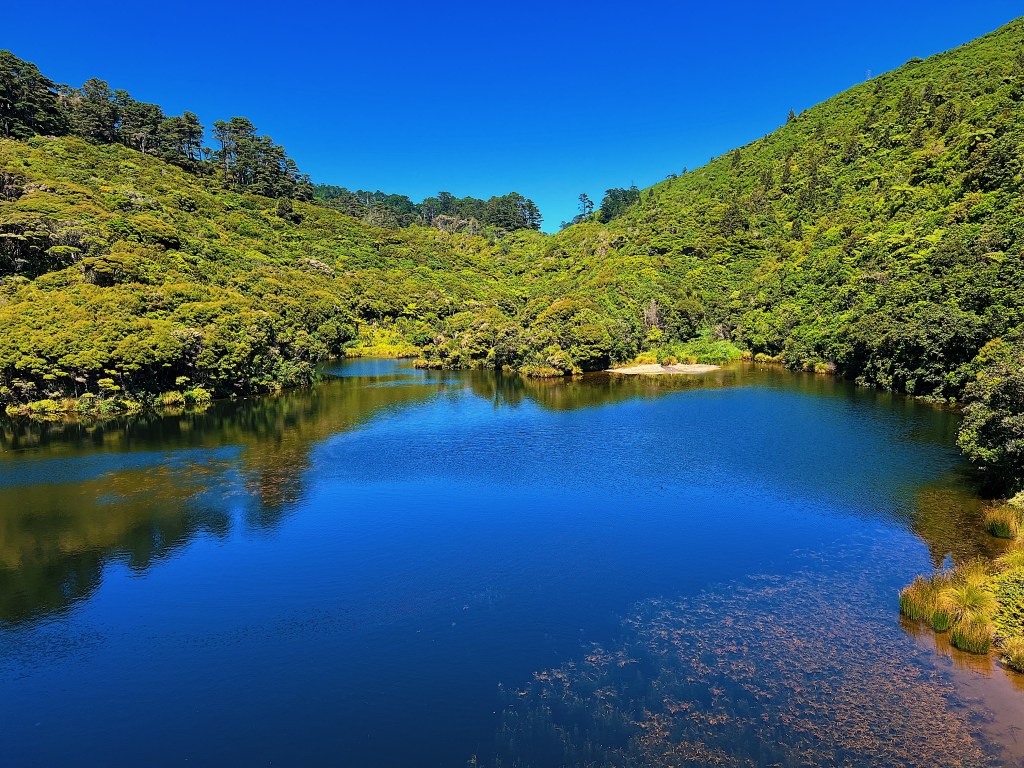
New Zealand only has two native mammals, both of which are bats. However, it has an abundance of native birds, and New Zealanders are crazy about them. In fact, a common nickname for New Zealanders is kiwi, named for the native bird, not the fruit. Unfortunately, when the Maori and later the Europeans arrived, they brought with them rats, stoats and cats that decimated the bird population. As a result, many native birds are extinct or under severe threat. New Zealand has belatedly responded to this threat by creating bird sanctuaries throughout the country and has an objective of being predator free by 2050. Most of these sanctuaries are on offshore islands which are easier to protect. A rare exception is Zealandia, a 225 hectare (500+ acre) sanctuary just minutes drive from downtown Wellington. The whole reserve is surrounded by a predator fence and is the home of over forty different species of native birds. It is a beautiful place to stroll through the native bush and admire its two beautiful reservoirs.



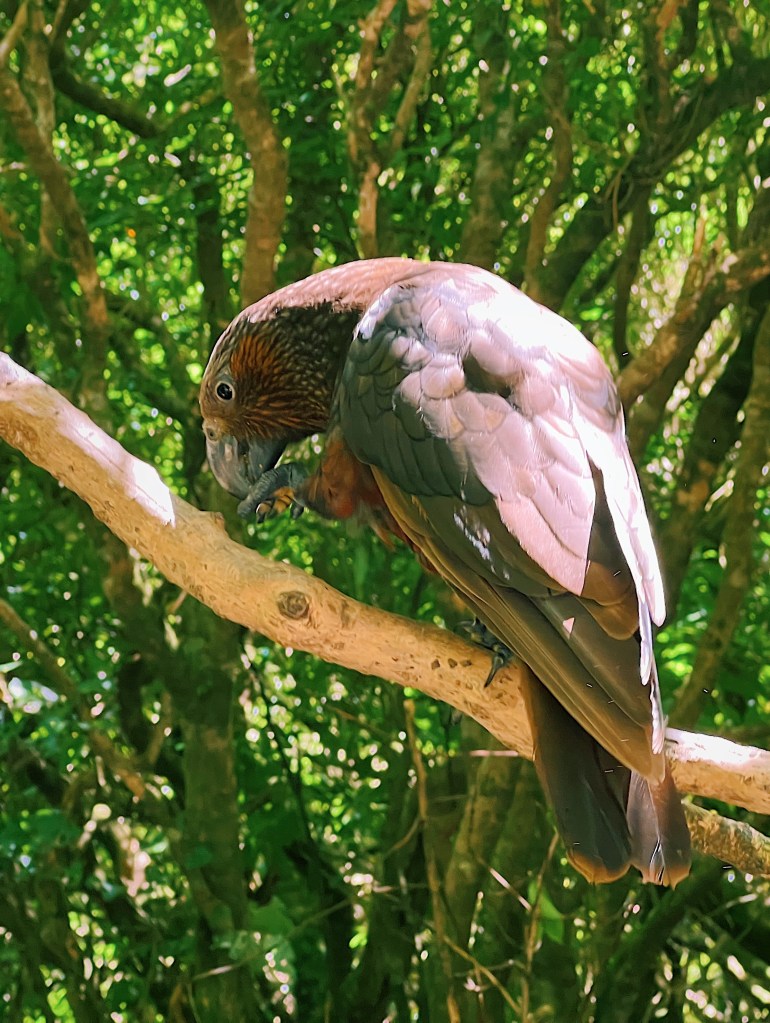
Among the birds we saw, were a number of Kaka, a boisterous bush parrot.
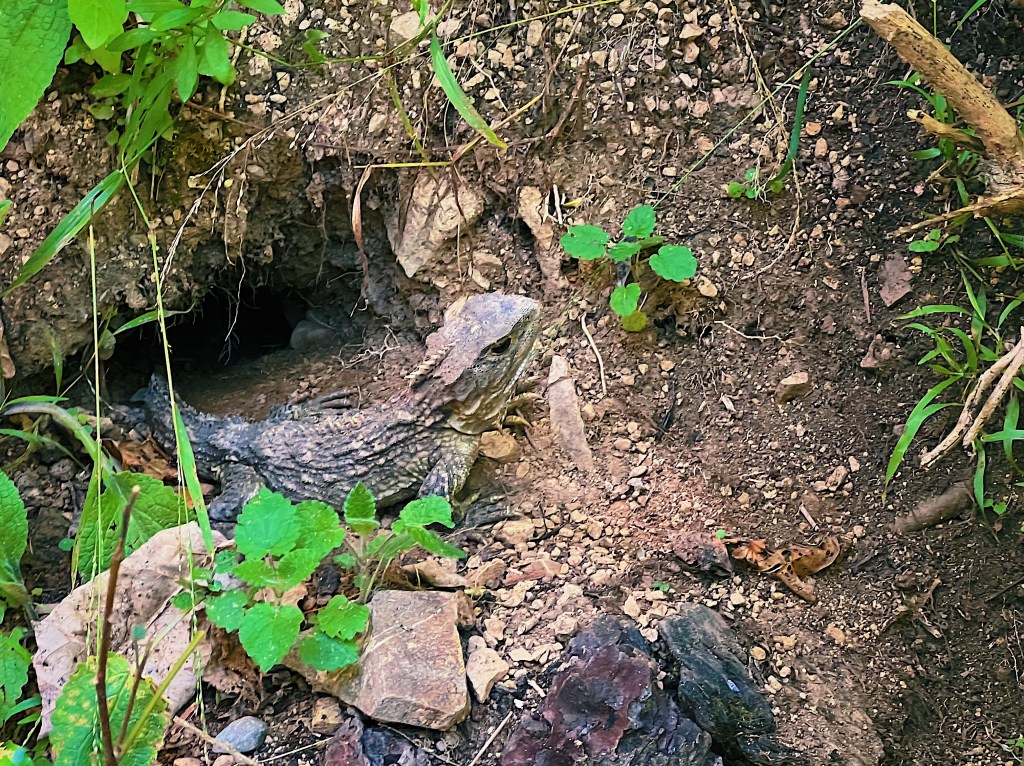
Zealandia is not just a sanctuary for birds, there are also numerous species of reptiles, including tuataras. Tuataras were around at the time of dinosaurs and are the only living members left of the Rhynchocophalian order. All the others died off about 65 million years ago.
At the top of Zealandia is a high bridge with views of the upper reservoir and down the valley.
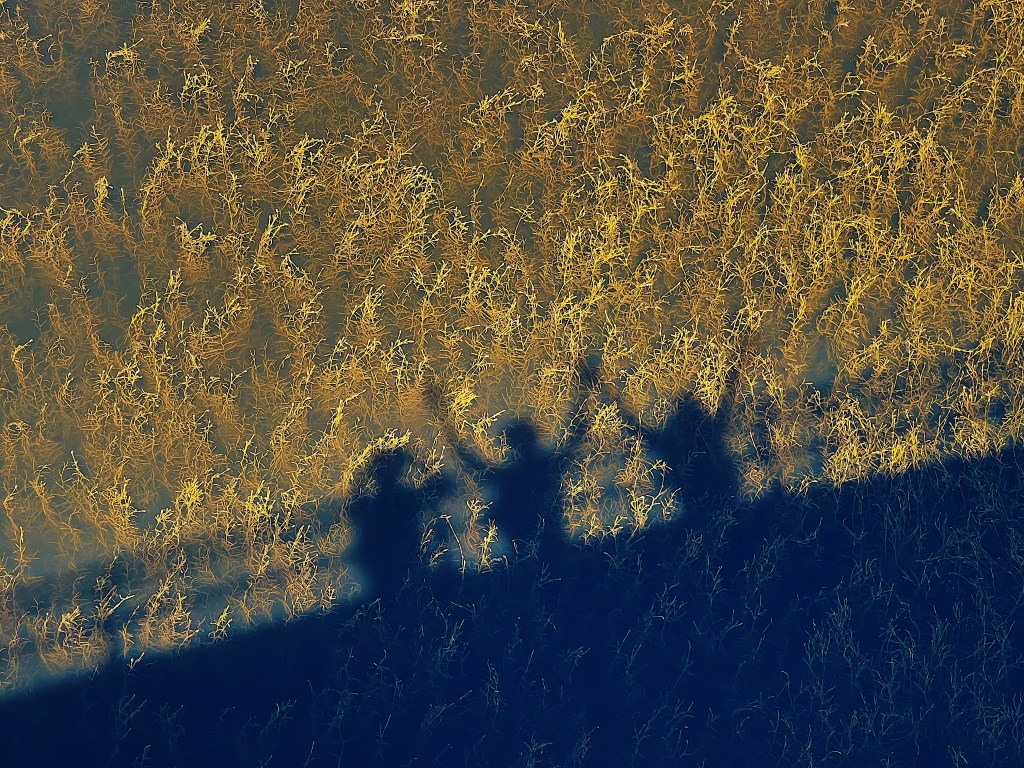

It’s also a good spot for a group photo.


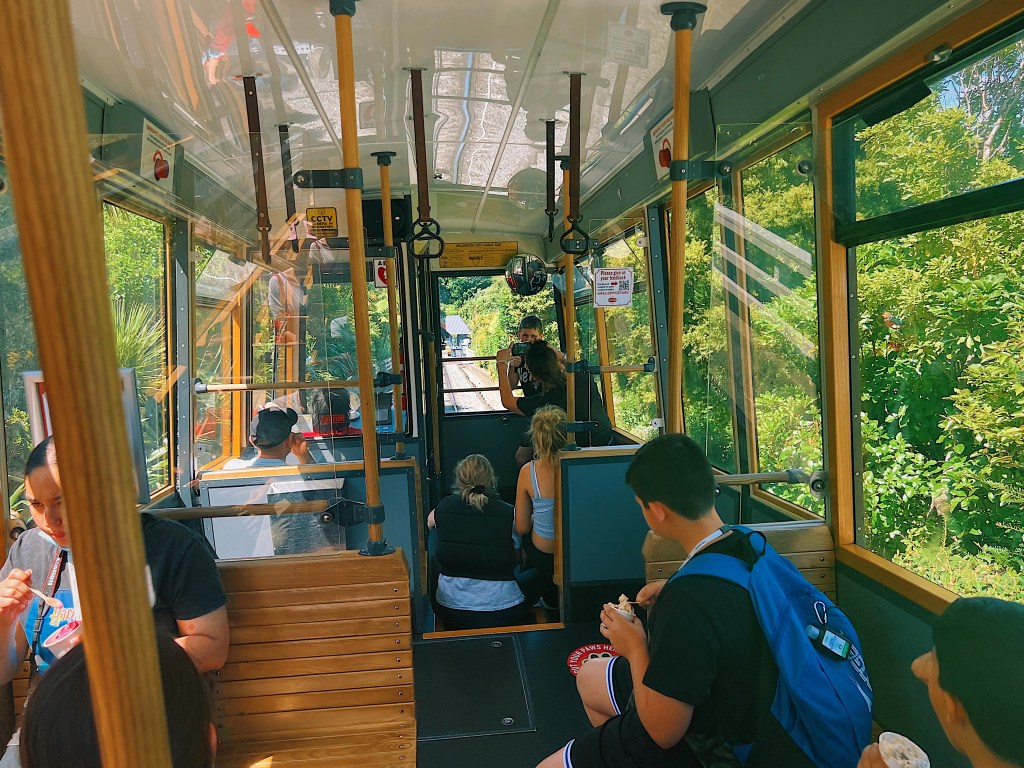
From Zealandia, it was a short walk to the top of Wellington’s cable car, which we rode down to Lambton Quay, Wellington’s main shopping street.





 Mal and Lauren