August 31, 2022
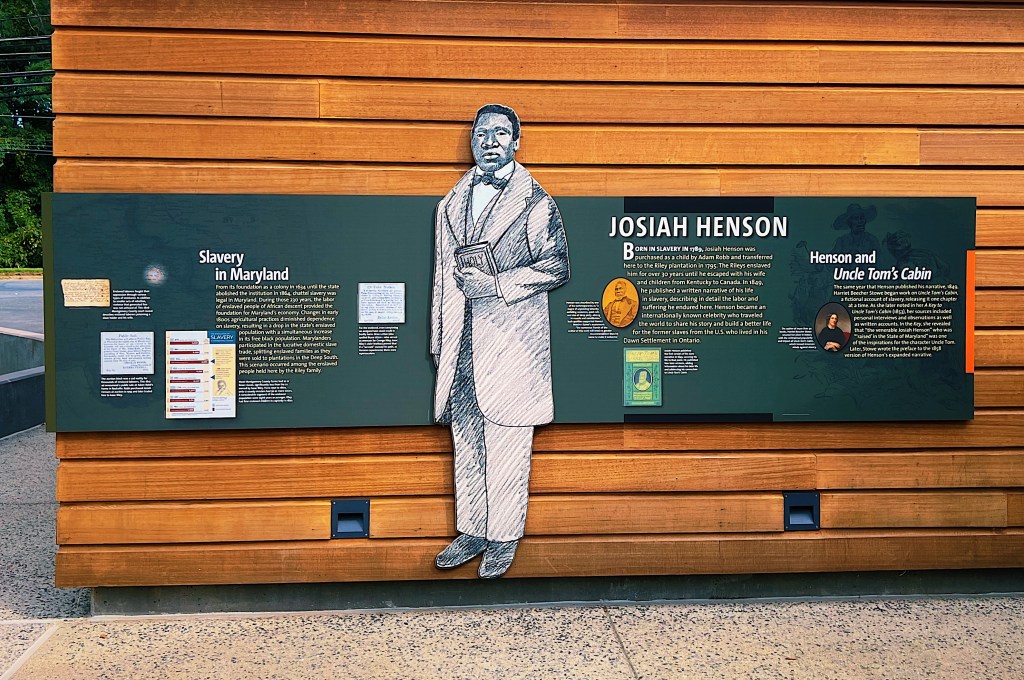
We returned to the neighborhood where Lauren grew up and where her parents lived until five or six years ago. It is a quiet neighborhood with winding narrow roads and houses on large sections. One of the great things about doing these blogs is the surprising things we often learn. For example, Lauren was not aware that she had grown up in a house that stood on land that was once part of a plantation. And not just any plantation, but the one where perhaps America’s most famous slave lived, Uncle Tom. When Harriet Beecher Stowe wrote her novel Uncle Tom’s Cabin, she drew from several sources but the best known was the autobiography of an escaped slave called Josiah Henson. Today Uncle Tom is a derogatory term used for someone who is excessively subservient. The Uncle Tom in the novel was not that man. Rather, minstrel show retellings of the story performed by men in black face transformed Uncle Tom from the Christian martyr of the book to a fool and apologist for slavery. The real Uncle Tom was nothing like the Uncle Tom we now know. Henson had an incredibly inspiring life and it is truly shameful that his story is not more widely known.
Henson had been born into slavery near Port Tobacco, in Charles County, Maryland in 1789. When he was a small boy, his father received one hundred lashes and had his ear cut off and pinned to the whipping post, before being sold off to Alabama, after he stood up to a slave overseer. When Henson’s owner died, the family was sold off and Henson was separated from his mother and siblings. Henson’s mother had pleaded at the auction for her new owner, Isaac Riley, to purchase Josiah as well. Riley responded by hitting and kicking her and Josiah was sold to Adam Robb who was a blacksmith. But Josiah was very ill as a child and Robb, fearing that he would lose his investment, agreed to give Josiah to Riley, in return for Riley bringing his future horseshoeing needs to Robb. Henson was reunited with his mother, regained his health and eventually became entrusted as the farm supervisor.
In 1828, Riley agreed to sell Henson his freedom for $350 which he had already saved up and a note promising a further $100. However, Riley secretly added another zero to the paper changing the fee to $1000. Having been cheated of his money and learning that he might be sold again, Henson escaped to Canada, taking along his wife and children. After working on farms in Canada, he was eventually able to purchase 200 acres in Dawn Township and started a black settlement that exported black walnut lumber to the United States and Britain. He also had become a Methodist preacher and spoke as an abolitionist. He had sent his eldest son, Tom, to school who in turn taught Josiah to read a write in his fifties. His book The Life of Josiah Henson, Formerly a Slave, Now an Inhabitant of Canada, as Narrated by Himself, was released in 1849 and became the basis of Harriet Beecher Stowe’s Uncle Tom’s Cabin.
Henson remained at the Dawn Settlement until he died in his nineties, although he did make a number of trips overseas. He secretly returned to the United States on many occasions as part of the Underground Railway and was responsible for leading 118 slaves to freedom. After the civil war and the abolition of slavery he again returned to the United States where he met with President Hayes at the White House. He also returned to Riley’s farm which by then had gone to seed. Henson described it as “a wilderness; the most desolate, demoralized place one can imagine.” He even crossed the Atlantic to Britain where he met with Queen Victoria and the Archbishop of Canterbury.
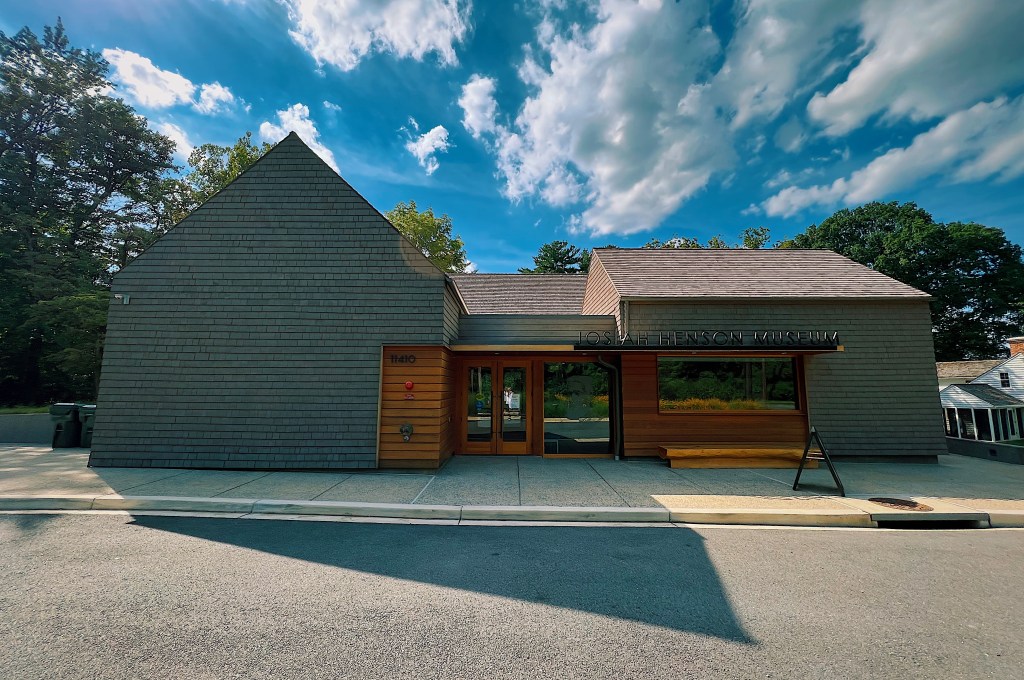
There is a brand new Joseph Henson museum in Luxmanor that is well worth a visit. It outlines his amazing story and includes the original plantation farm house. Its hours are limited, as it is only open from 10 to 4, Friday through Sunday.


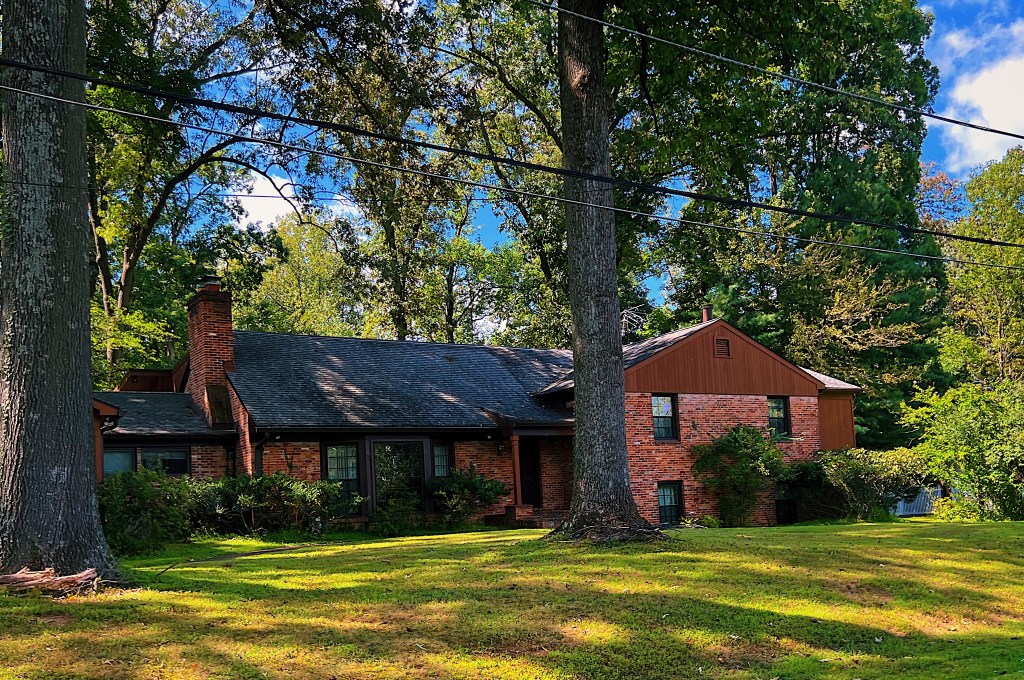
In 1928, Morton and Ernestine Luchs, had acquired 94 acres of the original Riley plantation which they ran as a farm. However, soon they decided to subdivide the farm into half acre lots. The called the suburb Luxmanor, which we guess is a nod to their last name. Unlike many other developments in the area at the time, Luxmanor deeds did not include restrictive covenants preventing Jewish families from purchasing homes. The neighborhood, therefore, attracted a number of Jewish families (There were, however, covenants restricting purchase by African-American families). For a long time, the area remained fairly undeveloped and Lauren remembers surrounding farmland and country roads. Like many suburbs that were built with large sections, many of the original modest brick ramblers and colonials have now been torn down and replaced with massive mansions. Here are some of the original homes that still remain.




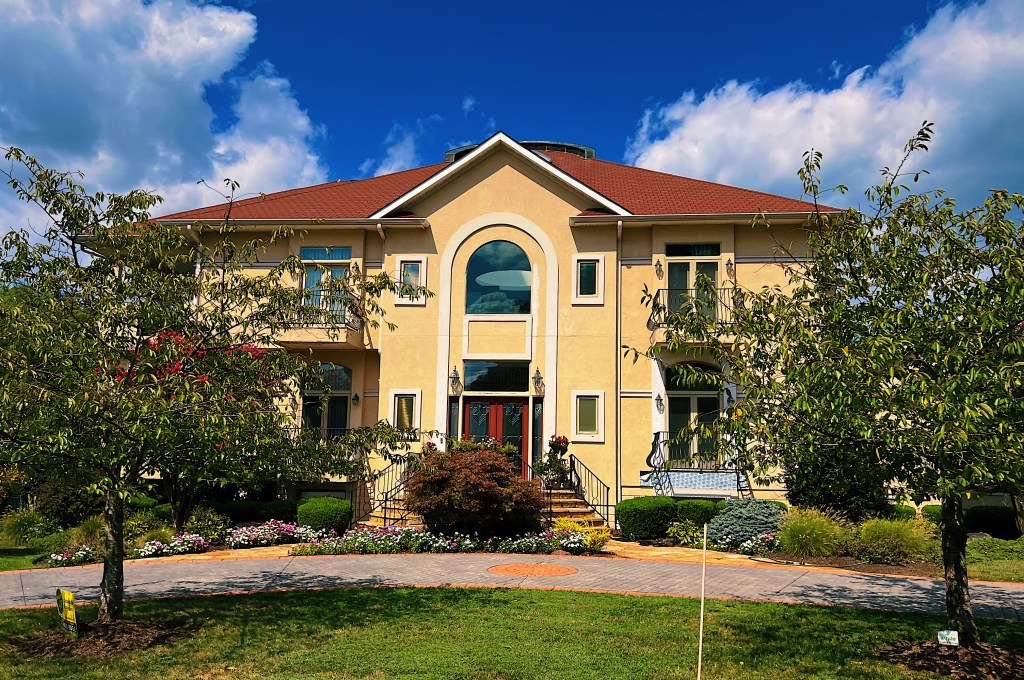
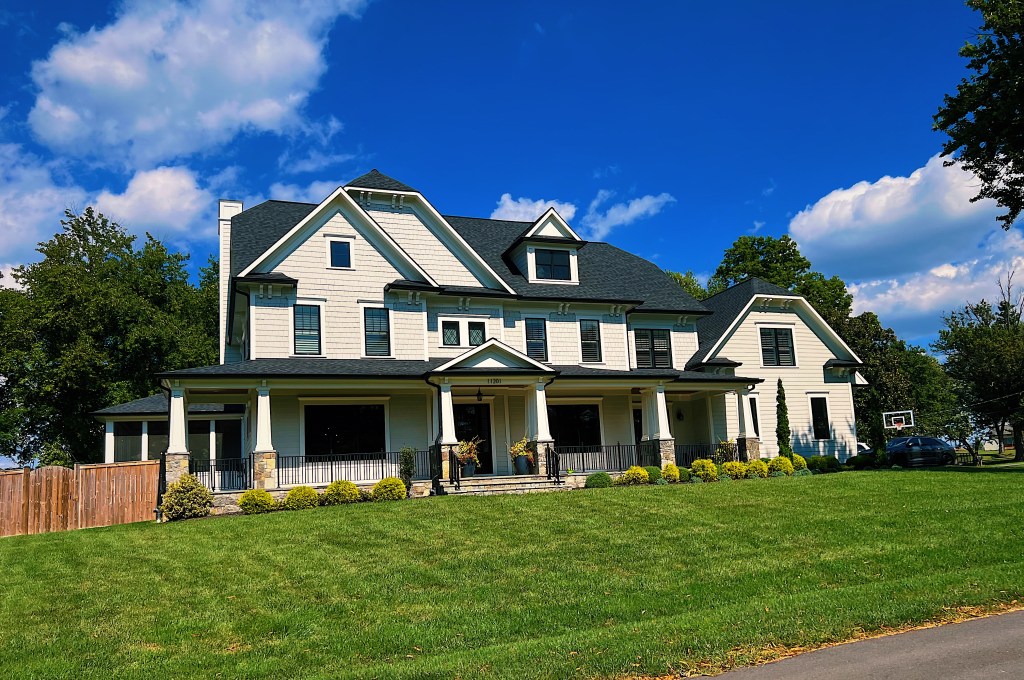
And here are some of the larger homes that are continually springing up in the neighborhood in place of the original homes. It is interesting to see the different types of home that have been in favor with developers over the last forty of so years. A few years back, large colonial homes, stucco mansions and the occasional post-modern home were popular.


Now Craftsman and Country style architecture appears to be in vogue.




Here is one of the very few modernist homes in the neighborhood.

And here is the house where Lauren grew up. The new owners have painted it white and appear to be going for a more mid-century modern look.


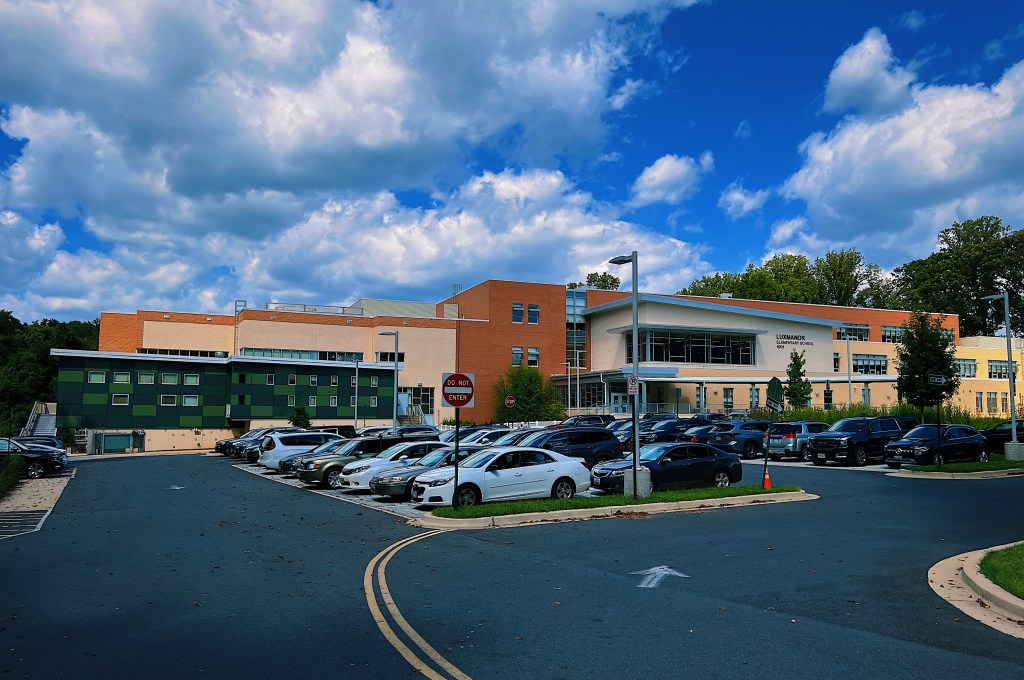
Finally, we passed by Luxmanor Elementary School. When Lauren attended, it had only been open for a short while and was a small school. Now it has been rebuilt and has 575 students.
 Mal and Lauren
!!! Astounding—he did all that in ONE LIFETIME??! What am I doing sitting in the couch watching Masterpiece Theater and thinking about washing the windows for? You grew up in a birthplace of greatness, Lauren—thx so much for sending this—-XOX
Sent from my iPhone
>
LikeLike
It does indeed make one feel a little inadequate. 😉
LikeLike