May 4, 2021
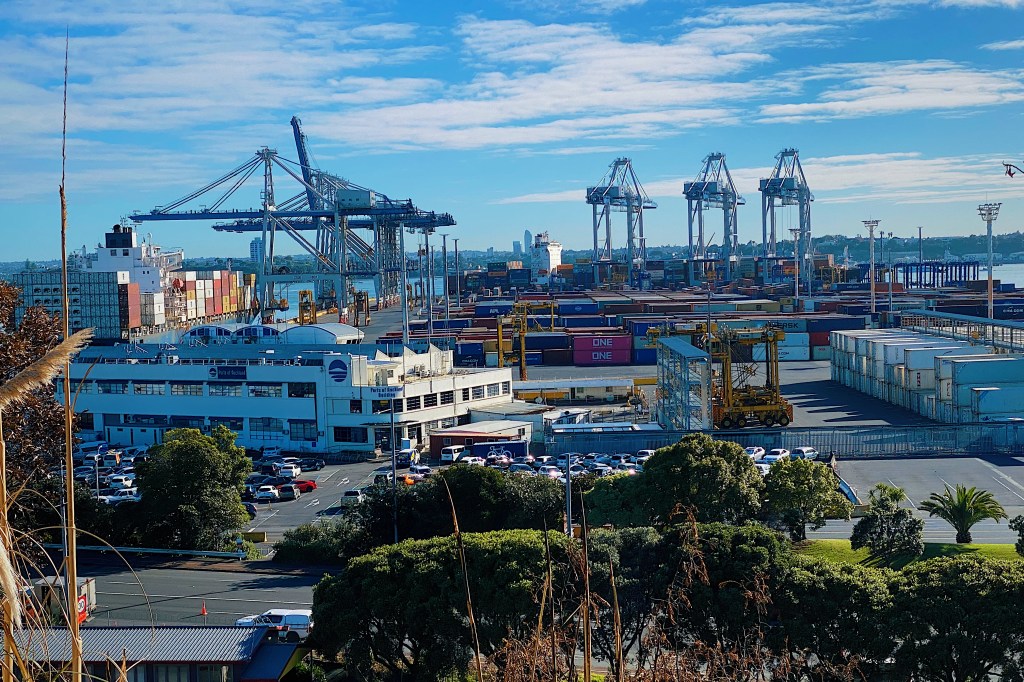
On a beautiful sunny morning we set out east from downtown along Tamaki Drive toward the inner city suburb of Parnell. Along the way we passed the Port of Auckland, New Zealand’s largest port. The three large cranes visible in the distance are a recent addition, costing $20 million a piece. Each is capable of handling four large containers at a time.
Across Tamaki Drive from the Port are the railway tracks that run in to Britomart Station at the bottom of Queen Street. We came across this train enthusiast.

We then headed up into Dove Myer Robinson Park. Commonly known as Robbie, Robinson was Auckland’s longest serving mayor, serving two terms from 1959-65 and from 1968-1980. He is one of several Jewish Auckland mayors, although he rejected Judaism as a teenager and became a lifelong atheist. Walking through the park we came across a number of tents pitched on a beautiful slope overlooking the harbor.
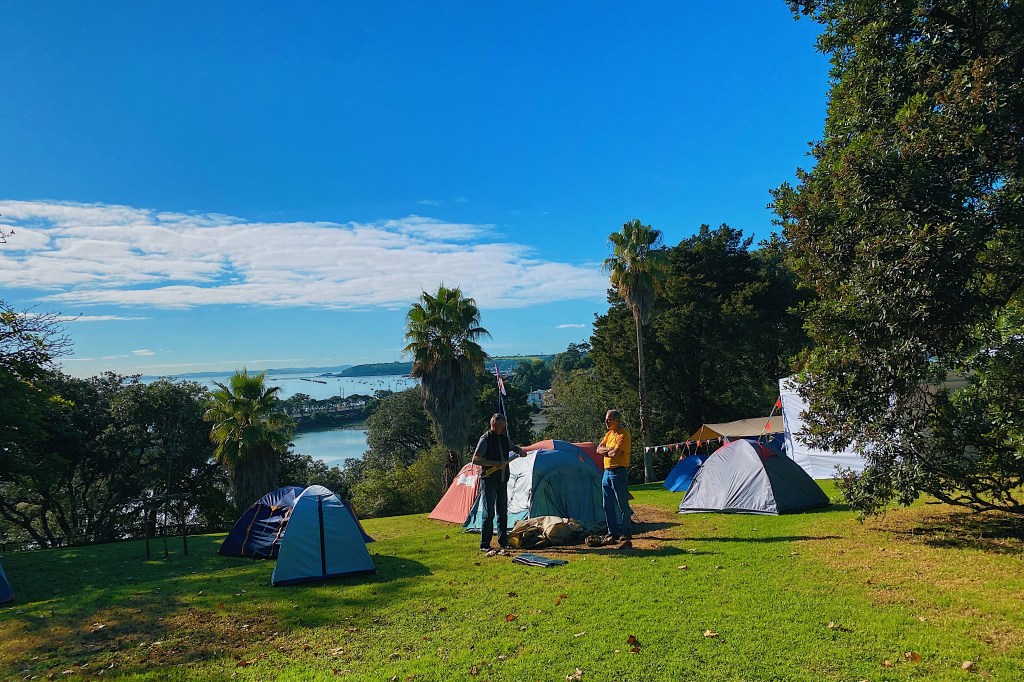
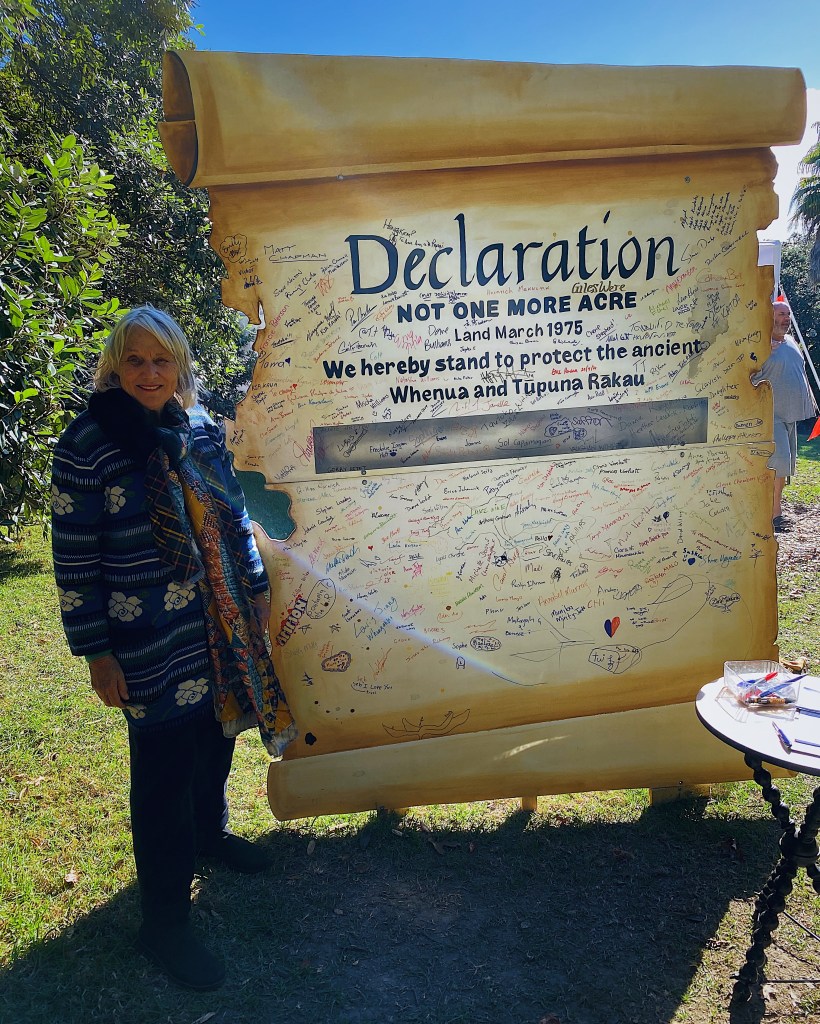
Our first impression was that it was a homeless encampment. We were surprised because, although such encampments are not an uncommon sight in Washington DC, we had not come across any in Auckland. But as we passed by we struck up a conversation with one of its inhabitants, Annie, who told us that the tents were there to stop the building of a large memorial to the Mt. Erebus disaster.
In 1979, Air New Zealand Flight 901 flew into Mount Erebus in the Antarctic killing all 237 passengers and 20 crew on board. Air New Zealand had been operating scheduled Antarctic sightseeing flights since 1977. The initial investigation concluded the accident was caused by pilot error, but public outcry led to the establishment of a Royal Commission. That Commission concluded that the accident was caused by a correction made to the coordinates of the flight path the night before the disaster, coupled with a failure to inform the flight crew of the change.
The protesters are not opposed to the idea of a memorial as such, although Annie pointed out that there are already numerous Erebus Disaster memorials in New Zealand. Rather, they are opposed to the large scale of the proposed memorial placed in the middle of a beautiful park, which also may lead to the loss of Auckland’s largest pohutukawa tree, which stands on the site.


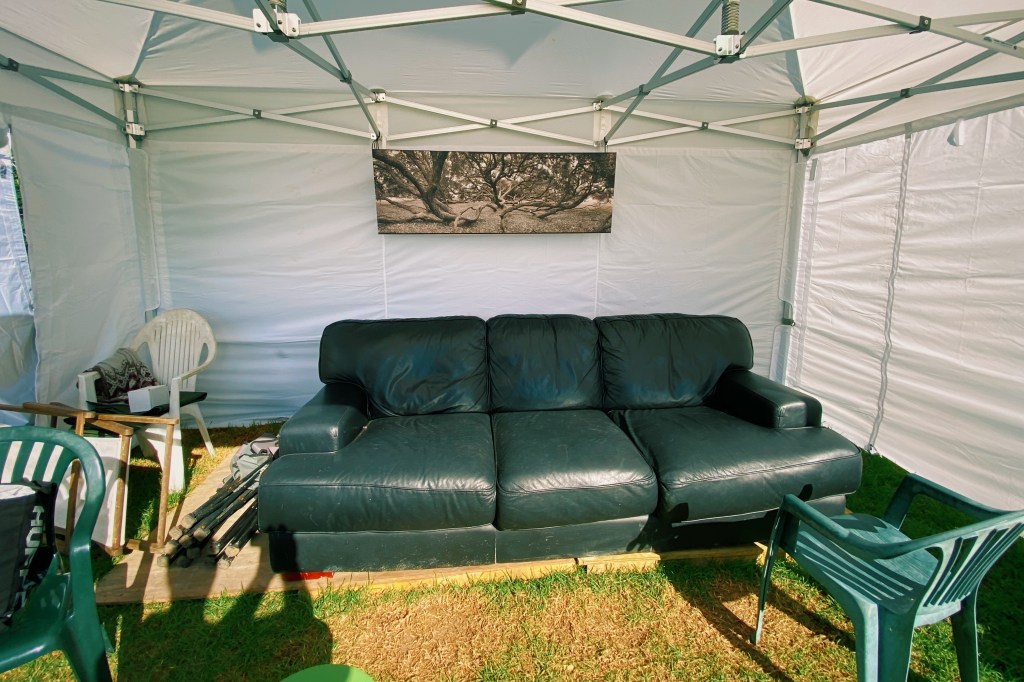
The camp was nicely appointed including a living area, complete with couch and beautiful photo of the endangered pohutukawa tree.
We continued on through the park down into Judges Bay. The bay is named for two early administrators of British Justice, Judge Martin and Attorney General Swainson, who lived in the bay in the 1840s. It is now separated from the harbor by the Tamaki Drive causeway.
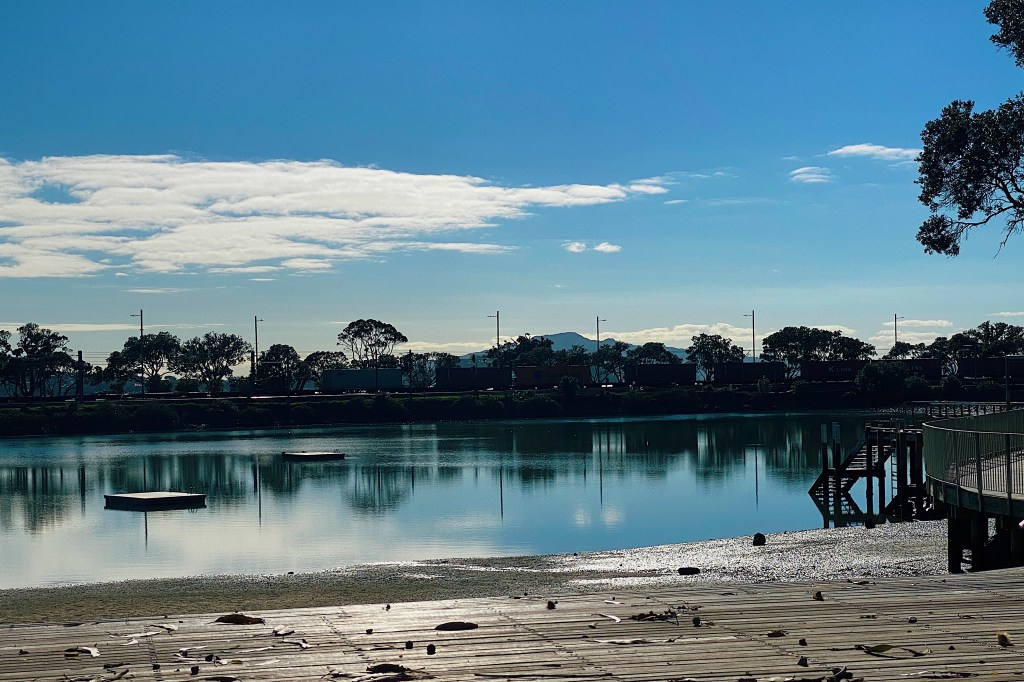

Sitting alongside the Bay are the Parnell Baths. Public swimming pools in New Zealand are often called baths. Built in 1950, in modernist design, the baths are a popular attraction during the Summer but were closed for the winter when we passed.

We then walked up and along St. Stephens Avenue, one of Auckland’s most prestigious residential streets. On the east side of the avenue, the houses sit on a cliff overlooking Hobson Bay. Perhaps because of their location, many of the original homes have been replaced with modern homes to better take advantage of the view.
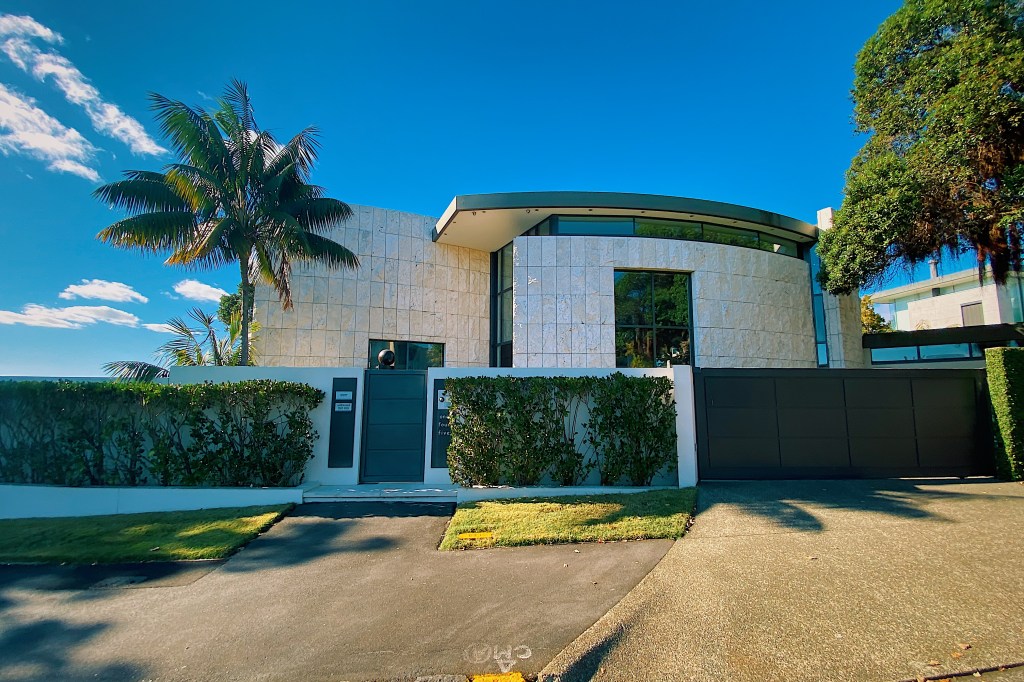
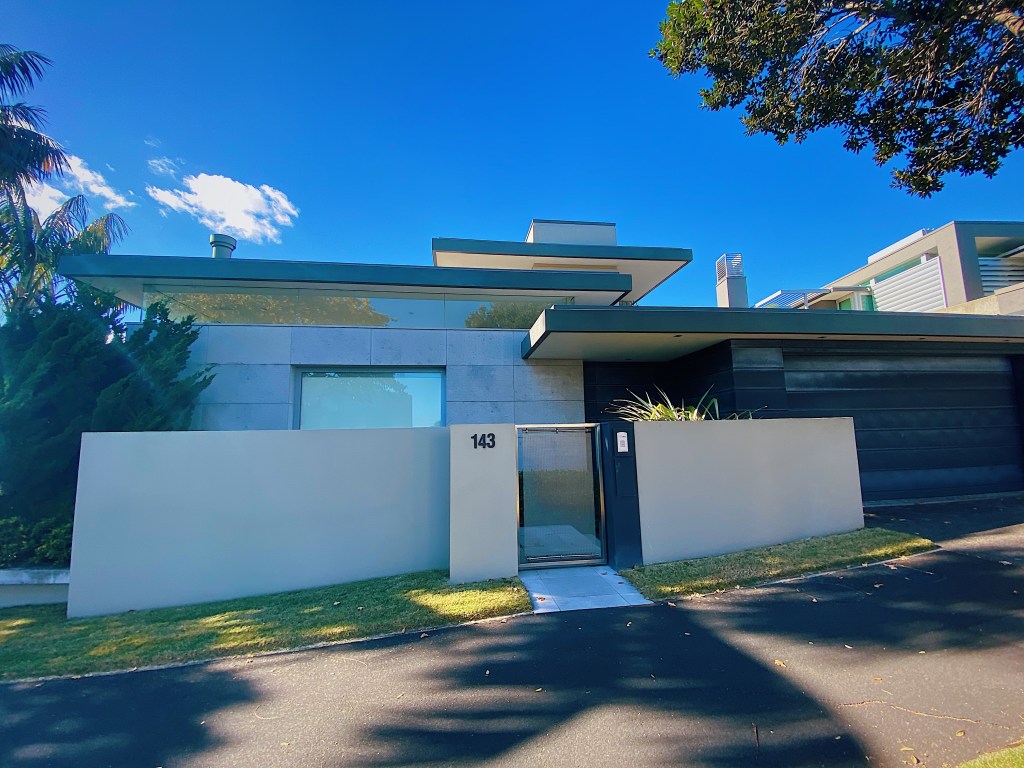
Whereas, on the western side of the Avenue, many of the older homes remain.

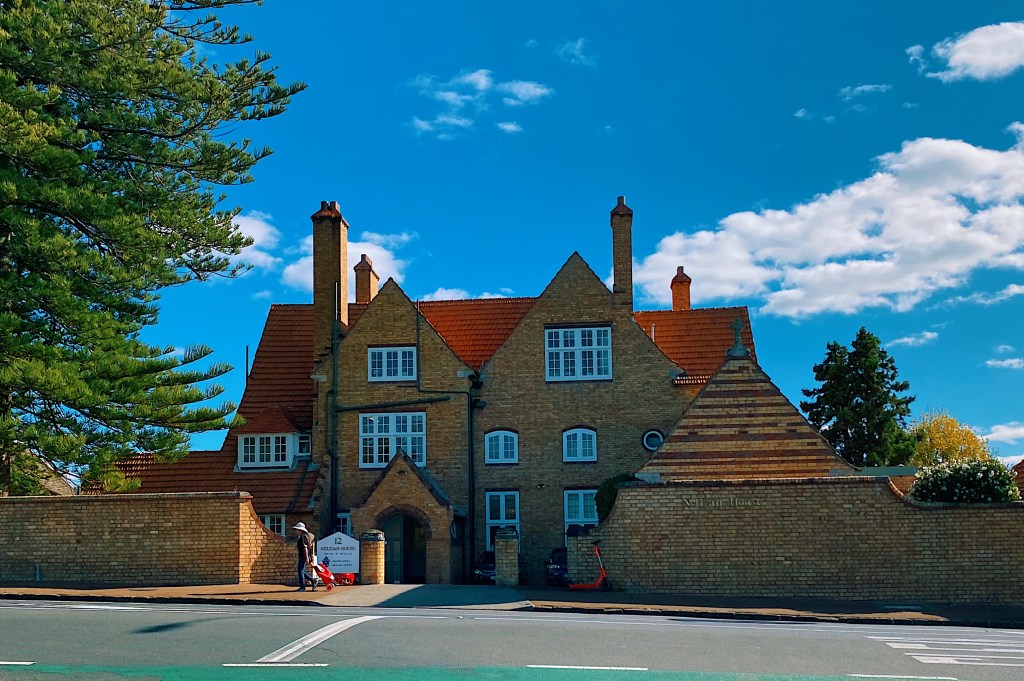
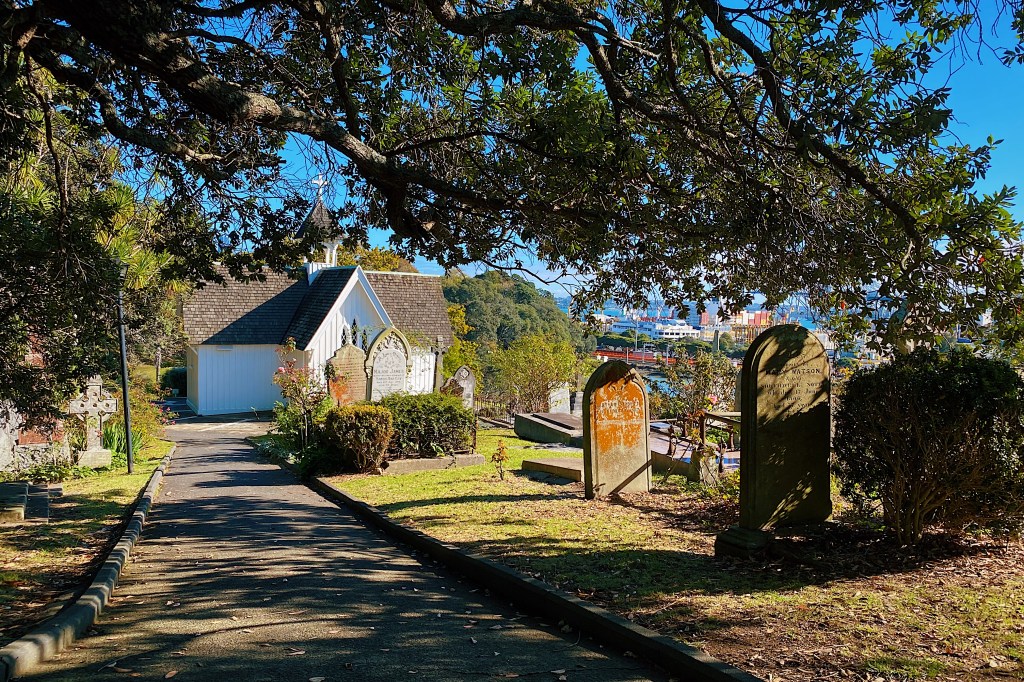
We passed by what may be Auckland’s smallest and largest churches. St. Stephen’s Chapel and surrounding graveyard date back to the 1850s. The chapel was built specifically for the signing of the constitution of the United Church of England and Ireland in New Zealand.
At the other end of the Avenue is the Anglican Holy Trinity Cathedral which was built in the 1990s and can hold over 1,200 people.

We finished up by walking down Parnell Road, the suburb’s main shopping street. This used to be one of Auckland’s premier retail and dining streets but it is much quieter today as Ponsonby Road and Britomart have become increasingly more popular. It has also been negatively impacted by Covid, as it was a popular tourist destination.


 Mal and Lauren