April 13, 2021
The Auckland area is home to 48 volcanic cones, many of which are clearly visible standing above their surrounding suburbs. The most recognizable is Maungakiekie (hill of the kiekie vine) more commonly known as One Tree Hill. The hill got its English name from a solitary tree that stood near its summit. However, that tree was cut down by an early settler in 1852 either in an act of vandalism or for firewood. Over the years, there have been numerous attempts to replace it with other trees. Most recently there was a lone pine standing near the summit but it came to an untimely end when it was attacked by a chainsaw wielding Maori activist in 2000.
Joined once again by our walking buddy Judi, we made our way up along the winding road that leads to the summit. The hill was once the site of the largest and most important Maori pa (fortified village) in pre-European times, with a population of up to 5,000. It is not uncommon in New Zealand to see terraces cut around the sides of hills. These are the remnants of the original pas that were built on the easy to defend hills. Maungakiekie is no exception.

From the top there are spectacular views over the city.
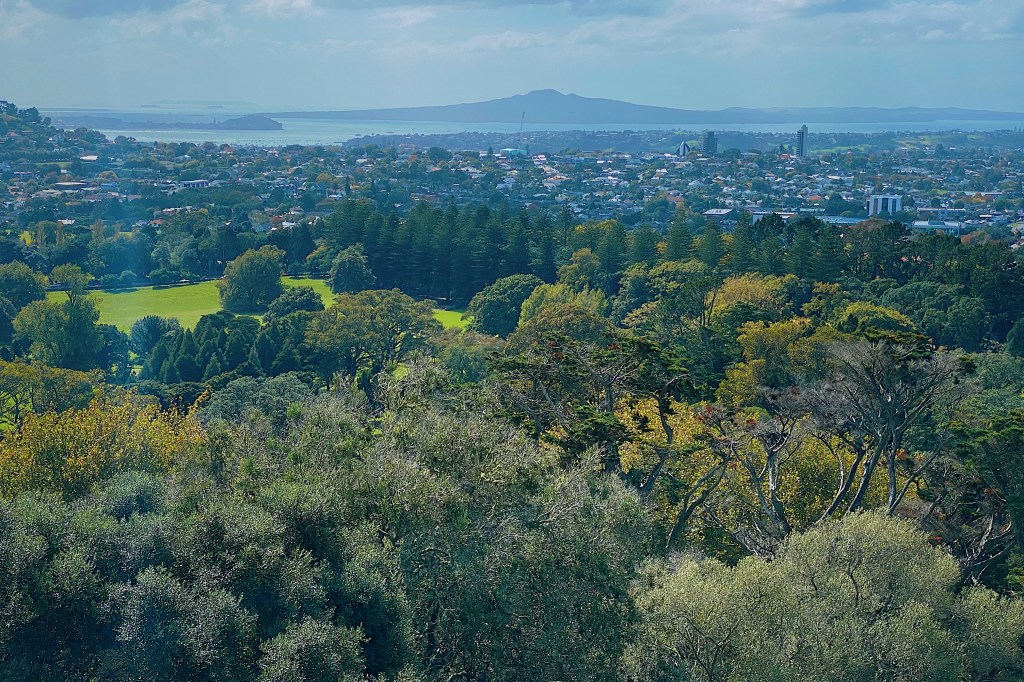
There also appears to be a new effort to regrow trees at the top.

Although there is no tree currently at the summit, there is an impressive obelisk. Unveiled in 1948, the obelisk is a memorial to Maori and features a bronze statue of a Maori warrior at its front. The money for the Memorial had been bequeathed by Sir John Logan Campbell, who had donated the surrounding farmland to the public. Campbell, who died in 1912, is buried at the foot of the obelisk. Like many European New Zealanders of his generation, Campbell had expected that the Maori would gradually die out and his hope was that the obelisk would make a striking memorial. That, of course, never happened and the use of the term “memorial” seems inappropriate nowadays. Particularly with Maori culture becoming more and more predominant in modern day New Zealand.

It was pretty breezy at the top so we made our way down into surrounding Cornwall Park.
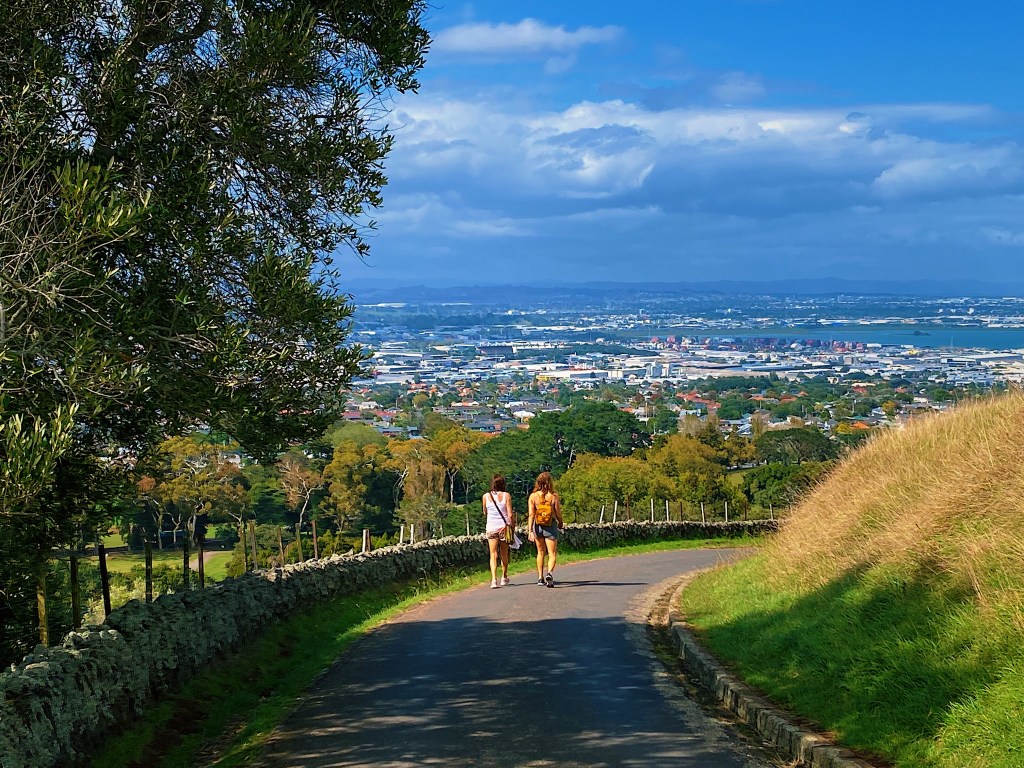
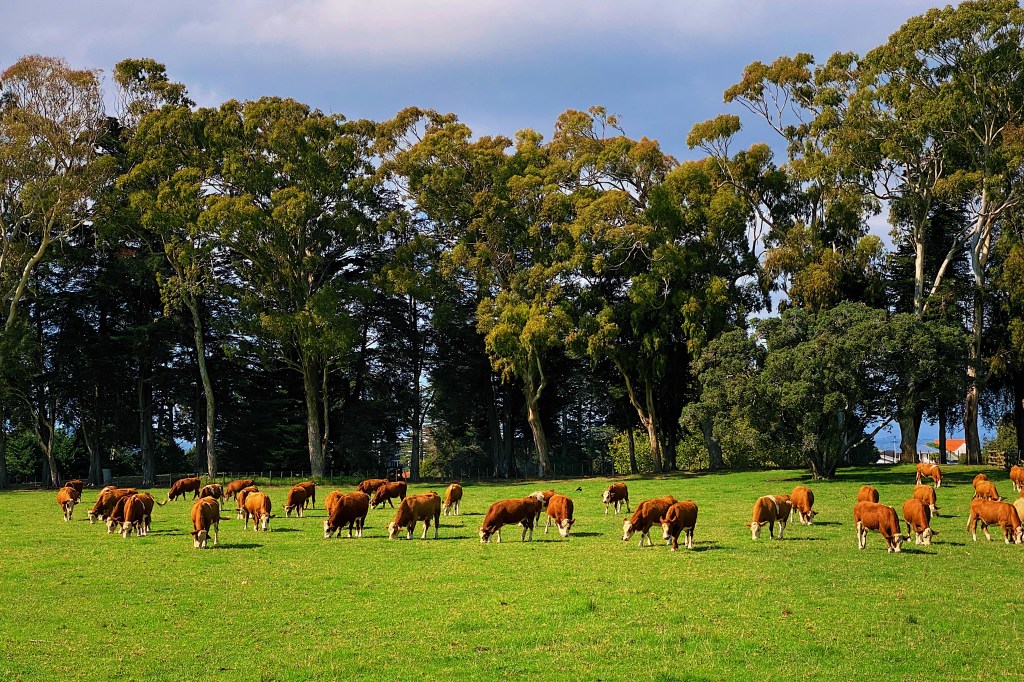
The Duke of Cornwall, later to become King George V, was visiting New Zealand in 1901 at the time that Sir John Logan Campbell was intending to donate to the public his 230 acres surrounding One Tree Hill. So on June 11, Campbell, who was Mayor of Auckland at the time, presented the deed to the land to the Duke and asked for his consent to name the park Cornwall Park in his honor. It is incredible to be able to enjoy such idyllic farmland right in the center of Auckland, complete with grazing sheep and cattle.
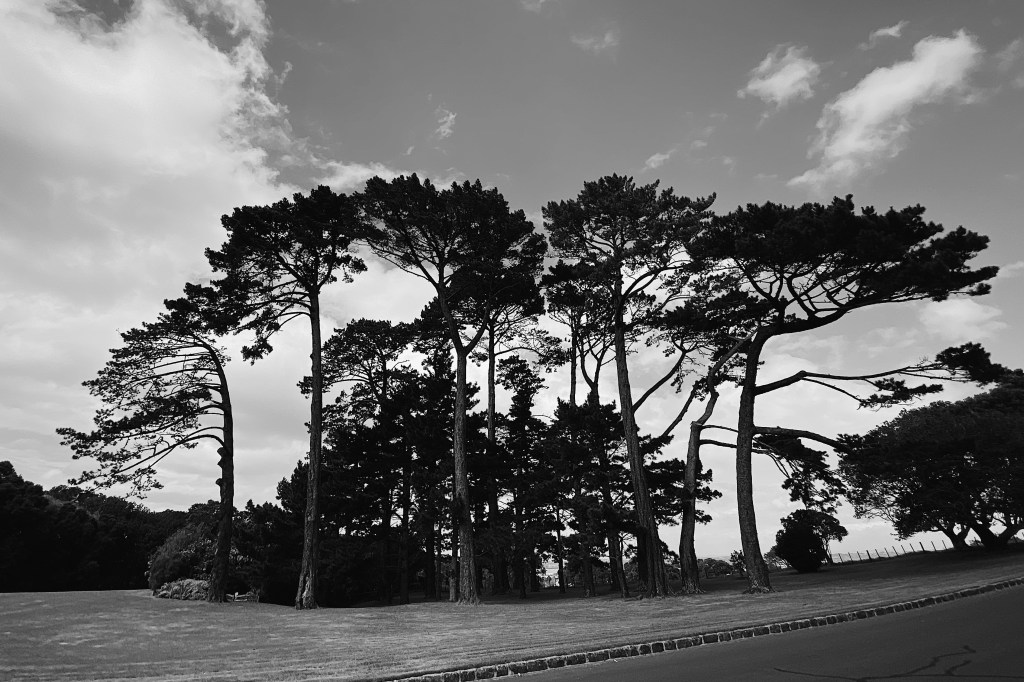


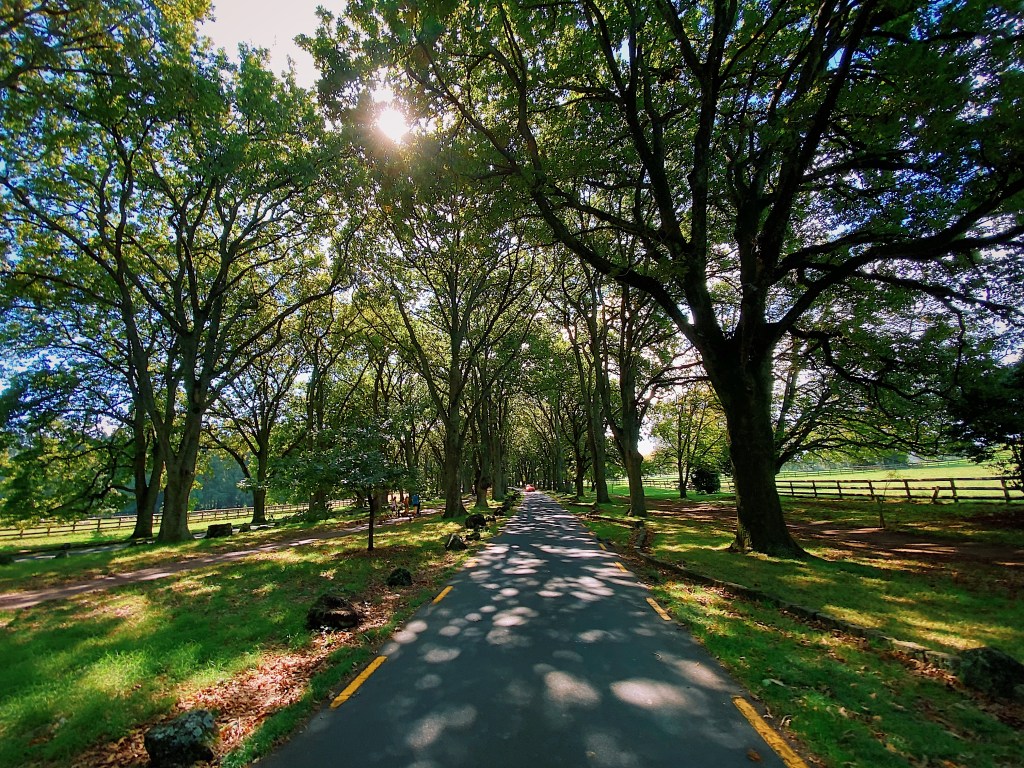

Cambell had become interested in wine and olive oil cultivation and had imported 5000 olive trees to be planted on his land in the 1860s. Unfortunately, the trees were sterile and produced a low yield of poor quality fruit, making the venture unprofitable. Today there are around 200 of the original trees on the west side of the park. They are some of the largest olive trees that we have seen anywhere.

Campbell, along with William Brown, a Scottish lawyer who had arrived in Auckland at the same time as Campbell, built Auckland’s earliest house. That cottage still exists, having been moved to Cornwall Park from its original location in in 1920.


 Mal and Lauren